Insect Mimicry and Camouflage

American Hoverfly, Courtesy National Park Service, nps.gov/long/naturescience/insects.htm
American Hoverfly
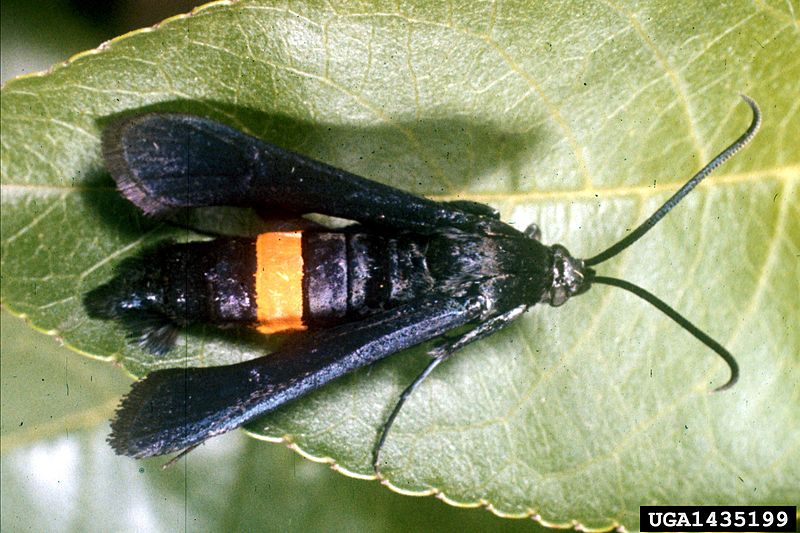
Courtesy National Park ServicePeach Tree Borer, Courtesy Cooperative Extension, Copyright 2009 Clemson UniversityPeach Tree Borer
Courtesy USDA Cooperative Extension
© 2009 Clemson University
Katydid, Courtesy Stokes Nature Center, Scott Biggs, Photographer Katydid
Courtesy Stokes Nature Center
Scott Biggs, Photographer

Monarch Butterfly, Courtesy Utah Division of Wildlife Resources, J. Kirk Gardner, Photographer Monarch Butterfly
Courtesy Utah Division of Wildlife Resources
J. Kirk Gardner, Photographer
Licensed Under CCL 3.0

Click for a closer view of a Tiger Swallowtail Butterfly, Courtesy Utah Division of Wildlife Resources, J. Kirk Gardner, Photographer Tiger Swallowtail Butterfly
Courtesy Utah Division of Wildlife Resources
J. Kirk Gardner, Photographer
Licensed Under CCL 3.0


Insects are the most diverse class of organisms on earth, with more than 900 thousand known species. With that many different kinds of bugs, it’s no wonder that they take on such a vast array of shapes, sizes, and colors. From Luna moths to fruit flies to millipedes, the diversity of this class of life is immense. Some insects have developed a shape and coloring so deliberate that it’s almost astounding. These insects are mimics – bred to look like something they aren’t, in an attempt to get a leg up on the survival game.

Insects can mimic all kind of things – stick bugs, for example, make such convincing twigs that you’ll never know they’re around until they move. Katydids look just like bright green leaves, and there are some species of caterpillar that in their youngest stages look just like splatters of bird droppings. But the mimics that I find most interesting are those who mimic other insects.

There are two main types of insect-to-insect mimicry. Batesian mimicry occurs when one harmless species mimics another dangerous one. Species that look like something fierce can capitalize on that insect’s dangerous reputation and potentially be safer from predators because of it. A common Utah pest, the peach tree borer, is a moth that very closely resembles a wasp in both its morphology and behavior. Harmless, nectar-eating hoverflies exhibit the black and yellow body stripes of a bee. Apparently, it’s not just humans who want to stay away from the business end of a wasp or a bee – many insect predators, too, give them a wide berth.

Ants also have a fierce reputation in the animal world, and so attract a lot of mimics. A number of spider species not only mimic ants in morphology and behavior, but some also give off ant pheromones, making them smell like friend rather than foe. While many ant-mimicking spiders go undercover as a way to hide from their own predators, some do use their disguise as a way to access the nest of their prey.

Batesian mimicry is a delicate balance. Predators need to catch a wasp or two before they associate that color pattern with dangerous prey. If there are too many tasty mimics around, the predators will stop associating black and yellow stripes with a dangerous object and the mimic’s ploy would fail to work.

A slight variation on Batesian mimicry are insects with false faces and false eyes. Tiger swallowtails – those large yellow and black butterflies – have red and blue spots on each of their hind wings at a place farthest from their body. These spots, combined with the skinny black ‘tails’ from which the species gets its common name, are meant to look like the eyes and antennae of another, possibly larger and more fierce, insect. This imagery is meant to frighten off predators, but also in the case of an attack, to spare the most important part of the butterfly’s body.

The second, less common, form of insect-to-insect mimicry is called Müllerian mimicry. This occurs when two equally distasteful insects come to resemble one another. Most of us are familiar with the monarch butterfly. As caterpillars, they feed exclusively on toxic milkweed. The caterpillars take the toxins into their bodies and retain them as adults, making them not only bad-tasting but also poisonous. Predators have learned to associate that distinct orange and black wing pattern with a bad experience, and therefore leave them alone. Viceroy butterflies look incredibly similar to monarchs – the only difference being an extra line of black on the hindwings of a viceroy. While once thought to be Batesian mimics, recent studies have shown that viceroys are equally unpalatable. Their similarity in looks to monarchs, then, serves to reinforce the distasteful nature of both species.

Mimicry is of course, not restricted to the insect kingdom. Some plants have gotten into the mimicry business in order to trick insects. The hammer orchid, which grows in Australia, has a flower that mimics a female bee. Male bees, in mistakenly trying to mate with the flower, collect pollen that they then carry with them to the next, ensuring pollination of this sneaky plant. So this ingenious tactic some insects use to gain a leg up in the game of survival can also be used against them to the advantage of others. Isn’t life amazing…

For more information and photos of some insect mimics, visit our website at www.wildaboututah.org. For the Stokes Nature Center and Wild About Utah, this is Andrea Liberatore.

Many thanks to Don Viers for his input on this piece.

Credits:

Photos: Courtesy and copyright as marked

Text: Andrea Liberatore, Stokes Nature Center

Additional Reading:

Imes, Rick (1997) Incredible Bugs: The Ultimate Guide to the World of Insects. Barnes & Noble Books. New York, NY

Pyle, Robert Michael (1981) National Audubon Society: Field Guide to Butterflies, North America. Alfred A. Knopf. New York, NY

Viers, Don (2013) Personal conversations

Ritland, David B., Brower, Lincoln P. (1991) The Viceroy butterfly is not a Batesian mimic. Nature, vol. 350, 497-8. Available online at: https://www.nature.com/nature/journal/v350/n6318/abs/350497a0.html

Cushing, Paula E. (2012) Spider-ant associations: An Updated Review of Myrmecomorphy, Myrmecophily, and Myrmecophagy in Spiders. Psyche, vol. 2012. Available online at: https://www.hindawi.com/journals/psyche/2012/151989/

NRCS Partners with Farmers, Ranchers to Aid Monarch Butterflies, Posted by Jason Weller, Chief, Natural Resources Conservation Service, on November 12, 2015, USDA Blog, https://blogs.usda.gov/2015/11/12/nrcs-partners-with-farmers-ranchers-to-aid-monarch-butterflies/

Grow Native!

Fire Chalice, Courtesy & Copyright 2010 Annalisa Paul, Stokes Nature Center https://www.logannature.org/
Fire ChaliceCopyright 2010 Annalisa Paul
Stokes Nature Center

With the beginning of summer at our doorstep, many of us look out over our green grass yards and dread the coming heat that will endeavor to turn it brown and stale. One might begin to ponder if there is an alternative to these plants that fill our yards and demand so much of our water. In fact, there is.

Utah may be a desert, but not one naturally devoid of vegetation. Many plants have evolved to live within the bounds of the climate, insect pests, microbes and soil types specific to our region. Once established, many native plants need minimal irrigation beyond normal rainfall. And because they have coexisted for eons, natives have developed their own defenses against many pests and diseases, resulting in minimal pesticide use.

Backyards, gardens, parks, and roadsides planted with native plants also provide wildlife with a “bridge” to the natural areas that remain, interspersed among our heavily developed communities. As the cornerstone of biological diversity, native plants also do the best job of providing food and shelter for our local animals. Ready to get planting? Here are two natives that would be easy, attractive, and low-maintenance additions to many Utah yards or gardens.

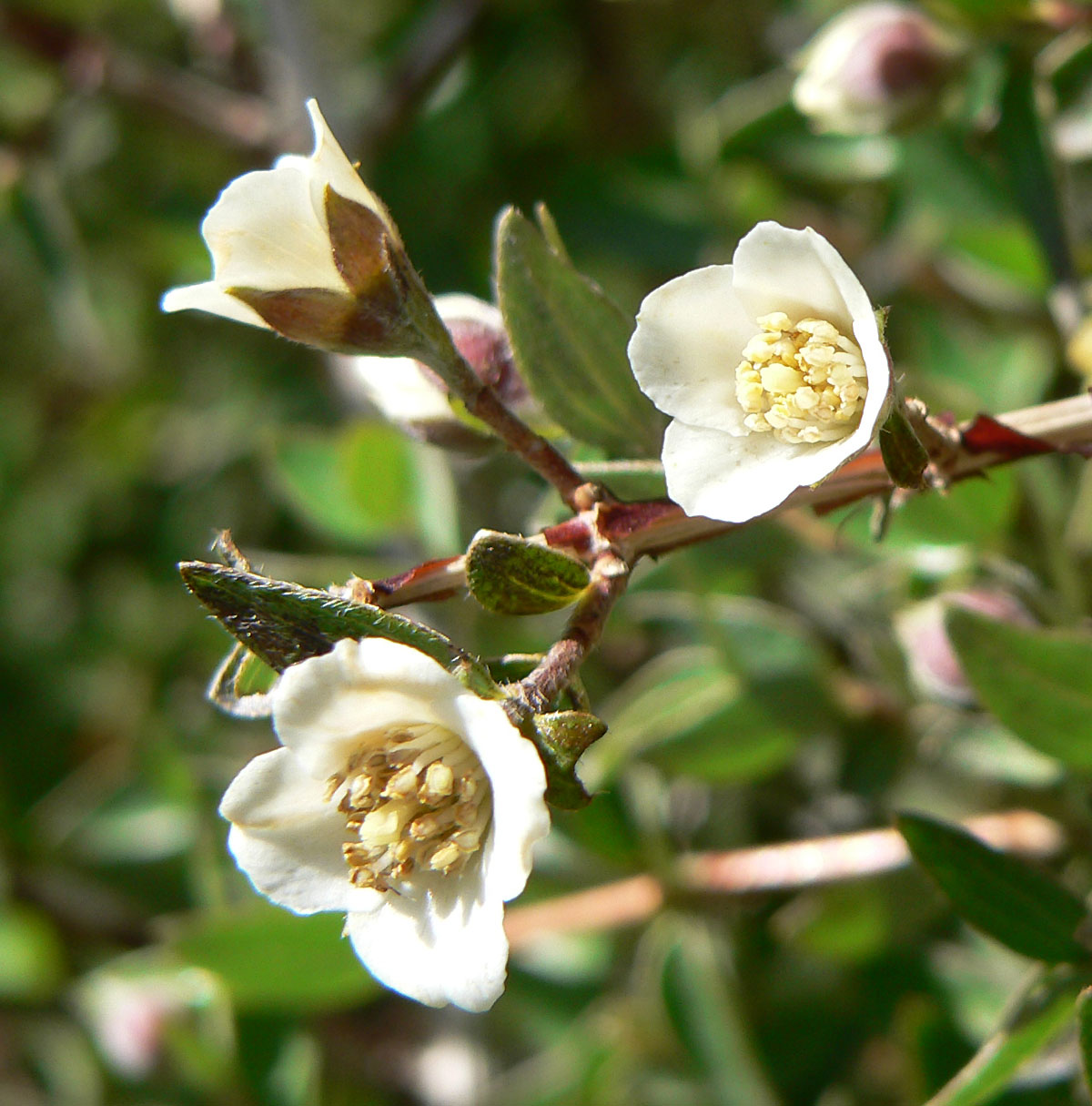
Littleleaf Mock Orange is a compact shrub which produces clusters of wonderfully fragrant white blossoms. In the wilds of Utah, it is often found growing in rock crevices and dry, gravelly areas, so it will likely do well in those bare, difficult parts of your yard. It is browsed by mule deer and also provides shelter for native birds.

Little leaf Mock Orange, Philadelphus microphyllus, licensed under the Creative Commons Attribution-Share Alike 3.0 Unported license. Photographer: Stan Shebs
Little leaf Mock Orange
Philadelphus microphyllus
Image licensed under the Creative Commons Attribution-Share Alike 3.0 Unported license.
Photographer: Stan Shebs

Fire Chalice, alternately known as hummingbird flower, is a low-profile plant with bright red tube-shaped flowers. The plant’s nectar is irresistible to hummingbirds and can help attract a number of native pollinators to your yard.

As with all plants, the right native must be matched with the right spot. Thankfully, there are native plants that thrive in every habitat imaginable. And the best thing is, natives include all different types of plants from mosses and ferns to wildflowers, shrubs and trees. A little bit of research should help you find the best species for your hot, dry slope, that wet swale in the back, or the dry shade under your trees.

For the Stokes Nature Center and Wild About Utah, this is Andrea Liberatore.

Credits:

Photos: Courtesy & Copyright Annalisa Paul, Stokes Nature Center, logannature.org
Courtesy & Copyright: Intermountain Native Plant Growers Association, inpga.org
Little leaf Mock Orange image licensed under the
Creative Commons Attribution-Share Alike 3.0 Unported license. Photographer: Stan Shebs
Text:    Andrea Liberatore, Stokes Nature Center, logannature.org
For more information about the upcoming Alternascapes Garden Tour:
Cache Master Gardeners, Alternascapes Garden Tour, Saturday, Jun 25 – 11:00AM to 4:00PM, https://extension.usu.edu/cache/files/uploads/Alterniscapes%20Handout%20Bi-fold%20for%20Web.pdf

For more information about Utah’s native plants:

Utah Native Plant Society: https://www.unps.org

Utah Master Gardeners: https://extension.usu.edu/mastergardener/
Additional Reading:

United States Department of Agriculture, Plants Profile: Littleleaf Mock Orange. Found online at: https://plants.usda.gov/java/profile?symbol=PHMI4

United States Department of Agriculture, Plants Profile: Garrett’s Fire Chalice. Found online at: https://plants.usda.gov/java/profile?symbol=EPCAG


Snowshoes

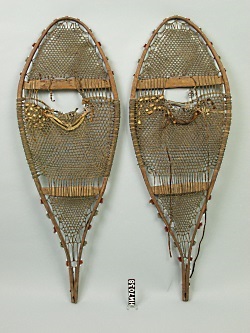
Maliseet Snowshoes, Photo Courtesy & Copyright Hudson Museum, University of Maine
Maliseet Snowshoe
Photo Courtesy & Copyright Hudson Museum, University of Maine

Imagine yourself living in Utah hundreds of years ago – before cars, before horses, before European influences. Summers provide you with abundant game and a multitude of plants for food and other materials, but the winters are harsh and full of snow. How did Native Americans manage to survive winter without modern amenities like snow plows and grocery stores? These hearty individuals owe their ability to hunt and travel in our snowy climate to one important tool – the snowshoe.

Snowshoes have been a part of life for humans in cold-weather climates for at least 6,000 years. From what historians can tell, people living in central Asia learned to strap thin planks of wood to their feet in order to help them travel through deep snow. Snowshoes work by increasing the surface area of the wearer’s foot, which distributes his or her weight across more snow – allowing them to basically float on top of the snow.

Western Subartic Antique Indian Snowshoes. circa 1890 – 1920., Photo Courtesy & Copyright VintageWinter.com
Western Subartic Antique
Indian Snowshoes. circa 1890 – 1920.
Photo Courtesy & Copyright VintageWinter.com

From this common ancestor in central Asia, both snowshoes and skis arose. Over the years, people began to spread out and move to new locations. Those who went west, into Europe, eventually developed the ski and those who went east across Siberia and into the Americas developed the snowshoe. The early snowshoes used by Native Americans were constructed of a wooden frame which was laced with babiche, un-tanned animal hide.

While we will likely never know why that first person decided to strap a plank of wood to their foot, perhaps they took their cue from Mother Nature. You see, humans are not the only ones who have figured out how to keep ourselves afloat on snow – some members of the animal world have too, and Utah holds two standout examples: the aptly named snowshoe hare and the Canada lynx. Both of these animals have extraordinarily large feet, which act much the same as our snowshoes, distributing the animal’s weight across a larger surface area.

Perhaps it’s no coincidence that both snowshoe hares and Canada lynx share this amazing adaptation. These two species are closely connected to each other in a special relationship: that of predator and prey. Leaving us to ponder the question: whose snowshoes came first, the lynx or the hare?

Eastern
Eastern Subartic Indian Snowshoes. circa 1855 – 1900
Photo Courtesy & Copyright VintageWinter.com

For more information and photos of traditional snowshoes, please visit our website at www.wildaboututah.org. Thank you to the Rocky Mountain Power Foundation for supporting the research and development of this Wild About Utah topic.

For the Stokes Nature Center and Wild About Utah, this is Andrea Liberatore.

Credits:

Photos: Courtesy Hudson Museum,
University of Maine
www.umaine.edu/hudsonmuseum/
Nick Thomas, SkiEO, VintageWinter www.vintagewinter.com
Text: Andrea Liberatore, Stokes Nature Center

Click to visit Vintage Snowshoe Slideshow, Courtesy & Copyright VintageWinter.com
Vintage Snowshoe Slideshow
Visit the Vintage Winter Sports Museum
Courtesy & Copyright VintageWinter.com

Additional Reading:

Prater, Gene. 1998. Snowshoeing, 3rd Edition. Seattle: The Mountaineers

Zeveloff, Samuel I. 1988. Mammals of the Intermountain West. Salt Lake City: University of Utah Press

Snowflakes

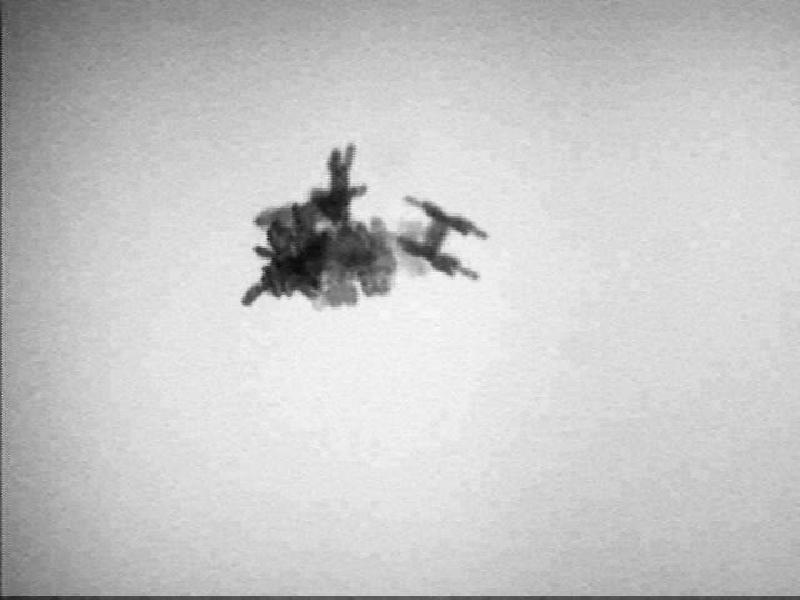
A free-falling snow crystal photographed as it fell on Alta Ski Area on March 6, 2011, Photo Courtesy & Copyright Tim Garrett, University of Utah
A free-falling snow crystal
photographed as it fell
Alta Ski Area on March 6, 2011
Photo Courtesy & Copyright 2011
Tim Garrett, University of Utah
Alta Snowflake Showcase

As winter draws to a close, I’d like to take a moment to reflect on the amazing weather phenomenon that is a snowflake. When winter weather dumps inches of snow on us, it’s easy to overlook the tiny works of art, those intricate and delicate snowflakes, which make up the storm.

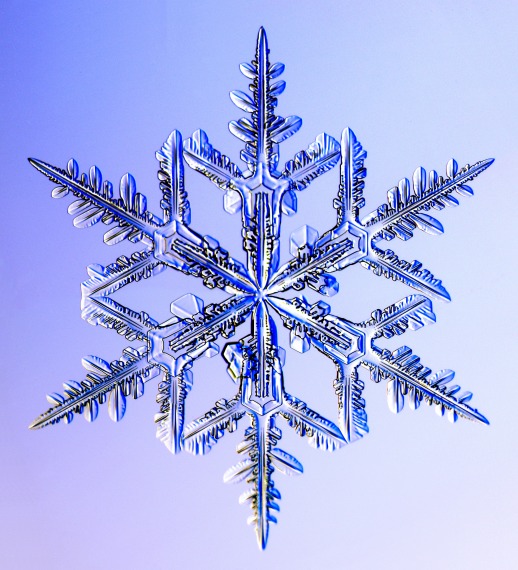
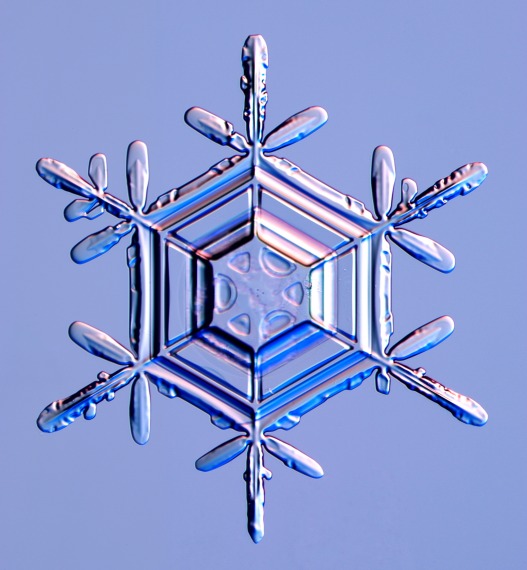
Snowflakes – or to use a more scientific term, snow crystals – come in a variety of different shapes including long, thin needles, flat hexagonal plates, columns, and irregularly-shaped pellets called graupel. The International Snow Classification System recognizes ten different shapes in all, only one of which is the traditional snowflake image. The classic six-armed snowflake shape is called a ‘stellar dendrite’ by scientists.

When teaching programs about snow, someone inevitably asks me, “Is it really true that no two snowflakes are alike?” As far as I can tell, the answer is, well, ‘maybe’, and here’s why.

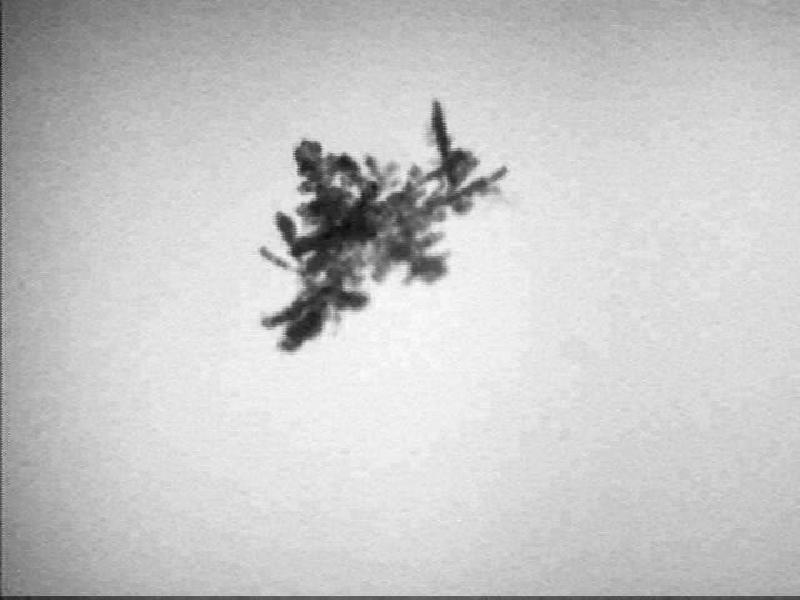
A free-falling snow crystal photographed as it fell, Alta Ski Area, March 6, 2011, Photo Courtesy and Copyright 2011, Tim Garrett, University of Utah, Alta Snowflake Showcase, https://alta.com/pages/snowflakeshowcase.php
A free-falling snow crystal
photographed as it fell
Alta Ski Area
March 6, 2011
Photo Courtesy & Copyright 2011
Tim Garrett, University of Utah
Alta Snowflake Showcase

Three things are needed to form these intricate crystals, and the first two are fairly obvious: water, and temperatures below freezing. The third item is a little more inconspicuous. Water cannot condense and freeze all on its own. Every snowflake needs a piece of atmospheric dust or salt at its core. This particle is referred to as a ‘nucleating agent,’ and it attracts water molecules which then condense and begin to freeze. From there, a snowflake’s overall shape is determined by a number of other variables including the atmospheric temperature, the amount of available moisture, wind speed, and mid-air collisions with other snowflakes.

To add more complexity, consider that each individual snowflake contains somewhere on the order of 10 quintillion water molecules. That’s ten with eighteen zeros behind it. While the way these molecules bind to each other is dictated by the laws of physics, the sheer number of ways in which 10 quintillion water molecules can arrange themselves as they freeze into place is mind boggling. But then again, how many snowflakes do you think fall in the typical March snowstorm in Utah? A lot. One scientist has estimated that the number of individual snowflakes that have fallen on Earth in the planet’s history is ten with 34 zeros behind it. In all of those snowflakes is it possible that two are exactly alike? Yeah, maybe… but good luck finding them!

A stellar dendrite snow crystal, Photo Courtesy and Copyright Kenneth Libbrecht, Caltech University, SnowCrystals.com, https://www.its.caltech.edu/~atomic/snowcrystals/photos/photos.htm
A stellar dendrite snow crystal Photo Courtesy & Copyright
Kenneth Libbrecht, Caltech University
SnowCrystals.com

For more information and some beautiful snowflake photographs, please visit our website at www.wildaboututah.org. Thank you to the Rocky Mountain Power Foundation for supporting the research and development of this Wild About Utah topic.

For the Stokes Nature Center and Wild About Utah, this is Andrea Liberatore.

Credits:

Photos: Courtesy Tim Garrett, University of Utah,
Kenneth Libbrecht, Caltech University
Text: Andrea Liberatore, Stokes Nature Center

Additional Reading:

Halfpenny, J.C and Ozanne, R.D. 1989. Winter: An Ecological Handbook. Boulder, CO: Johnson Books, https://www.amazon.com/Winter-Ecological-Handbook-James-Halfpenny/dp/1555660363

A stellar dendrite snow crystal, Photo Courtesy and Copyright Kenneth Libbrecht, Caltech University, SnowCrystals.com, https://www.its.caltech.edu/~atomic/snowcrystals/photos/photos.htm
A stellar dendrite snow crystal Photo Courtesy & Copyright
Kenneth Libbrecht, Caltech University
SnowCrystals.com

Gosnell, Mariana. 2007. Ice: the Nature, the History, and the Uses of an Astonishing Substance. Chicago, IL: The University of Chicago Press, https://www.amazon.com/Ice-Nature-History-Astonishing-Substance/dp/0679426086

Libbrecht, Kenneth .1999. A Snowflake Primer: the basic facts about snowflakes and snow crystals. https://www.its.caltech.edu/~atomic/snowcrystals/primer
/primer.htm


A hexagonal plate snow crystal, Photo Courtesy and Copyright Kenneth Libbrecht, Caltech University, SnowCrystals.com, https://www.its.caltech.edu/~atomic/snowcrystals/photos/photos.htm
A hexagonal plate snow crystal cite>Photo Courtesy & Copyright
Kenneth Libbrecht, Caltech University
SnowCrystals.com