Arctic Dreams

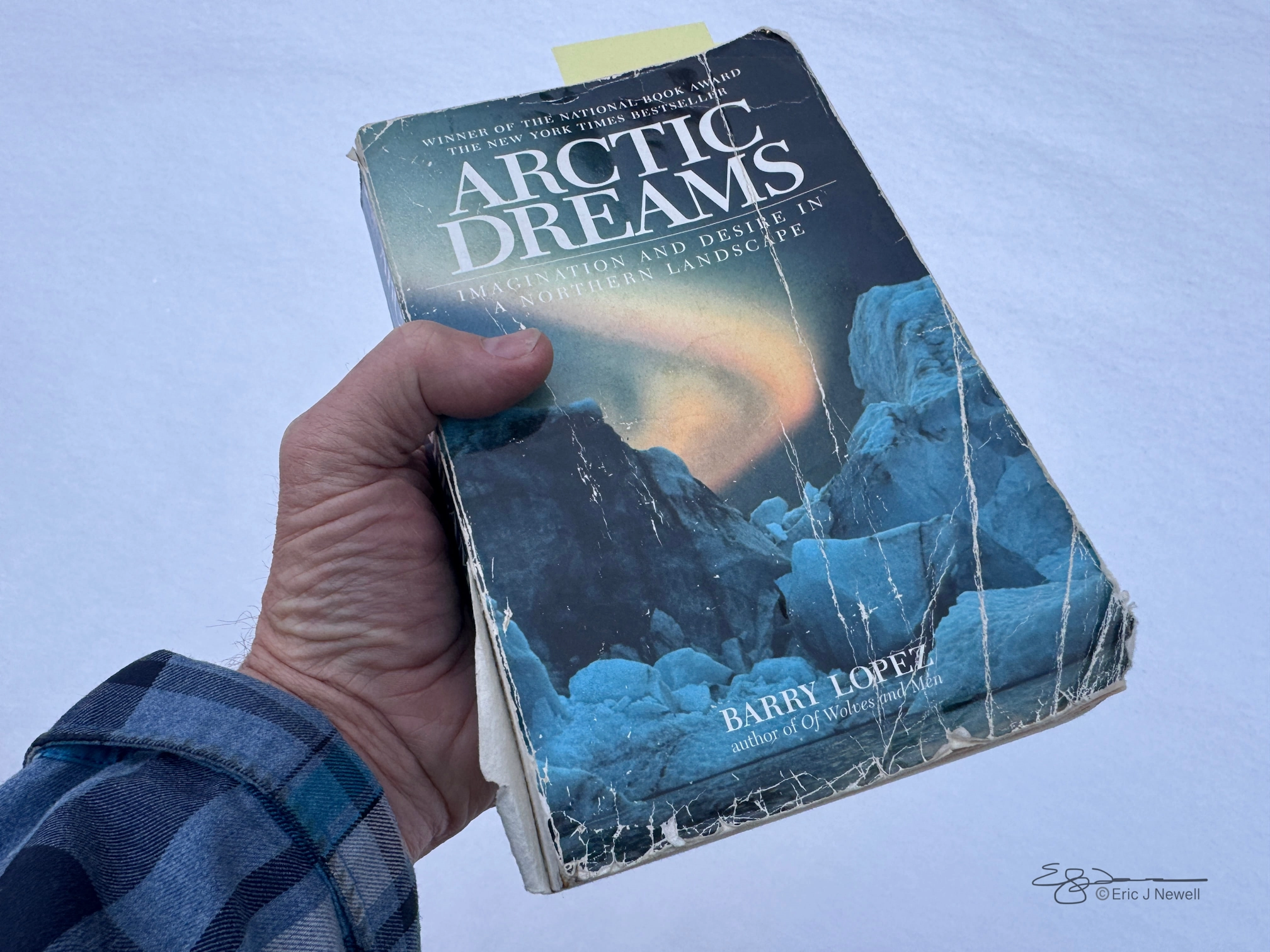
My well-worn copy of Artic Dreams by Barry Lopez, Illustrated Cover designed by Alan Magee, Maps illustrated by David Lindroth, Photo Courtesy & Copyright Eric Newell
My well-worn copy of Artic Dreams by Barry Lopez
Illustrated Cover designed by Alan Magee
Maps illustrated by David Lindroth
Photo Courtesy & Copyright Eric Newell
“This is an old business, walking slowly over the land with an appreciation of its immediacy to the senses and what lies hidden in it.” -Barry Lopez, Arctic Dreams

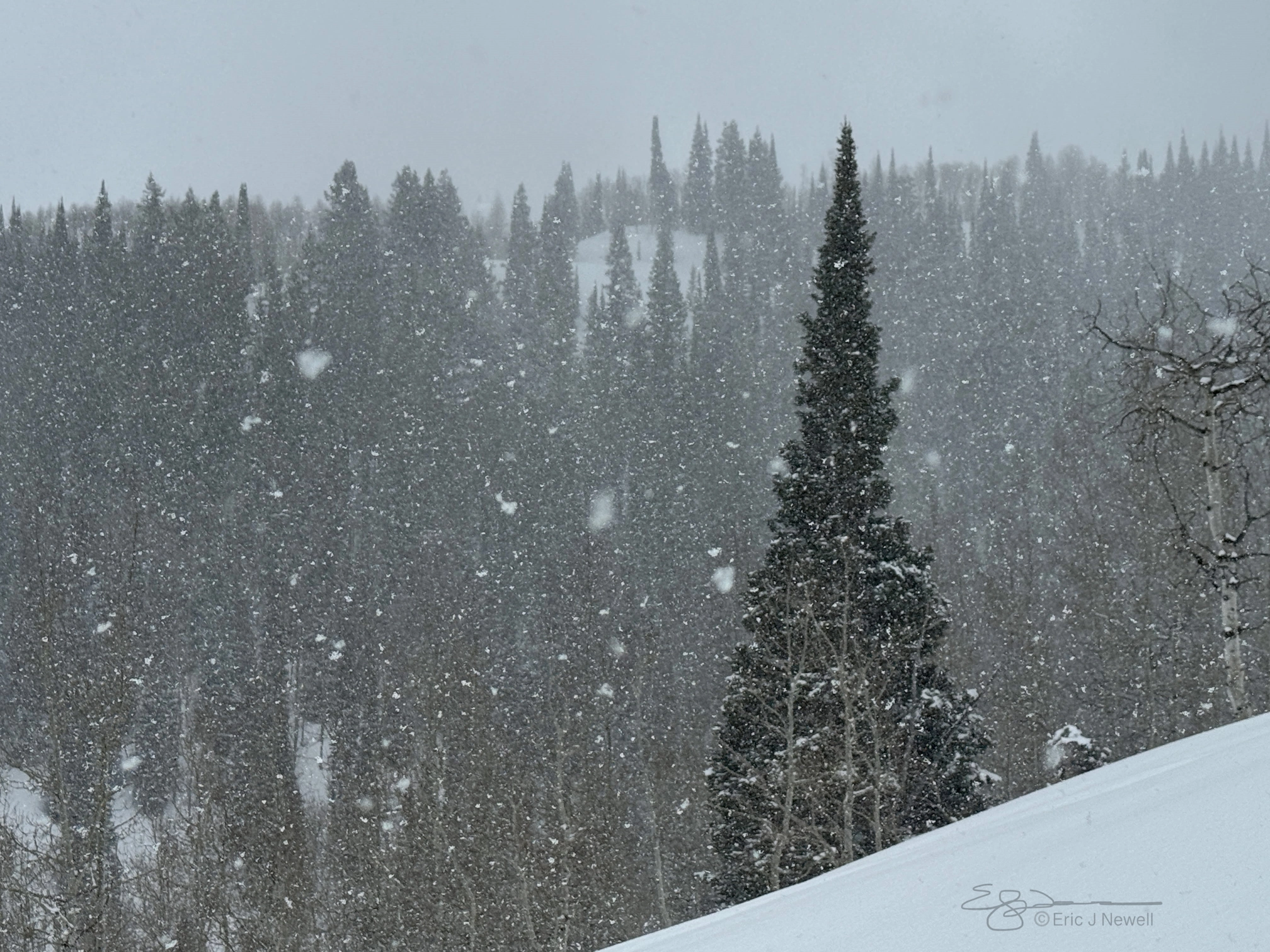
Snowflakes
Photo Courtesy & Copyright Eric Newell
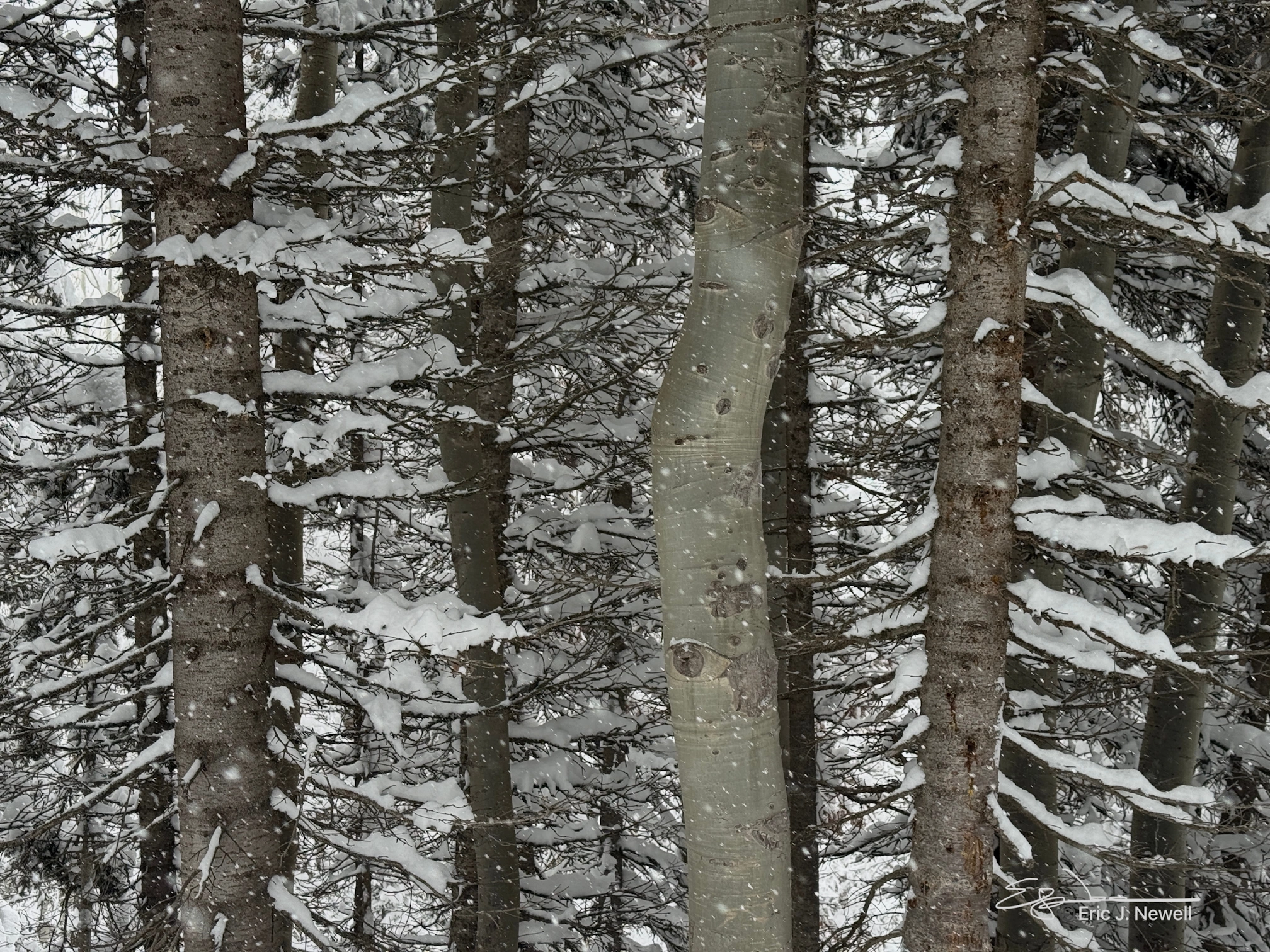
Snowflakes
Photo Courtesy & Copyright Eric Newell
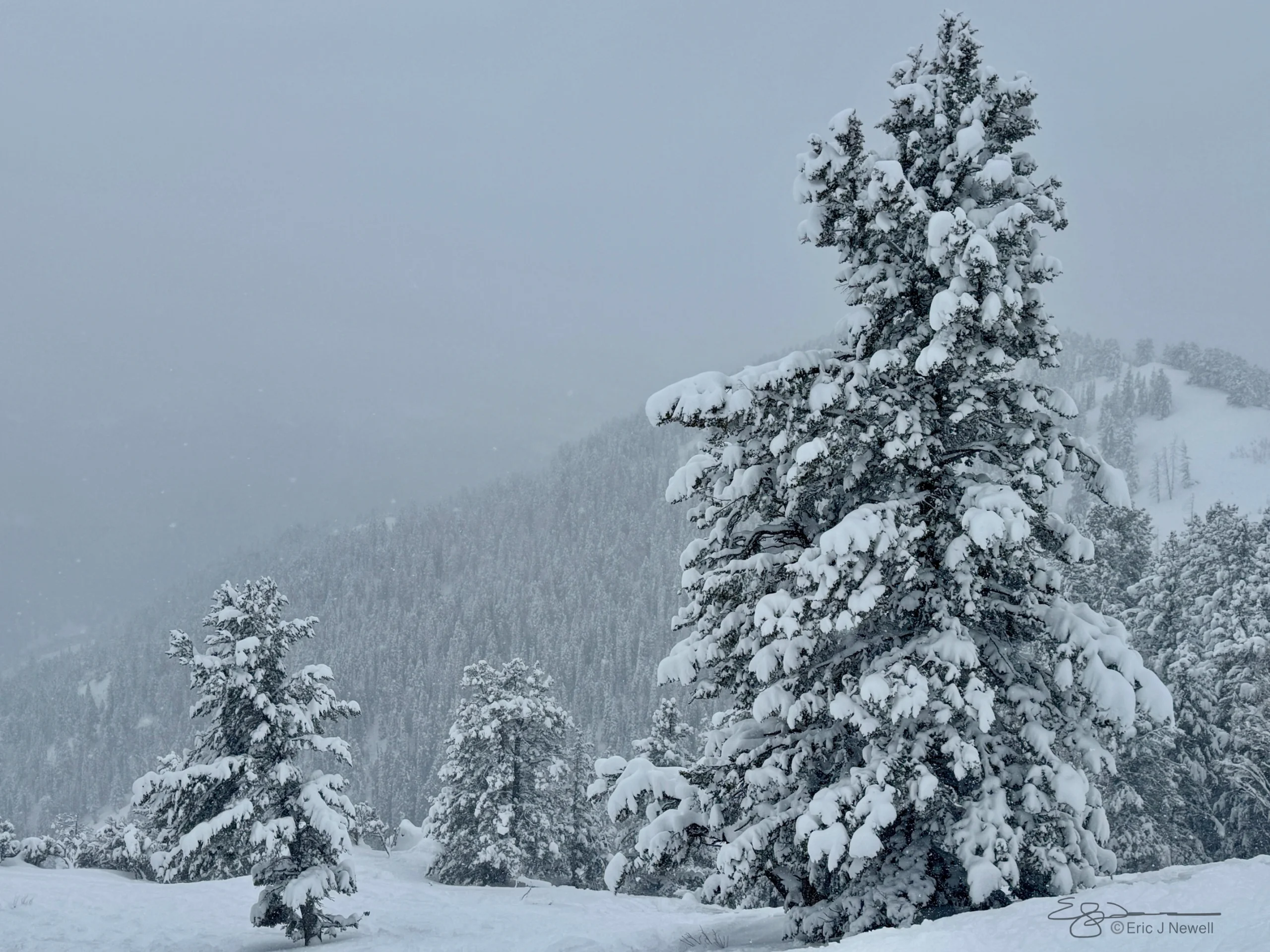
Logan Canyon Tree
Photo Courtesy & Copyright Eric Newell Logan Canyon Tree
Photo Courtesy & Copyright Eric Newell

Logan Canyon Forest
Photo Courtesy & Copyright Eric Newell Logan Canyon Forest
Photo Courtesy & Copyright Eric Newell

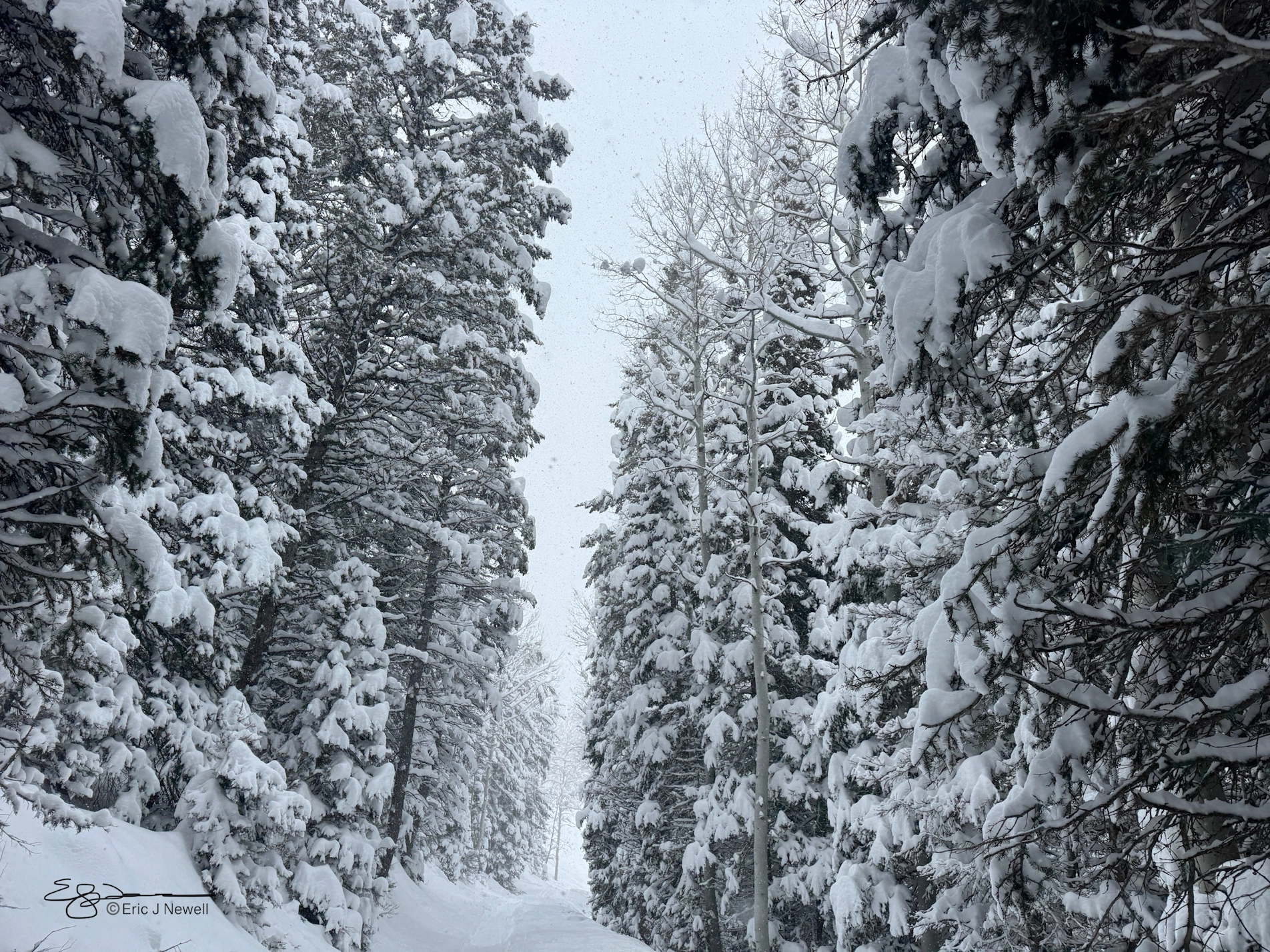
Logan Canyon
Photo Courtesy & Copyright Eric Newell Logan Canyon
Photo Courtesy & Copyright Eric Newell

The snow came late this year. If it is a measuring stick, Beaver Mountain ski area, in Logan Canyon, did not open before Christmas for the first time since 1977. The lifts started turning the last day of 2025.

Every tree, every elk and deer, every squirrel, every insect, every living thing in the Bear River Mountains prepared for winter weeks, even months, ago. The whole range seemed to sit in eerie limbo, waiting for the snow to fly.

This past week, I found myself pondering the immense weight of the world in the midst of the first real winter storm of the season—at least for me. I looked up from my feet at millions of snowflakes descending upon me, crisscrossing one another in a flurry. I’m talking about giant conglomerate snowflakes. The kind that transform the sky into a straight-up dreamland. I felt pure delight.

The other day, I pulled Barry Lopez’s 1986 New York Times best seller, Arctic Dreams, from my bookshelf and browsed the passages I had highlighted or underlined 25 years ago. Until his death in 2020, Lopez wrote his books on an IBM Selectric III typewriter.

Lopez asked the questions, “How do people imagine the landscapes they find themselves in?” and “How does the land shape the imaginations of the people who dwell in it?”

I imagined each snowflake as gift from the Pacific. Tiny droplets of frozen water meandering to the ground. Each is part of an endless cycle of water, dating back to the origins of the earth. I wondered how long ago these snowflakes last fell free through the sky. How long did they spend in the depths of the ocean? Where will they go on their journey from here? And how did I happen to be in this place, with these snowflakes, in this moment in time?

Everything is temporary—a snowflake, a lifetime, human history, even geologic time.

In another passage Lopez wrote: “Because [humans] can circumvent evolutionary law, it is incumbent upon [us], say evolutionary biologists, to develop another law to abide by if [we] wish to survive…. [We] must learn restraint. [We] must derive some other, wiser way of behaving toward the land.”

To that I would add, we must also derive some other, wiser way of behaving towards one another because the greatest threat to humanity is, frankly, humanity. The biggest threat to life on earth isn’t the sun’s eventual demise or a rouge asteroid. It is us. Can we learn to live sustainably, and can we learn to understand and respect those who are different from ourselves?

Later, Lopez continues the thought:

“The cold view to take of our future is that we are therefore headed for extinction in a universe of impersonal chemical, physical, and biological laws. A more productive, certainly more engaging view, is we have the intelligence to grasp what is happening, the composure not to be intimidated by its complexity, and the courage to take steps that may bare no fruit in our lifetimes.”

That requires collective action.

As Oscar Schindler identified in Schindler’s List, power is when we have every justification to take, or to control, or to act on impulse, and we don’t. We refrain.

Each snowflake individually seems insignificant, but together, relentless by the millions, snow crystals pile up. They cover the ground, flock the trees, and settle into the gaps of my jacket. Their strength is in their numbers and their ability to bond with each other.

I imagine snow accumulating on a steep mountain. As the storm rages, the sheer weight of snow increases, one single snowflake at the time, until finally, one seemingly insignificant snowflake settles on the surface, and it is suddenly too much for buried weak layers to withstand. Then, “Whoomph!” The result is a spontaneous avalanche. Inertia is both a property of matter and a property of culture.

In the big scheme of geologic time and human history, each of us are insignificant. Yet the power of our collective consciousness and action is significant. We have the capacity to lesson our footprint on the earth and deepen our impact on one another through small gestures that accumulate like falling snow: To consume less, to care more, to increase our capacity to love and understand, to be both frugal and generous, to be curious rather than judgmental, to smile or laugh with a stranger or a friend.

I catch several snowflakes on my tongue, as I walk through the blizzard, trying to pick out the biggest ones—the ones that are barely able to cling together. Several snowflakes crash-land on my face. I blink them off my eyelashes. One flake that I miss, spirals as it falls faster than the others. Each snowflake feels like a blessing from above that represents some kind of hope. Hope that the rivers will swell to fill their banks in April and May; hope that high mountain springs will gush throughout summer, hope for renewal that comes with each spring, and yes, hope for humanity.

I am Eric Newell, and I am wild about Utah snow and the power of small gestures.

Credits:
Images: Courtesy & Copyright Eric Newell, Photographer
Featured Audio: Courtesy & Copyright © J. Chase and K.W. Baldwin
Text: Eric Newell, Edith Bowen Laboratory School, Utah State University
Additional Reading: Eric Newell

Additional Reading

Wild About Utah Pieces by Eric Newell

Links:
Caswell, Kurt, His Life Helped: In Memory of Barry Lopez, 1945-2020, Terrain.org, Terrain Publishing, January 11, 2021, https://www.terrain.org/2021/currents/his-life-helped/

Barry Lopez died on December 25th
The proselytiser for a different understanding of landscape and Nature was 75, The Economist Newspaper Limited, https://www.economist.com/obituary/2021/01/02/barry-lopez-died-on-december-25th

O’Connell, Nicholas, At One With The Natural World Barry Lopez’s adventure with the word & the wild, March 24, 2000, Commonweal Magazine, https://www.commonwealmagazine.org/one-natural-world-0

Beaver Mountain [Ski Resort], https://www.skithebeav.com/

Logan Avalanche Forecast Page, Utah Avalanche Center, https://utahavalanchecenter.org/forecast/logan

Three of Logan’s Finest

The Folly Courtesy & Copyright Eric Newell, Photographer
The Folly
Courtesy & Copyright Eric Newell, Photographer
Kick. Step. Breathe. Kick. Step. Breathe.

Skier John Louviere Courtesy & Copyright Eric Newell, Photographer
Skier John Louviere
Courtesy & Copyright Eric Newell, Photographer

Skier Eric Newell Courtesy & Copyright John Louviere, Photographer Skier Eric Newell
Courtesy & Copyright John Louviere, Photographer

Miniature pellets of snow swirl past my face, land on the slope we are struggling against, then tumble hundreds of feet down the snow-encased mountain. My friend John Louviere and I have skied the Bear River Range backcountry together since we first met as Utah State University students in 1995.

Today the light is flat, causing both sky and mountain to blend into a single dimension, making it difficult to distinguish snow from clouds. The Dry Canyon slope we are ascending is prominent from nearly everywhere in Cache Valley. Each winter its absolute openness and gentle, seductive rolls tantalize backcountry skiers. For us, it is a blank canvas. We stare at it on our way to and from work, occasionally spotting other skier’s tracks, best highlighted when late evening sunlight turns the mountain hues of pink and orange.

But embedded in the stark beauty of this mountain is a dark past. Backcountry skiers call this slope “The Folly” for good reason: it measures exactly thirty-eight degrees in steepness—precisely the slope angle that produces the most deadly avalanches. Thirty-eight degree slopes are gentle enough to allow dangerous slabs of snow to build, where they can rest precariously without commitment to the mountain. A single skier, snowboarder, snowmobile, or even just one last snowflake can set it all in motion.

Because The Folly faces southwest, prevailing winds tend to transport freshly fallen snow off the slope, over the ridge, and deposit it in Spring Hollow. Afternoon sunshine also welds new layers of snow to old layers rather quickly. Both of these factors combine to stabilize the slope, despite its steepness, but it still shouldn’t be reckoned with unless you know and understand the composition and history of the snowpack. The spring-like conditions present today are exactly what John and I have waited for—everything is frozen firmly in place.
In January of 1997, Karl Mueggler and Max Lyon, who both grew up in Cache Valley, were visiting families for the holidays. The two decided to catch up on old times with Logan resident Keith Maas by ski-camping in Dry Canyon.

They pitched their tents in a stand of aspens interspersed with Englemann spruce at the base of The Folly. Trees generally serve as a good indicator of safety from avalanches since proven slide paths obliterate timber. Had they camped there any other night in a 20-year span, they would have awakened to another memorable ski day.
But while they slept, a foot of new snow fell and the west wind shifted, blowing violently from the northeast, heaping tons of snow from the Spring Hollow side onto The Folly. A week before, unseasonably warm temperatures caused rain to fall on the slope which later froze into a hard, smooth ice crust. All of these factors combined to create the perfect conditions for a spontaneous and catastrophic avalanche.

Despite their years of backcountry experience Karl, Max, and Keith were buried in their tent under five feet of concrete-hard snow. The community was devastated. Though I didn’t know Karl or Keith, I had spent a day skiing with Max only a few weeks before. He embodied the type of person anyone would aspire to become. Excitement for living radiated from his face. He laughed easily and spoke optimistically of the future. The same has been said of Karl and Keith. They were educators, outdoor activists, and advocates for community.
Over the years, I venture up here in the spring to pay tribute to their lives.

At the top of The Folly, still surrounded by thick clouds and meandering snowflakes, we start down, one at a time. Without warning, gracious sunlight bursts through the squall. We accelerate, gliding over the glowing snow, unsure if we are flying or skiing—a truly ethereal moment. The snow beneath our skis is firm and our metal edges cut tight turns with precision as we descend from the clouds, honoring three of Logan’s finest the best way we know how.

I’m Eric Newell, and I am wild about Utah.

Credits:
Images: Courtesy & Copyright Eric Newell, Photographer, Eric Newell image Courtesy & Copyright John Louviere
Featured Audio: Courtesy & © Kevin Colver https://wildstore.wildsanctuary.com/, Courtesy & © Friend Weller, https://www.upr.org/people/friend-weller, Courtesy & Copyright © Anderson, Howe, Wakeman
Thank you Eric Newell for recording the student audio clips
Text: Eric Newell, Edith Bowen Laboratory School, Utah State University
Additional Reading: Eric Newell

Additional Reading

Wild About Utah Pieces by Eric Newell

A longer version of this story was printed in the Herald Journal Outdoors section May 5, 2006.

Opsahl, Kevin, Memories of fatal ’97 avalanche still fresh, The Herald Journal, Jan 14, 2017,
https://www.hjnews.com/accidents_disaster/memories-of-fatal-avalanche-still-fresh/article_03c457bd-ffa2-5e92-8527-38514ddb7016.html

Outdoor Leadership Scholarship
The Lyon, Maas, Mueggler Outdoor Leadership Scholarship pays 50% of the tuition for the Desert Mountain Medicine Wilderness First Responder (WFR) certification course.
Lyon, Maas, Mueggler, Outdoor Leadership Scholarship, Utah State University
https://www.usu.edu/campusrec/outdoor/

Cane, James, Snow Dynamics, Wild About Utah, February 2, 2012, https://wildaboututah.org/snow-pack-dynamics/

Utah Avalanche Center https://utahavalanchecenter.org/

Local Sled Dogs-Sheer Joy

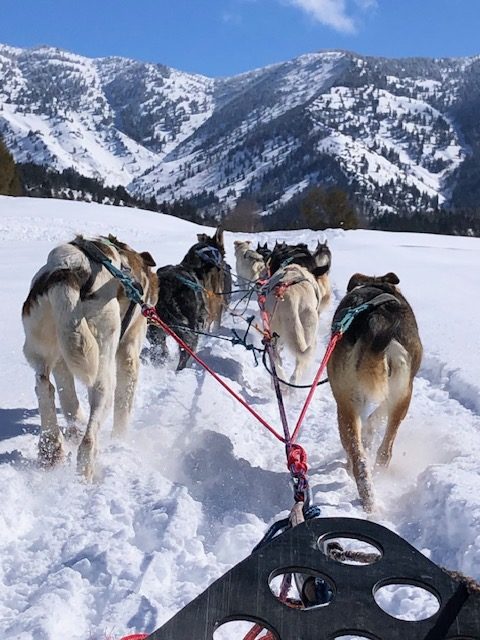
Sled Dogs-Sheer Joy: Sun, Snow, Sheer Joy, Courtesy & © Mary Heers, Photographer
Sun, Snow, Sheer Joy
Courtesy & © Mary Heers, Photographer
As the snow continued to pile up this winter, I started to ask around about sled dogs.

I soon bumped into a friend who had a friend in Preston who trained and occasionally raced his team of 14 Alaskan Huskies.

This musher graciously offered to give me a ride on one of his training runs. I showed up all smiles as he was harnessing his team. The dogs were excited to go and actually howling with happiness. The musher asked if I wanted to get in – or ride up the trail a bit on a snowmobile with his teenage son to a more level spot. In a rare moment of sanity, I opted for the snowmobile.

The machine had just pulled out of the yard when I heard his son say, “Oh, No!”

I looked back in time to see the sled tip over, sending the musher sliding across the driveway and under my car parked at the end of it. I jumped off the snowmobile as the dogs shot past us with the empty sled. The dogs were gaining on a truck up ahead, then shot past it with the snowmobile in hot pursuit.

I was left standing in a snowbank wondering if I’d wandered into a James Bond movie.

My first encounter with sled dogs had gone a lot smoother. I was visiting Denali National Park in Alaska and the rangers were introducing us to one of the dog teams that they still use to patrol the park.

But the most famous sled dogs are the freight teams that carried anti-toxin from Anchorage to Nome during an outbreak of Diphtheria in 1925. The dog teams ran a thousand miles and are credited with saving hundreds of lives.

For the last 50 years, modern mushers have retraced this journey in the ultimate sled dog race, the Ididarod. The best account I’ve read about the world of training sled dogs and running the Ididarod is Gary Paulsen’s book Winterdance. Just before going on a training ride, he discovered, “the gangline was trembling, quivering like a string on a guitar. It fairly hummed and I felt there was great power there. The trees in the yard went by in a mad blur and we left the yard at warp speed.”

Paulsen also lets us in on the deep relationship mushers form with their dogs: “As they understand you will give them meat when they run, and love when they run, and your soul when they run – as they learn to feel that, understand that, know that – they are no longer sled dogs – they become distance dogs, dogs that cannot, will not be stopped.” Paulson ran the Iditarod in 1983. It was a wild ride that took 17 days. But he finished.

Meanwhile, back in Preston, our teenage hero had caught up with the runaway team, made a flying leap from the snowmobile onto the empty sled, and somehow managed to stop the team. Pretty soon the musher and I caught up.

“Do you still want to get in?” he asked.

“Sure,” I said.

And we were off. The dogs settled into a steady trot. From then on it was all Sun and Snow and the sheer Joy of sliding quietly through the magnificent winter scenery.

This is Mary Heers and I’m Wild About Utah

Credits:
Photos: Courtesy & Copyright Mary Heers, Photographer
Featured Audio: Courtesy & Copyright Mary Heers
Text: Mary Heers, https://cca.usu.edu/files/awards/art-and-mary-heers-citation.pdf
Additional Reading: Lyle Bingham, https://bridgerlandaudubon.org/

Additional Reading

Wild About Utah, Mary Heers’ Postings

Paulsen, Gary, Winterdance: The Fine Madness of Running the Iditarod, Harvest Books, HarperCollins February 17, 1995, https://www.amazon.com/Winterdance-Fine-Madness-Running-Iditarod/dp/0156001454/

Idaho Sled Dog Challenge, https://idahosleddogchallenge.com/

Sled Dogs-Sheer Joy

Sled Dogs-Sheer Joy: Sun, Snow, Sheer Joy, Courtesy & © Mary Heers, Photographer
Sun, Snow, Sheer Joy
Courtesy & © Mary Heers, Photographer
As the snow continued to pile up this winter, I started to ask around about sled dogs.

I soon bumped into a friend who had a friend in Preston who trained and occasionally raced his team of 14 Alaskan Huskies.

This musher graciously offered to give me a ride on one of his training runs. I showed up all smiles as he was harnessing his team. The dogs were excited to go and actually howling with happiness. The musher asked if I wanted to get in – or ride up the trail a bit on a snowmobile with his teenage son to a more level spot. In a rare moment of sanity, I opted for the snowmobile.

The machine had just pulled out of the yard when I heard his son say, “Oh, No!”

I looked back in time to see the sled tip over, sending the musher sliding across the driveway and under my car parked at the end of it. I jumped off the snowmobile as the dogs shot past us with the empty sled. The dogs were gaining on a truck up ahead, then shot past it with the snowmobile in hot pursuit.

I was left standing in a snowbank wondering if I’d wandered into a James Bond movie.

My first encounter with sled dogs had gone a lot smoother. I was visiting Denali National Park in Alaska and the rangers were introducing us to one of the dog teams that they still use to patrol the park.

But the most famous sled dogs are the freight teams that carried anti-toxin from Anchorage to Nome during an outbreak of Diphtheria in 1925. The dog teams ran a thousand miles and are credited with saving hundreds of lives.

For the last 50 years, modern mushers have retraced this journey in the ultimate sled dog race, the Ididarod. The best account I’ve read about the world of training sled dogs and running the Ididarod is Gary Paulsen’s book Winterdance. Just before going on a training ride, he discovered, “the gangline was trembling, quivering like a string on a guitar. It fairly hummed and I felt there was great power there. The trees in the yard went by in a mad blur and we left the yard at warp speed.”

Paulsen also lets us in on the deep relationship mushers form with their dogs: “As they understand you will give them meat when they run, and love when they run, and your soul when they run – as they learn to feel that, understand that, know that – they are no longer sled dogs – they become distance dogs, dogs that cannot, will not be stopped.” Paulson ran the Iditarod in 1983. It was a wild ride that took 17 days. But he finished.

Meanwhile, back in Preston, our teenage hero had caught up with the runaway team, made a flying leap from the snowmobile onto the empty sled, and somehow managed to stop the team. Pretty soon the musher and I caught up.

“Do you still want to get in?” he asked.

“Sure,” I said.

And we were off. The dogs settled into a steady trot. From then on it was all Sun and Snow and the sheer Joy of sliding quietly through the magnificent winter scenery.

This is Mary Heers and I’m Wild About Utah

Credits:
Photos: Courtesy & Copyright Mary Heers, Photographer
Featured Audio: Courtesy & Copyright Mary Heers
Text: Mary Heers, https://cca.usu.edu/files/awards/art-and-mary-heers-citation.pdf
Additional Reading: Lyle Bingham, https://bridgerlandaudubon.org/

Additional Reading

Wild About Utah, Mary Heers’ Postings

Paulsen, Gary, Winterdance: The Fine Madness of Running the Iditarod, Harvest Books, HarperCollins February 17, 1995, https://www.amazon.com/Winterdance-Fine-Madness-Running-Iditarod/dp/0156001454/

Idaho Sled Dog Challenge, https://idahosleddogchallenge.com/