Leafy Bee Nests

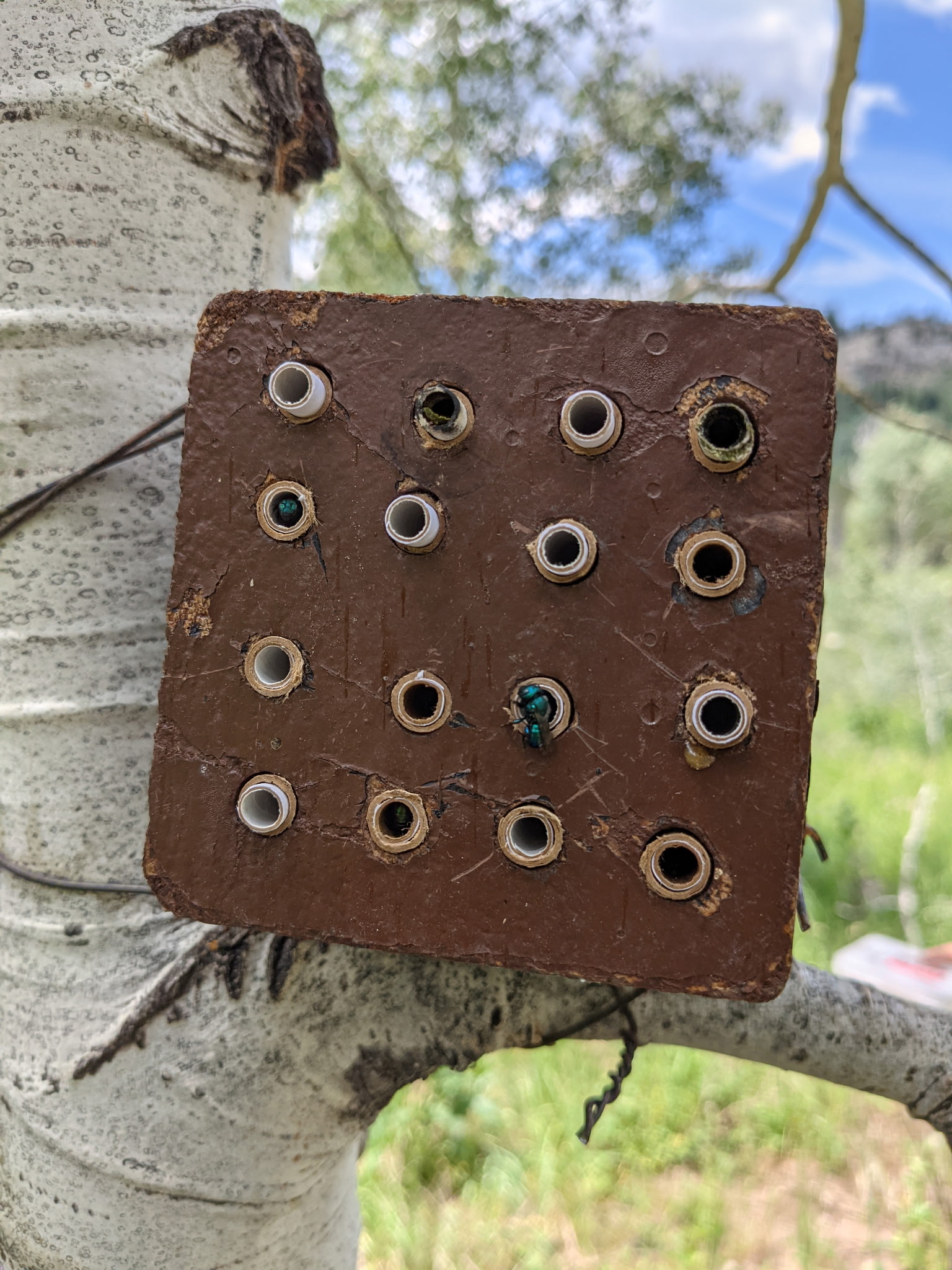
Mason Bee at the entrance to a nest tube
Courtesy & © Lindsie McCabe, Photographer
Mason Bee at the entrance to a nest tube
Courtesy & © Lindsie McCabe, Photographer
Today’s story is in both English and Spanish, to hear the Spanish translation tune in Wednesday evening at 9 or online at UPR.org

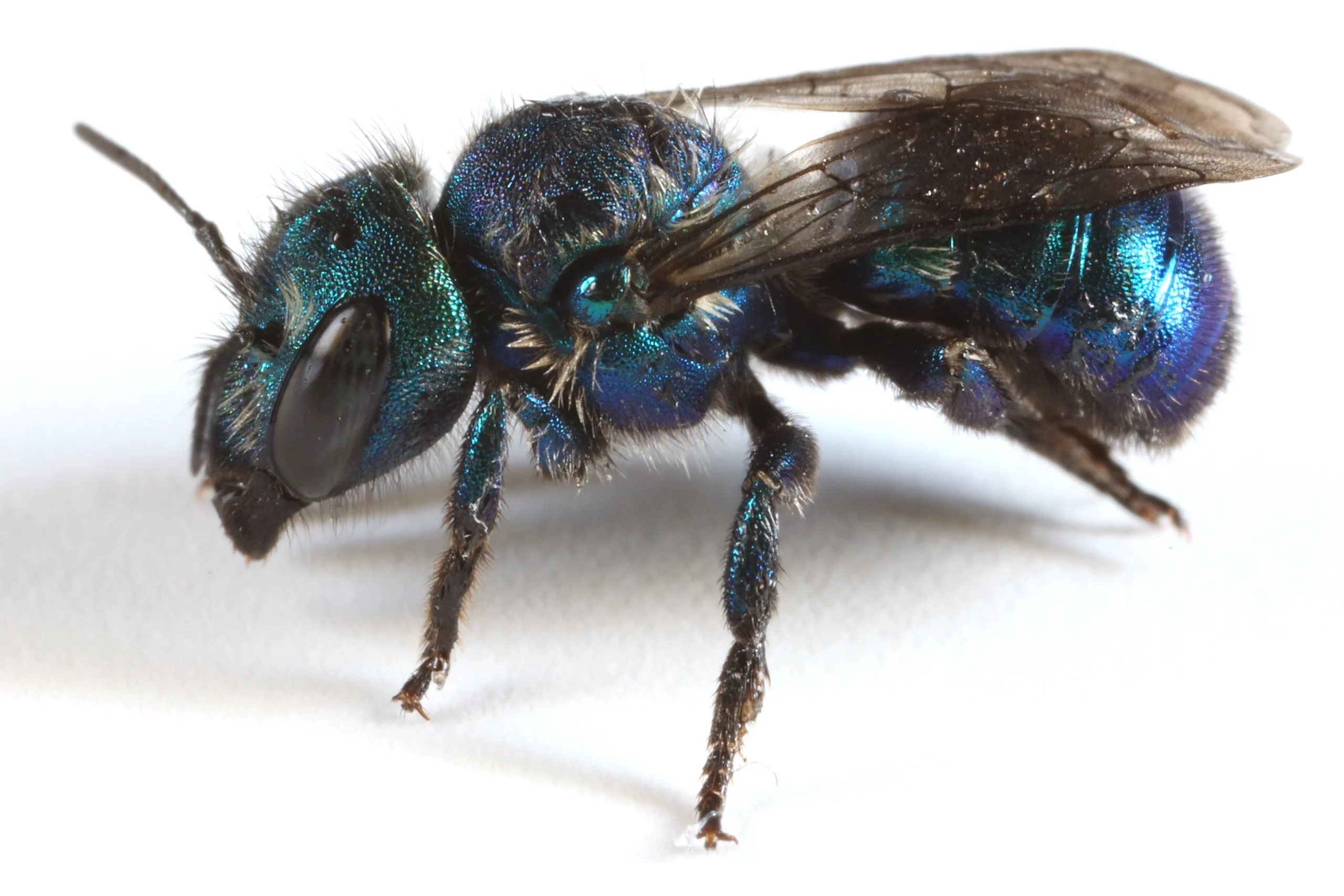
Osmia bruneri Female
Courtesy & © Michael Branstetter, Photographer
Osmia bruneri Female
Courtesy & © Michael Branstetter, Photographer
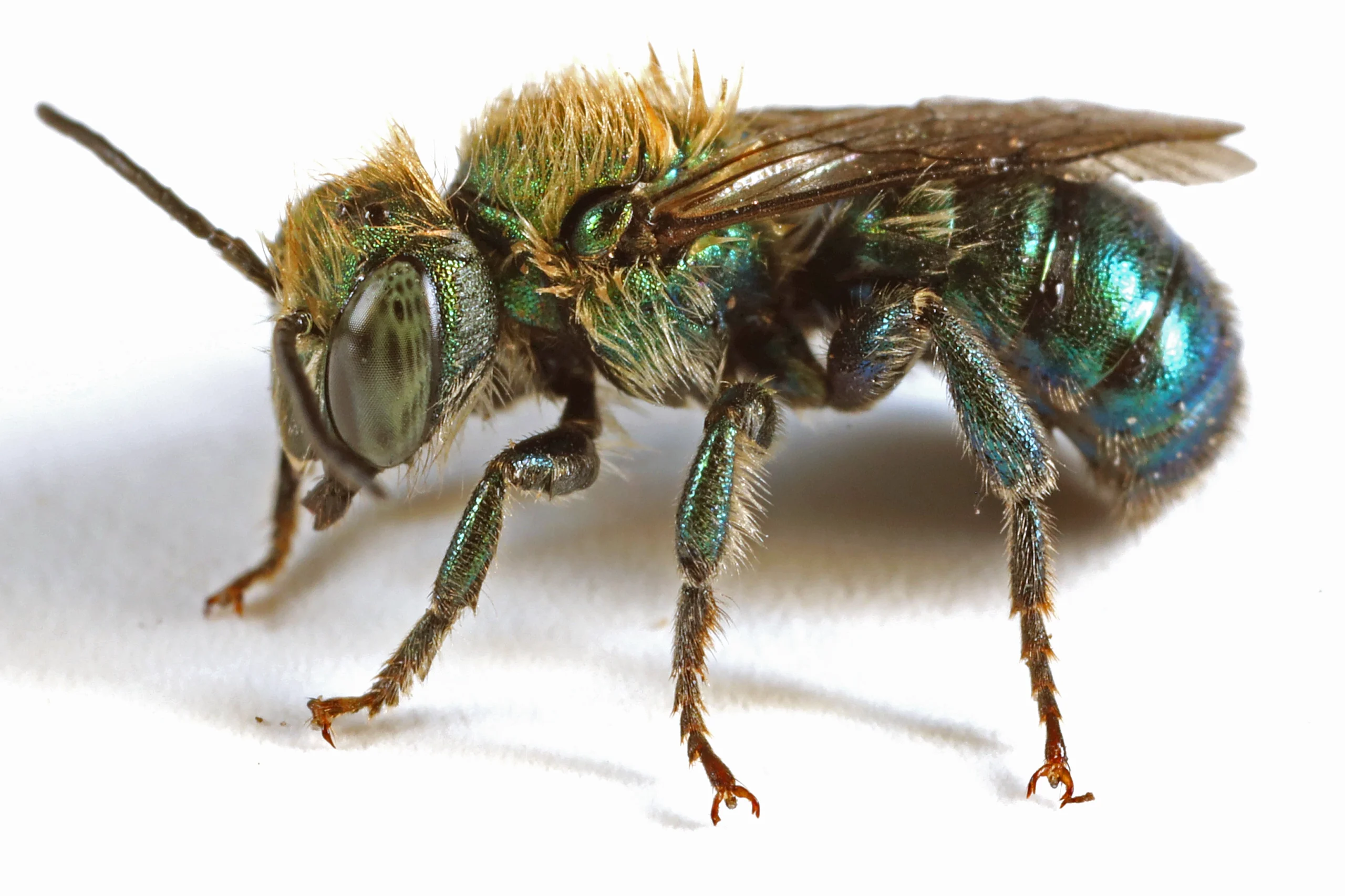
Osmia bruneri Male
Courtesy & © Michael Branstetter, Photographer Osmia bruneri Male
Courtesy & © Michael Branstetter, Photographer

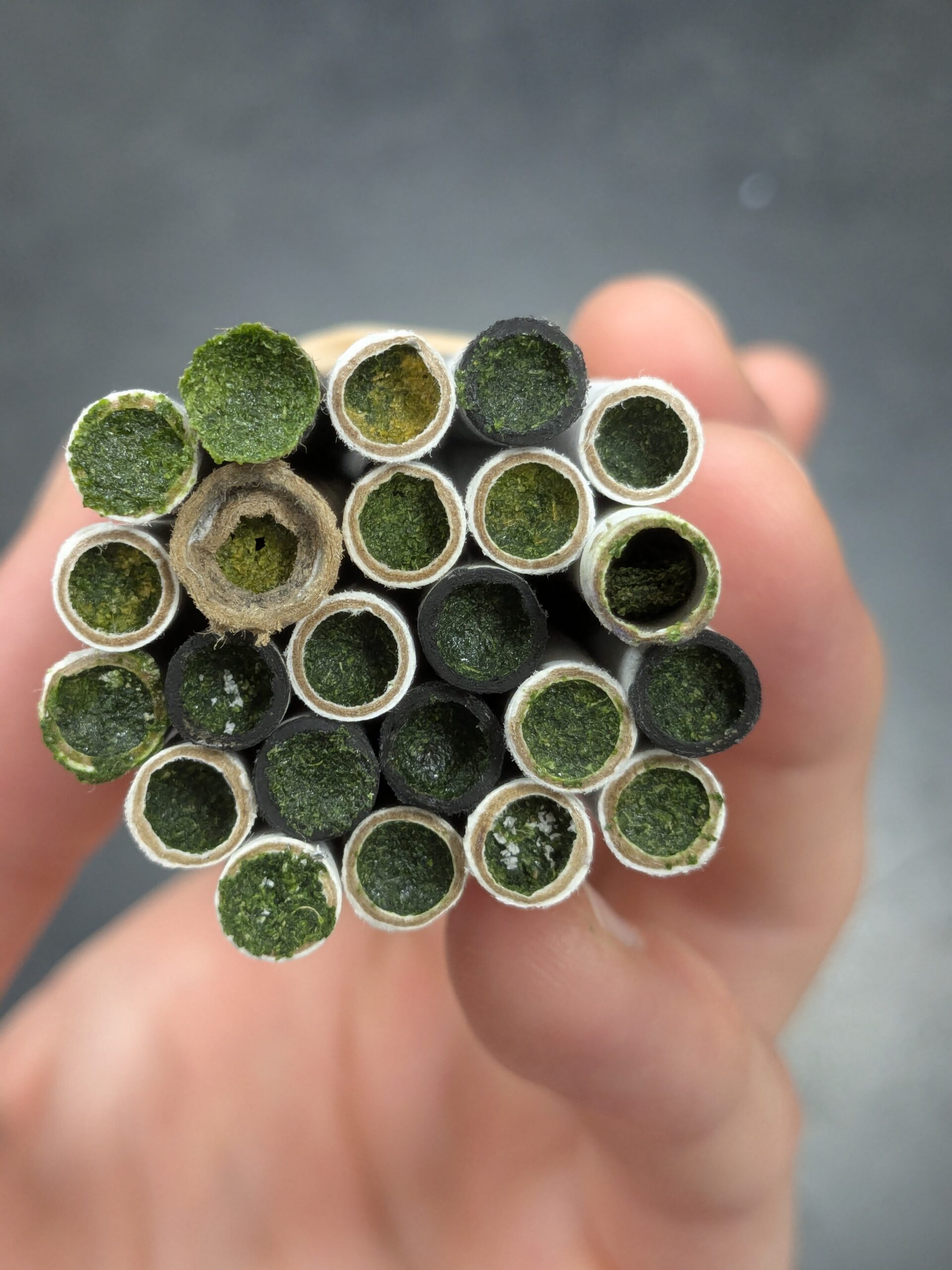
Filled and Leaf-capped Nest Tubes
Courtesy & © Anna Goates, Photographer Filled and Leaf-capped Nest Tubes
Courtesy & © Anna Goates, Photographer

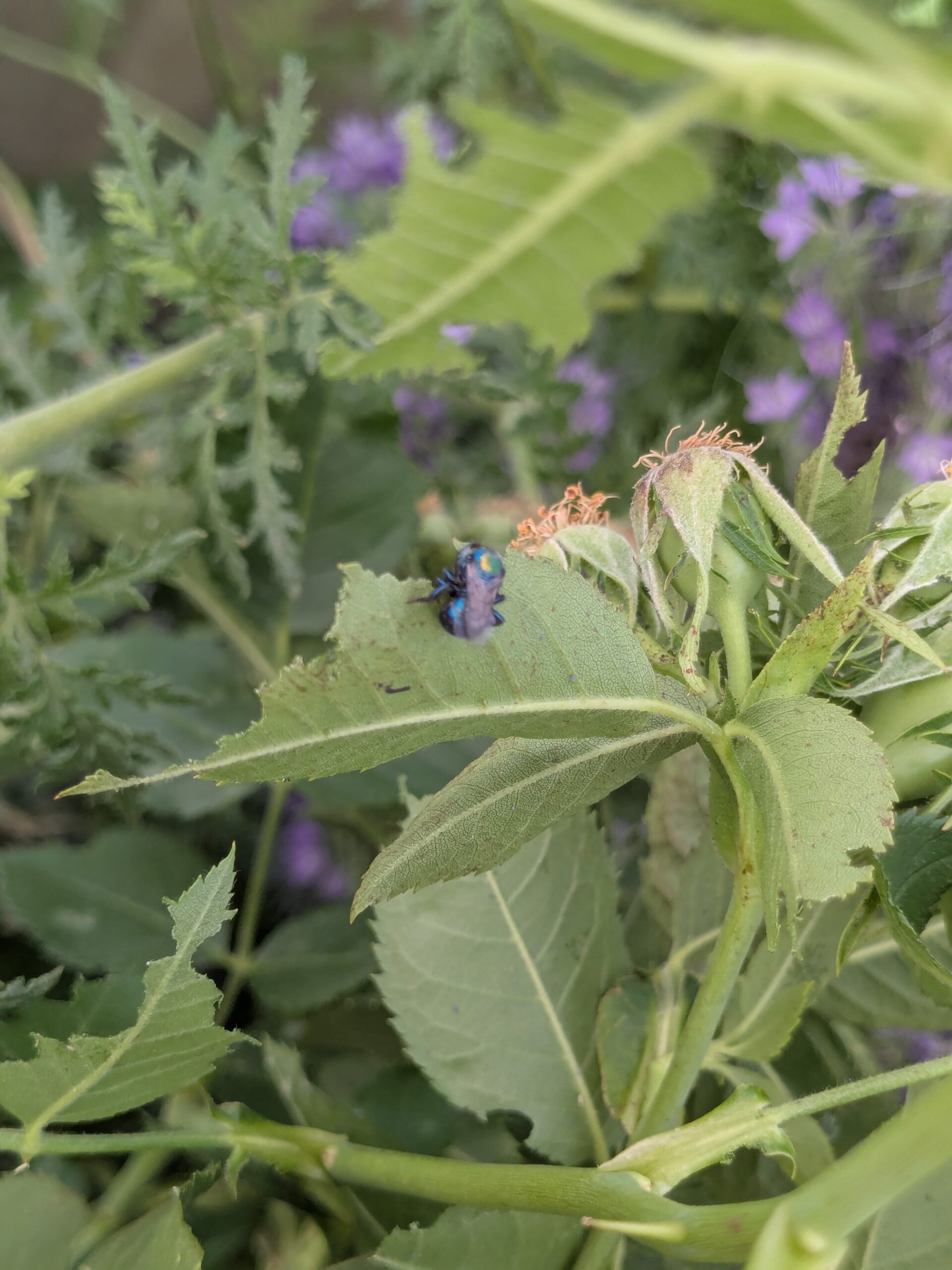
Female Osmia bruneri Harvesting Leaf Material
Courtesy & © Anna Goates, Photographer Female Osmia bruneri Harvesting Leaf Material
Courtesy & © Anna Goates, Photographer

When you think about what a bee needs to live, you probably think of flowers and a big hive. Bees do need flowers, and some live in a hive, but many bees also need other materials to build their nests. Some of my favorites build nests with mud, small rocks, pieces of leaves, sap from trees, flower petals, or even the fuzzy hairs that grow on plants. These bees are often solitary, relying on just one strong mama to take care of the whole nest.

It’s almost my favorite time of the year, when I get to watch these moms emerge and start their nests. Some solitary bees, like the ones I study, make their nests in holes in wood. Usually this means nesting in a wooden tunnel drilled out by a beetle, but it also means that they will nest in manmade nesting boxes. These nesting structures consist of a wooden block with long dead-end drilled holes where each hole belongs to a different mom, like rows of single story condos.

If I stand patiently next to a nesting box, I’m rewarded with the sight of a mama bee backing out of one of the nesting holes. She rests for a moment at the entrance to her nest, basking in some sun. She rubs her back legs together and wiggles her abdomen a bit. Then, she takes flight. I watch her buzz away to a leaf where she lands and rapidly chews on the leaf edge. Her motions are quick and urgent. Then she buzzes back to her nesting hole. She hovers for a moment, and pokes at the neighboring hole before landing back at her own and depositing the small bit of chewed leaf. She begins drywalling her new nursery, several trips of collecting, chewing up and puttying this bright green leaf pulp will result in a wall that protects her babies. Those babies develop throughout the rest of summer and fall and go into hibernation for the winter. When temperatures warm up, these new bees will chew through that leafy wall to enter the world.

My name is Anna Goates. I am a student at Utah State University and I study bees at the USDA-ARS Pollinating Insects Research Unit. I’m studying the nesting of one species of bee, Osmia bruneri, a bee that’s native here in Utah and throughout the Great Basin area. Like many other bees, bruneri need more than flowers. Bruneri bees use leaf pieces to build their nests. A mama bee will bring lots of pollen to her nest using fuzzy hairs on her belly. Then she lays an egg on top of the pollen and builds a wall out of leaf pulp. Female bruneri are a shiny metallic blue, and male bees are a metallic lime green with a fuzzy white mustache on their faces. If you don’t look closely, you might think they are flies.

As spring approaches, bees and other insects will start coming out from their winter hideaways. I’m excited to see my little bee friends again.

I’m Anna Goates, a volunteer for Stokes Nature Center, and I’m wild about Utah.

Credits:

Images: Capped Nesting Straws & Leaf-harvesting Osmia Female, Courtesy and Copyright Anna Goates, Photographer
Male & Female Osmia bruneri, Courtesy and Copyright Michael Branstetter, Photographer
Bee at tube entrance, Courtesy & Copyright Lindsie McCabe, Photographer
Featured Audio: Courtesy & Copyright Anderson, Howe, and Wakeman..
English Text & Voice: Anna Goates, Stokes Nature Center Volunteer, https://logannature.org/volunteer
Spanish Text & Voice: Carlos Ramos, Stokes Nature Center, https://logannature.org/staff
Additional Reading Links: Lyle Bingham, https://bridgerlandaudubon.org/

Additional Reading:

Wild About Utah Pieces by Anna Goates, https://wildaboututah.org/author/anna-goates/

Bruner’s Mason Bee — Osmia bruneri. Montana Field Guide. Montana Natural Heritage Program. Retrieved on April 5, 2026, from https://FieldGuide.mt.gov/speciesDetail.aspx?elcode=IIHYMA2610

Nidos de abejas y hojas

Abeja albañil en la entrada de un tubo nido, Cortesía y © Lindsie McCabe, fotógrafar
Abeja albañil en la entrada de un tubo nido
Cortesía y © Lindsie McCabe, fotógrafa
La historia de hoy está en inglés y en español. Para escuchar la traducción al español: la noche del miércoles a las 9 pm o en línea en UPR.org

Osmia bruneri hembra, Cortesía y © Michael Branstetter, fotógrafo
Osmia bruneri hembra
Cortesía y © Michael Branstetter, fotógrafo

Osmia bruneri macho, Cortesía y © Michael Branstetter, fotógrafo Osmia bruneri macho
Cortesía y © Michael Branstetter, fotógrafo

Tubos nido llenos y cubiertos con hojas, Cortesía y © Anna Goates, fotógrafa Tubos nido llenos y cubiertos con hojas
Cortesía y © Anna Goates, fotógrafa

Hembra de Osmia bruneri recolectando material de hojas, Cortesía y © Anna Goates, fotógrafa Hembra de Osmia bruneri recolectando material de hojas
Cortesía y © Anna Goates, fotógrafa

Cuando piensas en lo que una abeja necesita para vivir, probablemente piensas en flores y en una gran colmena.

Las abejas sí necesitan flores, y algunas viven en colmenas, pero muchas también requieren otros materiales para construir sus nidos.

Algunas de mis favoritas hacen sus nidos con barro, pequeñas piedras, trozos de hojas, savia de árboles, pétalos de flores o incluso los pelitos que crecen en las plantas.

Estas abejas suelen ser solitarias y dependen de una sola mamá fuerte para cuidar todo el nido.

Ya casi llega mi época favorita del año, cuando puedo ver a estas mamás salir y comenzar sus nidos. Algunas abejas solitarias, como las que estudio, hacen sus nidos en agujeros de madera.

Normalmente esto significa anidar en túneles hechos por escarabajos, pero también pueden hacerlo en cajas nido hechas por personas.

Estas estructuras consisten en un bloque de madera con agujeros largos y sin salida, donde cada agujero pertenece a una mamá diferente, como una fila de pequeños departamentos.

Si me quedo pacientemente junto a una caja nido, puedo ver a una mamá abeja salir de uno de los agujeros. Ella descansa un momento en la entrada de su nido, disfrutando el sol, se frota las patas traseras y mueve su abdomen.

Entonces, alza el vuelo.

La observo ir hasta una hoja, donde aterriza y rápidamente muerde el borde.

Sus movimientos son rápidos y decididos.

Luego regresa zumbando a su agujero.

Flota un momento, revisa el agujero de al lado y finalmente aterriza en el suyo para dejar el trozo de hoja masticada.

Así empieza a construir la pared de su nueva guardería;

varios viajes de recoger, masticar y pegar.

Esta pulpa verde formará una pared que protegerá a sus crías.

Esos bebés se desarrollarán durante el resto del verano y el otoño, y luego hibernarán en invierno.

Cuando suben las temperaturas, las nuevas abejas morderán esa pared de hojas para salir al mundo.

Este artículo es escrito por Anna Goates. Estudiante de la Universidad Estatal de Utah y estudia abejas en la Unidad de Investigación de Insectos Polinizadores del USDA-ARS. Ella está investigando el anidamiento de una especie de abeja, Osmia bruneri, una abeja nativa de Utah y de la región de la Gran Cuenca.

Como muchas otras abejas, bruneri necesitan más que flores.

Las abejas bruneri usan trozos de hoja para construir sus nidos.

Una mamá abeja lleva mucho polen a su nido, deposita un huevo encima y luego construye una pared de pulpa de hoja para proteger a su cría.

Las hembras bruneri son de un azul metálico brillante, y los machos son de un verde lima metálico con un bigote blanco y peludo en la cara.

Si no miras bien, podrías pensar que son moscas.

A medida que se acerca la primavera, las abejas y otros insectos empiezan a salir de sus escondites de invierno.

Me emociona volver a ver a mis pequeñas amigas abejas.

Es admirable el esfuerzo que haces para sobrevivir una temporada más, siendo fuerte para ver que tus pequeños crezcan mejor que tú.

¿No crees que las abejas Bruneri son un ejemplo de esfuerzo y valor?

Soy Carlos Ramos y estoy loco por Utah.

Créditos:

Imágenes: Tubos nido llenos y cubiertos con hojas y Hembra de Osmia bruneri recolectando material de hojas, Cortesía y © Anna Goates, fotógrafa
Osmia bruneri macho y hembra, Cortesía y © Michael Branstetter, fotógrafo
Abeja albañil en la entrada de un tubo nido, Cortesía y © Lindsie McCabe, fotógrafa
Audio destacado: Cortesía y derechos de autor Anderson, Howe y Wakeman
Texto y voz en inglés: Anna Goates, Stokes Nature Center Volunteer, https://logannature.org/volunteer
Texto: Anna Goates y Carlos Ramos, Stokes Nature Center, https://logannature.org/staff
Lectura adicional: Lyle Bingham, https://bridgerlandaudubon.org/

Lectura adicional

Artículos de Wild About Utah por Anna Goates, https://wildaboututah.org/author/anna-goates/

Artículos de Wild About Utah por Carlos Ramos, https://wildaboututah.org/author/carlos-ramos/

Bruner’s Mason Bee — Osmia bruneri. Montana Field Guide. Montana Natural Heritage Program. Retrieved on April 5, 2026, from https://FieldGuide.mt.gov/speciesDetail.aspx?elcode=IIHYMA2610