
Insects

A meadowhawk dragonfly, with dew on its wings, rests on a big sagebrush seedstalk
Courtesy US FWS, Tom Koerner, Photographer
A meadowhawk dragonfly, with dew on its wings, rests on a big sagebrush seedstalk
Courtesy US FWS, Tom Koerner, Photographer
Our lovely fall cricket symphony finally went silent as temperatures dropped, an indicator that winter isn’t far off.

I must confess that I have a love/hate relationship with insects. Early years in Michigan exposed my tender flesh to a full suite of biters and stingers- black flies, deer flies, no-see-ums, gnats, horse flies, and clouds of mosquitos that would darken the sky! My dear farmer friend succumbed to a swarm of yellow jackets he angered while driving his tractor through a field, and I’m aware of insect vectors that inoculate us with wretched diseases- from the plague to malaria. Aside from this house of horrors, how often do we humans really appreciate these amazing beings?

Throughout history, insects have markedly shaped human culture—from serving as valuable sources of food, pigment, and fiber, to inspiring our greatest feats of engineering, art, and design. We have much to learn from their abundant wisdom.

They fuel life on Earth through their roles as pollinators, predators, and prey. Insects serve as foundational elements in almost every terrestrial environment, acting as both consumers and providers of essential services. Their presence ensures that energy flows efficiently through various trophic levels, supporting biodiversity from the smallest microorganisms to large vertebrates.

Hummingbird Moth and Monarch 
Butterfly on Showy Milkweed
Courtesy US FWS, Tom Koerner, Photographer
Hummingbird Moth and Monarch
Butterfly on Showy Milkweed
Courtesy US FWS, Tom Koerner, Photographer
As pollinators, insects facilitate the reproduction of more than 75% of crop species and 85% of wild flowers. Many species provide natural biological control by preying on or parasitizing other insects that would otherwise destroy crops or local vegetation. Beyond their daily roles in nutrient cycling, insects act as guardians of environmental health. Their sensitivity to pollutants and habitat shifts makes them invaluable tools for assessing the overall resilience of natural landscapes.

Approximately 90 percent of bird species rely on insects for food at some point in their lives. Terrestrial birds that depend on insects have experienced a dramatic decline over the last 50 years. When insect availability drops, birds often struggle to meet the energy demands required for their daily survival and the strenuous needs of raising offspring.

Aerial insectivorous birds have seen a 32 percent population reduction since 1970, with groups like swifts, swallows and nightjars struggling as their primary food source vanishes. Because they rely almost exclusively on capturing insects in flight, they are uniquely sensitive to the health of the broader invertebrate community. Their inability to switch prey types effectively means that even short-term drops in insect activity can have catastrophic effects on nestling growth and adult survival.

Migratory birds face a compounded crisis from their breeding territories to their nonbreeding grounds and essential stopover points. Long distance species are particularly hard hit, as they often arrive after the short, critical peak in insect availability, leading to reproductive failure that residents and short-distance migrants avoid. Spring arrival dates often fail to align with the peak emergence of essential insect prey, a mismatch increasingly caused by shifting seasonal temperatures.

Industrial agriculture replacing vast swaths of biologically diverse natural systems with a few plant species and use of pesticides combined with extreme weather are primary causes in insect loss

This is Jack Greene for Bridgerland Audubon Society and I’m wild about Utah’s bugs, even the biting ones!

Credits:
Picture: Courtesy US FWS, Tom Koerner, Photographer
Audio: Courtesy & © J. Chase and K.W. Baldwin and Anderson, Howe, and Wakeman
Voice & Text: Jack Greene, Bridgerland Audubon, https://bridgerlandaudubon.org/
Additional Reading: Lyle W Bingham, Bridgerland Audubon Society, https://bridgerlandaudubon.org/

Additional Reading:

Jack Greene’s Postings on Wild About Utah, https://wildaboututah.org/author/jack/

The following references were accurate as of the date of publication or most recent update.
Cache Valley Sugar Beets and German POWs

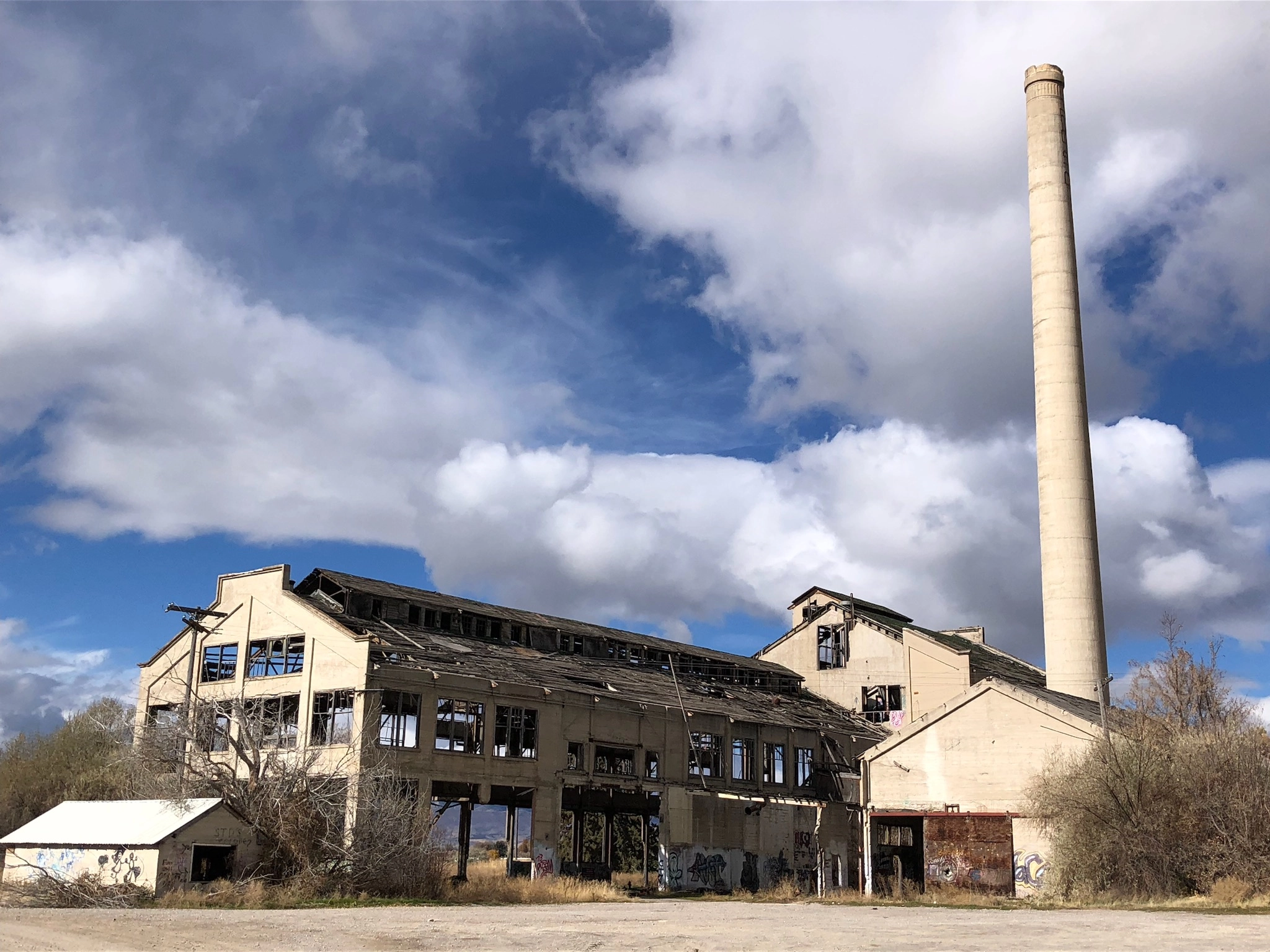
Abandoned Sugar Beet Factory, Weston near Franklin, ID
Courtesy & Copyright Mary Heers, Photographer
Abandoned Sugar Beet Factory, Weston near Franklin, ID
Courtesy & Copyright Mary Heers, Photographer
When I started teaching at Preston High School, one of the first books my English class read was The Diary of Anne Frank. I remember asking the class if they had any family stories of their own to share about those war years. A young woman raised her hand and said her grandparents had a painting on their wall that had been given to them by a German Prisoner of War. This POW had worked on their Cache Valley sugar beet farm in 1945. He’d signed the painting, and had written a few words of thanks on the back for the kind treatment he had received

I was astounded. German POW’s in Cache Valley? This led me to ask more questions.

I found out in 1945 there were close to 400 German POWs living in tents in a work camp at the Cache Valley Fairgrounds. Local farmers contracted with the US Government to hire the POWs to work in the fields for 80 cents a day.

Each morning the prisoners would get loaded into trucks and driven to a sugar beet field. The work day didn’t end until 8 pm when the prisoners returned to the Fairgrounds, damp and chilled, from the ride in the open bed trucks.

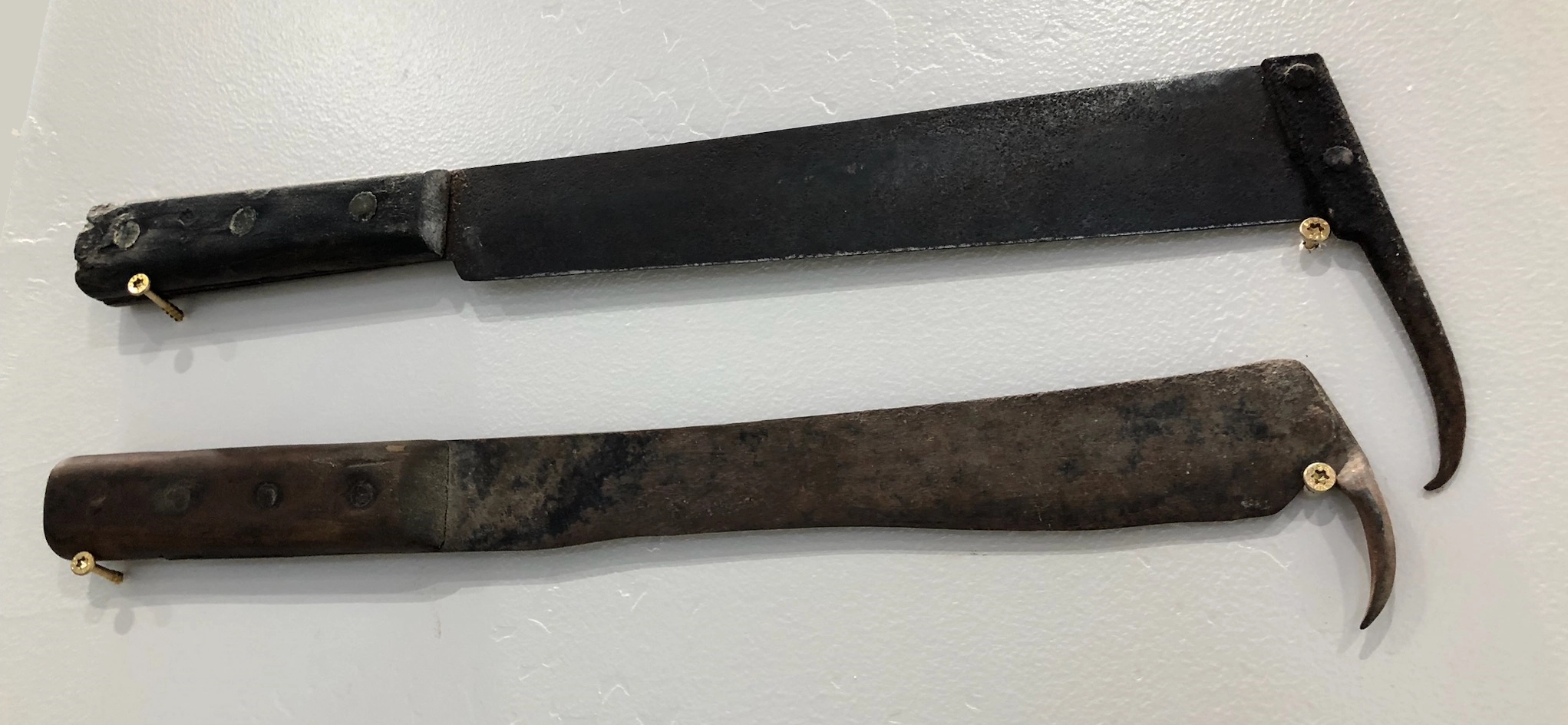
Sugar Beet Knives
Courtesy & Copyright Mary Heers, Photographer
Sugar Beet Knives
Courtesy & Copyright Mary Heers, Photographer
In 1945, sugar beets were a profitable crop, but labor intensive. In the Spring, the beets needed to be thinned and weeded. This work was done by a short handled hoe. In the Fall, the beets needed to be pulled out of the ground. This was done by a special beet knife with a big fish hook on the end. Once pulled out of the ground, the top leaves were sliced off and the beets tossed into a pile bound for the sugar factory.

At the peak of sugar beet farming in and around Cache Valley, there were 5 sugar factories operating. But by 1945 the factories were down to two – one located in Lewiston, and the other in Whitney, near Preston.

Native Americans came from Arizona to work the beets and set up their colorful teepees in downtown Lewiston. High school students were let out of school for 2-3 weeks in the Fall to work during what were called “Harvest Vacations.”

A friend of mine in Preston told me about a young man who went off the college in the Fall of 1945, but came home after a week. His father handed him a sugar beet knife and told him if he wasn’t going to go to college, he was going to work in the fields.

Everyone I met who once worked in the sugar beet fields told me all the work of thinning and harvesting needed to be done while bent over, and the resulting back pain was terrible.

Of all the stories I heard, my favorite was one of a Logan beet farmer who took his 3-year-old daughter with him to check on the work being done by the POWs he had hired. One day, he looked up and saw one of the German POWs holding his little girl in his arms. The farmer took his little girl by the hand, but the POW didn’t let go. A guard came running over. But both men stopped when they saw the tears running down the POW’s face. Somewhere, many miles away, they realized this German POW had a little girl of his own that he may or may not ever see again.

Today, all the POWs have long gone, as well as the local sugar beet farms. But if you drive north on Highway 89, just before you get to Preston, you can see the remains of the Whitney sugar beet factory. These huge crumbling buildings stand as a reminder that sugar beets were once king in Cache Valley.

This is Mary Heers and I’m Wild About Utah.

Credits:

Images Courtesy & Copyright Mary Heers, Photographer
Featured Audio:
Text: Mary Heers, https://cca.usu.edu/files/awards/art-and-mary-heers-citation.pdf
Additional Reading: Mary Heers & Lyle Bingham, https://bridgerlandaudubon.org/

Additional Reading

Wild About Utah, Mary Heers’ Postings

Powell, Allan Kent, Splinters of a Nation: German Prisoners of War in Utah (UTAH CENTENNIAL SERIES), University of Utah Press, January 1, 1990, https://www.amazon.com/Splinters-Nation-German-Prisoners-CENTENNIAL/dp/0874803306/ref=sr_1_1

Radford, Alexandria, The Old Sugar Beet Factory, Medium, Oct 7, 2021, https://medium.com/mind-talk/the-old-sugar-beet-factory-2e4b26f906d6

Arrington, Leonard J, Beet Sugar in the West A History of the Utah Idaho Sugar Company 1891-1966 University of Washington, 1966, https://www.amazon.com/-/he/Leonard-J-Arrington/dp/029574037X

Arrington, Leonard J, The Sugar Industry in Utah, Utah History Encyclopedia-website, Utah Education Network – UEN, https://www.uen.org/utah_history_encyclopedia/s/SUGAR_INDUSTRY.shtml

Sugar Beets and German POWs in Cache Valley

Abandoned Sugar Beet Factory, Weston near Franklin, ID
Courtesy & Copyright Mary Heers, Photographer
Abandoned Sugar Beet Factory, Weston near Franklin, ID
Courtesy & Copyright Mary Heers, Photographer
When I started teaching at Preston High School, one of the first books my English class read was The Diary of Anne Frank. I remember asking the class if they had any family stories of their own to share about those war years. A young woman raised her hand and said her grandparents had a painting on their wall that had been given to them by a German Prisoner of War. This POW had worked on their Cache Valley sugar beet farm in 1945. He’d signed the painting, and had written a few words of thanks on the back for the kind treatment he had received

I was astounded. German POW’s in Cache Valley? This led me to ask more questions.

I found out in 1945 there were close to 400 German POWs living in tents in a work camp at the Cache Valley Fairgrounds. Local farmers contracted with the US Government to hire the POWs to work in the fields for 80 cents a day.

Each morning the prisoners would get loaded into trucks and driven to a sugar beet field. The work day didn’t end until 8 pm when the prisoners returned to the Fairgrounds, damp and chilled, from the ride in the open bed trucks.

Sugar Beet Knives
Courtesy & Copyright Mary Heers, Photographer
Sugar Beet Knives
Courtesy & Copyright Mary Heers, Photographer
In 1945, sugar beets were a profitable crop, but labor intensive. In the Spring, the beets needed to be thinned and weeded. This work was done by a short handled hoe. In the Fall, the beets needed to be pulled out of the ground. This was done by a special beet knife with a big fish hook on the end. Once pulled out of the ground, the top leaves were sliced off and the beets tossed into a pile bound for the sugar factory.

At the peak of sugar beet farming in and around Cache Valley, there were 5 sugar factories operating. But by 1945 the factories were down to two – one located in Lewiston, and the other in Whitney, near Preston.

Native Americans came from Arizona to work the beets and set up their colorful teepees in downtown Lewiston. High school students were let out of school for 2-3 weeks in the Fall to work during what were called “Harvest Vacations.”

A friend of mine in Preston told me about a young man who went off the college in the Fall of 1945, but came home after a week. His father handed him a sugar beet knife and told him if he wasn’t going to go to college, he was going to work in the fields.

Everyone I met who once worked in the sugar beet fields told me all the work of thinning and harvesting needed to be done while bent over, and the resulting back pain was terrible.

Of all the stories I heard, my favorite was one of a Logan beet farmer who took his 3-year-old daughter with him to check on the work being done by the POWs he had hired. One day, he looked up and saw one of the German POWs holding his little girl in his arms. The farmer took his little girl by the hand, but the POW didn’t let go. A guard came running over. But both men stopped when they saw the tears running down the POW’s face. Somewhere, many miles away, they realized this German POW had a little girl of his own that he may or may not ever see again.

Today, all the POWs have long gone, as well as the local sugar beet farms. But if you drive north on Highway 89, just before you get to Preston, you can see the remains of the Whitney sugar beet factory. These huge crumbling buildings stand as a reminder that sugar beets were once king in Cache Valley.

This is Mary Heers and I’m Wild About Utah.

Credits:

Images Courtesy & Copyright Mary Heers, Photographer
Featured Audio:
Text: Mary Heers, https://cca.usu.edu/files/awards/art-and-mary-heers-citation.pdf
Additional Reading: Mary Heers & Lyle Bingham, https://bridgerlandaudubon.org/

Additional Reading

Wild About Utah, Mary Heers’ Postings

Powell, Allan Kent, Splinters of a Nation: German Prisoners of War in Utah (UTAH CENTENNIAL SERIES), University of Utah Press, January 1, 1990, https://www.amazon.com/Splinters-Nation-German-Prisoners-CENTENNIAL/dp/0874803306/ref=sr_1_1

Radford, Alexandria, The Old Sugar Beet Factory, Medium, Oct 7, 2021, https://medium.com/mind-talk/the-old-sugar-beet-factory-2e4b26f906d6

Arrington, Leonard J, Beet Sugar in the West A History of the Utah Idaho Sugar Company 1891-1966 University of Washington, 1966, https://www.amazon.com/-/he/Leonard-J-Arrington/dp/029574037X