The Audubon Society for the Protection of Birds is Counting Birds for Conservation

The Audubon Society for the Protection of Birds is Counting Birds for Conservation: Cassiar Junco, Courtesy & Copyright Hilary Shughart
Cassiar Junco
Courtesy & Copyright Hilary Shughart

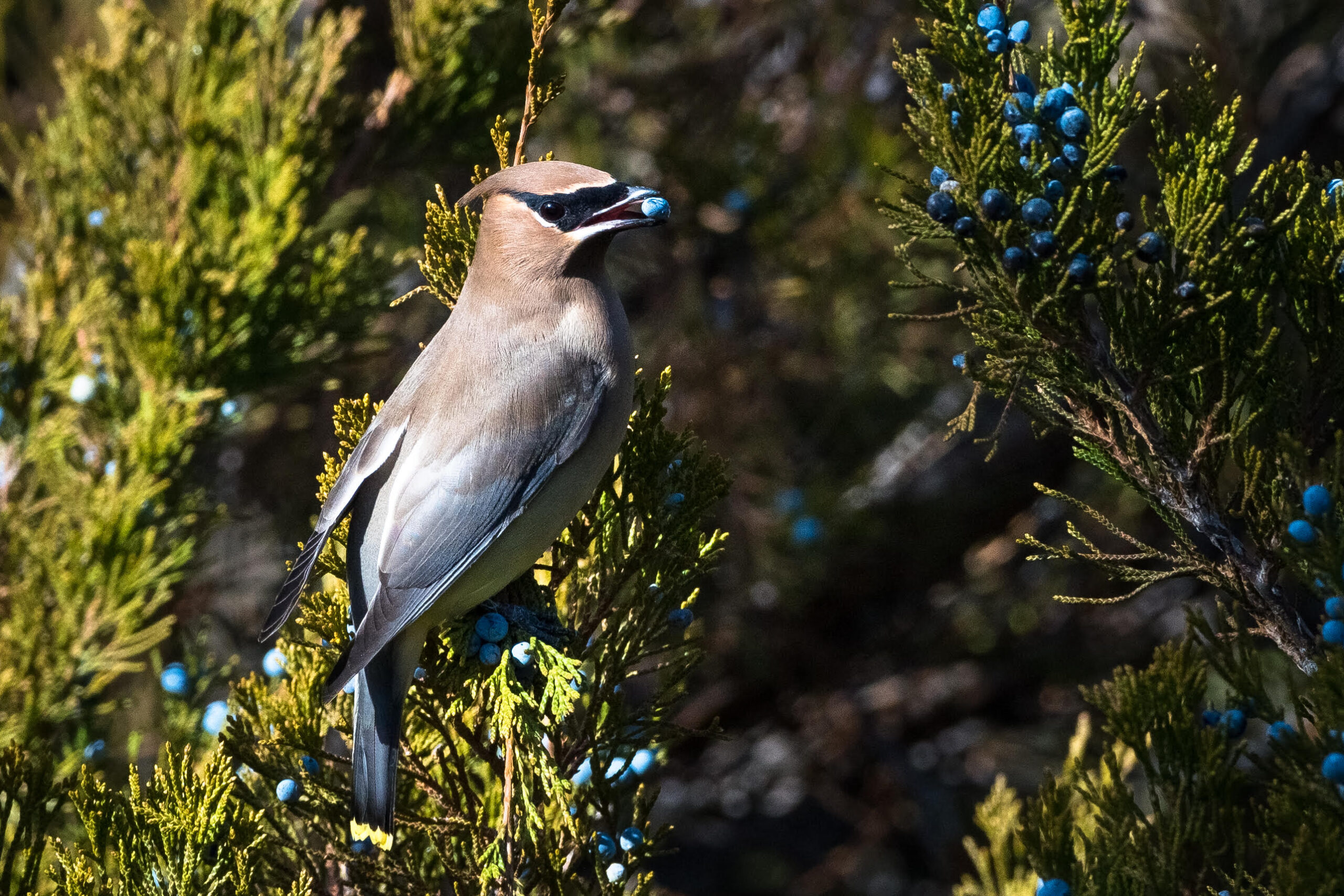
The Audubon Society for the Protection of Birds is Counting Birds for Conservation: Cedar Waxwing eating Juniper Berry, Courtesy & Copyright Jimmie Grutzmacher, Photographer Cedar Waxwing eating Juniper Berry
Courtesy & Copyright Jimmie Grutzmacher, Photographer

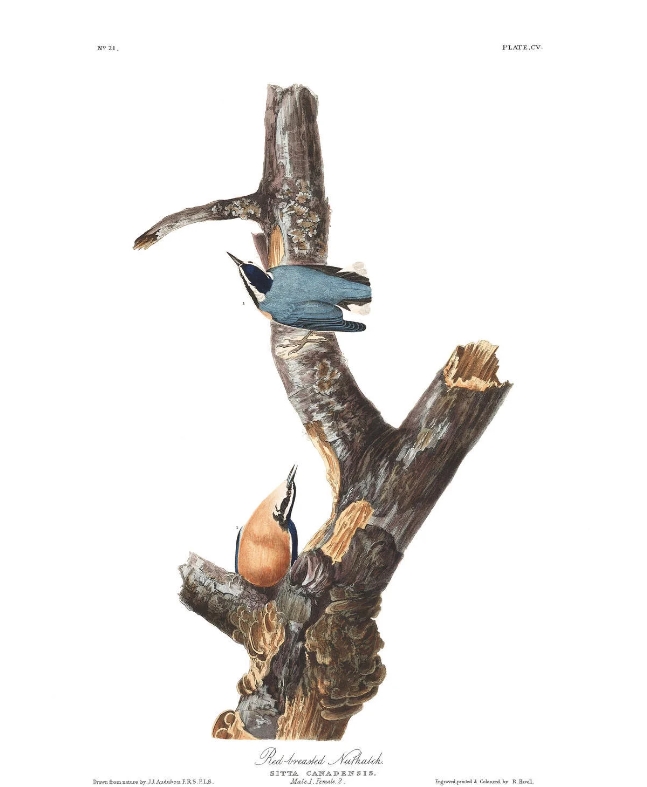
Red-breasted Nuthatch, The Birds of America paintings by John James Audubon, Courtesy the John James Audubon Center at Mill Grove, Montgomery County Audubon Collection, and Zebra Publishing Red-breasted Nuthatch
The Birds of America paintings by John James Audubon
Courtesy the John James Audubon Center at Mill Grove, Montgomery County Audubon Collection, and Zebra Publishing

The Bridgerland Audubon Society has enjoyed another productive Cache Valley Christmas Bird Count, and the participation of volunteers watching from home has proven as valuable as ever because despite the roving teams of volunteers covering the farms, wetlands, canyons, and mountains in the established 177 square mile count circle, the home sector sometimes contributes species missed by the driving and hiking teams. Either way, birds connect us because everyone who spent at least a few minutes counting birds was an important part of assisting the Audubon Society in generating community science data for the conservation of birds and the habitat they need.

The Audubon Society for the Protection of Birds was established in 1886 by George Bird Grinnell, who was inspired by the conservation ethic of his tutor and mentor, Lucy Bakewell Audubon, the widow of naturalist and artist John James Audubon. Grinnell published The Audubon Magazine, which “constituted one of the first efforts to preserve bird species decimated by the women’s hat trade, hunting, and loss of habitat.” (1) Many of the early members were women who, ironically, would attend society meetings wearing plumed hats.” (2) Grinnell is credited as the architect of the Migratory Bird Treaty Act, an effort which took over a decade of advocacy and the many voices of Audubon chapter members.

“The legacy of the Migratory Bird Treaty is the recognition that these magnificent birds are held in public trust and shared by all citizens. Our responsibility is to make sure that this legacy endures by conserving and managing migratory birds and their habitats for future generations to enjoy.” (3), and while the Migratory Bird Treaty Act is the cornerstone of migratory bird management across North America, anyone can help by participating in community science bird counts.

Highlights from this year’s Christmas Bird Count Home Sector reports include a few species not seen last year, such as Cedar Waxwing (Bombycilla cedrorum), which can be attracted to gardens with a songbird border of Juniper berries, Hawthorn, Serviceberry, and Red Osier Dogwood.

Also seen, the Ruby-crowned Kinglet (Corthylio calendula), one of North America’s smallest birds, which “can linger because in addition to insects, it will also eat berries and suet at feeders.”(4) The Red-breasted Nuthatch (Sitta canadensis) “feeds mainly on insects and spiders in summer; in winter, eats many seeds, especially those of conifers. Young are fed mostly or entirely on insects and spiders.” (5)

“Seed-eating boreal visitors, including several sparrow species and the Darkeyed Junco, will benefit from your letting things go literally to seed.” (6) The American and Lesser Goldfinch (Spinus tristis & Spinus psaltria) and the Pine Siskin (Spinus pinus) can be seen feasting on the tiny seeds in dried wild Sunflowers, Coneflowers, and Black-eyed Susans.

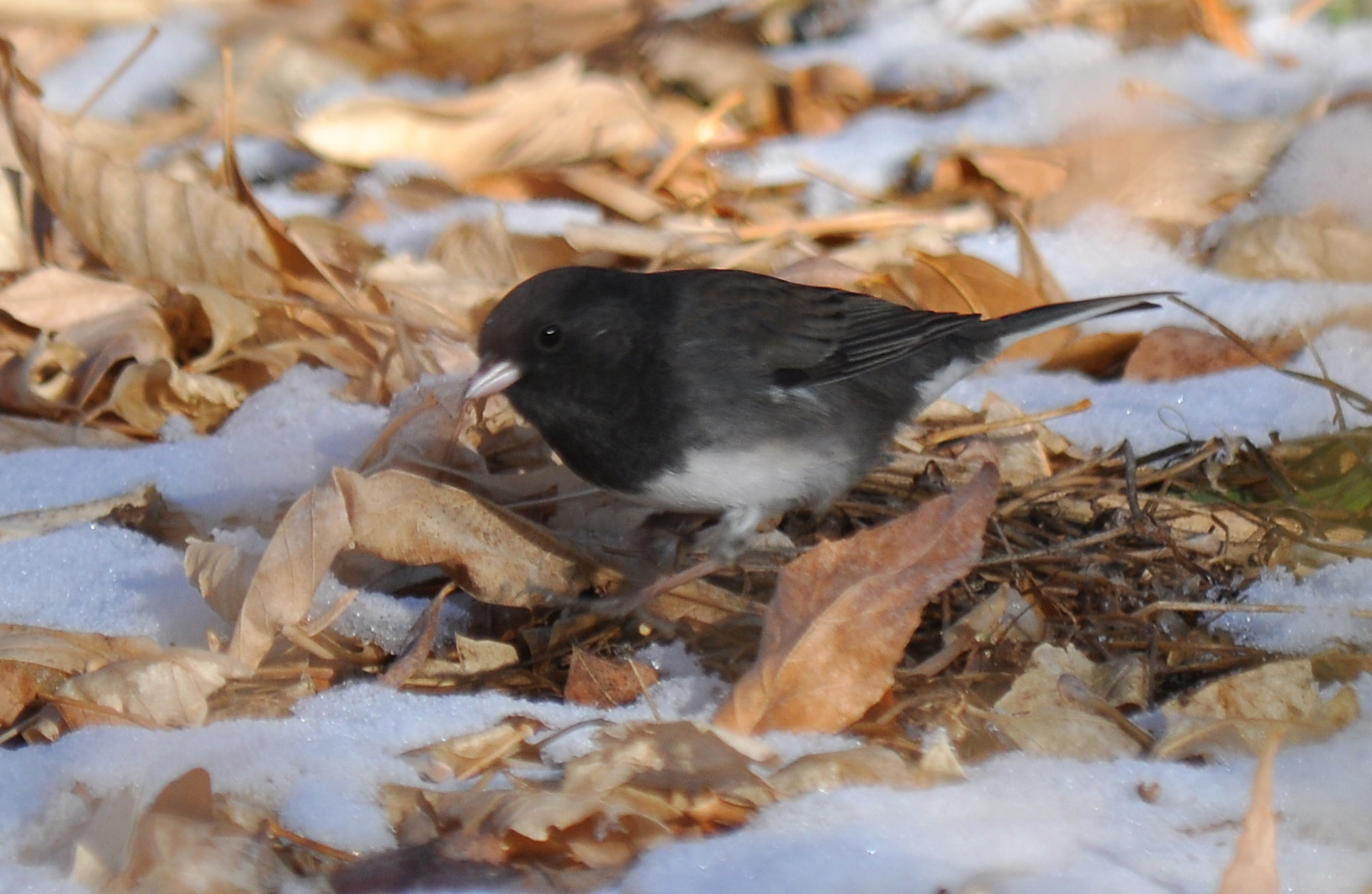
This year we added the elusive Cassiar (Junco hyemalis cismontanus), a Darkeyed Junco race also known as the Rocky Mountain Junco, which is rare to spot anywhere.(7) The Cassiar resembles a Slate Junco, but with a hood darker than it’s back. It is set apart from the more common Oregon, Slate, Pink-sided, and Gray-headed Juncos. This is an exciting addition to our local Christmas Bird Count checklist, and was made possible by someone watching the birds outside their window. To paraphrase Louis Pasteur who observed that in science chance favors the prepared mind, the more you know, the more you notice.

I’m Hilary Shughart with the Bridgerland Audubon Society, and I am wild about Utah!

Credits:

Images: Cassiar Junco, Courtesy & Copyright Hilary Shughart
      Cedar Waxwing eating Juniper Berry Courtesy and Copyright Jimmie Grutzmacher, Photographer
      Red-breasted Nuthatch: Courtesy of the John James Audubon Center at Mill Grove, Montgomery County Audubon Collection, and Zebra Publishing https://www.audubon.org/birds-of-america/red-breasted-nuthatch
Featured Audio: Courtesy & Copyright © Kevin Colver, https://wildstore.wildsanctuary.com/collections/special-collections/kevin-colver
Text & Voice: Hilary Shughart, President, https://bridgerlandaudubon.org/
Additional Reading: Hilary Shughart and Lyle Bingham, https://bridgerlandaudubon.org/

Additional Reading

  1.  Spare the Birds! George Bird Grinnell and the First Audubon Society, by Carolyn Merchant, Yale University Press, 2016. https://yalebooks.yale.edu/book/9780300215458/spare-the-birds/
  2.  B&C Member Spotlight – George Bird Grinnell, Boone and Crockett Club, https://www.boone-crockett.org/bc-member-spotlight-george-bird-grinnell
  3.  The Migratory Bird Treaty Centennial, For 100 years, this landmark agreement has been the cornerstone of migratory bird management across North America. by Paul Schmidt. Ducks Unlimited, June 23, 2016, https://www.ducks.org/newsroom/the-migratory-bird-treaty-centennial
  4.  Ruby-crowned Kinglet, American Bird Conservancy, https://abcbirds.org/bird/ruby-crowned-kinglet/
  5.  Red-breasted Nuthatch (Sitta canadensis), National Audubon, https://www.audubon.org/field-guide/bird/red-breasted-nuthatch
  6.  “ Even though records are widespread across much of the lower 48, only two of the grids show higher than the 0-2% frequency, the rarest category. They appear to not be common anywhere.”
    Dark-eyed Junco races: Oregon, Slate-colored and Cassiar By eBird Northwest Team December 12, 2014 https://ebird.org/pnw/news/dark-eyed-junco-races-oregon-slate-colored-and-cassiar/
  7.  How to Welcome Winter Birds: Fall may mean migration, but one bird’s north is just another bird’s south. By Ashley P. Taylor, National Audubon, October 06, 2015, https://www.audubon.org/news/how-welcome-winter-birds
    Disponible en español
  8.  Dark-eyed Junco races: Oregon, Slate-colored and Cassiar By eBird Northwest Team December 12, 2014 https://ebird.org/pnw/news/dark-eyed-junco-races-oregon-slate-colored-and-cassiar/

Ordinary Extraordinary Junco, by Jonathan Atwell, Steve Burns, and Ellen Ketterson, 2013 Documentary Video https://juncoproject.org/view-download/chapter3/index.html

Wright, Rick, “The Junco Called Cassiar” (2013). Nebraska Bird Review. 1324. https://digitalcommons.unl.edu/nebbirdrev/1324
https://digitalcommons.unl.edu/cgi/viewcontent.cgi?article=2323&context=nebbirdrev
Dark-eyed Juncos

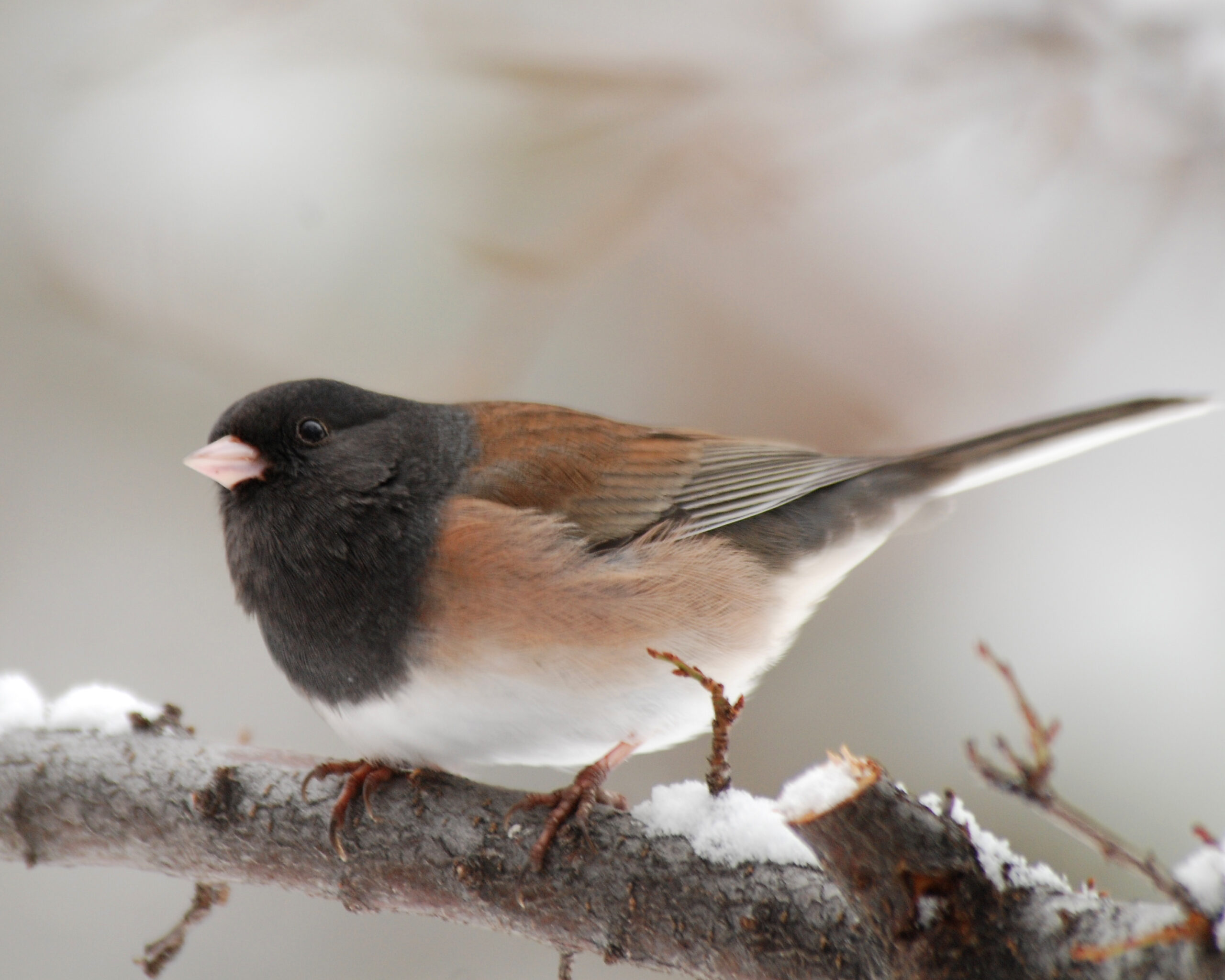
Click for a larger view of a Dark-eyed 'Oregon' Junco Male, Junco hyemalis montanus, Courtesy and copyright 2008 Ryan P. O'Donnell
Dark-eyed Junco “Oregon” Male
Junco hyemalis montanus
Courtesy & © 2008 Ryan P. O’Donnell, Photographer 

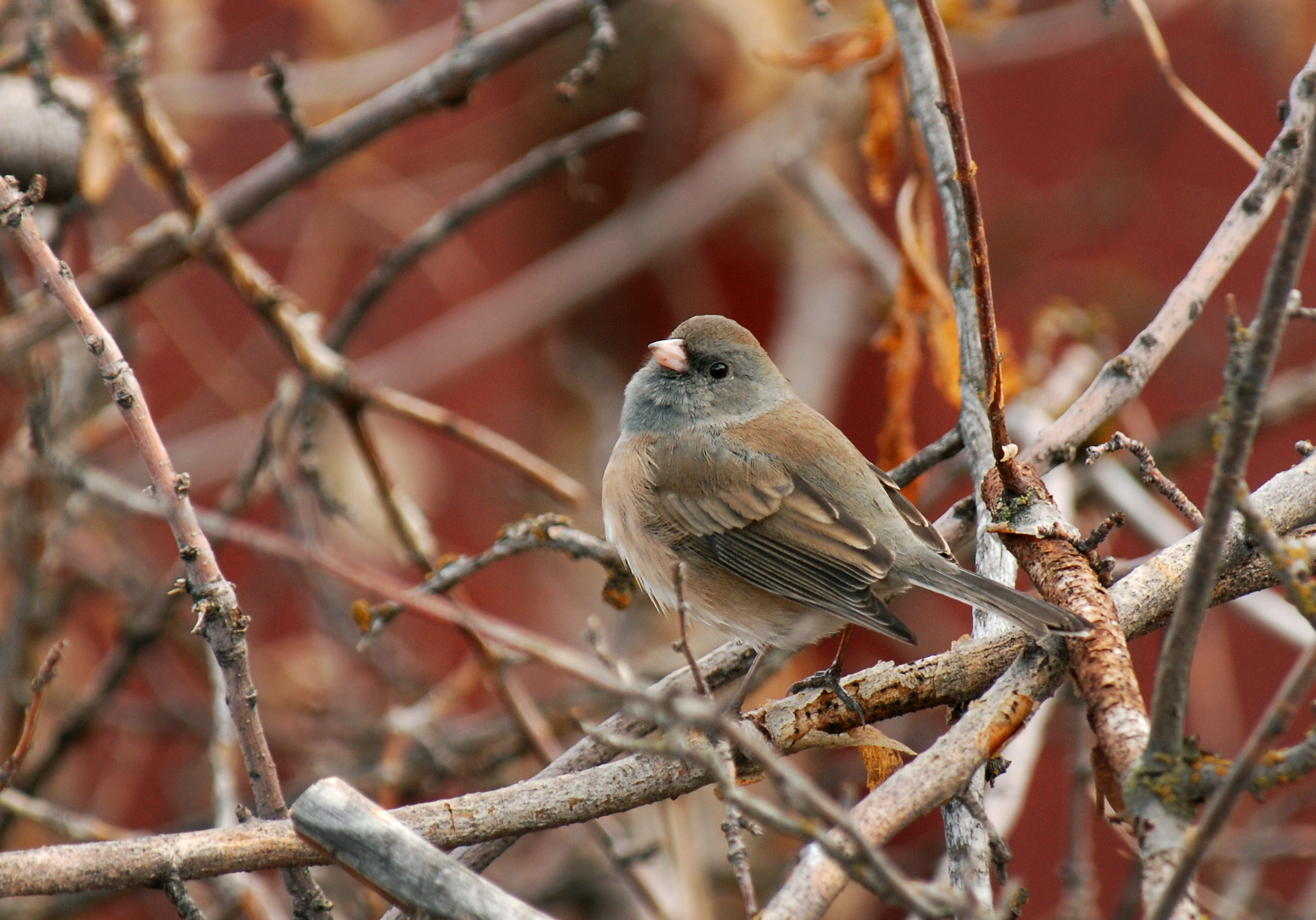
Click for a larger view of a Dark-eyed 'Oregon' Junco Female, Junco hyemalis montanus, Courtesy and copyright 2011 Ryan P. O'DonnellDark-eyed Junco “Oregon” Female
Junco hyemalis montanus
Courtesy & © 2011 Ryan P. O’Donnell, Photographer 

Click for a larger view of a Dark-eyed 'Pink Sided' Junco, Junco hyemalis mearnsi, Courtesy and copyright 2011 Ryan P. O'DonnellDark-eyed Junco “Pink Sided”
Junco hyemalis mearnsi
Courtesy & © 2011 Ryan P. O’Donnell, Photographer 

Click for a larger view of a Dark-eyed 'Cassiar' Junco, Junco hyemalis cismontanus, Courtesy and copyright 2011 Ryan P. O'DonnellDark-eyed Junco “Cassiar”
Junco hyemalis cismontanus
Courtesy & © 2011 Ryan P. O’Donnell, Photographer 

Click for a larger view of a Dark-eyed 'Gray-headed' Junco, Junco hyemalis caniceps, Courtesy and copyright 2011 Ryan P. O'DonnellDark-eyed Junco “Gray-headed”
Junco hyemalis caniceps
Courtesy & © 2011 Ryan P. O’Donnell, Photographer 

My backyard bird feeders are a busy place this time of year. I enjoy keeping track of who visits – especially as a relative newcomer to the Utah bird scene. Last winter, however, I was baffled by the identity of what turned out to be a fairly ordinary bird.

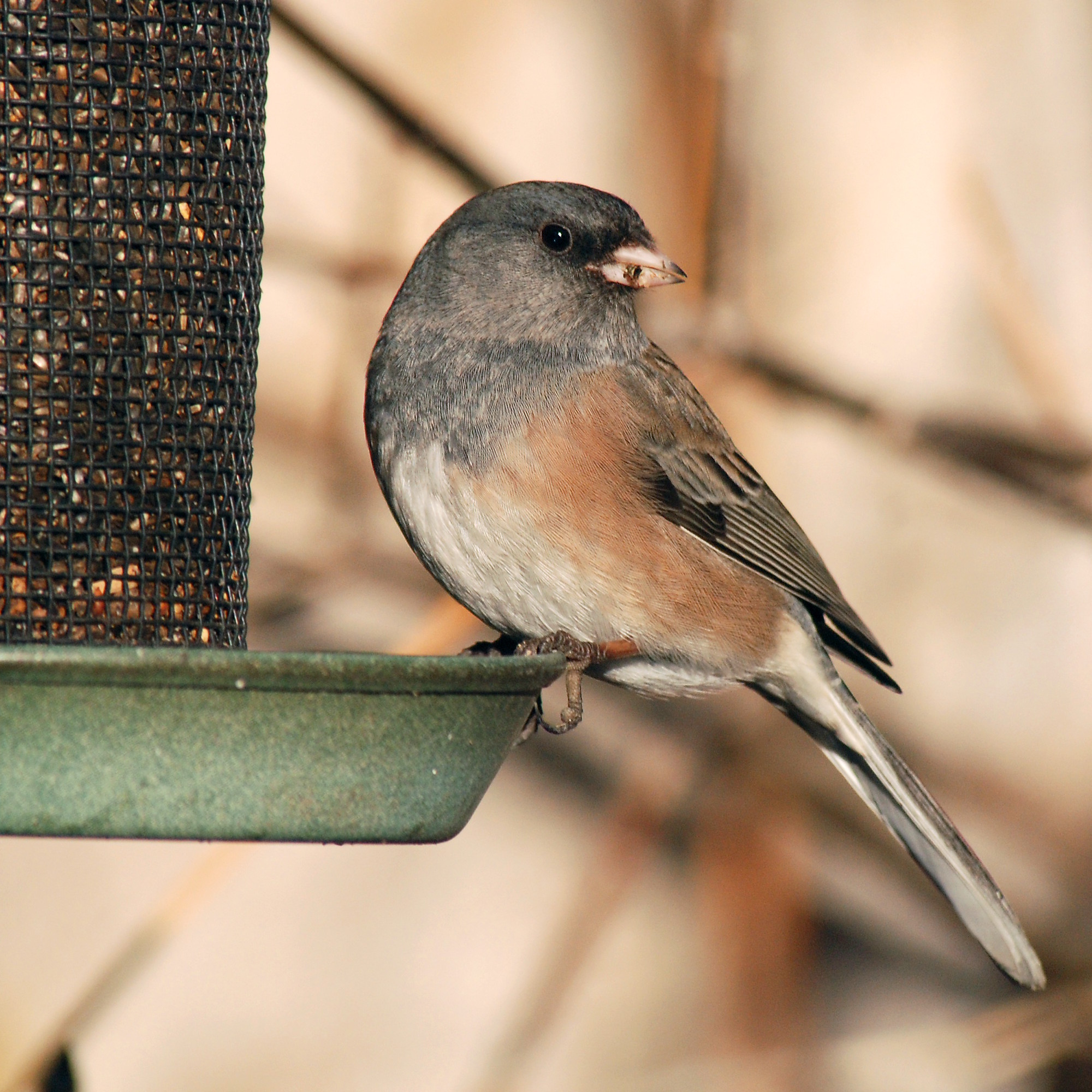
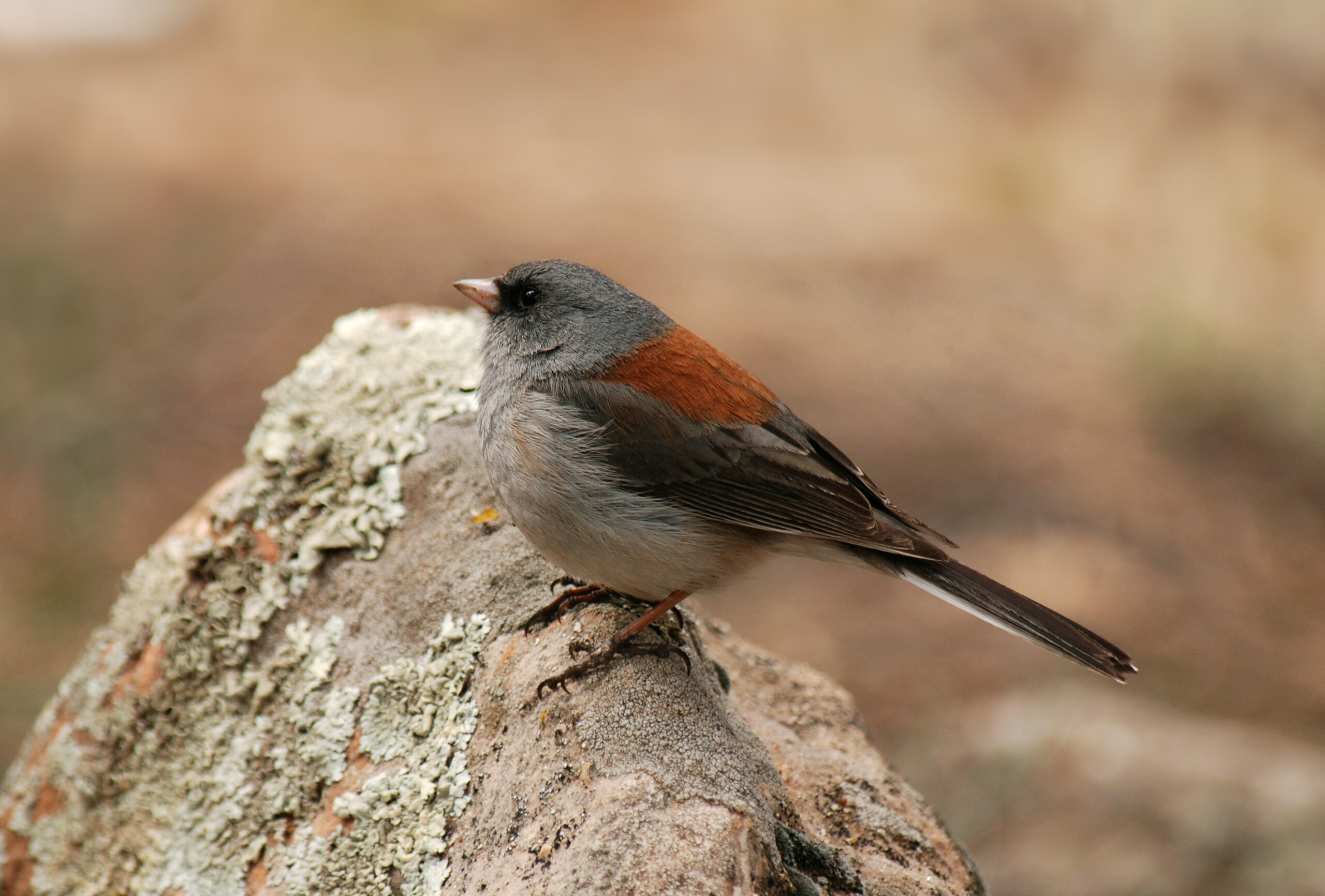
Dark-eyed juncos are a common sight throughout the United States, but as it turns out, they exhibit an incredible geographic variation in plumage colors. There is a ‘slate-colored race’ which I was used to seeing in the Midwest – uniformly gray above with a white underbody. During Utah winters, the ‘Oregon race’ is common, with its black hood, brown back and peachy sides. Another ‘gray-headed race’ sports varying shades of gray with a distinct reddish brown patch on its back.

Depending on who you ask, there are up to fifteen different races, also called sub-species, of dark-eyed junco – all quite visually distinct, but all considered to be the same species. It wasn’t always this way, however. In the late 1950’s what we now call dark-eyed juncos were recognized as four different species, and in the 1890’s there were six.

These changes beg the question, at what point does speciation occur? And the answer lies in the ability of these birds to interbreed. One scientific definition of a species is those organisms or populations of organisms that are “potentially capable of interbreeding.”

Unique plumage patterns have evolved in a number of geographic locations across the junco’s range, however all of the dark-eyed junco variants could potentially interbreed if they happened to meet. Indeed in places where these geographic territories overlap inter-breeding does take place resulting in blends of the usually-distinct color patterns.

Juncos aren’t the only bird species with recognized color variants. Any raptor enthusiast will be familiar with variations in plumage colors that many birds of prey exhibit, such as merlins and red-tailed hawks. What makes dark-eyed juncos unique is that they are being studied as a possible case of speciation in progress. It turns out that there is more than just a difference in color among dark-eyed juncos. Some sub-species also exhibit variation in song patterns, social behavior, body size, and migration patterns, any of which may eventually cause these groups to stop interbreeding and allow a new species to emerge.

To see pictures of dark-eyed junco subspecies, visit our website at www.wildaboututah.org. Thank you to Rocky Mountain Power Foundation for supporting the research and development of this Wild About Utah topic.

For the Stokes Nature Center and Wild About Utah, this is Andrea Liberatore.

Credits:

Photos: Courtesy & © Ryan P. O’Donnell
Theme: Courtesy & Copyright Don Anderson as performed by Leaping Lulu https://wildaboututah.org/about-us/#trout-n-berry-days
Voice & Text:    Andrea Liberatore, Stokes Nature Center, logannature.org
This episode was first published January 12, 2012.

Additional Reading:

The following references were accurate as of the date of publication or most recent update.

Atwell, J.W., O’Neal, D.M, and Ketterson, E.D. (2011) Animal Migration as a Moving Target for Conservation: Intra-species Variation and Responses to Environmental Change, as Illustrated in a Sometimes Migratory Songbird. Environmental Law. Vol. 41:289 p. 289-319, formerly at: https://www.amazon.com/Animal-migration-moving-target-conservation/dp/B005C29H7I
PubMed Central, National Library of Medicine, https://pmc.ncbi.nlm.nih.gov/articles/PMC5637735/

Alderfer, Jonathan (editor) (2005) National Geographic Complete Book of Birds. National Geographic Press. Dark-eyed junco information available online at: https://animals.nationalgeographic.com/animals/birding/dark-eyed-junco/

Cornell Lab of Ornithology, All About Birds: Dark-eyed Junco. https://www.allaboutbirds.org/guide/Dark-eyed_Junco/id/ac

History of Name Changes for Juncos. Cornell Lab of Ornithology. formerly at: https://www.birds.cornell.edu/pfw/News/junco_taxonomy.pdf
Updated by Cornell Lab of Ornithology to be at https://www.feederwatch.org/wp-content/uploads/2013/09/junco_taxonomy.pdf