
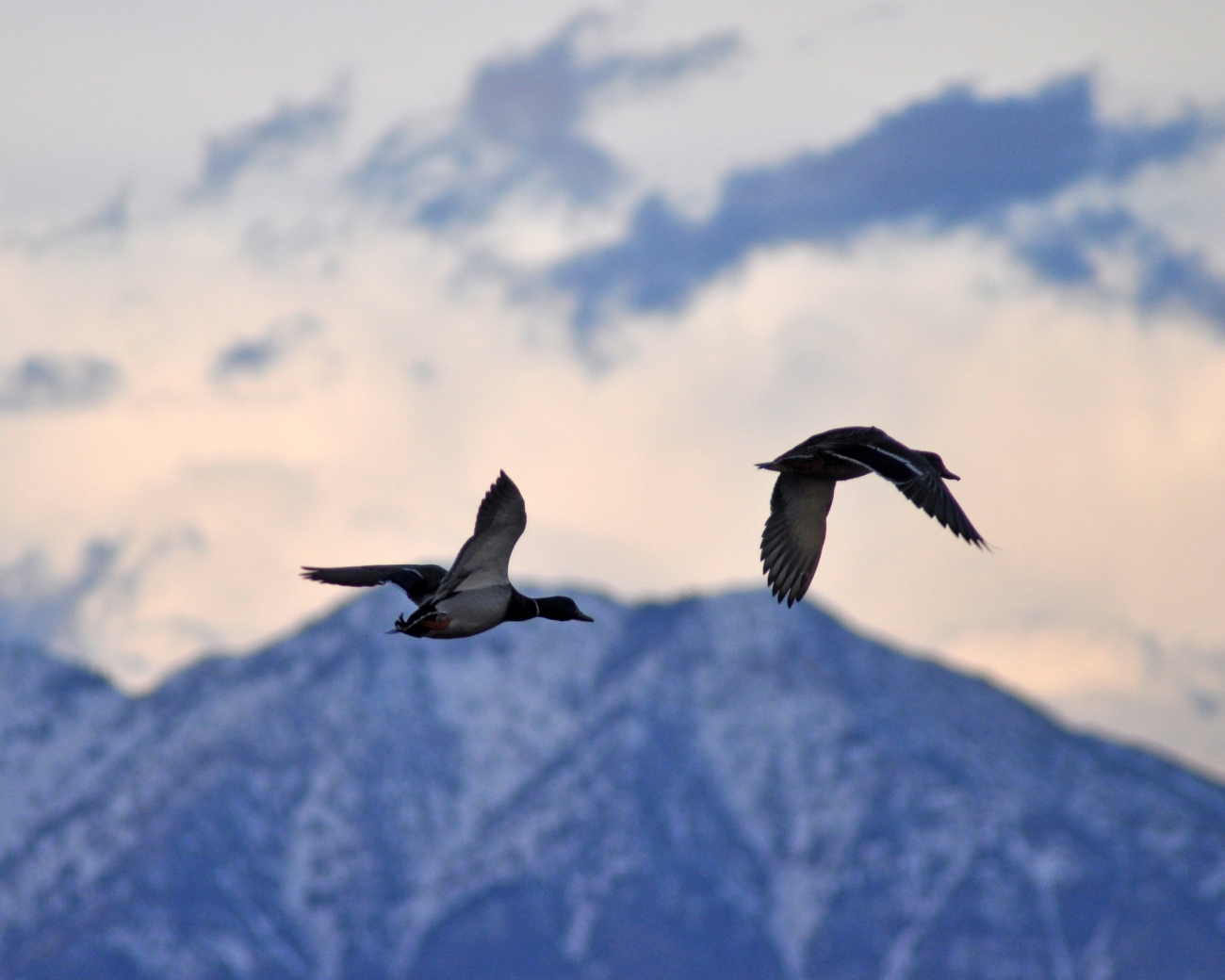
Bear River Migratory Bird Refuge
Courtesy US FWS,
Sheryl Ritter, Photographer
- Dr. Joseph Kozlowski
- Last month, I ran a segment on how students engaging in nature-related art helps them develop appreciation and awareness for the natural world around them. Today, I am joined by Gabby Johnson, who works for the US Fish and Wildlife Service at Bear River Migratory Bird Refuge, who is here to share her experience leading the Utah Junior Duck Stamp Contest, which encourages just that kind of nature and art appreciation.
So thank you, Gabby, for being here with us. Do you mind jumping right into a little bit of the history of this program?
- Gabby Johnson
- Yeah. Thank you so much for having me.
The Junior Duck Stamp Program is part of the Federal Duck Stamp Program, which started in 1934 when Congress passed the Migratory Bird Hunting Stamp Act. Every waterfowl hunter 16 and older is required to purchase a federal duck stamp each year they hunt. Since 1934, sales from federal duck stamps have helped conserve more than six million acres of wildlife habitat. Ninety-eight cents of every duck stamp dollar goes to purchasing or leasing wetlands and wildlife habitat, and the art featured on the duck stamp is chosen every year in the Federal Duck Stamp Art Contest.
In 1989, the Junior Duck Stamp Program started. This program gives students the opportunity to learn about conservation and submit a waterfowl painting or drawing into the Junior Duck Stamp Art Contest. After the state-level competitions, the art is judged at the national level, and the winning art is made into the Junior Duck Stamp, which sells for $5 to support conservation education.
- Dr Joseph Kozlowski
- Six million acres, that’s incredible. It makes me think of that saying I’ve heard, hunting is conservation, and it’s neat to see those two communities work together to support wildlife in this sense in wetlands.
So what about a basic overview of how people might be able to participate in this program?
- Gabby Johnson
- Yeah. All students from kindergarten through 12th grade, whether in a public, private, charter, or homeschool are welcome to participate in the Junior Duck Stamp Program. Each state holds their own Junior Duck Stamp Contest. In Utah, the deadline to submit art each year is March 1st.
Students participating in the program learn about North American waterfowl, including ducks, geese, and swans, and the importance of wetland habitat to these animals. Students share what they’ve learned during classroom discussions, research, and planning through both the artwork and a written conservation message. There are some contest rules to keep in mind, like specific paper size, and ensuring there’s no writing on the front of the artwork. For educators interested in getting involved, Bear River Migratory Bird Refuge has a variety of materials to support you. Educators can reach out about in-class programming, field trips at the refuge, or rentable art supplies and curriculum guides.
- Dr Joseph Kozlowski
- And I know personally as a educator who has done this program with my students, you’ve been incredibly helpful to staff at the Bear River Migratory Bird Refuge in supporting me in getting the resources and submitting artwork in the correct way, so thank you.
What about the impact you’ve seen from participation in this program?
- Gabby Johnson
- Yeah, one of my favorite parts of working on this program has been getting to read the student conservation messages. Through learning about waterfowl and wetlands, creating their artwork, and taking time to write about conservation, students recognize the important role wetlands play in our environment and the ways they can have a role in conservation, and that’s clear through their conservation messages.
This year, our conservation message winner was Jason Deacon. He’s 11 years old, and his message was, for future inspiration, utilize smart conservation.
- Dr Joseph Kozlowski
- I think it’s so important definitely here in Utah where we face these real water questions and water conservation issues to get kids thinking at a young age how they can be aware and thoughtful of some of those practices and ideas.
Well, finally, Gabby, what excites you personally about this program?
- Gabby Johnson
- I think the lasting impact this program can have on students is the most exciting part of the program to me. When there’s a positive experience associated with learning about waterfowl, wetlands, and the local environment as a student, the hope is that the value for these resources for students increases, and they make decisions in the future that reflect that care and value.
- Dr Joseph Kozlowski
- Well, personally, I’m awfully grateful for this program. My students have been doing this for a couple years now, and as our implementation of this program gets better and better each year, I can see that lasting impact in their knowledge and their understanding of conservation and wetlands, so I thank you, Gabby, for being here, and to all you educators and families out there, I encourage you, get your kids involved, encourage them to try to participate in this Junior Duck Stamp Contest, and I think you’ll see a lot of benefits in their learning and appreciation for the world around us.
- Dr Joseph Kozlowski & Gabby Johnson
- So I’m Dr. Joseph Kozlowski.
I’m Gabby Johnson.And we’re wild about outdoor education in Utah.
Credits:
Images: Courtesy & Copyright Joseph Kozlowski, Photographer, Used by Permission
Featured Audio: Courtesy & Copyright © Kevin Colver, https://wildstore.wildsanctuary.com/collections/special-collections/kevin-colver
Text: Audio converted to text using Otter.ai, Speakers: Joseph Kozlowski, Edith Bowen Laboratory School, Utah State University https://edithbowen.usu.edu/ Gabby Johnson, Bear River Migratory Bird Refuge, US Fish & Wildlife Service, https://www.fws.gov/refuge/bear-river-migratory-bird
Additional Reading Links: Joseph Kozlowski & Lyle Bingham
Additional Reading:
Joseph (Joey) Kozlowski’s pieces on Wild About Utah:
Edith Bowen Lab School, Utah State University, https://edithbowen.usu.edu/
Bear River Migratory Bird Refuge, US Fish & Wildlife Service, US Department of the Interior, https://www.fws.gov/refuge/bear-river-migratory-bird
https://www.facebook.com/BearRiverMBR/
Junior Duck Stamp, US Fish & Wildlife Service, US Department of the Interior, https://www.fws.gov/program/junior-duck-stamp/junior-duck-stamp-contest-information
Junior Duck Stamp Gallery, US Fish & Wildlife Service, US Department of the Interior, https://www.fws.gov/library/collections/junior-duck-stamp-gallery


