Spring’s Way

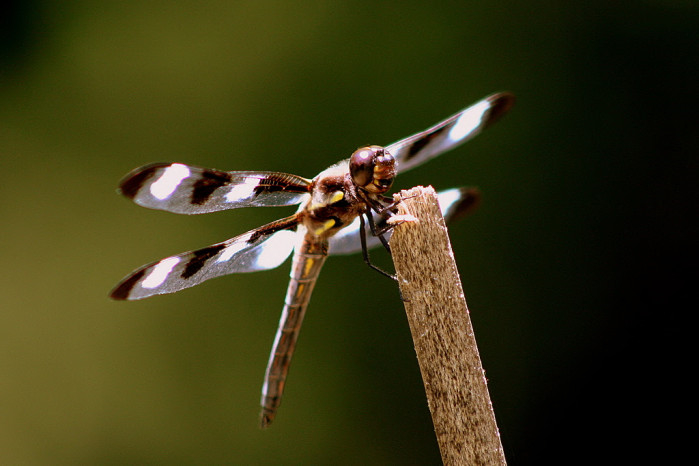
Spring's Way: Courtesy & Copyright Patrick Kelly, Photographer
Courtesy & © Patrick Kelly, Photographer
Springtime in Cache Valley is marked by many events. It is a seasonal turn full of unrelenting life. The signs and the emotions they revive are marked by the beauty found in every hour of the day: from the day’s first bird songs, reviving the world from slumber, to their last evening’s lullaby.

Spring is also the time when warmth returns to the sunlight. After winter, I’ll often need to sit in the celestial rays to warm my bones, always hesitant lest snows reappear in May and I get soft. When I allow myself finally to ceade, the feeling of sun on my bare face in spring can only be described though as relief.

In the sun, too, one can’t help but breathe the smell of thaw, green buds, and warming winds. The many scents of earth remind me of its very mineral diversity, often thought of as monolithic, but truly clay, limestone, sand, gravel, and granite each fill the air’s bouquet differently in the wet and dry. These and other reminders which revise winter’s nostalgic fog breathe fresh life with even more vivacity.

Spring also brings with it labor, for who can truly say to love than those who enjoy its work? For me, I do love chores, especially in spring. I enjoy mowing the lawn, pruning trees, tilling the soil, and starting crops just as the Swede enjoys stacking split wood. It is a natural work to us both, a good work, and a labor of provision.

Additionally, these simple actions signify belonging to something larger than myself. It is how I honor the world around me: by acting in accordance to an older, more widely-shared order. I act as spring dictates, and thus am realized as its agent. Tis good to be an agent of such.

It also feels good to allow myself to slip into this annual cycle with such depth. I work on this, for no worthy cause is without struggle. I engage myself to grow the better in me as I make the choices of participation with the goal that one day it shall be habit. I leave the windows ajar to hear the birds and let their sage songs smudge my home. I walk often and stop to feel the catkin buds, listen to the absence of traffic, and smell big firs. I tend to wildflowers with my attention, nurturing tomorrow’s colors, medicines, and gifts.

So this spring, I invite you to try it on: being an agent of the season. Even if you do not garden, begin by experiencing what a new-born leaf feels like. Even if you do not mow, grab a blade, breathe it in, and harvest into your mind the scent. Even if you cannot understand them, open the windows and let the birds morning revelry and lullabies bookend your days. In these ways, we can all do good and live still by spring’s way.

I’m Patrick Kelly, and I’m Wild About Utah.
 
Spring’s Way-Credits:

Images: Image Courtesy & Copyright Patrick Kelly, Photographer, all rights reserved
Audio: Contains audio Courtesy & Copyright Kevin Colver
Text:    Patrick Kelly, Director of Education, Stokes Nature Center, https://logannature.org
Included Links: Lyle Bingham, Webmaster, WildAboutUtah.org

Spring’s Way-Additional Reading

Parkhurst, Emma, MS, CHES, Eight Stress-relieving Activites to Give You a Break from the Coronavirus, USU Extension | Davis County, https://extension.usu.edu/covid-19/mental-and-emotional-well-being

Brower, Naomi, Four Tips for Cultivating an Attitude of Gratitude, Utah State University Extension, https://extension.usu.edu/covid-19/mental-and-emotional-well-being

Brower, Naomi, Finding a Cure for the Sheltering-in-Place Blues, Utah State University Extension, https://extension.usu.edu/covid-19/mental-and-emotional-well-being

Swinton, Jonathon, Remaining Coronavirus Calm, Utah State University Extension, https://extension.usu.edu/covid-19/mental-and-emotional-well-being

Spring’s Way

Nature Sings to Assuage Our COVID Fears

Nature sings: American Robin Turdus migratorius Courtesy US FWS Dr. Thomas G. Barnes, Photographer
American Robin
Turdus migratorius
Courtesy US FWS
Dr. Thomas G. Barnes, Photographer

Robins, house finch, and lesser goldfinch singing with gusto! Dippers on the stream blasting their melodious notes from watery perches on Summit Creek. An eastern blue jay bops out to wish me good morning in a nearby Park, its rarity always a treat, instantly teleporting me back to earlier days in Michigan. Meadowlarks reveal their hearts in song in fields below as I work my way up a canyon ridge. A fox sparrow with ear shattering song competes for “America’s Got Talent”.

On another outing, three individuals walking ahead of me pause to locate loud hammering high in a dead cottonwood. A flicker woodpecker- our largest and loveliest of the woodpecker family, beats his head against the tree hoping to attract a lady!

Totally unaware of COVID-19, which has inverted our human worlds, the bird world is right on schedule with their spring business of propagating more bird song.

Male House Finch Courtesy US FWS Gary Kramer, Photographer
Male House Finch
Courtesy US FWS
Gary Kramer, Photographer

Thank goodness, my usual escape into local Canyons has not been disrupted. Early spring plants are there to greet me- glacier lily, spring beauty, violet. Many more will emerge in coming weeks. Over 30 species will be blooming from now to early June accompanied by as many species of birds and butterflies.

We take a Sunday drive through our valley wetlands where abundant waterfowl rest and feed- pintails, mallards, gadwells, Northern shovelers, American widgeon, cinnamon teal, and the ever-present and magnificent Canada geese. A pair of Sandhill Cranes emerges which will be populating our valley by the hundreds as spring progresses. Many will remain to nest and raise their colts. 

Yes, these are tumultuous times- socially, economically, fear for our health. My usual spring activities have all but disappeared – travel, students, and direct contact with family members.

Lesser Goldfinch Courtesy US FWS Robert F Burton, Photographer
Lesser Goldfinch
Courtesy US FWS
Robert F Burton, Photographer

Spring is a transformation from winter’s death grip back to renewed life. This year I sense another transformation that gives me hope. Throngs of neighbors and others have invaded our canyons with kids, dogs, bikes, boards, horses, with joy in their hearts as they break free from COVOD’s bondage. Keeping the appropriate social distancing, their warm smiles and desire to chat reflect nature’s magic. Strangers become instantaneous friends. It’s reminiscent of my time in Europe where these outdoor activities are far more common. I sense a cultural shift.

Spring is here- my favorite season has returned filled with song, passion, Easter, and a rebirth of optimism- strong tonic for these difficult days. Our Earth Mother is being honored well before Earth Day!

Jack Greene for Brigerland Audubon and thank goodness for Utah Wilds!

Credits:

Pictures: Courtesy US FWS, Dr Thomas G Barnes, Gary Kramer, Robert F. Burton, photographers
Contains Sound: Courtesy Kevin Colver
Text: Jack Greene, Bridgerland Audubon Society | Utah State University Sustainability

Additional Reading:

American Robin, All About Birds, Cornell Lab of Ornithology, https://www.allaboutbirds.org/guide/American_Robin/id

House Finch, All About Birds, Cornell Lab of Ornithology, https://www.allaboutbirds.org/guide/House_Finch/id

Lesser Goldfinch, All About Birds, Cornell Lab of Ornithology, https://www.allaboutbirds.org/guide/Lesser_Goldfinch/id

Preserving the Social and Ecological Values of a Utah River

Preserving the Social and Ecological Values of a Utah River: Stewart Park1_Pre-construction Serious Bank Erosion: Serious erosion resulting, in part, from upstream channelization cuts into Stewart Park Courtesy & Copyright © Frank Howe, Photographer
Stewart Park1_Pre-construction Serious Bank Erosion: Serious erosion resulting, in part, from upstream channelization cuts into Stewart Park
Courtesy & Copyright © Frank Howe, Photographer
In 2011, extensive flooding in Cache Valley caused widespread damage to both buildings and land along the Logan River.
Preserving the Social and Ecological Values of a Utah River
This led to the formation of the Logan River Task Force; this group of Utah State University scientists and other experts in riparian and river restoration worked with Logan City and Bio-West, Inc. (a local consulting firm) to develop a long-term restoration plan that prevented flooding while balancing both social and ecological values of the river.

During Construction: Restoration specialists direct construction of the Stewart Park "Residential Demonstration" Restoration Project Courtesy & Copyright © Frank Howe, Photographer
During Construction: Restoration specialists direct construction of the Stewart Park “Residential Demonstration” Restoration Project
Courtesy & Copyright © Frank Howe, Photographer
Frank Howe, chairman of the Task Force said, “We developed the Logan River Conservation Action Plan to help ensure people’s property is protected, BUT we also envisioned the river becoming an amenity for our community – a place where people could enjoying activities [in, on, and around] the river such as canoeing, hiking, and fishing, or just sitting – enjoying the sights and sounds of the river.”
The Task Force’s first objective was to answer the question, “Why do people value the river?”

Volunteer Planting: Community volunteers plant native vegetation in the terraced demonstration area at the Stewart Park site, vegetation helps slow the flow and reduce the river's energy during a flood. Courtesy & Copyright © Frank Howe, Photographer
Volunteer Planting: Community volunteers plant native vegetation in the terraced demonstration area at the Stewart Park site, vegetation helps slow the flow and reduce the river’s energy during a flood.
Courtesy & Copyright © Frank Howe, Photographer
With the help of Logan’s citizens, the Task Force developed 22 Indicators of the river’s values. These indicators were essential for creating the Conservation Action Plan and directing restoration activities. People are anxious to avoid flood damage, but they’re also interested in the fish and wildlife the river supports as well as the recreational opportunities it offers.

Logan City Mayor Holly Daines said, “The Logan River Task Force has been really helpful to the city in working on river restoration! Quality of life is such an important part of our community. By expanding trails, and restoring the river wherever possible, we’re [creating] great places where we can enjoy [a] little slice of nature.”

Restoration after 1 year: The completed restoration features native vegetation, bark trails, and places where people can access the river. Courtesy & Copyright © Frank Howe, Photographer
Restoration after 1 year: The completed restoration features native vegetation, bark trails, and places where people can access the river.
Courtesy & Copyright © Frank Howe, Photographer
The Task Force’s first restoration effort was a demonstration project at Denzil Stewart Nature Park. Its purpose was to show residents who live along the river how they could enhance their property while providing benefits to the river and their neighbors. “A lot of people have built walls so the river doesn’t flood onto their property”, says Howe. “But this leads to channelization which creates a problem for the [whole] river system. It forces the entire flow of the river into a very confined space. That increases the erosive power of the river which then eats away at personal property and public infrastructure.”

The Stewart Park Project demonstrated that, instead of building walls, if the owner allows occasion flooding onto lower “terraced” areas which are planted with native vegetation, it allows the river to grow a little wider and this, along with the friction from the vegetation, slows the flow and dissipates the energy of the flood through the entire [river] system.

A family enjoys the river one year after the Rendezvous Restoration Project. Courtesy & Copyright © Frank Howe, Photographer
A family enjoys the river one year after the Rendezvous Restoration Project.
Courtesy & Copyright © Frank Howe, Photographer
The flagship project of the Task Force was Rendevous Park where the river was rerouted to avoid flood damage to a major highway and railroad. Pools were created in the river to catch sediments that previously plugged the river, causing flooding. Howe explains, “The pools allow sediments to drop out in a very predictable place which can be cleaned out every 5-10 years as sediments build up. These pools also provide excellent fish habitat as well as places for people to float or wade in the river. We removed several acres of non-native vegetation and planted native trees, shrubs, and wildflowers which created habitat for birds and other wildlife. We also added trails that allow people to access the river without disturbing the plantings. In all, we were able to improve 19 of the 22 social and ecological Indicators!”

This approach of balancing social and ecological values in river restoration used by the Logan River Task Force can be applied to rivers throughout Utah.

This is Shauna Leavitt and I’m wild about Utah.

Preserving the Social and Ecological Values of a Utah River-Credits:
Preserving the Social and Ecological Values of a Utah River
Photos: Courtesy & Copyright © Frank Howe, USU QCNR/Utah DWR
Audio: Courtesy & Copyright © Friend Weller, Utah Public Radio
Text: Shauna Leavitt, Utah Cooperative Fish and Wildlife Research Unit, Quinney College of Natural Resources, Utah State University
Co-Authored by: Frank Howe, chairman of the Logan River Task Force, adjunct associate professor, and university liaison for Utah Division of Wildlife Resources.

Preserving the Social and Ecological Values of a Utah River-Additional Reading

Leavitt, Shauna, Logan River’s Evolving Geomorphology, Wild About Utah, March 2, 2019, https://wildaboututah.org/logan-rivers-evolving-geomorphology/

Leavitt, Shauna, The Ecology in and around the Logan River, Wild About Utah, December 2, 2019, https://wildaboututah.org/the-ecology-in-and-around-the-logan-river/

Leavitt, Shauna, A Short History of the Logan River, Wild About Utah, November 4, 2019, https://wildaboututah.org/short-history-of-logan-river/

Hope

Hope: Crocus Courtesy Pixabay
Crocus
Courtesy Pixabay
It feels odd to be denning in the spring. Our usual season to escape back into the out of doors has shifted radically for society at-large. It is odd because all the world around us is still warming, flying a little further each day, and here we are, humanity, digging in. It is for the best, for our own survival, but it is still not easy to go against the natural grain.

Hunkering down has affected us all, myself included. At first I was angry with frustration, as I’m sure you were too. I wanted something or someone to blame, to witness and call wrong. I struggled to find meaning in any of it; I struggled to hear anything but fear. It took me a while to come to remind myself that this frustration, this search for orientation, is the human way; it is natural to feel as we do in the omnipresence of the unknown.

What I discovered though is that this perspective, natural as it may be, is harmful if lived too long. My search was a dangerous one: for some externality of blame in an effort to begin to wrest back seeming control. When this is the path you choose to take, you find, as I did, that your anger is not quenched, but instead stoked. My focus was consumed by a blackness; it burned into my eye like a mariner’s missing star.

How then does one change course towards hope, and if not acceptance, then duty, empathy, and discipline for our fellow man? How do we get through such times?

The Greek philosopher Heraclitus said that “For God all things are good and right and just, but for man some things are right and others are not.” When I do not understand the world, the world I love so dearly, I think of these ancient words. I am reminded of this wisdom as I find myself unconsciously passing judgement upon the things I cannot control, and it stops me. In this wisdom I am reminded that, while there may be something to fear, there is no righteousness to my anger. True righteousness instead stems from the lessons of spring; the lessons of hope: of living on with tenacity, industry, and love, even in the face, however distant, of winter.

The righteousness of hope is found, too, in our choice to harness our actions with humble intention in light of what is happening in the world and the toll that is being taken. And just as fear is begotten in the meandering anger of blame, hope lives in our individual conscious actions. Only together can our actions create constellations for others to follow: cosmos among the chaos, shining brighter than the void’s pull. That we will all choose to do what is right, though it will not be easy, even in the face of doubt and fear, gives me hope.

So from the crocuses, the robins, and the fresh mud of our beautiful Utah spring, don’t forget that the world is still good and continues to be every day, even if sometimes it does not feel like it. Remind yourself of the lessons of spring by opening your window, listening to the birds, smelling deep the thawing air, and choosing to den in these times, fulfilling the spring lessons of tenacity, industry, and love. Choose to fix yourself as another orienting light of hope for those who still only see the night, or those who do not look up at all, for the world is good, it is everywhere, and we will always be of it. Here is to the persistence of life and hope found in us all this spring.

I’m Patrick Kelly, and I’m Wild About Utah.
 
Hope-Credits:

Images: Image Courtesy Pixabay
Audio: Contains audio Courtesy & Copyright Kevin Colver
Text:    Patrick Kelly, Director of Education, Stokes Nature Center, https://logannature.org
Included Links: Lyle Bingham, Webmaster, WildAboutUtah.org

Hope-Additional Reading

Campbell, Joseph, Moyers, Bill, The Power of Myth, Bantum Books, Knopf Doubleday Publishing, Excerpt Courtesy Google Books, Heraclitus said: For God all things are good and right and just, but for man some things are right and others are not.