A Utah Public Radio production featuring contributors who share a love of nature, preservation and education
Podcast: Wild About Utah
Wild About Utah is a Utah Public Radio production featuring contributors who share a love of nature, preservation and education. Contributors include Bridgerland Audubon Society, Utah Public Radio, Stokes Nature Center, the Edith Bowen Laboratory School (EBLS) at USU and many other nature-related individuals and institutions. See WildAboutUtah.org for a list of authors, voices and contributors.
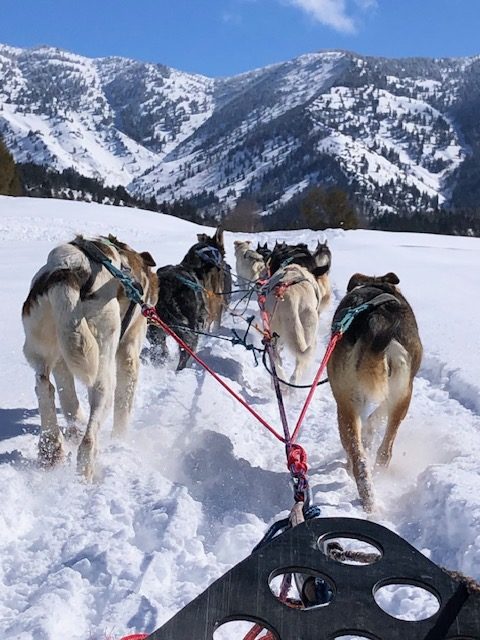
I soon bumped into a friend who had a friend in Preston who trained and occasionally raced his team of 14 Alaskan Huskies.
This musher graciously offered to give me a ride on one of his training runs. I showed up all smiles as he was harnessing his team. The dogs were excited to go and actually howling with happiness. The musher asked if I wanted to get in – or ride up the trail a bit on a snowmobile with his teenage son to a more level spot. In a rare moment of sanity, I opted for the snowmobile.
The machine had just pulled out of the yard when I heard his son say, “Oh, No!”
I looked back in time to see the sled tip over, sending the musher sliding across the driveway and under my car parked at the end of it. I jumped off the snowmobile as the dogs shot past us with the empty sled. The dogs were gaining on a truck up ahead, then shot past it with the snowmobile in hot pursuit.
I was left standing in a snowbank wondering if I’d wandered into a James Bond movie.
My first encounter with sled dogs had gone a lot smoother. I was visiting Denali National Park in Alaska and the rangers were introducing us to one of the dog teams that they still use to patrol the park.
But the most famous sled dogs are the freight teams that carried anti-toxin from Anchorage to Nome during an outbreak of Diphtheria in 1925. The dog teams ran a thousand miles and are credited with saving hundreds of lives.
For the last 50 years, modern mushers have retraced this journey in the ultimate sled dog race, the Ididarod. The best account I’ve read about the world of training sled dogs and running the Ididarod is Gary Paulsen’s book Winterdance. Just before going on a training ride, he discovered, “the gangline was trembling, quivering like a string on a guitar. It fairly hummed and I felt there was great power there. The trees in the yard went by in a mad blur and we left the yard at warp speed.”
Paulsen also lets us in on the deep relationship mushers form with their dogs: “As they understand you will give them meat when they run, and love when they run, and your soul when they run – as they learn to feel that, understand that, know that – they are no longer sled dogs – they become distance dogs, dogs that cannot, will not be stopped.” Paulson ran the Iditarod in 1983. It was a wild ride that took 17 days. But he finished.
Meanwhile, back in Preston, our teenage hero had caught up with the runaway team, made a flying leap from the snowmobile onto the empty sled, and somehow managed to stop the team. Pretty soon the musher and I caught up.
“Do you still want to get in?” he asked.
“Sure,” I said.
And we were off. The dogs settled into a steady trot. From then on it was all Sun and Snow and the sheer Joy of sliding quietly through the magnificent winter scenery.
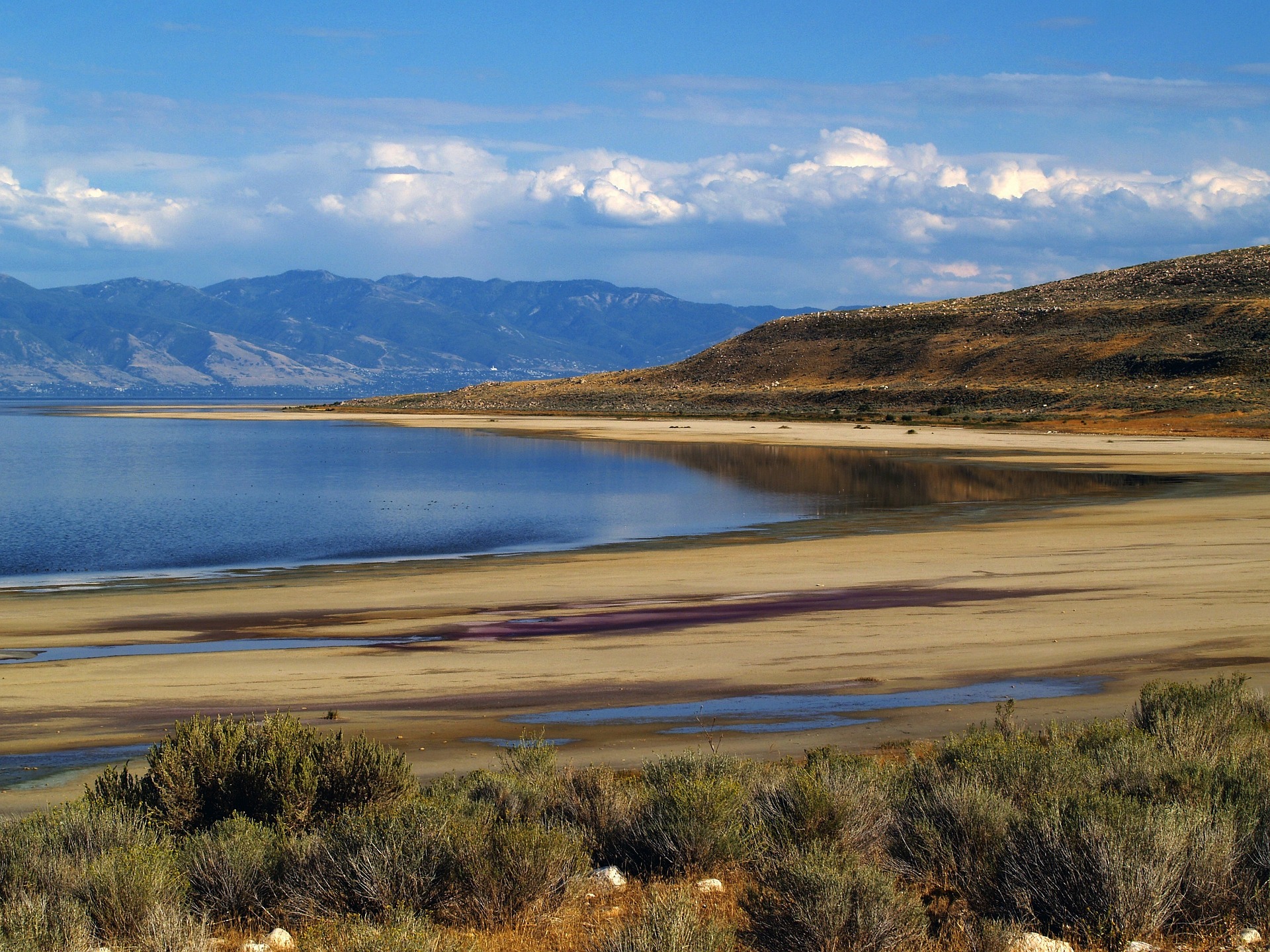
The Great Salt Lake Courtesy Pixabay, David Mark, ContributorI love rivers, especially atmospheric rivers, thanks Hawaii! Poor California. Will it ever end! As atmospheric rivers continue to destroy California, our mountains get the leftovers, which I’ve enjoyed immensely as an avid Nordic skier.
Having attended the USU Spring Runoff Conference, and the Northern Utah Water conference last week, driving streets which have become snow tunnels, an epic year of snowfall is all too apparent, possibly eclipsing the ‘011 epic year.
The Great Salt Lake welcomes every drop, while our cities brace for potential floods, a repeat of ’83 when Salt Lake City’s State Street became a favorite kayak route and trout fishery! Soil moisture is being replenished which is far more favorable to aquafer recharge and agriculture. Some reservoirs are even releasing water to prevent catastrophic overflow. We find ourselves filling sandbags anticipating the worst.
Atmospheric rivers, “giant conveyor belts of water in the sky”, cause the moisture-rich “Pineapple Express” storm systems that come from the Pacific Ocean, especially Hawaii, several times annually and are more common in the winter. From October 2018 to spring 2019, there were 47 atmospheric rivers, 12 of which were rated strong or extreme, in Washington, Oregon and California. In some parts of the world, changes in atmospheric humidity and heat caused by climate change are expected to increase the intensity and frequency of extreme weather and flood events caused by atmospheric rivers. This is expected to be especially prominent in the Western United States and Canada.
Atmospheric rivers have a central role in the global water cycle. On any given day, atmospheric rivers account for over 90% of the north-south water vapor transport. They are a major factor in extreme precipitation events that cause severe flooding in many mid-latitude, westerly coastal regions of the world. Equally, the absence of atmospheric rivers has been linked to the occurrence of droughts in several parts of the world.
Our Great Salt Lake has risen about 1 1/2 feet since it’s 2022 historic low. The LDS church is donating 20 thousand acre feet, about 0.3 % of what’s needed. They are hoping others will follow suite. Another 7 million acre feet of water is needed to create the once thriving salt lake ecosystem according to The Great Salt Lake Strike Team, a combination of two Utah research universities and three Utah agencies. They suggest water donations are one of the more cost-effective and efficient solutions for getting water back into the lake. Donations could help reduce this significant deficit, since human consumption accounts for about two-thirds of the lake’s decline.
Here in Cache Valley, our high school students will be competing with each other in “Saving the Great Salt Lake” to see which school can most effectively engage their schools and communities in reducing water consumption. Cash prizes will be awarded to all participating schools, along with a tree to plant on their school grounds or another public space. Contact jackisblue49@yahoo.com for further information.
This is Jack Greene for Bridgerland Audubon, and you guessed it-I’m wild about Utah and it’s Great Salty Lake!
The Bee Courtesy & Copyright Shannon Rhodes, Photographer
The Bird [A Mallard Drake] Courtesy & Copyright Shannon Rhodes, PhotographerMarch is a thrilling month to be in an elementary school. Besides fifth grade maturation sessions, shamrocks pop up and many spotlight the impact of Dr. Seuss. Besides green eggs and ham eaten by children wearing tall red and white hats, we read and re-read books filled with fanciful characters and rhymes that roll off the tongue. I learned this year along with my students that Dr. Seuss’s father was the superintendent of parks in Springfield, Massachusetts, so naturally young Theodor took his sketchpad and pencil to observe and record whenever he could. When an animal lost an antler at the zoo, he would use it to craft a sculpture just as whimsical as the imaginative ones in his books. He called them pieces of The Seuss System of Unorthodox Taxidermy and placed them early in his career as promotional advertisements in bookshops. Kangaroo Bird with its teal stripes and pouch-perched hatchling and the Andulovian Grackler’s fur tufts and orange bill intrigue me. He also painted the stunning “The Birds and the Trees” featuring a white flock flying between red and pink palm trees that inspired the Dadake Day in “Oh the Thinks You Can Think.” As we studied Dr. Seuss’s “Did I Ever Tell You How Lucky You Are?” released 50 years ago this year, students noted how many birds appeared in the pages, leading us to do a Seuss bird scavenger hunt, our version of the birding counts chronicled in Mark Obmascik’s “The Big Year: A Tale of Man, Nature, and Fowl Obsession” (that’s f-o-w-l).
I do know I was lucky to teach once on a fifth grade team with a man students called Mr. J. Among many other things, he taught them how to recognize and identify birds. He preserved a time each day to review birds they had learned and add facts about a new species, how it looks, how it sounds, and how it behaves. He could display photographs and even silhouettes; students knew the shapes enough to identify them. He could play short audio clips, and students shouted out the corresponding birds too. I’ve discovered since The Bird Song Hero app that provides a spectrogram showing pitches visually that allow people like me another way to memorize those various bird songs. I remember I popped in the day they were discussing how our loggerhead shrike impales insects, rodents, snakes, and lizards on fences and really anything sharp and off the ground. When we took them on the bus through the Bear River Migratory Bird Refuge, I couldn’t believe my ears as kids with binoculars and without them were confidently shouting, “I see…” and tallying on their clipboards. For weeks that spring I would find students at recess peering up in the sky above the schoolyard doing the same thing. When I marveled at this phenomenon, Mr. J. smiled. “You know, Shannon, it isn’t about the birds. It’s about being aware.”
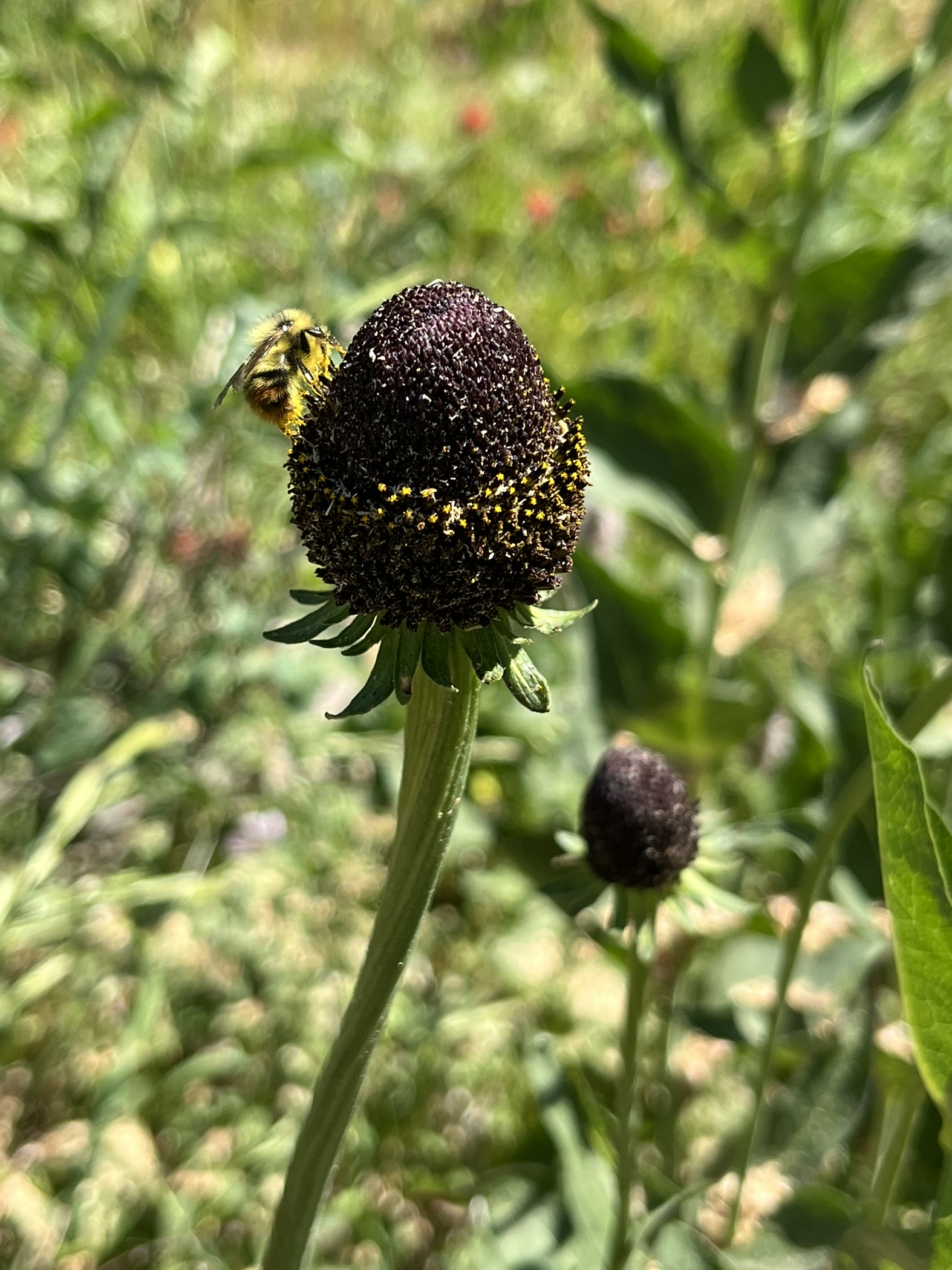
So often his “It’s about being aware” mantra pops in my head, like it did this week when my students huddled around our class pet cage housing a bee that emerged early from my Crown Bee tube “free-bee” from a recent science-teaching conference. Just like Dr. Seuss’s Bee-Watcher-Watchers, these six- and seven-year-olds eagerly missed romping in the fresh powder playground to watch a bee perched on a strawberry. I’ve done the same thing, standing mesmerized, lost in thought, watching a bee on a western coneflower, repeating the Seuss rhyme “Just tell yourself, Duckie, you’re really quite lucky.”
Newberry, Todd & Holtan, G. (2005). The Ardent Birder: On the Craft of Birdwatching. Random House LLC. https://www.amazon.com/Ardent-Birder-Birdwatching-Newberry-2005-10-01/dp/B01FGJKGUS?asin=1580087159&revisionId=&format=4&depth=1
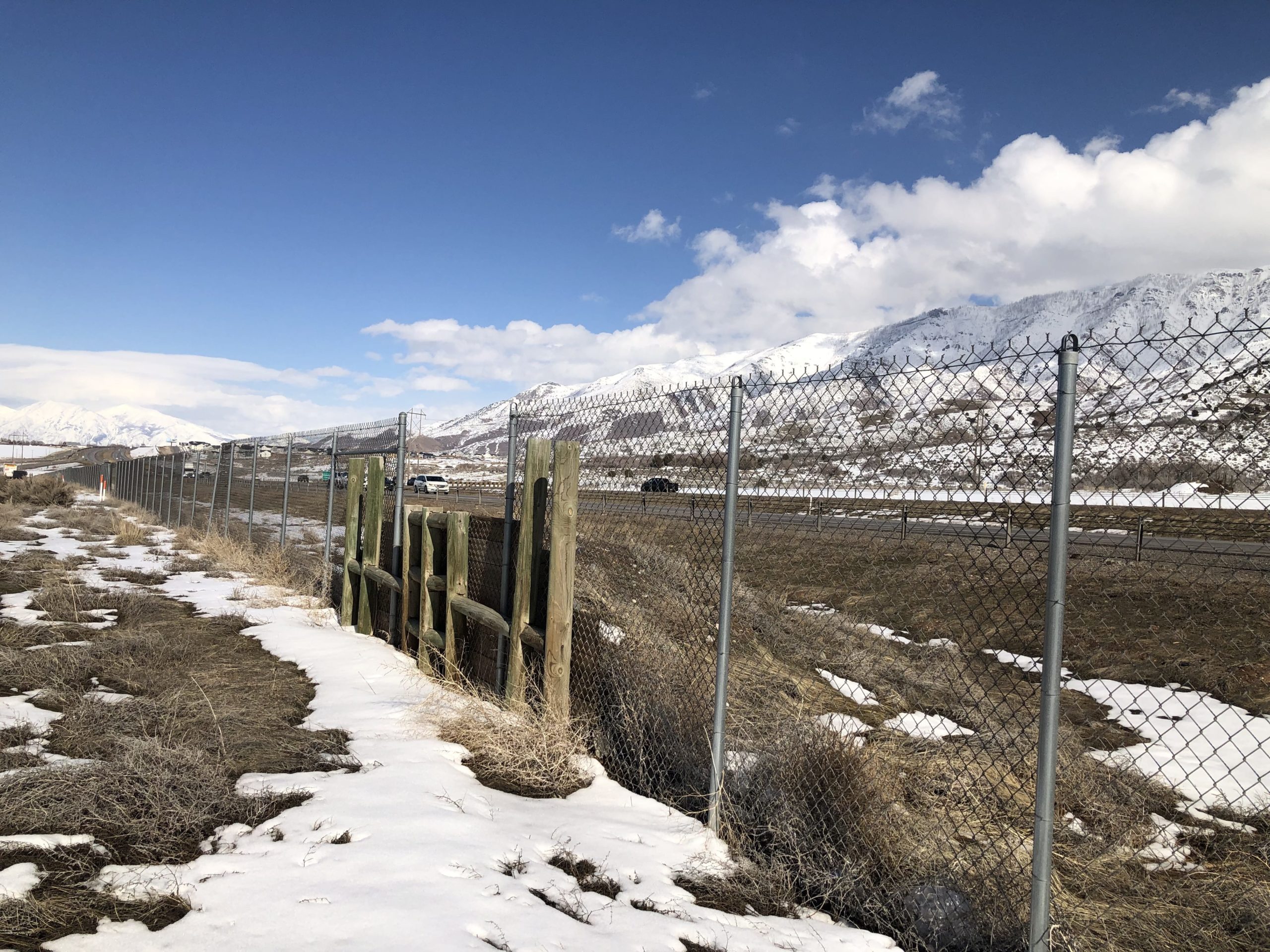
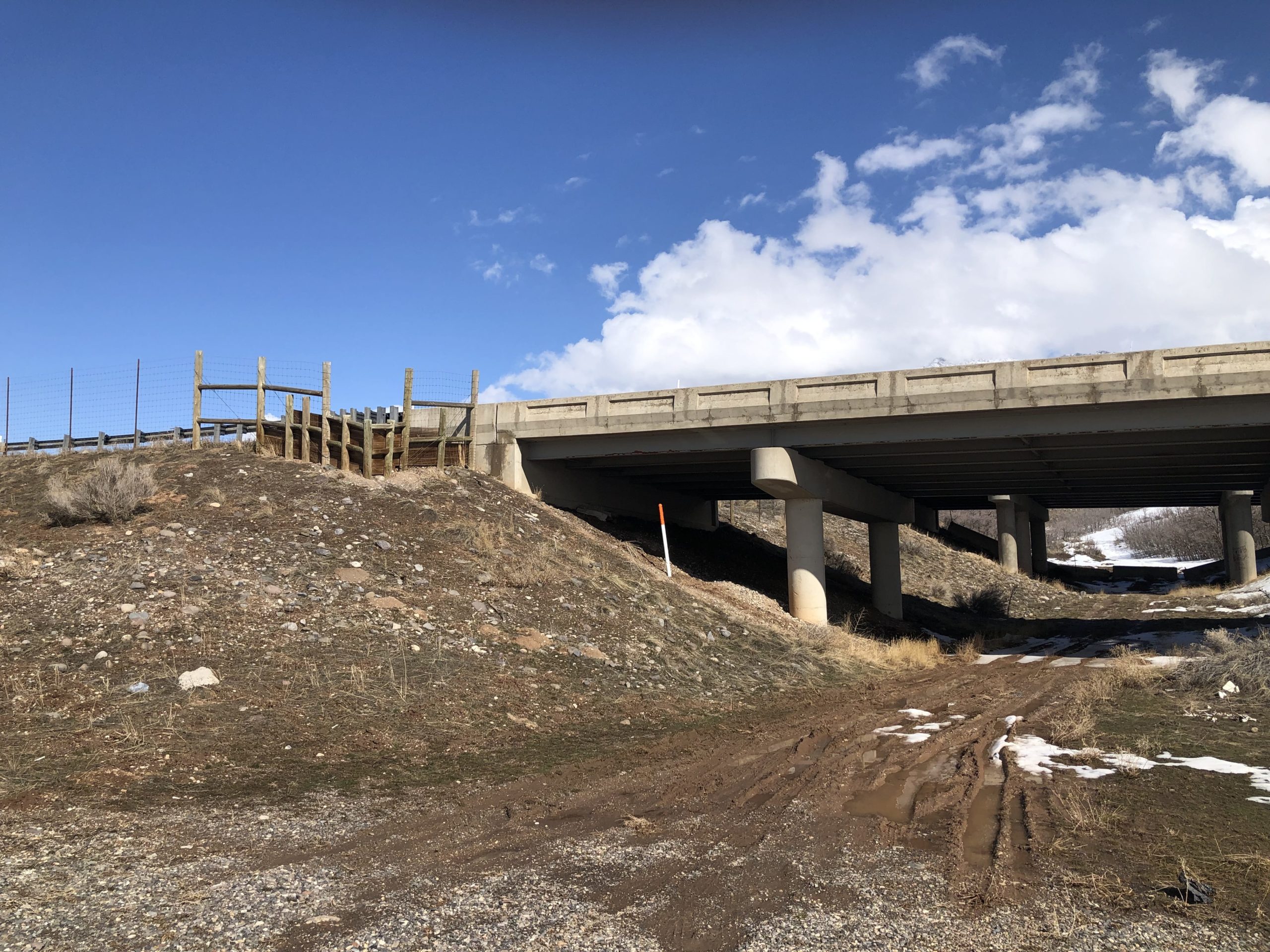
Underpass and Jump Ramp Near Santaquin WMA Courtesy & Copyright Lyle Bingham, Photographer
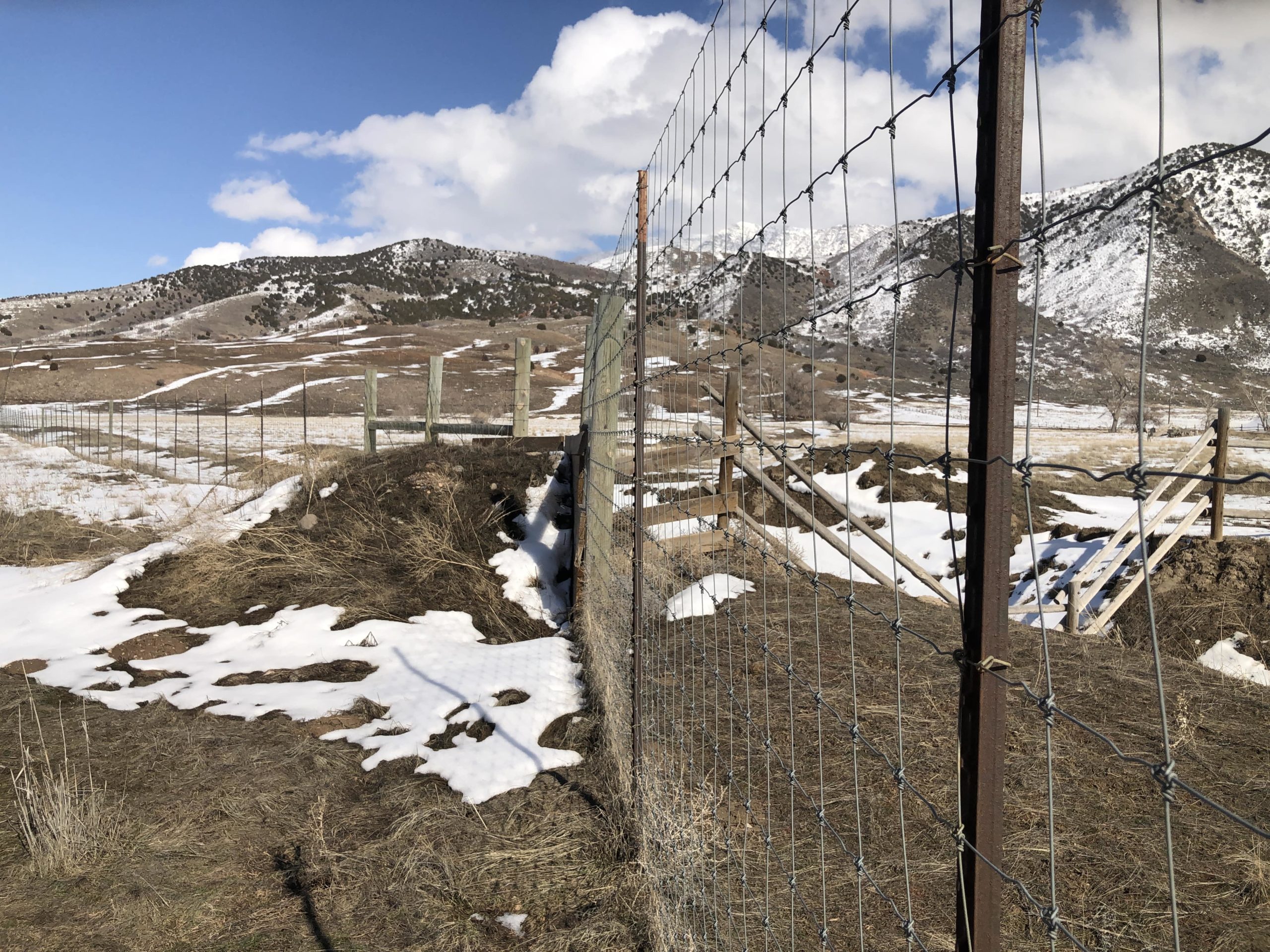
Rural Road Leading to Santaquin Wildlife Management Area Courtesy & Copyright Lyle Bingham, PhotographerDeer and other wildlife have been migrating across our state much longer than humans. When people drove horse-drawn wagons and slower vehicles, wildlife could easily pass without a problem. However, with the introduction of fenced highways and their increased speed and traffic, problems quickly arose. In this case, the problem is mostly with mule deer, because they comprise 90% of the animals migrating in Utah. Robert Frost wrote that “Good fences make good neighbors.” But neighbors need to cooperate to maintain a fence, and even with fences in place, what if the neighbors are animals? The problem is how to keep migrating deer from jumping fences and causing accidents.
Animal/vehicle encounters cause over 5,000 animal deaths in Utah each year. Beyond the loss of life, it is also an economic problem, not only for wildlife management but also for vehicle owners. Some estimate the deer are worth more than $2,500 each. Joshua Coursey wrote in the Deseret News, that the “estimated cost of collisions with mule deer in Utah reached close to $50 million in 2021.” That’s why the Utah Department of Transportation (UDOT) and the Division of Wildlife Resources (DWR) have worked for decades to reduce wildlife/vehicle encounters. As noted, fencing alone does not work; consequently, highway managers have had to find ways to get trapped deer across and away from fenced roads.
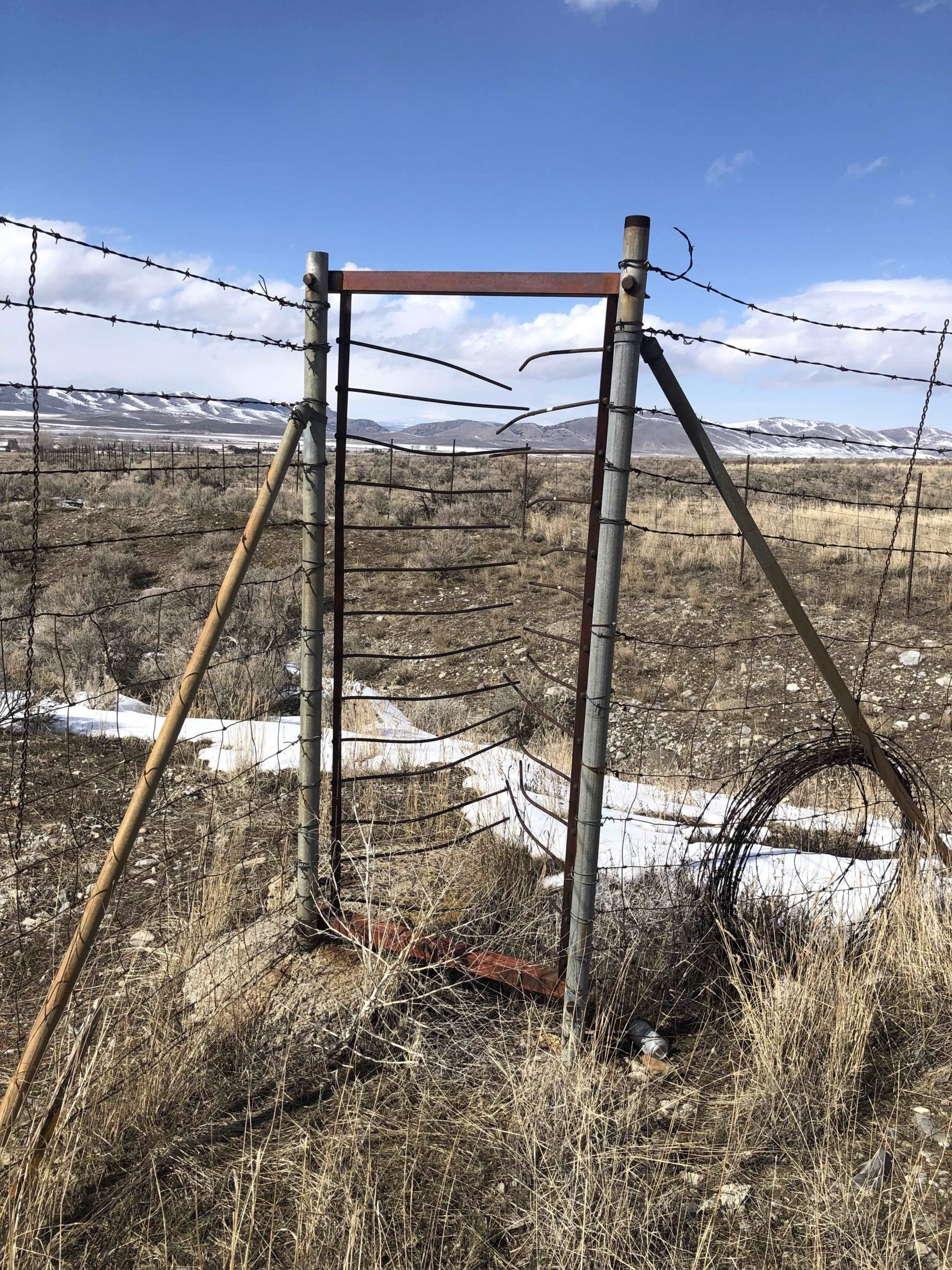
When USU researchers studied escape mechanisms in Sardine canyon, they found earthen escape mounds were superior to one-way, metal gates. Climbing a hill is more natural to deer than pushing through a metal gate. These mounds enable a one-way jump to safety. However, escape alone does not solve the driving force of migration.
A more effective way to handle migrating animals is to guide them above or below the road. UDOT explains: “Studies have shown there is a 90% reduction in wildlife/vehicle collisions when there is a crossing structure and fence in the area.” Since 1975, when UDOT built its first wildlife overpass near Beaver, Utah, deer, moose and elk, along with bear and mountain lions have begun to use wildlife underpasses and overpasses. More recently, a larger overpass was built in Parley’s Canyon on I-80. Videos show a variety of animals who successfully traverse that overpass.
But escape ramps and overpasses aren’t the only tools available. Passage is also possible using creek beds or culverts crossing under roads. Tall fences are effective in guiding animals toward structures and preventing roadway access. Then, to encourage faster adoption, contractors have found they can walk a herd of cattle through the structure, overpowering human scents
When on I-15, I-80, I-70, or in our canyons, watch for overpasses, underpasses, one-way gates and exit ramps. They demonstrate a few ways the DWR and UDOT are working together to preserve human and animal lives.
This is Lyle Bingham, and I’m Wild About Utah and our 15 years on Utah Public Radio.
Buford, Daniel, Cramer, Patricia, and Simpson, Nova, Integrating Wildlife Connectivity and Safety Concerns into Transportation Planning Processes, Federal Highway Administration, US Department of Transportation, Winter 2023, https://highways.dot.gov/public-roads/winter-2023/04
“A dynamic part of a National Cooperative Highway Research Program sponsored research project titled; ‘Evaluation of the Use and Effectiveness of Wildlife Crossings.'”, https://www.wildlifeandroads.org/
DWR: “It’s the video seen around the world! This compilation of footage shows various animals using the wildlife crossing constructed in 2018 over Interstate 80 near Parleys Summit. What’s especially notable with this crossing is how many animals are already using it; usually it takes several years for wildlife crossings to become widely used.
This video went viral near the end of 2020, and was celebrated as great progress in the problem of wildlife-vehicle collisions. Special thanks to the Utah Division of Wildlife Resources, Utah Department of Transportation and Summit County for the footage.” https://wildlifemigration.utah.gov/stories/parleys-summit-wildlife-crossing/
UDOT: Baker Canyon Wildlife Crossing Installation
DWR: “Utah’s highways are vital to the health of the state. They can present a significant barrier for wildlife migration. In order to prevent automobile/wildlife collisions and to increase habitat availability for animals, Wildlife biologists and the Utah Department of Transportation have designed and installed several overpasses and underpasses to allow wild animals to safely cross the highway.”

![The Bees and the Birds: The Bird [A Mallard Drake] Courtesy & Copyright Shannon Rhodes, Photographer](https://wildaboututah.org/wp-content/uploads/rhodes.shannon.the-bird-min-scaled.jpg "Click for a larger view: The Bird [A Mallard Drake] Courtesy & Copyright Shannon Rhodes, Photographer")