An Arizona Road Trip Back Into the Past

Montezuma Castle, Courtesy US NPS
Montezuma Castle
Courtesy US NPS
 
Location of Hubbell Trading Post NHS in the Southern Colorado Plateau Network,  Courtesy US NPSLocation of Hubbell Trading Post NHS in the Southern Colorado Plateau Network
Courtesy US NPS
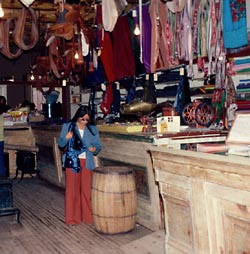
 
Hubbell Trading Post, Courtesy US NPSHubbell Trading Post Interior
Courtesy US NPS

Arizona is rich in history — from the 1800s all the way back to the Late Triassic Period. You can stitch together a road trip that winds out of Flagstaff to Montezuma Castle National Monument, to Petrified Forest National Park, and ends at Hubbell Trading Post National Historic Site. Along the way you’ll experience fascinating chapters of geologic and cultural history.

At Montezuma Castle, 45 minutes south of Flagstaff and just off Interstate 17 (Exit 289), a short walk places you in front of a 5-story-tall cliff dwelling that offered safety from invaders: it stands 100 feet above the valley floor, nestled into an alcove.

The site was misnamed Montezuma Castle in the late 1800s by whites who thought the structure had been built by the Aztec people. The original owners, members of the Southern Sinagua (seen aug wah) people, called this area home from roughly 1100-1425 A.D.

Stroll the short trail that loops around a vegetated landscape below the “castle,” and you’ll find great views as well of the remains of Castle A. That dwelling once rose 60 feet and was home to about 100 residents.

From Montezuma’s Castle, it’s 95 miles via Arizona 87 to Winslow, and then 34 miles east on Interstate 40 to Holbrook. Finally, another 19 miles southeast on Arizona 180 leads you into Petrified Forest National Park and its unusual landscape.

There’s no lodging within the park, and you have to leave by sundown, so you will need to make some tough decisions if you have just one day. Do you take time to tour the Rainbow Forest Museum with its dinosaur displays, or hike out to Agate House?

A building built of petrified wood is pretty cool, so stretch your legs with a walk to the house. Then head north and deeper into the park to the Crystal Forest Trail. Wander this path and you’ll find yourself surrounded by petrified wood with its hues of yellow, red, and green, black and white.

Blue Mesa is another great stop. There’s a trail that takes you down into another colorful landscape of badlands and chunks, logs, and even slabs of petrified wood in shades of red, blue, yellow and black.

The northern end of the park road is anchored by the Painted Desert, a great place for sunset photos. Here you’ll also see the Painted Desert Inn, which some day could put the Park Service back into the lodging business but today is just a museum piece.

Back on Interstate 40, drive 22 miles east to Chambers, and then north on U.S. 191 for about 38 miles to Ganado and Hubbell Trading Post. This authentic trading post was opened by John Lorenzo Hubbell in 1878 on the Navajo Reservation.

Although it was added to the National Park System in 1967, Hubbell is not a museum piece but an active trading post. As such, it still holds richly woven Navajo rugs, jewelry, and other Native American artworks for purchase.

Schedule your visit to Hubbell Trading Post for May and you just might be able to attend the annual Native American Art Auction. Check with the park (928-755-3475) for the exact date.

If you have a little more free time, you could extend your your trip by heading 39 miles north on 191 to Canyon de Chelly National Monument.

For Wild About Utah and National Parks Traveler, I’m Kurt Repanshek.

Credits:
Image: Courtesy and Copyright Kurt Repanshek, www.nationalparkstraveler.com
Text:     Kurt Repanshek, NationalParksTraveler.com.

Additional Reading:

Montezuma Castle National Monument, NationalParksTraveler.com, https://www.nationalparkstraveler.com/2012/03/visiting-montezuma-castle-national-monument-arizona9636

Montezuma Castle National Monument, US National Park Service, https://www.nps.gov/moca/index.htm

Geographic Area covered by the State of Deseret and Utah Territory, International Society Daughters of Utah Pioneers, https://www.dupinternational.org/dyn_page.php?pageID=54
Fossil Formation

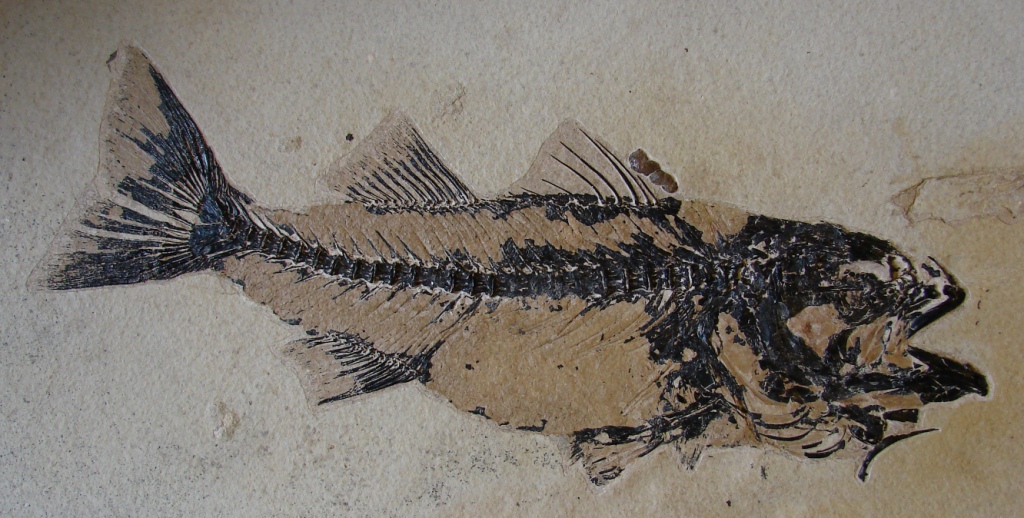
Fossil Formation: Click for a larger view of a fossil, Courtesy and copyright 2008 Stokes Nature Center, logannature.org
Fossilized fish
Mioplosus labracoides
Copyright 2013 Stokes Nature Center
Andrea Liberatore, Photographer

Fossil Formation: Click for a larger view of a fossil, Courtesy and copyright 2008 Stokes Nature Center, logannature.orgFossilized fish
Copyright 2013 Stokes Nature Center
Andrea Liberatore, Photographer

Fossil Formation: Horn Corals from Logan Canyon, Courtesy and copyright 2008 Stokes Nature Center, logannature.orgHorn Corals from Logan Canyon
Copyright 2013 Stokes Nature Center
Andrea Liberatore, Photographer

Fossilized leaf, Courtesy and copyright 2008 Stokes Nature Center, logannature.orgFossilized leaf
Copyright 2013 Stokes Nature Center
Andrea Liberatore, Photographer

Fossilized shells
Copyright 2013 Stokes Nature Center
Andrea Liberatore, Photographer

Fossil Formation

The most popular school program that the Stokes Nature Center offers is a geology lesson for second grade. I’m not sure what happens between second grade and adulthood to make our general perception of geology go from exciting to boring, but you would be amazed at how excited second graders get over rocks, and especially, over fossils.

Fossils are really quite rare – a very specific set of conditions have to be met in order to create one. Most living things decompose fairly rapidly upon death, leaving no trace of their existence behind. In order to create a fossil, this process of decomposition needs to be halted fairly rapidly, which typically means that the body is quickly covered by some kind of sediment – like sand, or soil or mud. For this reason, most fossils are found embedded in sedimentary rock. If pressure and moisture levels are just right, over the course of millions of years the organism’s molecules will slowly be replaced by minerals from the surrounding sediments – eventually turning bone into stone.

Only somewhere around one in a billion bones will make it through this process. From there the fossil has to remain intact and identifiable through eons of tectonic plate movement, earthquakes, and mountain uplift. Then, in order to be found it has to be located near enough to the earth’s surface, and in such a place where a human might come across it. Some geologists estimate that only 1 in 10,000 species that have ever lived have made it into the known fossil record, which makes me wonder what discoveries still await us.

Fortunately for us, prehistoric Utah was a place where fossilization happened with some regularity, as evidenced by places like Dinosaur National Monument and the Escalante Petrified Forest. Did you know that Utah has a state fossil? That distinction goes to the allosaurus, a predatory dinosaur that thrived during the Late Jurassic period. Numerous skeletons found in east-central Utah range in size from 10 – 40 feet in length, meaning this fearsome creature may have rivaled it’s more famous cousin Tyrannosaurus Rex for top predator status.

With such a rich fossil history, it’s not out of the question that you might stumble onto something truly amazing during a routine hike. Can you keep your find? Well, that depends on two things: the type of fossil, and whose land it was found on. On public lands in Utah, fossils of vertebrates cannot be collected, while fossils of invertebrates and plants can be. Private land owners have full rights to the fossils found on their property. With all fossils, it’s a great idea to report your find to the US Geological Survey so that your discovery can be documented for public or scientific research, display or education.

Fossil creation is an incredible phenomenon that has allowed us to glimpse the earth’s history in ways that would otherwise be completely hidden. Thanks to fossils, we can envision a prehistoric landscape filled with giant ferns, enormous dragonflies, long-necked allosauruses, and flying pterodactyls. Without the evidence in the fossil record, I doubt that even the most imaginative person among us could have envisioned such an amazing array of life.

For the Stokes Nature Center and Wild About Utah, this is Andrea Liberatore.

Fossil Formation-Credits:

Photos: Courtesy & © Stokes Nature Center, logannature.org
Text:    Andrea Liberatore, Stokes Nature Center, logannature.org

Fossil Formation-Additional Reading:

State of Utah, Utah Geological Survey, Dinosaurs & Fossils (2011) https://geology.utah.gov/utahgeo/dinofossil/index.htm

McCalla, Carole and Eldredge, Sandy (2009) What should you do if you find a fossil? Utah Geological Survey. Accessible online at: https://geology.utah.gov/surveynotes/gladasked
/gladfossil_collecting.htm

Trefil, James (1996) 101 Things You Don’t Know About Science and Nobody Else Does Either. Houghton Mifflin Company: New York, NY, https://www.amazon.com/Things-Dont-About-Science-Either/dp/0395877407

Bryson, Bill (2003) A Short History of Nearly Everything. Broadway Books. New York, NY, https://www.amazon.com/Short-History-Nearly-Everything-Illustrated/dp/0307885151

Hylland, Rebecca, What are Igneous, Sedimentary & Metamorphic Rocks?, Glad You Asked, Utah Geological Survey, https://geology.utah.gov/map-pub/survey-notes/glad-you-asked/igneous-sedimentary-metamorphic-rocks/

Spider Silk

Orb Spider Web
Contains 3 Types of Silk

Courtesy & Copyright 2011
Terry Greene, Photographer

Spider silk has long been of interest to scientists and engineers for its incredible strength. Silk can be, by weight, a stronger fiber than steel or Kevlar. But new research has discovered that the strength of the individual fibers does not explain the durability of a web, which can remain functional after sustaining extreme stress. The web’s overall design adds to silk’s durability to create a truly functional product.

Spiders utilize silk for many different reasons – transportation, lining burrows, protecting and securing egg cases, and of course for catching prey. Amazingly, an individual spider has the ability to manufacture several different types of silk, which are used for different purposes. In a typical orb-style web there are at least three kinds of silk at work. One is strong and dry, making up the ‘spokes’ of the web. These are the strands upon which the spider itself moves around, so as not to get stuck in its own trap. The strands which create the characteristic spiral pattern are actually made of two types of silk – one is a fine, stretchy fiber, and the other a sticky, glue-like substance. Together, these two silks make up the part of the web responsible for snaring prey.

Another important property of silk is that when stretched the fiber stiffens. As more pressure is applied, the properties of the silk change, allowing it to become stretchy and flexible. If still more pressure is added, the silk stiffens again, until finally it breaks. Originally, this stiff-stretchy-stiff response to stress was viewed as a weakness, but when analyzed as part of an interconnected web, that’s not the case. A team of scientists from MIT noted that webs could be subjected to a lot of force with only minimal damage. Whether the force was localized – for example while ensnaring a large insect – or more widespread over the entire surface – such as pressure from strong winds – the damage incurred by the web was minimal. Only the individual strands that endure the most pressure break, while others stiffen, flex, and remain intact.

Localized damage allows the spider to more often than not simply repair a web instead of abandoning it and starting over. Creating silk and weaving a web is a costly process for a spider – it takes up a lot of the arachnid’s energy. The ability to simply patch the broken parts is a more efficient strategy which requires less energy expenditure and fewer materials than weaving a new web.

Figuring out how to mimic this response to stress on a material could be infinitely useful in the human world. Imagine a skyscraper in an earthquake that fails in one small place where the forces are strongest – not in its entirety as is currently the case. That same earthquake-damaged building might also need only minimal repairs, saving time, money, and materials. Oh the lessons we could learn from one of nature’s smallest creatures…

Thank you to the Rocky Mountain Power Foundation for supporting the research and development of this Wild About Utah topic. For the Stokes Nature Center and Wild About Utah, this is Andrea Liberatore.

For the Stokes Nature Center and Wild About Utah, this is Andrea Liberatore.

Credits:
Images: Courtesy & Copyright 2011 Terry Greene
Text:     Andrea Liberatore, Stokes Nature Center in Logan Canyon.

Additional Reading:

Chandler, David L. (2012) How Spider Webs Achieve Their Strength. MIT News Office. Available online at: https://web.mit.edu/newsoffice/2012/spider-web-strength-0202.html

National Science Foundation press release (2012) A Spider Web’s Strength Lies in More Than its Silk. Available online at: https://www.nsf.gov/news/news_summ.jsp?cntn_id=123041

Law, Steven (2012) Curious Things About Spider Webs. Available online at: https://www.ksl.com/?nid=968&sid=20488145

The Smell of Rain

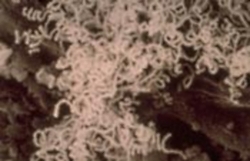
Electron micrograph showing
the filamentous structure of
actinomycetes
Photo Courtesy:
Soil Science Society of America

Spring is my favorite season. I love watching our landscape turn from brown to green, the first butterfly sighting, and the rain. During a recent April shower, I stepped outside and inhaled that magical springtime scent – the smell of rain. Which got me thinking – what is that smell, anyway?

What seems like a simple question, begs a complicated answer. That smell, however, does have a name – petrichor – and there are many things that contribute to its scent. One of the biggest culprits may actually be soil bacteria – mostly from the genus actinomycetes – which grow in unfathomable concentrations in soils all around the world. These bacteria play an important role in decomposition and soil health. Periods of relative dryness trigger their reproductive cycle, causing the production of spores, which are considerably more drought-tolerant. When rain finally does fall, the spores are launched into the air, where they may eventually reach our nose. Scientists have identified the chemical compound responsible for the spore’s odor and have named it geosmin, which literally translates to ‘earth smell.’

Humans noses are particularly sensitive to geosmin, but we’re not the only ones. Camels, too, are sensitive to its smell and some scientists believe this helps them find oases in the desert. Our ability to detect this odor might be a throwback to our nomadic ancestors for whom finding water in a vast landscape was of utmost importance.

But the scent trail doesn’t end with geosmin. The chemical compound ozone may also be a part of petrichor especially after a thunderstorm, as ozone is produced by lightning. Another aroma is provided by chemicals called volatile oils which are produced by all plants, and which collect on the ground during dry periods. With rain, they evaporate into the air, contributing to the musty, earthy odor. Acidic rain has also been shown to create scents by reacting with chemicals on the ground such as spilled gasoline. And further complicating the matter is the fact that rain hitting the earth throws dust and other particles from countless sources into the air.

If all of these smells are around us all the time, why is it that they are distinctly associated with rain? The answer lies in the properties of odors and how they travel. Everything that produces a scent is releasing chemical compounds into the air. The ability to evaporate – or volatility – of these compounds increases with the heat and moisture levels of the air around them. The humid air that produces rain creates ideal conditions for conveying scents to our noses.

In the end, it’s not the rain itself that causes odor, but the interaction of water and a number of chemical and organic compounds. Test this theory at home by throwing a bucket of water on the lawn or a hot driveway to see if you can recreate the smell of rain. Likewise, smell a stick, leaf, or rock when it is dry, then wet it and see how the odor changes. For those seeking answers to the origins of the smell of rain, it’s often best to follow your nose.

Thank you to the Rocky Mountain Power Foundation for supporting the research and development of this topic.

For the Stokes Nature Center and Wild About Utah, this is Andrea Liberatore.

Credits:
Images: Photo Courtesy Soil Science Society of America
Text:     Andrea Liberatore, Stokes Nature Center in Logan Canyon.
Special thanks to Joel Martin from the Utah Climate Center
Additional Reading:

National Public Radio (2007) The Sweet Smell of Rain. All Things Considered, August 11 2007. Interview of Dr. Charles Wysocki by Debbie Elliott. Transcript available online at: https://www.npr.org/templates/story/story.php?storyId=12716163

Gerritsen, V.B. (2003) The Earth’s Perfume. Protein Spotlight, Issue 35. Accessible online at: https://web.expasy.org/spotlight/back_issues/035/

Gerber, N.N, and Lechevalier, H. A., (1965) Geosmin, an Earthy-Smelling Substance Isolated from Actinomycetes. Applied Microbiology. 13,6. Accessible online at:
https://www.ncbi.nlm.nih.gov/pmc/articles/PMC1058374/pdf/applmicro00362-0105.pdf

Live Worldwide Network for Lightning and Thunderstorms in Real Time, Blitzortung, https://en.blitzortung.org/live_lightning_maps.php?map=30