A Utah Public Radio production featuring contributors who share a love of nature, preservation and education
Podcast: Wild About Utah
Wild About Utah is a Utah Public Radio production featuring contributors who share a love of nature, preservation and education. Contributors include Bridgerland Audubon Society, Utah Public Radio, Stokes Nature Center, the Edith Bowen Laboratory School (EBLS) at USU and many other nature-related individuals and institutions. See WildAboutUtah.org for a list of authors, voices and contributors.
Photographer: Larry Moats Courtesy US FWS Digital LibraryThere are those moments in one’s life when time stops and moments become hours. So it was while trail running in the Wellsville mountains of N. Utah
Deep in the forest shadows materialized a form- a coyote! Well, that was the initial thinking. I stopped for closer inspection and began talking in a soft, welcoming tone so as not to frighten away my favorite song dog.
The animal form persisted- no frenzied running up the steep slope just beyond. Interesting.
I walked toward the figure to find the fright distance and for closer encounter. Eight steps in crunchy leaves and the animal began to move. Wow! A long tail emerges. The canine face transforms to feline. MOUNTAIN LION!!!
After 50+ years of trapesing through wild, rugged country in the western U.S., dream becomes reality- that of seeing this shadow being in real form.
Mesmerized, I continue a cautious approach. The cat holds its ground. Our distance closes to 50 yards when it begins a leisurely retreat. I continue singing praises to its magnificence. At one point I find myself emitting “Here Kitty, Kitty, Kitty” to which fortunately it doesn’t respond.
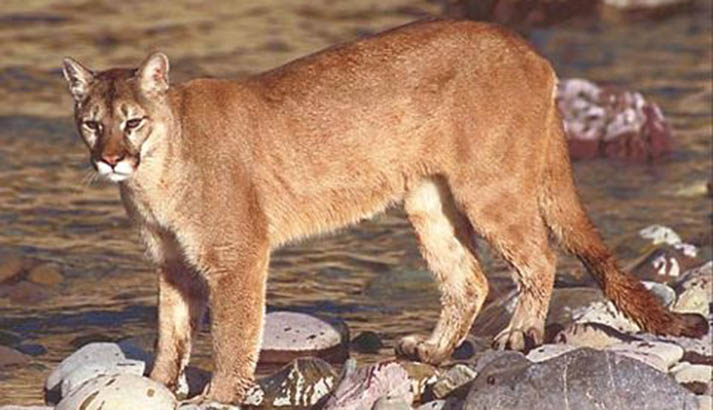
Mountain Lion Courtesy US FWSA large tom with striking colors- its lithe, fluid, soundless movement- poetry in motion, a marvel of artistic expression. It stops frequently, looking back to lock eyes with wonderment- perhaps its first close encounter with this strange being.
Eventually it gains the steep slope and picks its way upward. Occasional sunburst accents the rich tawny gold and well-muscled body. Eyes strain to follow its progress, fading into the dream it once was.
Cougars are solitary animals, making them a rare sight for humans. They usually hunt alone and at night, ambushing their prey from behind. Typically, cougars kill their prey with a bite to the lower neck. After making a kill, a cougar often will take the carcass to the base of a tree and cover it with dirt, leaves or snow, saving it to eat later.
Their main prey is deer, so cougars are often found close by. They can live up to 12 years in the wild but have lived up to 25 years in captivity.
Only 20 people in North America have been killed by cougars during the past 125 years, including six in California and 8 in Canada. No deaths have ever been reported in Utah. It is far less likely than dying from snake bites, avalanches, lightning strikes, hypothermia, or bee stings, or just about any other means. Children are particularly vulnerable when alone.
If approached by one, intimidation by intense eye contact, loud shouting, and any other actions to appear larger and more menacing is warranted.
This is Jack Greene writing and reading for WAU
Credits:
Images: Courtesy US FWS Digital Library
Text: Jack Greene
Sources & Additional Reading:
Mountain Lion, Wildlife Notebook, Utah Division of Wildlife Resources,
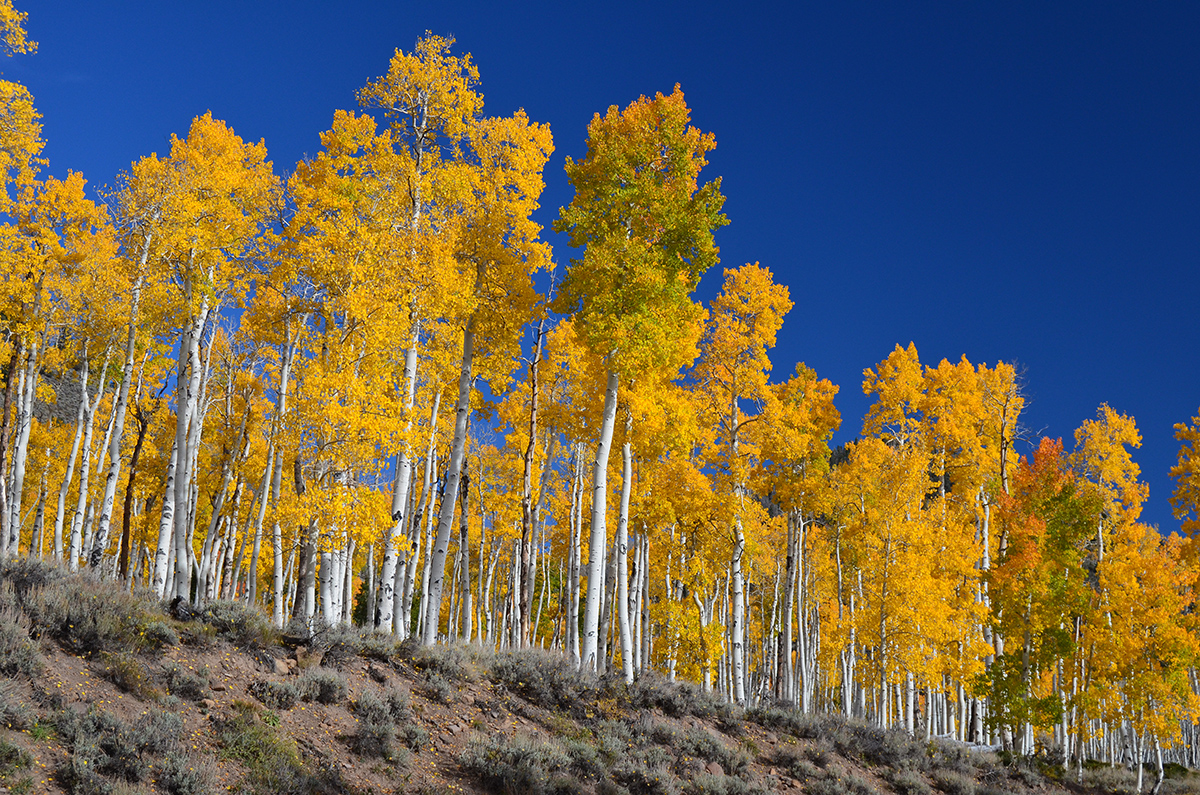
Pando, the worlds largest discovered organism at Fishlake in central Utah Image courtesy USDA Forest Service J. Zapell, Photographer
Pando, a sprawling aspen colony and the world’s largest discovered organism, is dying. On the lip of Fish Lake in Central Utah, Pando germinated from a seed the size of a grain of sand thousands of years ago. Now he sprawls over a hundred acres with approximately 47,000 trunks. The combination of the trunks and the extensive root system has Pando weighing in at around 13 million pounds. This giant male, which might be one of the oldest living organisms on the planet, is also prone to disease, wanted by humans to burn in stoves, and targeted by ungulates as a food source. And although Pando consists of literally tons of mature, geriatric trees, there aren’t many young volunteers replacing old trees that die.
Dr. Paul Rogers, a Utah State University scientist who’s trying to save Pando, explained the problem to me while we searched for new growth and deer scat on Pando. He said it would be like depending on a room filled with 90-year-olds to repopulate and save the human race—it’s possible, but not likely.
The age of the current mature trees that make up Pando is about 110-120 years. These ages are gleaned from a tree coring device called a borer. This information combined with others findings show that Pando took a turn for the worse about when Anglo-Americans showed up in central Utah. As they hunted apex predators like bears, wolves and mountain lions, populations of ungulates such as deer and elk increased. White settlers also added other ungulates—sheep, cows, and horses—to the ecosystem. Both domestic and wild ungulates feast on young, nutrient-filled Aspen trees. Which makes it so Pando can’t recolonize himself.
I asked Rogers if the reason he wanted to save Pando was because it was the superlative organism—the oldest and biggest on the globe, and he was quick to correct me. He questions the accuracy of age estimates for Pando based on current available science. And he believes there may even be larger aspen colonies, but we just haven’t found them yet. We know about Pando partially because a paved road goes right over his spine and partially because he almost touches Fish Lake. Rogers says he’s interested in saving Pando because the existence of this huge organism supports many dependent species and it likely holds lessons for sustainable cohabitation of this planet. As an afterthought he added, “If the colony dies on our watch, we’re doing something majorly wrong.”
There is hope for Pando. Aspen do two things really well: die and repopulate. In recent years, efforts have been implemented to preserve Pando. Paradoxically, some sections have been clear cut or burned to stimulate growth. Both techniques have produced positive results, but not enough. It seems the simplest solution to this problem might be the best—protect it from foraging ungulates. Eight-foot deer fences now encircle parts of Pando. Outside the fences, there are no new trees. Inside, however, green shoots can be seen pushing up from the dry ground.
WESTERN ASPEN ALLIANCE is a joint venture between Utah State University’s College of Natural Resources and the USDA Forest Service Rocky Mountain Research Station, whose purpose is to facilitate and coordinate research issues related to quaking aspen (Populus tremuloides) communities of the west. https://www.western-aspen-alliance.org/
DeWoody J, Rowe C, Hipkins VD, Mock KE (2008) Pando lives: molecular genetic evidence of a giant aspen clone in central Utah. Western North American Naturalist 68(4), pp. 493–497. https://digitalcommons.usu.edu/aspen_bib/3164
Mock, K.E., C . A. Rowe, M. B. Hooten, J. DeWoody and V. D. Hipkins. Clonal dynamics in western North American aspen (Populus tremuloides) Molecular Ecology (2008) 17, 4827–4844 https://digitalcommons.usu.edu/wild_facpub/163/
Cedar Waxwing US FWS FWS Digital Library, David Menke, PhotographerEvery winter, many of Utah’s breeding birds migrate south to avoid the cold. After the warblers, tanagers, and orioles leave each fall, we share the snowy winter with hardier residents, such as chickadees, nuthatches, and juncos. But even hardier birds breed in the far north and venture south to Utah only during the most severe winters.
…Cedar Waxwing (CEDW) call, Western Soundscape Archive; University of Utah, Audio file copyright 2007, Kevin Colver. All rights reserved…
Many people are familiar with the high, thin calls of Cedar Waxwings. Less frequently heard in Utah are the slightly lower calls of their close cousins, Bohemian Waxwings.
…Bohemian Waxwings(BOWA) call, Western Soundscape Archive; University of Utah, Audio file copyright 2007, Kevin Colver. All rights reserved…
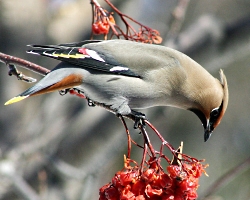
Bohemian Waxwing, licensed under the Creative Commons Attribution-Share Alike 2.0 Generic license. Source Wikimedia.org, Randen Pederson, Photographer.Bohemian Waxwings are slightly larger than Cedar Waxwings, and a little fancier—their wing feathers include red, yellow, black, and white, and the underside of their tails is a rich cinnamon. Both species gather by the hundreds to eat berries, so you won’t miss a flock if there’s one nearby. Although waxwings are songbirds, the calls you hear don’t serve the same functions as true songs, advertising mate quality and defending territories. Instead, waxwings cooperate to find and feed on scattered fruit, their main winter diet. Unlike most birds, waxwings are able to smell, which may help them find their food. If waxwings eat berries that have begun to ferment over the winter months, they may become intoxicated even though their ability to metabolize ethanol is very high. The last time Bohemian Waxwings were abundant in Utah was during the winter of 2012-2013.
Bald Eagle Haliaeetus leucocephalus Courtesy US FWSOn December 17th, I will join several others for an exciting day of counting bird species and numbers in our lovely, snowy valley. The numbers will be entered on a database that will be shared globally.
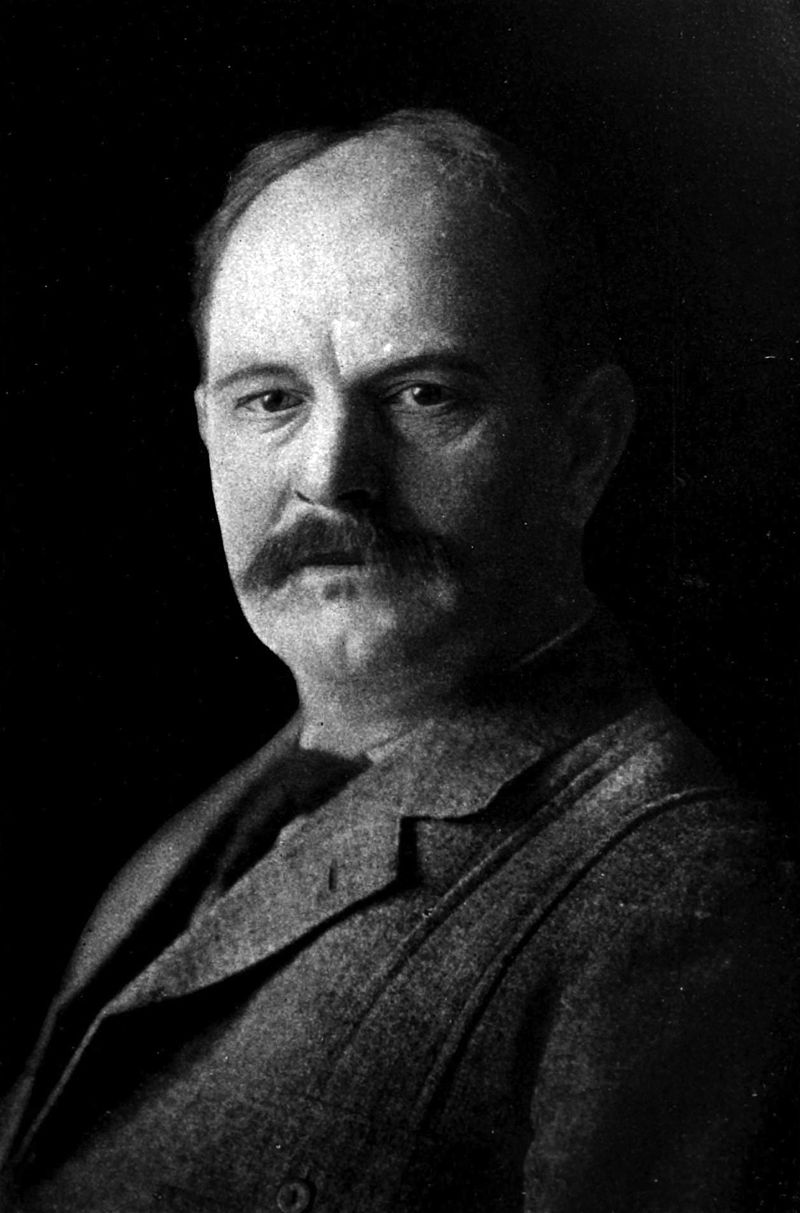
The Christmas Bird Count began on Christmas Day in the year 1900 when ornithologist Frank M. Chapman, an officer in the nascent Audubon Society, proposed a new holiday tradition—a “Christmas Bird Census” that would count birds during the holidays rather than slaughtering them, which had been the past ritual.
The data collected by observers over the past 116 years has allowed researchers to study the long-term health and status of bird populations across North America. When combined with other surveys such as the Breeding Bird Survey, it provides a picture of how the continent’s bird populations have changed in time and space. This long-term perspective is vital for conservationists. It informs strategists to better protect birds and their habitat and helps identify environmental issues, with implications for people as well.
Frank M. Chapman Courtesy Wikimedia Image in the public domain
Along with the fun it brings, the count has special significance for our changing climate’s impact on birds which is disrupting populations and their spatial distribution that are changing at an accelerating rate.
Audubon’s 2014 Climate Change Report is a comprehensive, first-of-its-kind study that predicts how climate change could affect the ranges of 588 North American birds. Of the bird species studied, more than half are likely to be in trouble. The models indicate that 314 species will lose more than half of their current range by 2080.
Audubon’s Climate Initiative, the organizational response to this threat, taps into its members’ love and commitment for birds to build population resilience and demand solutions to slow the pace of warming. Audubon is encouraging its members to take steps to address the climate change threat in their backyards and communities. Visit their website at audubon.org for how to take action.
The Environmental Protection Agency has included Audubon’s climate change work from CBC data as one of 26 indicators of climate change in their 2012 report.
In 2007, CBC data were instrumental in the development of Audubon’s Common Birds in Decline Report, which revealed that some of America’s most beloved and familiar birds have taken a nosedive over the past forty years.
142 species of concern are found in Utah including our state bird, the California gull and our national bald eagle. Averaging the most recent 10 years, our valley has seen 16 species increase and 11 species decline. Of course we would need a much broader sweep to know the true story of these species, but our data may play a significant part in the overall analysis.
And please, keep those bird feeders full as we enter the coldest month of the year!