A Utah Public Radio production featuring contributors who share a love of nature, preservation and education
Podcast: Wild About Utah
Wild About Utah is a Utah Public Radio production featuring contributors who share a love of nature, preservation and education. Contributors include Bridgerland Audubon Society, Utah Public Radio, Stokes Nature Center, the Edith Bowen Laboratory School (EBLS) at USU and many other nature-related individuals and institutions. See WildAboutUtah.org for a list of authors, voices and contributors.
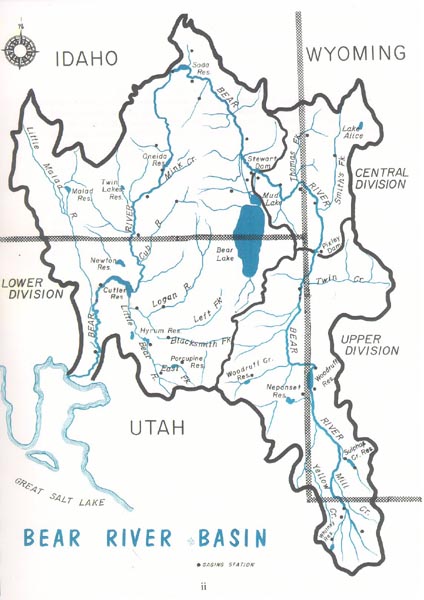
Bear River Basin Courtesy Utah Division of Water Rights bear.river_.basis_.waterrights.utah_.gov_.250×354.jpgFollowing the same route which I had taken when coming up, we arrived at Bear River on the evening of the eleventh and encamped. Examination of Cache valley occupied several days. Crossing over the range of low rounded hills through, which Bear River has cut a passage, we entered this beautiful and picturesque valley. Which was then covered with a profusion of rich green grass and adorned and diversified by numerous clumps of willows. The valley is full of swampy springs affording an abundance of good sweet water and excellent grass. Speckled trout, large size, abound in the streams. I believe this passage to be from “Journal of a Trapper” written by mountain man Osborn Russell around 1816.
The Bear is a unique and beautiful rivering system. Superlatives abound. A river of profound beauty, who provides over 60% of the life blood for the Great Salt Lake eco system. The largest river, to begin and end in the Great Basin. A river which witnessed the largest massacre of Native Americans in our country’s history. A river of abundant life, who supports three national wildlife refuges, in its 500 mile course.
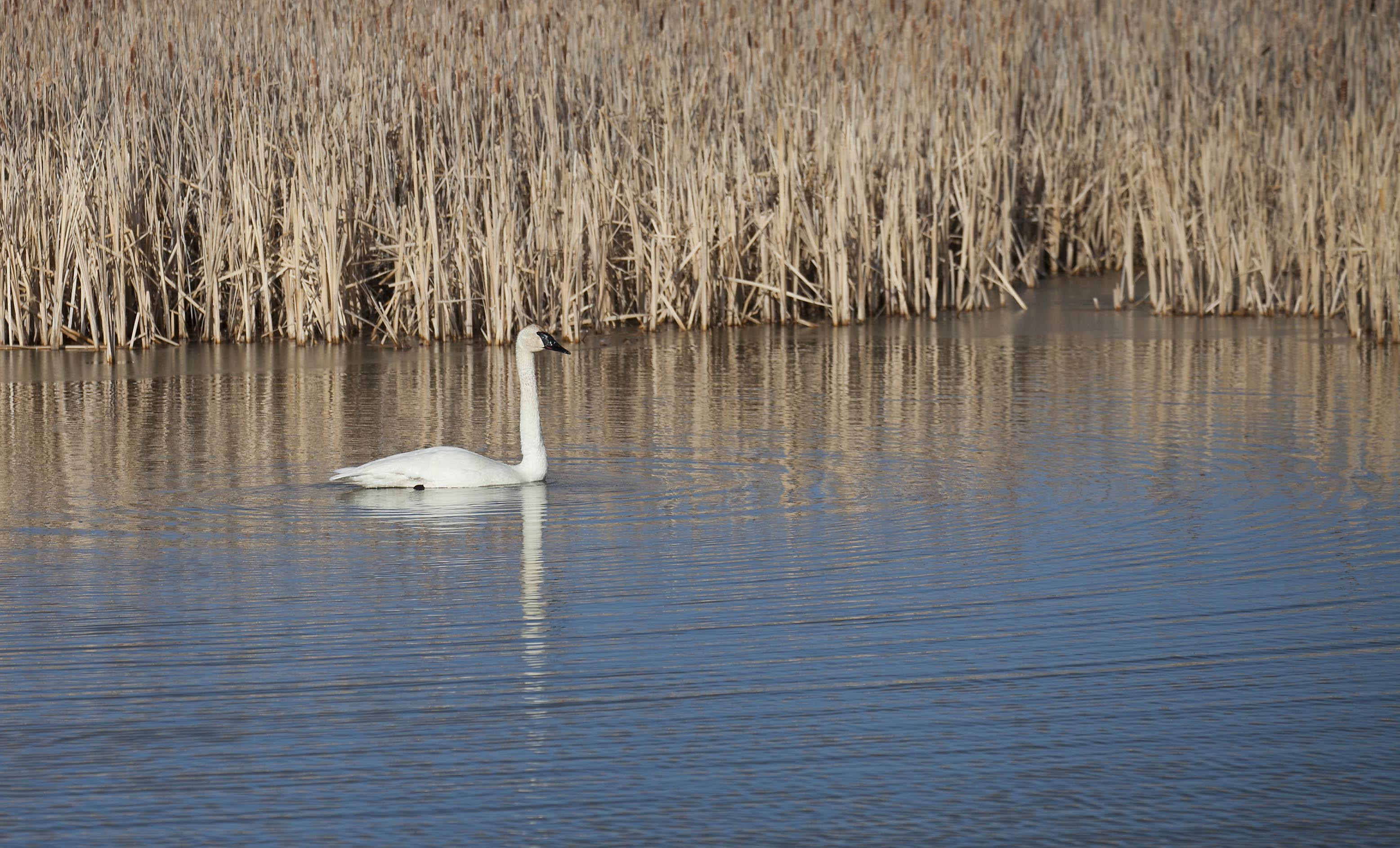
There were a few thoughts running through my brain as I canoed down a stretch of the Bear River though Gentile valley, in southeast Idaho this morning, counting bird species for Utah Power and Light. I was stunned by the beauty as we left the bank, into early morning sunrise, in a river mist with rain clouds forming over surrounding mountains. Our spirits were further buoyed by rampant bird songs, Canada Geese, Sandhill Cranes, Meadow Larks, Red Winged Blackbirds countless swallows and songbirds. Occasionally sun would find a hole in the clouds and awaken the hills to vibrant Spring green offset by dark clouds gathering. Trumpeter Swan Courtesy US FWS/Mountain Prairie-flickr Katie Theule, PhotographerA large white bird appears on the water ahead of us. Perhaps another pelican. Drifting closer we startled this elegant graceful being, which emits a loud trumpeting call to echo through the shrouds of fog. Trumpeter Swan. We are held in awe of this magnificence. Still on the endangered species list, due to overharvesting and habitat loss.
Winding our way through many river miles we finally arrived at the backwaters of Oneida Reservoir, as the river disappears in a rugged defile called the Narrows. Most of this once magnificent stretch of wildriver now lies beneath the reservoir
This is Jack Greene and I am Wild About Utah!
Credits:
Map: The Bear River Basin Courtesy Utah Division of Water Rights
Images:Courtesy US FWS/Mountain Prairie-flickr Katie Theule, Photographer
Text: Jack Greene
Audio: Courtesy and Copyright Kevin Colver
Transcribed from the audio supplied by UPR
Additional Reading:
Russell, Osborne, York, Lem A, Journal Of A Trapper Or Nine Years in the Rocky Mountains 1834-1843, Syms York, 1921, Digitized by Google, https://archive.org/details/journalatrapper00yorkgoog https://play.google.com/books/reader?id=49HTAAAAMAAJ&pg=GBS.PA7
Western Screech Owl Courtesy & Copyright Lou Giddings
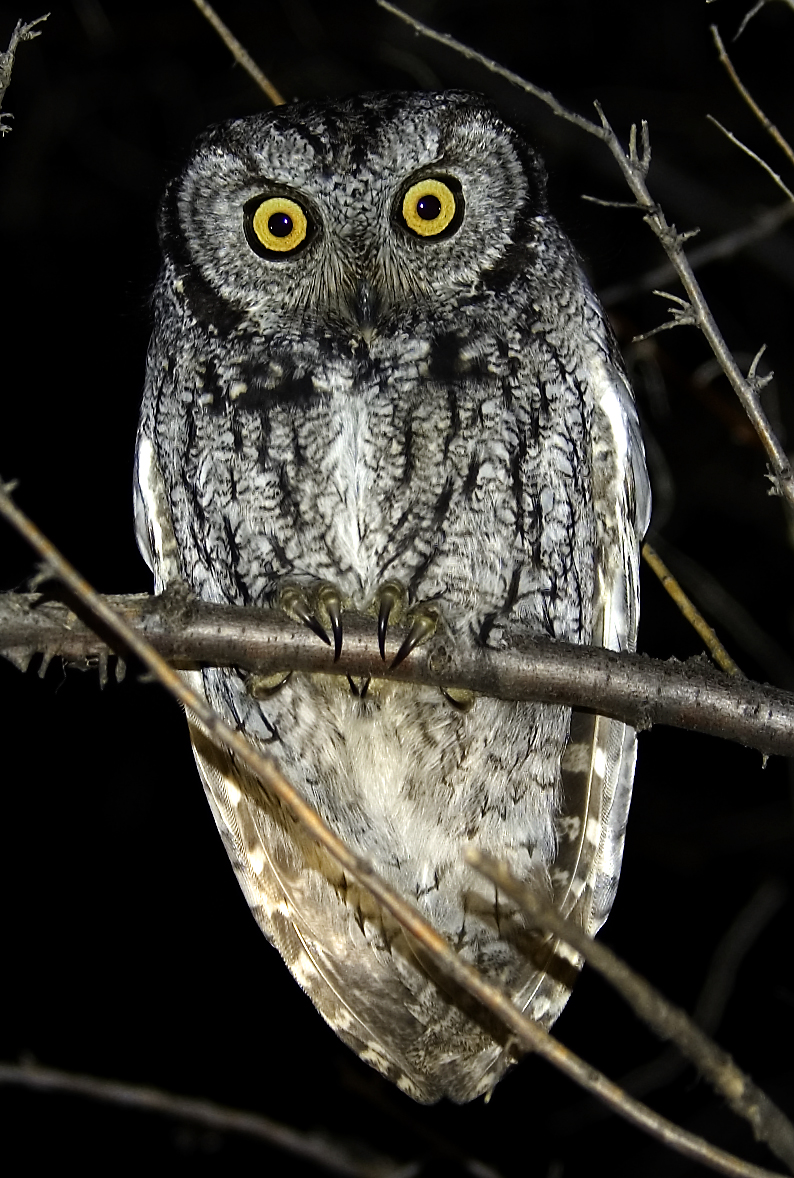
My wife and I paddled our kayak gingerly into the eaves of a limestone cliff, our eyes scanning its face for some sort of concavity or movement where there was none. “I don’t see where she could possibly be,” my wife confessed. She was right. We knew we had found the right rock, soiled as it was with bird refuse, but there was nowhere for the nest to lie it seemed. Just then, on cue, a stirring of movement. Dark triangles rose out of the rock, followed by the lemony-yellow eyes of a mother Western Screech Owl. She climbed slowly from her grotto before exploding out of the rock toward us. A flurry of feathers rocketed toward us. I’m pretty sure I screamed, ducked as the bird soared away over our heads. We backed off a little. Concerned about the integrity of the nest site and our own well-being, we didn’t want to venture too close. When we were finally far enough away for mother’s comfort, she leap-frogged her way back to the cliff-side and disappeared again into the rock.
It’s a wonder she was there at all! Inconspicuous as it is, her placement is nevertheless adjacent to a highly frequented recreational reservoir. As we watched her descend back into her incubation chamber, country music blared from the opposite shore and the joyous yelps of our fellow boaters rang out through the air. To be sure, this wasn’t the first time she had been stirred from her nest; but she must have somehow grown accustomed to human sights and sounds. Otherwise, she wouldn’t choose this same nesting site year after year, as I’d heard she does. My wife and I marveled at her bravery in defying what seemed a too-close proximity to our louder, more aggressively curious species; but the more I thought about it, the peculiarity of her choice faded. This was not the first intimate space we had discovered this spring.
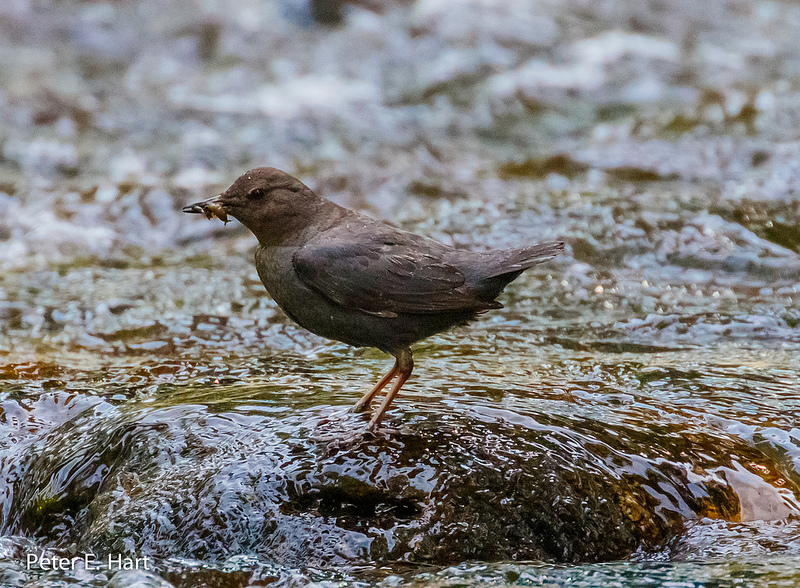
American Dipper Peter Hart, Photographer Photo credit: PEHart via Visual hunt / CC BY-SAA couple weeks earlier, as we sat at swift water’s edge, a small charcoal feather-bundle fell out of the sky toward the water near the opposite bank. A Water Ouzel—otherwise known as the American Dipper—had just lit upon a boulder where it commenced its famous bouncing. At once, it lunged at the riffles of water at its feet, torpedoing itself toward whatever invertebrate morsel was to be found in early spring. Having fetched what it was after, the dipper surfaced into full flight. I thought it would have returned to the rock; but instead, it swept itself into the girders of the small bridge spanning the river.
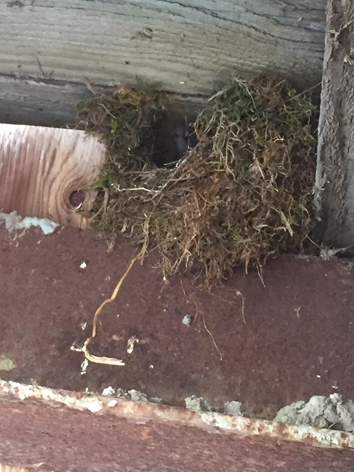
American Dipper Courtesy & Copyright Josh BolingI waited for what I thought was a polite enough amount of time before investigating the scene. As I peered into the dim shadows beneath the bridge, my eyes adjusted to two others blinking back at me from the rounded doorway of a mossy, gourd-like dipper nest. “Why here?” I wondered aloud. The bird had taken offense to the question and took its immediate leave of my presence. This was the second dipper nest I’d found within a few miles’ stretch of river—the mark of a healthy and robust riparian zone, and perhaps also indicative of a healthy human/nature relationship. The other, too, neighbored a well-travelled recreational space.
It seems heroic at first glance, the wild ones enduring our somewhat rude domesticity; but perhaps it’s a complement. They’re comfortable enough to hide in plain sight.
I’m Josh Boling, and I’m Wild About Utah.
Credits:
Photos: Courtesy US FWS
Text: Josh Boling, 2018
Scoundscape Recording Equipment Courtesy US NPSImagine yourself in your favorite place outside. What sounds do you expect to hear? The sound of water rushing over rocks? Crickets chirping? The wind softly blowing through the trees? These are some of the natural sounds you might expect to hear, but it might not always work out that way. Recreation areas are often filled with anthropogenic noises like vehicles, people talking, music playing, machinery, and more.
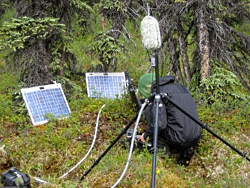
Checking sound equipment set up near the McKinley Bar Trail, Denali National Park Courtesy US NPSSoundscapes, or the acoustic environment, are not often thought of as a natural resource, but are actually an important part of the environment. A common reason people go to nature is for peace and quiet. Quiet is considered a valuable resource. Humans have grown accustomed to a constant background of noise, but it is not always good. Escaping to nature can potentially provide relief from noise pollution, but natural soundscapes are becoming less and less common.
Noise pollution significantly impacts human health. Physical and mental impacts can include hearing disorders, sleep disruption, and even interruptions in the cardiovascular and endocrine systems. Sound is more important than you might realize.
Soundscapes may be important to humans, but they are arguably even more important for wildlife. Many animals depend on hearing for warning them of danger, communicating with other animals, and locating prey. Birds and other animals can hear noises from very far away, and noise interference can disrupt them easily. Behavioral responses may include leaving an area for a brief time or leaving an area for good.
Through evolution, some animals have lost sight, because it was not a necessary trait in some situations. Up to this point, there has been no animal discovered that has lost its hearing through evolution. This illustrates how vital the acoustic environment is to wildlife and ecosystem health.
Barn Owl Courtesy US FWSThink of a Barn Owl. Hunting in the dark, they rely on the tiniest rustle to lead them to their prey. Their sense of hearing is fine-tuned and adapted specially for this purpose. One ear hole is slightly higher than the other, which allows them to perceive depth through hearing. Also, one ear hole can hear sounds below them on the ground, and the other can hear the sounds in the air. Just by listening, an owl can locate a mouse far below it on the ground. Noise pollution would make it nearly impossible for owls to hunt.
Owls are just one example of noise pollution negatively effecting wildlife. As soundscapes are disturbed, wildlife will be displaced or even die. Public land managers now have the challenge of managing soundscapes. This is a difficult, but soundscapes are important for humans recreating, wildlife, and whole ecosystems.
As William Shakespeare said, “The earth has music for those who listen.”
This is Aspen Flake and I am Wild About Utah.
Credits:
Photos: Courtesy US NPS ans US FWS
Audio: Courtesy and Copyright Kevin Colver
Text: Aspen Flake
Jeff Rice, Recording Artist:
Dobner, Jennifer, LISTENING TO THE NATURAL WEST
The U’s Western Soundscape Archive captures the animal and ambient music of the wild., CONTINUUM
THE MAGAZINE OF THE UNIVERSITY OF UTAH, Summer 2014, https://continuum.utah.edu/web-exclusives/listening-to-the-natural-west/
Vanderbilt, Tom, You Need to Hear This, Recording engineer Jeff Rice is on a mission to preserve the sounds of nature. Why? Listening to them might actually make us healthier., OutsideOnline.com, 20 Oct 2011, https://www.outsideonline.com/1887466/you-need-hear
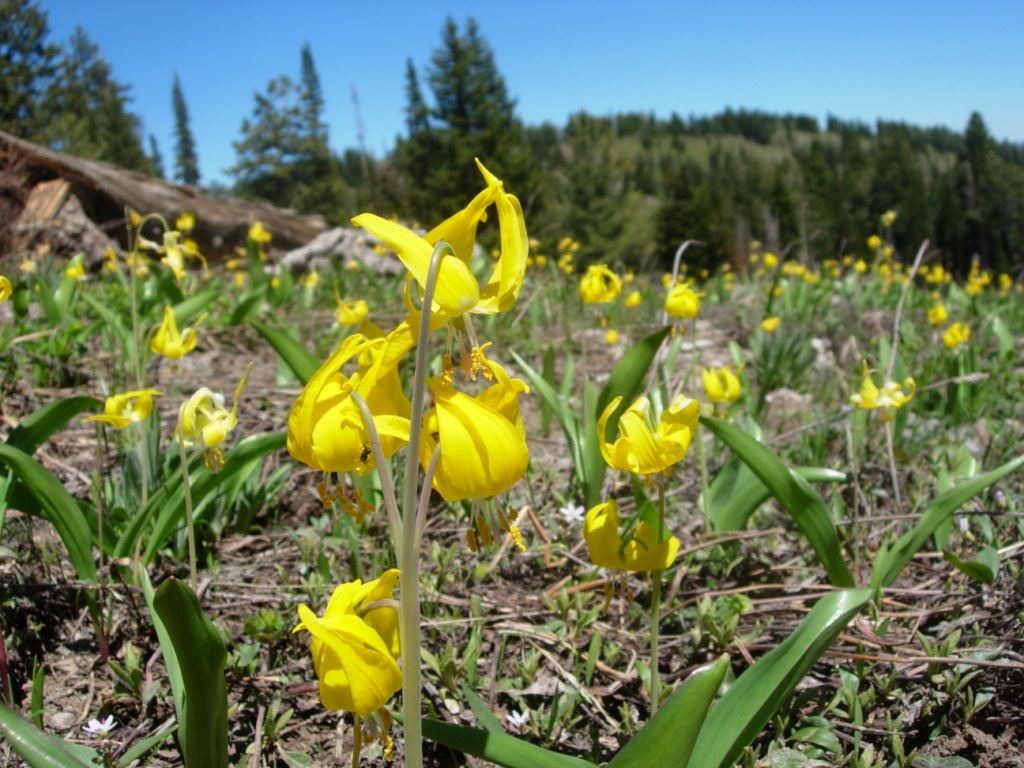
Glacier Lilies, Courtesy Andrea Liberatore, PhotographerI doubt there was a song left unsung as I worked my way up Birch Canyon early am. Testosterone laden birds filled the morning with delight. Robins, finches, meadow larks, song sparrows- what a marvelous symphony! I breathed deeply to fully absorb air filled with titillating odors from last night’s gentle spring rain- nature’s perfume, free and priceless.
Waters surging down Summit and Birch creeks released from winter’s cold grip. Further along, I take notice of recent bloom- glacier lilies exploding with bluebells soon to follow. Yellow bells in sage with promise of early Indian paintbrush. Arrowleaf balsamroot and penstemon only a few weeks away.
Thanks to earth’s 23 degree tilted axis spring is in full swing! This combined with the annual journey around our medium sized star brings the rebirth once again. How boring it would be had it been a tilt of zero degrees- negating our seasonal change. We complain as temperatures swing wildly from 60 degree days plummeting to 30’s in the course of a few hours. But please don’t despair- it may return to pleasantness almost as quickly.
I would not care to be a meteorologist in San Diego where temperatures rarely deviates more than a few degrees, winds are calm, and precipitation comes primarily during winter in dribbles. I relish the beauty and drama of a cumulonimbus cloud burst pummeling me with a deluge of rain pushed by strong wind spawned by a warm, moist air mass colliding with another cool and dry. Grand symbols crashing as lightening energizes countless trillion molecules of nitrogen and oxygen. How could something minute as a gas particle make such a ruckus! Miracles abound.
A spring trek across Zion N.P. last week to welcome spring on the south end. Townsend solitaires, scrub and Steller jays, mountain chickadees, and courtship drumming of woodpecker species were there to welcome me. White throated swifts launched from towering cliffs with occasional canyon wrens emitting cascading, descending notes from their vertical realm.
All three species of nuthatches were present- white and red breasted with small flocks of gregarious pygmies in ponderosa pine forest, busily searching bark crevasses for delectable grubs and insect eggs.
Indian potato and spring beauty were found among the sage near 8000 feet beneath lava point. These delectables were enjoyed by Native Americans. I sampled a few flowers leaving the mini-potato like roots undisturbed. I enjoyed waterleaf stems growing in hardwood forested areas.
After 36 miles of sublime scenery beyond comprehension, I descended into throngs of park visitors from many distant lands evident by their strange dialects. There are no down seasons in Zion these days that I once enjoyed years ago while working as a park seasonal. But the stunning beauty remains, with new greenery showing on cottonwood and boxelder in contrast to the warm glow of massive cliff.
Please don’t inquire of me which season I enjoy most.
This is Jack Greene and I’m wild about Utah!!
Credits:
Pictures: Courtesy & Copyright Andrea Liberatore
Text: Jack Greene, Bridgerland Audubon Society