What’s On Your List?

What's On Your List? Canoeing in Benson Marina, Benson, Utah Courtesy & Copyright Shannin Kishbaugh, photographer
Canoeing in Benson Marina
Benson, Utah
Courtesy & Copyright Shannin Kishbaugh, photographer

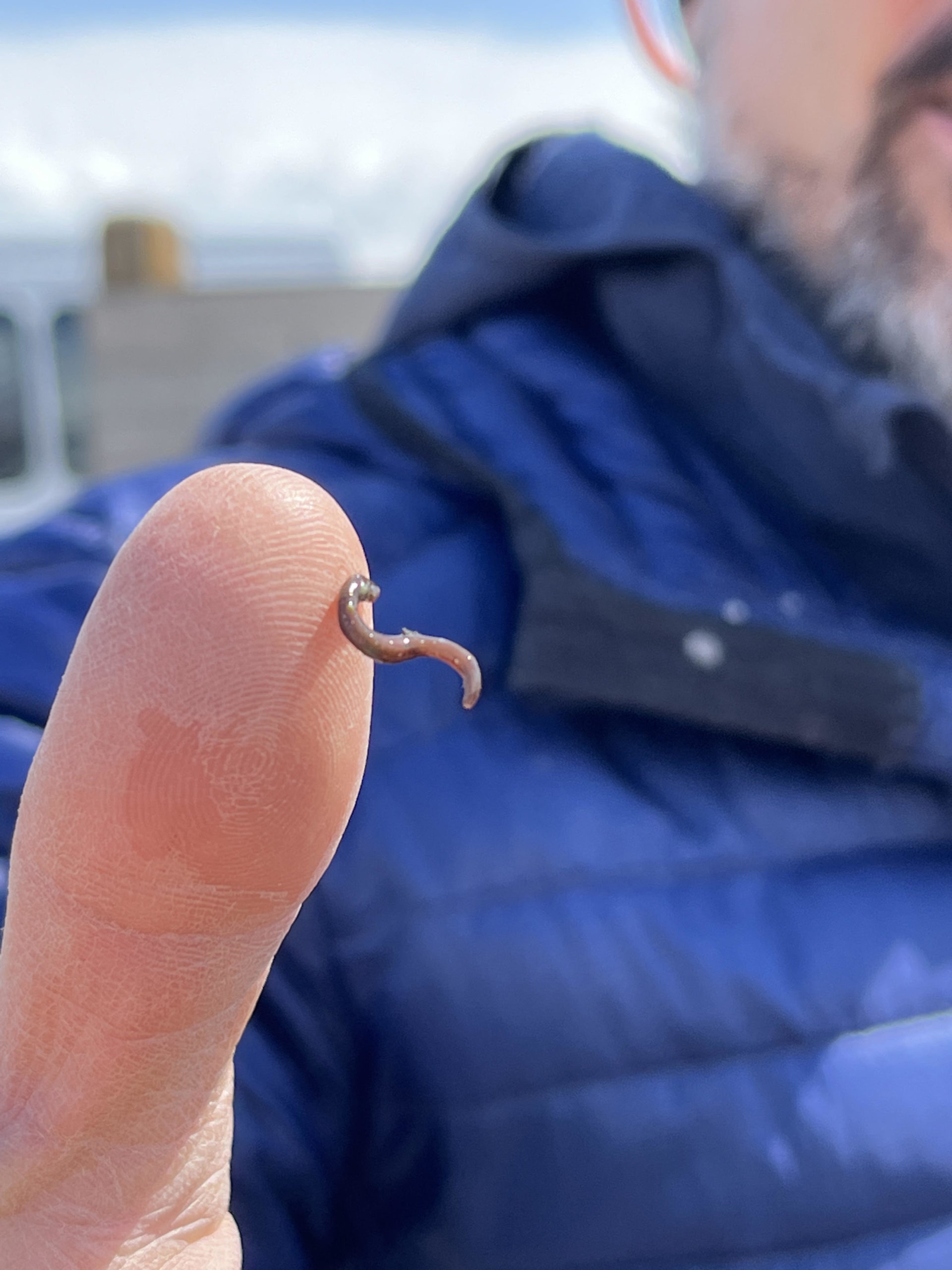
A Leech on Trip Armstrong’s Thumb Courtesy & Copyright Shannon Rhodes, Photographer A Leech on Trip Armstrong’s Thumb
Courtesy & Copyright Shannon Rhodes, Photographer

A Leech Escaping a Container Courtesy & Copyright Shannon Rhodes, Photographer A Leech Escaping a Container
Courtesy & Copyright Shannon Rhodes, Photographer

If I were to ask you to craft a list of words that represent your connection to the natural world, which words immediately pop into your mind? Of course, President Theodore Roosevelt said, “There are no words that can tell the hidden spirit of the wilderness that can reveal its mystery, its melancholy and its charm.” Yet, Brooke Smith published her book “The Keeper of Wild Words” in response to learning that nature words she loved were replaced in the Oxford Junior Dictionary for words like chatroom and voicemail.

Grandmother Mimi tells young Brook, “If we don’t use words, they can be forgotten. And if they’re forgotten, they disappear.”

That voice was the person who gave me this beautiful book, fellow Edith Bowen Laboratory School teacher Shannin Kishbaugh. I invited her with me to talk about wild words.

What words top your list? I would say calm, peaceful, freedom, exploration, and wonder.

My list evolves, but it always has wapiti and mica schist. It includes caddisfly casings on river rocks and cumulonimbus clouds in the sky. I love red-winged blackbirds I saw this morning in the phragmites along the roadside, curlycup gumweed I discovered at Hardware Ranch, stinging nettle walking the banks as a child with my father just off Fireclay Avenue in Murray, and hoodoos in Goblin Valley.

My most recent word is leech. Shannin, when you hear that, what are your words? Uncertainty, fear, dirty, slimy, old documents and uses in medicine. I’ve become a lover of water bugs this year, but still leeches feel extreme.

Well, those are very different words from your nature words. Not long ago at a conference cleverly titled “In Mud” about place-based education for young children, I stood with teachers from Washington state to Washington D.C. While the goal was discussing developing nature inquiry projects based on interest of the students, a colleague saw a dark blob on another’s boot and for the remainder of the workshop, we as educators huddled in a circle playing with the leech like children. It slithered and reached; we gazed in wonder and some apprehension. I realized I’d never spent time appreciating a leech.

There are lots of leech species, including some found only in Utah. They begin life in a cocoon which surprised me, they have suckers that give them the reputation as selfish parasites even though they don’t all suck blood, and they play an important role in the food chain. This spring when we took our first graders out again to explore what lives in the water, this time to Benson Marina of Cutler Reservoir, our students canoed past an osprey nest, captured the cattails in watercolor, and even observed a leech clinging to our guest scientist Trip Armstrong’s thumb. As the students worked, your idea was to collect the words, their exclamations, and offer them back to them to use in writing list poetry.

Let’s end with some of the nouns, adjectives and verbs from their list: “paddle whirlpools, dunking ducks, pelican peace, and ripple reflections.” And of course, “little leech. It was the best feeling. Happiness all around me.”

We are Shannon Rhodes and Shannin Kishbaugh, and we are wild about Utah words.

Credits:

Images: Canoeing – Courtesy & Copyright Shannin Kishbaugh, Photographer
Leeches – Courtesy & Copyright Shannon Rhodes, Photographer
Audio: Courtesy & © Friend Weller, https://upr.org/
Text: Shannon Rhodes, Edith Bowen Laboratory School, Utah State University https://edithbowen.usu.edu/
Additional Reading Links: Shannon Rhodes

Additional Reading:

Wild About Utah Pieces by Shannon Rhodes, https://wildaboututah.org/author/shannon-rhodes/

Andrews, Candice Gaukel. (2009). Nature Words on the Brink of Extinction. https://www.nathab.com/blog/nature-words-on-the-brink-of-extinction/

Black, Riley. (2021). New species of leech found in Utah. https://nhmu.utah.edu/articles/2023/05/new-species-leech-found-utah

Govedich, Fredric R. and Bonnie Bain. (2005). All About the Leeches of Montezuma Well. https://www.nps.gov/moca/learn/nature/upload/montezuma_well_leeches.pdf

Morse, Susan. A Few Words for Nature Nerds. https://www.fws.gov/story/few-words-nature-nerds

Smith, Brooke. (2020). The Keeper of Wild Words. San Francisco: Chronicle Books. https://www.chroniclebooks.com/products/the-keeper-of-wild-words

U.S. Department of the Interior. (2020). The Conservation Legacy of Theodore Roosevelt. https://www.doi.gov/blog/conservation-legacy-theodore-roosevelt

Utah State University Extension. Key to Aquatic Macroinvertebrates in Utah. https://extension.usu.edu/waterquality/macrokey/no-shell/worm-like/
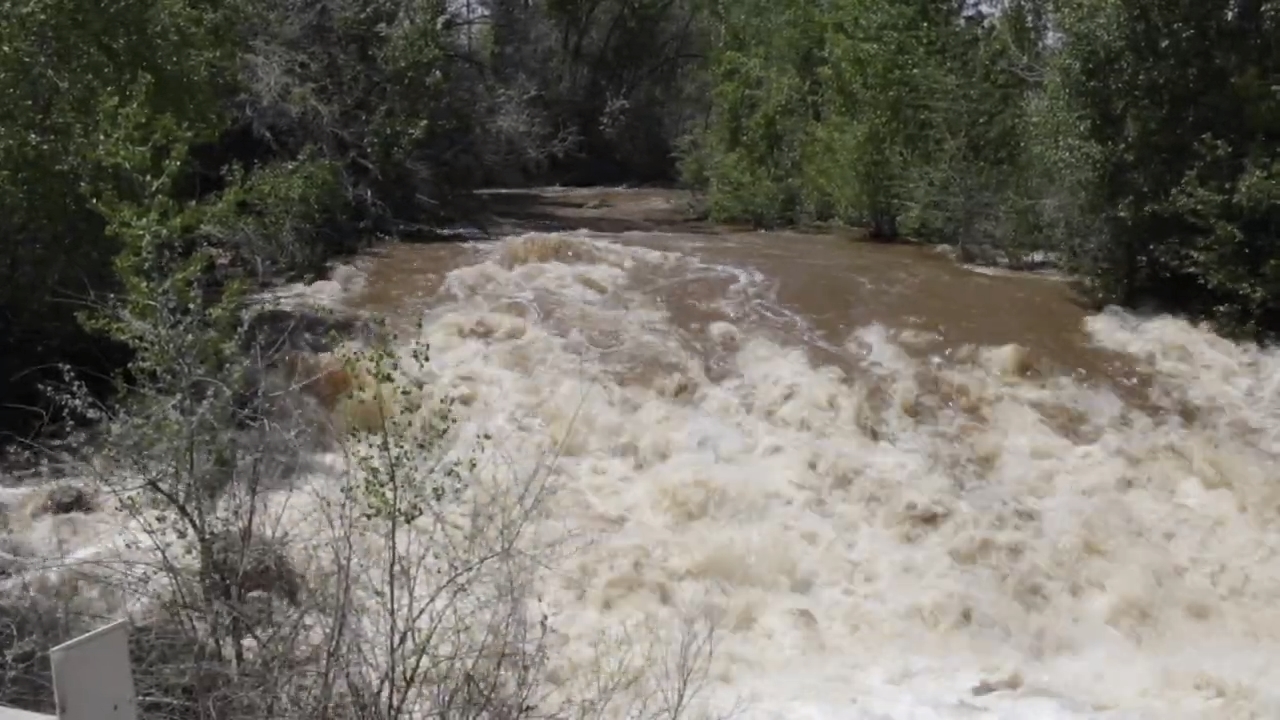

1983 vs 2023 Spring Flooding

1983 vs 2023 Spring Flooding, Ashley Creek Flowing Underneath Highway 191, Vernal, UT, Courtesy & Copyright Holly Strand, Photographer
Ashley Creek Flowing Underneath Highway 191, Vernal, UT
Click to view YouTube Video
Courtesy & Copyright Holly Strand, Photographer

Hi, I’m Holly Strand from the Utah Division of Emergency Management.

The roar you hear in the background is Ashley Creek flowing underneath Highway 191 in Vernal. Rivers and creeks all over the state have been running high with melted snow from the biggest snowpack ever recorded in Utah.

1983 was last time we had anything near this amount of snowmelt fueling our spring runoff. That year, there were multiple 100-year (and bigger) floods. The landslide in Thistle triggered Utah’s first presidential disaster declaration. For weeks, floods, landslides, and debris flows damaged homes, highways, and drainage canals. 22 of Utah’s 29 counties were affected.

This year—with a historic snowpack– it seems like we should be experiencing more 100-year floods or even 500-year floods. Even though only 40 years have gone by since 1983. It’s quite possible, because 100-year floods don’t happen just once every 100 years. They are just projected to happen every 100 years on average**

So did this year’s historic snowpack—more than in 1983–cause another round of 100-year floods? Hasn’t so far and doesn’t look like it will. There has been isolated flooding in some areas, and groundwater flooding, but we just aren’t seeing damage on the same scale that we saw 40 years ago. Why not?

For one thing, Utah communities took lots of mitigation measures in the wake of the 1983 floods. New debris basins were built, stormwater systems improved, river and watersheds were restored, and at-risk structures were flood-proofed. Communities also prepared their residents for floods with information and sandbags! But a big reason Utah didn’t suffer from 100-year or floods, is that the 2023 spring was absolutely ideal for moving water safely from the snowy, high elevations to the thirsty reservoirs and lakes below. Since peak snowpack in the beginning of April, there’s been a long gradual warming trend with no big storms. Stream flows have been consistently high for 2 months instead coming down all at once during a sudden long hot spell of 90 plus temperatures. We dodged a bullet this year thanks to mitigation, preparation and Mother Nature!

Thanks to Glen Merrill with the National Weather Service in Salt Lake City and to Tom Wright, hydrological engineer at AECOM for their expert knowledge.

I’m Holly Strand and I’m Wild About Utah and Utah Public Radio!

**A 100-year flood–has a 1% chance of happening each and every year on any given stream reach. Consider what happens when you roll dice. Let’s say you roll a double six. You could get double sixes on the very next roll.  But over many, many, many rolls, you will average double sixes only once every 36 rolls. Similarly you could get a 100-year flood one year, and then the very next year you could roll another 100-year flood but there’s a 99% chance that you won’t. But averaged over a long time, like 1000s of years, a 100-year flood should happen—on average—once every 100 years. To make this concept clearer flood experts prefer to say 1% annual chance flood instead of 100-year flood.

Credits:

Images: Courtesy & Copyright Holly Strand, Photographer
Additional Audio: Holly Strand
Voice: Holly Strand
Text: Holly Strand, Utah Division of Emergency Management
Additional Reading: Holly Strand

Sources & Additional Reading

Wild About Utah pieces authored by Holly Strand

Some interesting sites for flood nerds:
Utah Flood Hazards and Floodplain Management, Utah Division of Emergency Management, https://floodhazards.utah.gov/

Colorado Basin River Forecast Center, National Weather Service, National Oceanic and Atmospheric Administration, US Department of Commerce, https://www.cbrfc.noaa.gov/lmap/lmap.php?interface=snow

NOAA ATLAS 14 Point Precipitation Frequency Estimates: UT, Office of Water Prediction (OWP), National Weather Service, National Oceanic and Atmospheric Administration, US Department of Commerce, https://hdsc.nws.noaa.gov/pfds/pfds_map_cont.html?bkmrk=ut

https://pubs.usgs.gov/gip/106/pdf/100-year-flood_041210web.pdf


Ashley Creek Flowing Underneath Highway 191, Vernal, UT
Courtesy & Copyright Holly Strand, Photographer

Spring Dandelion Power

Dandelions, Courtesy & Copyright Patrick Kelly
Morning for the spring dandelion is gentle and calm
The world is no longer a struggle but instead a serendipitous balm
Your yellow buds open upon you, sneaking between others some pink, some white
More colors even still in the waxing new day’s light
 Spring Dandelion Power
There is no better time for the dandelion than when spring has sprung
The leaves are fresh green and so is the fresh dung
Birds do sing high up in the stretching yawning trees
Staking their turf, edges, and new nesting eaves
 
Spring when sprung well sizzles with waking signs
Of kin abloom drawn with straight growing lines
One end towards sun, the other down towards the deep
Until some roots build taps, and others go on the creep
 
The days are now joyous choruses of neighbor raucous crocuses
Avian acrobats whirling spinning diving like ferocious locusts
Shades of toothed green batten down the laden earth
Soaking and drinking and filling to fullest milky girth
 
And as the sun sets on each new spring day
I am reminded of the new presence by the heat that stays
Radiating, glowing, even after the moon has shown
Continuing the journey of growth and what has grown
 
It is amazing to think that each year the world mends
Its browns in all hues to life in all bends
From sails to seeds to germ and blossom
Dandelion life is both humble and awesome
 
So this spring when sprung look out your window or door
Remember that life gives always life more and more
If in doubt, don’t wait: be like the dandelion flower
Thriving in cracks and interrupting silly lawns with unrelenting blissful dandelion power
 
I’m Patrick Kelly, and I’m Wild About Utah
 
Credits:

Images: Courtesy & © Patrick Kelly
Audio: Courtesy & © Kevin Colver https://wildstore.wildsanctuary.com/
Text:    Patrick Kelly, Director of Education, Stokes Nature Center, https://www.logannature.org
Included Links: Patrick Kelly & Lyle Bingham, Webmaster, WildAboutUtah.org

Additional Reading

Wild About Utah, Posts by Patrick Kelly

Stokes Nature Center, https://www.logannature.org/

Brain McCann, Roslynn, Dandelion, Friend or Foe?, Wild About Utah, Apr 4, 2016, https://wildaboututah.org/dandelion-friend-foe/

Greene, Jack, Pioneer Day Edible Native Plants 2016, Wild About Utah, Jul 18, 2016, https://wildaboututah.org/pioneer-day-edible-native-plants-2016/

Tulips and Daffodils- It’s Spring!

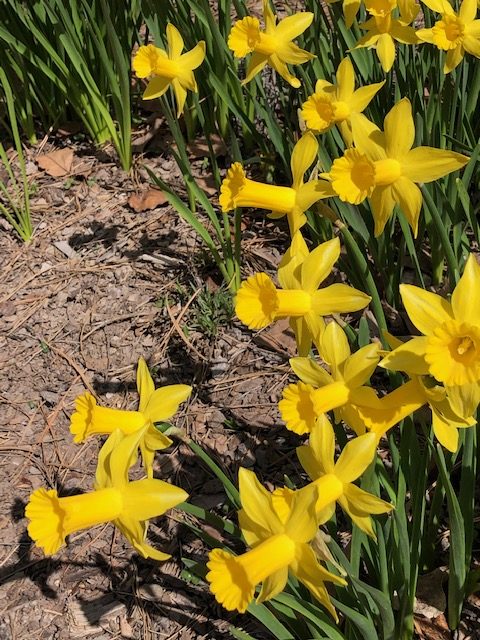
Tulips and Daffodils- It’s Spring! The Trumpet Choir Daffodils at Thanksgiving Point Courtesy & © Mary Heers, Photographer
The Trumpet Choir
Daffodils at Thanksgiving Point
Courtesy & © Mary Heers, Photographer

Daffodil Encore, Thanksgiving Point Courtesy & © Mary Heers, Photographer Daffodil Encore
Thanksgiving Point
Courtesy & © Mary Heers, Photographer

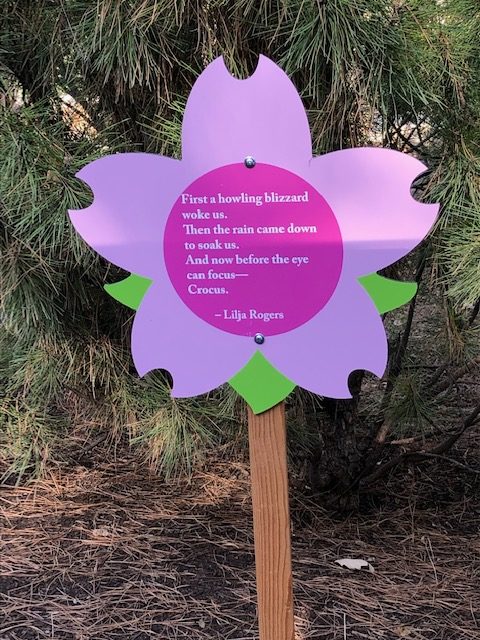
My Favorite Sign Along the Path, Lilja Rogers, Published as Hocus Pocus in the Saturday Evening Post, 1961, Image Courtesy & © Mary Heers, Photographer My Favorite Sign Along the Path
Lilja Rogers, Published as Hocus Pocus in the Saturday Evening Post, 1961
Image Courtesy & © Mary Heers, Photographer

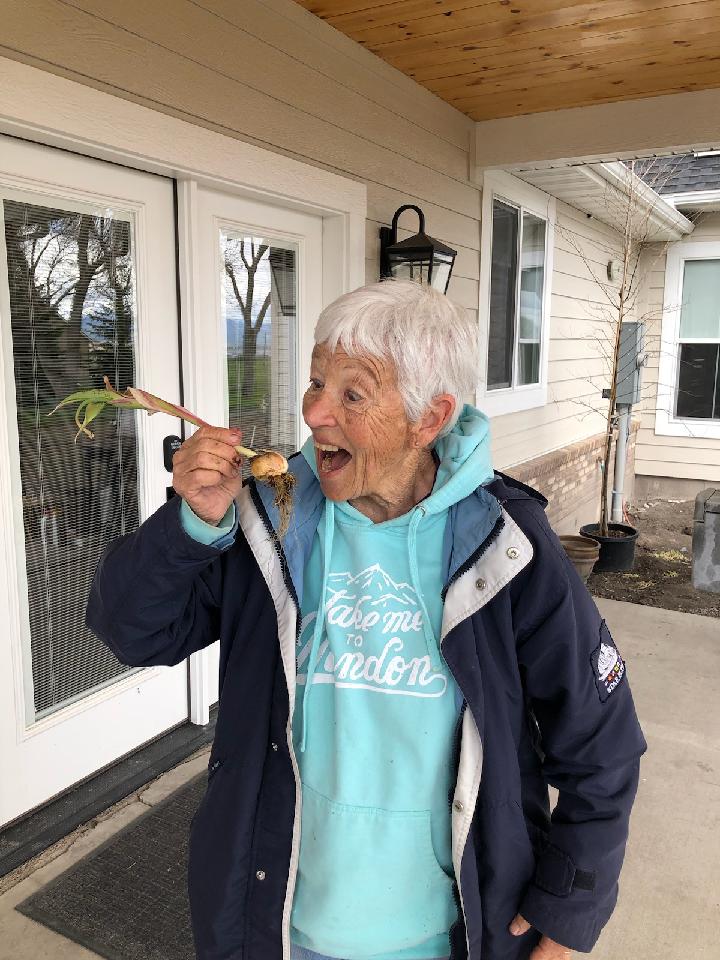
Mary Eating a Tulip, Courtesy & © Mary Heers Mary Eating a Tulip
Courtesy & © Mary Heers

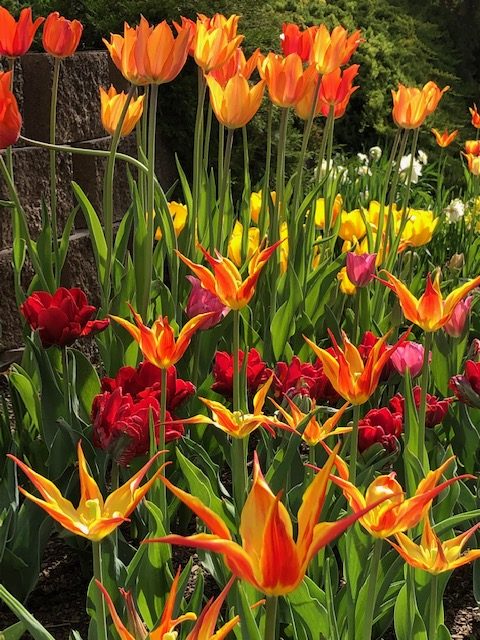
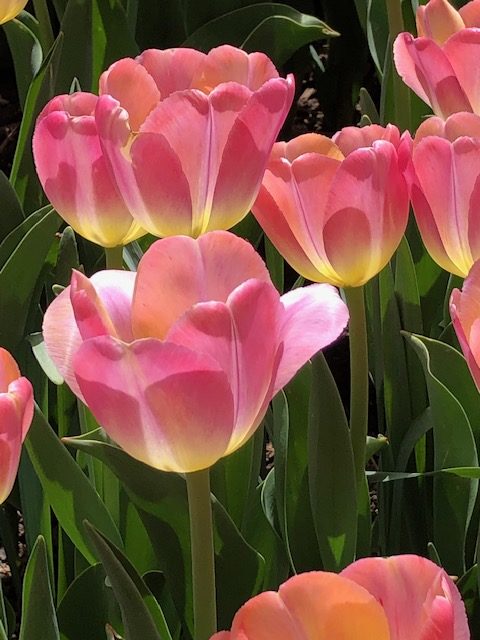
My Favorite Photo Tulips at Thanksgiving Point Courtesy & © Mary Heers, Photographer
More Tulips Thanksgiving Point Courtesy & © Mary Heers, Photographer
Close Up - Tulips Thanksgiving Point Courtesy & © Mary Heers, Photographer
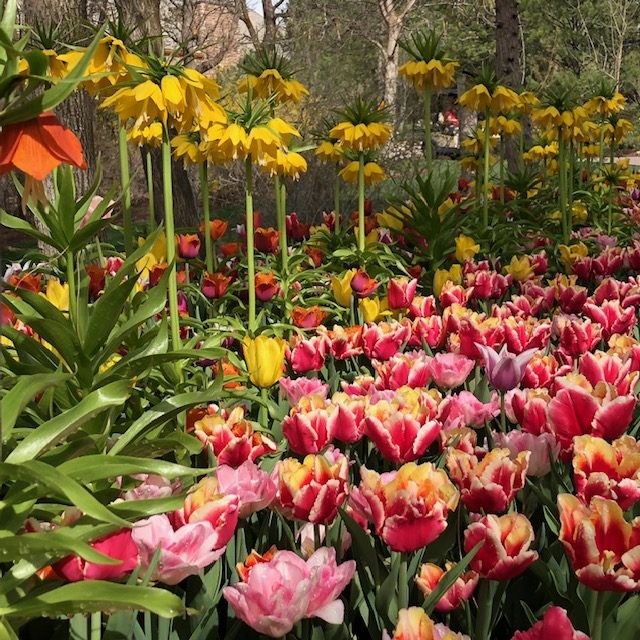
Mix of Tulips Thanksgiving Point Courtesy & © Mary Heers, Photographer
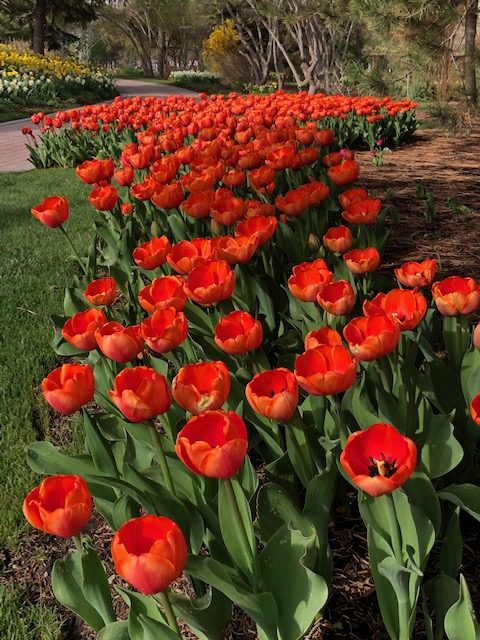
Red Tulips Thanksgiving Point Courtesy & © Mary Heers, Photographer
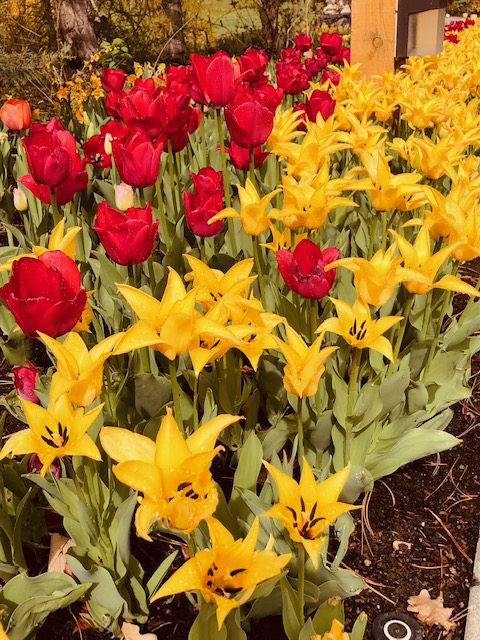
Red and Yellow Tulips Go Well Together Thanksgiving Point Courtesy & © Mary Heers, Photographer Above Tulips From Rebound Visit
Thanksgiving Point
Courtesy & © Mary Heers, Photographer

When I arrived at the Tulip Festival at Thanksgiving Point I was informed by a guide that the tulips were running late.

“No tulips?” I asked. I had heard they had planted 250,000.

“It has everything to do with the soil temperature,” my guide explained. It was April 14. She wasn’t expecting the tulips to emerge for at least another two weeks.

All was not lost, she hastened to add.

“The daffodils are up.”

So off we went along the paths of the 50 acre Ashton Gardens. Sure enough, hundreds of daffodils were waving their heads in the light breeze. I was especially drawn to a patch that they were intensely yellow, almost orange.

“Those are the ‘Tweety-Birds’,” my guide said.

I knelt down to get a good look at the trumpet shape of the flowers. Wow, I thought. This is the trumpet choir heralding the end of winter and the coming of spring.

So with my return ticket secure in my pocket, I went back to Mendon to wait. Snow was still on the ground.

This gave me time to read up on tulips. I found they were originally from Turkey. Tulip, in Turkish, means turban.

The exotic plant arrived in Holland in the 1500’s., It soon became so popular that the price went through the roof. At the height of the tulip mania, some people were willing to pay the price of a house for a single bulb.

About this time, a friend loaned me a book about this phenomenon, Tulip Fever. It turned out to be a real page turner. Set in 1630, young lovers in Amsterdam concocted an incredible scheme to run away and live comfortably in the colonies – if they played their tulips right.

Back in Mendon, when the snow finally started to melt, my neighbors began to tell me how the hungry deer had come into their gardens and beheaded their tulips. Their daffodils were left untouched.

Time for more research. I learned the daffodils produce a toxic alkaloid, lycorine, which makes them taste bitter. Tulips, however, are not only edible, but delicious.

About this time I noticed a lone tulip popping up next to my apple tree. No one planted a bulb here. This tulip had arrived as a seed. Years ago, the wind, or a bird. or an animal dropped this seed . Tulip seeds only take a few months to germinate. But it can take up to 5 years for the plant to produce a bulb which, in turn, produces the flower.

During WWII, when the German army occupied Holland, a large part of the population found themselves with nothing to eat but the tulip bulbs they had set aside to plant. They survived because a tulip bulb has as many calories as a potato.

I was sharing this tidbit of information with my good friend and neighbor when she reminded me the early Mormon pioneers had staved off hunger by eating the wild Sego Lilies that were growing on the nearby mountainsides.

Then she disappeared into her kitchen. She came back with a flower pot holding a tulip that had already bloomed. She pulled out the bulb and asked me if I wanted to taste it.

Never one to refuse a gift, I peeled off the outer layers and took a bite.

I chewed. She waited. It wasn’t bitter and it wasn’t sweet. I chewed some more. I wanted to say

green. Finally it came to me.

“Celery!”

This is Mary Heers and I’m Wild About Utah.

Credits:
Photos: Courtesy & Copyright Mary Heers, Photographer
Featured Audio:
Text: Mary Heers, https://cca.usu.edu/files/awards/art-and-mary-heers-citation.pdf
Additional Reading: Lyle Bingham, https://bridgerlandaudubon.org/

Additional Reading

Wild About Utah, Mary Heers’ Postings

Tulip Festival, Thanksgiving Point, https://thanksgivingpoint.org/events/tulip-festival/
Tulip Festival: Bounce-back!, https://thanksgivingpoint.org/tulip-festival-bounce-back/ [accessed 5/13/2023]

Pace, Eliza, Tulip festival to return to Thanksgiving Point, KSL TV, March 7, 2023, https://ksltv.com/530567/tulip-festival-to-return-to-thanksgiving-point/ [accessed 5/13/2023]

Stefanaki, A., Walter, T. & van Andel, T. Tracing the introduction history of the tulip that went wild (Tulipa sylvestris) in sixteenth-century Europe. Sci Rep 12, 9786 (2022). https://doi.org/10.1038/s41598-022-13378-9 AND https://www.nature.com/articles/s41598-022-13378-9 [accessed 5/13/2023]

The Amsterdam Tulip Museum, https://amsterdamtulipmuseum.com/tulip/
Tulip History Outside Of Holland, The Amsterdam Tulip Museum, https://amsterdamtulipmuseum.com/topics/tulip-history-in-many-nations/

Moggach, Deborah, Tulip Fever: A Novel, Dial Press Trade Paperback, April 10, 2001,https://www.amazon.com/Tulip-Fever-Novel-Deborah-Moggach/dp/0385334923

Eating tulip bulbs, Fluwel, https://www.fluwel.com/pages/eating-tulip-bulbs

Brown, Janice, First a Howling Blizard… A Poem by Lilja Rogers, Posted May 31, 2007, Cow Hampshire, https://www.cowhampshireblog.com/2007/05/31/poem-first-the-howling-winds-awoke-us-by-lilja-rogers/