Migration Maps

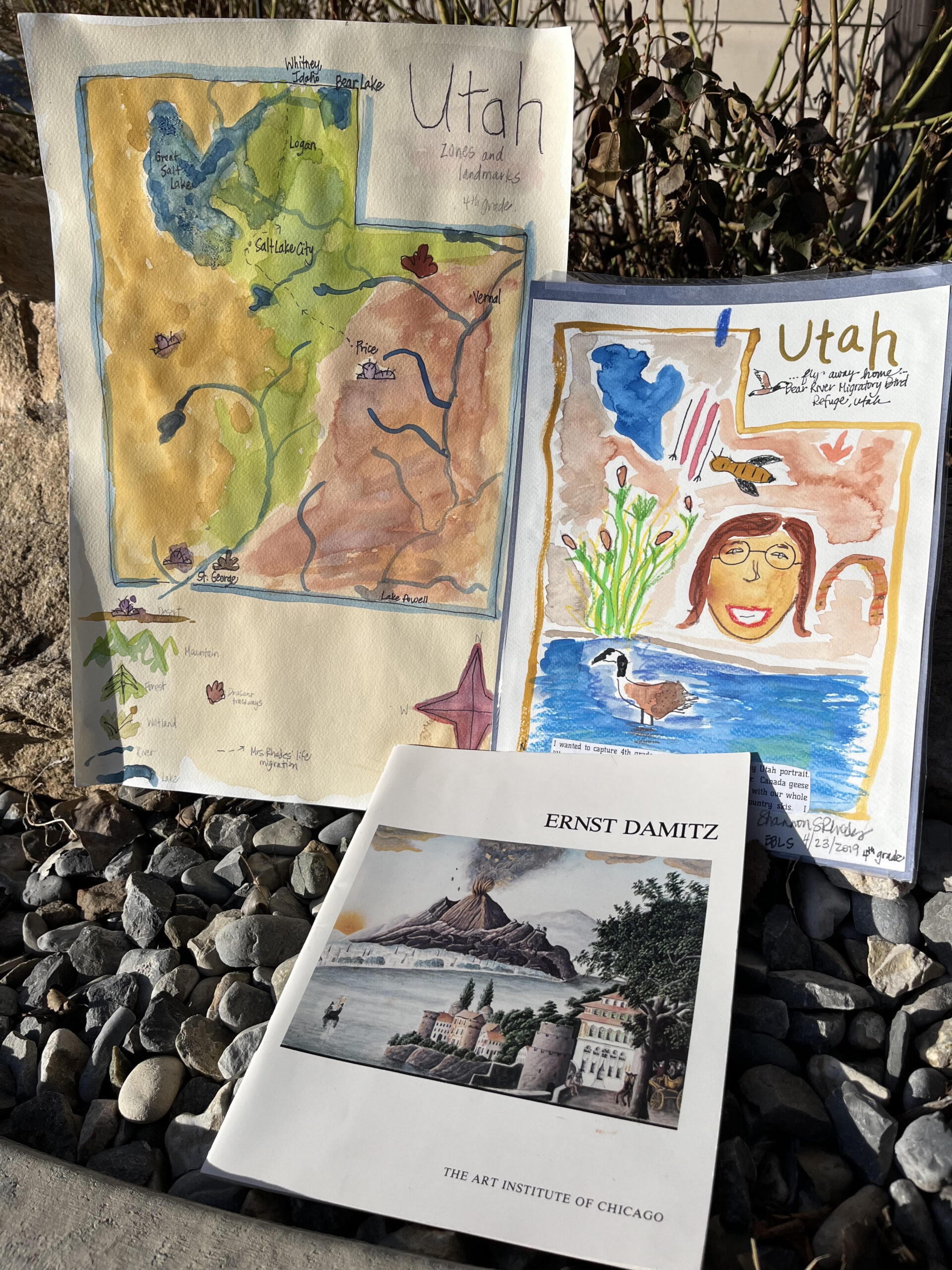
Migration Maps: Watercolor maps of Utah and Damitz Exhibition Catalog Courtesy & Copyright Shannon Rhodes, Photographer
Watercolor maps of Utah and Damitz Exhibition Catalog
Courtesy & Copyright Shannon Rhodes, Photographer

Lisa demonstrating sunprint map making techniques Courtesy & Copyright Eric Newell, Photographer Lisa demonstrating sunprint map making techniques
Courtesy & Copyright Eric Newell, Photographer
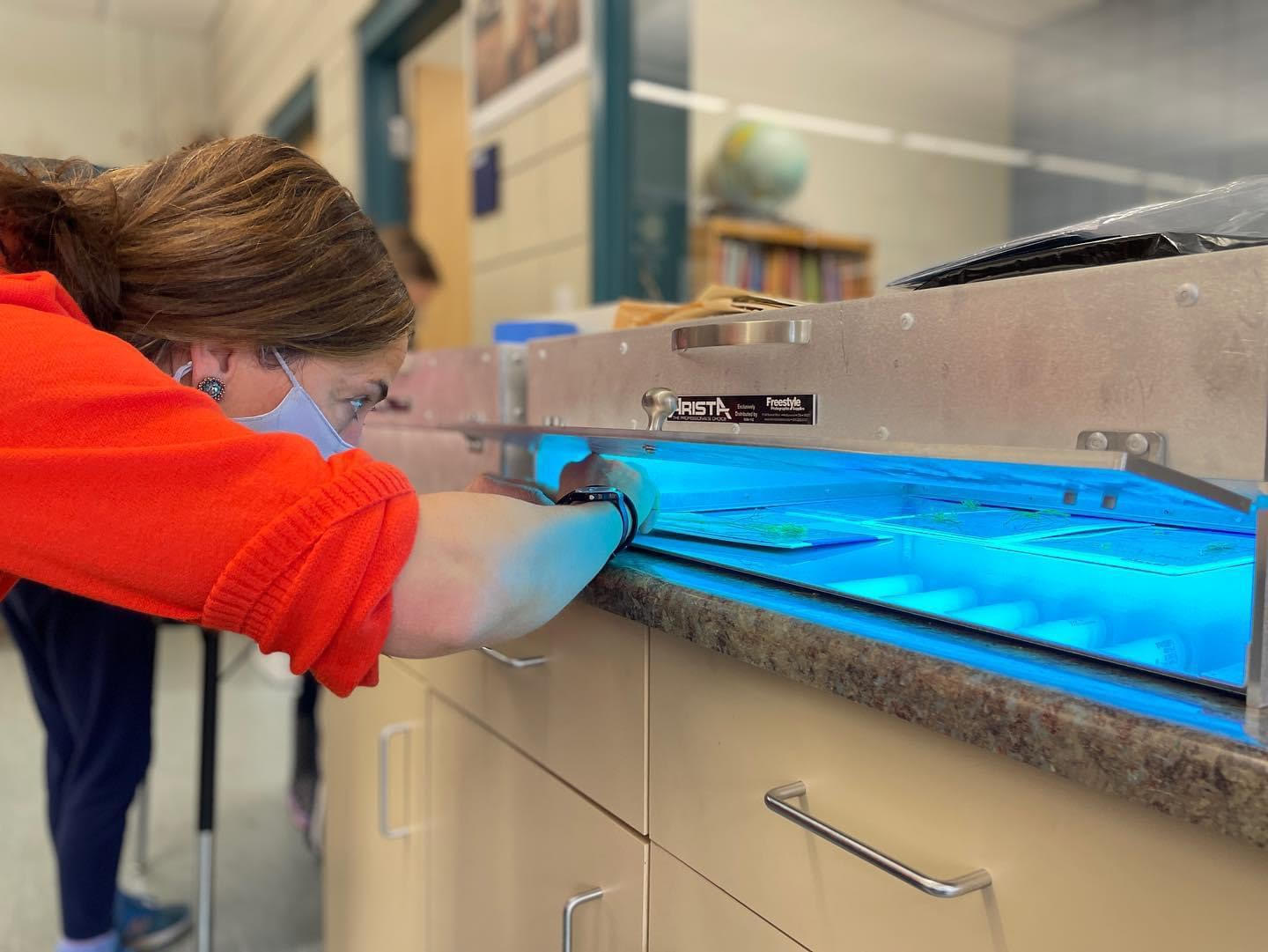
Lisa exposing sunprints with UV light Courtesy & Copyright Eric Newell, Photographer Lisa exposing sunprints with UV light
Courtesy & Copyright Eric Newell, Photographer

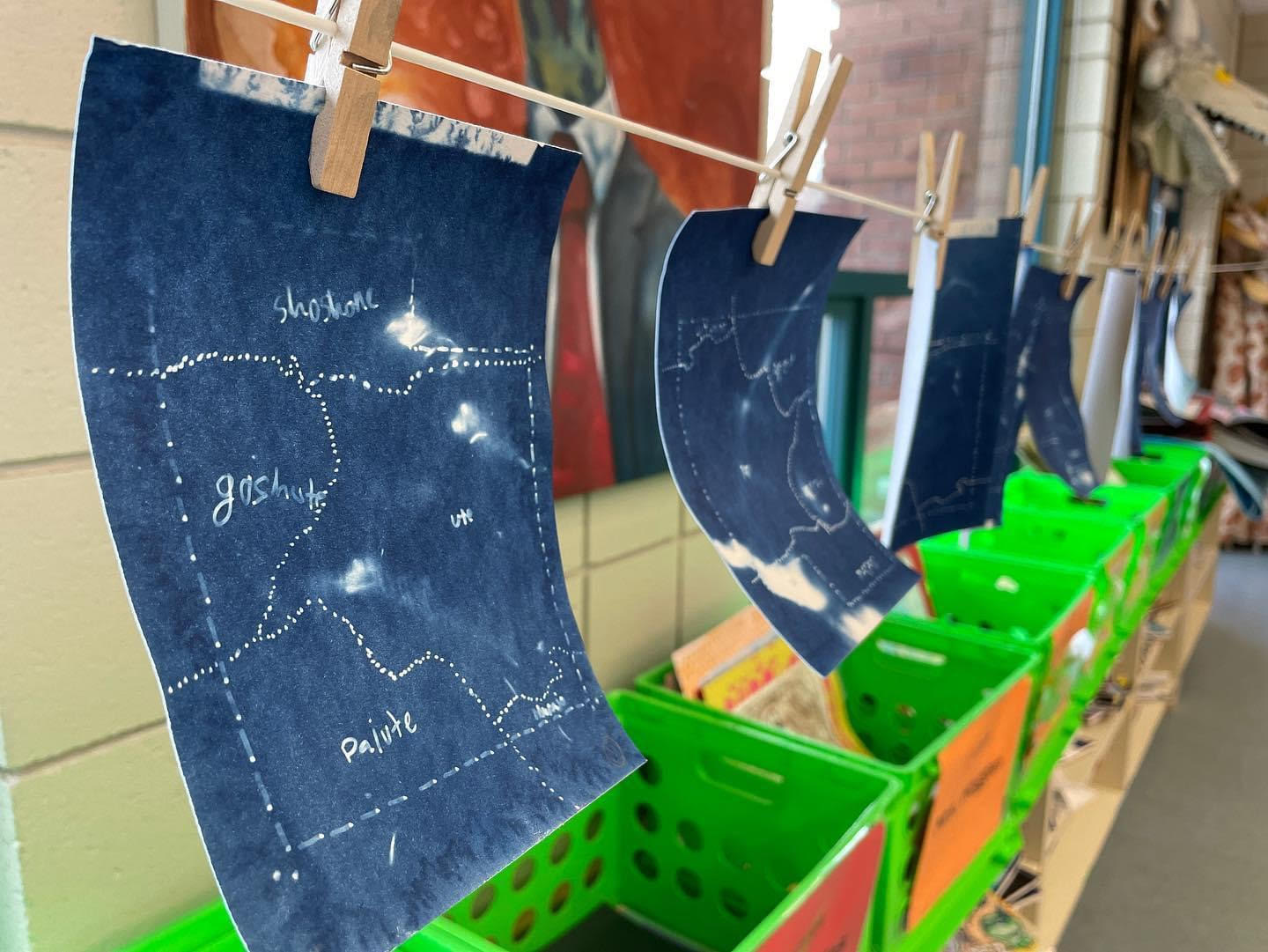
Processed sunprints hanging to dry, Courtesy & Copyright Eric Newell, Photographer Processed sunprints hanging to dry,
Courtesy & Copyright Eric Newell, Photographer

Author Yuyi Morales describes exploring how she and her son discovered their new home in the United States in her picture book “Dreamers.” “We are stories,” she writes, and it reminds me of a catalog of painted stories from my mother’s ancestry. My great-great-great-grandfather Ernst Otto Wilhelm Franz von Damitz emigrated from Prussia and settled in Illinois by 1848. The Art Institute of Chicago exhibited his paintings almost 50 years ago. In sharing my migration family history through his art with my friend Lisa Saunderson, we note his depiction of beautiful architecture, placement, order, and glorious castle views. Lisa unfolds the magic of visual art daily with students at Utah State University and Edith Bowen Laboratory School.

His paintings capture the essence of place, preserving his memory of home, both the home he left and his new one.

Lisa has taught me along with our students over the years to capture place in Utah’s deserts, wetlands, and mountains through artistic mapping. As we draw the Delicate Arch in oil pastels and trace with watercolor the bird migration pathways on the shape of Utah, she shares her wonder of place as one who migrated here herself.

My roots are very coastal, Canadian, both East and West, and I married a South African, we moved here from Cape Town. In the first year living in Cache Valley, I walked all over it with my little baby daughter. I pondered the landscape and the feeling of expectation I had whenever I heard a seagull. The sound triggered a visceral sense that there must be an ocean around here somewhere. The landscape held quiet, waiting to be understood. When I finally learned about Lake Bonneville, it all made sense.

Lisa, share a little about the cyanotype Utah maps you make with your artists.

In fourth grade we look at creating a map of Utah and consider animals, plants, even people. Heritage is tied to migrations, human and animal, recent and ancient. I teach that to the children so they understand the story of the place we are in. For example, our map of Utah is illustrative of landscape. The lines we use in our legend are descriptive. The state boundary is one kind of line. The indigenous territories are defined by a different line that continues beyond the state line.

The map is meant to be educational, a visual reference to help us remember all the people of the place. When we create our cyanotype prints, we use native Utah plants that have cultural significance and consider how animal and plant migrations don’t see ANY lines.

These sunprints developed by ultraviolet light help the artists imagine Lake Bonneville landscape, people living in this place, and yield evidence of the passage of time. Looking, then wondering.

Leaving and coming back to Utah, you find profound beauty and abundance. I’ve seen it over and over through a different lens as I find myself in new geography, and I see how the children identify places they recognize and have been. It is enchanting how you can watch and document layers of history at this place at this time. Consider how you might capture your experience of place through art the next time you are out in it.

I’m Lisa Saunderson and I’m Shannon Rhodes, and we are wild about Utah.

Note: Cyanotypes that Edith Bowen Laboratory School’s fourth grade students make are gifted to the Utah State Legislature and to the donors of the College of Education at Utah State University.

Credits:

Images: Watercolor with Damitz catalog, Courtesy & Copyright Shannon Rhodes, Photographer, Lisa teaching the cyanotype map process, exposing the cyanotypes, and drying maps on the line, Courtesy and copyright by Dr. Eric J. Newell.
Audio: Courtesy & © Friend Weller, https://upr.org/
Text: Shannon Rhodes and Lisa Saunderson, Edith Bowen Laboratory School, Utah State University https://edithbowen.usu.edu/
Additional Reading Links: Shannon Rhodes

Additional Reading:

Wild About Utah Pieces by Shannon Rhodes, https://wildaboututah.org/author/shannon-rhodes/

Bagnall, Laura. Cyanotypes: The Origins of Photography. Kew Royal Botanical Gardens. 28 February, 2023. https://www.kew.org/read-and-watch/cyanotype-photography

Hellstern, Ron. Journey North. Wild About Utah, March 19, 2018. https://wildaboututah.org/journey-north/

Hurren, Dick/Bingham, Lyle, A Moment to Think About Our State Bird. Wild About Utah, July 13, 2021. https://www.upr.org/environment/2021-07-13/a-moment-to-think-about-our-state-bird

Morales. Yuyi. Dreamers. Neal Porter Books/Holiday House. 2018. https://holidayhouse.com/book/dreamers/

Rankin, Jeff. Art Institute of Chicago Recognized Early Warren County Folk Artists. March 30, 2022. Daily Review Atlas. https://www.reviewatlas.com/story/news/history/2022/03/30/art-institute-chicago-recognized-early-warren-county-folk-artist/7202831001/

Strand, Holly. Last Blank Spots on the Map. Wild About Utah, Oct. 29, 2009. https://wildaboututah.org/last-blank-spots-on-the-map/

Watching Bird TV

watching bird tv: Flicker, Courtesy Pixabay
Flicker, Courtesy Pixabay

Two American Robins and a Northern Flicker Drinking from a Bird Bath Copyright © 2012 Linda Kervin Two American Robins and a
Northern Flicker Drinking from a Bird Bath
Copyright © 2012 Linda Kervin

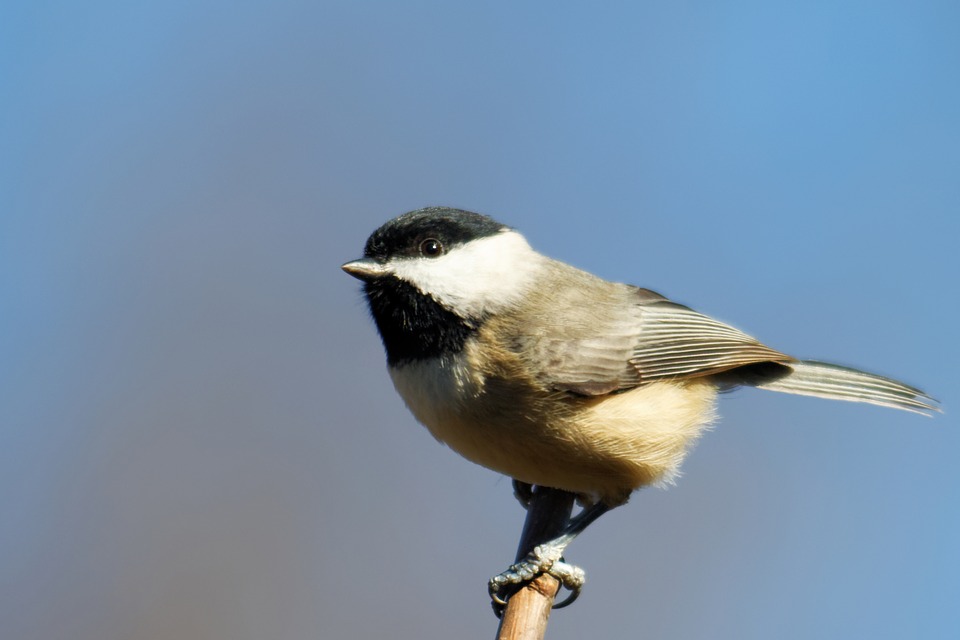
bird tv: Chickadee Courtesy edbo23, photographer and Pixabay Chickadee
Courtesy edbo23, photographer and Pixabay

There are some days that I just don’t have it in me to get outside. Maybe it’s the winter blues; maybe it’s exhaustion from a full day’s work. Either way, there are days where all I want to do is sit in the shelter of my home next to the heat ducts, or under the shade of a porch, and just exhale for hours. Sometimes, getting into the thick or exploring one of the many unmapped nooks of Utah’s majesty just isn’t happening.

I used to feel bad about this. I have but one life, one short blip of time upon this earth, I should be making use of every second. Whether it’s laboring on an overdue chore, or out testing my grit in harmony with Utah’s character, I need to be doing or I am dying; wasting the one life I am given.

It took me some good time to not overcome this mentality, but see my struggle with new eyes: to wash them and see the world fresh. My ablution began by asking a simple question: how can I love the still wild land that has provided for my family, my nation, my species for millennia, even when I don’t have it in me to go out and commune with it as I know I should daily?

The answer for me was to find a way to appreciate and give in such a way that allows me great joy and relaxation, yet fulfills that higher narrative which only the world beyond human influence can provide. My answer was watching birds at my small backyard bird feeder.

While it may not sound as exciting as fording a river while carrying my dog, or submitting a mountain that still holds on to deep winter snows (again with my dog), it gives me a chance to still learn about the cut of my jib, to see what character I’m made of, and to see my place in the world, in creation, and in life.

I test my grit upon the stillness of my mind when cheerful chickadees begin to see me as a part of the scenery and perch ever closer and closer to the branches above me, or my honest acceptance when rackets of starlings come to steal the suet left out in hope of a Stellar’s jay or lost mountain bluebird, or my reflection on where my body will one day go as scraps from my last hunt are eaten by the local neighborhood magpie clan.

This is an activity I have dubbed Bird TV for those who will often find my attention turn suddenly from conversation with them to quickly confirming the flicker drumming on the feeder’s home tree marking its stake. Through the lessons of my wild neighbors and in my observation of them, I can still hold true to myself in seeking to commune with the real world daily. By watching Bird TV, I can learn the calls of different species, notice when they change with the food supply or weather, and reflect upon my place within this world and within this life, no narration but the sounds of the real world, alive and vibrant in front of me.

So when you don’t have the energy or time to be upon the land from which has given life to your family, our nation, and all species, consider setting out sunflower seeds, nuts, raw meat, or even jams for the birds. Set them someplace you can catch yourself noticing who’s visiting out of the corner of your eye through a window at any moment, and if another human asks as to why you’re being distracted by a what’s outside and not by the usual glowing rectangle, just let them know that it’s Bird TV. Invite them to watch too, and catch them up on what’s been going on in the world. Hopefully then they’ll learn to tune in too.

I’m Patrick Kelly and I’m Wild About Utah.
 
Credits:

Images: Image Courtesy & Copyright Patrick Kelly, Photographer, all rights reserved
Audio: Contains audio Courtesy & Copyright Kevin Colver
Text:    Patrick Kelly, Director of Education, Stokes Nature Center, https://logannature.org
Included Links: Lyle Bingham, Webmaster, WildAboutUtah.org

Additional Reading

Project Feederwatch, Cornell Lab of Ornithology, Cornell University, https://feederwatch.org/

Axelson, Gustave, 30 Years of Project FeederWatch Yield New Insights About Backyard Birds, All About Birds, Cornell Lab of Ornithology, Cornell University, January 11, 2017, https://www.allaboutbirds.org/news/30-years-of-project-feederwatch-yield-new-insights-about-backyard-birds/

Local Sled Dogs-Sheer Joy

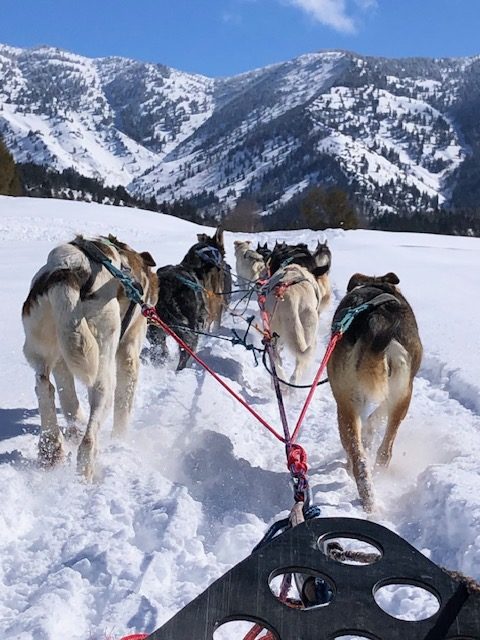
Sled Dogs-Sheer Joy: Sun, Snow, Sheer Joy, Courtesy & © Mary Heers, Photographer
Sun, Snow, Sheer Joy
Courtesy & © Mary Heers, Photographer
As the snow continued to pile up this winter, I started to ask around about sled dogs.

I soon bumped into a friend who had a friend in Preston who trained and occasionally raced his team of 14 Alaskan Huskies.

This musher graciously offered to give me a ride on one of his training runs. I showed up all smiles as he was harnessing his team. The dogs were excited to go and actually howling with happiness. The musher asked if I wanted to get in – or ride up the trail a bit on a snowmobile with his teenage son to a more level spot. In a rare moment of sanity, I opted for the snowmobile.

The machine had just pulled out of the yard when I heard his son say, “Oh, No!”

I looked back in time to see the sled tip over, sending the musher sliding across the driveway and under my car parked at the end of it. I jumped off the snowmobile as the dogs shot past us with the empty sled. The dogs were gaining on a truck up ahead, then shot past it with the snowmobile in hot pursuit.

I was left standing in a snowbank wondering if I’d wandered into a James Bond movie.

My first encounter with sled dogs had gone a lot smoother. I was visiting Denali National Park in Alaska and the rangers were introducing us to one of the dog teams that they still use to patrol the park.

But the most famous sled dogs are the freight teams that carried anti-toxin from Anchorage to Nome during an outbreak of Diphtheria in 1925. The dog teams ran a thousand miles and are credited with saving hundreds of lives.

For the last 50 years, modern mushers have retraced this journey in the ultimate sled dog race, the Ididarod. The best account I’ve read about the world of training sled dogs and running the Ididarod is Gary Paulsen’s book Winterdance. Just before going on a training ride, he discovered, “the gangline was trembling, quivering like a string on a guitar. It fairly hummed and I felt there was great power there. The trees in the yard went by in a mad blur and we left the yard at warp speed.”

Paulsen also lets us in on the deep relationship mushers form with their dogs: “As they understand you will give them meat when they run, and love when they run, and your soul when they run – as they learn to feel that, understand that, know that – they are no longer sled dogs – they become distance dogs, dogs that cannot, will not be stopped.” Paulson ran the Iditarod in 1983. It was a wild ride that took 17 days. But he finished.

Meanwhile, back in Preston, our teenage hero had caught up with the runaway team, made a flying leap from the snowmobile onto the empty sled, and somehow managed to stop the team. Pretty soon the musher and I caught up.

“Do you still want to get in?” he asked.

“Sure,” I said.

And we were off. The dogs settled into a steady trot. From then on it was all Sun and Snow and the sheer Joy of sliding quietly through the magnificent winter scenery.

This is Mary Heers and I’m Wild About Utah

Credits:
Photos: Courtesy & Copyright Mary Heers, Photographer
Featured Audio: Courtesy & Copyright Mary Heers
Text: Mary Heers, https://cca.usu.edu/files/awards/art-and-mary-heers-citation.pdf
Additional Reading: Lyle Bingham, https://bridgerlandaudubon.org/

Additional Reading

Wild About Utah, Mary Heers’ Postings

Paulsen, Gary, Winterdance: The Fine Madness of Running the Iditarod, Harvest Books, HarperCollins February 17, 1995, https://www.amazon.com/Winterdance-Fine-Madness-Running-Iditarod/dp/0156001454/

Idaho Sled Dog Challenge, https://idahosleddogchallenge.com/

Racoons: Masked Bandit Dumpster Divers

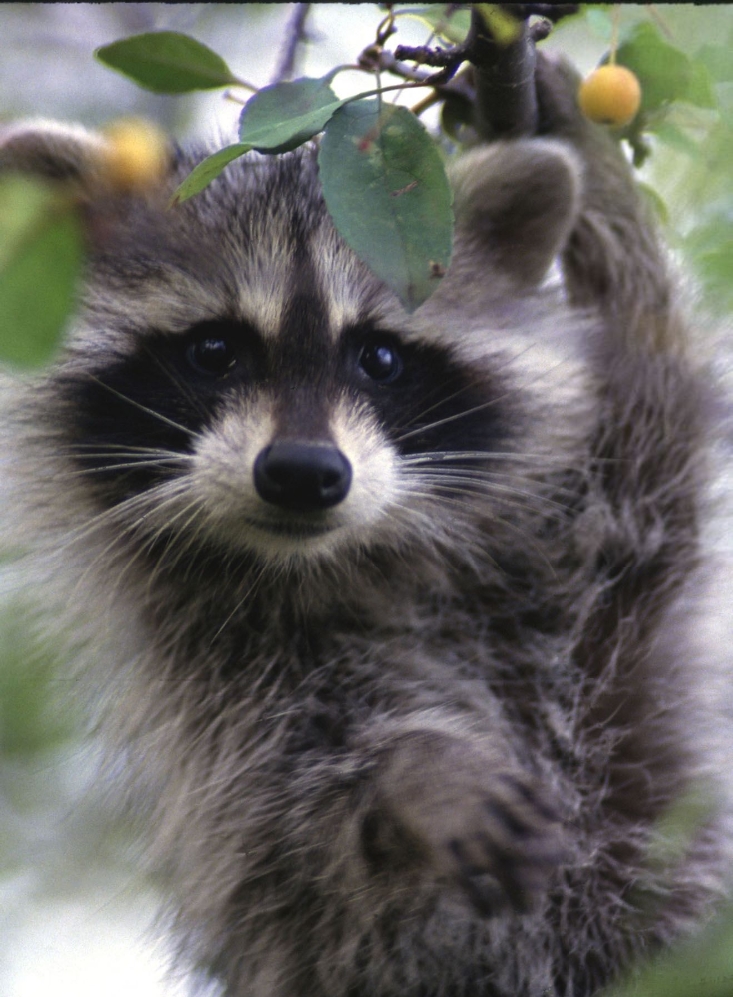
Racoon in Apple Tree, Courtesy US FWS, Bill Buchanan, Photographer
Racoon in Apple Tree
Courtesy US FWS, Bill Buchanan, Photographer
Those masked bandits raiding our gardens by night and bird feeders by day, who often wash their food (actually enhancing tactile experience), have human-like highly sensitive hands, love to eat chickens, as do I, and have a very clever brain- an animal full of contradictions much like us human animals.

I have deep affections for racoons that began with an young childhood in Michigan. A farmer friend discovered a litter of racoon kits in their haymow. Their mother was found dead on a nearby gravel road, a common demise for racoons, skunks, possums and host of many other critters.

The kits barely had their eyes open and needed intensive care. I took two from the litter and began gathering information on how to keep them alive. I don’t recall the details other than my mother mothering me and the baby racoons. We filled a doll bottle with whole, unpasteurized milk, which they quickly drank with gusto! As they drank, their tiny hands would massage my own, which brought me pure joy.

As they grew, I became their world as they explored me from top to bottom, their sensuous hands gathering texture, and other nuances of touch. We became inseparable companions. Neighbor kids soon joined the fun and were delighted by their playful, inquisitive antics.

I was forewarned they could become threats as they matured, even vicious at times, and possibly contracting rabies and other communicable diseases for cats, dogs, and humans. Our neighbors had gardens, keeping careful watch over my pets. Fortunately, my racoons were never a problem. Perhaps it resulted from being so habituated, they became one with us, and being well fed and entertained, never strayed into mischief.

Once the racoons gained maturity, and I became involved with school activities that fall, it was decided to return them to the farm where they were gladly accepted by the younger family members. A month or so later, one was found dead on the highway. A few days later, it’s sibling met the same end near it’s sister. Naturally, it shattered my heart.

So many years and a lifetime later, we are living on a small, wooded stream in N. Utah. Wild racoons are a constant, once birthing a litter in our chimney, occasionally finding their way to my bird feeder, on our deck, and exploring our garage. The grandkids are always enthralled, when these nocturnal beings tap on our deck windows both amazed as they lock eyes.

Raccoons, although not native to Utah, are abundant throughout much of the state. Resource agency professionals estimate that raccoons cause 60–70% of all urban wildlife problems. Racoons display problem-solving skills on par with monkeys. Further, they far outclass domestic pets such as cats and dogs, suggesting an astonishing level of intelligence. And that is often their undoing, as it is our own!

Jack Greene for BAS and I’m wild about our masked bandit dumpster divers!

Credits:

Images: Racoon in Apple Tree, Courtesy US FWS, Bill Buchanan, Photographer, https://digitalmedia.fws.gov/digital/collection/natdiglib/id/11639/rec/2
Audio: Courtesy & © Kevin Colver, https://wildstore.wildsanctuary.com/collections/special-collections
Text: Jack Greene, Bridgerland Audubon, https://bridgerlandaudubon.org/
Additional Reading: Lyle Bingham and Jack Greene, Author, Bridgerland Audubon, https://bridgerlandaudubon.org/

Additional Reading:

Jack Greene’s Postings on Wild About Utah, https://wildaboututah.org/author/jack/

Hinkamp, Dennis, Racoons are Costly Pests, Extension, Utah State University, Dec. 9, 2003, https://extension.usu.edu/archive/raccoons-are-costly-pests

Reese, Julene, Racoons Raiding Your Garden and Garbage, Extension, Utah State University, May 31, 2013 https://extension.usu.edu/archive/raccoons-raiding-your-garden-and-garbage