Shrikes

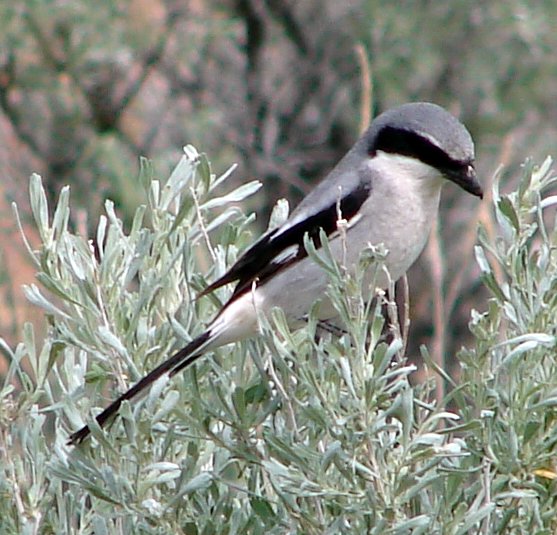
Loggerhead Shrike
Loggerhead Shrike
Lanius ludovicianus
Copyright 2013 Linda Kervin
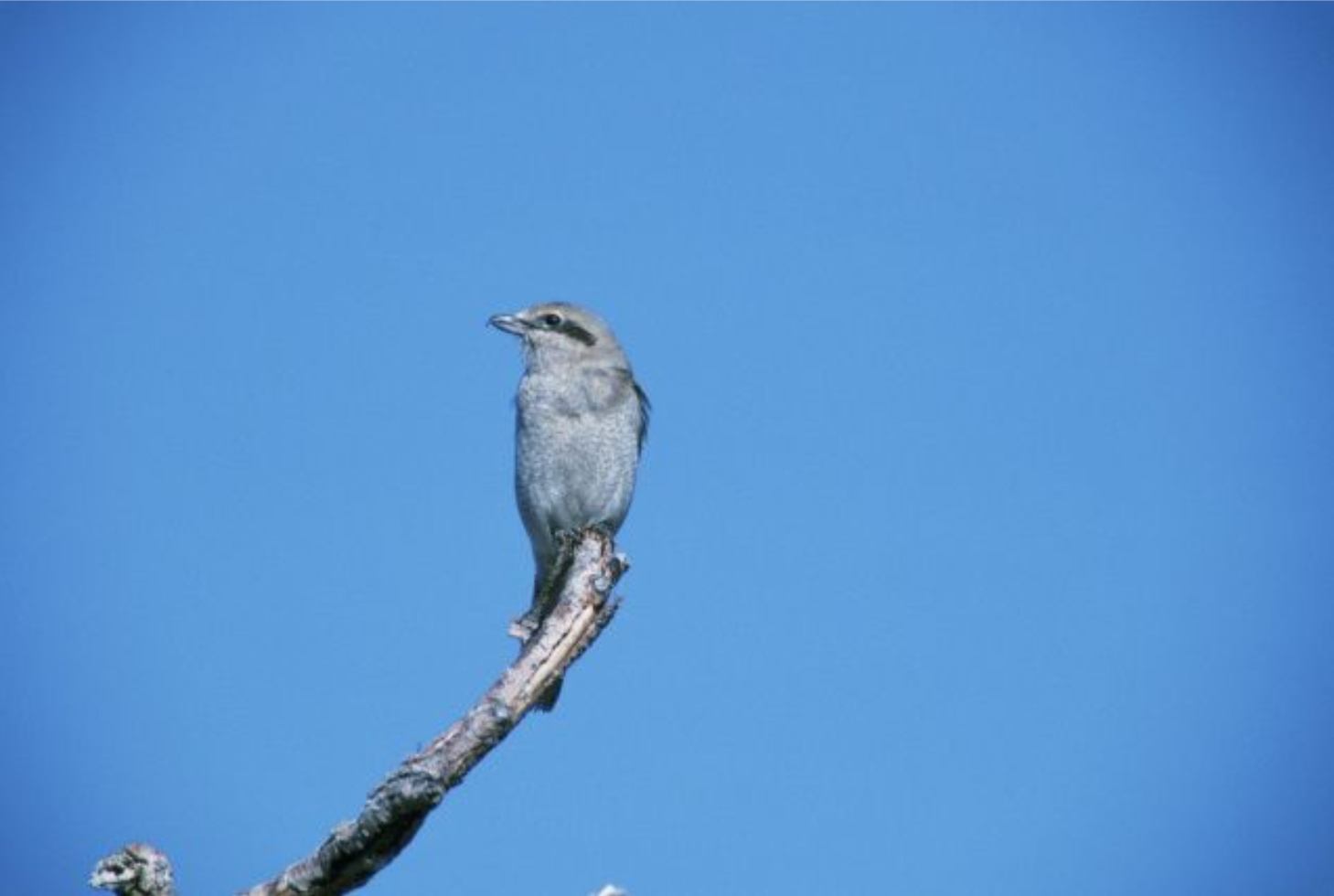
Northern Shrike Courtesy US FWS, Dave Menke, Photographer Northern Shrike
Lanius borealis
Courtesy US FWS, Dave Menke, Photographer

The name songbird conjures up an image of a colorful singing warbler. But one family of songbirds, the shrikes, are fierce little predators. No bigger than a robin, shrikes mainly eat insects, especially grasshoppers and crickets, but they also prey on rodents, small birds, lizards, snakes and frogs.

Utah has 2 species of Shrike: the Loggerhead which resides here year round and the Northern which breeds in tundra and visits Utah in the winter. Shrikes prefer semi-open country that has some trees, shrubs or fenceposts where they perch to watch for prey and then swoop to kill with their thick hooked bill.

Shrikes are sometimes called butcher birds Continue reading “Shrikes”

Elderberries

Elderberry Picking
Mark and his daughter picking Elderberries
Copyright 2013 Mark Larese-Casanova

Hi, this is Mark Larese-Casanova from the Utah Master Naturalist Program at Utah State University Extension.

Utah’s mountains are abundant with berry-producing shrubs that provide a veritable bounty of food for wildlife. As summer winds down and fall cedes to winter, many birds and mammals try to feed as much as possible to store energy for migration, hibernation, or even just surviving the cold.

One of the most abundant berry-producing shrubs in Utah’s moist mountain canyons is elderberry, Continue reading “Elderberries”

Cricket or Cootie?

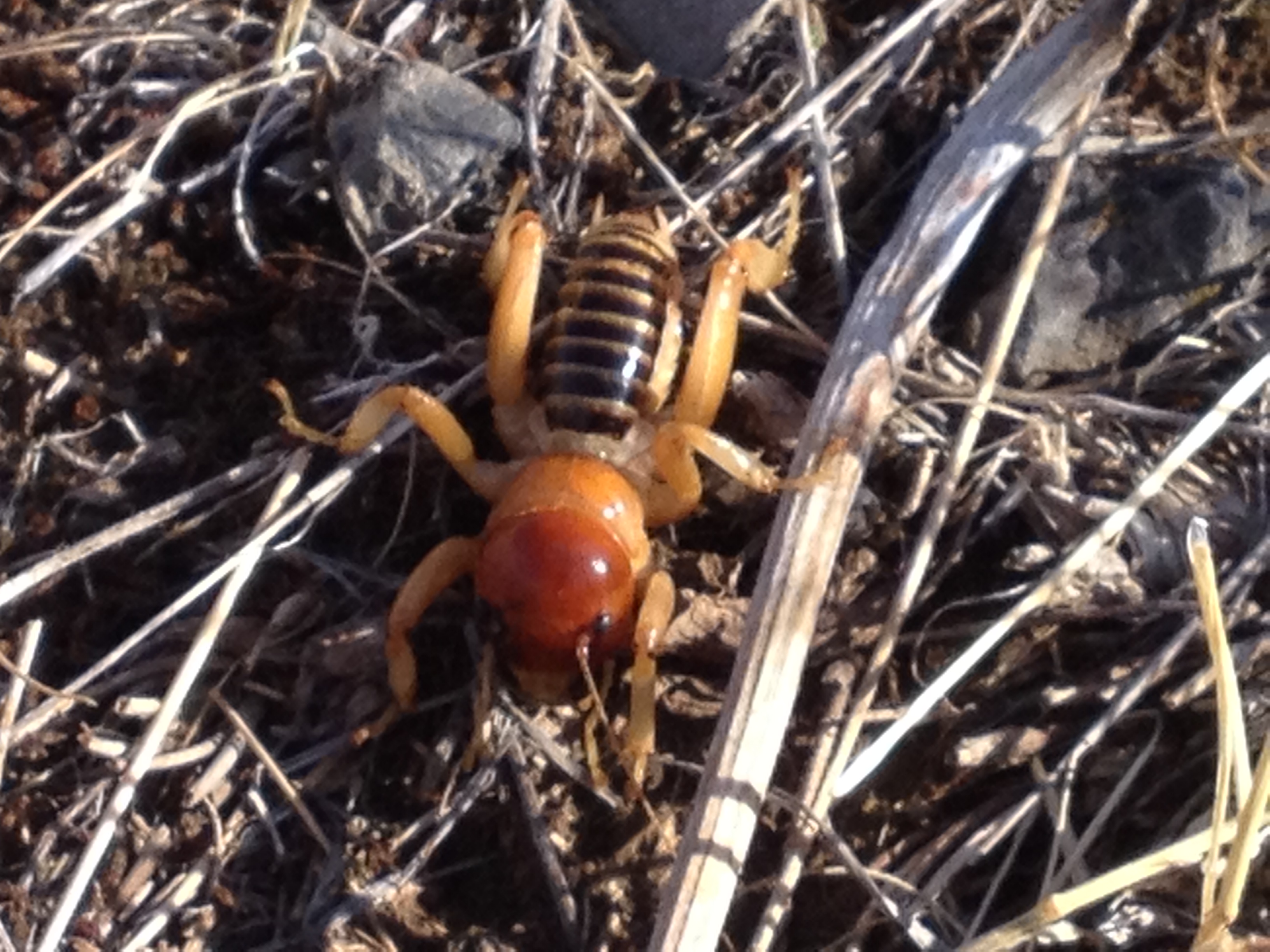
Jerusalem Cricket
Jerusalem Cricket
Orthoptera: Stenopelmatidae
Copyright 2013 Holly Strand

Hi, I’m Holly Strand from the Quinney College of Natural Resources at Utah State University.

It’s almost Halloween so I’d like to tell you about an unusual creature that has given many people a fright. It has a shiny oversized body with long spiny appendages. Dark eyes stare disturbingly from a smooth, bald head. It eats both living and dead matter. And sometimes it engages in cannibalism.

It’s a zombie you may be thinking! But no; Continue reading “Cricket or Cootie?”

Turkey Vultures

Swainsons Thrush
Turkey Vulture in flight
Cathartes aura
Courtesy Utah Division of Wildlife Resources
Scott Root, Photographer
Licensed under CCL

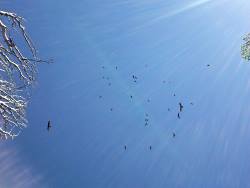
Turkey Vulture Kettle above LoganTurkey Vulture Kettle above Logan
Cathartes aura
Courtesy and Copyright
Andrea Liberatore, Photographer

Turkey Vulture Kettle above LoganTurkey Vulture Kettle above Logan
Cathartes aura
Courtesy and Copyright
Andrea Liberatore, Photographer

On certain days in the spring and fall, the sky above my neighborhood looks like a scene from Alfred Hitchcock’s ‘The Birds’. As many as 60 large black birds swarm the sky, circling above the rooftops. On the busiest of days, people will stop their cars in the middle of the road to gawk at the sight. Some give a visible shiver when told that the birds are turkey vultures. But we have nothing to fear from these birds – in fact they should be embraced for the absolutely vital role they play in our environment.

There are lots of myths surrounding vultures, which in turn creates a misunderstanding about them. So let’s set the record straight on a few things. Vultures circle for two main reasons, neither of which involves waiting for a sick or wounded animal to die. The first reason is to take advantage of rising columns of air, called thermals, which generally occur in the mornings as the sun warms the air closest to the earth. Vultures are soaring birds and flapping their 6-foot wingspans takes a lot of effort, so they rarely do it. In fact these birds can fly for hours without a single flap. Circling within a thermal helps them travel higher and farther on much less energy.
The second reason vultures circle is to hone in on a food source. Turkey vultures are one of the few birds that have a highly developed sense of smell. Working together with their excellent eyesight, the birds soar and circle to pin down the location of their next meal.

Continue reading “Turkey Vultures”