Autumn Migrations

Autumn Migrations: Redhead Ducks Courtesy US FWS Nate Rathbun, Photographer
Redhead Ducks
Courtesy US FWS
Nate Rathbun, Photographer
Here comes Autumn, especially noticed in the northern parts of Utah: the colors, the cool air, the absence of many insects, the falling leaves, and the occasional dusting of snow in the mountains.

In these weather-changing conditions, wildlife species have four options: adapt to colder weather, migrate to better conditions, hibernate…or die. Today, we’ll consider migration.

As recorded by the National Geographic Society, Entomology Professor Emeritus, Hugh Dingle, mentions five basic characteristics of migration:

Prolonged movements that carry animals outside familiar habitats.

  1. They tend to be linear, not zig-zag patterns.
  2. They involve special behaviors of preparation and arrival (such as overfeeding).
  3. They demand special allocations of energy.
  4. They maintain attention to the greater mission. Meaning they are undistracted by temptations, and undeterred by challenges, that would turn other animals aside.
  5. They feel they can eat, rest, or mate later.

The entire migration movement involves body shape, physical processes, and genetics of each species.

For ten years, scientists have been documenting one of the largest aerial mass migrations on earth. According to Science Magazine, three and one half trillion insects were recorded on radar traveling from southern England to Africa and back. They represented 3,200 tons of biomass (living tissues), which was more than seven times that of the thirty million songbirds that make that same annual flight.

Movements don’t have to be monumental to be considered migratory. For instance, some consider the daily changes in depth of ocean zooplankton to be a form of migration. They spend the day near the surface benefiting from the food provided by sunlight, then sink to darker depths at night to hide.

Some rattlesnakes in Western Canada are also considered migratory as they have been tracked to relocate anywhere from 5 to 33 miles each year. This movement is spurred by cold temperatures which reduce food, and a scarcity of good den sites below the earth’s surface, which must be warm enough and at times capable of holding up to 1,000 snakes. In contrast, Arizona rattlers travel far less because they don’t require that need.

Pronghorns, which are not really antelopes, travel far and fast, around 60 miles per hour. One group travels hundreds of miles from north-central Montana up into Alberta for breeding in the Spring. Another group of nearly 20,000 goes from Grand Teton National park south to the sagebrush plains near Pinedale, Wyoming for the winter. The routes of both groups do not vary, which can be hazardous if they are blocked by snows.

Biodiversity of ecosystems and processes, which enable each species to survive, is critical. But Conservation scientists also try to preserve migrational behaviors.

Monarchs in Mexico Courtesy FWS Pablo Leutaud, Photographer Licensed under Creative Commons
Monarchs in Mexico
Courtesy FWS
Pablo Leutaud, Photographer
Licensed under Creative Commons
No doubt, there are fragile creatures which travel south to avoid cold temperatures as well as lack of food. The Monarch butterfly comes to mind. The disappearance of flowers, and freezing cold would spell doom for them in northern climates. So they embark on a 3,000 mile journey to Mexico, or southern California. Let’s consider some other long-distance, roundtrip travelers:
*Salmon and Caribou also migrate 3,000 miles.
*Dragonflies will go 10,000 miles.
*Leatherback turtles swim 12,000 miles.
*Elephant seals and Humpback whales swim over 13,000 miles.
*For birds, Northern Wheatears and Pectoral Sandpipers fly 18,000 miles.
*Sooty Shearwaters fly from the Falkland Islands to Arctic waters, a roundtrip of 40,000 miles.
*The champion distance migrant, the Arctic Tern, flies 44,000 miles from the Arctic north of Greenland to Antarctica every year!
*And the longest nonstop flight goes to the Bar-Tailed Godwit at over 7,000 miles from Alaska to New Zealand in nine consecutive days!

An entire program could also be dedicated to human migrations including various Native American tribes, the Nenets who herd reindeer 400 miles in the Russian Yamal Peninsula, and the ancient people who crossed the Bering Strait to settle in the Americas.

As we close this session of Fall migrations, consider the words of George Eliot who wrote
the following in 1841: “Delicious Autumn. My very soul is wedded to it. And if I were a bird I would fly about the earth seeking the successive Autumns.”

This is Ron Hellstern for Wild About Utah


Credits:

Images: Readhead Ducks, Courtesy US FWS, Nate Rathbun, Photographer; Monarchs in Mexico, Courtesy US FWS but licensed under Creative Commons, Pablo Leutaud, Photographer
Text:     Ron Hellstern, Cache Valley Wildlife Association

Additional Reading

https://www.fws.gov/midwest/news/monarchpopulation2016.html

https://www.fws.gov/radar/migration/index.html

https://whc.unesco.org/en/list/1290

https://blog.nature.org/science/2014/02/26/cornfield-monarch-butterfly-decline-pollinators-agriculture/

https://www.nationalgeographic.org/news/snake-migration/

https://news.nationalgeographic.com/news/2006/08/060808-bird-migration.html

NRCS Working Lands for Monarch Butterflies, https://arcg.is/0TjueO
Greater Sage Grouse Recovery

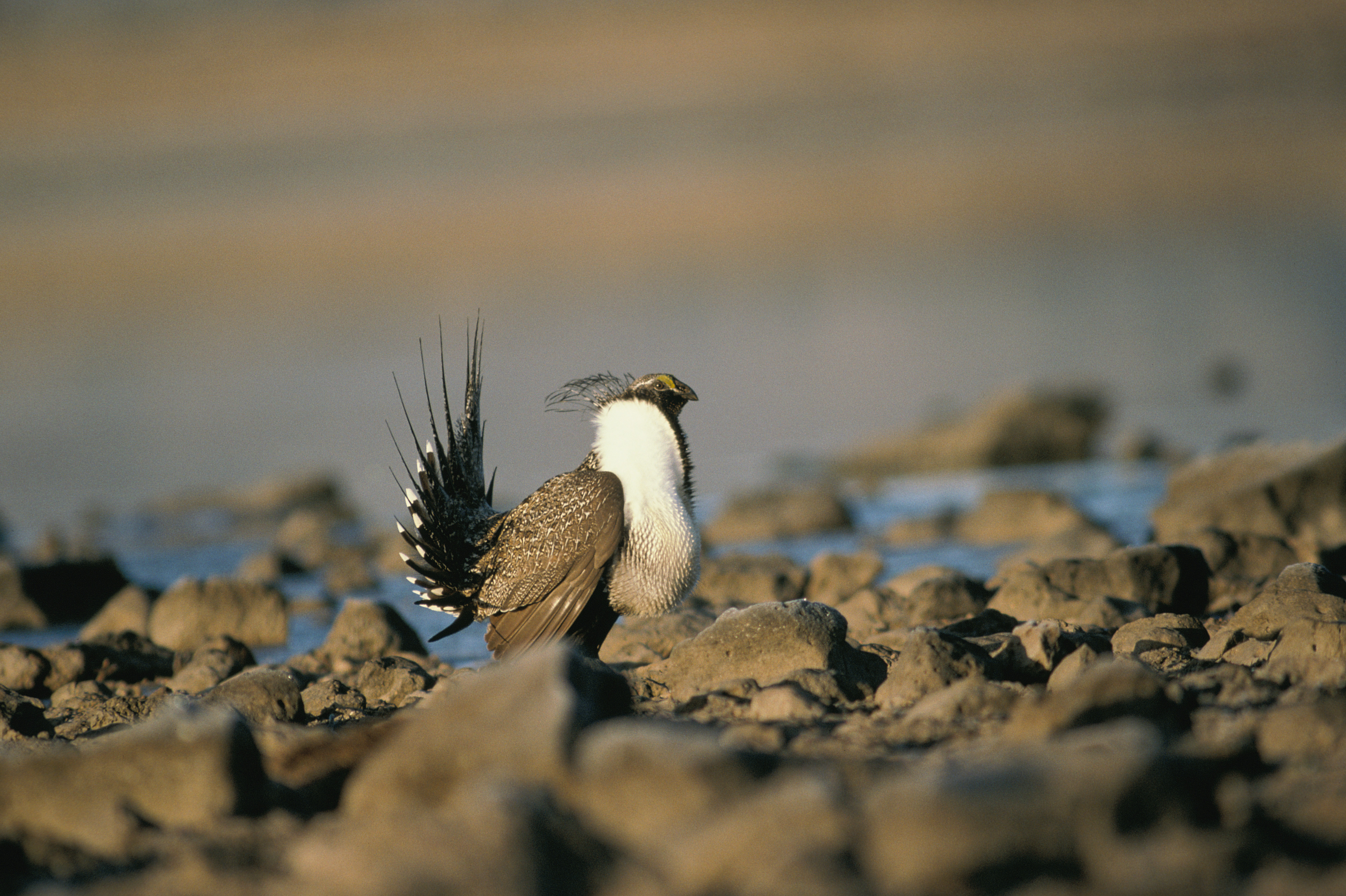
Greater Sage Grouse Recovery: Sage grouse standing in profile on rocky lake shore Courtesy US FWS Dave Menke, Photographer
Sage grouse standing in profile on rocky lake shore
Courtesy US FWS
Dave Menke, Photographer
So what happens when you get a bunch of ranchers together with a bunch of scientists and agencies? I found the answer as I attended a meeting in a remote part of western Boxelder County a few evenings ago. I was pleasantly surprised to discover much good for both wildlife and people.

This was a formal meeting under the auspice of the West Boxelder Conservation Resource Management (CRM) Group targeting greater sage grouse recovery. It was a very informative meeting covering everything from juniper forest removal, prescribed burns, and reseeding to enhance range for cattle, birds, and wildlife.

I learned that due to wildfire suppression which is essential to maintaining healthy range conditions, juniper forests have replaced thousands of acres of grasses, forbs, and sage steppe communities. I was also informed that pinyon pine will be preserved honoring Native American traditions which is central to their culture and diet. In addition to this work, the group addresses general rangeland condition and invasive species.

The CRM is planning wetland and riparian improvements that will provide resting, feeding, and nesting sites for migrating birds. Fencing has been put around key springs and off-site water sources have been developed. The reintroduction of beaver to the stream will help the extremely limited water supply by slowing the spring water runoff, stabilizing the stream banks, and raising the water table.

There was a lively exchange regarding a paper published in a respected science journal by USU authors addressing grazing impacts on grouse populations. The Greater Sage Grouse has become a species of special concern due to plummeting populations, and is considered an umbrella species being its recovery should be paralleled by other sensitive faunal species.

A statement in the papers abstract “Our meta-analysis revealed an overall negative effect of livestock grazing on grouse populations.” raised some red flags with the ranching community. Reading further, this study was conducted on a different grouse species in the U.K. There appeared to be a peaceful resolution to this concern and agreement that future abstract wording would get more scrutiny before published.

I also learned the verdict is still out on grazing impacts on the greater sage grouse. Intense research is underway in the CRM attempting to find answers. My prediction is with all of the range restoration activity combined with well managed grazing will eventually result in higher grouse populations.

This good work has not gone unrecognized. In 2016, the West Boxelder CRM was presented with the Sage Grouse Habitat Stewardship-Collaborative Award from the BLM as an ideal example of a community-based land stewardship organization that is committed, engaged, and active across land ownership boundaries. A tip of the hat to all interests on this remarkable effort!

This is Jack Greene writing and reading for Wild About Utah

Credits:

Pictures: Courtesy US Fish & Wildlife Service, Dave Menke, Photographer
Text: Jack Greene, Bridgerland Audubon Society

Additional Reading:

Community Based Conservation Plan, https://utahcbcp.org/localworkinggroups/WestBoxElder-WBECRM/westboxelder

Trout vs. Chub

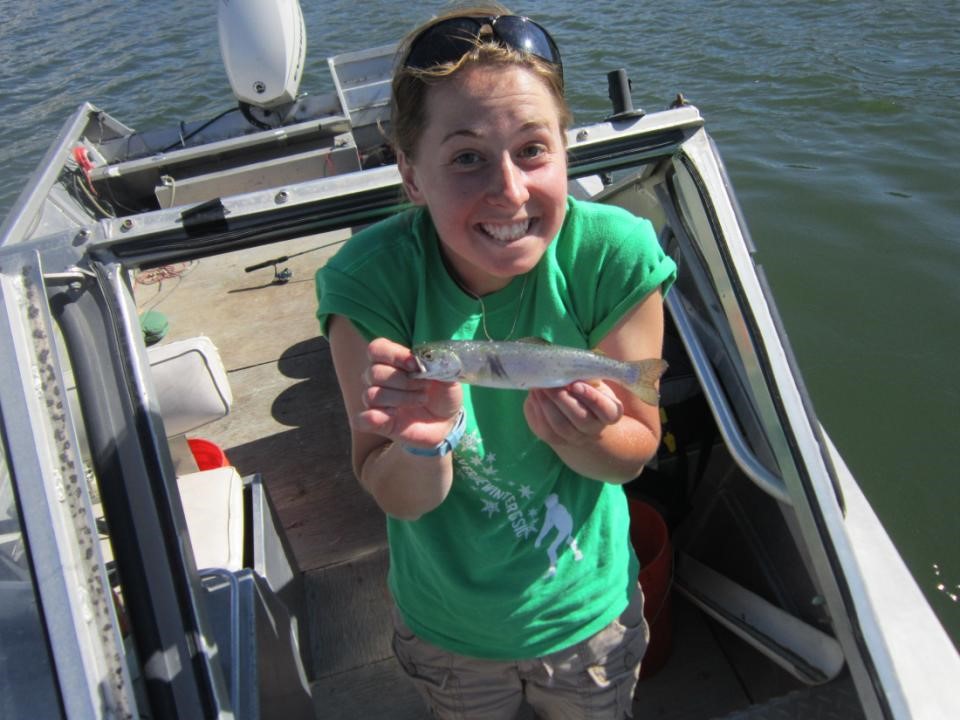
Trout vs. Chub: Graduate student Lisa Winters holds a mature tiger trout. Trout grow quickly when they are on a Utah chub diet.
Graduate student Lisa Winters holds a mature tiger trout. Trout grow quickly when they are on a Utah chub diet.
Scofield Reservoir (a 2,815-acre, man-made lake), has, “Historically [been] the most important trout fishery in Utah’s southeastern region…” says Dr. Phaedra Budy, Unit Leader for the U.S. Geological Survey Cooperative Fish & Wildlife Research Unit at USU.

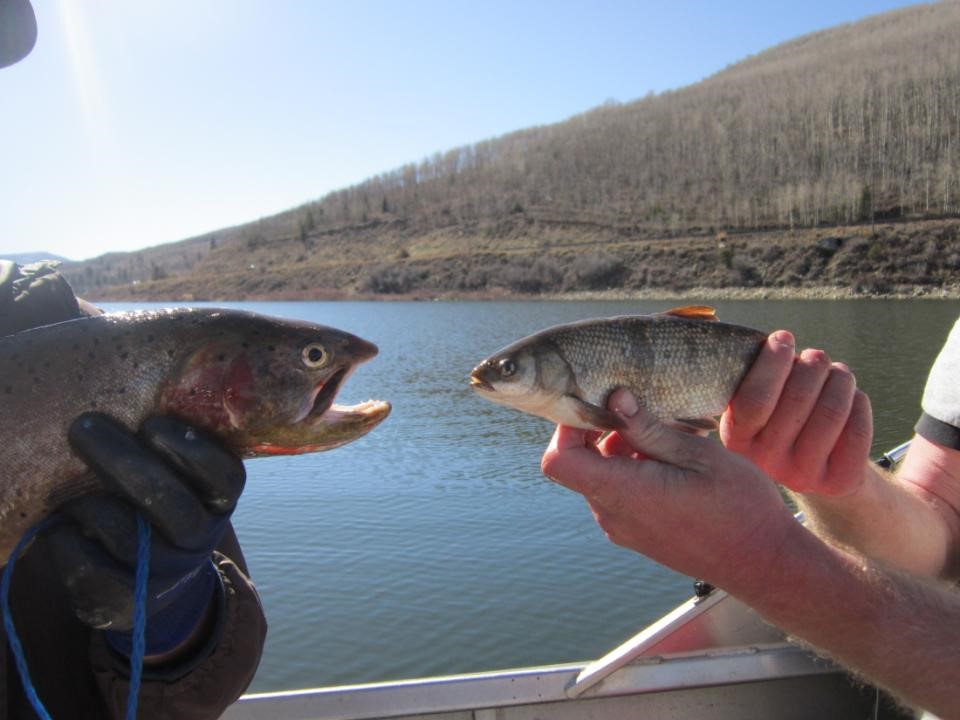
The trout (tiger, cutthroat and rainbow) now share the reservoir with high densities of Utah chub. The reservoir is thick with chub – a carp-like fish that matures quickly and is extremely prolific. At times chub have outnumbered trout in Scofield Reservoir nine to one.

Trout vs. Chub: The competitors: trout vs Utah chub in Scofield Reservoir
The competitors: trout vs Utah chub in Scofield Reservoir
The Utah Chub is native to the state, as indicated by its name, but it wasn’t observed in the lake until 2005.

The main concern for fisheries managers is whether or not the growing population of chub will compete with sport fish for food and/or space, as has been observed elsewhere, or whether chub can be effectively controlled by trout populations.

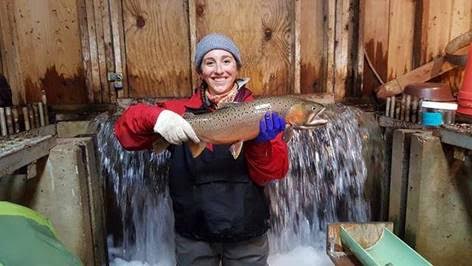
Trout vs. Chub: Undergraduate student Konrad Hafen holds a mature Tiger trout which preys on the Utah chub.
Undergraduate student Konrad Hafen holds a mature Tiger trout which preys on the Utah chub.
In an effort to answer these questions, Utah Division of Wildlife Resources (UDWR) commissioned a multi-year research project with Dr. Phaedra Budy’s Fish Ecology Lab in the Department of Watershed Sciences, Quinney College of Natural Resources to determine the predator and forage relationships between the trout and chub.

Fishing on Scofield Reservoir
Based on this USU research, one observed benefit of chub is the impact it has on the growth of trout that eat it. After stocked tiger and cutthroat trout reach a certain size (usually a year after being stocked) they switch to a diet of fish and begin eating the chub.

According to Gary Thiede, fishery biologist in the Department of Watershed Sciences, once the trout begin eating chub they grow rapidly. Tiger trout in particular grow to very large sizes eating a diet of 100% chub.

Sunset on Scofield Reservoir
The chub may, therefore, be beneficial to the reservoir’s ecosystem if the numbers are controlled.

DWR has used three trout species to control the population of chub and also enforced a catch and release rule for larger cutthroat trout so the biggest predators would remain in the reservoir. But since chub can live up to 30 years, some of the adults have reached a size where they are too big for trout to eat.

Graduate student Lisa Winters holds a tiger trout likely stocked earlier that spring. It takes at least a year before the stocked fish grow big enough to begin preying on the chub.
In 2016, it became obvious the public would no longer tolerate waiting for the trouts’ appetite to decrease the chub population.

After an extensive public input process, of gathering over 2500 public angler surveys, a committee was formed comprising of Scofield residents, sportsmen organizations, and wildlife agencies to develop a management plan, which would provide DWR recommendations to control the Utah chub population and create a sustainable, high-quality fishery at Scofield.

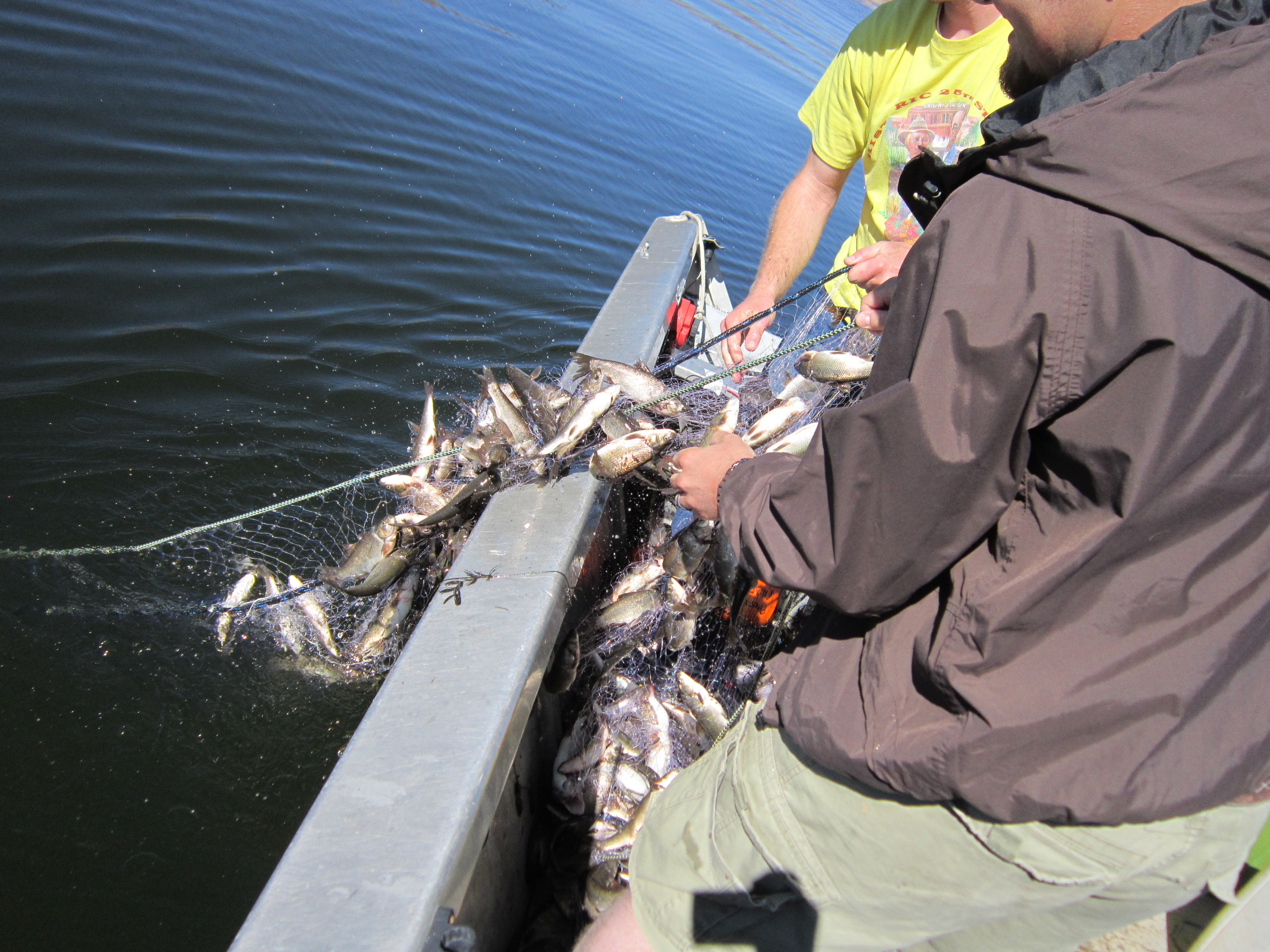
Research technicians pull in a net full of Utah chub.
The plan was reviewed and approved by the Central and Southeast Regional Advisory Councils.

The first step in the plan will be DWR introducing three new fish to Scofield: wiper (a hybrid of white and striped bass), tiger muskie and triploid walleye.

According to Chris Wood, the southeastern regional supervisor, “All three grow quickly and have an appetite for the Utah chub.”

Justin Hart, the DWR’s aquatics manager in southeastern Utah said, we don’t want to completely eliminate [the chub], but we do need to get their biomass down. We plan to use the chub to grow some big fish.

Once the chub population has dropped, DWR will resume stocking the rainbow trout – a favorite among the state anglers.

If the plan is successful, the chub population will remain at a sustainable level and be a benefit, instead of a burden to the Scofield Reservoir trout populations.

This is Shauna Leavitt for Wild About Utah.

Credits:
Photos: Courtesy and Copyright
Text: Shauna Leavitt

Sources & Additional Reading

Leavitt, Shauna, Trout vs. chub, Determining the effect Utah chubs have on Scofield trout populations, July 15, 2014, https://wildlife.utah.gov/news/wildlife-blog/732-trout-vs-chub.html

Bear Lake Sculpin – Cottus extensus

Bear Lake Sculpin - Cottus extensus: Hayley Glassic with a Bear Lake Cutthroat Courtesy & Copyright Jeremy Jensen
Hayley Glassic with a Bear Lake Cutthroat
Courtesy & Copyright Jeremy Jensen

Bear Lake Sculpin - Cottus extensus: Sculpin Courtesy & Copyright Jereme Gaeta Sculpin
Courtesy & Copyright Jereme Gaeta

Bear Lake Sculpin - Cottus extensus: Bear Lake Sckulpin Courtesy & Copyright Jeremy Jensen Bear Lake Sculpin
Courtesy & Copyright Jeremy Jensen

Bear Lake Sculpin - Cottus extensus: Sculpin in Haley Glassic's hand Courtesy & Copyright Jeremy Jensen Sculpin in Haley Glassic’s hand
Courtesy & Copyright Jeremy Jensen

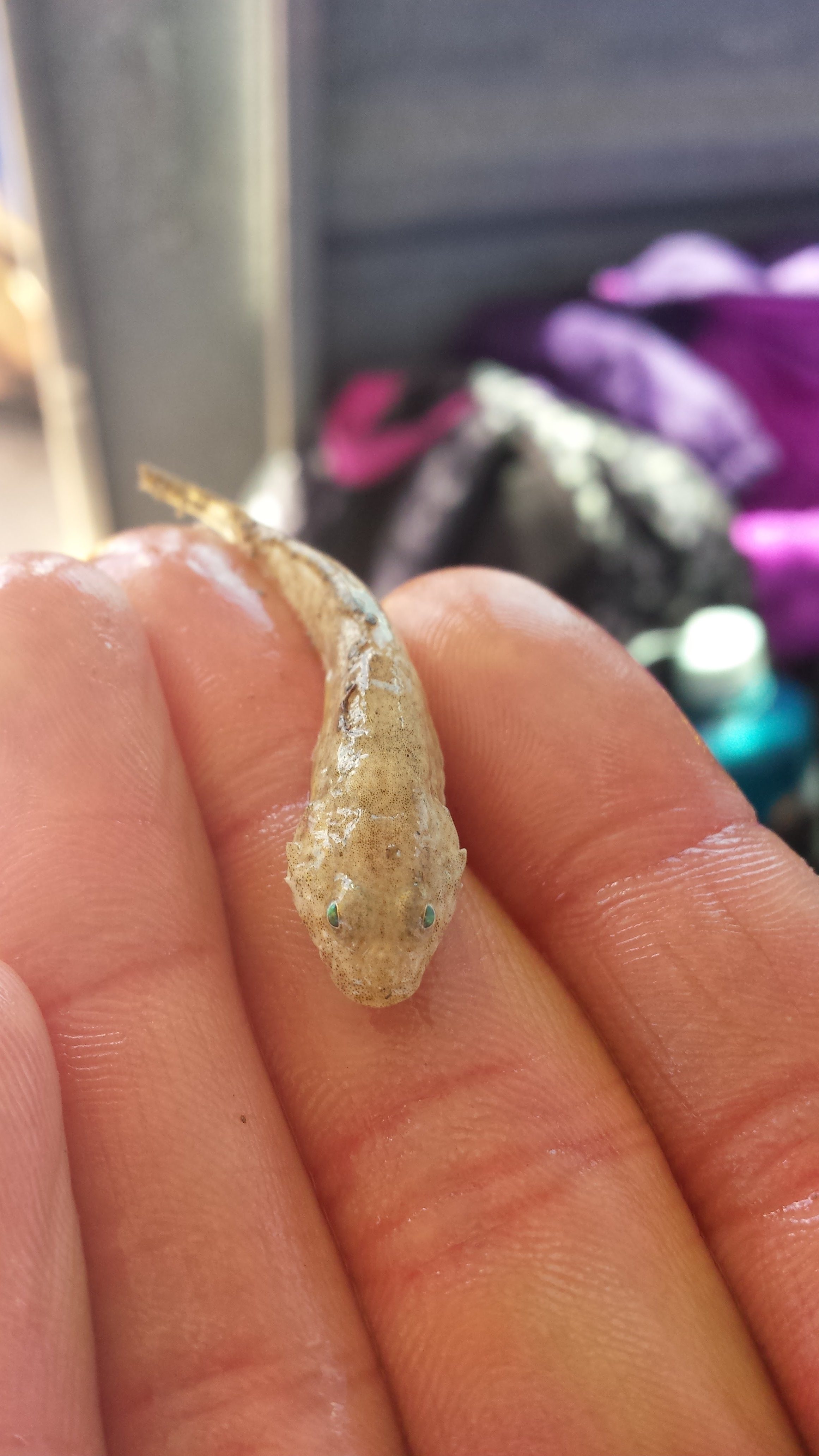
In Bear Lake, there lives a small, bright blue eyed, bottom-dwelling fish species that may appear insignificant as it moves among the lake’s cobble areas.

The fish grows up to three inches in length and is endemic to Utah’s northern most lake, hence its name – the Bear Lake sculpin.

The sculpin is a scale-free, tadpole-like fish with a broad flat head, a slender body and eyes placed high on its head. It has elaborate pectoral fins that stretch out like decorative fans from both sides of its body and two dorsal fins along its back that sometimes connect at the base.

Although the sculpin is small, its worth is significant. One of the main sportfish of Bear Lake, the Bonneville Cutthroat trout, rely heavily on the sculpin to be a source of food as its main forage fish, the sculpin makes up more than 70% of the diet for juvenile trout.

Interestingly, Bear Lake is the only place the sculpin is natively found and it is one of only two sculpins in the West that live in deep-water lake habitats.

It stays exclusively in the lake. While other fish in Bear Lake migrate up the tributaries to spawn, the sculpin seek out the lakes cobble areas where it can find cavities under and between the rocks to lay its eggs.

The best cobble habitat in Bear Lake is along the eastern shore at Cisco Beach where the shallow water covers the rounded rocks that range from 2-12 inches in size. Only 0.1% of Bear Lake is cobble habitat.

The shallow location of the cobble is important for the successful nest since the wave turbulence begins the hatching process. Waves and currents also help with the dispersal of the sculpin embryos throughout the 282 square kilometer lake.

Once hatched the young-of-the year have a feeding ritual quite different from their juvenile and adult counterparts. While the older sculpin stay on the bottom of the lake foraging for food, the young float up during the day to where the sun easily penetrates the water. The sunlight makes it easier for the young sculpin to find their food and it warms their bodies so they can digest their food more rapidly– which stimulates growth. The young sculpin can feed up to nine times faster during the day than they would at night. Once they have grown, it is difficult for sculpin to rise up the water column because they do not have swim bladders as trout do.

An essential component to have a large population of new sculpin each year is to ensure there is sufficient cobble habitat in Bear Lake.

When drought years hit, large portions of the cobble are exposed due to both that drought and human use. While the lake has never dropped to the level where all cobble habitat is exposed, a USU research team has documented more than 96% of cobble reductions during extreme multi-year drought events. This raises major concerns and questions about how a decrease in cobble would impact the sculpin population.

To investigate this question, Utah Division of Wildlife Resources awarded a research grant to Jereme Gaeta, assistant professor in the Department of Watershed Sciences and the Ecology Center in the Quinney College of Natural Resources to improve our understanding of the potential effects of drought on cobble habitats and fish communities.

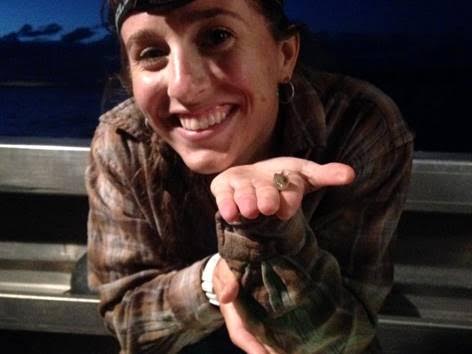
Hayley Glassic, a graduate student in Gaeta’s lab has worked on this project since 2015. In the coming months their findings will be published and made available to the public.

This may be important reading for any agency or person making decisions about the Bear Lake water levels, which would impact the cobble habitat of the Bear Lake sculpin.

According to Glassic, “Sculpin appear to be one of the essential parts of the entire (Bear Lake) ecosystem.” Ensuring their cobble habitat is preserved during drought years is necessary for the overall health of the lake’s ecosystem.

This is Shauna Leavitt for Wild About Utah.

Credits:

Theme: Courtesy & Copyright Don Anderson Leaping Lulu
Photos: Courtesy and Copyright Jeremy Jensen
Photos: Courtesy and Copyright Jereme Gaeta
Text: Shauna Leavitt
Voice: Shauna Leavitt

Sources & Additional Reading

Wild About Utah pieces by Shauna Leavitt https://wildaboututah.org/author/shauna-leavitt/

Pam Fuller, and Matt Neilson, 2026, Cottus extensus Bailey and Bond, 1963: U.S. Geological Survey, Nonindigenous Aquatic Species Database, Gainesville, FL, https://nas.er.usgs.gov/queries/factsheet.aspx?SpeciesID=503, Revision Date: 1/24/2012, Peer Review Date: 1/24/2012, Access Date: 1/29/2026

Ruzycki, J.R., Wurtsbaugh, W.A. & Lay, C. Reproductive ecology and early life history of a lacustrine sculpin, Cottus extensus (Teleostei, Cottidae). Environmental Biology of Fishes 53, 117–127 (1998). https://doi.org/10.1023/A:1007436502285, https://digitalcommons.usu.edu/wats_facpub/100/

Bear Lake Sculpin – Cottus extensus, Fishbase Consortium, https://fishbase.org/summary/Cottus-extensus.html

Bear Lake Sculpin – Cottus extensus, Species, Utah Division of Wildlife Resources, Utah Department of Natural Resources, https://fieldguide.wildlife.utah.gov/?species=cottus%20extensus

Bear Lake Blue Ribbon Fishery, Utah Division of Wildlife Resources, https://dwrapps.utah.gov/fishing/fStart?NA=Bear%20Lake%20(Blue%20Ribbon) [Link updated January 2024]

Bear Lake Sculpin – Cottus extensus, Idaho Fish & Game, https://idfg.idaho.gov/species/taxa/20071 [Link updated January 2024]