A Friend to Guide the Way

Red-tailed Hawk, Courtesy & Copyright Joseph Kozlowski, Photographer
“Look, up on that pole! There’s a huge bird! I think it’s a hawk!”

A storm of students put their half-eaten PB & Js down, grabbed binoculars, and raced to get a better view. One of my 2nd-grade students, while eating lunch under the King’s Nature Park gazebo, had spotted the special visitor.

Students bustled around with their binoculars trying to get a better look at the far-away hawk. Excited fragments of observations eventually started ringing out.

“Look at that sharp beak!”

“I can see a red tail!”

“It’s mostly brown with some lighter feathers on the chest!”

“It looks like it’s watching us!”

Jack Greene guided our students, Courtesy & Copyright Joseph Kozlowski, Photographer
Jack Greene guided our students
Courtesy & Copyright Joseph Kozlowski, Photographer
Eventually students returned binoculars, wolfed down their remaining bits of food, and found their instructor for the afternoon learning centers. About 25 kids made their way to me and Jack Greene, an expert naturalist. My group strapped on their binocular harnesses, left the gazebo, and started off on the Bonneville Shoreline Trail. We had one objective; to observe and wonder about nature.

We forged a 6-inch trickle of water – the endeavor being met with laughs, screams and giggles, proceeded higher onto the bench where the remnants of a recent fire still blackened the hillside, and made our way along the trail to a choke cherry bush which was to be the turning point. The students happily watched and listened to Black-Capped Chickadees and House Sparrows playing fall games in the crackly bramble. We all turned and started our journey back to the gazebo.

“Everyone, look up there! Soaring high above us! That looks like the huge hawk we saw at lunch! I think it’s following us!” came the shriek of an excited young girl.

Intrigued students looked up to see the large, soaring hawk far above, lazily drifting circles toward the gazebo. Naturally, the kids couldn’t let it get away. The unrestrainable naturalists raced down the gravel trail in the direction of the hawk.

The hawk did get too far away. We all rejoined and continued our walk back. No more than 5 minutes later, a shout echoed out: “It landed! That hawk that has been following us all day landed! I kept a close eye on it and it landed up there on a post!”

The hunt was afoot. We picked up our pace to get close to the big hawk that had landed on an electrical post a few hundred yards ahead of us. We crept up and it posed for the eager kid eyes and hasty teacher cameras. But little voices aren’t quiet, and the hawk launched from the post and took flight before many could get a good look.

We had to get back. After Jack gave a mini-lesson about the length of a Black-Billed Magpie tail indicating approximate age, we hustled to return to the gazebo.

Our group of hot, sweaty, and energized naturalists arrived back at the gazebo and gathered for a final closing discussion. We huddled close, and amidst my parting words, a boy loudly interrupted and pointed to a nearby telephone pole. “Everyone, look! The hawk came to say goodbye!”

We all turned, and perched on the pole was the same hawk that had followed us that day; our guide, our companion, our friend. It took off and slowly, methodically, made low circles above our head, as if to say “Now you can see me, I am your friend. Goodbye, little ones. We had a special journey together.”

I am Dr. Joseph Kozlowski, and I am wild about outdoor education in Utah!

Credits:

Images: Courtesy & Copyright Joseph Kozlowski, Photographer, Used by Permission
Featured Audio: Courtesy & Copyright © Kevin Colver, https://wildstore.wildsanctuary.com/collections/special-collections/kevin-colver and including contributions from Anderson, Howe, and Wakeman.
Text:     Joseph Kozlowski, Edith Bowen Laboratory School, Utah State University https://edithbowen.usu.edu/
Additional Reading Links: Joseph Kozlowski & Lyle Bingham

Additional Reading:

Joseph (Joey) Kozlowski’s pieces on Wild About Utah:

Red-tailed Hawk, All About Birds, The Cornell Lab of Ornithology, https://www.allaboutbirds.org/guide/Red-tailed_Hawk/overview

Black-capped Chickadee, All About Birds, The Cornell Lab of Ornithology, https://www.allaboutbirds.org/guide/Black-capped_Chickadee

House Sparrow, All About Birds, The Cornell Lab of Ornithology, https://www.allaboutbirds.org/guide/House_Sparrow

Black-beak Magpie, All About Birds, The Cornell Lab of Ornithology, https://www.allaboutbirds.org/guide/Black-billed_Magpie
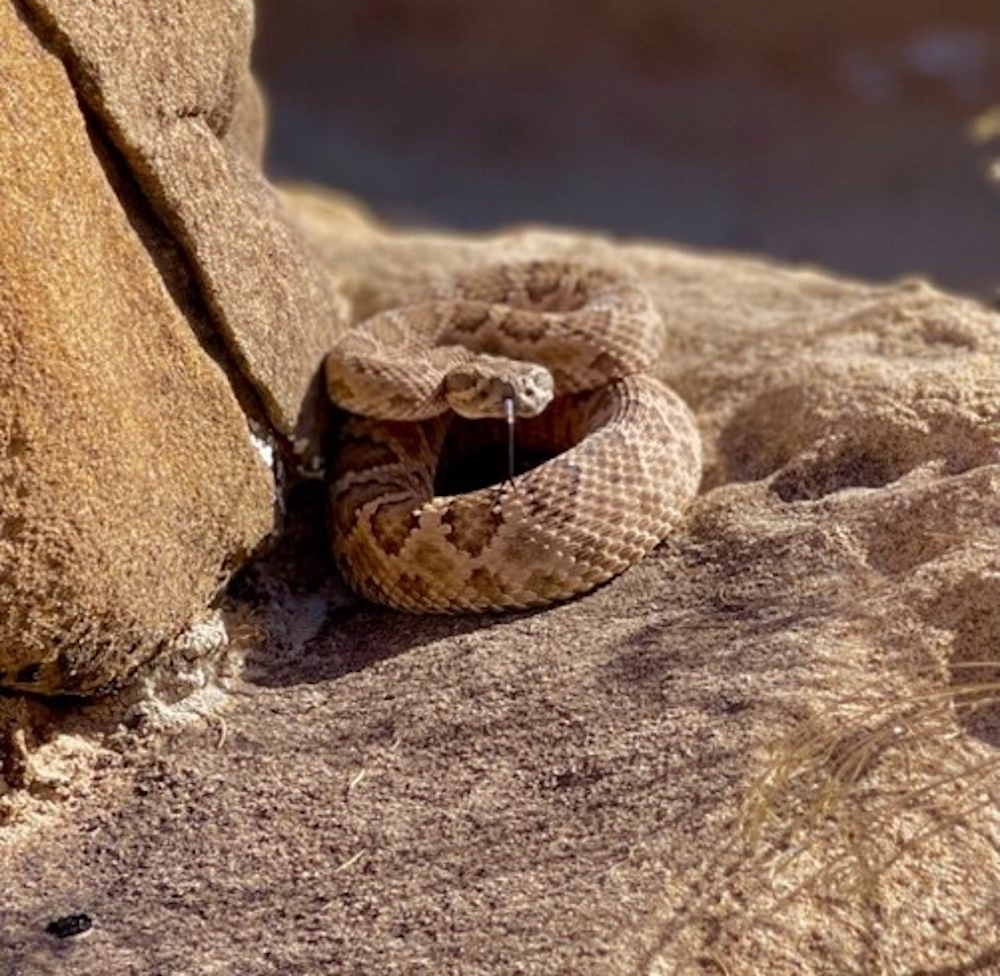
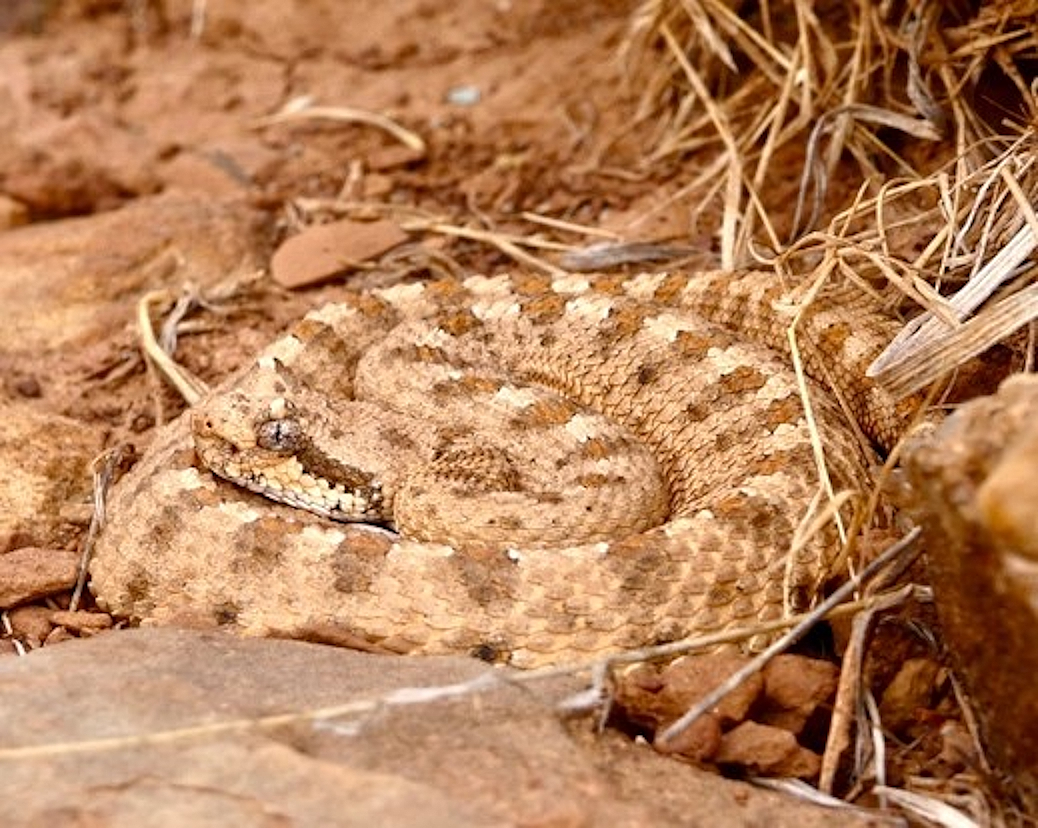
Washington County Rattlesnakes

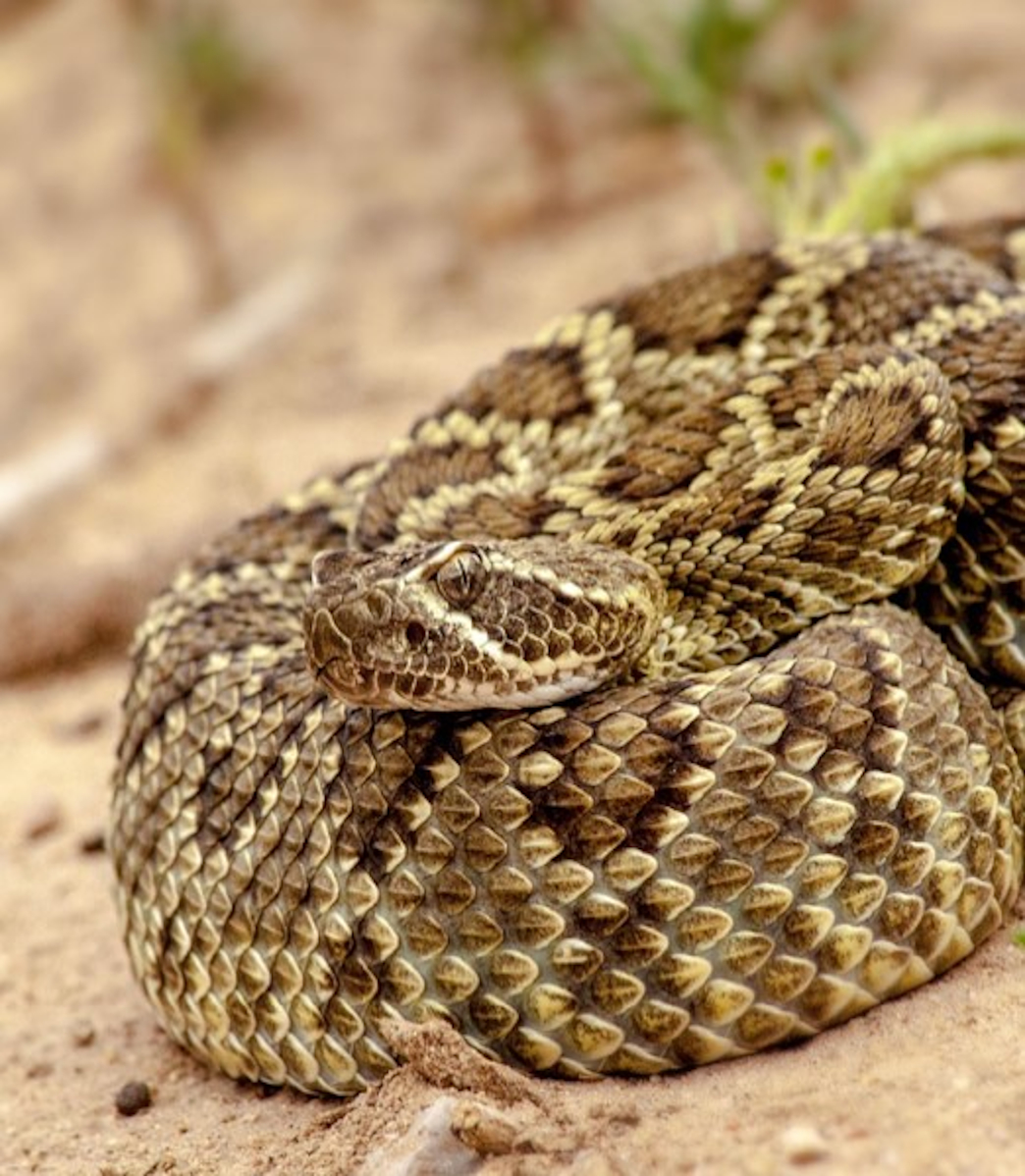
Washington County Rattlesnakes: Great Basin Rattler Courtesy & Copyright Marshall Topham, Photographer
Great Basin Rattler, Crotalus lutosus
Courtesy & Copyright Marshall Topham, Photographer
I was in the process of taking a video of a Gila Monster in Washington County’s Red Cliffs Desert Reserve. It was walking toward me and backed me into a Creosote Bush. That’s when I heard the buzz. It sounded like I had alarmed a rattlesnake, but I had been fooled before by a bull snake vibrating its tail in dry Leaf’s. It turns out it was indeed a Great Basin Rattlesnake coiled under the creosote and warning me to keep my distance. Washington County boasts 4 species of rattlesnakes, more than any other county in the state. While Great Basin Rattlers and Sidewinders are by far the most common, Mojave and Speckled Rattlesnakes can be found on the slopes of the Beaver Dam wash.

Sidewinder Courtesy & Copyright Marshall Topham, Photographer
Sidewinder, Crotalus cerastes
Courtesy & Copyright Marshall Topham, Photographer

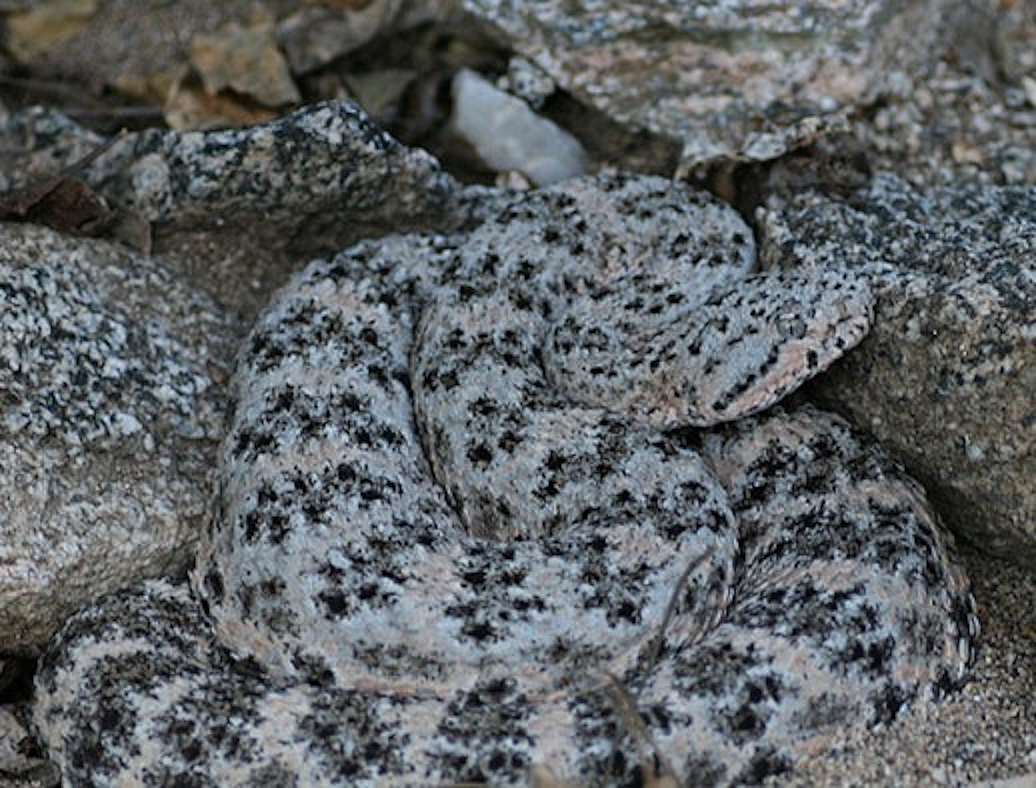
Speckled Rattler Courtesy & Copyright Marshall Topham, Photographer Speckled Rattler, Crotalus mitchellii
Courtesy & Copyright Marshall Topham, Photographer

Mojave Rattler Courtesy & Copyright Marshall Topham, Photographer Mojave Rattler, Crotalus scutulatus
Courtesy & Copyright Marshall Topham, Photographer

The motion of Sidewinders is fascinating as they undulate across the desert sand, keeping a portion of its under-belly off the heated sand at all times to reduce overheating. These small (2 ft. or less) snakes have a horn over each eye. They are often overlooked because of their reduced size and reluctance to go in motion. Like most rattlers, they are primarily nocturnal in summer, but crepuscular during cooler seasons. They often bury themselves in sand, exposing only their eyes and horns. This behavior effectively hides them from predators and allows them to ambush prey such as lizards and birds.

Although all local rattlesnakes are well camouflaged, none measures up to the standard of the Speckled Rattlesnake. They seem to be nearly invisible on the basalt rocks where they reside. Out with a group of university students one day on the Beaver Dam Slope, I encountered a Speckled Rattlesnake. I probably wouldn’t have noticed it if I hadn’t watched it coil into a defensive posture. I called students over to observe it as it remained coiled and very still. It was entertaining to watch their reactions as one by one they were able to distinguish it from the rock with a look of excitement and disbelief.

All rattlesnakes are venomous and potentially lethal to some degree. Their venom generally contains hemotoxins which cause blood and tissue damage. The Mojave Rattler sometimes referred to as Green Rattlers, lead the way in this category, their venom contains nerve damaging neurotoxin. Envenomation by this specie is much more concerning as it can cause paralysis. It frequently causes Permanent numbness at the site of the bite.

Getting bitten by a rattlesnake can be a serious medical event but depending on the species, between 25% and 50% of Rattlesnake bites are “dry bites” meaning no venom is injected. If properly treated, within an hour or two, the outlook for recovery from envenomation usually very good. In fact, in North America, over 99% of people who receive prompt hospital treatment with antivenom survive. Over the years, many first aid measures for snakebite have been discredited, some even made the situation worse. It is best to keep the victim calm and still, immobilizing the bitten potion of the body if possible and keep it at roughly heart level as you calmly get to a medical facility.

All rattlesnakes are ovoviviparous, females produce fertile eggs but keep them inside their body until they hatch, so the young emerge alive. This is a great survival strategy in a desert environment where Gila Monsters and an army of other egg devouring creatures reside. Baby rattlesnakes feed on insects and small lizards until they become large enough to seek out warm blooded rodents. All rattlers are pit-vipers. A heat sensory pit is located between the eye and nostril on each side of a rattlesnake’s head. These pits detect infrared radiation (heat) from warm-blooded prey, they are so sensitive they can detect the heat left in rodent tracks. This adaptation is essential for nocturnal or low-light hunting.

Rattlesnakes discern their environment through a reptilian sense of smell. Extending their forked tongues, they collect molecules from the air and transfer them back into their mouths. There they are inserted into two A pair of organs known as “Jacob’s organs”. These organs interpret the molecules as a sense of smell and taste.

Rattlesnakes are marvelous creatures important for maintaining balance in ecosystems. Though feared by many, it is always a red-letter day for me when I have a chance encounter with a rattlesnake in my desert wanderings.

I’m professor Marshall Topham and I’m wild about Utah and its diverse rattlesnake fauna.

Credits:

Images Courtesy & Copyright Marshall Topham, Photographer
Featured Audio: Courtesy & © Friend Weller, https://www.upr.org/people/friend-wellerCourtesy & Copyright © Anderson, Howe, Wakeman
Text: Marshall Topham, https://ees.utahtech.edu/faculty-staff/
Additional Reading: Lyle Bingham, https://bridgerlandaudubon.org/

Additional Reading

Wild About Utah pieces by Marshall Topham https://wildaboututah.org/author/marshall-topham/

Utah Vipers, Fieldguide, Utah Division of Wildlife Resources, Utah Department of Natural Resources, State of Utah, Formerly: https://fieldguide.wildlife.utah.gov/?family=viperidae [Removed February 9, 2026]

Great Basin Rattlesnake, Crotalus oreganus lutosus, Venomous, The Reptiles and Amphibians of Utah [Rye Jones], https://reptilesofutah.com/great-basin-rattlesnake/

Great Basin Rattlesnake, Snake Snap, https://www.snakesnap.co/greatbasinrattlesnake

What to know about rattlesnakes in Utah and how to stay safe, Utah Division of Wildlife Resources, Utah Department of Natural Resources, State of Utah, April 8, 2025, https://wildlife.utah.gov/news/utah-wildlife-news/2094-what-to-know-about-rattlesnakes-and-how-to-stay-safe.html

Nature Out Your Front Door

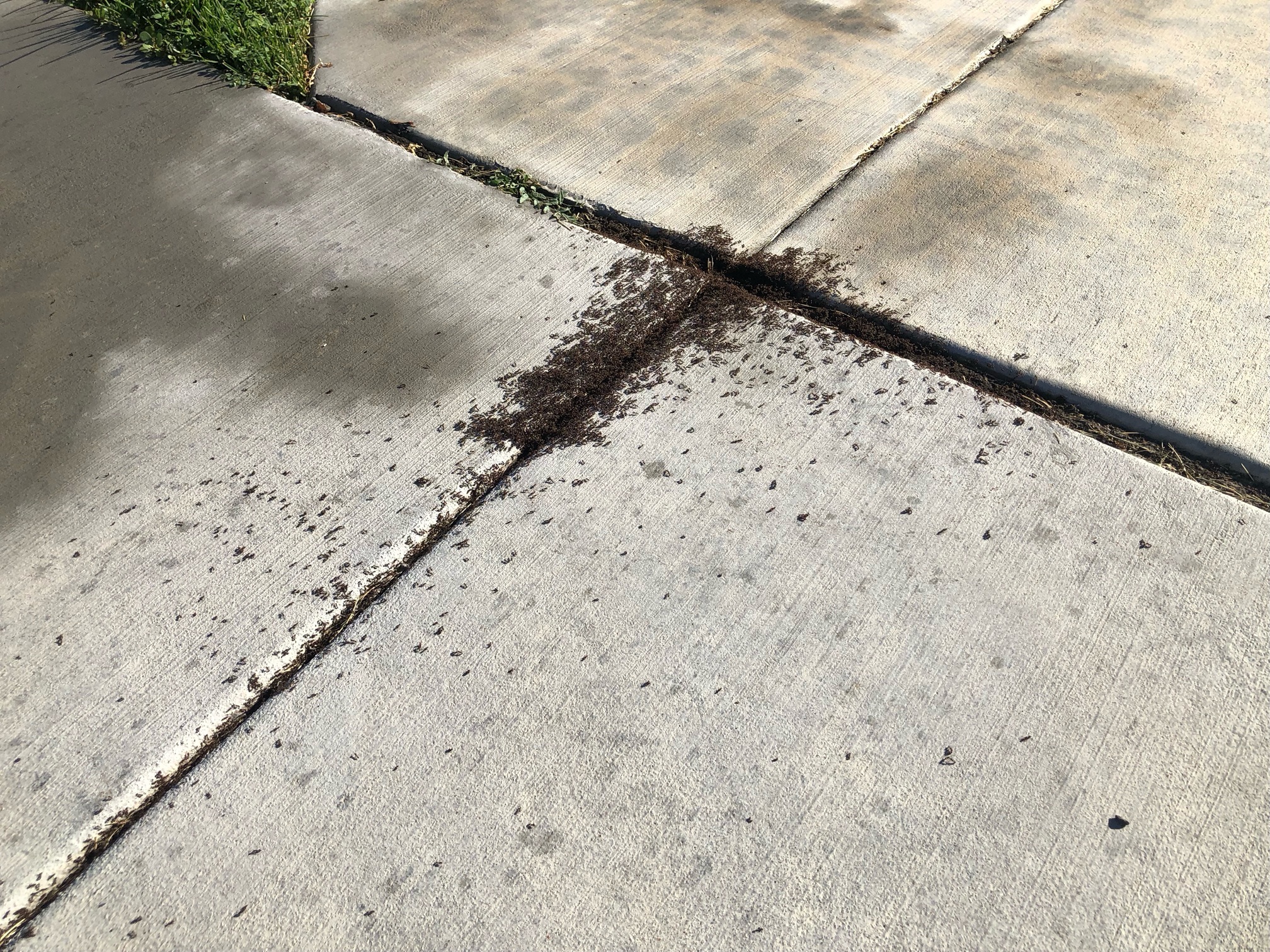
Nature Out Your Front Door, Pavement Ants July 2025, Payson UT Courtesy & Copyright Lyle W. Bingham, Photographer
Pavement Ants
July 2025, Payson UT
Courtesy & Copyright Lyle W. Bingham, Photographer
If you’ve listened to these Wild About Utah segments for a while, you’ll have noticed that we tend to focus on places where humans don’t live. But what we call “nature” can flourish almost anywhere, including the places where people dominate.

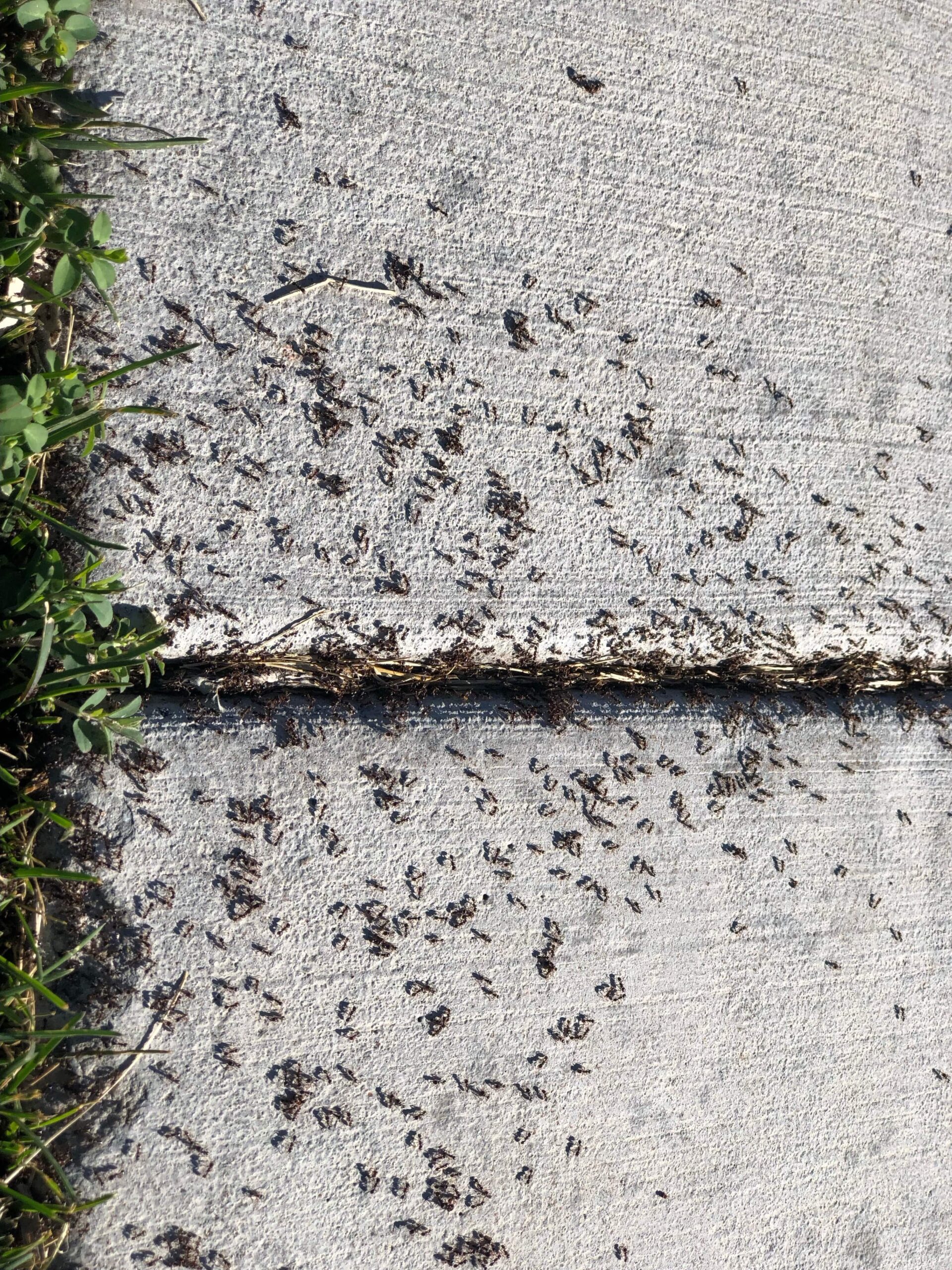
I’m an avid runner and walker. And my town has done a lot of street and sidewalk work this year, so I’ve spent a lot of time looking down to make sure I don’t suddenly trip or step in a hole. Earlier this year, I was looking down while walking to my office, and I was amazed by how many ant colonies I was seeing on the sidewalks. Each colony included hundreds of tiny ants, milling around in what looked like random patterns. Some blocks had an ant swarm every 20 to 30 feet.

I’d seen them before, of course, but hadn’t realized just how ubiquitous they are. Being a scientist and therefore endlessly curious, I began to wonder: What are these ants doing when they swarm? And how do they all know to do it at the same time?

Nature Out Your Front Door, Pavement Ants July 2025, Payson UT Courtesy & Copyright Lyle W. Bingham, Photographer
Pavement Ants
July 2025, Payson UT
Courtesy & Copyright Lyle W. Bingham, Photographer
The particular species of ant that I was seeing – and I’m sure most of us have seen them at one time or another – is called the immigrant pavement ant. In some places they’re also called sugar ants, thanks to their nasty habit of sneaking into people’s kitchens to find sweet things to eat. They’re tiny, 2.5 to 4 millimeters long, shorter than a grain of rice. Originally native to Europe, some of them probably stowed away on a ship to America in colonial times. Now they’re widespread across North America.

As I watched closely, I realized that the ants’ movements weren’t entirely random. They would approach another ant, stop for a half second, then move on. That’s because one purpose of swarming is colony expansion. They wander around checking each other out. If an interloper from another colony enters the swarm and is recognized as a stranger, it will be attacked. Sometimes hundreds of ants can die in battles between neighboring colonies.

The other thing that happens when they’re swarming is mating. Some of the ants develop wings and take nuptial flights, when males and queens from different colonies take to the air and mate. They like to do this on clear, warm surfaces, when the days are long and hot sunlight has warmed the soil for a while. If each colony responds to the same environmental cue, it means there is a huge pool of prospective mates, which increases genetic diversity and colony success.

After mating, the males die and the queens, which are about twice as big as the other ants, fly off to start new colonies. Worker ants from nearby colonies will collect and remove the dead ants quickly. This helps prevent predators from being able to locate the colonies, which spend most of their time in nests beneath flat stones or similar hard spaces – such as sidewalks. Within a week after the swarms appear, they’re gone.

Pavement ants can be a nuisance if they get into your pantry. But when they’re swarming safely out on the sidewalk, they’re just a fascinating part of nature – one that most of us can observe without going more than a block or two from home.

I’m Mark Brunson, and I’m wild about Utah’s natural creatures, wherever they’re found.

Credits:

Images Courtesy & Copyright Lyle Bingham, Photographer, Bridgerland Audubon Society
Featured Audio: Courtesy & © Kevin Colver, https://wildstore.wildsanctuary.com/collections/special-collections and Anderson, Howe and Wakeman
Text: Mark Brunson, https://www.usu.edu/experts/profile/mark-brunson/
Additional Reading: Mark Brunson, https://www.usu.edu/experts/profile/mark-brunson/ & Lyle Bingham, Bridgerland Audubon Society

Additional Reading

Mark Brunson’s archive: https://wildaboututah.org/?s=brunson


Pavement Ants, Hillman Ball Park, Payson UT, After the Sprinklers
Courtesy & Copyright Lyle W. Bingham, Photographer

Tetramorium caespitum – Bugwoodwiki
https://wiki.bugwood.org/Tetramorium_caespitum

Tetramorium caespitum – iNaturalist
https://www.inaturalist.org/guide_taxa/832327

Immigrant Pavement Ant (Tetramorium immigrans) – iNaturalist
https://www.inaturalist.org/taxa/569552-Tetramorium-immigrans

Pavement Ant | NC State Extension Publications
https://content.ces.ncsu.edu/pavement-ant

“Pavement ants (Formicidae, Tetramorium immigrans) are northern Utah’s most common pest ant in and around homes and structures. Until recently, the pavement ant’s scientific name was Tetramorium caespitum, but recent genetic work has clarified that our common pest Tetramorium species in the U.S. is from Europe and has been given the name T. immigrans (Wagner et al., 2017; Zhang et al., 2019). Genetic variation among pavement ant populations in the U.S. is low and it is believed that current populations were derived from one or a few closely related colonies from Europe introduced into the northeastern U.S. about 200 years ago (Wagner et al., 2017; Zhang et al., 2019).”
Pavement Ants, Extension, Utah State University (USU), https://extension.usu.edu/planthealth/research/pavement-ants

When the Ants Come Marching In…, IPM Fact Sheet #8, USU Extension, Utah State University, https://extension.usu.edu/planthealth/schoolipm/files/pest-press-fact-sheets/pdf/ants_pestpress.pdf

Pavement Ant, Tetramorium caespitum | USU
https://extension.usu.edu/planthealth/ipm/notes_ag/hemp-pavement-ants

My Fishing River Otter

River Otter, Lontra canadensis Seedskadee National Wildlife Refuge Courtesy US FWS, Tom Koerner, Photographer
River Otter, Lontra canadensis
Seedskadee National Wildlife Refuge
Courtesy US FWS, Tom Koerner, Photographer
Many years ago on a gorgeous fall day, I was standing on the bank of Green River in the Split Mountain campground in Dinosaur National Monument. I was visiting the site for our upcoming Utah Envirothon competition to assess the lay of the land and all it contained- plants, wildlife, soils, and aquatics. These were the main areas covered in the competition, so I would report back to my Logan high students on what local knowledge they might be tested on.

Humpback Chub Gila Cypha Courtesy US FWS, S Nev. FWO
Humpback Chub
Gila Cypha
Courtesy US FWS, S Nev. FWO

River Otter, Lontra canadensis Blue Lake National Wildlife Refuge Courtesy US FWS, Ted Narveson, Photographer River Otter, Lontra canadensis
Blue Lake National Wildlife Refuge
Courtesy US FWS, Ted Narveson, Photographer

River Otter, Lontra canadensis Malheur National Wildlife Refuge Courtesy US FWS, Barbara Wheeler, Photographer River Otter, Lontra canadensis
Malheur National Wildlife Refuge
Courtesy US FWS, Barbara Wheeler, Photographer

River Otter, Lontra canadensis Seedskadee National Wildlife Refuge Courtesy US FWS, Tom Koerner, Photographer River Otter, Lontra canadensis
Seedskadee National Wildlife Refuge
Courtesy US FWS, Tom Koerner, Photographer

River Otter, Lontra canadensis Turnbull National Wildlife Refuge Courtesy US FWS, Tim Holman, Photographer River Otter, Lontra canadensis
Turnbull National Wildlife Refuge
Courtesy US FWS, Tim Holman, Photographer

River Otter, Lontra canadensis Big Stone National Wildlife Refuge Courtesy US FWS, Mike Budd, Photographer River Otter, Lontra canadensis
Big Stone National Wildlife Refuge
Courtesy US FWS, Mike Budd, Photographer

I stood mesmerized by the beauty of the tranquil setting and glowing cottonwoods dwarfed by rainbow colored cliffs. The spell was suddenly shattered by a large aquatic mammal swimming nearby. Thinking it was a beaver, I awaited the telltale slap of its tail as it neared my position. Suddenly it began swimming wildly in a river backwater immediately in front of me. A river otter! This was my first sighting of a freshwater otter. I had seen many much larger marine otters on the west coast lying on their backs in kelp forests using rocks to crack open shellfish.

River otters had been nearly extirpated from Utah and recently reintroduced from 1989-1992, all of which doubled my excitement! As the otter accelerated, a fin emerged about a dozen feet in front of the predator. A large fish and strong swimmer, it led the otter on a wild, zigzag chase in the backwater. Finally, the otter captured the exhausted fish- an endangered humpbacked chub! It hauled out with a fish dinner on a flat boulder protruding from the water no more than 20 feet from where I stood. It cradled the large fish in its arms prepared to deliver the death bite through the head when it suddenly realized my statuesque presence.

Startled by my presence, it allowed the humpback to flip loose and return to the water. The otter was immediately on it, but the fish surged from the calm backwater to the main river channel current and disappeared. I was stunned by what happened next. The otter returned to the flat rock where it had held the fish, looked directly at me, and hurled what had to be a stream of otter profanity toward me! Me Me Me Me!!! (repeated several times) I have yet to fully recover from the insults!

River otters are important as indicators of healthy aquatic environments. They have a low tolerance for polluted water and require an abundant prey population. Due to their secretive nature, wide ranges, and low densities, otter populations are difficult to monitor. Currently, there is not a population estimate for Utah. Knowing where they are located is vital to managing this species. Recreationists can help with their management by reporting any sightings.

River otters primarily eat fish, but are also known to prey on small mammals, aquatic birds, crayfish and insects.

Now I must revisit the Disney film “Flash, the Teenage Otter”, to get reacquainted with this playful, highly intelligent and comical relative!

Jack Greene for Bridgerland Audubon Society, and I’m forever Wild About Utah’s River Otters & Humpback Chubs!

Credits:
Images Courtesy US FWS, photographers marked with each image
Audio: Courtesy & © Kevin Colver https://wildstore.wildsanctuary.com/
Text: Jack Greene, Bridgerland Audubon, https://bridgerlandaudubon.org/
Additional Reading: Lyle W Bingham, Webmaster, and Jack Greene, Author, Bridgerland Audubon, https://bridgerlandaudubon.org/

Additional Reading:

Jack Greene’s Postings on Wild About Utah, https://wildaboututah.org/author/jack/

Flash, the Teenage Otter

Filmed almost entirely at a Wisconsin game preserve, this episode of “”Walt Disney Presents”” was based on a book by Emil Liers. The program chronicles the early life and adventures of two otters, Flash and Fleta, and their close-knit family. Upon reaching their rebellious teen years, Flash strikes out on his own, experiencing all manner of exciting and life-threatening exploits, especially when coming in contact with that predatory species known as Man. But as the “”teaser”” to this episode tipped off a week in advance, Flash is ultimately and happily reunited with his loved ones. “”Flash, the Teenage Otter”” was released theatrically in 1961. –more–

Flash the Teenage Otter, The Wonderful World of Disney, [Review above from] TheTVDB.com, A Whip Media Company, https://thetvdb.com/series/the-wonderful-world-of-disney/episodes/245964
See also:
Liers, Emil, An Otter’s Story, The Viking Press, April 3, 1953, https://www.amazon.com/Otters-Story-Emil-Liers/dp/0670529753

Humpback Chub, , Utah Species, Utah Division of Wildlife Resources, https://fieldguide.wildlife.utah.gov/?species=gila%20cypha

Northern River Otter, Utah Species, Utah Division of Wildlife Resources, https://fieldguide.wildlife.utah.gov/?species=lontra%20canadensis