Excitement at the Bird Feeder!

Bird Feeder in Winter<br />Ready for Reloading
Courtesy Pixabay, PGloutnay, Contributor
Bird Feeder in Winter
Ready for Reloading
Courtesy Pixabay, PGloutnay, Contributor
Excitement at the Bird Feeder! There are many reasons for having a bird feeder, especially in the winter season when birds are often hanging on by a thread due to challenges from inclement weather and lack of food. Where to place a feeder and how to manage it for bird health and safety has been well covered by Hilary Shughart in earlier Wild About Utah readings. Additionally, she mentions several citizen science programs for feeder watchers you may engage in, adding important data on bird population dynamics.

Beyond what feeders provide for birds, it can add joy to one’s life, especially during these short, cold winter days. Nearing four decades of feeding birds at our home in Northern Utah, we’ve had many pleasant surprises from who decides to stop by for a snack beyond the usual chickadees, an assortment of finches, and juncos.

Most recently a pair of Steller’s jays have been attacking our suet block. These handsome rascals spend their summer in high-country coniferous forests. All members of the jay (corvid) family are known for their intelligence and adaptability. Several years ago, this seedeater showed up on a branch near our kitchen window with a fat meadow vole dangling from its beak. And you thought you knew me Jack!

Even rarer than Steller’s jays are eastern blue jays. These striking birds stop by about once a decade causing quite a stir. Being from the east, it’s music to my ears when hearing their loud, sharp calls, warming my winter soul. It amuses me to see these marauders skulking around with a very different attitude than their usual bawdy behavior. A favorite summer bird found in thick canyon shrubs showed up at the feeder several years ago. The green tail towhee wears a vibrant russet cap to complement its greenish toned tail. There it was, hopping around our deck snatching tidbits dropped from the feeder above. Another sweat treat!

A teacher friend, whom you may have heard on Wild About Utah, has feeders attached to his classroom window. His second graders have learned nearly every bird who arrives. He sent me a photo of a puzzler. Following a bit of sleuthing, I was amazed to identify it as a pine grosbeak, a most unusual winter visitor!

Predatory birds are an infrequent delight. On rare occasions, the sharp shinned hawk bolts through hoping to snatch a songbird from the feeder, as do the Northern pigmy and western screech owls. This brings mixed emotions. I will always root for the songbird, but in the recesses of my mind, realize they must eat or perish. After all, I eat chicken!

Two winter beauties who have missed my feeder thus far, the evening grosbeak and gray crowned rosy finch- perhaps this will be the winter when they bless me with their presence! May you be blessed by feeding your birds as well!

Jack Greene for Bridgerland Audubon Society, and I’m wild about Utah’s wild feeder birds!

Credits:
Image: Courtesy Pixabay, PGloutnay, Contributor https://pixabay.com/photos/winter-manger-bird-feeder-bird-1428270/
Audio: Courtesy & © Kevin Colver https://wildstore.wildsanctuary.com/collections/special-collections/kevin-colver
Text: Jack Greene, Bridgerland Audubon, https://bridgerlandaudubon.org/
Additional Reading: Jack Greene & Lyle W Bingham, Webmaster, Bridgerland Audubon, https://bridgerlandaudubon.org/

Additional Reading:

Jack Greene’s Postings on Wild About Utah, https://wildaboututah.org/author/jack/

Shughart, Hilary, Enhance Backyard Birdwatching–Feed & Protect Birds, Wild About Utah, October 2, 2023, https://wildaboututah.org/enhance-backyard-birdwatching-feed-protect-birds/

L’Ai, Linda, Native Plants for Birds, Wild About Utah, February 8, 2021, https://wildaboututah.org/native-plants-for-birds/

Feeding Birds: a Quick Guide to Seed Types | All About Birds, Apr 20, 2009, https://www.allaboutbirds.org/news/types-of-bird-seed-a-quick-guide/

Why Do We Feed Birds—and Should We? A Q&A With the Experts, All About Birds, Dec 18, 2018, https://www.allaboutbirds.org/news/why-do-we-feed-birds-and-should-we-a-qa-with-the-experts/

Analysis: Do Bird Feeders Help or Hurt Birds? – All About Birds, Jan 11, 2017, https://www.allaboutbirds.org/news/analysis-do-bird-feeders-help-or-hurt-birds/

Winter Bird Feeding 101 with Project FeederWatch | Bird Academy, AllAboutBirds, Nov 19, 2020, https://academy.allaboutbirds.org/live-event/winter-bird-feeding-101-with-project-feederwatch/
Mundane to Magical Experiences

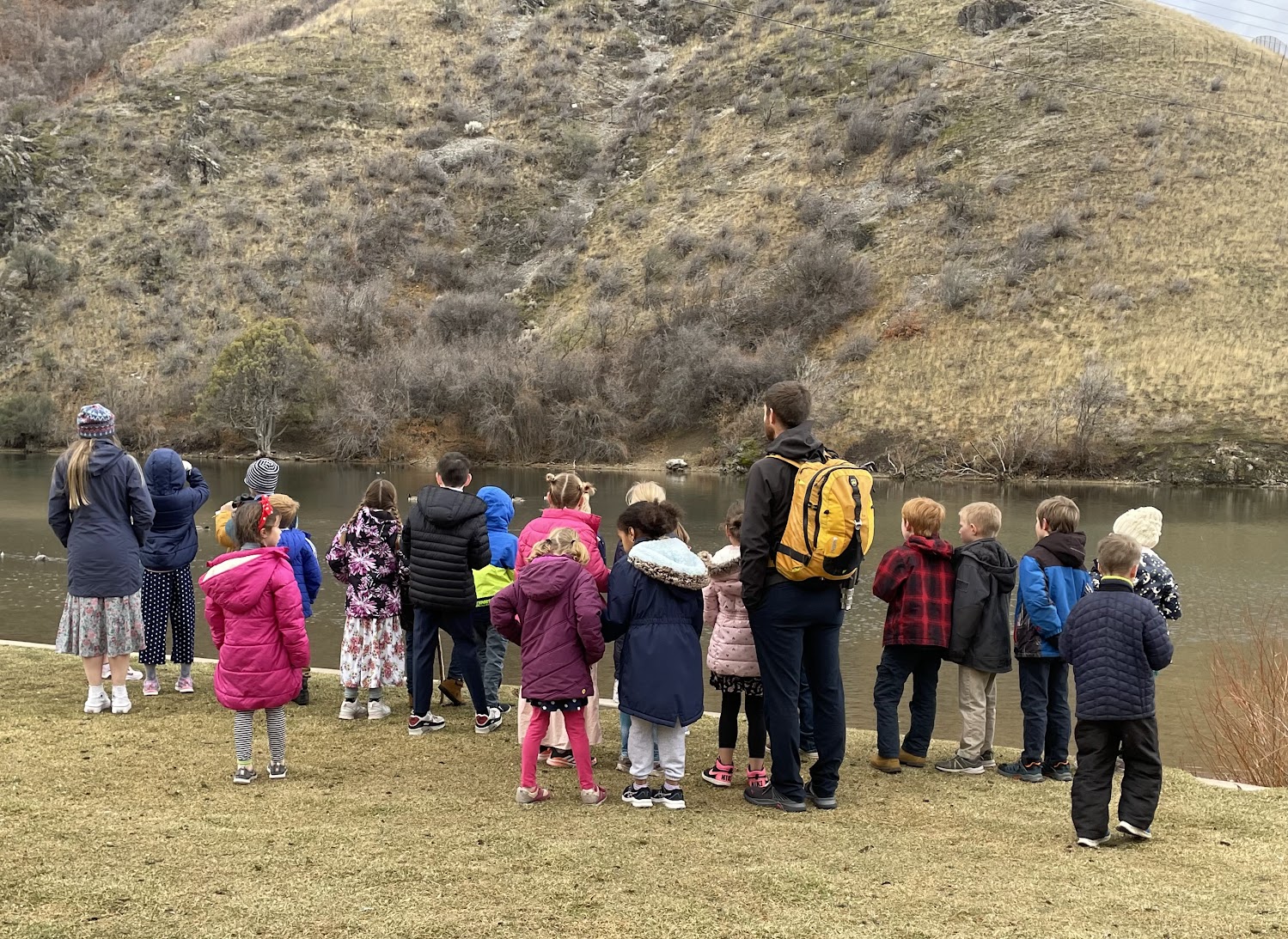
Mundane to Magical Experiences: Whole Class at First Dam, Courtesy & Copyright Joseph Kozlowski, Photographer
Whole Class at First Dam
Courtesy & Copyright Joseph Kozlowski, Photographer

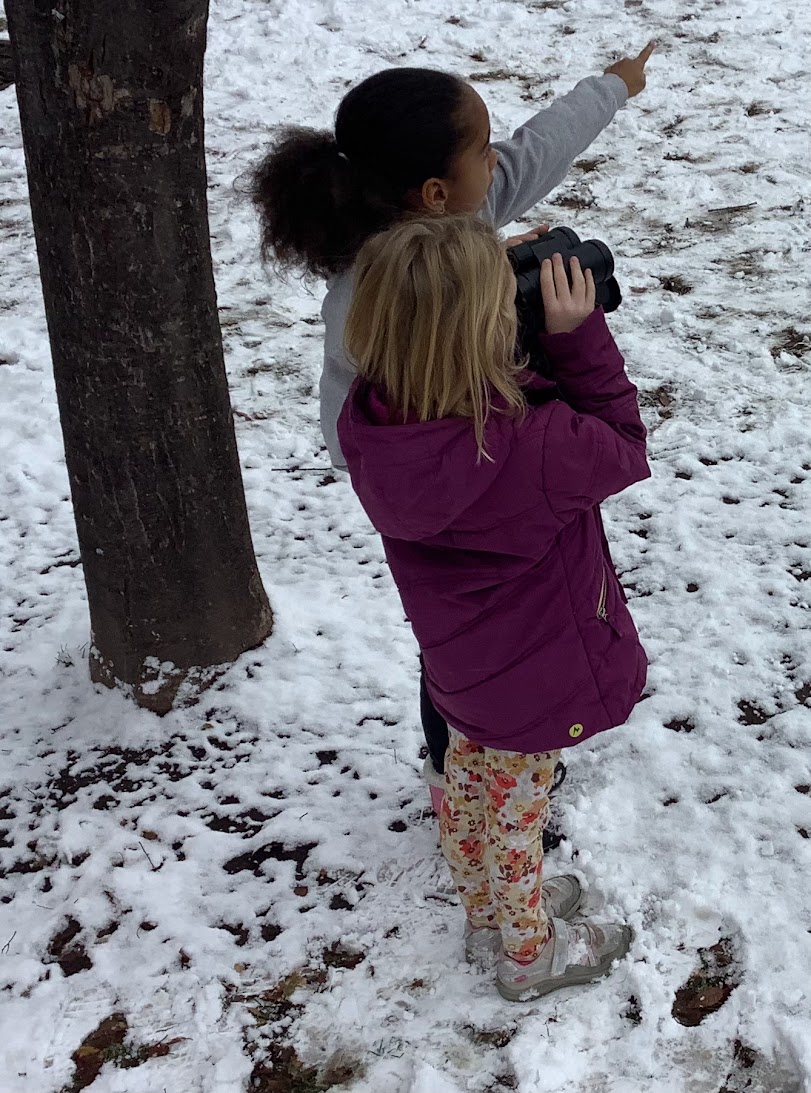
Mundane to Magical Experiences: Using Binoculars to Look for Ducks, Courtesy & Copyright  Joseph Kozlowski, Photographer Using Binoculars to Look for Ducks
Courtesy & Copyright Joseph Kozlowski, Photographer

Spotting Scope with Image Transmitter, Courtesy & Copyright  Joseph Kozlowski, Photographer Spotting Scope with Image Transmitter
Courtesy & Copyright Joseph Kozlowski, Photographer

One aspect of experiential learning I love most is how it turns mundane encounters into magical experiences. How many times have your children walked by a pond full of ducks and geese without batting an eye, or shuffled their feet through fallen, Autumn leaves on their way to this or to that? I continue to be astonished by how much there is to appreciate and to learn from our surroundings, but we lend it a bit of our attention and wonder. It’s amazing to see how just a little preparatory investigation can turn fleeting everyday moments into lifelong learning memories.

My 2nd-grade class focuses on learning about birds. I don’t just mean we read a few books and discuss the basics of birds. I mean my students can replicate the sounds of at least 15 local birds, provide detailed descriptions of their body characteristics, and even provide information about their diet, habits, and behaviors. We’ve studied birds all year long, partnered with local bird organizations – Bridgerland Audubon Society, Bear River Migratory Bird Refuge –, been on numerous birding outings, and let’s just say are ALL IN on birding.

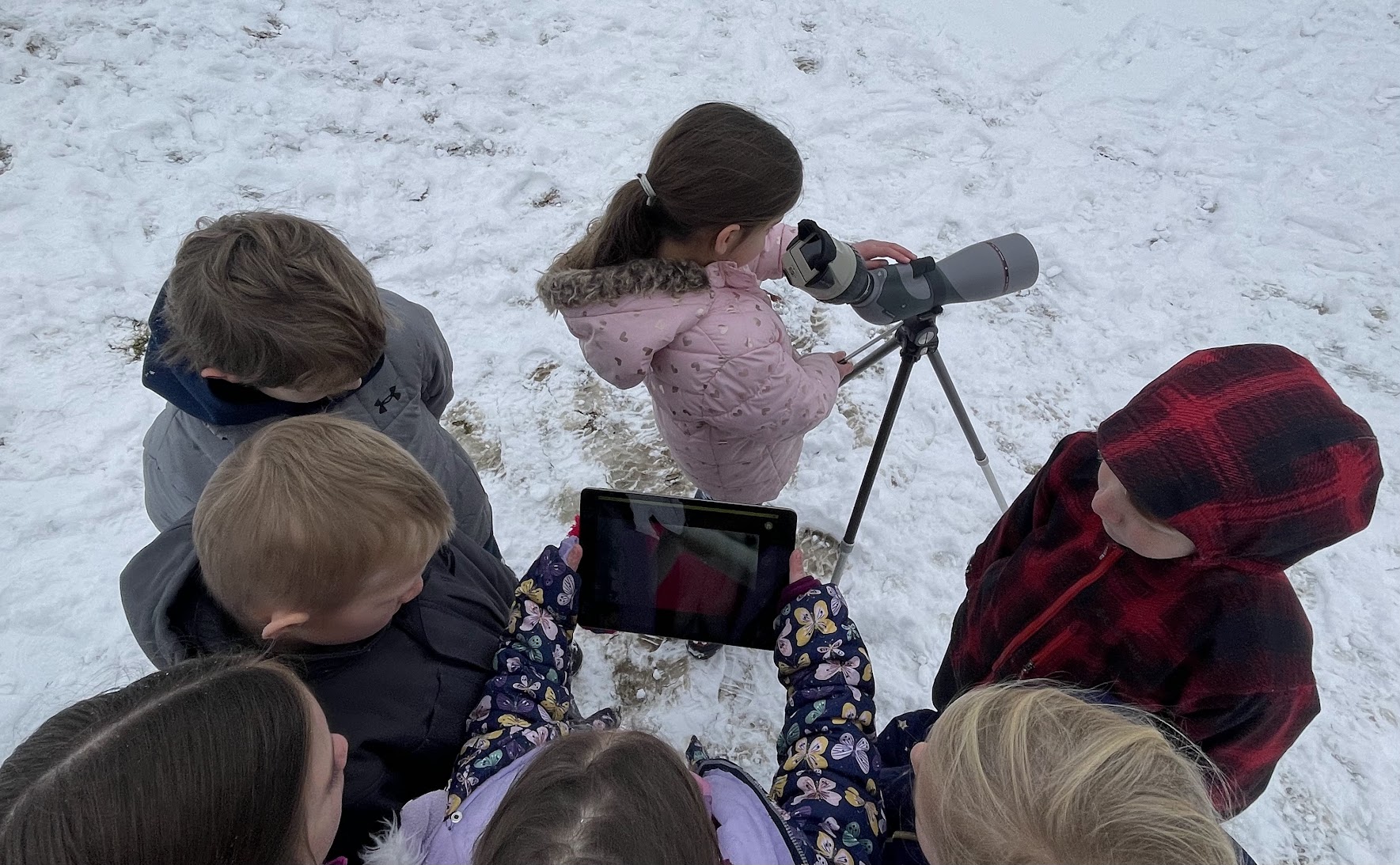
With the recent weather systems and cold fronts in Northern Utah, we’ve seen waterfowl migrations come alive; a perfect time to study that classification of birds with my students! Little did I, or my students, realize there was so much to learn about common waterfowl! Did you know some waterfowl dive for food and others dabble? Did you know about preening to keep waterproof, or special down feathers to keep warm? How about your knowledge on a Redhead Duck’s nest parasitism techniques? Well, my students learned about these things, and many more over the span of a few weeks. As a culminating event, we planned a field experience to Logan’s 1st Dam, a local and vibrantly busy park, which surrounds a small reservoir, and is about a 45-minute walk from our school’s front door. Many of my students have been to this park numerous times throughout their lives with their families. Needless to say, there is nothing novel about this location.

Armed with binoculars leant by the Bear River Migratory Bird Refuge, and a spotting scope with an image transmitter granted us by Bridgerland Audubon Society, students began to observe, count, and be astonished by what they saw. It was as if the students had never seen a Canada Goose or Mallard duck in their lives. Their background knowledge on these birds brought to life the mundane place they were experiencing, as kids shouted “Look, it’s dabbling!” or “I saw 15 drakes and 19 hens, that’s 34 total!” or “I bet that Redhead is trying to find someone else’s nest to lay her eggs!” The point here is that, with proper prior investigation and attention to details of place, a mundane park can become a treasured location for observing, questioning, and astonishment. What are some mundane experiences around you that could become inspiring and magical learning opportunities?

This is Dr. Joseph Kozlowski, and I am Wild about Outdoor Education in Utah!
Credits:

Images: Courtesy & Copyright Joseph Kozlowski, Photographer, Used by Permission
Featured Audio: Courtesy & Copyright © Kevin Colver, https://wildstore.wildsanctuary.com/collections/special-collections/kevin-colver
Text:     Joseph Kozlowski, Edith Bowen Laboratory School, Utah State University https://edithbowen.usu.edu/
Additional Reading Links: Joseph Kozlowski & Lyle Bingham

Additional Reading:

Joseph (Joey) Kozlowski’s pieces on Wild About Utah:

Rosenberg, Ken, Choosing a Spotting Scope, All About Birds, Cornell Lab of Ornithology, 2008, https://www.allaboutbirds.org/news/scope-quest-2008-our-review-of-spotting-scopes/?pid=1039

How To Choose Binoculars: Our Testing Tips, All About Birds, Cornell Lab of Ornithology, Updated December 4, 2022, https://www.allaboutbirds.org/news/six-steps-to-choosing-a-pair-of-binoculars-youll-love/

Free K-12 Lessons Open Doors for Kids to Explore Nature and Science, Cornell Lab Annual Report 2023, Cornell Lab of Ornithology, Updated December 4, 2022, https://www.birds.cornell.edu/home/free-k-12-lessons-open-doors-for-kids-to-explore-nature-and-science/

The Christmas Bird Count is a Most Wonderful Time of the Year!

Downy Woodpecker Male at Feeder, Courtesy & © Hilary Shughart, Photographer
Downy Woodpecker Male at Feeder
Courtesy & © Hilary Shughart, Photographer

Downy Woodpecker Using Tools? Courtesy & © Hilary Shughart, Photographer Downy Woodpecker Using Tools?
Courtesy & © Hilary Shughart, Photographer

When the winter chill sets in, that’s my cue to start filling the suet feeders, plug in the heated bird bath, and keep the Black Oil Sunflower Seed in stock for the grand variety of birds which visit my home through the Winter. I feed the birds because I know that my visitors will have better success in raising their families next Spring, but also because they are such fun to watch! Just yesterday I was mesmerized by a Downy Woodpecker taking black oil sunflower seeds one by one from the hanging squirrel-proof bird feeder, flying onto the deck railing, and hopping along about six feet to place the seed in a knothole serving as a mortar to the beak pestle, thus gaining access to the tasty seed inside the hard shell. I immediately wondered if this behavior might qualify as tool use, but suspected it would not meet a strict definition. Sure enough, this clever problem-solving activity is not considered to be tool use, but it is no less fascinating!

This is a great time to discover the joy of bird watching and contributing to community science. The annual National Audubon Society Christmas Bird Count is hosted by many organizations in many locations, with a single day selected between December 14th through January 5th. The Christmas Bird Count database was established by Frank Chapman in 1900, when holiday shooting parties were replaced with counting parties as a proactive response to the noticeable decline bird numbers.
Cache Valley (Logan) Utah Circle 125th Annual Christmas Bird Count Visit BridgerlandAudubon.org
The Bridgerland Audubon Society Christmas Bird Count is always hosted on the first Saturday on or following December 14th, and we have been contributing Cache Valley, Utah data to the National Audubon database since 1956. You can watch from home if you live within the 15-mile diameter watch circle area centered at Main Street and Hyde Park Lane – that is if you live within 7.5 miles of the intersection of Hwy 91 & 3600 N, which includes all or part of Amalga, Smithfield, North Logan, Hyde Park, Logan, Logan Canyon, River Heights, Providence, Mendon, Benson, and unincorporated Cache County. Check the interactive map on our website to determine if your home is inside the watch circle. There’s limited space available with the wandering watch groups, too.

Even if you only see the occasional American Robin or Magpie, please do consider participating in a Christmas Bird Count near you. We welcome newcomers and beginners, and hope that you will enjoy contributing to the longest running community science program which provides data for scientists worldwide.

For identification assistance you can post photos on our Facebook group. Please don’t forget that Zero is a number – we want your final report even if you didn’t see a single bird outside your home. Consider hosting a cozy watch party, sharing hot chocolate with friends and neighbors while sharpening observation and identification skills, keeping hearts and minds full and growing in wonderful ways.

For more information check our website to register at no cost at BridgerlandAudubon.org – that’s Bridgerland Audubon A-U-D-U-B-O-N dot org.

I’m Hilary Shughart with the Bridgerland Audubon Society, and I am Wild About Utah!

Credits:
Images: Courtesy US Fish & Wildlife Service, Leah Schrodt and Brett Billings, Photographers
Featured Audio: Courtesy & Copyright © Kevin Colver, https://wildstore.wildsanctuary.com/collections/special-collections/kevin-colver & Friend Weller, https://www.upr.org/people/friend-weller
Text: Hilary Shughart, President, https://bridgerlandaudubon.org/
Additional Reading: Hilary Shughart and Lyle Bingham, https://bridgerlandaudubon.org/

Additional ReadingSupplemental food and water are important ways we can reduce stress for backyard birds
WildAboutUtah pieces by Hilary Shughart, https://wildaboututah.org/author/hilary-shughart/

ChristmasBirdCount.org which forwards to the following National Audubon page: https://www.audubon.org/community-science/christmas-bird-count

Christmas Bird Count on the National Audubon website: https://www.audubon.org/community-science/christmas-bird-count/join-christmas-bird-count

Regional Christmas Bird Counts found on UtahBirds.org: http://www.utahbirds.org/cbc/cbc.html

Bridgerland Audubon Society Christmas Bird Count, https://bridgerlandaudubon.org/cbc/

Footprints of Dinosaurs in Our Past

Dinosaurs in our past: Dinosaur Footprint Cast, The Prehistoric Museum, USU Eastern Campus, Price, UT Courtesy Mary Heers, Photographer
Dinosaur Footprint Cast
The Prehistoric Museum,
USU Eastern Campus, Price, UT
Courtesy Mary Heers, Photographer

Dinosaur Footprint Display, The Prehistoric Museum, USU Eastern Campus, Price, UT  Courtesy Mary Heers, Photographer Dinosaur Footprint Display
The Prehistoric Museum,
USU Eastern Campus, Price, UT
Courtesy Mary Heers, Photographer

When I saw my first giant dinosaur footprint a the Natural History Museum of Utah, I said it was terrific.

“Dime a dozen, “ said my father-in-law, who was standing next to me. “The ceiling of the coal mine is littered with them.”

My ears perked right up. “Really,?” I said. “Maybe I could get one?”

As a young mining engineer right out of college, my father in law had been hired to run the Sunnyside coal mine about 25 miles outside of Price. He went on to explain that it was impossible to take a footprint out of the mine ceiling with risking bringing the whole roof down on your head. I had to agree it sounded difficult, but that didn’t stop me from sighing and saying, “I sure would like a dinosaur footprint for Christmas. “

In the end, he compromised by arranging a trip into the mine to see the footprints.

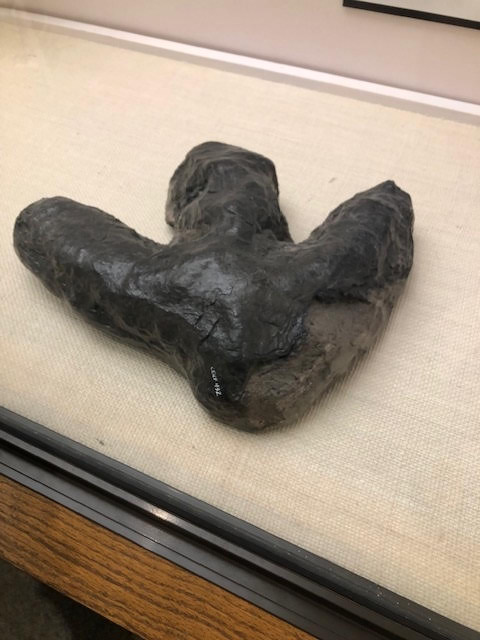
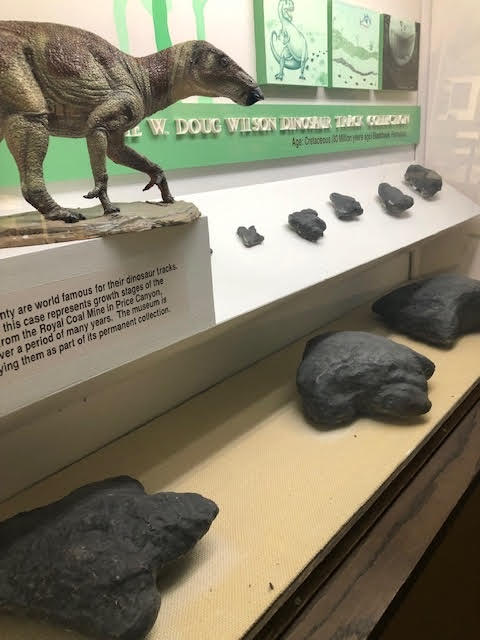
So, on a day no one was working in the mine, we climbed into the low riding miner’s car that carried us deep, deep into the heart of the mountain. When we got to the face we stopped and got out. In the dim light of our headlamps I could see we were in a huge cavernous room with massive pillars of coal, seven feet high and almost as wide, holding up the roof. And then I looked up and saw them – three toed footprints pressed down into the ancient mud that had turned into coal millions of years ago. Whole families of dinosaurs had strolled through this prehistoric swamp, leaving big prints, as long as two feet, and small ones, as small as six inches.

I found out later that the preservation of these footprints was a happy accident of sand filling up the prints soon after they were made. Millions of years later, when the decaying swamp plants were compressed into coal, the sand (itself pressed into sandstone,) held the shape of the foot.

A similar lucky mix of sand, water and pressure was needed to preserve dinosaur bones. Not all bones become fossils. So you can imagine the excitement in the scientific community when a fossil bed containing more than 12,000 dinosaur bones were discovered 30 miles south of Price. There were enough bones to qualify as a crime scene. To this day, my favorite spot in the Natural History Museum of Utah is the corner where 4 paleontologists on 4 TV screens square off with their earnest explanations for this massive bone pile-up.

    One says it was a watering hole that dried up so the dinosaurs died.

    “No,” says the second. There was too much water. The site became so muddy that the dinosaurs got stuck in the mud.

    The third offers up the idea that it could have been poison or a lethal germ that got in the water.

    “Oh, no,” says the fourth. The dinosaurs died somewhere else, and floodwaters floated them here.

It’s a mystery still waiting to be solved, and that’s what makes studying Utah’s past so interesting.

This is Mary Heers, and I’m Wild About Utah.

Credits:
Photos: Courtesy Mary Heers,
Featured Audio: Courtesy & Copyright © Friend Weller, Utah Public Radio upr.org
Text: Mary Heers, https://cca.usu.edu/files/awards/art-and-mary-heers-citation.pdf
Additional Reading: Lyle Bingham, https://bridgerlandaudubon.org/

Additional Reading

Wild About Utah, Mary Heers’ Wild About Utah Postings

Sunnyside Coal Mines, UtahRails.net, Last Updated March 8, 2019, https://utahrails.net/utahcoal/utahcoal-sunnyside.php

Prehistoric Museum, USU Eastern Campus, Price, UT, https://eastern.usu.edu/prehistoric-museum/

Natural History Museum of Utah, Rio Tinto Center, University of Utah, https://nhmu.utah.edu/