Seed Dispersal

Maple Seeds
Courtesy & Copyright © 2011
Linda Kervin

Milkweed Seeds
Courtesy & Copyright © 2011
Jim Cane
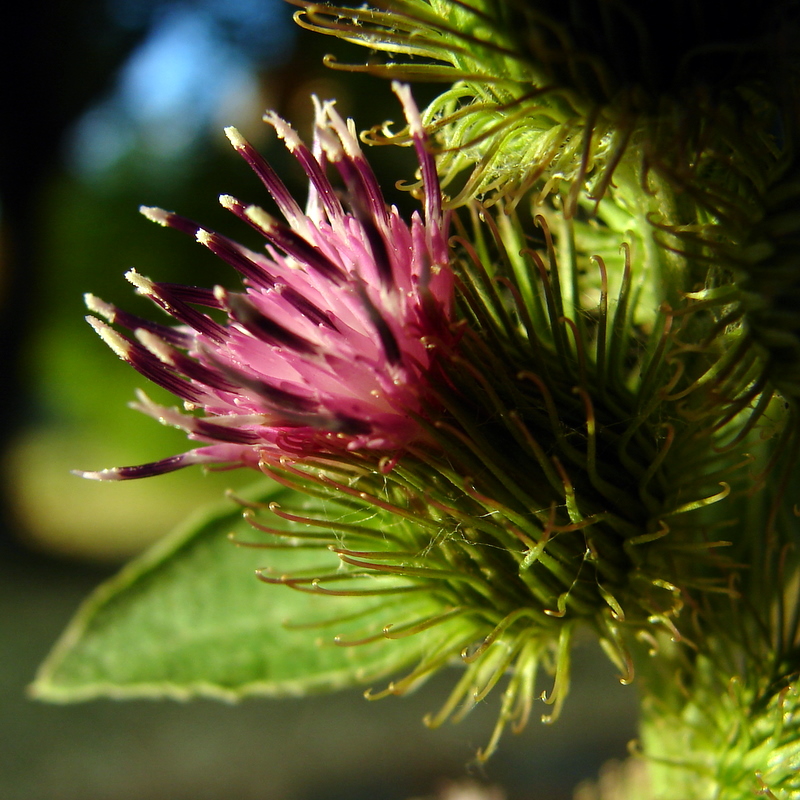
Burdock Flower
Courtesy & Copyright 2009 Jim Cane
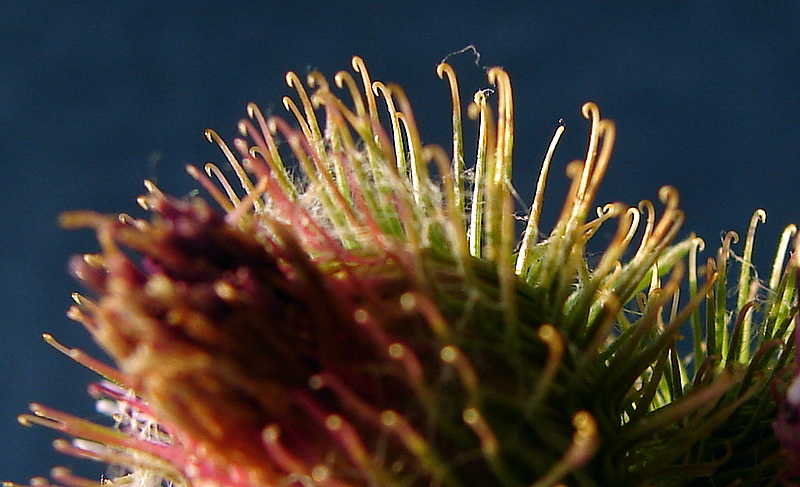
Burdock Hooks
Courtesy & Copyright 2009 Jim Cane

Autumn is a season of travelers. Birds migrate south. Deer, elk and antelope move to their wintering grounds. Many plants finish maturing seeds designed for transport to favorable new habitats. Seeds come in a kaleidoscope of shapes and sizes: their structure reveals their means of dispersal.

Many plants rely on the wind to loft their seed to fertile ground. Due to wind’s fickle nature, few of these seeds actually make it to a suitable site, so to compensate they are produced in abundance. Some seeds, like those of dandelion and milkweed, have a downy fluff which floats aloft with the slightest breeze. Others utilize wing-like appendages on the seed capsule, as in maple, ash and pines. The seed is heavier than the blade shaped wing, causing a spiraling motion which propels seeds farther than mere drifting.

Another strategy for seed dispersal is to entice animals to ingest the seed. Some plants like cherries, junipers and grapes do this by imbedding their seeds in a nutritious and tasty pulp. Others, like many grasses, achieve the same end by the placement of the seeds. As grazers consume the foliage, they inadvertently ingest seeds at the same time. Hopefully the seeds end up some distance from the parent plant, deposited in their own dollop of manure to aid seedling growth. Some seeds require a trip through the digestive tract, where the impervious seed coat is eroded away so that the seed can absorb water and germinate. Ants disperse seeds that have a patch of nutritious tissue, the aril, that they gnaw off before discarding the seed.

Another means of dispersal relies on a chance encounter to hitch a ride in an animal’s fur. The seed coat has clinging hooks, hairs or spines that latch onto fur or clothing. Many noxious weeds including burdock, hound’s tongue and cheatgrass use this type of dispersal, so be careful where you groom and dispose of their seed.

Grasses don’t run and pines don’t roam, but plant seeds have many tricks to gain mobility.

This is Linda Kervin for Bridgerland Audubon Society.

Credits:

Images: Courtesy & Copyright Jim Cane &
            Courtesy & Copyright Linda Kervin
Text: Linda Kervin, Bridgerland Audubon Society

Additional Reading:

Seed Dispersal
https://andromeda.cavehill.uwi.edu/Dispersal.htm (archived link)

Wind Dispersal
https://www2.palomar.edu/users/warmstrong/plfeb99.htm

Seed Dispersal by Animals
https://www.cnr.uidaho.edu/range556/…

Migratory Birds and Coffee

Western Tanager
Courtesy & Copyright © 2010
Michael Fish

For many of us, the day has not truly begun until we hold a warm mug of richly flavored coffee in our hands. But how often have you considered where that coffee comes from and how its culture impacts wild Utah?

We tend to think of migratory birds as our residents who take a winter vacation to the south every year. But it is more truly the other way around. They are representatives from groups of tropical birds who venture north to take advantage of less crowded nesting and a seasonal abundance of food for their young. For instance, of the 49 species of true tanagers, only 4 summer in the United States. Much of our coffee originates in Central and South America and its production directly affects birds who fly north to nest in Utah.

Traditionally, coffee bushes are grown under a diverse canopy. Some of the trees in the overstory yield timber, others fix nitrogen and still others like papaya provide food. This multi-tiered habitat supports a wide variety of birds that is only exceeded by undisturbed tropical forest itself.

About twenty years ago, coffee production changed radically with the development of varieties that tolerate full sun. This has allowed huge areas of land to be cleared of forest and planted exclusively to row after row of coffee bushes that demand intensive management. More fertilizer and pesticides are needed leading to toxic runoff. Soil erosion increases. Much lovely bird habitat has been destroyed for this barren coffee monoculture. Many migratory bird populations are in trouble due to the loss of their forested winter habitats.

But there is hope for coffee lovers because many farmers still grow coffee in the traditional way. These grower-owned farms tend to be smaller and provide a more reliable income for the farmer due to the diversity of crops. Soil quality is maintained while providing critical habitat for tropical frogs, insects, plants and birds. When purchasing coffee, look for bird friendly or shade grown or certification by Rainforest Alliance or Smithsonian. Our warblers, tanagers and thrushes will thank you.

This is Linda Kervin for Bridgerland Audubon Society.

Credits:

Images: Courtesy & Copyright Michael Fish
Text: Linda Kervin, Bridgerland Audubon Society

Additional Reading:

Shade-Grown Coffee, National Audubon Website, https://web4.audubon.org/bird/at_home/coffee/

Song Bird Coffee, American Birding Association, https://www.aba.org/shadecoffee/songbird.html

Some Coffee-related Resources, American Birding Association, https://www.aba.org/shadecoffee/whattodo.html#Coffee-related%20Resources

Why Migratory Birds are Crazy for Coffee, Migrants and Coffee: What’s the Connection?, National Zoo, Smithsonian Institution, https://nationalzoo.si.edu/scbi/MigratoryBirds/Fact_Sheets/default.cfm?fxsht=1

Why Migratory Birds Are Crazy for Coffee, Atlanta Audubon Society, formerly: https://atlantaaudubon.org/aaswww/sgc/sgcfacts.htm

Smithsonian-Certified Shade Grown & Bird Friendly Coffee, Caffe Ibis, https://caffeibis.com/

Amazing Adaptations of Utah’s Desert Plants

Amazing Adaptations of Utah’s Desert Plants: Click to view larger image of Tap roots that grow deep into the soil to reach groundwater, Photo Courtesy and Copyright Mark Larese-Casanova, Photographer
Tap roots grow deep
to seek groundwater
Photo Courtesy & Copyright
Mark Larese-Casanova, Photographer

Winterfat trichomes
Hair-like trichomes provide shade
and absorb dew
Photo Courtesy & Copyright
Mark Larese-Casanova, Photographer

Prickly Pear Cactus
Fibrous roots quickly absorb water
and store it in wide succulent leaves
Photo Courtesy US FWS
Gary M. Stolz, Photographer

Waxy Creosote Bush
Leaf coating inhibits desication
Photo Courtesy & Copyright
Mark Larese-Casanova, Photographer

Hi, this is Mark Larese-Casanova from the Utah Master Naturalist Program at Utah State University Extension.

Anyone who lives in Utah knows that it’s a dry state. In fact, around three-quarters of our state is considered desert. A desert is often characterized as an area that receives less than ten inches of precipitation each year. But, high levels of evaporation, which are influenced by temperature, wind speed, and solar radiation, also contribute to creating a dry desert ecosystem.

So, how exactly are plants able to survive in Utah’s deserts, which are so dry? It turns out that the plants that grow and flourish in Utah’s deserts have an amazing array of adaptations for survival.

Many shrubs and trees, such as desert willow, and certain species of sagebrush and mesquite, have thick taproots that grow deep into the soil to reach groundwater. This helps the plants survive the hot, dry summer. Some mesquite taproots have been found to grow as deep as 200 feet to reach a constant water supply.

Cacti, such as the various types of prickly pear, have almost an opposite adaptation. They produce dense tufts of fibrous roots just below the surface of the soil. This allows cacti to quickly absorb water from brief rainstorms, and then store the water in their thick, succulent leaves.

As temperature increases, desert plants face the danger of excessive water loss from their leaves. A thick, waxy coating on the outside of leaves often helps to retain water. The shiny wax also reflects sunlight to keep the leaves relatively cooler. To further reduce leaf temperature and water loss, some plants, such as brittlebush, grow light-colored dense ‘hairs’ on their leaves and stems. These trichomes not only shade the plant, but also aid in absorbing water from morning dew.

If temperatures get too hot, and drought stress too great, some plants, such as creosote bush and ocotillo, may drop their leaves several times each year to ensure survival. Some of these plants have green chlorophyll in their stems so they can still produce food through photosynthesis when there are no leaves on the plant.

While this is just a sample of an amazing collection of adaptations, it’s clear that desert plants are champions of survival in a harsh ecosystem where water is so scarce.

For Wild About Utah, I’m Mark Larese-Casanova.

Credits:

Images: Courtesy & Copyright Mark Larese-Casanova

US FWS images.fws.gov
Text:     Mark Larese-Casanova, Utah Master Naturalist Program at Utah State University Extension.

Additional Reading:

Utah’s Desert Dwellers: Living in a Land of Climate Extremes. Wildlife Review. Utah Division of Wildlife Resources
wildlife.utah.gov/wr/0706desert/0706desert.pdf

Deserts. James MacMahon. The Audubon Society Nature guides. 1985. https://www.amazon.com/Deserts-National-Audubon-Society-Nature/dp/0394731395

Natural History of the Colorado Plateau and Great Basin, Harper, St. Clair, Thorne, and Hess (Eds.), 1994. https://www.amazon.com/Natural-History-Colorado-Plateau-Great/dp/0870815113

The Biology of Deserts, David Ward, Oxford University Press, 2009. https://www.amazon.com/Biology-Deserts-Habitats/dp/0199211477


Crow vs. Raven

Crow vs. Raven: Ravens in Bryce Canyon National Park
Common Raven (Corvus corax)
Bryce Canyon National Park
Courtesy US National Park Service
And found on Wikipedia

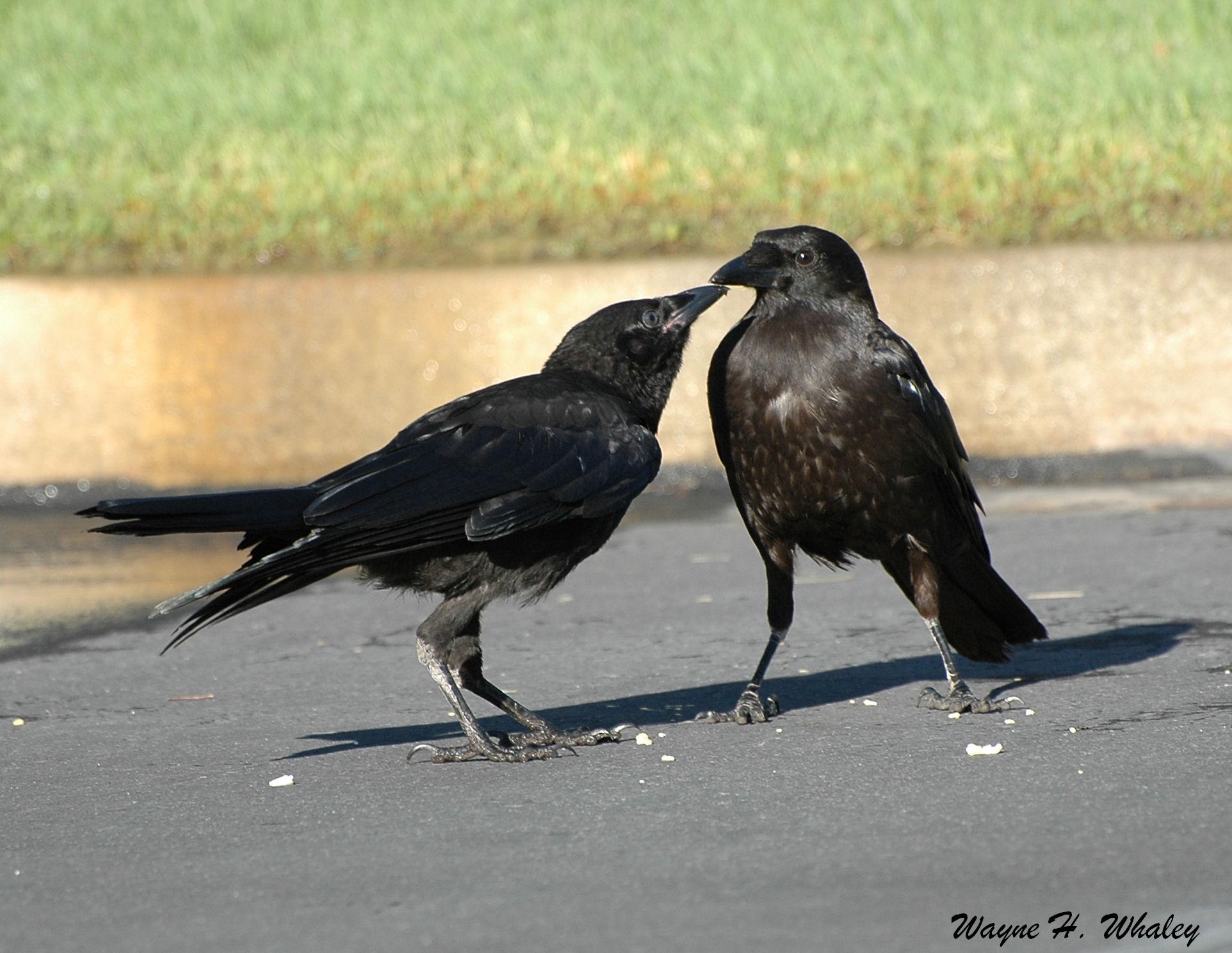
Image of the American Crow, Corvus brachythynchosby, Courtesy and Copyright 2011 Wayne WhaleyAmerican Crow Juvenile & Parent
(Corvus brachythynchosby)
Copyright © 2011 Wayne Whaley

Image of the American Crow, Corvus brachythynchosby, Courtesy and Copyright 2011 Wayne WhaleyAmerican Crow, Orem, UT
(Corvus brachythynchosby)
Copyright © 2011 Wayne Whaley

The American Crow, Corvus brachythynchosby, Courtesy and Copyright 2011 Wayne WhaleyAmerican Crow Pair, Orem, UT
(Corvus brachythynchosby)
Copyright © 2011 Wayne Whaley

Hi I’m Holly Strand.

As you might have guessed, the American crow and the common raven are birds of a feather—two closely related species of the same genus Corvus. Both of them are residents of Utah. Together with family members magpies and jays, crows and ravens are among the brainiest animals on the planet.

Many times I’ve heard someone ask “Is that a crow or a raven?” or “What’s the difference between them?”

Perhaps the easiest way to tell these two apart is by size. If you are thinking to yourself “Wow! That’s a huge crow!” You are probably looking at a raven. Ravens can weigh over 2.5 pounds while crows typically weigh less than 1. The Raven’s wingspan can clear 4.5 feet while that of crows is less than 3. Proportional to their bodies, the bill on a Raven is larger and thicker.
The crow has a thinner, more pointed bill.

Take a look at the tail in flight: a crow tail is fan shaped with a straight tail edge. A raven tail has a rounded wedge shape.

In the air, ravens usually soar, while crows will flap a lot more. It’s not always apparent why, but some ravens will perform acrobatic rolls during flight—usually half rolls, but sometimes full rolls and even double rolls!

Common ravens are abundant throughout Utah, They can be found in almost all habitats and in all seasons. They are more wilderness-oriented than crows who prefer forest edges, savannas, agricultural fields and urbanized areas. In cities and towns humans provide lots of easy food in the form of garbage. The crows’ intelligence allows them to take advantage of novel food items– like pizza and Cheetos–that don’t really resemble food in the wild.

Finally, listen to the difference in sound: Here are two crows calling—an adult and a juvenile https://xeno-canto.org/72977 . Now listen to the throatier sound of the raven https://xeno-canto.org/12581 [Updated February 11, 2026]
Crows will also scream, rattle, whine and coo, but most of the time they just caw. Ravens have a richer, more complex vocabulary. They’ll scream, trill, knock, croak, cackle, warble, yell, and kaw. Young birds reared in isolation have even been taught to say “Nevermore.”

Thanks to Ryan O’Donnell and Andrew Spencer for their recordings available on the web at www.xeno-canto.org

For Wild About Utah, I’m Holly Strand.

Credits:

Theme: Courtesy & Copyright Don Anderson as performed by Leaping Lulu
Photos: Courtesy US National Park Service &
Courtesy & Copyright © 2011 Wayne Whaley
Text & Voice: Holly Strand

Sources & Additional Reading:

Boarman, William I. and Bernd Heinrich. v1.9 March 4, 2020. Common Raven (Corvus corax), The Birds of the World. Ithaca: Cornell Lab of Ornithology; Retrieved from the Birds of the World: https://birdsoftheworld.org/bow/species/comrav/cur/introduction [Updated February 11, 2026]

Kilham, Lawrence. 1989. The American crow and the common raven. W. L. Moody Jr. Natural History Series. College Station: Texas A&M University Press. https://www.amazon.com/American-Common-Raven-Natural-History/dp/0890964661/ [Updated February 11, 2026]

Marzluff, John M. 2005. In the company of crows and ravens. Yale University Press. https://www.amazon.com/Company-Crows-Ravens-John-Marzluff/dp/0300122551/ [Updated February 11, 2026]

Savage, Candace Sherk , 1997. Bird brains: the intelligence of crows, ravens, magpies, and jays. Sierra Club Books. https://www.amazon.com/Bird-Brains-Intelligence-Ravens-Magpies/dp/1771644257/ [Updated February 11, 2026]

Verbeek, N. A. and C. Caffrey. v1.5, December 24, 2025. American Crow (Corvus brachyrhynchos), The Birds of the World Online. Ithaca: Cornell Lab of Ornithology; Retrieved from the Birds of the World Online: https://birdsoftheworld.org/bow/species/amecro/cur/introduction [Updated February 11, 2026]