Lewis and Clark’s Taxonomic Legacy

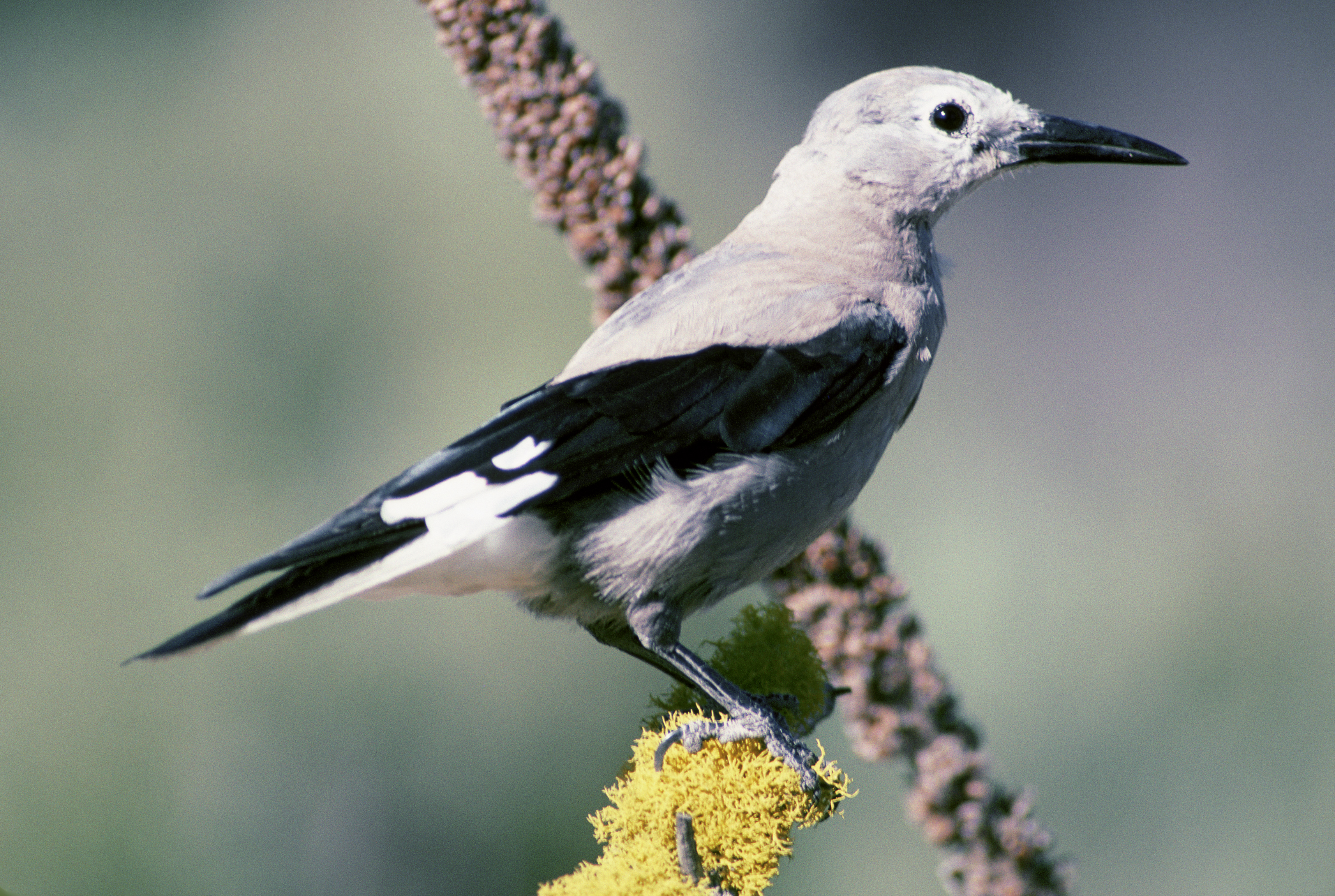
Clark’s Nutcracker
Courtesy US FWS
Dave Menke, Photographer
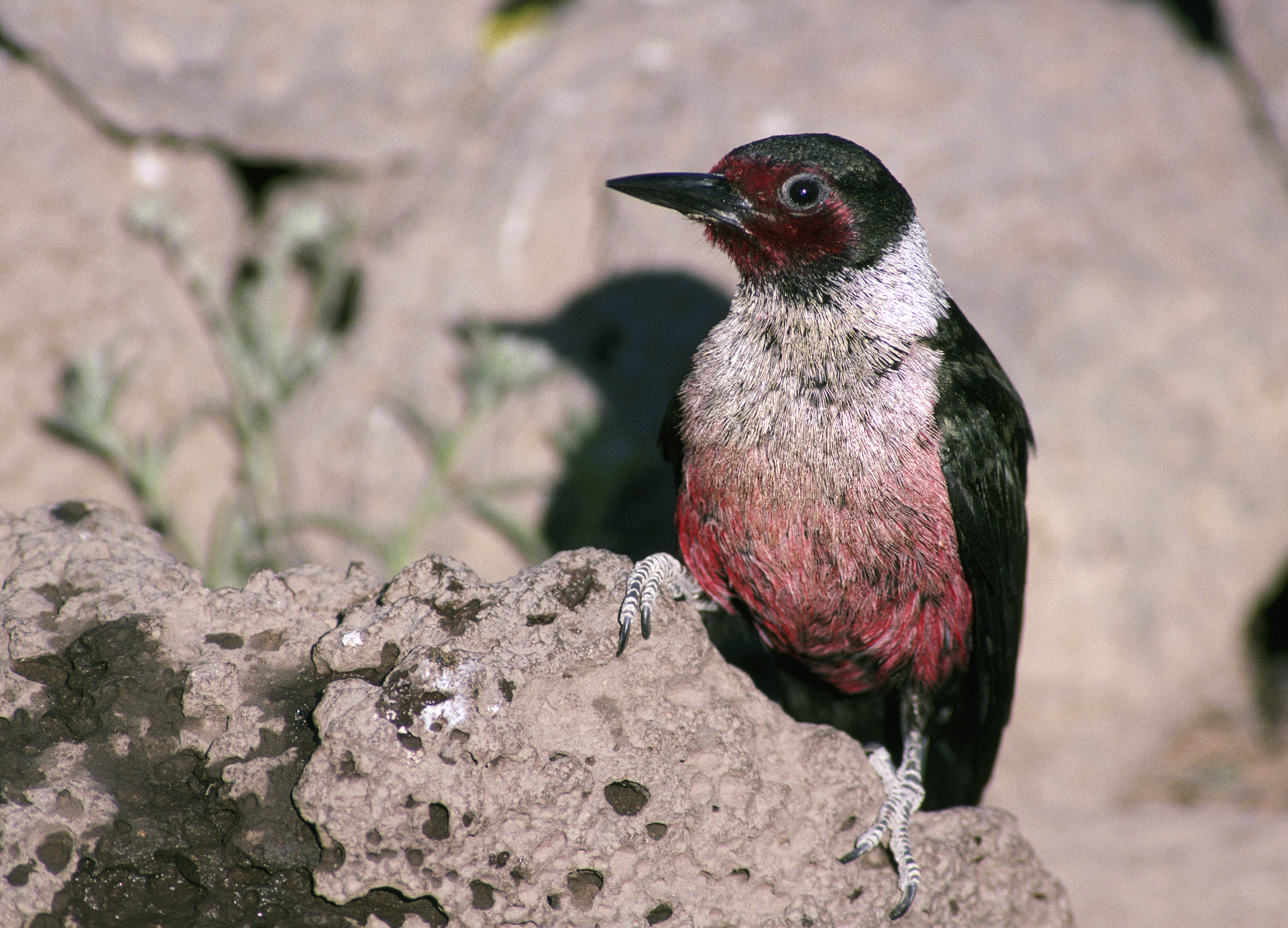
Lewis’s Woodpecker
Courtesy US FWS
Dave Menke, Photographer

Thomas Jefferson will forever be remembered as our third president and author of the Declaration of Independence. Jefferson oversaw the acquisition of the vast Louisiana Purchase and soon thereafter initiated planning for an expedition that would be named the “Corps of Discovery”. That bold adventure was led by Meriwether Lewis and William Clark. These two frontiersmen are immortalized by the plants and animals that taxonomists named in their honor.

The arduous 3-year expedition route passed far north of what would become Utah, ascending the tributaries of the Missouri River and later following down the Columbia River to the Pacific Ocean. Jefferson, being an avid naturalist, instructed the explorers to observe and make record of the geography, plants and animals that they encountered and to return with those specimens which they could carry. Hopes for discovery of a navigable inland passage to the Pacific were not realized, but in all other ways, the expedition was a singular success.

Lewis and Clark made collections of pressed plants along the way. These eventually went to Frederick Pursh, a German botanist in Philadelphia. One new genus of plant he named Lewisia. These are the bitteroots, one of which is the spectacular state flower of Montana. Another genus new to science he named Clarkia . Many species names of plants immortalize the men too, such as the blue-flowered flax, Linum lewisii, commonly used today for seeding following wildfire.

Bird names honoring the discoveries of Lewis and Clark include Clark’s nutcracker and Lewis’ woodpecker. Clark’s nutcracker is a big black and gray relative of crows. [https://wildstore.wildsanctuary.com/collections/special-collections, https://wildstore.wildsanctuary.com/collections/special-collections] This noisy resident of Utah’s mountains is notable for its habit of caching seeds of pine trees to be remembered and found months later.

The age of the pioneer naturalist in North America closed more than a century ago, but the names of men like Meriwether Lewis and William Clark live on with the plants and animals that bear their names.

This is Linda Kervin for Bridgerland Audubon Society.

Credits:

Images: Courtesy US FWS images.fws.gov
Audio: Courtesy & Copyright https://wildstore.wildsanctuary.com/collections/special-collections, https://wildstore.wildsanctuary.com/collections/special-collections
Text: Jim Cane, Bridgerland Audubon Society

Additional Reading:

The Lewis and Clark Herbarium, Images of the Plants Collected by Meriwether Lewis and William Clark, 1804-1806, Presented by the University of Maryland and The Academy of Natural Sciences in Philadelphia in cooperation with Cornell University, https://www.plantsystematics.org/reveal/pbio/LnC/LnCpublic.html

Evans, Howard Ensign. 1993. Pioneer naturalists: the discovery and naming of North American plants and animals. Henry Holt & Company, New York. Illustrated by Michael G. Kippenhan. ISBN: 0-8050-2337-2, https://www.amazon.com/Pioneer-Naturalists-Discovery-American-Animals/dp/0805023372

And for a thorough treatment of Clark’s nutcracker:

https://en.wikipedia.org/wiki/Clark%27s_Nutcracker

All About Birds, The Cornell Lab of Ornithology:
https://www.allaboutbirds.org/guide/lewiss_woodpecker/id

https://www.allaboutbirds.org/guide/Clarks_Nutcracker/id

A Big Year in Utah

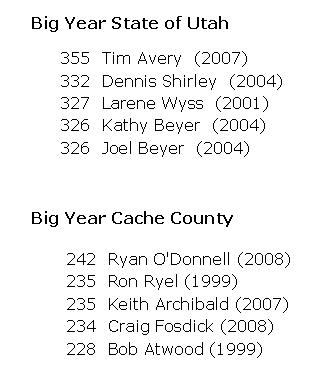
Utah Big Year Records
Courtesy Utahbirds.org/records/

Hi I’m Holly Strand.

Birders are flocking to theaters to see the new movie The Big Year. The story is based on a real life competition among birders in which they race around to count the most birds within a particular geographic boundary in a single calendar year.

To do a Big Year, you need to follow some simple rules. To count a bird it must be alive and wild and unrestrained when encountered. You have to see enough or hear enough of the bird to absolutely be sure it’s the species you are claiming to see. And the bird must be within the prescribed area and time period of your particular Big Year competition. For instance if you are doing a Big Year for the state of Utah, you can’t count a bird that you see across the border in Idaho. However, you can be standing in Idaho looking at a bird in Utah, and you can count it.

To be competitive in a Big Year you have to find ALL the usual or common birds in your designated country, state or area. This means hitting all the major birdwatching spots at critical times during the year. In Utah you might want to start in the southwestern corner of the state picking up desert species such as vermillion flycatcher and greater roadrunner . Then head to the high Uintas to see Rocky Mountain alpine and subalpine birds such as the rosy finch and northern goshawk. You’d want to check out the Great Salt Lake in all four seasons and make frequent trips up and down the Wasatch canyons as different elevation zones harbor different species. Whenever possible you should be scouring wetlands and riparian zones for whoever might be perching, wading or fishing.

To push your count up beyond that of your competitors, you would need to spot rare birds, esp. vagrants. Vagrants are birds who have wandered or been blown off course. For example, when setting the Big Year record in Cache County, Ryan O’Donnell saw an Iceland Gull who was obviously terribly lost. And a Mexican Whip-poor-will that had somehow drifted up from Southern Arizona.

Modern communication technology is incredibly useful for locating rare birds and vagrants. Big Year participants monitor chat lists like Birdnet and BirdTalk run by Utahbirds.org. Ebird also helps spread the news of sightings. Email hotlines operate in several Utah regions. It always helps to maintain a network of birding friends who can text you the location of birds you haven’t seen yet.

Thanks to Frank Howe and Ryan O’Donnell of Utah State University’s Dept. of Wildland Resources for their assistance in developing this Wild About Utah story.

For Wild About Utah, I’m Holly Strand.

Credits:

Table: Courtesy utahbirds.org
Text: Holly Strand

Sources & Additional Reading:

American Bird Association https://www.aba.org/

Utah Birds https://utahbirds.org/

Ebird https://ebird.org/content/ebird/

Bridgerland Audubon Society Cache Birders Hotline https://www.bridgerlandaudubon.org/hotline.htm

Official movie site: https://www.thebigyearmovie.com/

Desert Animals-Extreme Survivors

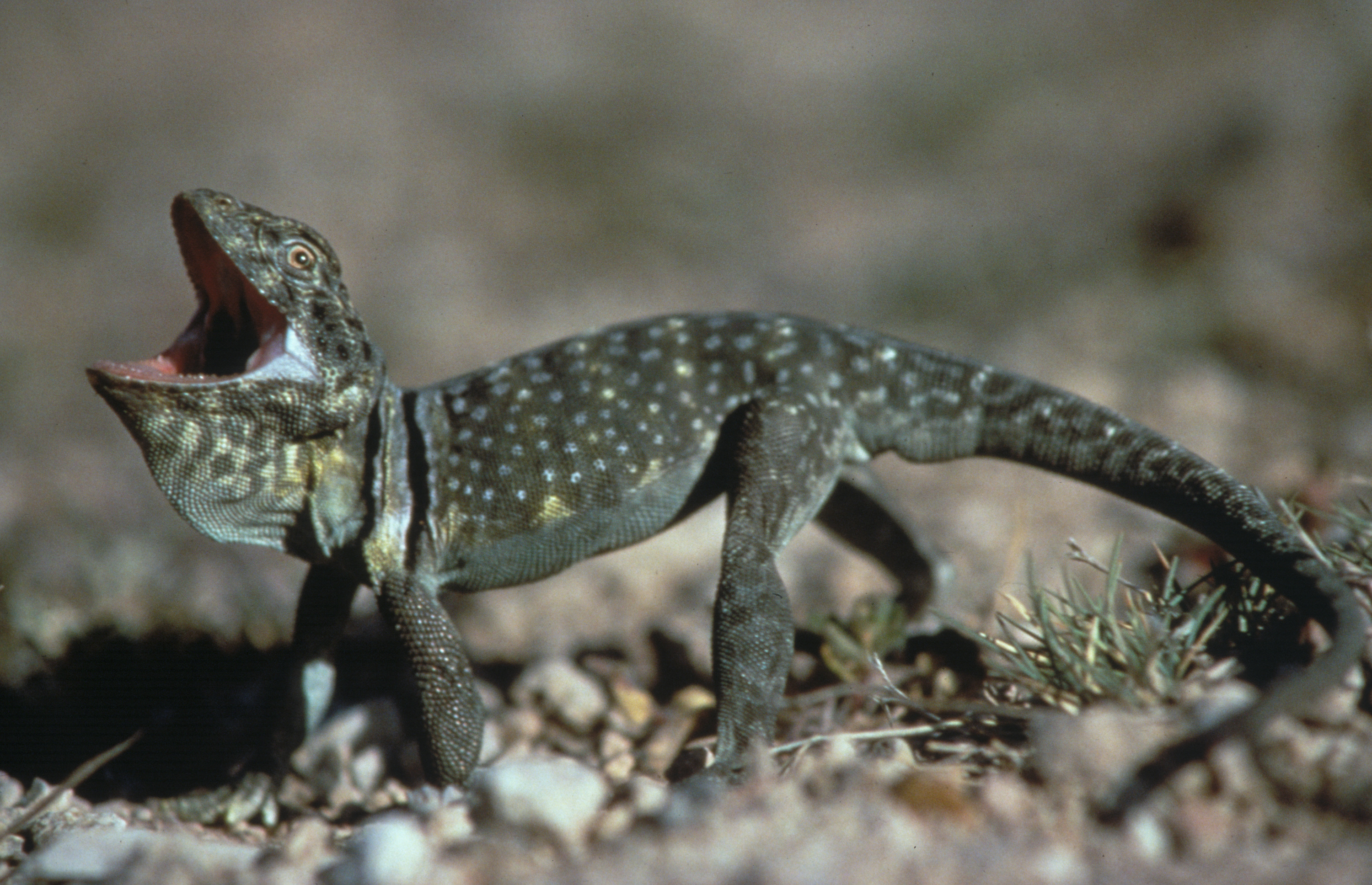
Desert Animals-Extreme Survivors: Collared lizard, Photo Courtesy US FWS, Lawrence Gamble, Photographe
Collared lizard
Photo Courtesy US FWS
Lawrence Gamble, Photographer

Kangaroo Rat
Photo Courtesy US FWS
George Harrison, Photographer

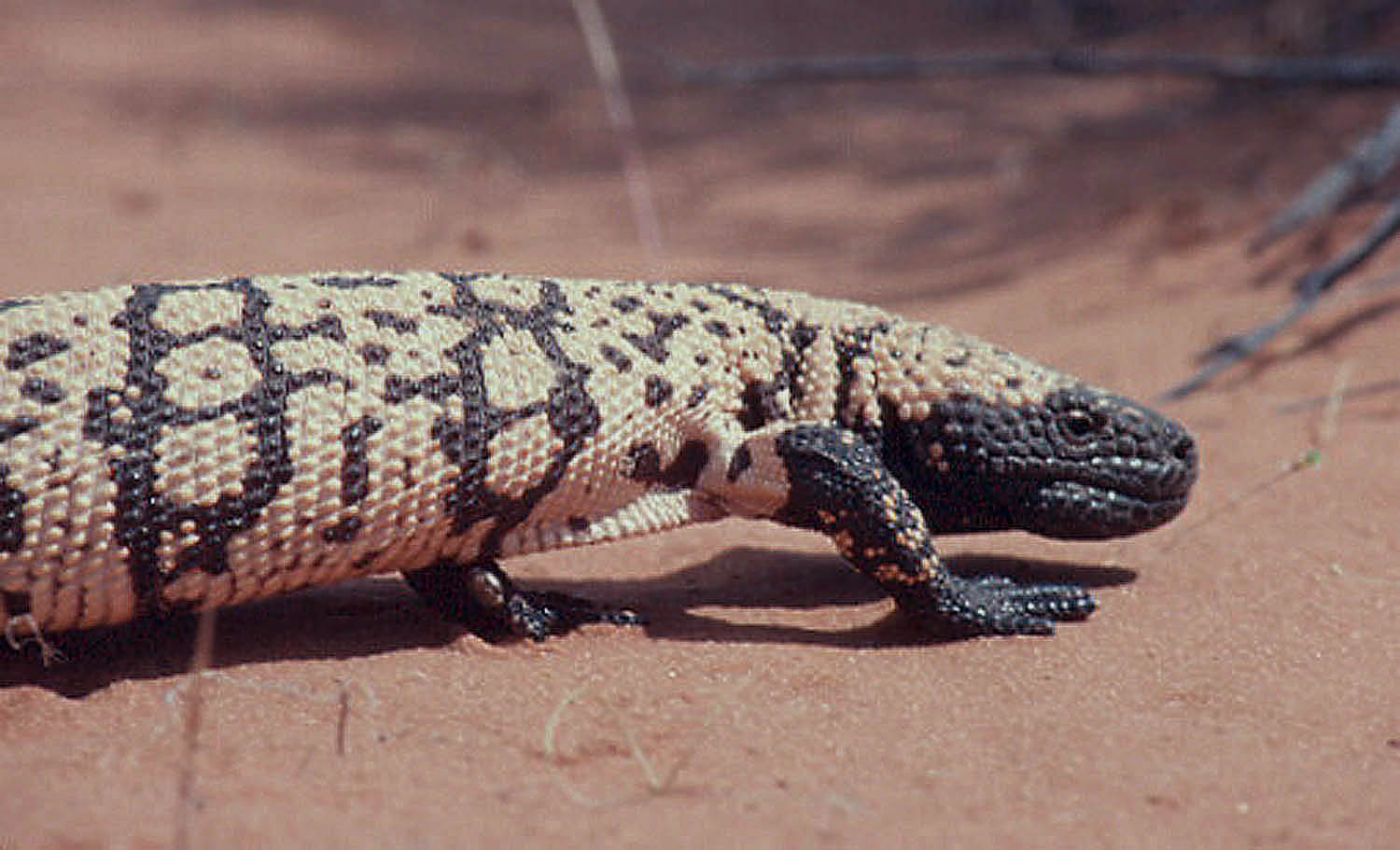
Gila Monster
Photo Courtesy & © Daniel D. Beck
Central Washington University

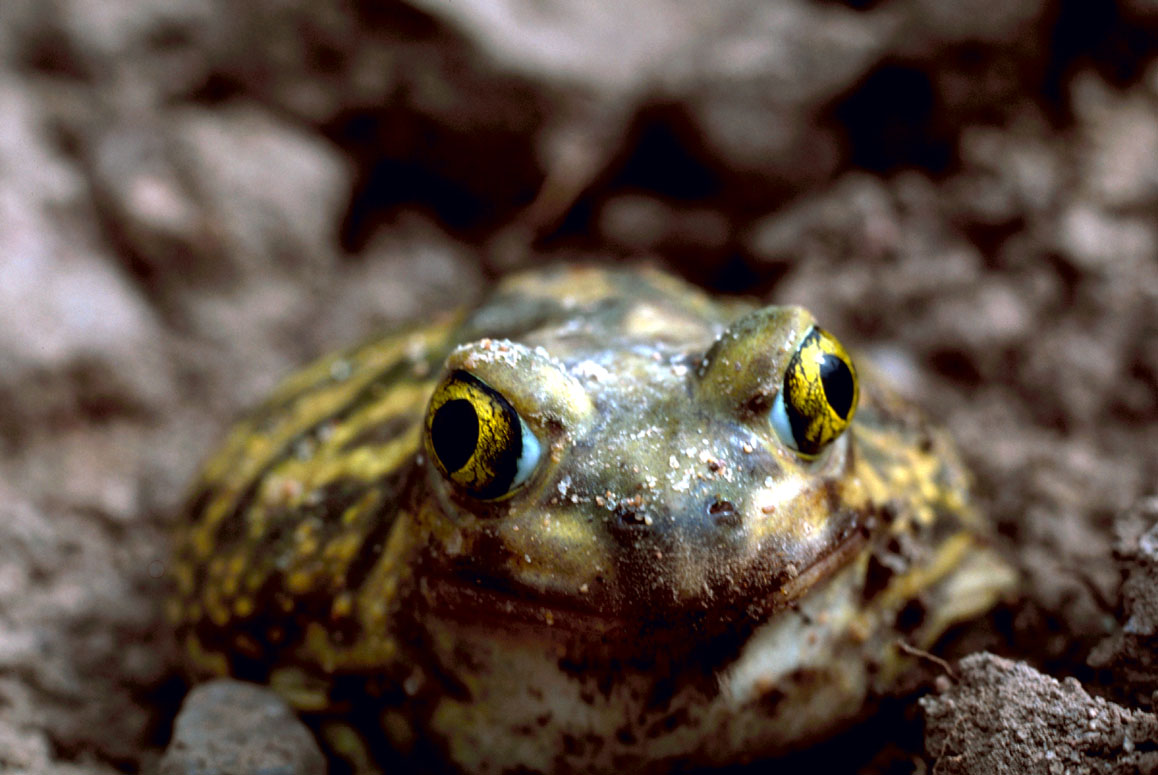
Couch’s Spadefoot Toad
Photo Courtesy US FWS
Gary M. Stolz, Photographer

Hi, this is Mark Larese-Casanova from the Utah Master Naturalist Program at Utah State University Extension. Desert Animals-Extreme Survivors

The three main deserts of Utah- the Great Basin to the west, the Colorado Plateau to the east, and the Mojave Desert in the southwest corner of the state- are each inhabited by animals that have unique adaptations for surviving the extreme heat, dryness, and sometimes cold temperatures of the desert.

Many animals survive in Utah’s deserts through behavioral adaptations. During the heat of the day, most animals can be found underground in burrows, or simply sitting in the shade of a shrub or tree. Reptiles, such as the desert tortoise and gila monster, spend almost all of their time in a burrow or under a rock. Many birds and mammals are most active near dawn and dusk when temperatures are coolest, yet there is enough light to see. Many bats, snakes, and rodents are nocturnal, and are only active at night!

Morphological adaptations, related to the shape or color of an animal’s body, are also important for living in the desert. The collared lizard has long legs and toes that keep its body away from the hot ground, reducing heat absorption. White-tailed antelope ground squirrels will use their bushy tails as a shade umbrella, and the long ears of the jackrabbit aid in dispersing body heat.

The kangaroo rat has perhaps the most amazing combination of adaptations for desert survival. Not only does it live in a burrow and is nocturnal, but it recaptures it’s own body moisture by storing food within its burrow. Dry seeds absorb moisture from the kangaroo rat’s breath, which condenses more readily in the cooler underground temperatures.

Physiological adaptations relate to a change in body function to aid survival in the desert. The kangaroo rat has such complex kidneys that it is able to retain as much water as possible. It also has specialized tissues in its nasal passages that help it retain much of the moisture that is normally lost through breathing. If the desert gets too hot, many animals will aestivate, which is similar to hibernating, but is usually in response to a lack of water rather than a lack of food. The spadefoot toad spends 10-11 months out of the year buried in the soil, only to emerge to breed and feed during summer rainstorms.

So, while at first glance, it may look like there isn’t much life in the desert, keep in mind that the vast array of adaptations help ensure the survival of a high diversity of plants and animals in such a harsh ecosystem.

For Wild About Utah, I’m Mark Larese-Casanova.

Credits:
Images: Courtesy US FWS images.fws.gov
            Courtesy & Copyright Daniel D. Beck, Central Washington University
Text:     Mark Larese-Casanova, Utah Master Naturalist Program at Utah State University Extension.


Additional Reading:

Utah’s Desert Dwellers: Living in a Land of Climate Extremes. Wildlife Review. Utah Division of Wildlife Resources
wildlife.utah.gov/wr/0706desert/0706desert.pdf

Deserts. James MacMahon. The Audubon Society Nature guides. 1985. https://www.amazon.com/Deserts-National-Audubon-Society-Nature/dp/0394731395

Natural History of the Colorado Plateau and Great Basin, Harper, St. Clair, Thorne, and Hess (Eds.), 1994. https://www.amazon.com/Natural-History-Colorado-Plateau-Great/dp/0870815113

The Biology of Deserts, David Ward, Oxford University Press, 2009. https://www.amazon.com/Biology-Deserts-Habitats/dp/0199211477

Lodgepole Pines

Lodgepole Pine
Pinus contorta
Courtesy & Copyright Michael Kuhns
https://forestry.usu.edu/

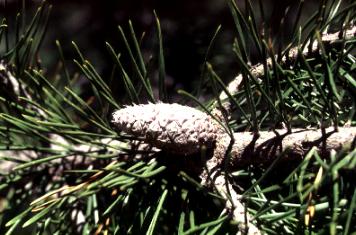
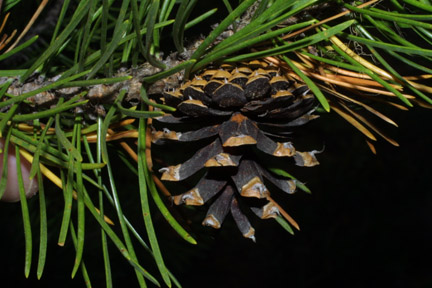
Lodgepole pine cone – open
Copyright © 2005 Steven J. Baskauf
https://bioimages.vanderbilt.edu/

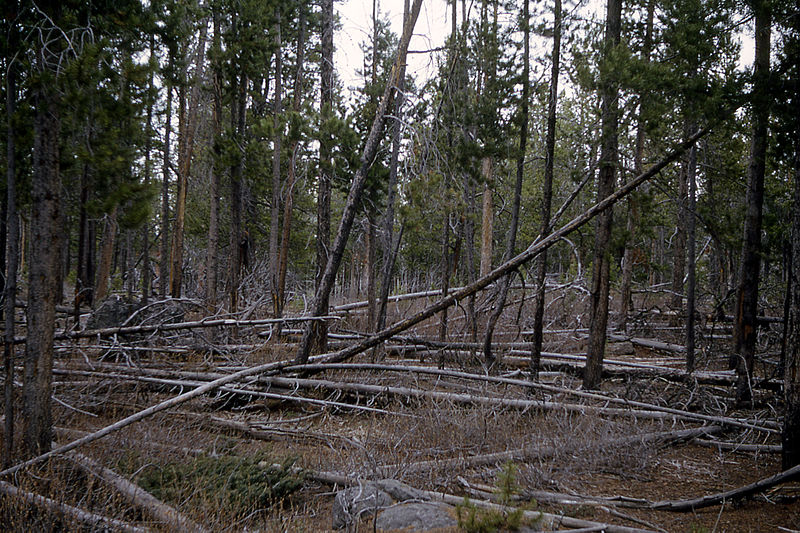
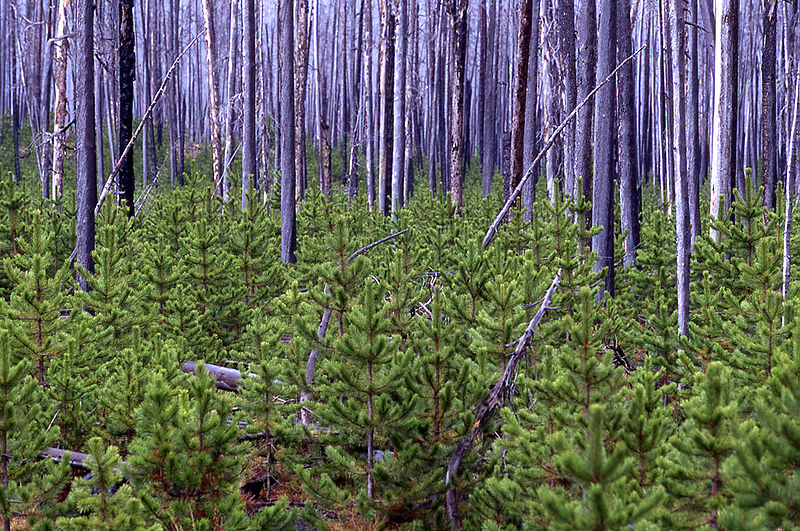
P. contorta subsp. latifoliaforest
23 years before (above) and
10 years after (below) the
Yellowstone fires of 1988
Courtesy US NPS and Wikimedia
1998 Photographer: Jim Peaco

Autumn in Utah’s semi-arid climate typically means the end of a long, dry summer. While reports of forest fires popping up across the state may make us cringe, fire remains an important and natural part of our landscape. And no plant demonstrates that better than the lodgepole pine.

In Utah, these trees are found growing above 6,000 feet – mostly in the northern part of the state. Their tall, straight trunks have been important to humans for centuries as teepee poles, railroad ties and telephone poles.

Lodgepole pines have a number of adaptations that help them thrive in an ecosystem occasionally ravaged by fire. For starters, these trees produce two types of cones. Open, or non-serotinous cones, are fairly typical pine cones. Pollinated in early spring, they mature and the seeds fall during their second autumn. However, these seeds are rarely successful unless they fall in canopy openings. Lodgepole pines grow in very dense stands but their seedlings require copious amounts of sunshine to survive.

In order to combat this conundrum, lodgepole pines also produce another type of cone; called closed or serotinous cones. These cones, and their viable seed, stay on the parent tree for up to 20 years. The scales, which encapsulate the seeds, are sealed shut by a special resin that will only melt when exposed to temperatures between 113 – 140 degrees (F). In nature, the only way those temperatures are reached in the canopy, where cones are produced, is through forest fires.

A fire intense enough to emit that much heat will also kill many adult trees – especially lodgepole pines, which have very thin bark when compared to other evergreen species. However, when many adult trees are killed by fire, the canopy opens and sunlight can easily reach the forest floor where now-available seeds from serotinous cones are ready to germinate and renew the landscape.

Lodgepole pines also produce an enormous quantity of seeds – hundreds of thousands per hectare each year. The trees grow so dense that it can be hard to pick a path through them. As they age, saplings compete fiercely with their neighbors for survival, and many succumb to the pressure. Amazingly, however, this ensures that once a stand is mature, the many dry trunks and branches of the fallen provide adequate fuel to support another blaze, encouraging the next generation to rise and shine.

For sources and pictures of lodgepole pines, please visit our website at www.wildaboututah.org. Thank you to Rocky Mountain Power Foundation for supporting the research and development of this Wild About Utah topic.

For the Stokes Nature Center and Wild About Utah, this is Andrea Liberatore.

Credits:

Photos: Courtesy & © Michael Kuhns, https://forestry.usu.edu/ and
             Courtesy and copyright © 2005 Steven J. Baskauf, https://bioimages.vanderbilt.edu/
             Yellowstone images courtesy USDA Forest Service and Wikimedia.
Text:    Andrea Liberatore, Stokes Nature Center, logannature.org

Additional Reading:

Preston, Richard J. Jr. 1968. Rocky Mountain Trees. Dover Publications Inc. NY, NY.

Lotan, James E. and Critchfield, William B. Lodgepole Pine. U.S. Forest Service manual. Found online at: https://www.na.fs.fed.us/pubs/silvics_manual/volume_1/pinus/contorta.htm

USU Extension (2002) Range Plants of Utah: Lodgepole Pine.
Found online at: https://extension.usu.edu/range/woody/lodgepolepine.htm

Johnson, Carl M. 1991. Common Native Trees of Utah. Utah State University Extension Service. Logan, UT. 109 p