Hummingbird Nests

Male Broad-tailed Hummingbird
Selasphorus platycercus
Copyright © 2010 Michael Fish

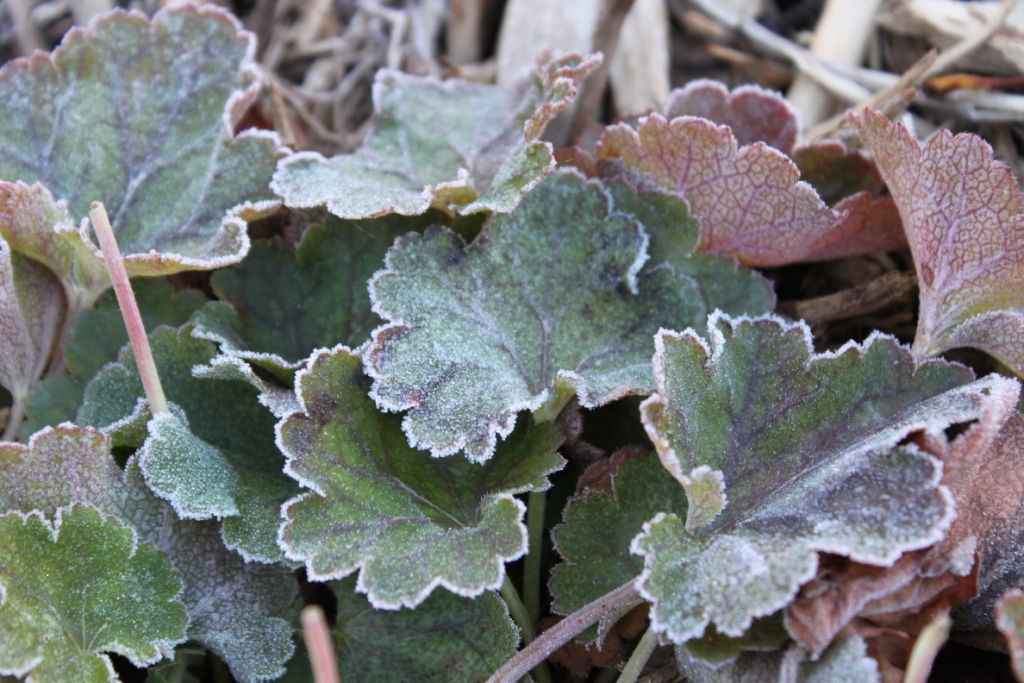
Glacier Lilies
Erythronium grandiflorum
Copyright © 2010 Andrea Liberatore

Adult Black-chinned Hummingbird
incubating eggs in nest
Archilochus alexandri
Copyright © 2010 Lyle Bingham
(cell phone through spotting scope)

Young Black-chinned Hummingbird
with beak hanging out of nest
Archilochus alexandri
Copyright © 2010 Lyle Bingham

The hummingbird feeders at Stokes Nature Center are a busy place this time of year. Little bullets of metallic green zoom in and out jockeying for position, while others rest or await their turn in the branches of nearby box elder trees. The birds are a great source of wonder and amusement for staff and guests alike.

June signals the start of nesting season for Utah hummingbirds. At this point in the year, the birds have mainly recovered from their lengthy migration from places as far away as Central America, and are ready to focus on their next set of challenges: establishing a territory, courtship, mating, and rearing young.

Hummingbird nests are a wonder all their own. Tiny and cup-like, they are generally found affixed to small branches near riparian areas. Nests are constructed primarily of plant materials and are lined with plant down such as the fluffy seeds produced by cottonwood trees. Materials used on the exterior of the nest vary from species to species. Black-chinned hummingbirds use leaves and flowers, while Broad-tailed hummingbirds are partial to decorating with lichens or shredded bark. Regardless of the exterior appearance, hummingbird nests have one important material in common – spider webs. Hummingbirds collect the webs and use them to plaster the outside of the nest, which serves two important purposes: acting as a glue that holds nest materials together while at the same time providing some flexibility that allows the nest to stretch and grow with the developing young.

Nests are occasionally constructed on the foundation of last year’s home, and two eggs around half-an-inch in length are laid and incubated by the female for about 16 days before hatching. Young will fledge and join their mother at your feeder about 20 days later. If nesting is successful, the family migrates south in the fall and will return to the same general area next May.

Finding food in early spring, however, is becoming more of a challenge each year to hummingbirds in the American West. A recent study published in the journal Ecology shows that hummingbird migrations and spring flower blooms are becoming out of sync. Broad-tailed hummingbirds in particular rely upon the nectar of petite, yellow glacier lilies – one of the first flowers to bloom in spring. Scientists have found that due to global temperature increases glacier lilies are blooming about 17 days earlier than they did in the 1970’s. The birds, however, haven’t altered their migration timing and so often arrive to find the flowers already in full swing. If this trend continues, scientists predict that within the next 20 years, the birds could miss the glacier lily bloom entirely. Hope lies in the hummingbirds’ ability to adapt– either by migrating farther north to places where lilies bloom later, or shifting their own migration time to match the changing bloom dates.

Photos of glacier lilies, Utah hummingbirds, and their nests, can be found on our website, www.wildaboututah.org. Thank you to the Rocky Mountain Power Foundation for supporting the research and development of this Wild About Utah topic.

For the Stokes Nature Center and Wild About Utah, this is Andrea Liberatore.

Credits:
Images: Courtesy & Copyright 2010 Mike Fish
            Courtesy & Copyright 2010 Andrea Liberatore
            Courtesy & Copyright 2010 Lyle Bingham
Text:     Andrea Liberatore, Stokes Nature Center in Logan Canyon.


Additional Reading:

Harrison, H. H. (1979) Peterson Field Guides: Western Birds’ Nests. Houghton Mifflin Co: Boston

Ehrlich, P.R., Dobkin, D.S., Wheye, E. (1988) The Birder’s Handbook: a field guide to the natural history of north American birds – The Essential Companion to Your Identification Guide. Simon & Schuster/Fireside Books: New York.

National Science Foundation press release, 05-30-2012, Where Have All the Hummingbirds Gone? Retrieved online at: https://www.nsf.gov/news/news_summ.jsp?cntn_id=124345&WT.mc_id=USNSF_51&WT.mc_ev=click

Live Webcam of black chinned hummingbird nest:
https://www.livestream.com/hummingbirdsociety

Nature News, Evolution News and Views, David Klinghoffer, The Genius of Birds: Watch a Hummingbird’s Tongue in Action – See more at: https://www.evolutionnews.org/2013/06/the_genius_of_b073491.html

Coro Arizmendi Arriaga, Maria del, Hummingbirds of
Mexico and North America, In Spanish and English, CONABIO, 2014, https://www.biodiversidad.gob.mx/Difusion/pdf/colibries_mexico_y_norteamerica.pdf

Antlions and Tiger Beetles

Ant Lion pit
showing loose sides that slide victims
to awaiting jaws at the bottom

Courtesy & Copyright,
Jim Cane, Photographer

Courtesy Wikimedia
Licensed under
GNU Free Documentation License

Lions and tigers in Utah. Oh my! But fear not unless you are an insect. Ant lions and tiger beetles are fierce, diminutive predators. They are not related to each other and the adults look very different, but the larval stages behave in very similar ways. Both await their prey in earthen lairs.

The conical pits of antlions are found in dry, soft sand, frequently under trees, rock overhangs or house eaves. The larvae dig their pit by crawling backwards in a spiral, plowing with their abdomen. The slope of the sides reaches the angle of repose, which is the steepest angle that the sand can lie before it collapses from a slight disturbance. They embed themselves in the sand at the bottom of the pit with their enormous mandibles open like a bear trap. Any small insect that inadvertently steps over the edge of the pit will tumble to the bottom into waiting jaws.

Tiger beetle larvae also await their prey in a burrow, but theirs is a narrow cylinder. The adult female inserts her eggs in the soil. The young larva uses its formidable mandibles to loosen the surrounding dirt, pushing it to the surface with its head and thorax. The larva’s lower back has a prominent hump with two pairs of large hooks. With these, it anchors itself to the burrow wall, its mandibles poised at soil level. Woe to the insect that walks nearby.

The adults of these two underground predators differ in both appearance and lifestyle. The adult antlion resembles a damsel fly with two pairs of long, transparent wings and a weak, nocturnal flight. The adult does not feed and only lives about 3 weeks. Conversely, the diurnal adult tiger beetle is an aggressive, mobile predator. For its size, it is the fastest running insect. It runs so quickly that it cannot see its prey, so sprints and stops repeatedly to track its intended victim. Tiger beetles come in diverse colors and patterns including bright, iridescent greens and blues. In Utah, look for them on bare ground, such as trails in open country or on dunes.

This is Linda Kervin for Bridgerland Audubon Society.

Credits:

Images: Courtesy and Copyright Jim Cane
            And Courtesy Wikimedia
Theme: Courtesy & Copyright Don Anderson Leaping Lulu
Text & Voice: Linda Kervin, Bridgerland Audubon Society

Additional Reading:

Other Wild About Utah Pieces by Linda Kervin

Tiger Beetles:

https://askabiologist.asu.edu/explore/chasing-tiny-tigers

A field guide to the tiger beetles of the United States and Canada [electronic resource] : identification, natural history, and distribution of the Cicindelidae / David L. Pearson, C. Barry Knisley, and Charles J. Kazilek New York : Oxford University Press, 2005. (via Amazon) https://www.amazon.com/Field-Beetles-United-States-Canada/dp/0199367175/
https://en.wikipedia.org/wiki/Tiger_beetle

Antlions:
https://bugguide.net/node/view/137
https://www2.palomar.edu/users/warmstrong/pljuly97.htm

Rubber Boas

Rubber Boas: Click for a larger view of a Rubber boa showing tail scarred by rodent bites, Charina bottae.  Courtesy and Copyright Edmund 'Butch' Brodie, Photographer
Rubber boa Charina bottae
showing tail scarred by rodent bites

Courtesy & Copyright,
Edmund ‘Butch’ Brodie, Photographer


Click for a larger view of a Rubber boa showing a small head.  Courtesy Andrew Durso, PhotographerRubber boa Charina bottae
showing small head

Courtesy & Copyright ©
Andrew Durso, Photographer


Click for a larger view of a Rubber boa showing a blunt tail.  Courtesy and Copyright Andrew Durso, PhotographerRubber boa Charina bottae
showing blunt tail

Courtesy & Copyright ©
Andrew Durso, Photographer

Mention boas and we imagine steaming South American rain forests, home to emerald tree boas and enormous boa constrictors. However, the canyons of northern Utah are home to the rubber boa, one of only two native North American boas. Rubber boas range from northern Utah west to the Pacific coast and north to Vancouver. An adult rubber boa resembles a thin kielbasa sausage in size and shape, having both a blunt tail and head. Juveniles are the size of a crayon. A rubber boa’s leathery skin is the color of creamy coffee, its small scales giving it a rubbery texture. Like other boas, it has vestigial hind legs, called spurs, with which males stimulate females during mating.

Rubber boas are active at night during the summer. In spring they can be among the first snakes to come out from the talus slopes and rock crevices where they hibernate. In Cache County, rubber boas can be found basking from March through November. From April to August, pregnant females use these rocky habitats to maintain body temperatures around 88 degrees. When not pregnant, rubber boas stay remarkably cool for a snake, around 57 degrees. In late summer, females bear an average of four live young. They only reproduce every two to three years, so juvenile survival must be quite high. In captivity, rubber boas can live 30 years or more.

It’s hard to imagine these docile, slow-moving snakes as predators, but rubber boas eat mammals, birds, reptiles and eggs. Like other boas, they have no venom and kill by constriction. Rubber boas often consume whole litters of nestling mice, voles, pocket gophers, shrew and moles. The snakes fend off the protective rodent parents with their short, blunt tails, which often bear bite scars. Both rubber boas and rodents evolved in Asia about 45 million years ago which suggests that they have been predator and prey for a very long time.

Thanks to Andrew Durso, Utah State University herpetology student, for today’s essay.

This is Linda Kervin for Bridgerland Audubon Society.

Credits:

Images: Courtesy and Copyright Andrew Durso and Edmund ‘Butch’ Brodie

Text: Andrew Durso, Utah State University herpetology doctoral candidate, https://www.biology.usu.edu/htm/our-people/graduate-students?memberID=6753

Additional Reading:

Life is Short, but Snakes are Long: https://snakesarelong.blogspot.com/2012/04/utahs-boa.html

Utah Division of Wildlife Resources: https://dwrcdc.nr.utah.gov/rsgis2/search/Display.asp?FlNm=charbott

Cox DT & WW Tanner (1995) Snakes of Utah. Bean Life Science Museum, Provo, UT https://www.amazon.com/Snakes-Utah-Douglas-C-Cox/dp/0842523316

Ernst CH & EM Ernst (2003) Snakes of the United States and Canada. Smithsonian Institution Press, Washington D.C. https://www.amazon.com/Snakes-United-States-Canada-Ernst/dp/1588340198

Wetlands-What’s in a name?

Wetlands- What’s in a name?

Wetlands- What’s in a name? Pond and marsh showing wetland plants with Canada geese goslings and pelicans. Photo Courtesy and Copyright Mark Larese-Casanova
Pond and marsh showing
wetland plants with
Canada geese goslings and pelicans.
Courtesy & Copyright ©
Mark Larese-Casanova

Wetlands- What’s in a name? Pickleweed growing in a salt playa is adapted to growing in saline soils. Photo Courtesy and Copyright Mark Larese-Casanova
Pickleweed growing in a salt playa
is adapted to growing in saline soils.
Courtesy & Copyright ©
Mark Larese-Casanova

Hi, this is Mark Larese-Casanova from the Utah Master Naturalist Program at Utah State University Extension.Wetlands- What’s in a name?

A wetland really is more than just ‘land that is wet’. There are certain key ingredients that need to go into a wetland for it to truly be a wetland. Of course, water needs to be present for at least part of the growing season. It can simply be in the form of temporarily saturated soils or even standing water a few feet deep.

As soil becomes saturated with water, oxygen levels are greatly reduced. Quite often, bacteria in saturated soils will create hydrogen sulfide, giving wetland soils that stinky odor of rotten eggs. As plants grow in a wetland over several years, their decaying matter helps to create a thick, dark layer of organic soil.

The presence of water in a wetland encourages the growth of hydrophytes, or ‘water-loving’ plants, that are specially adapted to living in wet environments. Many wetland plants have open spaces within the leaves and stems- often referred to as aerenchyma. This allows oxygen to diffuse down to the roots, sometimes creating an oxygen-rich environment in the soil around a plant. Also, many wetland plants reproduce both by floating or wind-dispersed seeds and by rhizomes, which are underground roots that can travel great distances. Some plants that grow in salty wetlands around the Great Salt Lake are able to control the salt in their tissues by depositing it on the outside of the leaf or containing it in chambers within their cells.

Like plants, specially adapted animals also call wetlands their home. Mammals and birds have oily fur or feathers that allow them to swim in cold water without losing much body heat. They also often have webbed feet to aid in swimming. Other animals, such as fish, amphibians, and insects, have gills to breathe in water.

Despite being the second driest state in the country, Utah has a high diversity of wetlands. Vast marshes surround the Great Salt Lake, providing habitat to enormous populations of migratory birds. Less obvious wet meadows provide unique habitat to butterflies and other insects. Salty playas, which are shallow basins with no outlet, are found throughout the West Desert, creating unique ecosystems of highly adapted plants. Riparian wetlands can grow along the edges of rivers, providing a unique transition between the swift water and upland habitats. Southern Utah is home to some peculiar wetlands such as potholes and hanging gardens, both associated with sandstone bedrock. A hanging garden clings to the side of a moist cliff, creating a microhabitat for rare plants, such as orchids and monkeyflower. Potholes can simply be eroded basins in the sandstone where water collects in spring. A pothole is an oasis that provides water for desert wildlife and a home for fairy shrimp and spadefoot toads.

Spring is the perfect time of year to visit a wetland. The constant chorus of birds, insects and amphibians are a testament to the importance of wetlands, teeming with life in the middle of a desert.

For Wild About Utah, I’m Mark Larese-Casanova.

Credits:

Images: Courtesy & Copyright © Mark Larese-Casanova

Text:     Mark Larese-Casanova, Utah Master Naturalist Program at Utah State University Extension.
Additional Reading:

Mitsch, W.J., and J.W. Gosselink. (1993). Wetlands. Van Nostrand Rheinhold.

Tiner, R. W. (1999). Wetland Indicators: A Guide to Wetland Identification, Delineation, Classification, and Mapping. CRC Press

Utah Division of Wildlife Resources. (1995). Playas to Marshes…Where Water Meets Land. Growing WILD Newsletter. https://www.wildlife.utah.gov/education/newsletters/95spring-gw.pdf

Utah Division of Wildlife Resources. (2003). Utah’s Wonderful Wetlands Activity Guide. https://wildlife.utah.gov/education/pdf/wetlands_activity_guide.pdf
Wetlands- What’s in a name?