Wetlands-What’s in a name?

Wetlands- What’s in a name?
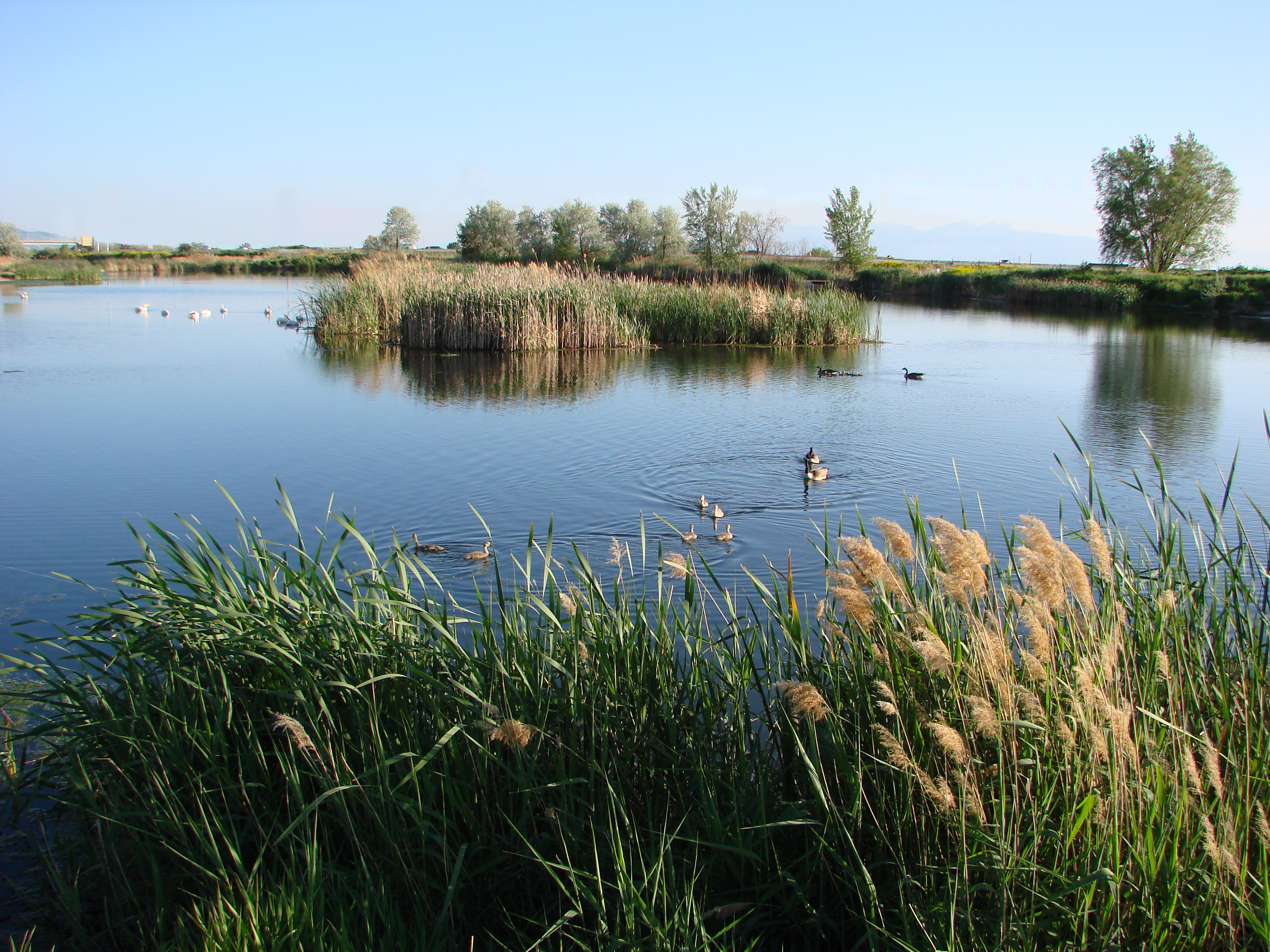
Wetlands- What’s in a name? Pond and marsh showing wetland plants with Canada geese goslings and pelicans. Photo Courtesy and Copyright Mark Larese-Casanova
Pond and marsh showing
wetland plants with
Canada geese goslings and pelicans.
Courtesy & Copyright ©
Mark Larese-Casanova

Wetlands- What’s in a name? Pickleweed growing in a salt playa is adapted to growing in saline soils. Photo Courtesy and Copyright Mark Larese-Casanova
Pickleweed growing in a salt playa
is adapted to growing in saline soils.
Courtesy & Copyright ©
Mark Larese-Casanova

Hi, this is Mark Larese-Casanova from the Utah Master Naturalist Program at Utah State University Extension.Wetlands- What’s in a name?

A wetland really is more than just ‘land that is wet’. There are certain key ingredients that need to go into a wetland for it to truly be a wetland. Of course, water needs to be present for at least part of the growing season. It can simply be in the form of temporarily saturated soils or even standing water a few feet deep.

As soil becomes saturated with water, oxygen levels are greatly reduced. Quite often, bacteria in saturated soils will create hydrogen sulfide, giving wetland soils that stinky odor of rotten eggs. As plants grow in a wetland over several years, their decaying matter helps to create a thick, dark layer of organic soil.

The presence of water in a wetland encourages the growth of hydrophytes, or ‘water-loving’ plants, that are specially adapted to living in wet environments. Many wetland plants have open spaces within the leaves and stems- often referred to as aerenchyma. This allows oxygen to diffuse down to the roots, sometimes creating an oxygen-rich environment in the soil around a plant. Also, many wetland plants reproduce both by floating or wind-dispersed seeds and by rhizomes, which are underground roots that can travel great distances. Some plants that grow in salty wetlands around the Great Salt Lake are able to control the salt in their tissues by depositing it on the outside of the leaf or containing it in chambers within their cells.

Like plants, specially adapted animals also call wetlands their home. Mammals and birds have oily fur or feathers that allow them to swim in cold water without losing much body heat. They also often have webbed feet to aid in swimming. Other animals, such as fish, amphibians, and insects, have gills to breathe in water.

Despite being the second driest state in the country, Utah has a high diversity of wetlands. Vast marshes surround the Great Salt Lake, providing habitat to enormous populations of migratory birds. Less obvious wet meadows provide unique habitat to butterflies and other insects. Salty playas, which are shallow basins with no outlet, are found throughout the West Desert, creating unique ecosystems of highly adapted plants. Riparian wetlands can grow along the edges of rivers, providing a unique transition between the swift water and upland habitats. Southern Utah is home to some peculiar wetlands such as potholes and hanging gardens, both associated with sandstone bedrock. A hanging garden clings to the side of a moist cliff, creating a microhabitat for rare plants, such as orchids and monkeyflower. Potholes can simply be eroded basins in the sandstone where water collects in spring. A pothole is an oasis that provides water for desert wildlife and a home for fairy shrimp and spadefoot toads.

Spring is the perfect time of year to visit a wetland. The constant chorus of birds, insects and amphibians are a testament to the importance of wetlands, teeming with life in the middle of a desert.

For Wild About Utah, I’m Mark Larese-Casanova.

Credits:

Images: Courtesy & Copyright © Mark Larese-Casanova

Text:     Mark Larese-Casanova, Utah Master Naturalist Program at Utah State University Extension.
Additional Reading:

Mitsch, W.J., and J.W. Gosselink. (1993). Wetlands. Van Nostrand Rheinhold.

Tiner, R. W. (1999). Wetland Indicators: A Guide to Wetland Identification, Delineation, Classification, and Mapping. CRC Press

Utah Division of Wildlife Resources. (1995). Playas to Marshes…Where Water Meets Land. Growing WILD Newsletter. https://www.wildlife.utah.gov/education/newsletters/95spring-gw.pdf

Utah Division of Wildlife Resources. (2003). Utah’s Wonderful Wetlands Activity Guide. https://wildlife.utah.gov/education/pdf/wetlands_activity_guide.pdf
Wetlands- What’s in a name?
Ring of Fire

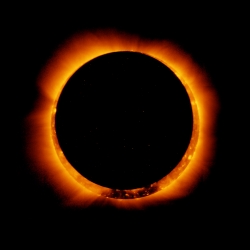
The Hinode satellite
captured this image of
an annular solar eclipse

Hinode is a Japanese mission
in partnership with NASA,
NAOJ, STFC, ESA, & NSC
Photo Courtesy NASA

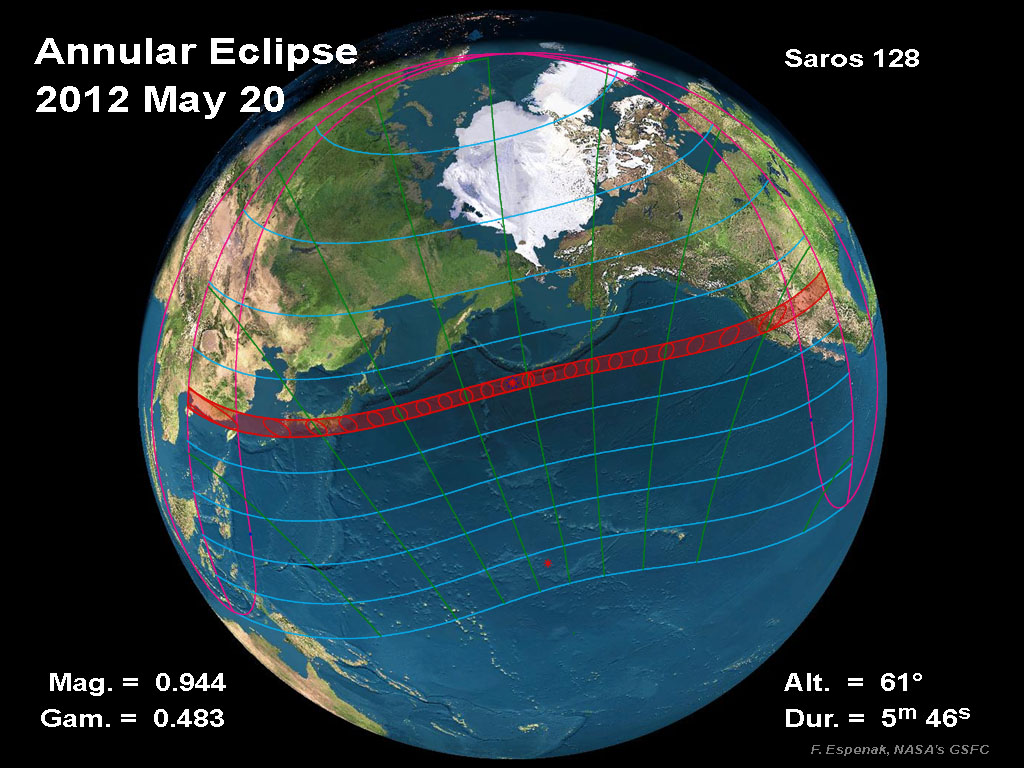
Annular eclipse path for May 20, 2012
Courtesy Fred Espenak, NASA/GSFC

Hi, I’m Holly Strand.

On Sunday afternoon and early evening, the US mainland will experience its first solar eclipse of the 21st century. And Utahns will have first row seats.

During a total eclipse, the Earth, Moon and Sun are in perfect alignment with the Moon in the middle. For the Earthlings experiencing it, the sun’s surface is totally blocked by the moon and the sky darkens. However, sometimes the Earth-Moon-Sun alignment occurs when the moon is near its greatest distance from earth. When this happens, the moon has a smaller apparent size that is not large enough to cover the entire disk of the sun. Instead, a fiery ring of sunlight remains visible around the lunar edge. This is called an annular eclipse from the Latin word “annulus” meaning ring. And this is what some Utahns will see on Sunday.

To experience a total or annular eclipse you must be located within the eclipse path which is defined by the eclipsing moon’s shadow. The path of this Sunday’s eclipse is a 150-180 mile wide swath that begins near Hainan Island in southern China at sunrise on May 21. The center line of the eclipse path curves northeast, passing between Yokohama and Tokyo, before continuing across the Pacific. SW of the Aleutians the path traverses the International Dateline where suddenly it’s the day before- May 20. Then the path curves south and eastward striking the United States near the border of California and Oregon. Arching down through Nevada and Utah the path slices through the southwest before disappearing with the sunset in Texas.

The eclipse path encompasses the entire SW corner of Utah. Visitors to Zion, Bryce Canyon, Cedar Breaks and Lake Powell will experience full annularity. As will the inhabitants of St George, Milford, Kanab, Cedar City, Escalante and many other southern Utah towns. Don’t despair if you are outside the full eclipse path. Anywhere in Utah, you will still experience a very impressive partial eclipse.

Even though an eclipse is an amazing sight, it is not for human eyes! Most eclipse-burned retinas belong to children or young adults so be vigilant with young ones around. The common way to experience an eclipse is with a pinhole viewer with two pieces of stiff white cards. Punch a hole in one of the cards and– with your back to the Sun–hold the card up so that light falls through the hole, projecting the eclipsed sun’s image on to the other card. Do not look at the Sun through the pinhole!

If you have some shade trees, look at the images of eclipsed sun coming through the holes formed by the leaves. You may see little rings of light in the shadows. If the leaves have little bug holes, they will also act as pinhole projectors.

If for some reason you miss this Sunday’s show, you don’t have to wait long for another…in astronomical time anyway. For on August 21st 2017, North America will experience a total solar eclipse. The path will be just to the north of Utah in central Idaho and Wyoming. Total eclipses can draw a huge number of visitors from around the country and abroad. If you think Jackson hotels are expensive now just wait ‘til 2017!

For pictures, maps of the eclipse path and advice on viewing go to www.wildaboututah.org

Special thanks to Michelle Larson, astrophysicist at Utah State University, for her help with this Wild About Utah episode.

For Wild About Utah, I’m Holly Strand.

Credits:
Images: Courtesy NASA https://www.nasa.gov
Text: Holly Strand

Sources & Additional Reading


Fred Espenak’s Eclipse Web Site:
https://eclipse.gsfc.nasa.gov/eclipse.html

Interactive path of annularity or eclipse path of the May 20th eclipse.
https://eclipse.gsfc.nasa.gov/SEgoogle/SEgoogle2001/SE2012May20Agoogle.html

Map of May 20 eclipse path in Utah
https://home.cc.umanitoba.ca/~jander/ase2012/US3.png
See also the home page: https://home.cc.umanitoba.ca/~jander/

Enter a geographic location to find out about past and future eclipses: https://eclipse.gsfc.nasa.gov/JSEX/JSEX-NA.html

How to view:
https://earthsky.org/space/view-may-20-annular-eclipse-and-june-5-transit-of-venus-safely

The smell of rain

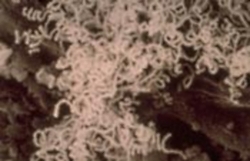
Electron micrograph showing
the filamentous structure of
actinomycetes
Photo Courtesy:
Soil Science Society of America

Spring is my favorite season. I love watching our landscape turn from brown to green, the first butterfly sighting, and the rain. During a recent April shower, I stepped outside and inhaled that magical springtime scent – the smell of rain. Which got me thinking – what is that smell, anyway?

What seems like a simple question, begs a complicated answer. That smell, however, does have a name – petrichor – and there are many things that contribute to its scent. One of the biggest culprits may actually be soil bacteria – mostly from the genus actinomycetes – which grow in unfathomable concentrations in soils all around the world. These bacteria play an important role in decomposition and soil health. Periods of relative dryness trigger their reproductive cycle, causing the production of spores, which are considerably more drought-tolerant. When rain finally does fall, the spores are launched into the air, where they may eventually reach our nose. Scientists have identified the chemical compound responsible for the spore’s odor and have named it geosmin, which literally translates to ‘earth smell.’

Humans noses are particularly sensitive to geosmin, but we’re not the only ones. Camels, too, are sensitive to its smell and some scientists believe this helps them find oases in the desert. Our ability to detect this odor might be a throwback to our nomadic ancestors for whom finding water in a vast landscape was of utmost importance.

But the scent trail doesn’t end with geosmin. The chemical compound ozone may also be a part of petrichor especially after a thunderstorm, as ozone is produced by lightning. Another aroma is provided by chemicals called volatile oils which are produced by all plants, and which collect on the ground during dry periods. With rain, they evaporate into the air, contributing to the musty, earthy odor. Acidic rain has also been shown to create scents by reacting with chemicals on the ground such as spilled gasoline. And further complicating the matter is the fact that rain hitting the earth throws dust and other particles from countless sources into the air.

If all of these smells are around us all the time, why is it that they are distinctly associated with rain? The answer lies in the properties of odors and how they travel. Everything that produces a scent is releasing chemical compounds into the air. The ability to evaporate – or volatility – of these compounds increases with the heat and moisture levels of the air around them. The humid air that produces rain creates ideal conditions for conveying scents to our noses.

In the end, it’s not the rain itself that causes odor, but the interaction of water and a number of chemical and organic compounds. Test this theory at home by throwing a bucket of water on the lawn or a hot driveway to see if you can recreate the smell of rain. Likewise, smell a stick, leaf, or rock when it is dry, then wet it and see how the odor changes. For those seeking answers to the origins of the smell of rain, it’s often best to follow your nose.

Thank you to the Rocky Mountain Power Foundation for supporting the research and development of this topic.

For the Stokes Nature Center and Wild About Utah, this is Andrea Liberatore.

Credits:
Images: Photo Courtesy Soil Science Society of America
Text:     Andrea Liberatore, Stokes Nature Center in Logan Canyon.
Special thanks to Joel Martin from the Utah Climate Center
Additional Reading:

National Public Radio (2007) The Sweet Smell of Rain. All Things Considered, August 11 2007. Interview of Dr. Charles Wysocki by Debbie Elliott. Transcript available online at: https://www.npr.org/templates/story/story.php?storyId=12716163

Gerritsen, V.B. (2003) The Earth’s Perfume. Protein Spotlight, Issue 35. Accessible online at: https://web.expasy.org/spotlight/back_issues/035/

Gerber, N.N, and Lechevalier, H. A., (1965) Geosmin, an Earthy-Smelling Substance Isolated from Actinomycetes. Applied Microbiology. 13,6. Accessible online at:
https://www.ncbi.nlm.nih.gov/pmc/articles/PMC1058374/pdf/applmicro00362-0105.pdf

Live Worldwide Network for Lightning and Thunderstorms in Real Time, Blitzortung, https://en.blitzortung.org/live_lightning_maps.php?map=30

Songs of the Western Meadowlark, Poorwill and Canyon Wren

Songs of the Western Meadowlark, Poorwill and Canyon Wren: Western Meadowlark. Courtesy US FWS https://images.fws.gov. John and Karen Hollingsworth, Photographers
Western Meadowlark
Sturnella neglecta
Courtesy US FWS
John & Karen Hollingsworth,
Photographers, images.fws.gov

Common Poorwill. Courtesy Dominic Sherony, Photographer, Licensed under CCA-Noncommercial 3.0 Unported Common Poorwill
Phalaenoptilus nuttallii
Dominic Sherony, Photographer
formerly linked to: https://www.birdphotos.com/photos/index.php?q=gallery&g2_itemId=85245
Licensed under
CCA-Noncommercial 3.0 Unported

Canyon Wren, Catherpes mexicanus, Courtesy & Copyright © 2007,Lou Giddings, Photographer Canyon Wren
Catherpes mexicanus
Courtesy & Copyright © 2007,
Lou Giddings, Photographer
UtahBirds.org

Everyone recognizes bird-watchers by their binoculars. Bird-listening, on the other hand, takes nothing more than your ears, and attention to Nature’s sounds. Listening for bird songs may require your concentration at first, but soon it becomes second nature. Some common birds of Utah are more easily found and known by their song than their appearance.

The Canyon Wren is one of my favorites. This tiny cinnamon-brown bird weighs little more than a marshmallow, but it belts out a cascading song big enough to reverberate off the rocky cliffs and slopes that are its home.

[Kevin Colver recording: Birds of the South West Canyon Country, https://wildstore.wildsanctuary.com/collections/special-collections]

You may not see the canyon wren, but try conversing with it by whistling its song in reply. Listen year-round for its song throughout Utah and our neighboring states, particularly in canyons with rocky walls.

Nocturnal birds are seldom seen but commonly heard. Owls are an obvious example, but so is the

Common Poorwill, a migrant whose call is diagnostic throughout Utah.

[Kevin Colver recording: Birds of the Rocky Mountain Foothills, https://wildstore.wildsanctuary.com/collections/special-collections]

Poorwills are camouflaged ground-nesters. On summer evenings, though, you may occasionally see them settled on pavement, their eyes reflecting headlight beams, looking like glowing coals.

Bird song can help distinguish between related bird species too. On the eastern Great Plains, both Eastern and Western Meadowlarks co-occur. The plumage of these two starling-sized species is nearly identical, but their songs differ dramatically. The eastern species sings but a few clear notes, but our western meadowlark sings a beautiful musical warble.

[Kevin Colver recording: Birds of the South West Canyon Country, https://wildstore.wildsanctuary.com/collections/special-collections]

Meadowlarks reside here year-round, typically in grassy areas, pastures and foothills. Their backs are brown, but the male’s chest is a brilliant lemon yellow. Males are frequently seen singing their cheerful song atop a fence post. And that is another reason for listening to birds, for the sheer pleasure of their song.

This is Linda Kervin for Bridgerland Audubon Society.

Credits:

Graphics: Courtesy US FWS images.fws.gov
Recordings: Kevin Colver, https://wildstore.wildsanctuary.com/collections/special-collections
Text: Jim Cane, Bridgerland Audubon Society
Voice: Linda Kervin, Bridgerland Audubon Society

Additional Reading:

Western Meadowlark, UtahBirds.org, Utah County Birders, http://www.utahbirds.org/birdsofutah/ProfilesS-Z/WesternMeadowlark.htm

Common Poorwill, UtahBirds.org, Utah County Birders, http://www.utahbirds.org/birdsofutah/Profiles/CommonPoorwill.htm

Canyon Wren, UtahBirds.org, Utah County Birders, http://www.utahbirds.org/birdsofutah/Profiles/CanyonWren.htm

Western Meadowlark, All About Birds, Cornell Lab of Ornithology, https://www.allaboutbirds.org/guide/Western_Meadowlark

Common Poorwill, All About Birds, Cornell Lab of Ornithology, https://www.allaboutbirds.org/guide/Common_Poorwill/overview

Canyon Wren, All About Birds, Cornell Lab of Ornithology, https://www.allaboutbirds.org/guide/Canyon_Wren