From Flood to Fire, Utah’s evolving role in mending rangelands

From Flood to Fire, Utah’s evolving role in mending rangelands: Click for a larger view of , Utah.  Courtesy and Copyright 2012 Jim Cane, Photographer
Blue flowers of wild flax
years after seeding
of Devil’s Playground.
Courtesy & Copyright 2012
Jim Cane, Photographer

From Flood to Fire, Utah’s evolving role in mending rangelands: Click for a larger view of Native grasses established two years after seeding Scooby Fire., Utah.  Courtesy and Copyright 2012 Jim Cane, PhotographerNative grasses established
two years after
seeding Scooby Fire.
Courtesy & Copyright 2012
Jim Cane, Photographer
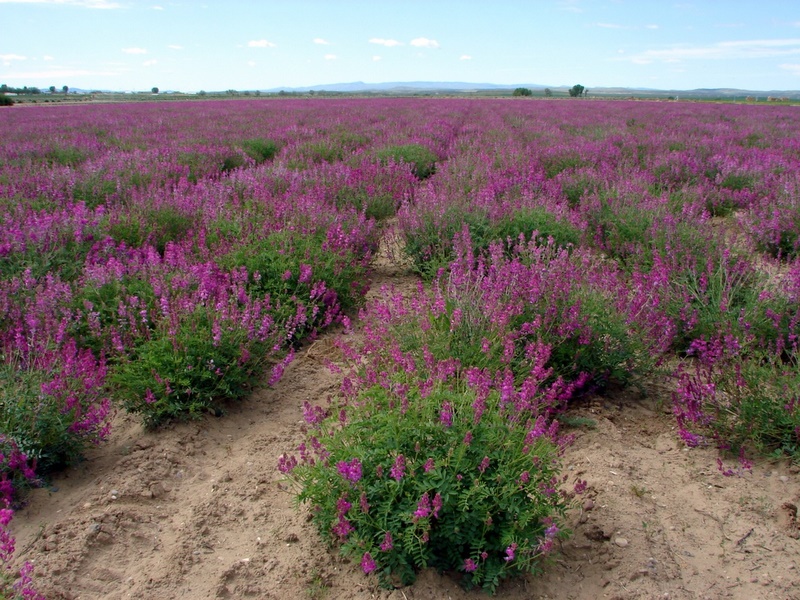
From Flood to Fire, Utah’s evolving role in mending rangelands: Click for a larger view of , Utah.  Courtesy and Copyright 2012 Jim Cane, PhotographerNative sweetvetch farmed
for seed production.
Courtesy & Copyright 2012
Jim Cane, Photographer

Restoring degraded plant communities has a long history on Utah’s public lands. The problem began with the transcontinental railroad, which enabled transport of livestock from Western rangelands to Eastern cities. By the late 1800s, vast flocks of ravenous sheep roved Utah’s unregulated wildlands. Montane summer pastures were stripped bare, so snow melt and summer rainfall washed across the ground unchecked, carving deep gullies. Downstream settlements, such as Logan and Manti, incurred ruinous floods and mud flows. Teddy Roosevelt responded to local pleas for federal control by designating our first national forests in Utah.

Soon thereafter, the fledgling Forest Service created the Great Basin Research Station east of Ephraim Utah. It was charged with discovering the cause of the floods. Within two years, large grazing exclosures were built in nearby mountain meadows by the Agency’s first range ecologist, Arthur Sampson. His research quickly linked overgrazing with denuded meadows, eroding soil and the floods. By 1914, Sampson advocated for rest rotational grazing. To then restore the impacted plant communities, there followed a landmark program at the Station to evaluate plants that could revegetate the degraded watersheds, and later, restore big-game winter range. Led by Perry Plummer, the Station evaluated the performance of 1000 species of shrubs, grasses and wildflowers, some tested in most of Utah’s plant communities. Methods to better collect, store, plant and germinate seeds underpinned the restoration of plant communities that, along with the 1934 Taylor Grazing Act, ended Utah’s frequent canyon floods.

That public research continues with the Great Basin Native Seed Selection and Increase Project. Today’s goal is to restore plant communities after rangeland fire, stalling and eventually reversing the invasion of flammable exotic grasses and weeds in the Intermountain West. Dedicated warehouses in Ephraim, Ely and Boise can store up to 3 million pounds of seed, a testimony to further progress in farming and collecting desirable seed. The seed is spread by aircraft over rocky places, while on gentler slopes, versatile rangeland seeders can place each kind of seed at the right depth, from tiny sagebrush to big grass seeds, all in a single pass over uneven ground. For every planting that takes hold, another weedy legacy of hundred-year-old overgrazing is finally repaired.

This is Linda Kervin for Bridgerland Audubon Society.

Credits:

Images: Courtesy & Copyright Jim Cane
Text: Jim Cane, Bridgerland Audubon Society

Additional Reading:

https://wildfiretoday.com/page/2/

https://www.fs.fed.us/rm/boise/research/shrub/greatbasin.shtml

https://www.fs.fed.us/rm/boise/research/shrub/projects/plant_guides.html

Reseeding the West After Fire

Reseeding the West After Fire
Soil bared by fire with
furrows left by new seeding.
Devil’s Playground Fire, Box Elder Co.
Courtesy & Copyright 2012
Nancy Shaw, Photographer

Reseeding the West After FireBlue flowers of wild flax
years after seeding
of Devil’s Playground.
Courtesy & Copyright 2012
Jim Cane, Photographer

Reseeding the West After FireSeed being planted after fire
using a rangeland drill.
Scooby Fire, Box Elder Co.
Courtesy & Copyright 2012
Nancy Shaw, Photographer

Reseeding the West After FireNative grasses established
two years after
seeding Scooby Fire.
Courtesy & Copyright 2012
Jim Cane, Photographer

Native sweetvetch farmed
for seed production.
Courtesy & Copyright 2012
Jim Cane, Photographer

Palmer penstemon farmed
for seed production.
Courtesy & Copyright 2012
Bob Hammon, Photographer

More than 7 million acres burned this summer across the western United States. It’s the biggest fire year since 2007. In Utah, wildfires blazed across 450,000 acres, as much land as the urbanized Wasatch front. Most of these fires scorched basin and foothill habitats dominated by sagebrush or juniper forests. After a year or two, the blackened land will turn green. But shrubs and trees in these basin habitats are frequently killed by fire. Where these native plant communities naturally recover, it’s because perennial wildflowers and grasses resprout, and, like the shrubs, germinate their seeds. However, overgrazing a century ago impoverished many western rangelands. Aggressive weeds from Europe and Asia could then invade, such as tumblemustard, Russian thistle, and red brome or cheatgrass. These weeds outcompete our natives, multiplying with each fire cycle to eventually carpet the landscape.

To stem this tide of weed invasion after fire, land managers assist plant community recovery by planting mixtures of shrub, grass and wildflower seed. The shrub seed is mostly native, harvested from the wild by private seed collectors. The tiny seeds of several kinds of sagebrush prevail, often mixed with fourwing saltbush, shadscale, or bitterbrush.

The grasses are largely farmed by specialty growers. In past decades, these were mostly tough, competitive grasses from the Asian steppe, notably crested and tall wheatgrasses, and Russian wildrye. These practical, affordable grasses stand up to cheatgrass, but they also impede the return of the native flora. Today, half the grass seed applied after Great Basin fires includes natives, such as Sandberg bluegrass, squirreltail, Indian ricegrass, and bluebunch wheatgrass.

Use of wildflower seed has lagged. It’s challenging to farm yet costly to wild harvest. Today, a handful of innovative farmers are growing native wildflowers for seed, such as yarrow, Lewis flax, sweetvetch, two prairie-clovers, a milkvetch, and several penstemons. How much seed is needed? After the big fire year of 2007, four thousand tons of shrub, grass and wildflower seed were planted in the American West!

This is Linda Kervin for Bridgerland Audubon Society.

Credits:

Images: Courtesy & Copyright Nancy Shaw
            Courtesy & Copyright Bob Hammon and
            Courtesy & Copyright Jim Cane
Text: Jim Cane, Bridgerland Audubon Society

Additional Reading:

https://wildfiretoday.com/page/2/

https://www.fs.fed.us/rm/boise/research
/shrub/greatbasin.shtml

https://www.fs.fed.us/rm/boise/research/shrub
/projects/plant_guides.html

Forero, Leslie, Plants Surviving Cheatgrass Invasion May Improve Restoration Chances, Study Shows, UPR Utah Public Radio, Feb 26, 2018 https://www.upr.org/post/plants-surviving-cheatgrass-invasion-may-improve-restoration-chances-study-shows

Mule Deer

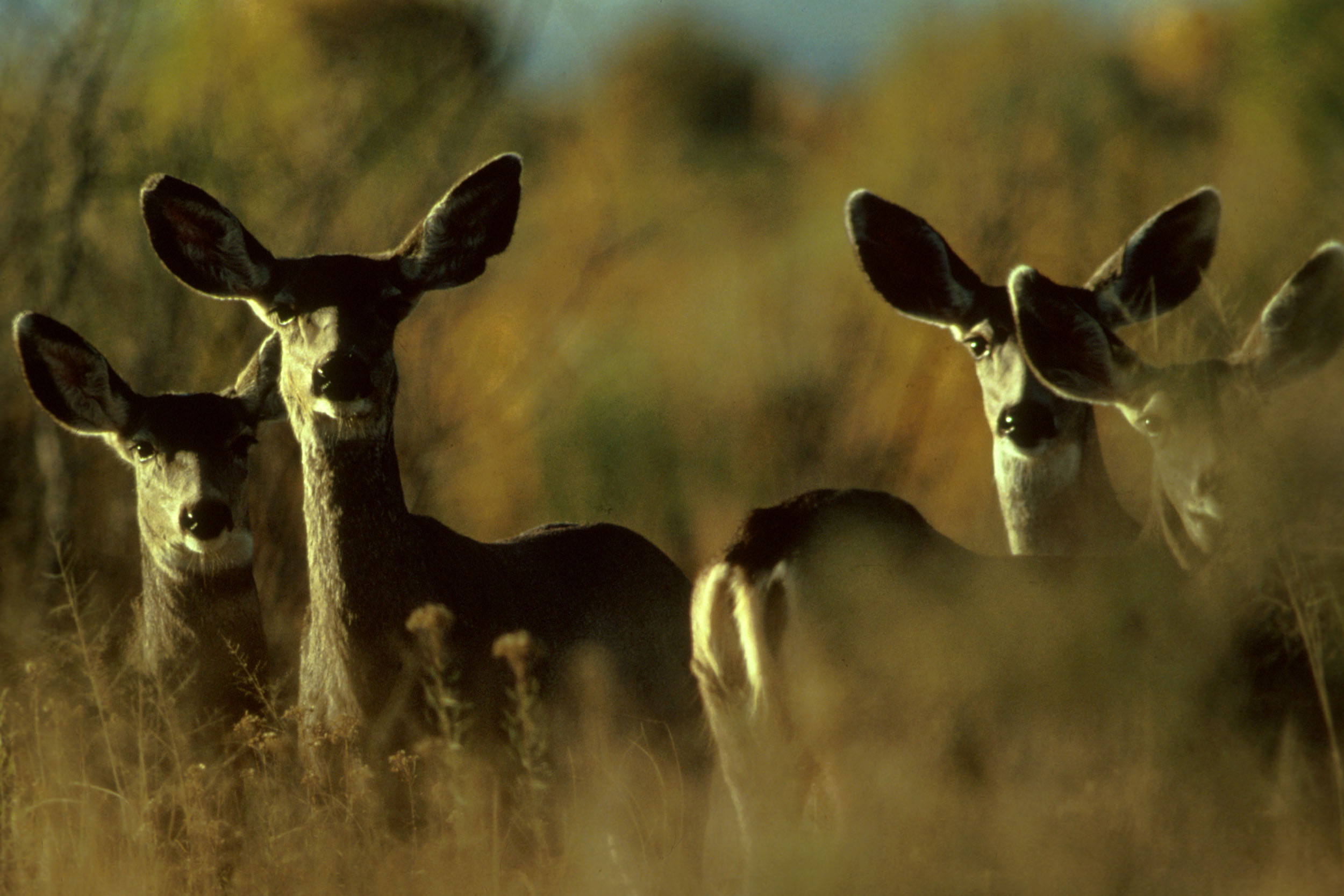
Mule Deer Herd
Odocoileus hemionus
Photo Courtesy US FWS

Mule Deer Herd
Odocoileus hemionus
Photo Courtesy US FWS
Gary Zahm, Photographer

Mule Deer Herd
Odocoileus hemionus
Photo Courtesy US FWS
David Heffernan, Photographer

Hi, this is Mark Larese-Casanova from the Utah Master Naturalist Program at Utah State University Extension.

It’s that time of year again, the leaves have fallen from the trees, the snowy holidays are on their way, and love is in the air for one of Utah’s vital wildlife species. Odocoileus hemionus, commonly known as Mule Deer are the smallest members of the Cervid family in Utah, after moose and elk. Their name is derived from their large ears which resemble those of a mule.

Mule deer have a coat that ranges from dark grey, to a lighter tan color, a white rump patch, and tail with a black tip.

In the months of November and December Mule deer are active in their breeding season known as the rut. During the summer and early fall males will typically live away from does and fawns, and begin to “play” fight with other males to establish a hierarchy of dominance. Once the rut begins males will seek out does, and become more aggressive and compete with one another for females to breed with. The less dominant males are usually aware of their status, and will be chased away by larger bucks. However males that are similar in size will posture to one another, lock antlers and fight to establish breeding rights with the doe.

Mule deer are not monogamous in nature. Males will breed with any female that will accept them. Does can also breed with multiple bucks, providing the possibility of multiple births from different fathers. The receptive period for does is known as estrus, and typically lasts for less than a day, and sometimes only a few hours. If the first estrus cycle is missed does can go through another cycle in about four weeks. When the rut comes to an end, bucks will return to being solitary until they shed their antlers in late winter.

In Utah, does typically give birth in June and will leave the herd to be alone. The older does commonly have twins, while younger does have only one fawn. After the fawns are born the cycle of life starts again.

For Wild About Utah, I’m Mark Larese-Casanova.

Credits:

Images: Courtesy US FWS, Gary Zahn and David Heffernan, Photographers
Text:     Mary Jackson, Justin Hicken, Utah State University

Additional Reading:

LEARN MORE, Find out more about mule deer and what the DWR is doing to help them, Utah Division of Wildlife Resources, Department of Natural Resources, State of Utah, https://wildlife.utah.gov/16-wildlife.html?start=14

Ongoing Efforts to Help Utah’s Deer Herds, Utah Division of Wildlife Resources, Department of Natural Resources, State of Utah, https://wildlife.utah.gov/md-help.html

Mule Deer Statewide Management Plan, Utah Division of Wildlife Resources, Department of Natural Resources, State of Utah, https://wildlife.utah.gov/pdf/bg/mule_deer_plan.pdf

Mule Deer, Utah Species, Utah Division of Wildlife Resources, Department of Natural Resources, State of Utah, https://fieldguide.wildlife.utah.gov/?species=odocoileus%20hemionus

Blue, Blue, My World is Blue…

Blue, Blue, My World is Blue…Indigo Bunting
Passerina cyanea
Courtesy US FWS
Steve Maslowski, Photographer

Spring Azure(Male)
Celastrina ladon
Courtesy Wikimedia,
D. Gordon E. Robertson, Photographer
Licensed under Creative Commons
Attribution-Share Alike 3.0 Unported

Holly: Hi, I’m Holly Strand.

If I were to ask you what your favorite color is, odds are your answer would be blue. All around the world most people prefer blue over any other color.

Maybe this is because blue is quite unusual in nature. We rarely see blue in animals or plants. Animals are brown, ruddy or grayish—sometimes white or black makes an appearance. Plants are green, brown, red and yellow. So the blue exceptions really stand out.

There are two main ways to be blue. The first way is thorough pigmentation. Pigments are chemical substances that selectively absorb light. We see color based on the light wavelengths that are not absorbed but reflected. For it is these reflected wavelengths that hit our eyes.

Blue flowers are the result of anthocyanin pigments. These pigments usually reflect red or purple, but in Uinta’s Alpine Forget-me-nots they create a pure sky blue that will stop you in your tracks.

The other way to be blue is through a physical rather than chemical approach. A physical or structural color is produced when incoming light interacts with nanoscale biological structures on an object’s surface. In birds, different shapes and sizes of tiny air pockets and keratin in feathers can cause different shades of blue. The lazuli bunting gets its bright blue head and back via structural color. So do indigo buntings and mountain bluebirds.

Some birds change color depending upon the angle at which you look at them. This shimmering iridescence is caused by a more complex interplay of light and feather structure which sends light bouncing off into different directions. Some of the light waves coincide to intensify color; nd others crash and cancel each other out. In Utah look for iridescent blue on the head and back of the tree swallow and on the black-billed magpie’s wing and tail.

Iridescence is quite common in insects—think of colorful beetle and butterfly wings . The dazzling morpho is the most striking example of an iridescent blue. While we don’t have morphos in Utah, we do have several species of butterfly in a subfamily group of the gossamer winged butterflies. This group is appropriately called “ the blues.”

By now Utah’s blue creatures have mostly expired or flown south. However, you can still get your blue color fix. Just look up! Utah’s sky is a deep and satisfying blue due to our aridity and high elevation.

For Wild About Utah, I’m Holly Strand.

Credits:

Image: Courtesy and Copyright 2003 Michael Kuhns, Extension.usu.edu
Text: Holly Strand

Sources & Additional Reading:

Color
Angier, Natalie. True Blue Stands Out in an Earthy Crowd. NY Times. Oct 22, 2012
https://www.nytimes.com/2012/10/23/science/with-new-findings-scientists-are-captivated-by-the-color-blue.html?emc=eta1

Fields, Helen. Why Are Some Feathers Blue? https://www.smithsonianmag.com/science-nature/Why-Are-Some-Feathers-Blue.html [accessed November 15, 2012]

Murphy, Pat, and Paul Doherty. 1996. The Color of Nature: An Exploratorium Book San Francisco: Chronicle Books

WebExhibits. Causes of Color. https://www.webexhibits.org/causesofcolor/15A.htm l [accessed November 15, 2012]

Color Preference
Grieve, K.W. (1991), “Traditional Beliefs and Colour Perception,” Perceptual and Motor Skills, 72 (4], 1319-23.

Krishna, K.P. (1972), “Colour Preferences as a Function of Age and
Sex,” Journal of the Indian Academy of Applied Psychology, 9 (1), 10-13.

Madden, Thomas, Kelly Hewett, and Martin S. Roth. 2000. Managing Images in Different Cultures:
A Cross-National Study of Color Meanings and Preferences. Journal of International Marketing. Vol. 8. No 4 pp. 90-107