
Why is it Colder at Higher Elevations?

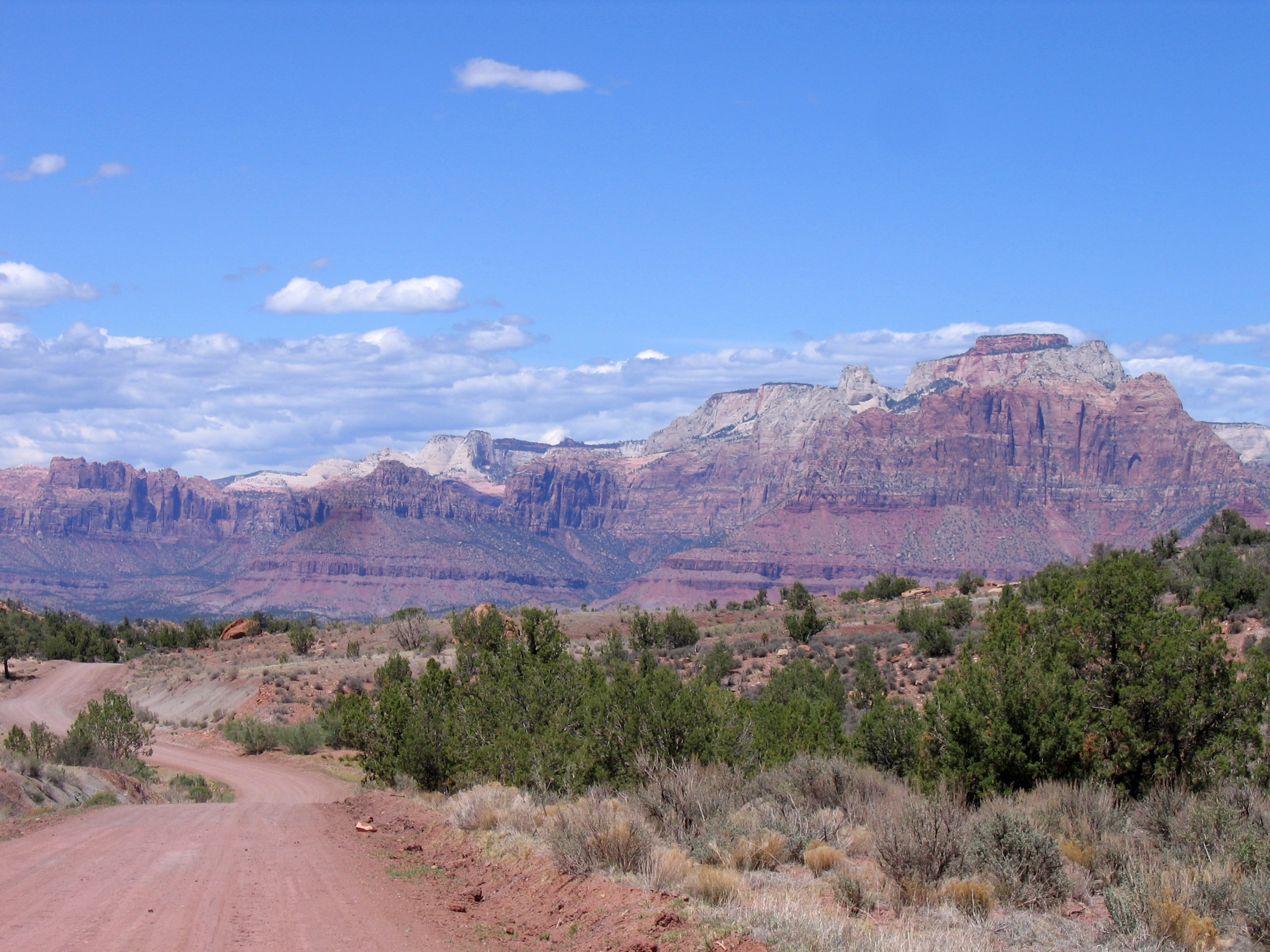
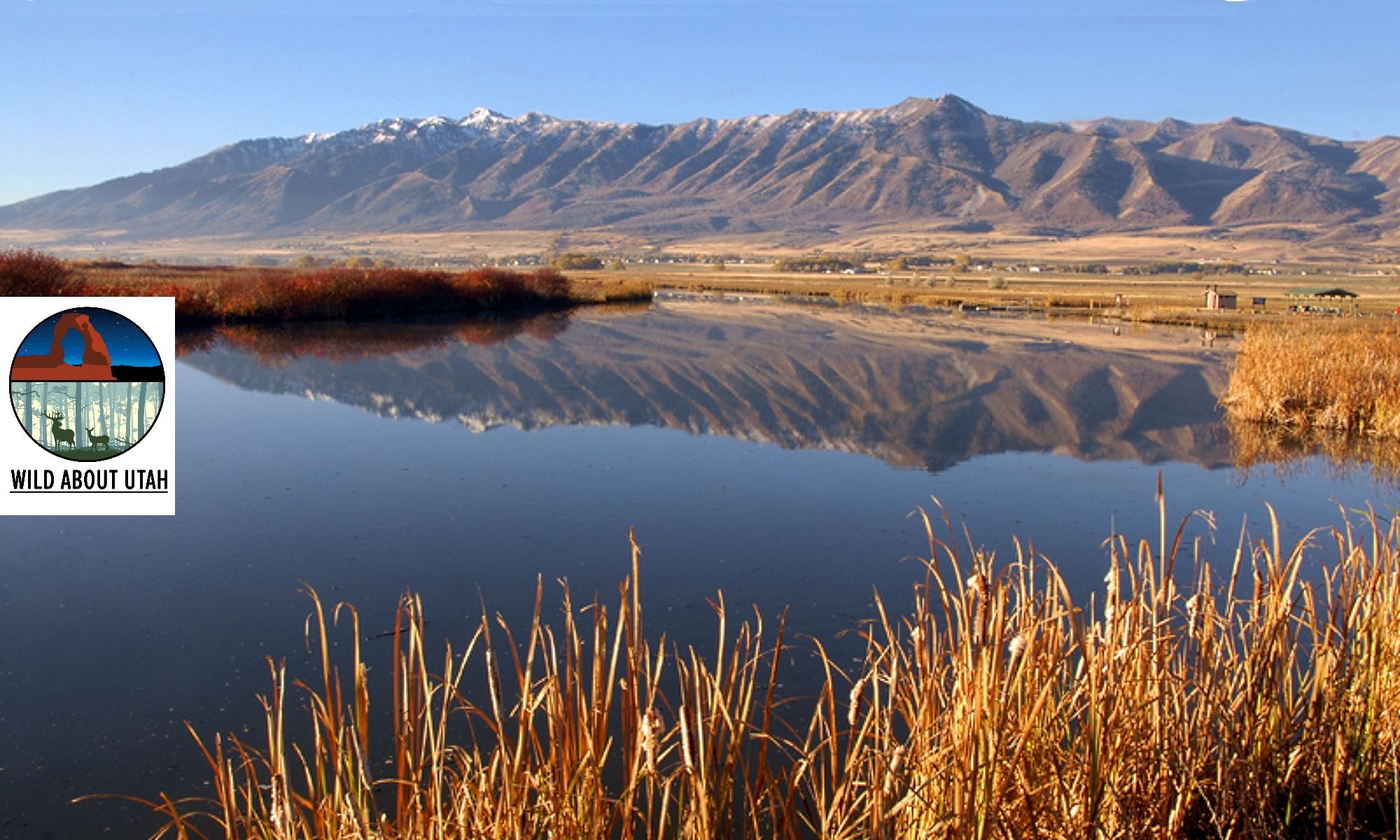
The age old question: Why is it Colder at Higher Elevations? Click to view a larger photograph of view from the Nebo Loop, Photo Courtesy and Copyright Lyle Bingham
It is cooler at higher altitudes
Looking Southeast from the Nebo Loop
Photo Courtesy & Copyright 2011
Lyle Bingham

Hi, this is Mark Larese-Casanova from the Utah Master Naturalist Program at Utah State University Extension.

If the old saying that “hot air rises” is true, then why is it colder at the top of a mountain? Let’s think about it in terms inflating a bicycle tire. If we were to use a bicycle pump, it would compress the surrounding air to a greater pressure as the tire is inflated. This causes air molecules to collide at a greater rate, releasing energy in the form of heat. As a result, the bicycle pump would feel warmer to the touch.

Alternatively, if a CO2 cartridge is used to inflate the tire, compressed air is released, resulting in a cooling effect as molecules rapidly move farther apart. On a warm day, the CO2 cartridge will feel cold to the touch, even frosty. So, the greater the air pressure, the warmer the temperature.

The air around us doesn’t feel like it weighs much, but it’s obvious that it has some mass whenever a helium balloon is released. The balloon, filled with a gas that is lighter than the air in our atmosphere, floats up into the sky. If we think about the amount of air sitting on top of the ground at Utah’s lowest elevation of 2,178 feet above sea level at Beaver Dam Wash in the southwest corner of the state, and compare it to Utah’s highest elevation of 13,538 feet at King’s Peak, that’s an extra 11,360 feet of air! As a result, air pressure is about one and a half times as much at Beaver Dam Wash as it is at King’s Peak. With that increased pressure at lower elevations comes increased temperatures. In fact, with every thousand feet lower in elevation, average temperatures increase about 3.5 degrees Fahrenheit.

On average, annual temperatures are about 15 degrees Fahrenheit warmer in Salt Lake City than up at the Town of Alta, just ten miles up Little Cottonwood Canyon. Even early pioneers noticed this, and decided to settle along the warmer foothills of the Wasatch Mountains. To this day, most of Utah’s population along the Wasatch Front benefits from longer growing seasons and lower heating bills, while taking advantage of higher, cooler elevations for hiking on a summer day or skiing in winter.

For Wild About Utah, I’m Mark Larese-Casanova.

Credits:
Images: Courtesy and Copyright Mark Larese-Casanova
Text:     Mark Larese-Casanova

Additional Reading:

Altitude.org Air Pressure Calculator. https://www.altitude.org/air_pressure.php

If hot air rises, why is it cold in the mountains? Colorado State University Little Shop of Physics. https://littleshop.physics.colostate.edu/tenthings/ExpansionCooling.pdf

Joule-Thomson Effect. Princeton University. https://www.princeton.edu/~achaney/tmve/wiki100k/docs/Joule%E2%80%93Thomson_effect.html

Utah’s basement — Beaver Dam Wash is state’s lowest elevation. Deseret News. Sept. 3, 2006. https://www.deseretnews.com/article/645197370/Utahs-basement–Beaver-Dam-Wash-is-states-lowest-elevation.html?pg=all

Western Regional Climate Center. https://www.wrcc.dri.edu/

Til Death Do Us Part

Audio:  mp3 Listen to WildAboutUtah

Tundra Swan Pair
Cygnus columbianus
Courtesy US FWS
Tim Bowman, Photographer

Hi, I’m Holly Strand.

Each year we celebrate Valentine’s Day by expressing our love and devotion to a significant other. While humans are the only species that actually celebrate it, we aren’t the only animals who bond together as couples. Monogamy–or long term pair bonding as animal behaviorists call it–is practiced by over 90 % of birds. Along with a modest number of mammals, including wolves, beavers, voles and gibbons. Even a few fish pair up.

Monogamy may have evolved for different reasons among different groups of animals. For some, female dispersal may have played a role. If females are few and far between–as is the case with white tail ptarmigans–there is a tendency to pair up. Perhaps additional potential mates are too far away too bother. For males, monogamy can save a lot of time and energy. Monogamous males don’t have to fight over females or bother with first time courtship rituals. And by closely guarding a single female , males can protect their genetic investment.

There are advantages for females too. With a mate, you can get a little assistance around the nest or den. Male partners can help incubate eggs, guard against predators and help feed the kids. The fact that male and females are equally suited to care for chicks may explain why monogamy is so much more common among birds. The male improves his chances for reproductive success by investing in just one female’s little ones. The situation is different in mammals. Mammal males just can’t step in and help as much with gestation and lactation. So perhaps that’s why only 3% of mammal species form pair bonds.

The offspring of monogamous pairs tend to be pretty helpless at birth. Having two caregivers means that the you can take more time to mature. This long, slow development leads to larger brain sizes. Humans demonstrate this phenomenon very well as we parent our children longer than any other species on earth!

The tundra swan is Utah’s best example of monogamy in the wild. Young tundra swans date around a bit when they are young, but they eventually settle down with a single mate for life. They build and defend a nest together and raise the kids. But then they stick together the rest of the year as well. Greetings and courtship rituals such as head bobbing and dipping and ritual bathing strengthen their commitment toward each other.

You can see these beautiful swans in massive numbers twice a year when they migrate through Utah. Tens of thousands of them stop by the Great Salt Lake on their way to either the Arctic tundra or to central California.

For sources, pictures, and archives of past programs, go to www.wildaboututah.org

For Wild About Utah, I’m Holly Strand.

Credits:

Image: Courtesy US FWS, images.fws.gov
Text: Holly Strand

Sources & Additional Reading

Limpert, R. J. and S. L. Earnst. 1994. Tundra Swan (Cygnus columbianus), The Birds of North America Online (A. Poole, Ed.). Ithaca: Cornell Lab of Ornithology; Retrieved from the Birds of North America Online: https://bna.birds.cornell.edu/bna/species/089

Mocka, Douglas, and Masahiro Fujiokab. 1990. “Monogamy and long-term pair bonding in vertebrates” Trends in Ecology & Evolution. Volume 5, Issue 2, February 1990, Pages 39–43

Reichard, Ulrich and Christoph Boesch. 2003. Monogramy: mating Strategies and Partnerships in Birds, Humans and Other Mammals. Cambridge University Press.

Schultz, Susanne and Robin I.M. Dunbar. 2010. “Bondedness and sociality”
Behaviour, Volume 147, Number 7, 2010 , pp. 775-803(29).

Schultz, Susanne and Robin I.M. Dunbar. 2010. Social bonds in birds are associated with brain size and contingent on the correlated evolution of life-history and increased parental investment. Biological Journal of the Linnean Society. Volume 100, Issue 1, pages 111–123, May 2010.

Hearts

Hearts abound this time of year – gracing cards, storefronts, and of course, chocolates. And while the heart symbol bears little resemblance to the organ itself, their abundance of late has caused me to consider my own heart, beating away largely unacknowledged all these years.

In its simplest form, the heart is a pump. Its sole function is to keep the blood in your body on the move, partnering with your lungs to deliver life-giving oxygen to each and every hard-working cell, from the top of your head to the tip of your pinky toe. Most hearts have two distinct features – an atrium where blood collects on its way into the heart and a ventricle which pumps the blood back out.

But even with these shared components, not all hearts are alike. Throughout the animal kingdom, hearts take on a variety of forms. Fish, for example, have a two-chambered heart: one atrium that collects blood and one ventricle that pumps it back out. Blood journeys from the heart to the gills, where it picks up oxygen and then continues on its way, delivering its cargo to the body before making its way back.

Amphibians and reptiles, with the exception of the crocodile, have a three-chambered heart consisting of two atria and one ventricle. One atrium is designated for the oxygen-poor blood that is headed towards the lungs while the other is reserved for oxygen-rich blood coming back from the lungs and headed out into the rest of the body. In the shared ventricle, blood from both atria mix slightly, resulting in a somewhat inefficient system that nonetheless seems to meet the needs of the animals it serves.

Mammals and birds have taken the heart one evolutionary step further with the development of a four chambered heart that fully separates oxygenated and deoxygenated blood. Blood flowing in from the lungs enters the left atria and is pumped out to the body by the left ventricle, while blood returning from the body enters the right atria and is pumped to the lungs via the right ventricle. Because of this total separation, the blood leaving a mammal’s heart contains more oxygen than a reptile’s – a huge metabolic advantage that helps support our warm-blooded fast-paced lifestyle.

Two-, three- and four-chambered hearts are considered closed circulatory systems, meaning the fluid, or blood, is fully enclosed within blood vessels. Insects, on the other hand, have an open circulatory system which means that they don’t have blood vessels at all. Instead their bodies are simply full of fluid that is continually circulated with the help of multiple simple hearts that pass liquid through as they contract and relax.

Lastly, there are some organisms that don’t need hearts at all! These creatures absorb oxygen through their skin and are small or thin enough that oxygen easily diffuses to all parts of the body. Some jellyfish, for example, have a body wall only two cells thick that separates their internal body space from the water around them.

Without our comparatively complex hearts, we probably wouldn’t be able to do what we do as humans and mammals. So take a moment during this Valentine’s season to acknowledge your amazing heart. Throughout the course of your lifetime it will beat upwards of 2 billion times and will pump as much as 100 million gallons of blood through its chambers. A pretty amazing feat for something we only celebrate once a year.

For the Stokes Nature Center and Wild About Utah, this is Andrea Liberatore.

Credits:
Text:     Andrea Liberatore, Stokes Nature Center in Logan Canyon.

Additional Reading:

Campbell, N.A. (1996) Biology, Fourth Edition. Benjamin/Cummings Publishing Company, Menlo Park CA

Bailey, Regina (2013) Circulatory System: Types of Circulatory Systems. https://biology.about.com/od/organsystems/a/circulatorysystem.htm

Meyer, J.R. (2005) Insect Physiology: Circulatory System. North Carolina State University. https://www.cals.ncsu.edu/course/ent425/tutorial/circulatory.html

SNOTEL Snowpack Recording Stations

Manual Snow Measurement
Cover image from
Snow surveying by James C. Marr
USDA 1940 Publication 380
Public Domain
Courtesy UVA, Google & HathiTrust

For a modern view visit
https://www.meted.ucar.edu/afwa
/avalanche/print.htm

Removing snow surveying apparatus
from canvas carrying case
preparatory to use
From
Snow surveying by James C. Marr
USDA 1940 Publication 380
Public Domain
Courtesy UVA, Google & HathiTrust

Water is a precious resource throughout the world. Most of Utah consists of arid habitats and many users clamor for their share of the scarce moisture. Ever-growing demand challenges water managers to insure that agriculture, cities and nature all get their portion. Predicting and monitoring stream flow is imperative in order to know how much to hold in reservoirs or send downstream, and when to anticipate floods, enact water conservation measures, and in general provide for all users.

Much of Utah’s water originates in the mountain snowpack. Early in the twentieth century, the Department of Agriculture constructed a series of Snow Courses in mountainous areas of the West. Hardy personnel periodically trekked in to measure snow depth with a long ruled stick. Water content was found by taking a core sample, weighing it and subtracting out the weight of the metal tube. Stream gauging stations installed by the US Geological Survey allowed correlation of stream flows with snowpack measures.

In the 1970’s, monitoring snow courses became more automated. The reporting stations were named “SNOTEL” for snowpack telemetry. Now there are over 600 SNOTEL sites in 13 western states. The measurement functions of SNOTEL stations are elegantly simple and reliable. Air and soil temperatures are monitored with standard thermocouples. Water content of the snowpack is measured by its weight atop a broad thin bladder called a snow pillow that is filled with antifreeze. The snow pillow is carefully spread on the ground. Accumulating snow presses down on the pillow, pushing some antifreeze out a connecting tube to a pressure sensor.

Some SNOTEL sites also measure snow depth, using the autofocus technology of the digital camera. Subject distance is gauged by the time delay of an ultrasonic pulse, like sonar or hearing your voice echo back in a canyon. At a SNOTEL station, a similar sensor is placed high above the expected snow line. As snow accumulates, the downward facing sensor reports the shortening distance between it and the snow surface.

SNOTEL stations have batteries and a solar panel to power their hourly data transmissions. Ogden has one of the two master receiving stations. Want to size up mountain snowfall from the last storm or know how warmly to dress for an outing? Just go to Utah’s SNOTEL information site on the web.

Credits:

Image: Public Domain, Courtesy University of Virginia, Google and HathiTrust, Cover image from Snow surveying by James C. Marr, USDA 1940 Publication 380
Theme Music: Written by Don Anderson and performed by Leaping Lulu from their CD “High Road, Low Road”
Text: Jim Cane & Linda Kervin, Bridgerland Audubon Society https://www.bridgerlandaudubon.org
Voice: Linda Kervin, Bridgerland Audubon Society https://www.bridgerlandaudubon.org
Additional Reading:

Water Conservation Begins with Snow Surveys, USDA NRCS, https://www.wcc.nrcs.usda.gov/factpub/wc_ss.html

Snow Hydrology: SNOTEL, Randall Julander, Civil & Environmental Engineering, University of Utah, (formerly at https://www.civil.utah.edu/~cv5450/snotel/snotel.htm)

Utah Snow Survey Program, USDA NRCS, https://www.ut.nrcs.usda.gov/snow/

NRCS Snow Surveyor Collects Vital Water Data, Lives Dream Job, Spencer Miller, NRCS, Jan 10, 2013, https://www.nrcs.usda.gov/wps/portal/nrcs/detail/national/home/?cid=STELPRDB1076993

Snow Surveys and Water Supply Forecasting, National Atlas of the United States, US Department of the Interior, formerly at https://www.wcc.nrcs.usda.gov/factpub/sect_4a.html

Utah Snow Survey Program, Natural Resources Conservation Service, US Department of the Interior, https://www.nrcs.usda.gov/utah/snow-survey

Map, Utah USGS SNOTEL Stations https://www.wcc.nrcs.usda.gov/snotel/Utah/utah.html