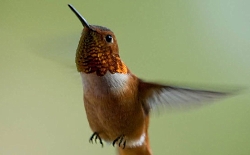
Rufous Hummingbird

Rufus Hummingbird Courtesy US FWS, Roy W, Lowe, Photographer
Rufus Hummingbird
Courtesy US FWS,
Roy W. Lowe, Photographer

Who doesn’t love hummingbirds! I’m always amazed how a tiny life form with a brain smaller than a pea is capable of such amazing intelligence and behaviors. In fact, a hummingbird’s brain is proportionally larger in size to their body than that of any other bird. And like the corvid family (jays, magpies, and crows), research has found that hummers have an amazing memory.

Now is the seasonal peak for hummingbird activity with young birds fresh off the nest. One of my favorites, the migrating rufous hummingbird, may join the milieu on their long distance marathon as they make their way from as far north as Alaska to winter in Mexico.

The feistiest hummingbird in North America, the brilliant orange male and the green-and-orange female are relentless attackers at flowers and feeders. These fearless competitors will challenge even the largest hummingbirds of the Southwest, which can be double their weight, and often win the contest! Rufous Hummingbirds are wide-ranging, and breed farther north than any other hummingbird. Look for them in spring in California, summer in the Pacific Northwest and Alaska, and now in the Rocky Mountains as they make their annual circuit of the West.

Rufous Hummers have the hummingbird gift for fast, darting flight and pinpoint maneuverability. Like other hummers, they eat insects as well as nectar, taking them from spider webs or catching them in midair.

Rufous Hummingbirds breed in open areas, yards, parks, and forests up to timberline. On migration they pass through mountain meadows as high as 12,600 feet where nectar-rich, tubular flowers are blooming. Winter habitat in Mexico includes shrubby openings and oak-pine forests at middle to high elevation.

They may take up residence (at least temporarily) in your garden if you grow hummingbird flowers or put out feeders. But beware! They may make life difficult for any other species that visit your yard. If you live on their migration route, the visiting Rufous is likely to move on after just a week or two.

Regarding feeders, make sugar water mixtures with about one cup of sugar per quart of water. Food coloring is unnecessary; table sugar is the best choice. Change the water before it grows cloudy or discolored and remember that during hot weather, sugar water ferments rapidly to produce toxic alcohol. If you are among those who have these dazzling sprites of amazing life stop by, consider yourself fortunate indeed!

This is Jack Greene reading for “Wild About Utah”

Credits:

Pictures: Courtesy US FWS, Roy W Lowe, Photographer
Text: Jack Greene, Bridgerland Audubon Society

Additional Reading:
Sphinx Moths

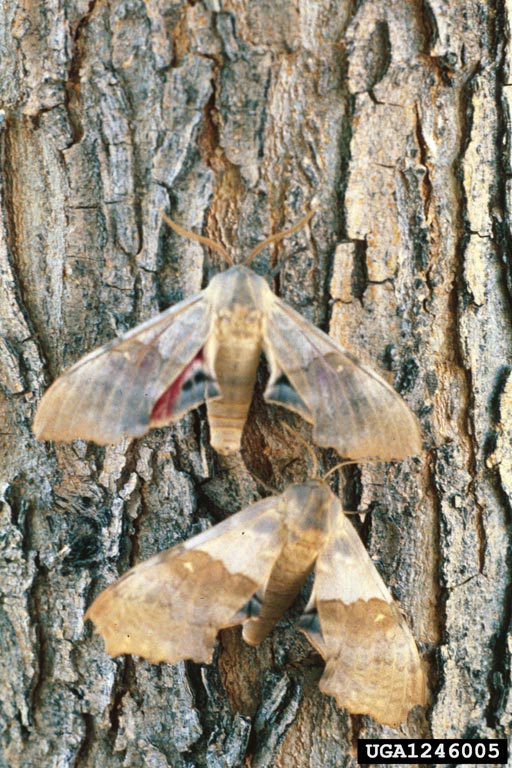
Big Poplar Sphinx
Pachysphinx occidentalis
Courtesy Whitney Cranshaw
Colorado State University
bugwood.org

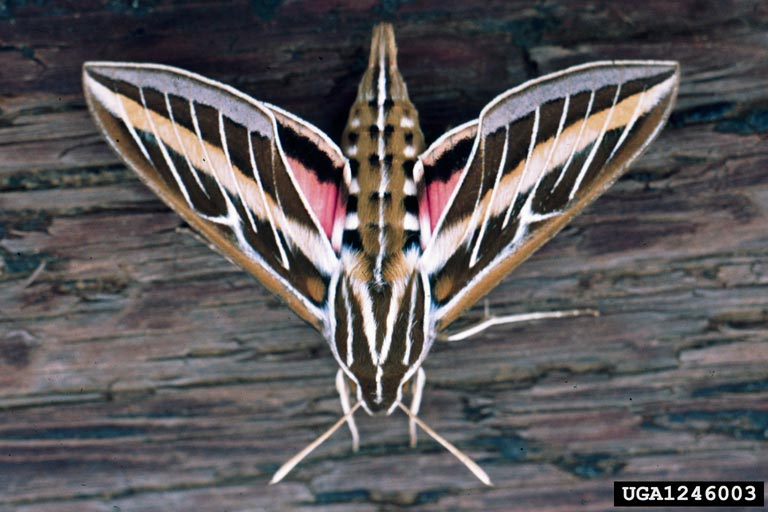
White-lined Sphinx
Hyles lineata
Courtesy Whitney Cranshaw
Colorado State University
bugwood.org

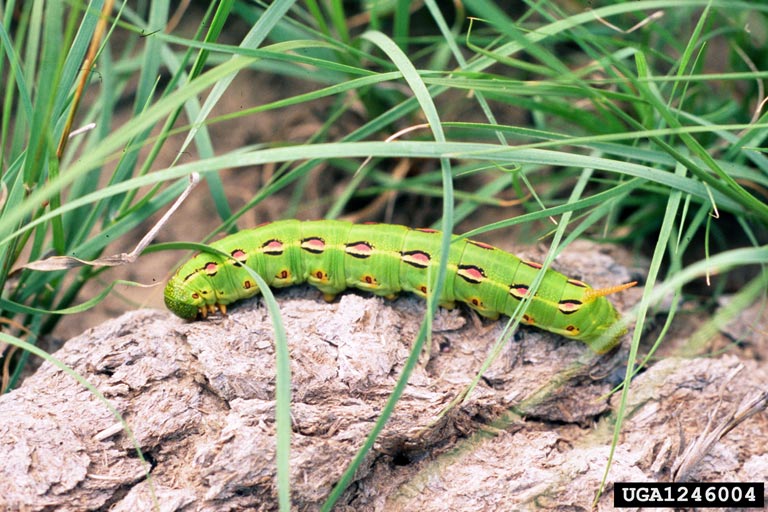
White-lined Sphinx Caterpillar
Hyles lineata
Courtesy Whitney Cranshaw
Colorado State University
bugwood.org

I vividly remember the first time I saw one – a small winged creature whirring from flower to flower in the evening light, its long tongue dipping for nectar within tube-shaped blooms. I was mesmerized, and struggled for a closer look.

If you’re thinking that I must have seen a hummingbird, you would be making a very common mistake. A mistake, in fact, that has given this critter one of its many nicknames. The winged wonder I saw that summer night was a sphinx moth, also called a hummingbird or hawk moth because of their large size and bird-like characteristics.

In all stages of their life, these insects are large. Caterpillars grow to a robust 4 inches in length and adult wingspans can measure more than 5 inches. Sphinx moths are also some of the fastest insects on earth and have been clocked flying at over 30 miles per hour. Their size, speed, and flying ability reflect those of the hummingbird so closely that they are commonly misidentified.

Sphinx moths are a beloved sight in many Utah gardens. However, they also hold a bit of a devious surprise. The larvae, or caterpillar, of one common species of sphinx moth are well known by vegetable gardeners. They are large and bright green with a distinctive horn near their hind end. Like the adults, these larvae go by many names, the most common being the tomato hornworm. Hornworm caterpillars, unlike their adult counterparts, are not beloved by gardeners. They are voracious beasts with the ability to strip the vegetation off a tomato or pepper plant in one day.

Aside from our garden plants, young hornworms of other species feed on a variety of vegetation including willow, poplar and cottonwood trees. Adult moths rely on a host of flowers such as columbine, honeysuckle, larkspur and evening primrose. Here in Utah you might come across one of a handful of different species in the sphinx moth family including the five-spotted hawk moth and the white-lined sphinx. Look for them in the late summer evenings as daylight begins to fade. But be sure to look twice to avoid mistaking them for something they’re not.

And the next time you find a hornworm on your tomatoes, maybe just relocate the little bugger so that you can enjoy it once metamorphosis changes the beast into a beauty.

For more information and pictures of our native sphinx moths, visit our website at www.wildaboututah.org. Thank you to Rocky Mountain Power Foundation for supporting the research and development of this Wild About Utah topic.

For the Stokes Nature Center and Wild About Utah, this is Andrea Liberatore.
Credits:

Photos: Courtesy Whitney Cranshaw, Colorado State University, Bugwood.org
            Images licensed under Creative Commons Attribution 3.0 License
Text:    Andrea Liberatore, Stokes Nature Center, logannature.org

Additional Reading:

Cranshaw, W.S. 2007. Hornworms and “Hummingbird” Moths. Colorado State University Fact Sheet 5.517. Found online at: https://www.ext.colostate.edu/pubs/insect/05517.pdf

Buchman, Steve. 2010. Pollinator of the Month: Hawk Moths or Sphinx Moths (Sphingidae). US Forest Service. Found online at: https://www.fs.fed.us/wildflowers/pollinators/pollinator-of-the-month/hawk_moths.shtml

Wildlife Corridors

Western Wildway Network
Copyright © Wildlands Network

Have you heard about the Yellowstone to Unita Connection or the Western Wildway Priority Wildlife Corridor and the Bear River Range Corridor? What we will talk about today is the critical importance of protecting, maintaining and creating wildlife corridors throughout Utah and the west.

Animals and yes plants and all other critters that live in ecosystems, such as birds, insects and amphibians, always suffer when their ecosystem and the ecosystems that are adjoining theirs, either through land or water corridors are fragmented and minimalized, if not lost altogether due to human activities. The ever expanding web of roads and highways, residential and commercial development, intensive agriculture, energy development and off-road vehicle trails in essence trap animals in an ever shrinking island of non-connected ecosystems. Its when species can’t move between ecosystems to mate, migrate, eat, pollinate, find new homes and resources. recycle nutrients, take refuge and more, that inbreeding can cause significant problems for flora and fauna. Sometimes even extinction.

Our politicians and agency folks, as well as developers, farmers and ranchers, businesses and everyday residents can all help to assure that we preserve, maintain and develop a network of these corridors connecting large and small ecosystems running from Canada, through the United States into Mexico.

One such large project, called the Spine of the Continent, is a geographic, social and scientific effort to sustain linkages, along the Rocky Mountains, so that plants and animals can keep moving. A local example, the Bear River mountains, located in northern Utah and southern Idaho, is a relatively narrow tract of forest land in the Uninta-Wasatch-Cache National Forest and the Caribou and Targhee National Forests. This mountain range and surrounding basin are a key component of the western United States biological corridor system. The Bear River basin corridor is a critical choke point for species migration in the western United States because it offers the only major link between the northern and the southern Rockies. Or more specifically, the link between the greater Yellowstone ecosystem and the high Unitas wilderness area.

Here’s how you can get involved:
We have dedicated organizations working on the protection, expansion and maintenance of wildlife corridors. I mentioned the Yellowstone to Unita connections. They along with the Bear River Watershed Council and others in our state are actively working on wildlife corridors. I spoke to Dr. John Carter, manager of the Yellowstone to Unitas connection about their program. They are doing great work to restore fish and wildlife habitat in the Yellowstone to Unitas corridor, through the application of science, education and advocacy. He invites you to check out their website at www.yellowstoneuintas.org.

I’m Jim Goodwin for Wild About Utah

Credits:

Image: Courtesy Wildlands Network
Text:    Jim Goodwin, co-founder of the Utah Bioneers Sustainability Conference, https://www.intermountainbioneers.org/

Additional Reading:

Yellowstone to Unitas Connection, https://www.yellowstoneuintas.org/

Western Wildway Network, Wildlands Network, https://westernwildway.org/

Wildlife Mortality Along Utah’s Highways, Utah Division of Wildlife Resources, https://www.slideshare.net/UtahDWR/wildlife-mortality-along-utahs-highways-april-2011

Pioneer Day Edible Native Plants

Mountain big sagebrush (Artemisia tridentata subsp. Vaseyana) in flower - Photo Courtesy and Copyright Dr. Leila Shultz
Mountain big sagebrush (Artemisia tridentata subsp. Vaseyana) in flower – Photo Courtesy and Copyright Dr. Leila Shultz


With Pioneer Days looming, let’s explore a bit of our local heritage.

Following several days of cold and snowy weather in early May, my friend and USU graduate student Ian Keller and I approached the Mormon Handcart outpost near Evanston Wyoming on Deseret Land & Livestock Company land. We braved the elements to deliver a seminar to 8 missionary couples on Mormon pioneer use of wild plants as they struggled toward the Promised Land of Salt Lake Valley.

Ian’s graduate work encompasses this topic. Some of what follows is from his good work combined with others later mentioned. And we must not overlook the origins of this knowledge which came from the native peoples, acquired through thousands of years of trial and error.

(I must add that following our seminar we feasted on a variety of sumptuous foods the missionaries had prepared from pioneer recipes!)

I’ll begin with a remarkable plant big sage brush or Artemisia tridentate, which was their constant companion for much of the journey.

Medicinal uses included treatment for headache, diarrhea, sore throat, vomiting and even bullet wounds. Tea made from leaves was used for hair tonic and a poultice for bee stings.

“Brighan Young advised gathering and drying it for winter medicinal purposes. From a pioneer journal- “We washed our hair in sage tea, sage tea is good to cure night sweats”. And from Phil Robinson, 1883- “Someday perhaps a fortune will be made of it, but at present its chief value seems to be as a moral discipline to the settler and as cover for the sage hen.”

Dandelions, Photo Copyright 2002 Roger Banner, Intermountain Herbarium, USU
Dandelions
Copyright © 2002 Roger Banner, Intermountain Herbarium, USU


Another plant that rarely gets its due, the common dandelion.
For Dandelion Salad- “Gather the tender young plants of the dandelion. Wash and cut up into a salad. Serve with dressing oil, or just with salt and pepper.”— Ilene Kingsbury.

And from Larry A. Sagers, USU Extension Horticulture Specialist in the Thanksgiving Point Office-
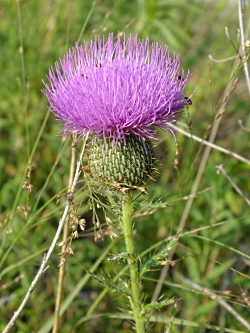
Thistles that we now curse were once highly prized by the pioneers. One early pioneer wrote, “I used to eat thistle stalks until my stomach would be as full as a cow’s.”
The young leaves of stinging nettles were also used as greens. The cooking destroyed the irritating parts that affect the skin.
Camas bulbs for which Kamas, Utah, was named, were also used for food. The bulbs were eaten or a crude molasses was made from boiling the bulbs. Unfortunately, if too many of the bulbs were consumed they could cause severe illness. The bulbs also grow in proximity with death camas, so this particular plant involves certain risks to the user.

Tall Thistle (Cirsium altissimum), Photo Courtesy NPS, Kelly Manktelow, Photographer
Tall Thistle
(Cirsium altissimum)
Aster family (Asteraceae) in flower
Photo Courtesy NPS,
Kelly Manktelow, Photographer
The pioneers also used grease wood sprouts and other plants to supplement their meager diet.
Gooseberries, strawberries, raspberries and currants grew in the mountains and were highly prized. Chokecherries were a favorite for preserves and jellies.
A recent book by Brock Cheney “Plain but Wholesome: Foodways of the Mormon Pioneers.” is a delightful book with many pioneer plant stories and recipes, as is Dr. Wesley P. Larsen’s “Field Folio of Indian and Pioneer Medicinal Plants”.

Perhaps your Pioneer Day’s activities will include preparing a recipe from one of these sources to garnish your picnic! And let us include the plants which garnished our pioneers with flavor if not survival during their epic trek!

Jack Greene, Smithfield Utah

Credits:

Pictures: Courtesy and Copyright Dr. Leila Shultz
Copyright © 2002 Roger Banner, Intermountain Herbarium, USU
Courtesy NPS,
Kelly Manktelow, Photographer
Text: Jack Greene, Bridgerland Audubon Society

Additional Reading:
Brock Cheney, Plain but Wholesome: Foodways of the Mormon Pioneers, https://www.amazon.com/Plain-but-Wholesome-Foodways-Pioneers/dp/1607812088

Wesley P. Larsen, Field Folio of Indian and Pioneer Medicinal Plants,
https://www.amazon.com/Field-Indian-Pioneer-Medicinal-Plants/dp/B007HFR7A2