Marie and Her Yellow Jacket

Western yellowjacket (Vespula pensylvanica) on a fennel flower (Foeniculum vulgare), Courtesy Wikimedia, By Davefoc - Own work, CC BY-SA 3.0, Link
Western yellowjacket (Vespula pensylvanica)
on a fennel flower (Foeniculum vulgare)
Courtesy Wikimedia, By DavefocOwn work, CC BY-SA 3.0, Link
Marie y su chaqueta Amarilla.
Today’s story is in both Spanish and English. To hear a Spanish version listen on Wednesday evening at 9pm, or online here and at UPR.org
La historia de hoy está en español e inglés. Para escuchar una versión en español, escuche el miércoles por la noche a las 9 p. m., o en línea aquí y en UPR.org

We’ve had some hot days, during which we’ve been able to enjoy rivers, lakes, and pools—but what I enjoy most during this time is walking along the trails of this beautiful valley where I live.

Cache Valley has a unique geographic shape unlike anywhere else in the world. Just a short distance from our homes, we can find natural beauty that captivates us and makes us lose track of time within stunning landscapes such as the First Dam, the Second Dam, the Wind Caves, the Stokes Nature Center Trail, Tony Grove, and Bear Lake, among others. It would take me an entire book to list every single one.
Among the many beautiful things this summer has brought are the chance to live unique experiences—like watching fireflies, feeding hummingbirds, and seeing people learn about native species from experts.

All of this reminds me that I live in a magical place, full of life—a place where everyone would want to stay forever and where time feels like it stands still.

A few leaves have started to fall, and the landscapes are turning orange, brown, and golden. That reminds me that autumn is coming and winter will soon arrive. It’s time to start preparing my little home. I’ve been working, gathering mud from the banks of the Logan River, but I still take notice of all those who take photos, who sing, and who speak words of love, joy, and hope to their loved ones—including their pets.

My family and I are almost ready to rest and hope that this winter will be as pleasant as all the previous ones, and that people will enjoy it with their walks and warm clothes—with their boards and funny shoes—and that children will be able to run and slide with their little faces red from the cold.

You might be wondering who I am, since I’ve already given you a few hints about where I live. My family and I have spent many years here, close to you, watching you pass by. Many times, I’ve startled you—and you’ve applauded me for my good performance.

There are many of us who live here. I have wonderful neighbors—like the snakes that rest near the rocks or by the riverbanks, the birds that fly each day in search of seeds, and the squirrels that gather food and run toward the trees. Do you know who I am now?

Thank you for understanding that we are important. Thank you for studying and learning about me. Thank you for giving me fancy hotels where I can live and spend time.

Although I always prefer to build my own mud house—the one that protects us from rain and snow.

It’s me, your little friend, the one who helps with pollination and eats caterpillars in your garden. I always wear a yellow jacket in case bad weather catches me away from home. Yes, that’s me—Marie, the yellow jacket wasp.

Remember that our magical place is here. We live in harmony with one another, and keeping it that way forever depends on us. Help me ensure that our place of peace and tranquility remains for generations to come.

This is Kate Hunter with Stokes Nature Center, and I’m Wild about Utah.

Credits:
English Version: Kate Hunter, Education, Stokes Nature Center https://logannature.org/staff/
Spanish Version: Carlos Ramos, Facilities, Stokes Nature Center https://logannature.org/staff/
Images: Courtesy Wikimedia Commons, Davefoc, – Own work, CC BY-SA 3.0, Link
Featured Audio: Courtesy & Copyright Anderson, Howe, & Wakeman
Text: Kate Hunter & Carlos Ramos, https://logannature.org/staff
Additional Reading: Kate Hunter, Carlos Ramos, https://logannature.org/staff & Lyle Bingham, https://bridgerlandaudubon.org/

Additional Reading

Wild About Utah Pieces by Kate Hunter https://wildaboututah.org/author/kate-hunter/
Wild About Utah Pieces by Carlos Ramos https://wildaboututah.org/author/carlos-ramos/

Western Yellowjacket drinking water, Wikimedia Commons, Katja Schulz, Author/Contributor, https://commons.wikimedia.org/wiki/File:Western_Yellowjacket_drinking_water_-_Flickr_-_treegrow.jpg
Originally posted to Flickr by treegrow at https://flickr.com/photos/86548370@N00/8137488317

Western Yellowjacket Wasp: Western Paper Wasp, Mischocyttarus flavitarsushttps://en.wikipedia.org/wiki/Mischocyttarus_flavitarsis

Yellow-legged Mud Dauber: Sceliphron caementarium, Wikimedia, https://en.wikipedia.org/wiki/Sceliphron_caementarium

Bald-faced hornet: Dolichovespula maculata, Plant Health, Extension, Utah State University, https://extension.usu.edu/planthealth/ipm/notes_nuisance/baldfaced-hornet

When Pumpkins Become Boats

Pumpkin on Center Street - Daybreak UT Courtesy & Copyright Mary Heers, Photographer
Pumpkin on Center Street – Daybreak UT
Courtesy & Copyright Mary Heers, Photographer
The Ginormous Pumpkin Regatta began in Daybreak, Utah on Oct 18 with eight 600 lb pumpkins lined up on the edge of the community’s lake. The action began at 8:30 am when a forklift driver picked up Pumpkin #1 and eased it into the water. The pumpkin slid off its pallet and floated away from the shore.

Lying in wait was a small motorboat. The woman in the front of the boat leaned way out over the bow and put her hands on the pumpkin.

“Got it!” she called. This was the cue for the man in the back of the boat to fire up the outboard motor. Together they pushed the giant pumpkin around the nearby pier and into a shallow holding area.

Here, three people in hip waders were waiting in the water. Two steadied the pumpkin while the third cut a big square hole out of the top of the pumpkin. The cut-out square was tossed aside and all three reached down into the pumpkin to pull out handfuls of seeds and stringy pulp.

This is how they turned the giant pumpkin into a boat.

By now Pumpkin #2 had been delivered, and the work continued.

It wasn’t long before the announcer called the youth racers to come forward. Three brave competitors under the age of seventeen stepped up. They each chose a pumpkin and climbed in. Someone handed each of them a kayak paddle and pointed to the start line. Just how unwieldy these boats were was immediately obvious as two veered off in opposite directions while the third turned round in circles. But with a little practice, the teens were able to get the “boats” going in a straight line –more or less.

By then some serious new competitors were beginning to gather on the pier in elaborate costumes – a long haired mermaid, an Indian with a feathered headdress, King Neptune with his trident.

The day’s Grand Finale would include all eight giant pumpkins in a hundred yard all out sprint for the golden pumpkin trophy and the title of Gourd’s Man of the Year. I didn’t get to see this race. I had to get back to Logan.

But I had gotten to see Logan’s Giant Pumpkin festival a few weeks earlier. Here, giant pumpkins lined both sides of Center Street. One by one they were brought to the stage and weighed on a giant scale. The last six all weighed over 1,000 pounds. The big winner that day weighed in at 1,917 pounds.

I went home that day with a packet of giant pumpkin seeds in my pocket. I was warned that they were hard to grow.

But why not give it a try?

This is Mary Heers and I’m Wild about all things bright and beautiful in Utah.

Pumpkin Regatta - Daybreak UT Courtesy & Copyright Mary Heers, Photographer
Pumpkin Regatta – Daybreak UT
Courtesy & Copyright Mary Heers, Photographer

Credits:

Images Courtesy & Copyright Mary Heers, Photographer
Featured Audio: Vince Guaraldi’s Great Pumpkin Waltz, Courtesy & Copyright Concord/Craft Recordings https://craftrecordings.com/
Text: Mary Heers, https://cca.usu.edu/files/awards/art-and-mary-heers-citation.pdf
Additional Reading: Lyle Bingham, https://bridgerlandaudubon.org/

Additional Reading

Wild About Utah, Mary Heers’ Postings

Ginormous Pumpkin Regatta, LiveDAYBREAK, Daybreak Master Planned Community, https://www.mydaybreak.com/live_news_detail_T16_R550

Upcoming Events, Utah Giant Pumpkin Growers, https://www.utahpumpkingrowers.com/events.html

How Giant Pumpkins Grow so Big, The Associated Press, https://youtu.be/gRUNB3YA2FI Duration: 2:19 minutes

Winter Birds

Red Crossbill, Courtesy US FWS, David Menke, Photographer
Red Crossbill
Courtesy US FWS
David Menke, Photographer
Fall bird migration is well underway! Our winter residents and migrating dropins are now beginning to populate our feeders and lower landscapes. So what sweet treats will decorate our feeder this year? We’re always hoping for a few surprises like eastern blue jays,
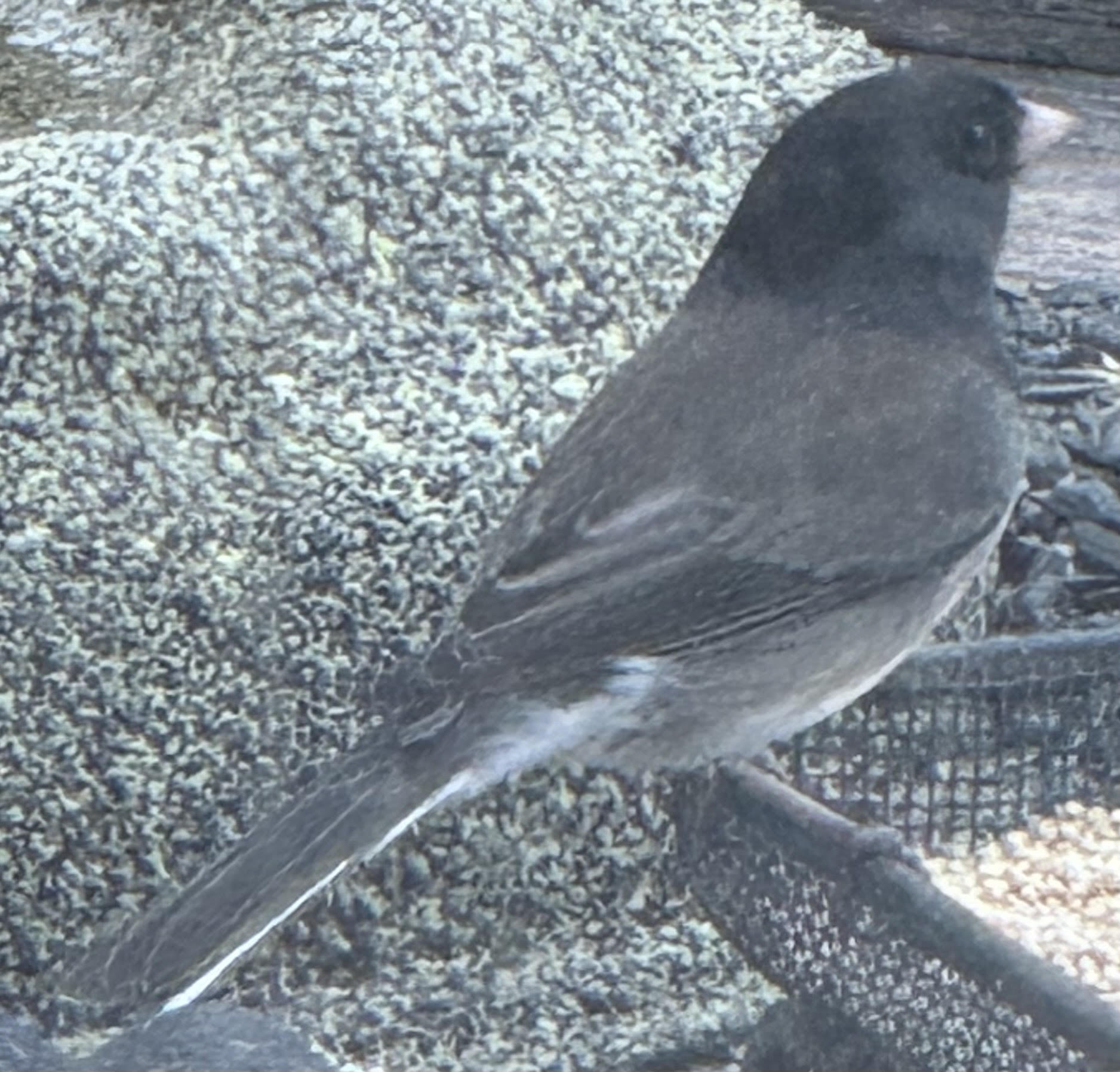
perhaps a gray crowned rosy finch, or green tail towhee. The old standbys never disappoint- juncos, various finch species, red breasted nuthatch, black capped & mountain chickadees.

A Black-capped Chickadee, Courtesy & Copyright Stephen Peterson, Photographer
A Black-capped Chickadee
Courtesy & Copyright
Stephen Peterson, Photographer

A Mountain Chickadee, Courtesy & Copyright Stephen Peterson, Photographer A Mountain Chickadee
Courtesy & Copyright
Stephen Peterson, Photographer

Swainsons Hawk, Buteo swainsoni, Courtesy Patrick Meyers, US NPS, Photographer Swainsons Hawk
Buteo swainsoni
Courtesy Patrick Meyers, US NPS, Photographer

Rough-Legged Hawk, Buteo lagopus, Courtesy US FWS Rough-Legged Hawk
Buteo lagopus
Courtesy US FWS

Snowy Owl, Bubo-scandiacus, Courtesy US FWS, Alex Galt, Photographer Snowy Owl
Bubo-scandiacus
Courtesy US FWS
Alex Galt, Photographer

Our winter birds are primarily seed eaters and berry eaters. Some exceptions are the woodpecker clan that attack our suet block, as do many of the seed eaters, and of course the raptors, who love to eat my feeder birds.

One non-feeder song bird that always brightens our day is the American dipper on our backyard creek. These little bundles of joy, or Rocky Mountain miniture pinguins if you prefer, do fine without our winter treats. They are full of joy swimming in freezing waters to pursue their prey- insect larva, small fish, and crustaceans. I’ve known them to sing their beautiful river song in the height of whiteout blizzards.

Many raptors have headed south, especially the Swainson hawks for which virtually the entire N. American flock winters in Argentina. Others move into our valley from further north- rough legged hawks, occassional snowy owls, snow buntings, and rarely a great gray owl, all raising spirits and engendering excitement by our birding community.

We’ve had but one green-tailed towhee in the 38 years we’ve resided in Smithfield Canyon. This delight acted unsure of where it was supposed to be. Skulcing, timid, it would steal in hesitant of its next move, where its spottoed towhee cousin was at ease, sure of its footing as it gobbled seed from the deck.

Being from the midwest, eastern bluejays elicite a flush of Michigan memories. Haughty and eye popping beauty, they too are less sure of their place and act quite timid and flighty at the feeder, quite opposite from their racous behavior back home.

We were blessed by immature Harris sparrows during our first three winters here. These elegant sparrows wear a striking black necklace, whick disppears with maturity. Will they ever return?

A tiny raptor brought great excitement. We noticed a Northern pygmy owl sitting comfortably 5 feet from our window, hoping to surprise a finch or junco. Fortunately for the songsters, it was discovered and the alarm sounded. Following 15 minutes of waiting, its patience subsided and it disappeared, never to be seen again!

Last winter we saw our first wild turkeys on the deck. Curious and comical, they would gaze in our living room window, wishing they had access to its contents. We learned even turkeys can be quite elegant, as they paraded on our deck railing.

Occasionally, great flocks of evening grosbeaks bless us with their startling beauty and abundance. We have yet to see gray crowned rosy finch or red crossbills. Perhaps this will be the winter!!

This is Jack Greene, for Bridgerland Audubon Society, and wild for Utah’s winter arrivals!

Credits:

Pictures: Courtesy US FWS,Photographers noted below each image
Contains Sound: Courtesy Kevin Colver, https://wildstore.wildsanctuary.com/collections/special-collections
Text: Jack Greene, Bridgerland Audubon Society/Utah State University Sustainability

Additional Reading:

Jack Greene’s Postings on Wild About Utah, https://wildaboututah.org/author/jack/

Black-capped Chickadee, All About Birds, Cornell Lab of Ornithology, https://www.allaboutbirds.org/guide/Black-capped_Chickadee/id/

Mountain Chickadee, All About Birds, Cornell Lab of Ornithology, https://www.allaboutbirds.org/guide/Mountain_Chickadee/id

Red-breasted Nuthatch, All About Birds, Cornell Lab of Ornithology, https://www.allaboutbirds.org/guide/Red-breasted_Nuthatch/id

Northern Pygmy Owl, All About Birds, Cornell Lab of Ornithology, https://www.allaboutbirds.org/guide/Northern_Pygmy-Owl/id

Swainson’s Hawk, All About Birds, Cornell Lab of Ornithology, https://www.allaboutbirds.org/guide/Swainsons_Hawk/id

Rough-legged Hawk, All About Birds, Cornell Lab of Ornithology, https://www.allaboutbirds.org/guide/Rough-legged_Hawk/id

Gray-crowned Rosy Finch, All About Birds, Cornell Lab of Ornithology, https://www.allaboutbirds.org/guide/Gray-crowned_Rosy-Finch/id

Snowy Owl, All About Birds, Cornell Lab of Ornithology, https://www.allaboutbirds.org/guide/Snowy_Owl/id

The Tenacity of Beavers

Beaver at Dam, Courtesy Pixabay
Beaver at Dam
Courtesy Pixabay
The most important lessons I can give my daughter are not through me, but instead those found best in the wild. Though she can’t talk, I know she still listens. Though her childhood amnesia is inevitable, I know that neural circuits are still being formed. Those circuits will do her good one day.

Our favorite lesson is in the tenacity of beavers.

This winter, we took one of our favorite hikes through knee-deep postholing snow to one of our favorite beaver dams. The dogs trot ahead, sniff snuffing at the path, darting to the stream that runs alongside our trail and back, and lead us as they have many times before up the trail. When we come to the great beaver dam, one that assuredly took not just years but generations of beavers to build, we stop for a snack and water, and let our daughter sit quizzically in the springtime slush. I explain to her the parts of the beaver’s home: the dam, the lodge, how they store their food. She listens while she smushes snow in her mittens, neural circuits are formed, and we pack up to start the slushy walk back to the car. A good day’s hike and lesson. A Greek proverb is dusted off in my mind, that a society grows great when old men plant trees under whose shade they know they shall never sit. Those beavers are good Greeks, but likely poor hoplites.

Later that spring, we return to the dam, our trail shortened by melted snow. Snow is gone from the trail, but still holding fast in the mountains above. The travel is easier, muddier, but the beaver Platonic Republic justly endures. I explain the parts of the Castorian city-state yet again, and explain what the beavers are doing now as we see fresh aspen fells. They’re collecting good sugars and preparing for their kits. Kallipolis endures, as it has, another year out of dozens of millennia, and even without a cud of pulp in sight. I wonder if beavers have oral traditions?

Time then passes as we all pass through space, and summer buds, blooms, and begins to fade. The cattle have come, grazed, trammeled, and been driven off yet again. We return to Xanadu in the early morning before the sun beats hard. We can get even closer to the dam now that the Forest gates are open, and we prepare for our adventure. My daughter looks around excitedly and drinks water from her cup. The dogs look around excitedly at all the leftover cow pies to investigate. Luckily they’ve dried.

We exit the car and make our short way to the beavers only to discover that tragedy has struck between spring and now. The dam has burst. Like the River Isen, a great work of nature has blown a hole in the waterkeep, and drained the promised pond. The shoreline has receded like a tonsure, the lodge’s secret doors exposed as if by moonlit ithildin, and the water flowing with Newtonian determination towards Great Salt Lake.

It’s shocking at first, seeing this anchor of time heaved asunder, the work of generations of beavers up and smote by spring runoff. All that labor. All those lives well-lived. Perhaps not wasted, but at least now remembered with a sigh. I sigh out as well, and explain this all to my daughter. She listens, pulls on cow-mown grasses, synapses fire, and circuits connect. We complete our hike and eventually go home.

Finally, early this fall we set off for the utopia-that-was once more. Colors have begun to change to golds and crimson. The air is more crisp; the heat more bearable. We saddle up in the toddler backpack, and see what there is to see of the beavers. We arrive to the wonders of hope and joy, and the tenacity of beavers.

The dam it appears is not abandoned. The labor of generations is honored with the restoration of the work. Not in its entirety mind you, for that will again take years and perhaps generations, but the work is underway regardless. Greek thinking again prevails. Whether by purpose or itch it matters not, but slowly the pond is regrowing. The shoreline has risen to swallow back and douse bare earth, and the water is a bit more wine-dark. I excitedly show my daughter, who excitedly is playing with my hat, the work that has happened, and the work yet to do. The beavers will not quit when allowed to do so. They are tenacious little buggers whose teeth grow forever. We take it all in and continue our hike, and eventually go back home. A new proverb pops into my head. A society grows great when we get to work and, figuratively, give a dam.

I’m Patrick Kelly and I’m Wild About Utah.
 
Credits:

Images: Beaver & Dam Image Courtesy Pixabay, Public Domain
Featured Audio: Courtesy & Copyright Friend Weller, Utah Public Radio with and Anderson, Howe, & Wakeman.
Text:    Patrick Kelly, Stokes Nature Center, https://logannature.org
Included Links: Lyle Bingham, Webmaster, WildAboutUtah.org

Additional Reading

Greene, Jack, I’m a Beaver Believer, Wild About Utah, December 19, 2022, https://wildaboututah.org/im-a-beaver-believer/

Bingham, Lyle, Welcoming Rodent Engineers, Wild About Utah, February 7, 2022, https://wildaboututah.org/welcoming-rodent-engineers/

Hellstern, Ron, Leave it to Beaver, Wild About Utah, July 30, 2018, https://wildaboututah.org/leave-it-to-beaver/

Leavitt, Shauna, Beaver–Helping Keep Water on Drying Lands, Wild About Utah, April 17, 2017, https://wildaboututah.org/the-beaver-helping-keep-water-on-drying-lands/

Strand, Holly, Beavers: The Original Army Corps of Engineers, Wild About Utah, April 29, 2010, https://wildaboututah.org/beavers-the-original-army-corps-of-engineers/

Goldfarb, Ben, Eager: The Surprising, Secret Life of Beavers and Why They Matter, Chelsea Green Publishing, March 8, 2019, https://www.amazon.com/Eager-Surprising-Secret-Beavers-Matter/dp/1603589082/ref=asc_df_1603589082/