Wind, Hold on to Your Hat!

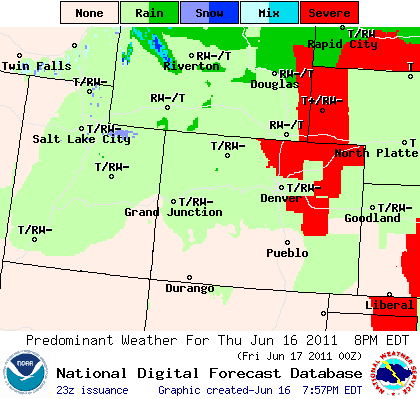
Graphical Forecasts – Central Rockies
NOAA National Weather Service
Western Regional Headquarters
Hi I’m Holly Strand.

On a recent camping trip on Utah’s Colorado Plateau, my brother and I were buffeted by strong sand-blasting winds for two days straight. Setting up camp was nearly impossible. Strong gusts ripped the tent away from us. Catching only the guylines, we flew the big green tent like a kite through the sagebrush. Eventually we pulled it down and got stakes in the ground. Unable to make a fire, we ate a cold dinner and tried to sleep –until the tent collapsed under the persistent onslaught of meteorological Furies. The next day, the sand-infused wind whipped us painfully as we descended into Horseshoe Canyon. Dust devils pursued us along the canyon floor.

Arriving home I read up on the cause of our discomfort. In simplest terms wind is caused by air moving from high to low pressure. The steeper the air pressure gradient—that is –the change in air pressure per unit distance–the stronger the resulting wind speed. Differences in air pressure are often caused by localized warming of air temperature. The warm air rises creating a spot of relatively low pressure ; then cooler air from a high pressure region rushes in to replace it.

Wind tends to blow much more forcefully near a frontal boundary. And our camp was located very close to the low pressure center of a stationary front. Although the wind was a nuisance, it was probably only blowing around 35 miles an hour. Meanwhile the record in Utah is 124 miles an hour –a wind gust measured at 11000 feet Snowbird. The strongest wind gust here in Logan was 94 miles an hour. Compare this to the highest wind on record anywhere—a gust measuring 253 miles per hour on Australia’s Barrow Island during a tropical cyclone. The record in the United States is 231 miles per hour on top of Mt. Washington in New Hampshire. Higher wind speeds than these may occur in tornadoes, but anemometers tend to malfunction at extreme speeds .

Luckily, we don’t have to worry much about tornadoes. Utah ranks very low in terms of tornado frequency. We average 2-33 a year with most of them occurring May through August. Utah tornadoes tend to be small and not last very long. Whirlwinds or dust devils are much more common. About 90% of them occur in the West Desert where there is plenty of loose, dry dust and sand to swirl around in the air.

Thanks to Marty Booth of the Utah Climate Center for help in developing this Wild About Utah episode.

For Wild About Utah, I’m Holly Strand.

Credits:

Photos: Courtesy US NOAA
Text: Holly Strand

Sources & Additional Reading:

National Weather Service (NOAA) “Dust Devils” https://www.wrh.noaa.gov/fgz/science/dustdvl.php?wfo=fgz [Accessed June 15, 2011] [Not available as of January 31, 2026]

Cooley, J.R., Dust devil meteorology, NOAA Technical Memorandum NWS CR-42, NOAA Repository (.gov), May 1971, https://repository.library.noaa.gov/view/noaa/14125/noaa_14125_DS1.pdf [Added January 31, 2026]

National Weather Service (NOAA) Jetstream Online School for Weather. “Origin of Wind” https://www.srh.noaa.gov/srh/jetstream/synoptic/wind.htm [Accessed June 15, 2011]

National Weather Service (NOAA) Daily weather maps https://www.wpc.ncep.noaa.gov/dailywxmap/ [hpc.ncep.noaa.gov/dailywxmap/ Accessed June 15, 2011] [Updated January 31, 2026]

Utah Climate Center https://climate.usu.edu/ [Updated January 31, 2026]

Pope, Dan and Clayton Brough (eds.) Utah’s Weather and Climate. 1996. Salt Lake City: Publisher’s Press. https://www.amazon.com/Utah-Weather-Climate-D-Pope/dp/1567131743

Weather Service Photos: https://www.photolib.noaa.gov https://www.noaa.gov/digital-collections/collections/media/2409 [Updated January 31, 2026]
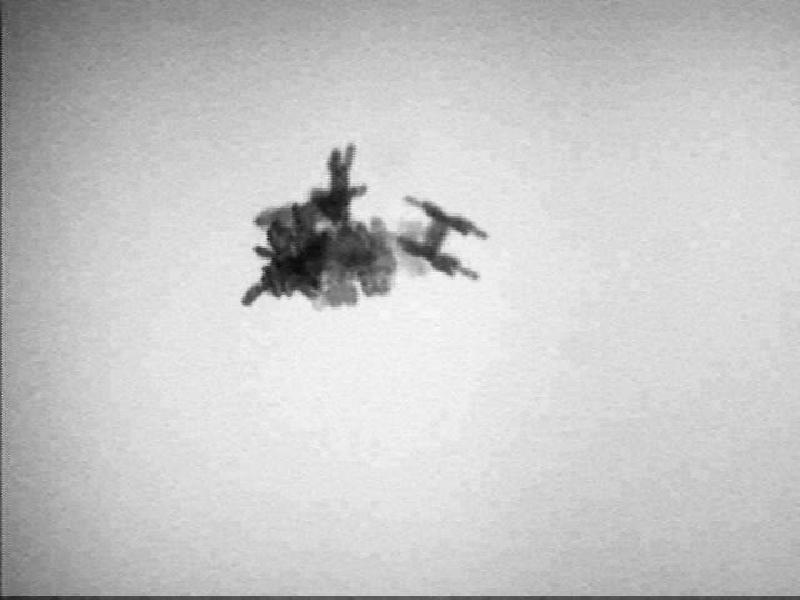
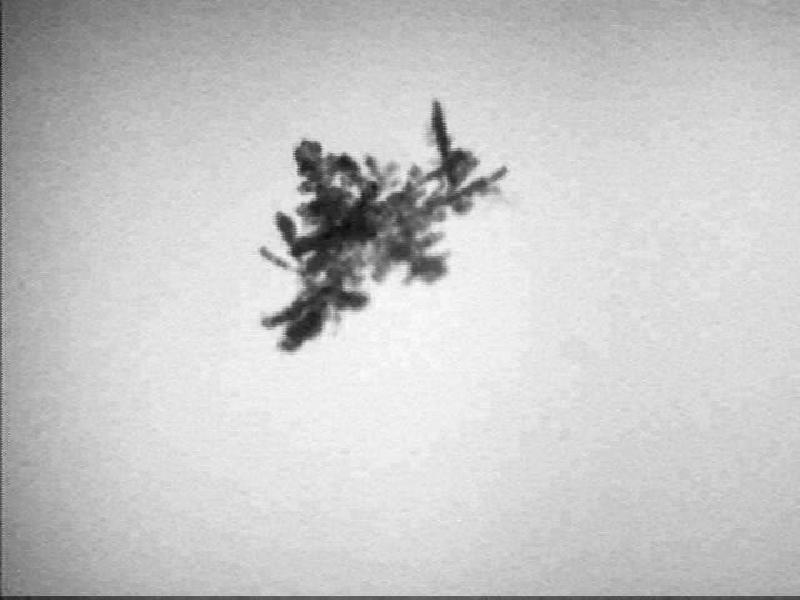
Snowflakes

A free-falling snow crystal
photographed as it fell
Alta Ski Area on March 6, 2011
Photo Courtesy & Copyright 2011
Tim Garrett, University of Utah
Alta Snowflake Showcase https://www.alta.com/conditions/snowflake-showcase [Mar 10, 2011] Archive
As winter draws to a close, I’d like to take a moment to reflect on the amazing weather phenomenon that is a snowflake. When winter weather dumps inches of snow on us, it’s easy to overlook the tiny works of art, those intricate and delicate snowflakes, which make up the storm. Snowflakes

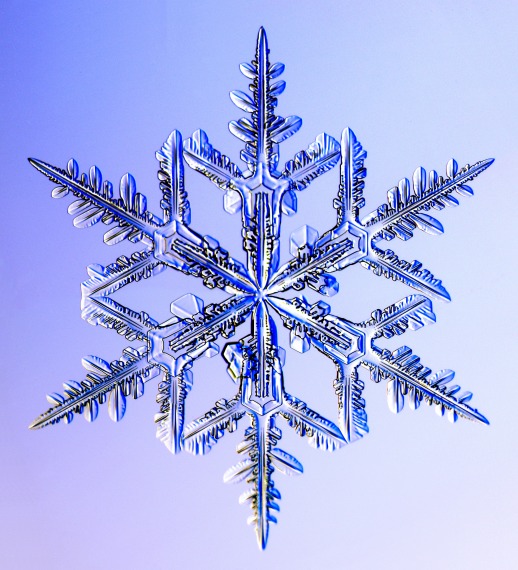
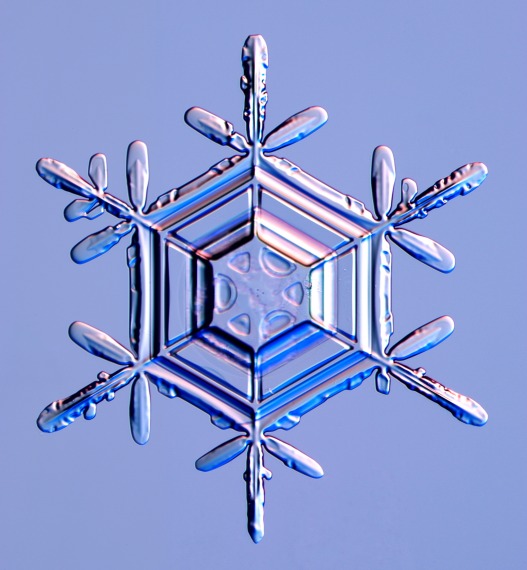
Snowflakes – or to use a more scientific term, snow crystals – come in a variety of different shapes including long, thin needles, flat hexagonal plates, columns, and irregularly-shaped pellets called graupel. The International Snow Classification System recognizes ten different shapes in all, only one of which is the traditional snowflake image. The classic six-armed snowflake shape is called a ‘stellar dendrite’ by scientists.

When teaching programs about snow, someone inevitably asks me, “Is it really true that no two snowflakes are alike?” As far as I can tell, the answer is, well, ‘maybe’, and here’s why.

A free-falling snow crystal
photographed as it fell
Alta Ski Area
March 6, 2011
Photo Courtesy & Copyright 2011
Tim Garrett, University of Utah
Alta Snowflake Showcase https://www.alta.com/conditions/snowflake-showcase [Mar 10, 2011]

Three things are needed to form these intricate crystals, and the first two are fairly obvious: water, and temperatures below freezing. The third item is a little more inconspicuous. Water cannot condense and freeze all on its own. Every snowflake needs a piece of atmospheric dust or salt at its core. This particle is referred to as a ‘nucleating agent,’ and it attracts water molecules which then condense and begin to freeze. From there, a snowflake’s overall shape is determined by a number of other variables including the atmospheric temperature, the amount of available moisture, wind speed, and mid-air collisions with other snowflakes.

To add more complexity, consider that each individual snowflake contains somewhere on the order of 10 quintillion water molecules. That’s ten with eighteen zeros behind it. While the way these molecules bind to each other is dictated by the laws of physics, the sheer number of ways in which 10 quintillion water molecules can arrange themselves as they freeze into place is mind boggling. But then again, how many snowflakes do you think fall in the typical March snowstorm in Utah? A lot. One scientist has estimated that the number of individual snowflakes that have fallen on Earth in the planet’s history is ten with 34 zeros behind it. In all of those snowflakes is it possible that two are exactly alike? Yeah, maybe… but good luck finding them!

A stellar dendrite snow crystal Photo Courtesy & Copyright
Kenneth Libbrecht, Caltech University
SnowCrystals.com

For more information and some beautiful snowflake photographs, please visit our website at www.wildaboututah.org. Thank you to the Rocky Mountain Power Foundation for supporting the research and development of this Wild About Utah topic.

For the Stokes Nature Center and Wild About Utah, this is Andrea Liberatore.

Credits:

Photos: Courtesy Tim Garrett, University of Utah,
Kenneth Libbrecht, Caltech University
Text: Andrea Liberatore, Stokes Nature Center

Additional Reading:

Halfpenny, J.C and Ozanne, R.D. 1989. Winter: An Ecological Handbook. Boulder, CO: Johnson Books, https://www.amazon.com/Winter-Ecological-Handbook-James-Halfpenny/dp/1555660363

A stellar dendrite snow crystal Photo Courtesy & Copyright
Kenneth Libbrecht, Caltech University
SnowCrystals.com

Gosnell, Mariana. 2007. Ice: the Nature, the History, and the Uses of an Astonishing Substance. Chicago, IL: The University of Chicago Press, https://www.amazon.com/Ice-Nature-History-Astonishing-Substance/dp/0679426086

Libbrecht, Kenneth .1999. A Snowflake Primer: the basic facts about snowflakes and snow crystals. https://www.its.caltech.edu/~atomic/snowcrystals/primer
/primer.htm

A hexagonal plate snow crystal cite>Photo Courtesy & Copyright
Kenneth Libbrecht, Caltech University
SnowCrystals.com

Graupel Snow

Graupel Snow
Image Courtesy & Copyright Jim Cane
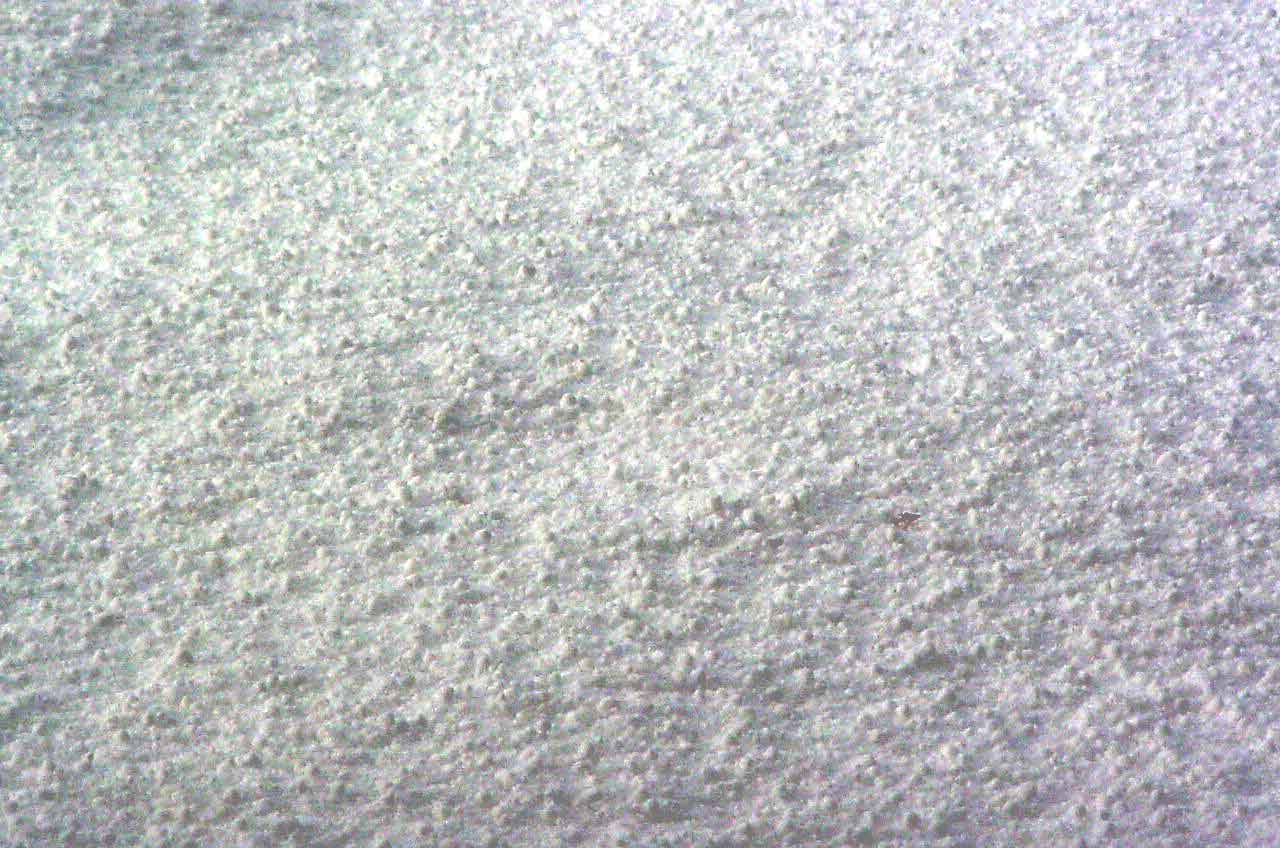
Snow graces the winter sky in many different forms. We have large lazy flakes drifting down, sharp needles driven by harsh winds and thick curtains that swiftly blanket the landscape. Late winter storms offer good chances to observe one of our more unusual and distinctive kinds of snowfall; “graupel”. Graupel – that sounds like some kind of respiratory malady, doesn’t it? Also known as soft hail or tapioca snow, graupel consists of tender round snow pellets no bigger than a pea. The name comes from the German word for hulled grain, “graupe”.

Graupel accompanies warmer winter storms, the kind we often have in March, as well as during summer showers high in the mountains. The pellets form when snow crystals fall through a low cloud of super-cooled liquid droplets. The foggy droplets readily coalesce and freeze around the falling ice crystals, accumulating to form soft graupel pellets. The process is somewhat akin to making rock candy from a concentrated hot sugar syrup, or the method used to generate artificial snow. In contrast, sleet forms when raindrops fall through a cold air layer and freeze.

Our big snowfalls are spawned by storms that generate sprawling unbroken cloud decks. Graupel snow, on the other hand, tumbles down from the bellies of fluffy cumulus clouds. As a consequence, squalls of graupel are brief, the pellets accumulating in a thin white bumpy layer, hence the other common name, “tapioca snow”. A buried layer of tapioca snow is prone to avalanche for the first day or two, after which the pellets anneal and stabilize. Any connoisseur of Utah snow should have graupel in their lexicon of wintry terminology, at the ready to impress any Sun Belt visitor met on the slopes.

This is Linda Kervin for Bridgerland Audubon Society.
Credits:

Photos: Courtesy & Copyright Jim Cane

Text: Jim Cane & Linda Kervin, Bridgerland Audubon Society
Additional Reading:

Wild About Utah pieces by Jim Cane and Linda Kervin

Riehl, Herbert: Introduction to the Atmosphere, McGraw-Hill Book Company, 1972 https://www.amazon.com/Introduction-Atmosphere-Herbert-Riehl/dp/0070526567

Rime and Graupel [link removed Oct 6, 2024. Page formerly found at:] https://emu.arsusda.gov:80/snowsite/rimegraupel/rg.html

Severe Weather 101, How does hail compare to other types of frozen precipitation?, NOAA National Severe Storms Laboratory, https://www.nssl.noaa.gov/education/svrwx101/hail/types/ [added Oct 6, 2024]

American Meteorological Society, Glossary of Meteorology [updated Oct 6, 2024] https://glossary.ametsoc.org/wiki/Graupel

Graupel – What is Graupel? https://weather.about.com/od/g/g/graupel.htm

Colorado vs. Utah Snow

Utah snow in author's backyard: relatively light and dry--and definitely deep, Photo Copyright 2010 Holly Strand
Utah snow in author’s backyard:
relatively light and dry
–and definitely deep.
Copyright © 2010 Holly Strand

Hi I’m Holly Strand.

Growing up in Colorado, it never crossed my mind that the snow might be better somewhere else. I believed that my state was the center of the universe– at least as far as snow and skiing were concerned. A couple of decades passed and now I am a Utah resident. I couldn’t help but notice that snow quality here is well beyond satisfactory. And many Utah license plates claim the Greatest Snow on Earth. So, I wondered… Who has better snow? Colorado or Utah?

People usually assume that “great snow” means voluminous and powdery. So let’s compare the 2 states using measures of snow depth for volume and measures of water content for powder.

As far as snow depth, Alta takes the cake and wins mega points for Utah. According to data collected by ski area avalanche professionals, Alta’s average annual snowfall from Nov 1-Apr 30 is 530 inches. That’s 44 feet of snow ! A few other Utah resorts,–plus Colorado’s Wolf Creek Pass–come next with 400 + inches. After that, you get several 300+ inches resorts in both states. More in Colorado, but that’s just because there are more resorts in general. Colorado also has a bunch of areas with 200+ inches. But the point is that a handful of super-snowy resorts lead the pack and most of them are in Utah.

Next I located National Weather Service data for the average water content of freshly fallen snow. The lower the value, the drier the snow. It turns out that the mean water content of new snow decreases as you move eastward from the Pacific Coast to the Rockies. You get values around 12 % water content for the Sierras. This is the infamous Sierra Cement. Intermountain (including the Wasatch Mountains) values hover around 8.5%. The mean water content value for Central Rocky Mountain stations was close to 7%. So in general, Colorado has less watery snow. Of course there are localized anomalies in each state. But overall, Colorado appears to edge out Utah for light, dry, and fluffy snow.

So who has the best snow overall? Well, I guess I still haven’t solved that issue. Best to discuss it further after an exhilarating day on the slopes. Let us know what you think: Send us an email at wildaboututah@gmail.org

For data sources and archives of past Wild About Utah episodes visit www.wildaboututah.org

For Wild About Utah, I’m Holly Strand.

Credits:

Photos: Courtesy and Copyright 2010 Holly Strand

Text: Holly Strand

Sources & Additional Reading:

Armstrong, R.L. and B.R. Armstrong. 1987. Snow and avalancheclimates of the western United States: a comparison of maritime, intermountain and continental conditions. IAHS Publ. 162
(Symposium at Davos 1986 – Avalanche Formation, Movement and Effects), 281–294

Baxter, M.A., C.E. Graves, and J.T. Moore, 2005: A Climatology of Snow to Liquid Ratio for the Contiguous United States, Weather and Forecasting, 20, 729-744.

Crocker, Tony. BESTSNOW.NET – an independent statistical analysis of snow characteristics (based on data collected by ski area avalanche professionals) at major North American ski resorts. https://webpages.charter.net/tcrocker818/ [accessed December 14, 2010]

Steenburgh, W. J., and T. I. Alcott, 2008. Secrets of the “Greatest Snow on Earth.” Bull. Amer. Meteor. Soc., 89, 1285-1293.