Wildlife dispersal in late summer (Or, It’s time to leave the nest!)

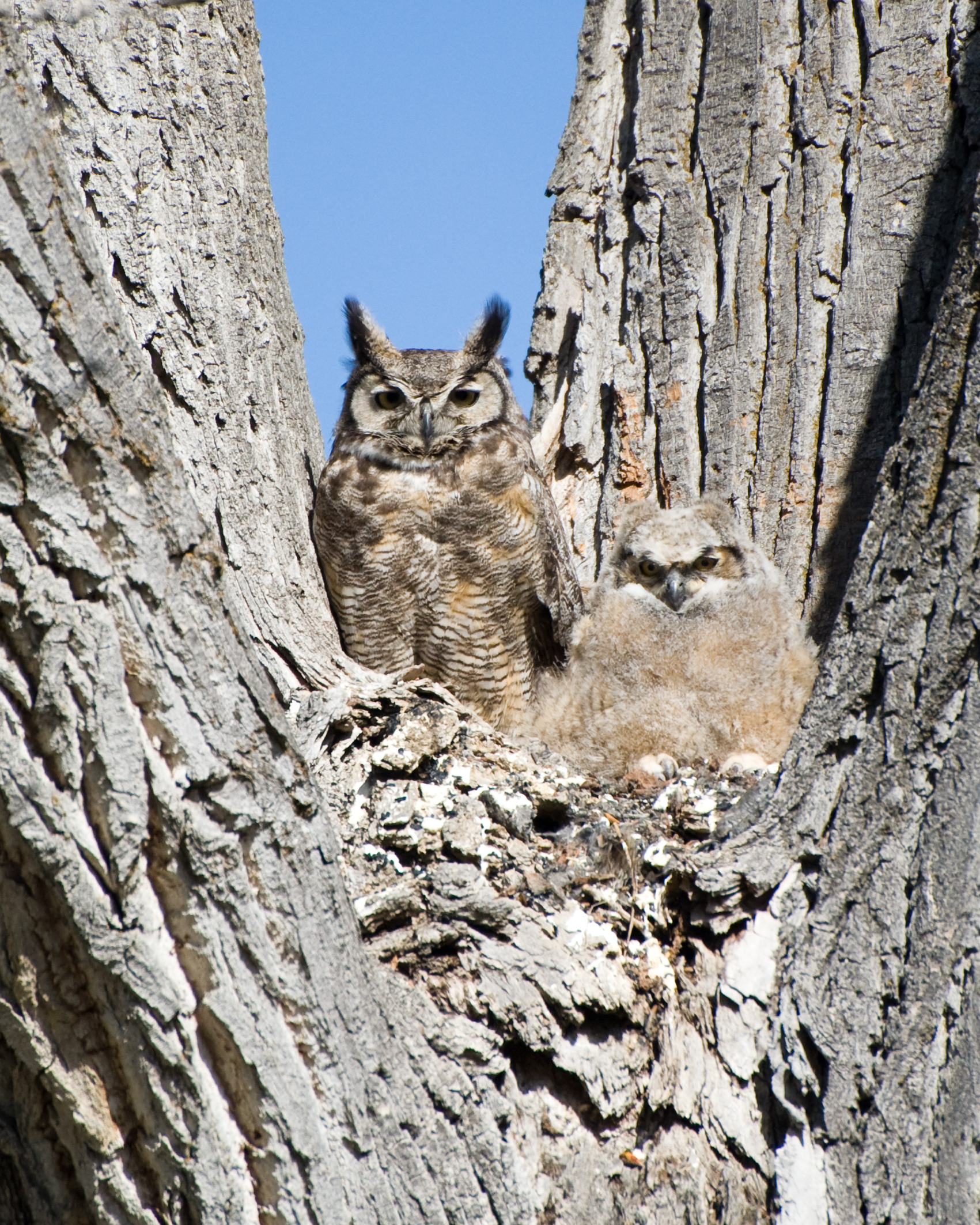
Wildlife dispersal in late summer: Click to view larger image of Adult great-horned owl perched at dusk, hunting for its young, Photo Courtesy and Copyright Mark Larese-Casanova
Adult great-horned owl
perched at dusk,
hunting for its young
Photo Courtesy & Copyright 2009
Mark Larese-Casanova

Hi, this is Mark Larese-Casanova from the Utah Master Naturalist Program at Utah State University Extension.

Late summer is the time of change when the rich nature born of spring matures and enters the next stage of its life. Streams and wetlands may dry up in the heat. Wildflowers wither and produce seeds to ensure a plant’s survival into the future. And, young wildlife leave their place of birth to strike out on their own.

Prior to fledging, young red-tailed hawks build flight muscles by hopping and flapping their wings in the nest. Once they are strong enough, the young red-tailed hawks make excursions from the nest, often soaring together, calling to each other while they fly. This time of year, red-tailed hawk fledglings can still be seen perched atop telephone poles, even in the middle of town, calling to their parents and begging for food. As a bird that usually spends the entire year in Utah, the red-tailed hawk must prepare for its solitary, cold winter ahead.

The calls of great horned owls often echo through the late summer nights. The adult owl soars through an open field while the fledgling owlet is perched nearby, calling for food. The parent responds, and faithfully catches a mouse to feeds its young. Aside from their echoing calls, this all happens quietly and almost invisibly. A lucky observer might spy an owlet and its parent at dusk, but the great horned owl’s soft feathers ensure that their flight is silent, even when just overhead.

Some young reptiles disperse in summer, too, just like birds. Tiny garter snakes, no larger in length or width than a pencil, can often be found slithering across meadows or even lawns. Rather than laying eggs in a nest, the female garter snake retains the eggs in her body until they are ready to hatch. While young garter snakes receive no parental care after birth, the mother hedges her bets by producing upwards of twenty young in the second half of each summer. At least two need to survive over the mother’s life to maintain a stable population.

Fledging and dispersal in late summer is a time of great risk, though. It’s very common in Utah to see road kill of young marmots, skunks, raccoons, and mink, among others. Many inexperienced young animals are also taken by predators. In nature, survival to adulthood is relatively uncommon, so the great investment of the parents is essential for a species to survive.

For Wild About Utah, I’m Mark Larese-Casanova.

Credits:

Images: Courtesy and copyright Mark Larese-Casanova
Text:     Mark Larese-Casanova, Utah Master Naturalist Program at Utah State University Extension.

Additional Reading:

Danilson, C.D. Post-Fledging Ecology of Great Horned Owls in South Central Saskatchewan. Master’s Thesis. https://scholarworks.boisestate.edu/td/505/

Great Horned Owls. All About Birds. Cornell Lab of Ornithology. https://www.birds.cornell.edu/AllAboutBirds/owlp/ghowl

Red-tailed hawk. Hawkwatch International. https://www.hawkwatch.org/blog/item/130-red-tailed-hawk-buteo-jamaicensis

Great Horned Owl, Utah Division of Wildlife Resources, Department of Natural Resources, State of Utah, https://fieldguide.wildlife.utah.gov/?species=bubo%20virginianus

Red-tailed Hawk – Buteo jamaicensis. Utah Division of Wildlife Resources, Department of Natural Resources, State of Utah, https://fieldguide.wildlife.utah.gov/?species=buteo%20jamaicensis

Common Gartersnake – Thamnophis sirtalis. Utah Division of Wildlife Resources, Department of Natural Resources, State of Utah, https://fieldguide.wildlife.utah.gov/?species=thamnophis%20sirtalis

Black-necked Gartersnake – Thamnophis cyrtopsis. Utah Division of Wildlife Resources, Department of Natural Resources, State of Utah, https://fieldguide.wildlife.utah.gov/?species=thamnophis%20cyrtopsis

Terrestrial Gartersnake – Thamnophis elegans. Utah Division of Wildlife Resources, Department of Natural Resources, State of Utah, https://fieldguide.wildlife.utah.gov/?species=thamnophis%20elegans

Thamnophis elegans: Western Terrestrial Garter Snake. Animal Diversity Web. https://animaldiversity.ummz.umich.edu/accounts/Thamnophis_elegans/
Owls & iPods

Owls & iPods: Great Horned Owl and Chick, Courtesy US FWS Digital Library, George Gentry Photographer
Great Horned Owl and Chick
Photographer: George Gentry
US FWS Digital Library

Hi I’m Holly Strand.

In early spring, my friends and I went owling in a northern Utah canyon. We were hoping for modest success—just to see or hear a northern pygmy or great horned owl — both common owls in our area.

To better the odds we brought an iPod with prerecorded owl sounds. We played the northern pygmy call for 20-30 second intervals and listened intently in between intervals.

After 10 minutes of off-and-on playbacks we heard an answering call from a nearby conifer grove. We were ecstatic that we had made contact with an actual owl. But wait! Was it an owl we heard or just another iPod user?

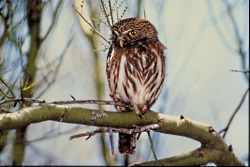
Pygmy Owl, Courtesy US FWS Digital Library, Bob Miles Photographer
Pygmy Owl
Photographer: Bob Miles
US FWS Digital Library

According to David Sibley, author of the Sibley Guide to Birds, the proliferation of digital audio devices and recorders among birders has both pluses and minuses. On the plus side, you can often entice certain birds out of hiding using playbacks. For example, if a territorial male thinks a rival bird is threatening to encroach on its territory, he may come out to confront the intruder. Or he may sing his “I’m Here, So Stay Away” song. A female bird might approach the recording source as a potential date. Using playbacks, you can target specific species to see or hear without disturbing others.

On the flip side, overuse of these playback devices can cause unnecessary stress and distraction in the target birds—and annoyance among other birders. In one study, the use of playbacks upset the avian apple cart by causing high-ranking black- capped chickadee males to lose status. The rest of the flock perceived them as losers as they were unable to drive away an unwanted phantom intruder.

Because the widespread use of recorded playbacks is relatively new, proper etiquette is still evolving. But here are some key points.

  • Keep the volume low and use only occasional snippets of sound—less than 30 seconds at a time. Leave a long pause between snippets. Definitely do not broadcast loud or continuous sound.
  • It is illegal to disturb endangered or threatened species. And these recordings can be interpreted as disturbance. So stick with sounds of non-threatened species.
  • Finally, check the rules at your birding location. The use of playback is prohibited in some parks and refuges.

For source material and websites with bird sound recordings, go to www.wildaboututah.org.

For Wild About Utah, I’m Holly Strand.

Credits:

Photos: Courtesy US FSW Digital Media Library
Text: Holly Strand

Sources & Additional Reading:

Sibley, David. 2011. The Proper Use of Playback in Birding. Sibley Guides: Identification of North American birds and trees. https://www.sibleyguides.com/2011/04/the-proper-use-of-playback-in-birding/ [Accessed May 19, 2011]

Recordings:

Soundscapes for Birders by Kevin Colver

https://www.xeno-canto.org/ shared bird sounds from the whole world

Beletsky, Les, editor. 2010. Bird Songs Bible: The Complete, Illustrated Reference for North American Birds Contains digital audio player.

Ipods and mp3 apps:

iBird https://www.ibirdexplorer.com

Audubon Birds Field Guide https://www.audubonguides.com/field-guides/mobile-apps.html

The Sibley eGuide to the Birds of North America https://www.mydigitalearth.com

Nesting Season

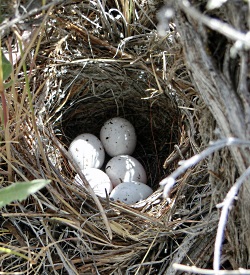
Lark Sparrow Nest, Courtesy & Copyright © Jim Cane, Photographer
Lark Sparrow Nest, June
Courtesy & © Copyright
Jim Cane, Photographer
While we swelter in summer’s heat, the southward shorebird migration has begun. But some songbirds find this a perfect time to nest. We think of spring as nesting season and for the majority of birds it is. But there are some birds nesting almost year round in Utah.

Living organisms are impelled to maximize the number of successful offspring they produce. Therefore, they tend to reproduce during times of plenty, because the breeding season is strenuous. Males compete for mates and territory and females produce eggs. Both parents may guard the nest from predators and feed the young. Many birds feed nutrient rich insects to their nestlings so nesting season is timed to coincide with the greatest abundance of insects, usually spring in temperate and arctic climes.

American and Lesser Goldfinches are one example of birds who do things differently. (Lesser Goldfinch. Kevin Colver: Songbirds of the Southwest Canyon Country) Instead of insects, they feed their young a regurgitated milky seed pulp. Therefore, they time their nesting for greatest abundance of seeds, especially sunflower and thistle, which is in the summer.

Other birds prefer one type of nut. These include Pinon Jays and crossbills. Abundant pinon nuts trigger Pinon Jay nesting. (Pinon Jay. Kevin Colver: Songbirds of the Southwest Canyon Country) If they have enough nuts cached from the previous season, they will nest in late winter, even while snow blankets the landscape. In years with a bumper crop of pinon nuts, they will also breed in late summer to take advantage of the plentiful food. Good conifer cone crops determine when and where crossbills nest, which can be almost any time.

Great-horned Owls are one of the first to nest each year. (Great-horned Owl. Kevin Colver: Songbirds of the Southwest Canyon Country) You can hear courting pairs hoot back and forth in midwinter. They may incubate their eggs while covered in snow, and if the temperature is too frigid, the eggs freeze and the young die. Many predatory birds nest early, perhaps to insure that the young learn how to proficiently hunt before winter.

The drive to reproduce is inviolable and birds take advantage of whatever season gives them the greatest chance for success. For every nesting bird there is a season.

Thanks to Kevin Colver for the use of his bird recordings.

This is Linda Kervin for Bridgerland Audubon Society and Wild About Utah.

Credits:
Images: Jim Cane, Bridgerland Audubon Society
Audio: Courtesy & © Kevin Colver https://wildstore.wildsanctuary.com/
Theme: Courtesy & Copyright Don Anderson as performed by Leaping Lulu
Text & Voice: Linda Kervin, Bridgerland Audubon Society

Additional Reading:

Linda Kervin’s pieces on Wild About Utah

Red Crossbill, All About Birds, Cornell Lab of Ornithology, Cornell University, https://www.allaboutbirds.org/guide/red_crossbill/lifehistory

Great Horned Owl, All About Birds, Cornell Lab of Ornithology, Cornell University, https://www.birds.cornell.edu/AllAboutBirds/owlp/ghowl

American Goldfinch, Spinus tristis, Guide to North American Birds, National Audubon, https://birds.audubon.org/birds/american-goldfinch

Erlich, Paul, Birders Handbook, Touchstone/Simon & Schuster, June 15, 1988, https://books.simonandschuster.com/Birders-Handbook/Paul-Ehrlich/9780671659899

The Cutthroat Trout

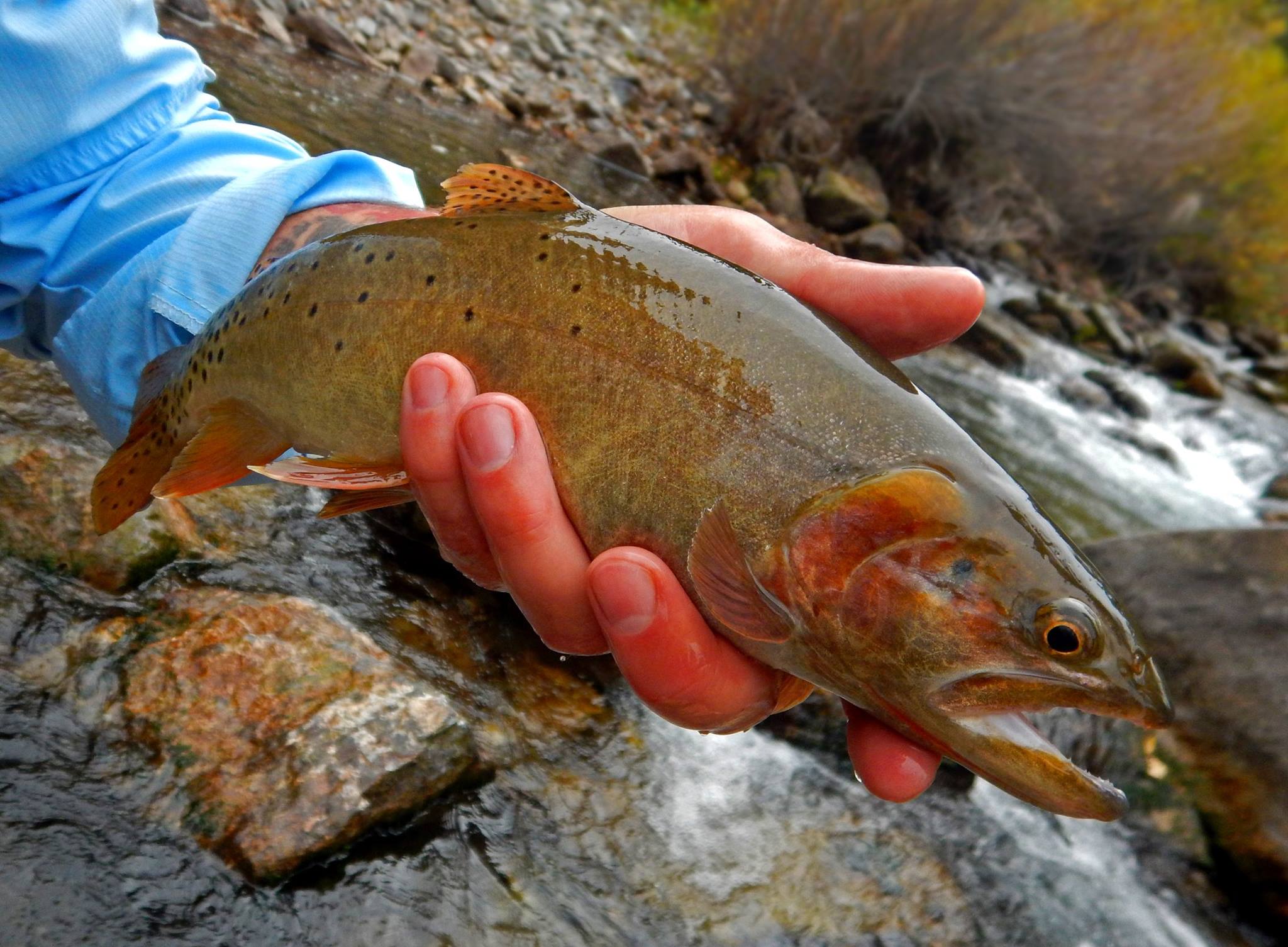
The Cutthroat Trout-a Local Favorite: Yellowstone Cutthroat Trout, Oncorhynchus clarki bouvieri
Yellowstone Cutthroat Trout
Oncorhynchus clarki bouvieri
Courtesy USDA Forest Service
 
Cutthroat Trout A “no-trouts-land” on the Logan River, Copyright (c) Chadd VanZanten, Photographer vanzanten-cutthroat_trout Cutthroat Trout on the Logan River, Copyright (c) Chadd VanZanten, Photographer
 
Colorado River Cutthroat Trout, Oncorhynchus clarki pleuriticusColorado River Cutthroat Trout
Oncorhynchus clarki pleuriticus
Courtesy US BLM Rawlins, WY Office
 
Utah streams offer excellent year-round fishing opportunities for every level of angler. According to the Department of Natural Resources, Utah’s waters are home to approximately 80 different species of fish, but it is the trout fishing that is the biggest attraction for fishermen. Of the trout species swimming in our rivers and lakes, the cutthroat trout is a local favorite and the only trout native to the state.

The cutthroat trout represents the most diverse trout species in North America. They are a freshwater fish of the Salmonidae family that live in cold, clear streams and lakes across the west. Cutthroat trout are distinguished from other trout species by two red slashes prominently striping the lower jaw after which they are named. All cutthroat trout share a single common ancestor, but historic population isolation gave rise to 14 subspecies, each endemic to their own geographic region and river drainage.

There are four subspecies that exist in Utah. Only three of these are considered native to the state: the Colorado River cutthroat, the Yellowstone cutthroat, and Utah’s state fish, the Bonneville cutthroat. In Utah, the Colorado River cutthroat trout can be found in some of the smaller streams and tributaries of the Green River, the San Juan River, and the Colorado River drainages. Their bright coloration and posterior black spotting distinguish these cutthroats from others.

Pure, native Yellowstone cutthroat trout are present in small numbers in the streams of the North Slope of the Raft River Mountains in northwestern Utah. However, this subspecies is more widely distributed across the state due to extensive stocking. Yellowstone cutthroat trout can be differentiated by larger-sized black spots concentrated near the tail and their gold, gray, and copper tones.

The Bonneville cutthroat trout evolved in the Bonneville Basin of Utah, Wyoming, Idaho, and Nevada. Its primary ancestors were a population of lake dwelling cutthroat trout living in the late-Pleistocene aged Lake Bonneville. The Bonneville cutthroat trout is less vividly colored and has spots that are more sparsely and evenly distributed across the body than other cutthroats. Thought to be extinct in the 1970s, populations of the Bonneville cutthroat trout are now estimated to exist in around 35% of their historic range, including the nearby Weber and Provo Rivers.

Like so many species, the native cutthroat trout of Utah are under significant pressure due to drought, habitat loss, disease, and competition with non-native species. Though only the Colorado River cutthroat is included on the Utah State Sensitive species list, conservation of all of Utah’s native cutthroat populations is a focal point for state wildlife resource managers.

For Wild About Utah, I’m Anna Bengtson of Park City.

The Cutthroat Trout-a Local Favorite-Credits:
Images: Courtesy USDA Forest Service, US Bureau of Land Management & Chadd VanZanten.
Text: Anna Bengston

Additional Reading:

Anna Bengston’s Postings on Wild About Utah, https://wildaboututah.org/author/anna-bengston/

Utah Fishing Regulations, Utah Division of Wildlife Resources, Department of Natural Resources, State of Utah, https://wildlife.utah.gov/fishing/fishing-regulations.html.

Fishes, Utah Division of Wildlife Resources, n.d. Web. 7 July 2014: https://fieldguide.wildlife.utah.gov/?class=actinopterygii.

Bonneville Cutthroat Trout, Utah Species, Utah Division of Wildlife Resources, Department of Natural Resources, State of Utah, https://fieldguide.wildlife.utah.gov/?species=oncorhynchus%20clarkii%20utah

Colorado River Cutthroat Trout,, Utah Species, Utah Division of Wildlife Resources, Department of Natural Resources, State of Utah, https://fieldguide.wildlife.utah.gov/?species=oncorhynchus%20clarkii%20pleuriticus.

Yellowstone Cutthroat Trout, Utah Species, Utah Division of Wildlife Resources, Department of Natural Resources, State of Utah, https://fieldguide.wildlife.utah.gov/?species=oncorhynchus%20clarkii%20bouvieri

Greenback Cutthroat Trout, Western Native Trout, https://www.westerntrout.org/gc-trout.html.

Cutthroat Trout, Colorado Parks and Wildlife, https://cpw.state.co.us/learn/Pages/ResearchCutthroatTrout.aspx.

Cutthroat Trout (Oncorhynchus clarkii) – FactSheet. Cutthroat Trout (Oncorhynchus clarkii) – FactSheet. U.S Geological Survey, 14 June 2013. Web. 7 July 2014: https://nas.er.usgs.gov/queries/FactSheet.aspx?speciesID=890.

Bonneville cutthroat trout (Oncorhynchus clarki utah), U.S. Fish & Wildlife Service, US Department of the Interior, https://www.fws.gov/species/bonneville-cutthroat-trout-oncorhynchus-clarkii-utah

Brown, Dylan. Shocking habitat projects help increase native Cutthroat populations. Standard Examiner, 14 May 2014. Web. 7 July 2014: https://www.standard.net/lifestyle/recreation/2014/may/13/shocking-habitat-projects-help-increase-native-cutthroat-populations/.

Chorney, Chad. For the Love of Cutthroat Trout Unlimited Blog, 29 Jan. 2013. Web. 7 July 2014: https://westslope.tu.org/comment/1556.