West Nile Virus found in Mendon

West Nile Virus Sign in the Mendon Post Office
Photo courtesy Mary Heers, Photographer
West Nile Virus Sign in the Mendon Post Office
Photo courtesy Mary Heers, Photographer

Cache Valley Mosquito Trap, Courtesy & Copyright Mary Heers, Photographer Cache Valley Mosquito Trap
Courtesy & Copyright Mary Heers, Photographer

Cache Valley Mosquito Trap, Courtesy & Copyright Mary Heers, Photographer Cache Valley Mosquito Trap
Courtesy & Copyright Mary Heers, Photographer

Cache Valley Mosquito Trap, Courtesy & Copyright Mary Heers, Photographer Cache Valley Mosquito Trap
Courtesy & Copyright Mary Heers, Photographer

“West Nile Virus Found in Mendon.” This warning, printed in big block letters, definitely caught my attention when I walked into the Mendon Post Office. The poster included a picture of a mosquito and a message saying “Please take the necessary precautions to protect yourself and your loved ones.”

The warning came from the Cache Mosquito Abatement District. Curious, I called them up. I found out that their staff goes out once a week and activates 18 mosquito traps at rural locations throughout the valley. They invited me to go along and see how they collect their test mosquitos

I was surprised to find out its carbon dioxide that attracts the mosquitos. The sun was setting when we pulled up to the first stop and found the cylinder of CO2 already in place on the ground. The first step was to turn on the CO2, a slow flow emitting about as much as a human exhaling. Next, they snapped a battery into place on the underside of a metal disc that was hung a few feet above the CO2 cylinder. This disc, that looked a lot like a broad brimmed man’s hat, also held a small fan which now started whirring. The last step was to tie on a white mesh bag below the fan.

The trap was now emitting an enticing trail of CO2. When the mosquitos arrived, the fan would blow them into the mesh bags.

Early the next morning, it was time to turn off the CO2, and retrieve the batteries and the mesh bags.

Back at the lab, the mesh bags made a quick trip into the freezer, which killed the mosquitos.

Then the mosquitos were emptied onto a black tray and counted. Of the varieties of mosquitos in Cache Valley, only the Culex carries the West Nile virus.
To the trained eye of the staff, it was short work to separate the Culex from the rest. These mosquitos were then packed into small vials and sent to the lab in Salt Lake which runs the tests for the West Nile virus.

We now know that West Nile is one of the viruses transmitted by a mosquito bite. And with the help of high-powered microscopes, we can see that a mosquito bite is actually the complex work of 6 needlelike shafts housed in the female mosquito’s protruding mouthpiece. Two shafts with serrated edges saw through the victim’s flesh, two hold the cut open, and two are inserted into the cut. These last two function like straws, one to suck blood up and one to carry down anti-coagulant saliva to keep the blood flowing. It’s the mosquito’s saliva that transmits the virus.

For most people who become infected, West Nile feels like a bout of flu. But for 1 in every 150, it can lead to deadly neurological problems. Now that we’ve been warned, we would be wise to take some precautions: Drain any stagnant pools of water in our neighborhoods where mosquitos can breed. Wear long sleeve shirts and long pants after dusk- the Culex fly at night.

And let’s not forget that some of our valley bats are helping us. Some bats can eat as many as 500 mosquitos in an hour. But that’s a story for another day.

This is Mary Heers and I’m Wild About Utah

Credits:

Images Courtesy & Copyright Mary Heers, Photographer
Featured Audio: Courtesy & Copyright © Friend Weller, Utah Public Radio upr.org & Cook Laboratories https://folklife.si.edu/archives-and-resources/cook-labs-records
Text: Mary Heers, https://cca.usu.edu/files/awards/art-and-mary-heers-citation.pdf
Additional Reading: Lyle Bingham, https://bridgerlandaudubon.org/

Additional Reading

Wild About Utah Pieces by Mary Heers

Cache Mosquito Abatement District, visited September 25, 2024, https://www.cachemosquito.gov/

West Nile Virus, US Centers for Disease Control and Prevention, Department of Health and Human Services, https://www.cdc.gov/west-nile-virus/index.html

Goddard, Amanda, First human West Nile case confirmed in northern Utah; officials encourage prevention, The Leader [Tremonton], (HJNews), https://www.hjnews.com/tremonton/news/local/first-human-west-nile-case-confirmed-in-northern-utah-officials-encourage-prevention/article_3b654032-79c3-11ef-b350-3b31f525dce1.html

West Nile virus, Utah Epidemiology, Utah Department of Health and Human Services, https://epi.utah.gov/west-nile-virus/
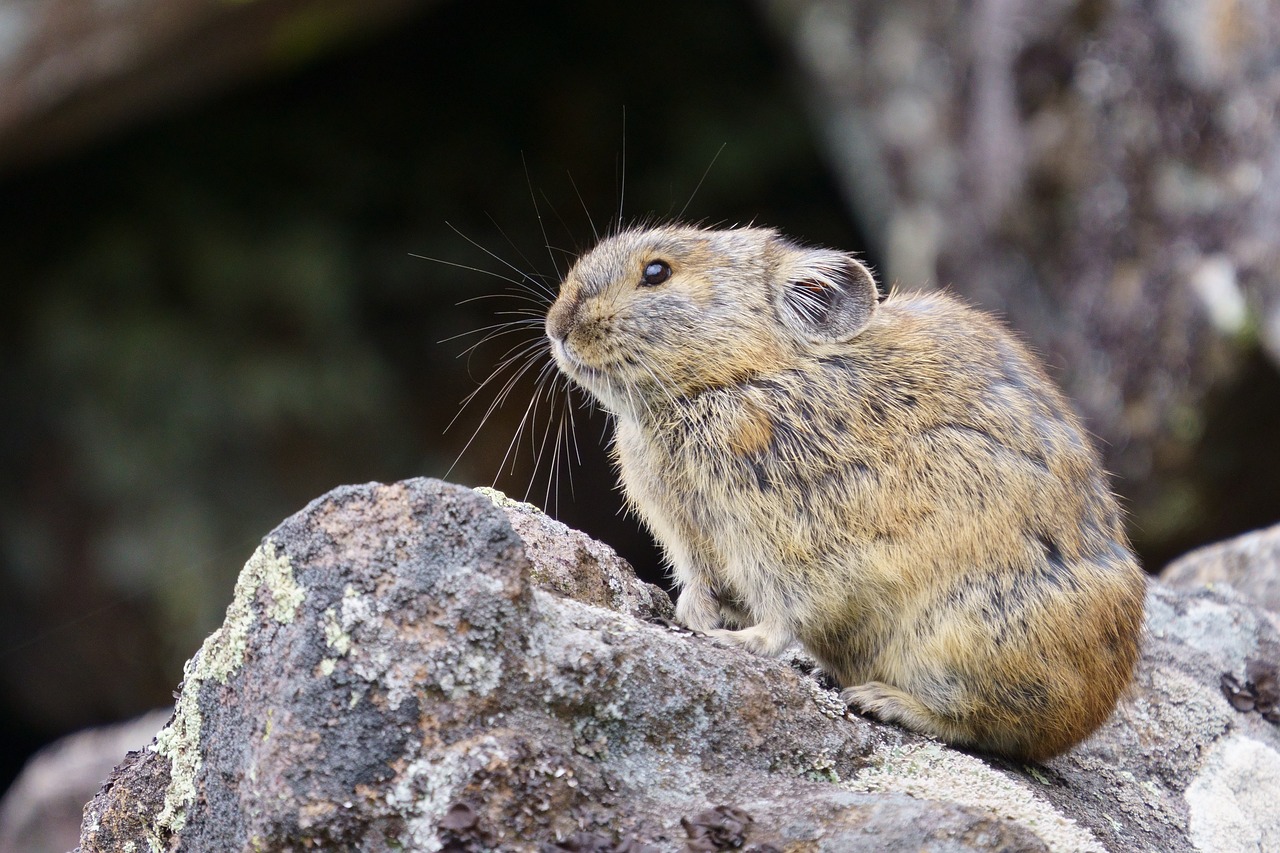
American Pika

Pika, Courtesy Pixabay, Makieni77 Contributor
American Pika
Courtesy Pixabay, Makieni77 Contributor
As I hike the high country, there is a non-bird call that always brightens my way. A mini rabbit, or rock rabbit in Jack vernacular, the pika, has been declared North America’s cutest mammal. I won’t argue with this declaration, unless it’s compared to my grandkids.

On a scramble up two gnarly peaks above Alta Ski Resort a few weeks ago, my spirits went sky high with an abundance of pika busily gathering hay for their winter larder. Their Ehhhhh! Notes surrounded us, tiny furry forms darting in and out of boulder fields while we made our way to the summits.

This was especially heartening given the warming trends, which push these little spirits beyond their limits of heat tolerance in too many locations. Pikas have disappeared from more than one-third of their previously known habitat in Oregon and Nevada. Despite this, the American Pika has not been listed under the Endangered Species Act. The pika can overheat and die within 6 hours when exposed to temperatures as mild as 78 degrees Fahrenheit.

American Pikas are famously vocal. They chirp, sing, and scream in an effort to protect their territory. They use their signature call to alert others in the colony of an approaching predator, to establish boundaries, and in some cases, to attract mates.

Pikas spend a great deal of time gathering vegetation for winter which they cure on rocks to prevent molding, then store their piles under rocks for safekeeping, occasionally moving them so they don't get rained on. Haystacks, as they're called, weigh a whopping 61 pounds on average. The timing of haying seems to correlate to the amount of precipitation from the previous winter. They appear to assess the nutritional value of available food and harvest accordingly. Pikas select plants that have the higher caloric, protein, lipid, and water content. They also enjoy their fecal pellets, which have more energy value than stored plant food, by consuming them directly or store for a later sweet treat.
Cedar Breaks National monument in southern Utah has adopted the pika as its token mammal. You can get your own stuffy who has a remarkable resemblance to the real deal. Your donation will help the Monument with its field research on the pika and other park critters.

Considering pika are mostly found in alpine and subalpine environments with cool temperatures and deep snow, I was shocked to find them occurring at Craters of the Moon National Monument in Idaho averaging 6000’ elevation. Summer temperatures at the Monument can soar to 170 degrees on the black rock surface, which would fry a pica in short order. Yet, here they are, finding relief in lava tubes and deep crevasses. Unlike their diurnal alpine cousins, they are primarily crepuscular- active early morning- late evening.

The American pika can be found throughout the mountains of western North America, from Canada to New Mexico. Of the 30 global species, only two inhabit North America, which includes the collared pika found in Alaska and Canada.

Jack Greene for Bridgerland Audubon Society, and I’m wild about Utah and its rock rabbits!

Credits:
Image: Courtesy Pixabay, https://pixabay.com/photos/pika-animal-wildlife-nature-cute-5326942/
Audio: Courtesy & ©
Text: Jack Greene, Bridgerland Audubon, https://bridgerlandaudubon.org/
Additional Reading: Lyle W Bingham, Webmaster, Bridgerland Audubon, https://bridgerlandaudubon.org/

Additional Reading:

Jack Greene’s Postings on Wild About Utah, https://wildaboututah.org/author/jack/

Cane, Jim, Voice: Dick Hurren, Pikas, Our First Haymakers Wild About Utah, October 28, 2008, https://wildaboututah.org/pikas-our-first-haymakers/

Patent, Dorothy Hinshaw, Pika Country: Climate Change at the Top of the World, September 18, 2020, https://www.amazon.com/Pika-Country-Climate-Change-World/dp/1970039027

Plumb, Sally, A Pika’s Tail, May 1, 2012, https://www.amazon.com/Pikas-Tail-Sally-Plumb/dp/0931895251

American Pika, Utah Species, Field Guide, Utah Division of Wildlife Resources, Department of Natural Resources, State of Utah, https://fieldguide.wildlife.utah.gov/?species=ochotona%20princeps

American Pika, Animal Diversity Web, https://animaldiversity.org/accounts/Ochotona_princeps/

Booth, Michael, Chirp one out for the pika: Climate change is destabilizing previously perfect Rocky Mountain habitat, December 4, 2025, https://coloradosun.com/2025/12/04/colorado-pika-population-global-warming/

I Ate A Bug

Bugfest Poster, Utah Museum of Natural History (UMNH), Courtesy Mary Heers
Bugfest Poster
Utah Museum of Natural History (UMNH)
Photo Courtesy Mary Heers

UMNH I ate a BUG button Courtesy Mary Heers UMNH I ate a BUG button
Courtesy Mary Heers

Never one to say no to an adventure, this month I found myself sitting in the front row at the Bug Bar at the Natural History Museum in Salt Lake. I was waiting for the Bug Bar to open and serve up some insects.

This was the first day of the museum’s annual Bug Festival, and the lobby was full of interesting displays and presenters. But the one that intrigued me the most was the one that suggested we should be bringing insects into our kitchens.

Soon Megan Bartley, an anthropologist and professional chef, walked onto the stage along with the museum director. She began by telling us North America and Europe were the only two places on earth where people did not routinely eat insects.

After all, she said, insects are high in protein, have no carbs, no fat and are gluten free. Furthermore, they can be raised with a lot less water than other foods, and do not create greenhouse gases.

With all this going for them, Megan was here to prove that insects can also be very tasty.

“Are you ready to chow down?” the museum director shouted.

“Yes,” we shouted back. There was no turning back now.

First up on the menu was Spicy Giant Water Bug Pasta. Small samples were handed out and I glanced cautiously into the paper cup. I recognized bowtie pasta, and a little cilantro, carrots and onions, No sign of a water bug. I ate my forkful, and it was delicious. Megan told us the water bugs had been ground up and hidden in the imported Thai chili paste. It was the water bugs that gave the pasta a bit of a musky flavor.

We moved on to Raspberry Ant Pastries. Here, the ants weren’t ground up, but more or less hidden in the raspberry jam. Megan told us it was the ants that gave the pastry its citrus kick.

Then it was time for the ‘Apple Slaw with Candied Crickets.’ The crickets had been toasted in melted butter, sprinkled with sugar and a pinch of salt, and then tossed into an apple and cabbage slaw. There was a slightly unnerving crunch when I bit into this sample, but I had to admit it too was delicious.

The final sample was Grasshopper Tacos. The dehydrated grasshoppers had been sauteed in olive oil with garlic, onions and chipotle peppers. They were served on a dollop of guacamole. A quick look and I could clearly see the grasshopper. But by then I was ready to go for it. It was predictably crunchy – and also delicious.

Megan had proved her point that eating insects could be very tasty. More importantly, she got us thinking that it was time to consider this sustainable source of protein that can help curb food insecurity in our rapidly growing world.

Megan wrapped up with a caution about eating the insects that live around our homes. There’s no telling what these insects have been eating. Better to stick with the ones farmed in controlled environments.

I whipped out my phone and ordered some black ants and some toasted crickets online.

Then I pinned on one of the museum’s “I Ate a Bug” buttons and proudly wore it home.

This is Mary Heers and I’m Wild About Utah

Credits:

Images Courtesy & Copyright Mary Heers, Photographer
Featured Audio: Courtesy & Copyright © Friend Weller, Utah Public Radio upr.org & Cook Laboratories https://folklife.si.edu/archives-and-resources/cook-labs-records
Text: Mary Heers, https://cca.usu.edu/files/awards/art-and-mary-heers-citation.pdf
Additional Reading: Lyle Bingham, https://bridgerlandaudubon.org/

Additional Reading

Wild About Utah, Mary Heers’ Postings

Natural History Museum of Utah, Rio Tinto Center, University of Utah, https://nhmu.utah.edu/

Bugfest, Natural History Museum of Utah, Rio Tinto Center, University of Utah, https://nhmu.utah.edu/programs/bugfest

Edible Insects, Entosense, Inc, https://www.edibleinsects.com/

Galloping Thru Time

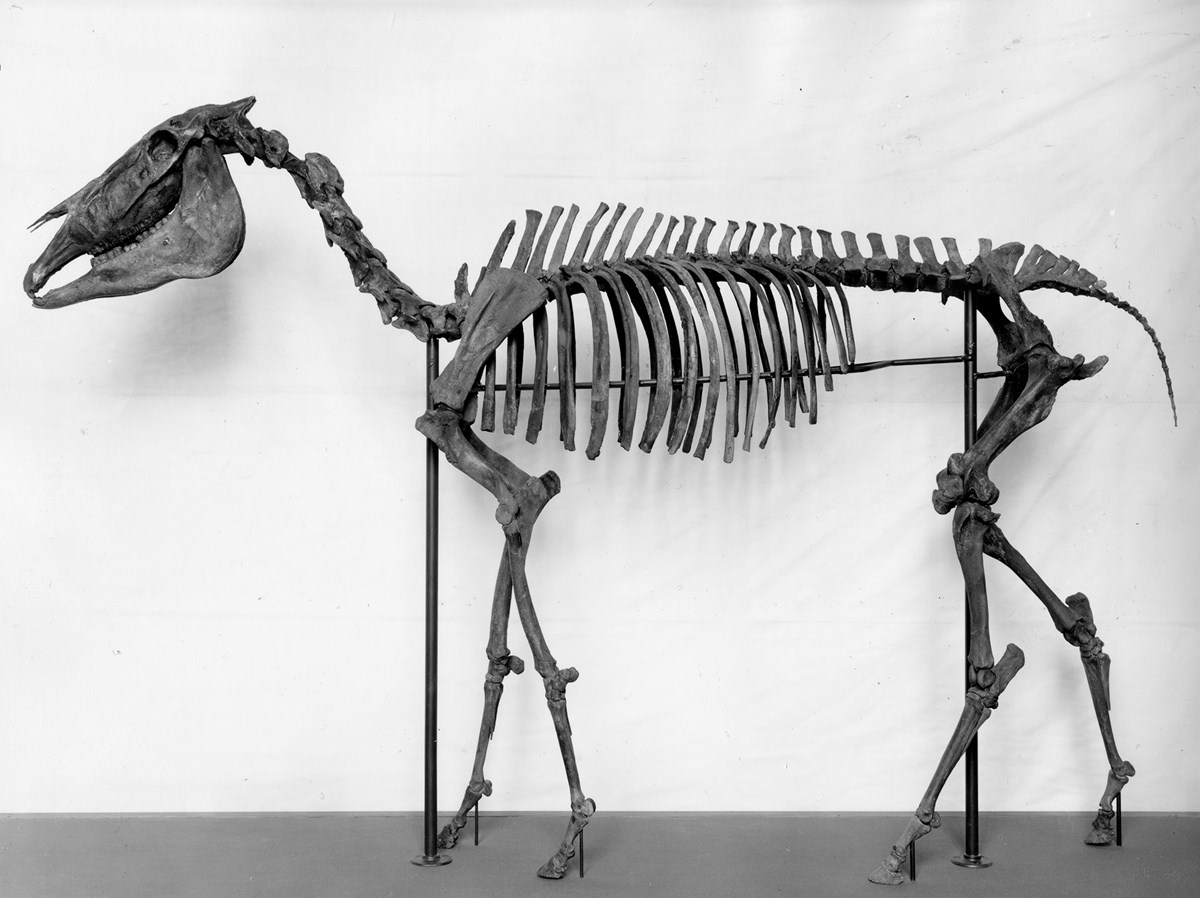
Gallop Thru Time: The Hagerman Horse (Equus simplicidens), Hagerman Fossil Beds National Monument, Courtesy US NPS
The Hagerman Horse (Equus simplicidens), Hagerman Fossil Beds National Monument, Courtesy US NPS

Elmer Cook Recognition Plaque Hagerman Fossil Bed National Monument Courtesy & © Mary Heers, Photographer Elmer Cook Recognition Plaque
Hagerman Fossil Bed National Monument
Courtesy & © Mary Heers, Photographer

Mary Heers' Selfie with the Hagerman Horse Hagerman Fossil Bed National Monument Courtesy & © Mary Heers, Photographer Mary Heers’ Selfie with the Hagerman Horse
Hagerman Fossil Bed National Monument
Courtesy & © Mary Heers, Photographer

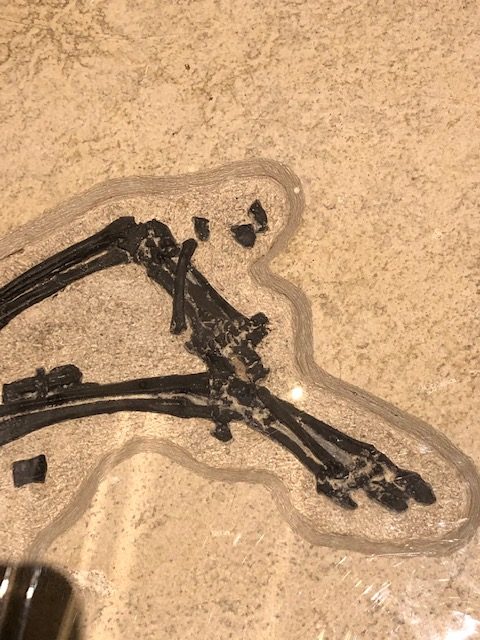
Three Toes on the Kemmerer Horse Utah Museum of Natural History Courtesy & © Mary Heers, Photographer Three Toes on the Kemmerer Horse
Utah Museum of Natural History
Courtesy & © Mary Heers, Photographer

Metacarpal Toe, Hoof Hagerman Horse Equus simplicidens Hagerman Fossil Bed National Monument Courtesy & © Mary Heers, Photographer Metacarpal Toe, Hoof Hagerman Horse
Equus simplicidens
Hagerman Fossil Bed National Monument
Courtesy & © Mary Heers, Photographer

Metacarpal Toe, Hoof Domestic Horse Equus ferus caballus Hagerman Fossil Bed National Monument Courtesy & © Mary Heers, Photographer Metacarpal Toe, Hoof Domestic Horse
Equus ferus caballus
Hagerman Fossil Bed National Monument
Courtesy & © Mary Heers, Photographer

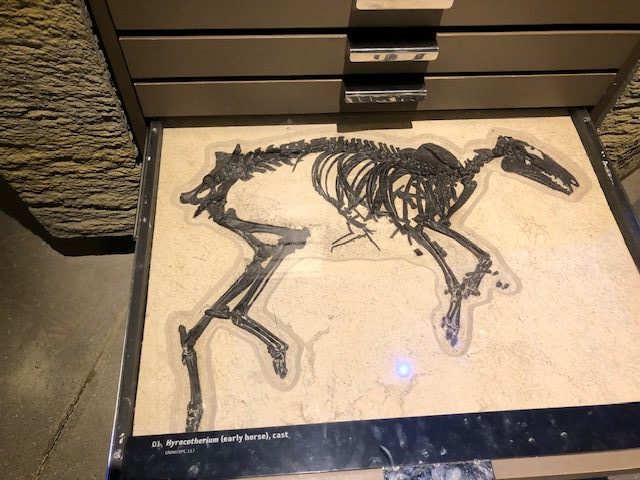
Cast of Kemmerer Early Horse Utah Museum of Natural History Courtesy & © Mary Heers, Photographer Cast of Kemmerer Early Horse
Utah Museum of Natural History
Courtesy & © Mary Heers, Photographer

In 1928 Elmer Cook, a rancher in Hagerman, Idaho, noticed an interesting bone sticking our of the hillside on his land overlooking the Snake River. Intrigued, he started to dig around and discovered it was a fossilized bone and there were plenty more like it. Elmer alerted the National Smithsonian Museum, who sent out a team. This team determined the bones were ancestors of the modern horse. They were 3½ million years old. In the end, after digging into the hillside for 2 years, they took over 200 fossils, including 12 complete horse skeletons, back to Washington D.C.

My own fascination with horse fossils actually began a few years ago when I was giving tours at the Utah Museum of Natural History in Salt Lake City. A fossil hunter near Kemmerer, Wyoming, had been quite surprised to find a small mammal while digging through layers of fossilized fish in an ancient seabed. This skeleton is now also in the Smithsonian Museum in D.C., but the Utah museum owns a copy.

When giving tours, I always paused my group as we entered the dinosaur floor. “I’m going to pull a whole horse out of here,” I’d say as I pulled a sliding drawer out of a chest with a flourish.

It was a fully grown horse about the size of a small dog – 24 inches long and 20 inches high.

It was over 50 million years old. In that time, the Intermountain West was a lush, swampy place. Fierce predators like the Utah Raptor roamed the land, and the mammals that survived were small and stayed hidden in the dense forested undergrowth.

Over the next 50 million years, the dinosaurs went extinct and the terrain dried out The Hagerman Horse (dating back 3 ½ million years ) stood about 4 ½ feet high. Most notably, it now stood on four hooves. The 3 toes on the Kemmerer Horse had evolved into a single dominant toe, perfectly adapted to running away from predators over dry terrain.

Unfortunately, this remarkable adaptation was not enough to save the horse. The horse went extinct in the Americas (along with other large mammals like the mammoth and giant sloth) about 10,000 years ago. It was the Spanish Conquistadors that reintroduced the horse to North America. When Hernan Cortez and his 200 soldiers landed in Mexico in 1519, they brought 16 horses with them. Over time, some of these horses got away to form wild bands, and others fell into the hands of the Native Americans.

This summer I made a small archeological pilgrimage into Idaho, to see the Hagerman Fossil Beds, now a National Monument. In the newly opened visitor center I found a life size replica of the Hagerman Horse. As I stood next to it, admiring its shapely hoof, I remembered one more remarkable fact about the horse. The bows now used to play violins are made from horse hair It takes 5 horse tails to make a violin bow. To this day, absolutely nothing has been found that makes the strings of a violin sing as sweetly.

This is Mary Heers and I am Wild About Utah.

Credits:
Photos: Courtesy & Copyright © Mary Heers
Photos: Courtesy
Featured Audio: Courtesy & Copyright © Kevin Colver, https://wildstore.wildsanctuary.com/collections/special-collections/kevin-colver
Text: Mary Heers, https://cca.usu.edu/files/awards/art-and-mary-heers-citation.pdf
Additional Reading: Lyle Bingham, https://bridgerlandaudubon.org/

Additional Reading

Wild About Utah, Mary Heers’ Wild About Utah Postings

Hagerman Fossil Beds National Monument, History, National Parks Service, US Department of the Interior, https://npshistory.com/publications/hafo/index.htm

The Hagerman Horse (Equus simplicidens), Hagerman Fossil Beds National Monument, National Parks Service, US Department of the Interior, https://www.nps.gov/articles/000/equus_simplicidens.htm

Hagerman Fossil Beds, National Parks Service, US Department of the Interior, https://www.nps.gov/hafo/index.htm

The Horse (Exhibit), Natural History Museum of Utah, July 21, 2014 – January 4, 2015, https://nhmu.utah.edu/horse#:~:text=The%20Natural%20History%20Museum%20of,and%20spiritual%20connections%20with%20them.
Natural History Museum of Utah,https://nhmu.utah.edu/

Fossil Horse Quarry Near Hagerman, Idaho, Worked by National Museum, Smithsonian Libraries and Archives, The Smithsonian Institution, https://www.si.edu/object/fossil-horse-quarry-near-hagerman-idaho-worked-national-museum:siris_arc_367758

Plesippus shoshonensis Gidley, 1930, National Museum of Natural History, The Smithsonian Institution, https://www.si.edu/object/plesippus-shoshonensis-gidley-1930:nmnhpaleobiology_3590445