USA National Phenology Network

Courtesy USA National Phenology Network

The study of recurring plant and animal life cycle events is phenology. It is the calendar of nature. This includes when plants flower, when birds migrate and when crops mature. Phenology is relevant to interactions between organisms, seasonal timing and large-scale cycles of water and carbon. Phenology is important to us for many reasons. Farmers need to know when to plant and harvest crops and when to expect pests to emerge. Resource managers use it to monitor and predict drought and assess fire risk. Vacationers want to know when the best fall colors will be or when the wildflower blooms will peak. Timing varies but we can discern patterns.

The USA National Phenology Network monitors the influence of climate on the phenology of plants, animals and landscapes. They encourage people to observe phenological events such as flowering, migrations and egg laying. The Phenology Network provides a place to enter, store and share these observations, which are then compiled and analyzed nationwide. Participants range from individual observers in their own backyards to professional scientists monitoring long-term plots. My husband and I monitor leafing and flowering of lilacs, a key species in the program.

These observations support a wide range of decisions made routinely by citizens, managers, scientists and others. This includes decisions related to allergies, wildfires, pest control, and water management.

I urge you to participate. The National Phenology Network has many public, private and citizen partners. It is a great way to become involved in a nation-wide effort to better understand our environment. All this information and much more is available at the National Phenology website, to which there is a link from our Wild About Utah website.

This is Linda Kervin for Bridgerland Audubon Society.

Credits:

Text: Linda Kervin, Bridgerland Audubon Society
Additional Reading:

Linda Kervin’s pieces on Wild About Utah

Phenology Tools for Community Science
USA National Phenology Network, https://www.usanpn.org/
Nature’s Notebook Education Program, US National Phenology Network, https://www.usanpn.org/nn/education

North American Bird Phenology Program, USGS Patuxent Wildlife Research Center, https://www.pwrc.usgs.gov/bpp/BecomeAParticipant.cfm

eBird, https://www.ebird.org/

iNaturalist, https://www.inaturalist.org/
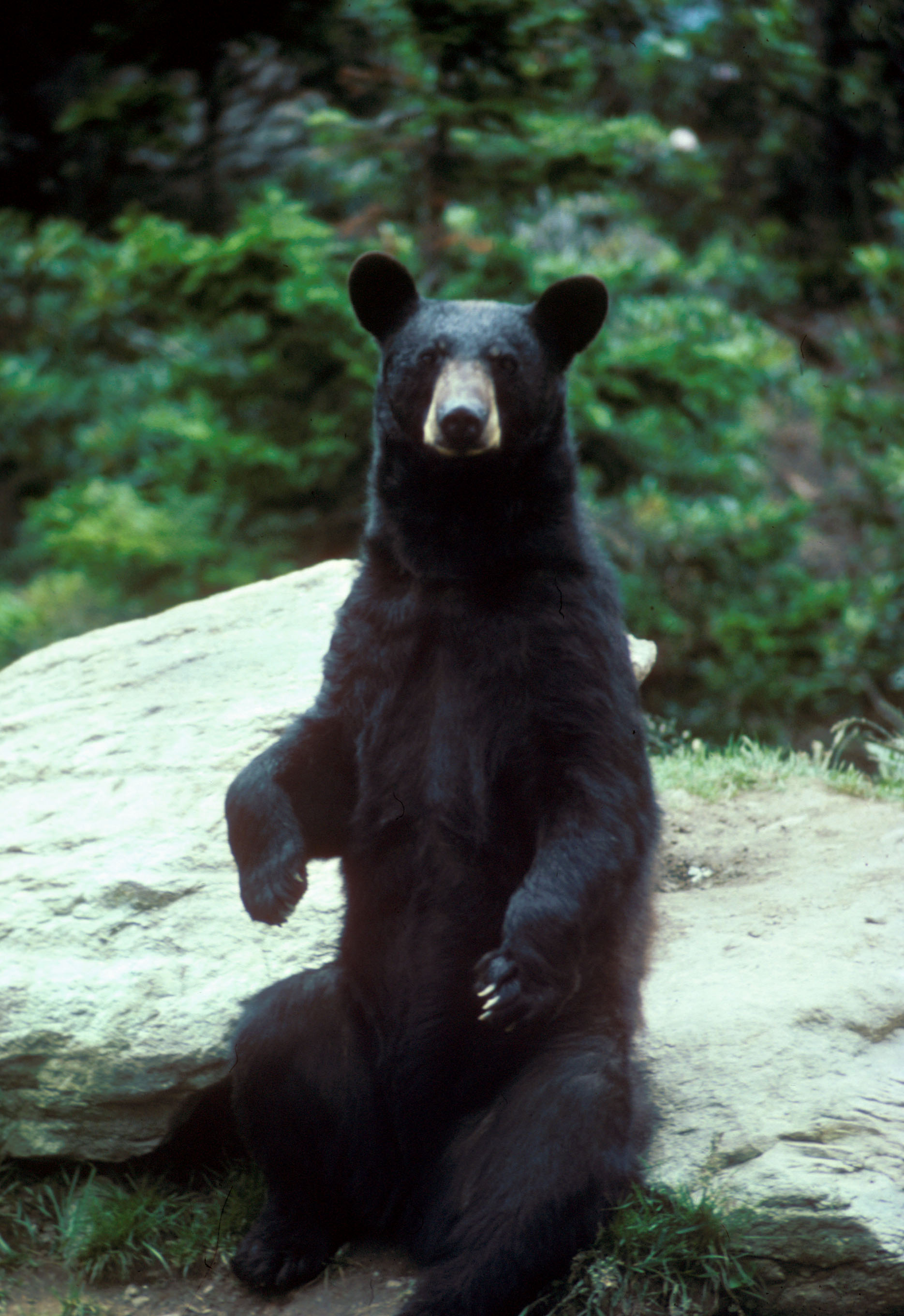
Blackbears

Black Bear Sitting
Photo Courtesy US FWS
Mike Bender, Photographer

Hi, this is Mark Larese-Casanova from the Utah Master Naturalist Program at Utah State University Extension.

I have to admit that it didn’t make much sense to me that yesterday was the start of summer. While sitting in the warm sun, feeling like winter forgot to give spring a turn in the seasonal cycle, I though of the American black bear, another mammal that also probably wondered when the warm weather would finally arrive.

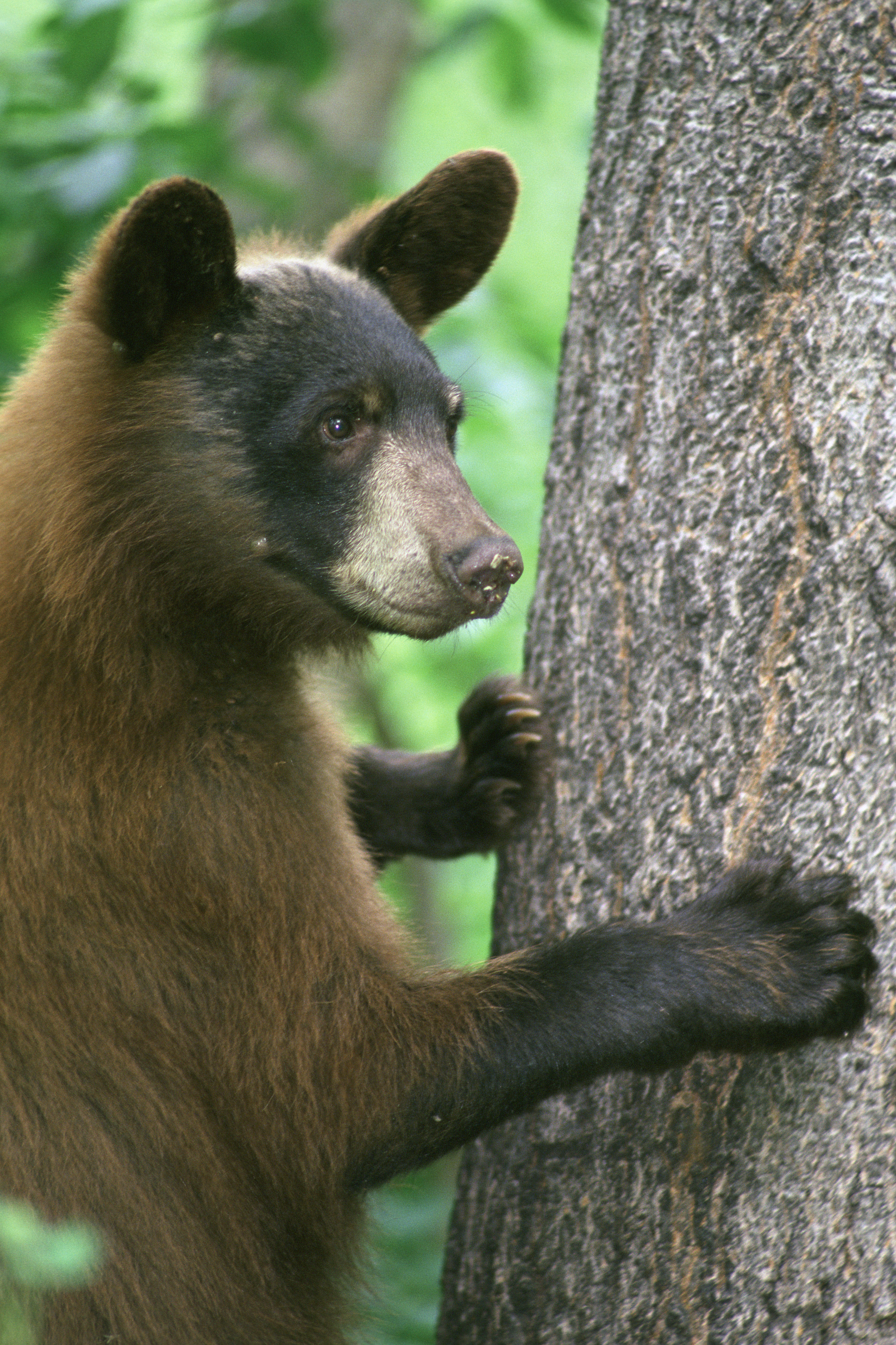
Black bears are native to most of North America, even into northern Mexico. In Utah, black bears are common throughout many of the state’s forests. Contrary to its name, black bears tend to be medium to dark brown in the western US, although its color can range all the way from blonde or cinnamon to black.

As black bears emerge from their winter slumber, they are particularly hungry from several months of living mostly off of fat reserves. This is an even greater challenge for females because cubs are born in January or February and survive on the mother’s milk until spring. So, when spring arrives, they are more than happy to feed on a wide variety of foods, including fruits, nuts, grubs and other insects, small vertebrates, and carrion. Bears are most actively feeding around dawn or dusk, but may feed at other times of day if they become habituated to human food sources.

Young Male Blackbear Climbing Tree
Photo Courtesy US FWS
Steve Maslowski, Photographer

Black bears have been known to attack humans, although usually very infrequently. Attacks most often happen when a black bear is defending cubs or food, or as a result of becoming accustomed to obtaining food from people.

Will the black bears be as hungry for summer as we are? It might be best to not take any chances while out exploring the mountains this summer. When not eating, be sure to carry all food, garbage, and scented items, such as toothpaste and chapstick, in an airtight plastic bag or securely store them in a vehicle or bear-proof container. I’d even recommend carrying bear spray just to be safe. And, don’t forget to hold on tight to those pic-a-nic baskets!

For Wild About Utah, I’m Mark Larese-Casanova.

Credits:

Images: Courtesy US FWS: https://Images.fws.gov
Text:     Mark Larese-Casanova, Utah Master Naturalist Program at Utah State University Extension.
Additional Reading:

Burt, W. H. and R. P. Grossenheider. 1980. A field guide to the mammals. Houghton Mifflin Company, Boston. 289 pp.

Safety in Bear Country https://wildlife.utah.gov/dwr/learn-more/bear-safety.html

Utah Division of Wildlife Resources Utah Conservation Data Center https://dwrcdc.nr.utah.gov/rsgis2/Search/Display.asp?FlNm=ursuamer


Spotted Sandpiper

Spotted Sandpiper
Courtesy US FWS and
Photographer: Dave Menke

An ancient Latin proverb declares that: “Nature abhors a vacuum”. Every naturalist comes to learn that Nature also loves an exception. Sandpipers are a good example. Coastal beaches bring sandpipers to mind, their flocks either loafing about the upper beach or manically advancing and retreating just ahead of the surf line. Every beachcomber can picture the scene.

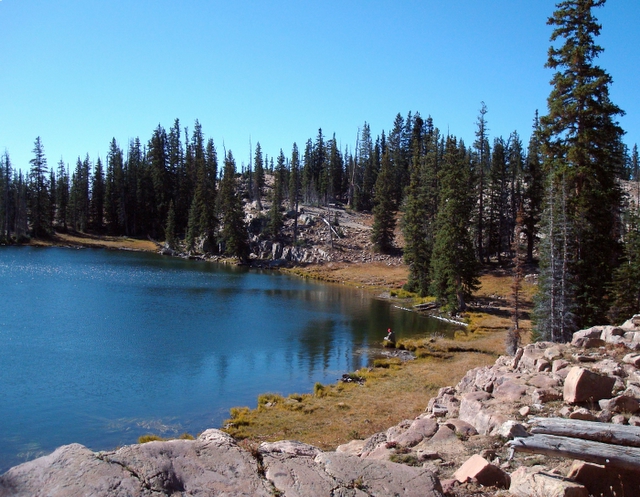
Imagine, then, hearing this solitary call during your hike past some montane stream, lake or beaver pond.

[Spotted Sandpiper recording, hosted by Western Soundscape Archive, J Willard Marriott Library, University of Utah Copyright 2007 Kevin Colver https://wildstore.wildsanctuary.com/collections/special-collections]

Spotted Sandpiper Habitat
Courtesy & Copyright 2010 Linda Kervin

That sure sounds like a sandpiper, but isn’t the context all wrong? Here you can trust your ears and not your experience. When the bird flushes and flies away on stiff shallow wing beats, you’ll see that the calling bird was indeed a Spotted Sandpiper, easily recognized by the dark spots that speckle its pale breast. This bird is sometimes called a “teeter peep” too, because it bobs its tail incessantly. Its an odd bird, for it is the male Spotted Sandpiper who tends nest and chicks, while the female busily courts other males. That’s polyandry and among birds, its very rare.

Unlike its more coastal kin, the Spotted Sandpiper is right at home in Utah’s high alpine habitats, just so long as it has shallow water and meadows in which to search for its invertebrate meals. Maybe the Spotted Sandpiper is not so exceptional after all, for the upthrust limestones, shales and other sedimentary rocks that compose many of our mountains were deposited under ancient seas that once inundated Utah. Perhaps the Spotted Sandpiper is just exceptional for its late arrival at that prehistoric beach party.

This is Linda Kervin for Bridgerland Audubon Society.

Credits:
Audio: Spotted Sandpiper audio courtesy and Copyright Kevin Colver https://wildstore.wildsanctuary.com/collections/special-collections
Photos: Courtesy US FWS, Photographer Dave Menke
and habitat photo Courtesy & Copyright 2010 Linda Kervin
Text: Jim Cane, Bridgerland Audubon Society

Additional Reading:

Spotted Sandpiper on Utahbirds.org, https://www.utahbirds.org/birdsofutah/ProfilesS-Z/SpottedSandpiper.htm

Blackbirds in Our Wetlands

Blackbirds in Our Wetlands
Male Red-winged Blackbird
Photo Courtesy US FWS
George Gentry, Photographer

Hi, this is Mark Larese-Casanova from the Utah Master Naturalist Program at Utah State University Extension.

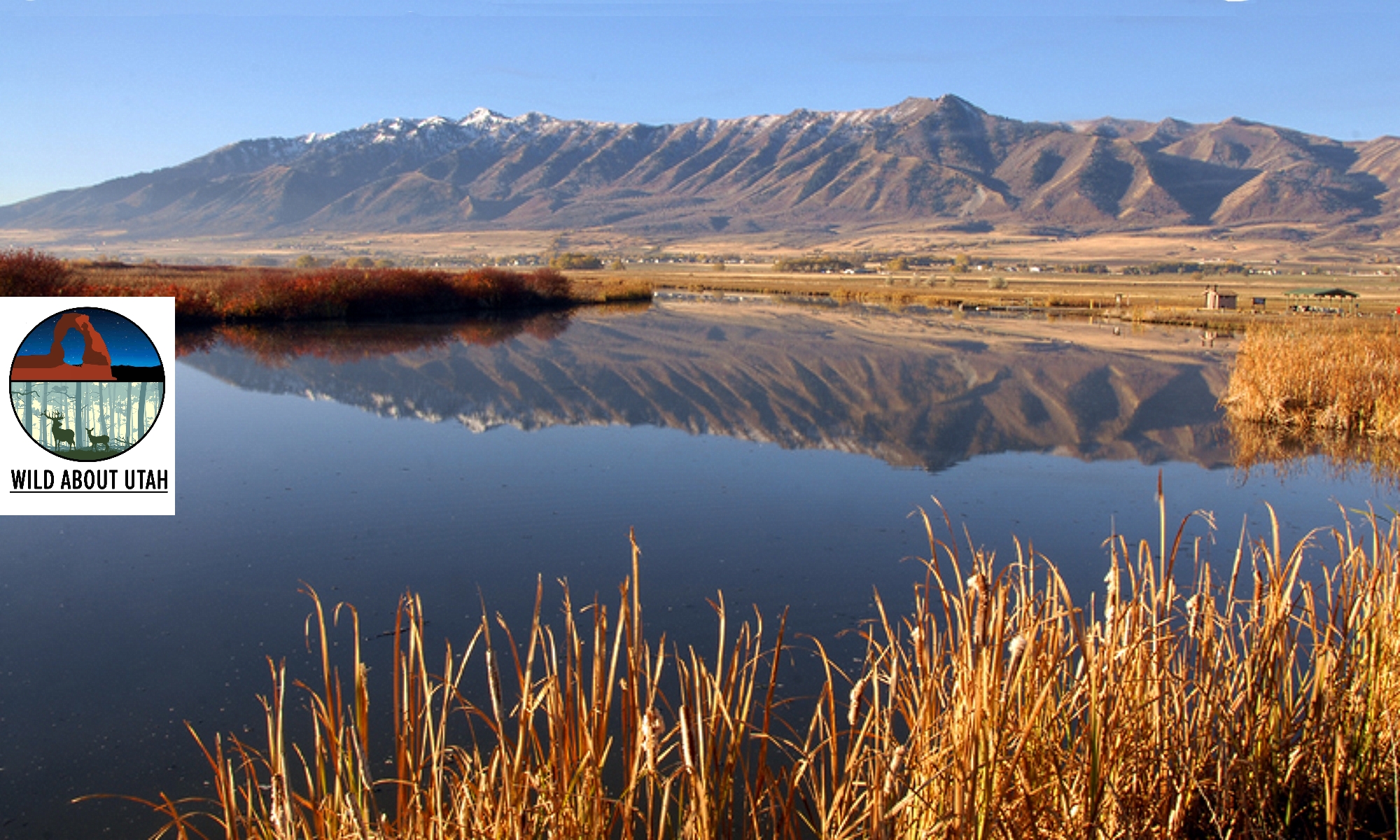
Now that spring finally seems to be arriving here in Utah, marshes, ponds, and other wetlands have sprung to life. It’s impossible to walk by a wetland without seeing countless birds rushing about collecting nest material, feeding, or advertising and defending territories.

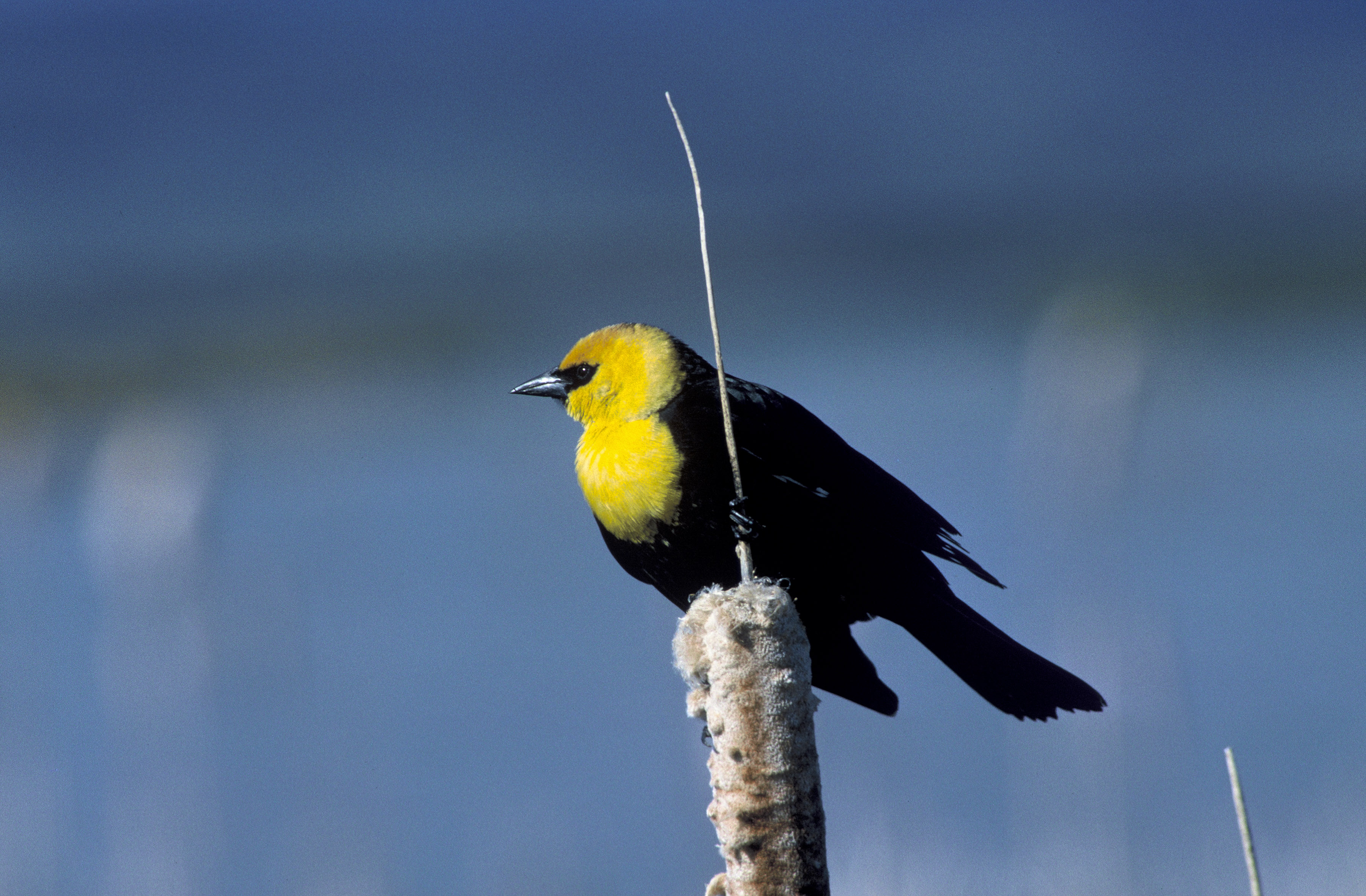
Two birds most commonly seen and heard in Utah’s wetlands are the red-winged blackbird [Red-winged Blackbird call, © Kevin Colver]and yellow-headed blackbird[Yellow-headed Blackbird call, © Kevin Colver]. As their names suggest, both are black birds a little smaller in size than a robin. The red winged blackbird has a red shoulder with a yellow bar below, and the yellow-headed blackbird has a bright yellow head.

Both the red-winged and yellow-headed blackbirds eat the same foods, which primarily include insects during the summer, and seeds at other times of the year. They also both prefer to nest in stands of cattails, bulrush, or other wetland plants emerging from standing water. So, how is it that two very similar species of birds can coexist with the same habitat preferences?

Male Yellow-headed Blackbird
Photo Courtesy US FWS
Dave Menke, Photographer

Well, competition and exclusion might be better descriptions than coexistence. While the red-winged blackbird can successfully nest in a variety of habitats near wetlands, the yellow-headed blackbird specializes in nesting in the emergent wetland plants. This could be a disadvantage for the yellow-headed blackbird if it wasn’t for the fact that it typically nests in groups, or colonies, and are better able to defend a territory from intrusion by the more solitary nesting red-winged blackbird. So, in wetlands where only red-winged blackbirds occur, they are able to nest in the preferred habitat. But, when yellow-headed blackbirds are present, they force the red-wings to nest in less suitable habitat, even in tall trees far away.

While red-winged blackbirds can often be seen year-round in Utah, the yellow-headed blackbird is usually only here for the summer breeding season. So, think of it as if we were red-winged blackbirds and our distant, out-of-state cousins came to visit for the summer. They get the most comfortable beds in the house, and they eat all of our favorite foods. But, come the end of summer, they head back south, and we can enjoy our homes to ourselves.

To see photos of the two blackbirds mentioned in this program, please visit wildaboututah.org.

For Wild About Utah, I’m Mark Larese-Casanova.

Credits:

Audio: Blackbird calls courtesy and Copyright Kevin Colver https://wildstore.wildsanctuary.com/collections/special-collections
https://wildstore.wildsanctuary.com/collections/special-collections
Images: Courtesy US FWS: https://Images.fws.gov
Text:     Mark Larese-Casanova, Utah Master Naturalist Program at Utah State University Extension.

Additional Reading:

Miller, R. S. 1968. Conditions of Competition Between Redwings and Yellowheaded Blackbirds. Journal of Animal Ecology, Vol. 37, No. 1 (Feb., 1968), pp. 43-62.

Minock, M. E., and Watson, J. R. Red-Winged and Yellow-Headed Blackbird Nesting Habitat in a Wisconsin Marsh. Journal of Field Ornithology, Vol. 54, No. 3 (Summer, 1983), pp. 324-326.