The Mysterious Salamander

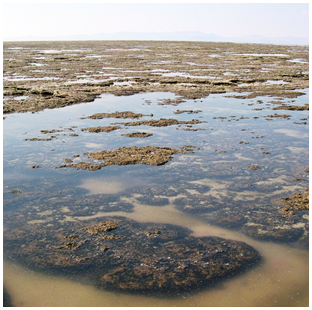
The Mysterious Salamander: Tiger salamander egg mass, Copyright 2009 Jason Jones, Utah Division of Wildlife Resources
Tiger salamander egg mass
Copyright 2009 Jason Jones
Utah Division of Wildlife Resources
Salamanders have long been a source of mystery for humans and their name reflects some of this mystique. The word salamander has its roots in an Arab-Persian word meaning ‘lives in fire’, reflecting an early belief that salamanders could walk through fire unscathed. Mentioned by Aristotle, Aesop, and Shakespeare, this myth likely arose from salamanders that fled the fireplace once their cozy home in the woodpile was disturbedThe Mysterious Salamander

Utah is home to only one of the world’s more than 500 salamander species. Our tiger salamanders can live in a multitude of different habitats, so long as there is access to fresh water. Because of their need to stay moist, salamanders live a life often hidden from view – spending much of their time underneath rocks, leaves, and other debris. But in early spring, these unique creatures become more active and leave their homes in search of a mate.

Long-toed salamander larvae
in an egg
Copyright 2007 Jason JonesUtah Division of Wildlife Resources

The salamander lifecycle is similar to that of a frog. Eggs are laid in a pond or other source of still water, and hatch into larvae called efts, which look quite like their frog counterpart, the tadpole. After spending a few weeks in the larval stage, individuals metamorphose into an adult.

While modern science has debunked a lot of salamander myths one big mystery still remains. Not all salamanders undergo metamorphosis to become what we recognize as an adult salamander. Some remain in the larval form their entire life, and are even able to reproduce as larvae. This phenomenon, called paedomorphism, has been documented in a number of salamander species, and scientists don’t really understand why or how it happens. Some speculate that the ability to morph or not helps salamanders overcome environmental challenges, such as competition for resources, lack of water, or increased predation.

Tiger salamander eft
Copyright 2007 Jason Jones
Utah Division of Wildlife Resources

Unfortunately, this amazing adaptation has not helped salamanders overcome recent decreases in population that baffled scientists for many years. At one time mysterious, scientists now understand that salamanders are some of the first species to show the effects of pollution in their environment. Now that this particular salamander mystery has been solved, these animals are playing an increasingly important role in determining ecosystem health which may help save many other species.

For more information and photographs of tiger salamanders, please visit our website at www.wildaboututah.org. Thank you to the Rocky Mountain Power Foundation for supporting the research and development of this Wild About Utah topic.

Adult tiger salamander
Copyright 2002 Richard Fridell
Utah Division of Wildlife Resources

For the Stokes Nature Center and Wild About Utah, this is Andrea Liberatore.

Credits:

Photos:

Courtesy & Copyright Jason Jones, Utah Division of Wildlife Resources
Courtesy & Copyright Richard Fridell, Utah Division of Wildlife Resources
Courtesy & Copyright Krissy Wilson, Utah Division of Wildlife Resources
Text: Andrea Liberatore, Stokes Nature Center

Adult tiger salamander,
Copyright 2002 Krissy Wilson
Utah Division of Wildlife Resources

Additional Reading:

Donel, M., Joly, P., Whiteman, H.H. 2005. Evolutionary Ecology of Facultative Paedomorphosis in Newts and Salamanders. Biological Review 80 663-671,

https://onlinelibrary.wiley.com/doi/10.1017
/S1464793105006858/abstract

Grzimek’s Animal Life Encyclopedia, Second Edition. 2003. Volume 6: Amphibians. Farmington Hills, MI: Thompson Gale, https://www.amazon.com/Grzimeks-Animal-Life-Encyclopedia-Amphibians/dp/0787657824

Stebbins, Robert C. 2003. Peterson Field Guides: Western Reptiles and Amphibians, Third Edition. New York: Houghton Mifflin Company., https://www.amazon.com/Field-Western-Reptiles-Amphibians-Peterson/dp/0395982723

Whiteman, Howard H. 1994. Evolution of Facultative Paedomorphosis in Salamanders. The Quarterly Review of Biology 69(2) 205-220, https://www.jstor.org/pss/3037717

Owl Vision

Barn Owl Sleeping in a Tree
Copyright © 2010 Mike Fish

Hi I’m Holly Strand.

Great-horned and other nocturnal owls have phenomenal nighttime vision. In some respects—they see much better by night than we can by the light of the sun. The visual acuity of owls springs from a number of interesting adaptations.

Of course you’ve noticed that owls have big eyes. If our eyes were in the same proportion to the size of our head, they would be the size of grapefruits! Large owl corneas and lenses help maximize the amount of light received by the retina.

There are two types of photo receptors in the retina. Cones operate in bright light and give fine detail and color vision. Rods work with much less light but compromise somewhat on detail and color. Owl eyes contain considerably more rods than cones while the eyes of daytime animals–like us –contain many more cones than rods.

Great Horned Owl
Copyright © 2010 Mike Fish

Owls –and other nocturnal creatures—have a mirror-like structure behind the retina called a tapetum. Light passes through the rods and cones, strikes the tapetum and is reflected back through the eye to the light source. The tapetum ensures that any light unabsorbed by receptor cells is reflected back through the eye. This gives the receptor cells a second chance at stimulating the rods.

Owls, like most predators, have eyes positioned forward on the face and looking in the same direction. The resulting binocular vision gives the owl a three dimensional perspective. By accurately sensing depth, the owl can zero in on a tasty little mouse scurrying across a field and make adjustments on the wing as it closes in for a kill. To help triangulate even more precisely, owls will often bob or weave their heads to get several viewpoints of an object.

Finally, because of their unique eye structure, owls cannot move their eyes within the sockets. No worries! The owl just moves its whole head instead. On an exceptionally mobile neck, an owl head can rotate at least 270 degrees from side to side and 90 degrees up and down.

For some great pictures of owls and their enigmatic eyes, go to www.wildaboututah.org

For Wild About Utah, I’m Holly Strand.

Credits:

Photos: Courtesy and Copyright 2010 Mike Fish

Text: Holly Strand

Sources & Additional Reading:

Cornell Lab of Ornithology. https://www.birds.cornell.edu/

Utah Division of Wildlife Resources. Utah Conservation Data Center. https://dwrcdc.nr.utah.gov/ucdc/

Scholz, Floyd. 2001. Owls. Mechanicsburg PA: Stackpole Books

Sparks, John and Tony Soper. 1989. Owls: Their Natural and Unnatural History. NY: Facts on File.

Huddling for Warmth

Beaver in snow, Courtesy US FWS
Beaver in snow
Image Courtesy US FWS

When temperatures dip below freezing and wind hurries on its way, we often find ourselves looking for another warm body to huddle near and share heat. Children snuggle into laps and dogs lean close.

Many animals huddle to stave off the cold. Species that are strong individualists in balmy seasons seek warmth from a group when temperatures drop. Many non-colonial rodents will share a den come winter.

[Kevin Colver recording: Songbirds of the Southwest Canyon Country]

Pygmy nuthatches jam themselves tightly together into tree cavities as do flying squirrels. Through the winter, worker honeybees huddle tightly around a central patch of wax comb where developing larvae are growing. The larvae die if temperatures drop below 83 degrees, so a living blanket of worker bees shivers to generate the heat equivalent to a 40 watt incandescent bulb.

An animal loses heat in direct proportion to its surface area. By huddling together, each animal reduces its exposed surface area. This in turn allows them to reduce their metabolic rate and so conserve energy at a time when food can be scarce or inaccessible.

Nests or dens occupied by numerous individuals can be much warmer than ambient. A snow covered lodge with at least 2 beaver occupants can be as much as 35 degrees warmer than the outside air temperature. A study of taiga voles showed that underground nests containing 5 to 10 residents remained 7 to 12 degrees warmer than the surrounding soil and up to 25 degrees warmer than the air above. Individuals take turns going out to forage so their nest remains toasty.

Living in close proximity does have its problems. Disease and parasites are readily transmitted in tight quarters. Local food competition could potentially lead to hunger or starvation. Predators may more easily discover prey in groups. But for many animals, the advantages of huddling for warmth far outweigh the risks during our chilly winter months.

This is Linda Kervin for Bridgerland Audubon Society.
Credits:

Photos: Courtesy US FWS

Audio: Courtesy Kevin Colver, https://wildstore.wildsanctuary.com/collections/special-collections, https://wildstore.wildsanctuary.com/collections/special-collections

Text: Linda Kervin, Bridgerland Audubon Society
Additional Reading:

Life in the Cold: An Introduction to Winter Ecology. Peter Marchand. 1991, University Press of New England. https://www.amazon.com/Life-Cold-Introduction-Winter-Ecology/dp/0874517850

Lives of North American Birds. Kenn Kaufman. 1996, Houghton Mifflin Company. https://www.amazon.com/American-Peterson-Natural-History-Companions/dp/0395770173

The Birder’s Handbook. Paul R. Ehrlich, David S. Dobkin and Darryl Wheye. 1988, Simon & Schuster, Inc. https://www.amazon.com/Birders-Handbook-American-including-Regularly/dp/1435277589

Sleeping Winter Away

Yellow-bellied marmots,
one of Utah’s true hibernators
Photo courtesy Utah Division of Wildlife Resources,
Copyright Lynn Chamberlain

As Utah’s blanket of snow grows thicker and cold temperatures set in, some of our furred friends quietly retire for the winter. Gone are the marmots that basked on sunny slopes, the bears that browsed in the forests, and the bats that winged silently overhead.

Animals have a number of different strategies to help them survive in winter. Some, such as hummingbirds, migrate to a more temperate climate. Some have special adaptations that allow them to withstand cold temperatures such as mink, which grow wonderfully thick winter coats. And some, such as marmots, bears, and bats, simply find a cozy place to sleep away the winter.

The general term for this period of inactivity is “dormancy,” which includes more specific terms such as “hibernation” and “torpor.” During this time, an animal’s heart rate, breathing rate and metabolism slows down considerably. Contrary to popular belief, most of the mammals that hole up for the winter do not actually hibernate. The term hibernation applies to only a small portion of our Utah mammals – a few species of bats and some rodents like the marmot. True hibernation means that an animal’s metabolism turns off to the point that its body temperature nearly matches that of the environment around it. And in winter, this means that body temperatures can drop to nearly freezing. Hibernating animals become unresponsive to environmental stimuli such as loud noises and being touched, and it takes hours and lots of energy for them to finally awaken.

A black bear,
which survives winter
in a state called torpor
Photo courtesy Utah Division of Wildlife Resources,
Copyright Lynn Chamberlain

In contrast, consider the bear, which does not technically hibernate, but instead enters a state called torpor or ‘winter lethargy’. A bear’s body temperature does decrease during this time but never approaches freezing. Bears also remain semi-active occasionally moving about in their dens, or even giving birth and tending to their newborns. Other animals that become largely inactive in winter but do not fully hibernate include skunks, raccoons, and opossums. These animals can respond very well to environmental stimuli and can resume their full abilities in less than a minute if disturbed – something to keep in mind in case you stumble across a bear’s den this winter.

Thanks to the Rocky Mountain Power Foundation for supporting research and development of this Wild About Utah topic. For the Stokes Nature Center and Wild About Utah, this is Andrea Liberatore.

Credits:

Photos: Courtesy Utah Division of Wildlife Resources and Copyright Lynn Chamberlain, photographer

Text: Andrea Liberatore, Stokes Nature Center

Additional Reading:

Encyclopædia Britannica. 2010. “Dormancy.” Encyclopædia Britannica Online. https://www.britannica.com/EBchecked/topic/169514/dormancy (Accessed Nov. 20, 2010)

New Jersey Division of Fish and Wildlife. 2010. Black Bear Biology and Behavior. https://www.state.nj.us/dep/fgw/bearfacts_biology.htm (Accessed Nov. 20, 2010)