Wolves and wolverines in Utah? Oh my!

Wolves and wolverines in Utah? Oh my! Endangered Yellowstone Grey Wolf with Radio Collar Courtesy US FWS, William Campbell, Photographer
Endangered Yellowstone Grey Wolf with Radio Collar
Courtesy US FWS, William Campbell, Photographer
Wolves and wolverines in Utah? Oh my! As I prepare for a 3 day trip with students to Yellowstone, a stronghold for what once was, these iconic critters come to mind. The last wolves were cleared from Cache Valley in 1869. A predator drive through our valley was mustered, where every able-bodied citizen was called to arms to rid us of these villains. A wolverine met its demise on the hill where the Logan Temple now stands.

Thank goodness, we have awakened to the value of predators in maintaining healthy ecosystems, and for their aesthetic and spiritual value. After all, they coexisted along with their prey for millions of years before our species came along and began tinkering.

There are well-documented visits by these two species in Utah, including actual tactile experience. However, established breeding populations are yet to be found. Both require vast, relatively undisturbed wildlands to thrive.

Since wolves were reintroduced in Yellowstone in 1995, the Utah DWR has been able to confirm 20 wolves in our state. Nearly all confirmed sightings have been consistent with lone, dispersing wolves.

Due to a recent court ruling, wolves in much of Utah are once again listed as endangered under the federal Endangered Species Act except a small portion of northern Utah where wolves are not welcome. There is a statewide wolf management plan and personnel to manage them. Any wolves that move out of the small, delisted area are considered endangered and are subject to exclusive federal jurisdiction.

A wolverine was recently spotted in Rich County, now wandering the Uinta Mountains with a GPS collar around its neck. This is the first wolverine ever captured in Utah history. The wolverine is a male, between 3-4 years old, and biologists say he is in excellent physical condition. They are excited to learn more about this elusive animal with only eight confirmed sightings in Utah since 1979. We are on the southern edge of the wolverine’s typical habitat. This GPS tracking will allow us to understand and manage wolverines in Utah.

Now on to Yellowstone where both species are well established. Around a hundred wolves in 8 packs, and about 7 wide ranging wolverines may be found in the park. Climate-change models predict that by 2050, the spring snowpack needed for wolverine denning and hunting will make the greater Yellowstone ecosystem a critical part of its southern range. Wolverines are so rarely seen and inhabit such remote terrain at low densities that assessing population trends is difficult and sudden declines could go unnoticed for years.

I doubt we will see a wolverine on our visit, but wolf sightings are a good bet as we will be led by a park wolf technician, that is if we don’t succumb to hypothermia before a howl is heard!

Jack Greene for Bridgerland Audubon Society. With confirmed sightings of wolves and wolverine in our state, I’m even wilder about Utah!

Credits:
Pictures: Courtesy US National Parks Service, William Campbell, Photographer
Audio: Courtesy & Copyright J. Chase and K.W. Baldwin, https://upr.org/
Text: Jack Greene, Bridgerland Audubon, https://bridgerlandaudubon.org/
Additional Reading: Lyle W Bingham, Webmaster, and Jack Greene, Author, Bridgerland Audubon, https://bridgerlandaudubon.org/

Additional Reading:

Jack Greene’s Postings on Wild About Utah, https://wildaboututah.org/author/jack/

Wolves in Utah, Utah Division of Wildlife Resources, Utah Department of Natural Resources, State of Utah, Last Updated: Thursday, March 3, 2022, https://wildlife.utah.gov/wolves.html#:~:text=Are%20there%20wolves%20in%20Utah,20%20wolves%20in%20the%20state.

Gray wolves again listed as endangered in most of Utah, A recent court ruling limits wolf-management options, Utah Division of Wildlife Resources, Utah Department of Natural Resources, State of Utah, March 1, 2022, https://wildlife.utah.gov/wolf/wolves.pdf

Podmore, Zak, (Report for America), A gray wolf is in Utah for the first time in years. The state is setting traps, The Salt Lake Tribune, June 3, 2020, https://www.sltrib.com/news/2020/06/03/gray-wolf-is-utah-first/

Wolverine captured, collared and released in Utah, Utah Division of Wildlife Resources, Utah Department of Natural Resources, State of Utah, March 14, 2022, https://wildlife.utah.gov/news/utah-wildlife-news/1380-wolverine-captured-collared-and-released-in-utah.html

Miller, Jordan, Wolverine spotted in Utah this month marks third publicized sighting this year, The Salt Lake Tribune, Oct. 20, 2021, https://www.sltrib.com/news/2021/10/20/wolverine-spotted-utah/

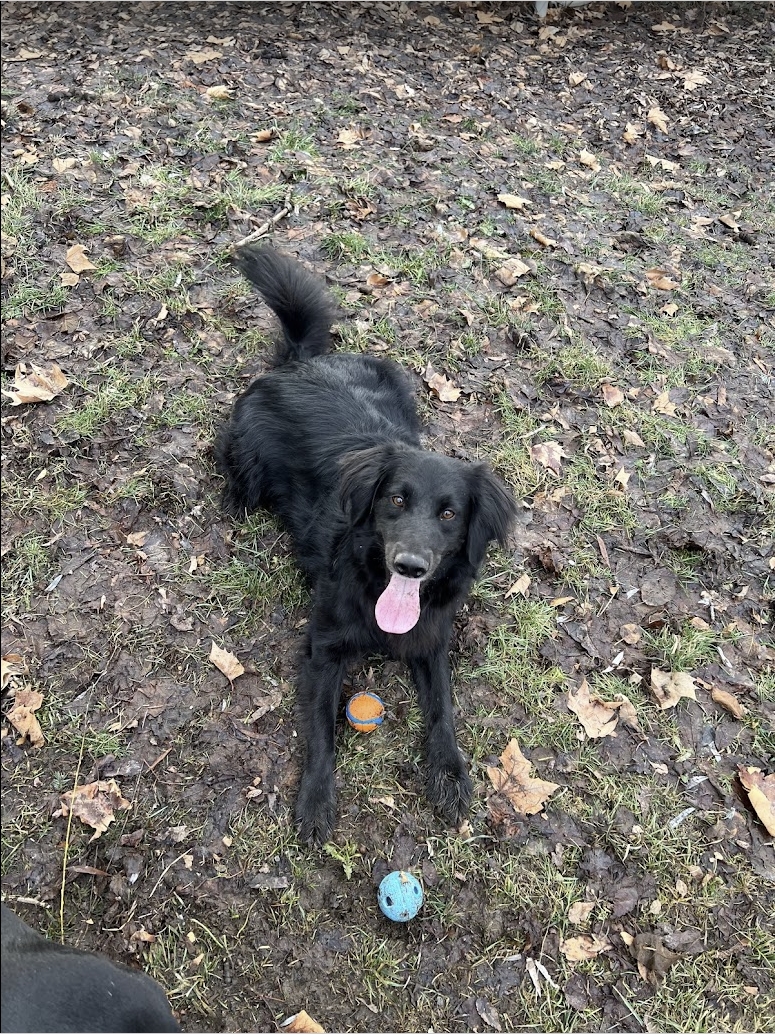
A game called ball; a game called chase

A game called ball; a game called chase: Sable Courtesy & © Katarzyna Bilicka, Photographer
Sable
Courtesy & © Katarzyna Bilicka, Photographer
Me and my partner have three dogs who love two games and this is their favorite time of year to play them. The first game is called ‘ball.’ There is one rule in ball: ball. The goal is to have the ball and taunt the other player that you have that ball. Sometimes, there are two balls and the stakes for both wealth and risk increase. But most of the time, there is just one. Me and the dog who loves ball the most, Sable, will go outside especially this time of year after all of our snow has melted and the ground has firmed well, and, with a ball chucker to ease my deteriorating shoulder, hunt for any token to play with. Usually she finds one first, leaping upon it like a fox hunting shrews in snow, then parades the ball with full royal vanity, pomp, and pride. My play then is to have another ball I’ve kept hidden in my pocket: the new most valuable ball. As I slowly reveal it, Sable freezes and stares. “Oh dear,” she thinks, “ball.” As I clasp it into the chucker, her jaw goes slack and now yesteryear’s ball drops to the ground with a dull thud. All she wants is this new old ball, because, well, ball.

Sable will then do one of three things. Most often, she gives a short enthusiastic dash in the direction that she believes I will throw the ball, then quickly sits to wait with patience, even though she’s already decided her lead. Sometimes, she will run all the way to the end of where she anticipates the arc to be complete to get an even more keen lead. And sometimes, she will try to snatch the ball right from the chucker. Wily is the game of ball.

Either way, as soon as she’s done one of those three things, I direct her to settle and wait. If she’s gone down the field to gain a lead, I will turn on my heels and throw the ball the other way. Ha. She must learn not to over-anticipate. If she is but a short way in front, I’ll throw the direction she anticipated to teach that good guesses are sometimes right. If she gets scrappy and goes for it before I’ve even let it go, I’ll make her sit and wait for it to already be downfield and out of sight, then when she’s settled, I let her go and she sprints like lightening to snatch the treasured new old ball. Once retrieved, she comes back in full tilt with fuller pride, and parades it yet again. I’ll find that first ball she dropped, and the game continues. New new old ball. Same new old game.

The second game played is chase. Sometimes it’s just my other two dogs which play, sometimes it’s all three, and sometimes it’s all four of us. This game is simple, though there is still one rule: chase. We’ll zip and zag all about the garden, ducking under trees, hiding behind bushes, and intermittently stalking the chickens as intermission to catch our breath. We run, tumble, and freeze when we all see a Eurasian collared dove unwittingly selecting millet off the ground while we are here, instead of biding its time in the safety of a perch until we’ve gone indoors. Even though chase requires fewer materials and less patience, it’s still, like ball, best enjoyed outside and in free form. It’s harder to break lamps that way, too.

So as our spring blooms and the ground firms, see what draws you to be outdoors yourself, whether it be games, or dogs, or robins, or sunshine. Rediscover that it’s no longer hard to love being outdoors if it was, just as each crocus and violet surely must renew that same urge each year after it, too, getting through winter. Remember that no matter which draw you choose, even if none at all, every day a new surprise awaits for patient and keen eyes: the raptures of such a season of renewal, emergence, and life. Doesn’t it feel good to be outside and play.

I’m Patrick Kelly, and I’m Wild About Utah.
 
Credits:

Images: Courtesy & © Patrick Kelly
Audio: Courtesy & © Kevin Colver https://wildstore.wildsanctuary.com/
Text:    Patrick Kelly, Director of Education, Stokes Nature Center, https://www.logannature.org
Included Links: Patrick Kelly & Lyle Bingham, Webmaster, WildAboutUtah.org

Additional Reading

Wild About Utah, Posts by Patrick Kelly

Stokes Nature Center in Logan Canyon, https://www.logannature.org/

Swan Life

Swan Life: Tundra Swans in Flight Courtesy & © Mary Heers
Tundra Swans in Flight
Courtesy & © Mary Heers

Tundra Swans at Dusk Courtesy & © Mary HeersTundra Swans at Dusk
Courtesy & © Mary Heers

Swan Life Book Cover, Courtesy & © Copyright Mark Nicolaides, All Rights Reserved https://www.swanlife.com/about Swan Life Book Cover,
Courtesy & © Copyright Mark Nicolaides, All Rights Reserved
https://www.swanlife.com/about

Tundra Swan in Flight Cygnus columbianus Courtesy US FWS Donna A Dewhurst, Photographer Tundra Swan in Flight
Cygnus columbianus
Courtesy US FWS
Donna A Dewhurst, Photographer

Swan Life: Tundra Swan Pair Cygnus columbianus Courtesy US FWS Tim Bowman, PhotographerTundra Swan Pair
Cygnus columbianus
Courtesy US FWS
Tim Bowman, Photographer

Mounted Swan at the Bear River Migratory Bird Refuge Courtesy & © Mary Heers, Photographer Mounted Swan at the Bear River Migratory Bird Refuge
Courtesy & © Mary Heers, Photographer

Two weeks ago I got an excited phone call from a friend of mine in Fairview, Idaho.

“The swans are back,” she said. I hopped in my car and raced over to watch as hundreds of swans plodded over the bumpy cornfields, devouring the bits and pieces of corn left behind by the harvester.

My next stop was the Bear River Migratory Bird Refuge, and sure enough, hundreds of swans were there too, dipping their heads into the shallow water and pulling up one of their other favorite foods, pondweed.

These magnificent migrating birds had already flown hundreds of miles from southern parts of the hemisphere, and had hundreds of miles still to go. They were here to briefly rest and recharge.

What happens to these swans in the next few months is a somewhat private affair. The swans pair up for life, and fly north to build their nests in remote areas close to the arctic Circle. I was curious. So I sent away for a book, Swan Life by Mark Nicolaides, who won the trust of a pair of mute swans on a nature reserve in England, and was able to observe them raise their young in the wild.

Mark’s story begins with Kay, the female, sitting on her nest. Kob, the male, was standing guard. Kay sat on the nest, rain or shine, for 6 weeks. But very soon after the chicks hatched, Kay hopped out of the nest into the shallow surrounding moat. The bewildered chicks had no choice but to plunge headlong out of the nest and plop into the water. It was their day one, and time for their first swim. Also time to learn to forage for their own food. Unlike bird mothers who bring food to their chicks, Kay got her chicks out of the nest and led them to food.

Over the summer, the young swans stopped looking like gray balls of fluff. They put on weight, stretched out their necks and wings and grew thousands of feathers. They learned to flap their wings and walk at the same time. At five months, it was time to learn to fly. Kay waited for a windy day, and took them to an open stretch of water. Pointing into the wind, she galloped over the water, pounding her wings, and lifted off. The young swans raced after her, the breeze giving them that little bit of extra lift. Their tails were still draping along in the water, but it still counted as flight.

Mark writes how the young swans went wild – like players who score a goal in the World Cup. They beat the water into a foam, dove underwater and came up like sea monsters with their mouths wide open, and finished with a flip upside down.

Meanwhile the weather was changing and it was time to migrate south. Almost to a day, five months after they hatched, the young swans flew off one by one, to join other migrating swans and begin their own adult lives.

So if you missed seeing the Tundra swans passing through Cache Valley this month, you’ll have another chance when they pass through in the fall. These beautiful birds, weighing about 15 pounds and averaging a wingspan over 6 feet, are a sight not to be missed.

But what I like best is the thunder of their wings as they run across water and lift off.

This is Mary Heers and I’m Wild About Utah.

Credits:
Photos: Courtesy & Copyright © Mary Heers
Book cover: Courtesy & © Copyright Mark Nicolaides, All Rights Reserved https://www.swanlife.com/about
Photos: Courtesy US FWS, Donna A Dewhurst and Tim Bowman, Photographers
Featured Audio: Courtesy & Copyright © Kevin Colver, https://wildstore.wildsanctuary.com/collections/special-collections/kevin-colver
Text: Mary Heers, https://cca.usu.edu/files/awards/art-and-mary-heers-citation.pdf
Additional Reading: Lyle Bingham, https://bridgerlandaudubon.org/

Additional Reading

Wild About Utah, Mary Heers’ Postings

Nicolaides, Mark, Swan Life, Lulu Press, June 3, 2015, https://www.amazon.com/Swan-Life-Mark-Nicolaides/dp/1326281208
Mark Nicolaides’ website: https://www.swanlife.com/about

Tundra Swans, All About Birds, The Cornell Lab of Ornithology, Cornell University, https://www.allaboutbirds.org/guide/Tundra_Swan/overview

Strand, Holly, Til Death Do Us Part, Wild About Utah, February 21, 2013, https://wildaboututah.org/til-death-do-us-part/

Tundra Swan, Utah Bird Profile, UtahBirds.org, https://utahbirds.org/birdsofutah/ProfilesS-Z/TundraSwan.htm
Other Photos: https://utahbirds.org/birdsofutah/BirdsS-Z/TundraSwan.htm

Tiny Owls

Tiny Owls: Northern Pygmy Owl Courtesy US FWS,  Bob Miles, Photographer
Northern Pygmy Owl
Courtesy US FWS,
Bob Miles, Photographer

Northern Saw Whet Owl Courtesy US FWS Dave Miller, Photographer Northern Saw Whet Owl
Courtesy US FWS
Dave Miller, Photographer

Western Screech Owl Courtesy & Copyright Lu Giddings Western Screech Owl
Courtesy & Copyright Lu Giddings

They just kept coming. Students, Auduboner’s, friends. They filled the parking lot at the mouth of Birch Canyon, an offshoot of Smithfield Canyon in N. Utah. About two dozen of us begin a march up the canyon as a full moon threatens to pop over the ridge high above us.

Tiny owls that don’t give a hoot were on the menu. Utah Division of Wildlife Resources bird survey coordinator Frank Howe leads the crew with his highly energetic dog bouncing around snow patches we crunch through. After a half-mile or so, Frank pauses by a stand of large cottonwood trees. He opens a Sibley bird app on his phone, explaining we will begin with a repertoire of songs and calls of small owls- northern saw whet, norther pygmies, and western screech owls, hoping not to awaken great horned owls, which might eat their lesser brethren.

We stand silent, awaiting an answer as he begins with the soft bouncing ping-pong ball song of the western screech owl. A few minutes pass and there it is! We are transfixed by its somewhat distant soothing call, then another deeper sound emitted by its male partner. The female slowly works her way in our direction. A few more minutes pass and she’s caught in Frank’s bright flashlight beam. Soft oohs and aahs are emitted by the viewers, most of whom have never heard, nor seen, this tiny owl being before. “This is a mated pair, beginning their courtship rituals and soon to be nesting activities.” Frank explains.

After a half hour of enjoying this fine little owl, we saunter on, hoping for a Northern saw whet or Northern pygmy. After another mile, and several toots without an answer, we begin marching back down bathed in moonlight and friendly chatter. Within a few hundred yards of the screech owl, Frank hails a halt and once again plays the saw whet recording. An immediate, barely audible answer follows. We catch a glimpse of bright owl eyes as they briefly land on a branch 30 yards away.

Frank explains both the saw whets and Northern pygmy’s will migrate to higher elevations for nesting in coniferous forests as the snow recedes. All three of these smallish owls are cavity nesters, preying mostly on small mammals, birds, and large insects. When they feel threatened, they will elongate their bodies to resemble a tree branch. The saw whet will even cover its front with a wing for added camouflage.

In a good prey year, the saw whet will kill several mice in quick succession and store them for later feeding. N. pygmy’s eat only the brains of birds they capture and the soft abdomen of large insects. They can carry prey twice their own weight. Bizarre behaviors for these little demons!

Thank you Frank for an unforgettable moonlight stroll!

Jack Greene for Bridgerland Audubon and I’m wild about the Utah Wilds and its tiny demonic owls!

Credits:
Pictures: Northern Pygmy Owl, Courtesy US FWS, Bob Miles, Photographer
Northern Saw Whet Owl: Courtesy US FWS, Dave Miller, Photographer
Western Screech Owl: Courtesy & © Copyright Lu Giddings, Photographer
Audio: Courtesy & Copyright Kevin Colver, https://wildstore.wildsanctuary.com/collections/special-collections as well as J. Chase and K.W. Baldwin, https://upr.org/
Text: Jack Greene, Bridgerland Audubon, https://bridgerlandaudubon.org/
Additional Reading: Lyle W Bingham, Webmaster, and Jack Greene, Author, Bridgerland Audubon, https://bridgerlandaudubon.org/

Additional Reading:

Jack Greene’s Postings on Wild About Utah, https://wildaboututah.org/author/jack/

Northern Pygmy Owl, Overview, All About Birds, The Cornell Lab of Ornithology, https://www.allaboutbirds.org/guide/Northern_Pygmy-Owl/overview

Northern Saw Whet Owl, Overview, All About Birds, The Cornell Lab of Ornithology, https://www.allaboutbirds.org/guide/Northern_Saw-whet_Owl/overview

Western Screech Owl, Overview, All About Birds, The Cornell Lab of Ornithology, https://www.allaboutbirds.org/guide/Western_Screech-Owl/overview

Northern Pygmy Owl, Utah Birds, https://www.utahbirds.org/birdsofutah/ProfilesL-R/NorthernPygmyOwl.htm
Featured Article by Paul Higgins: https://www.utahbirds.org/featarts/2006/NorthernPygmyOwl.htm
Gallery Pictures: https://www.utahbirds.org/birdsofutah/BirdsL-R/NorthernPygmyOwl.htm

Northern Saw Whet Owl, Utah Birds, https://www.utahbirds.org/birdsofutah/ProfilesL-R/NorthernSawWhetOwl.htm
Gallery Pictures: https://www.utahbirds.org/birdsofutah/BirdsL-R/NorthernSawWhetOwl.htm

Western Screech Owl, Utah Birds, https://www.utahbirds.org/birdsofutah/ProfilesS-Z/WesternScreechOwl.htm
Featured Article by Eric Huish: https://www.utahbirds.org/featarts/2004/OwlBox/OwlBox1.htm
Gallery Pictures: https://www.utahbirds.org/birdsofutah/BirdsS-Z/WesternScreechOwl.htm