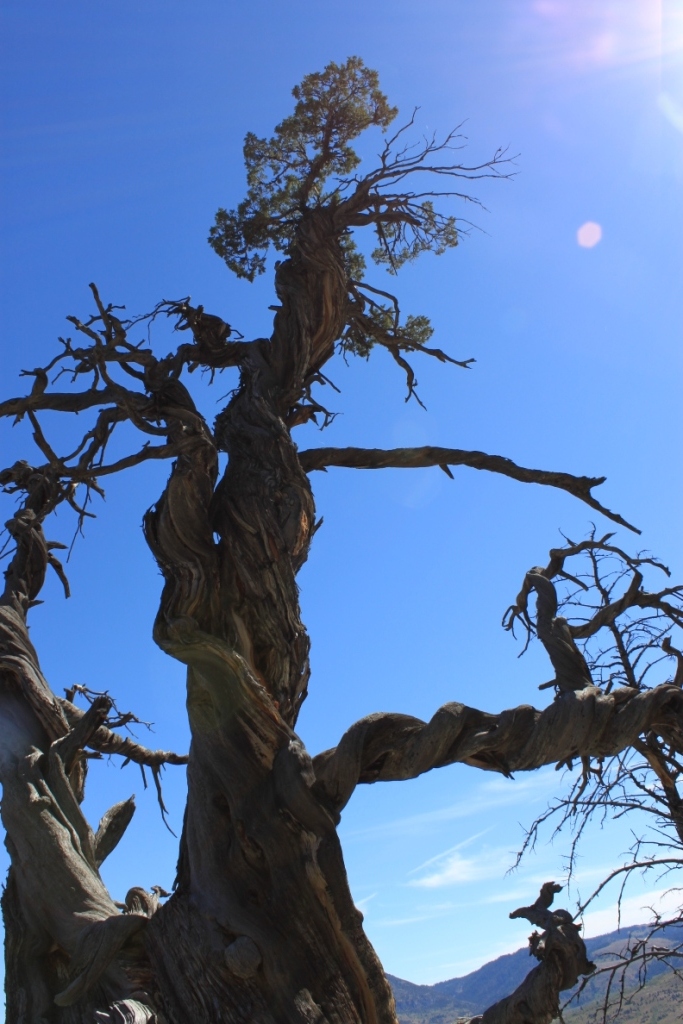
Jardine Juniper

Jardine Juniper
a Rocky Mountain Juniper
Juniperus scopulorum
Courtesy & © 2010 Andrea Liberatore
Stokes Nature Center


Jardine Juniper
a Rocky Mountain Juniper
Juniperus scopulorum
Courtesy & © 2010 Andrea Liberatore
Stokes Nature Center

Hi, I’m Chelsea McMahon and I’m Rose Wiarda from Utah State University’s Department of Environment and Society.

Can you recall watching a tree grow from a seed to a shade-giving giant over your lifetime? Now imagine this happening on a timescale of over 50 generations! Logan Canyon’s Jardine Juniper is a tree that has survived through many centuries of human history. Core samples taken from this gnarled giant reveal its age as an estimated 1500 years old. The Jardine Juniper was discovered in 1923 by Maurice Lindford, a student at Utah State Agricultural College, now Utah State University. Lindford named the tree in honor of fellow alumnus and U.S. Department of Agriculture Secretary William Mason Jardine.

The Jardine Juniper is a Rocky Mountain juniper, one of Utah’s two tree-sized native juniper species. The Rocky Mountain juniper is characterized by bluish-green foliage and bright blue berry-like cones. Native American tribes throughout the Intermountain West and the western Great Plains have traditionally used juniper berries, foliage, and roots for medicinal purposes.

The Jardine Juniper holds a position on Utah’s Big Tree champion list as the largest Rocky Mountain juniper in the state. It also occupies a position on the prestigious National Register of Big Trees. This register, which is maintained by non-profit group American Forests, records the dimensions of the largest trees in the nation. The Jardine Juniper overshadows other trees of its species with a 284-inch diameter and 40-foot height, making it not only the largest in the U.S., but the largest in the world.

Although its current foliage is sparse, the tree is still alive. This hardy sentinel has kept watch over centuries of change in the canyon, witnessing the comings and goings of native Shoshone peoples, the arrival of fur trappers and Mormon settlers, and the development of the canyon as part of the Uintah-Wasatch-Cache National Forest.

If you wish to see this majestic remnant of another age, take a hike! The hike to the Jardine Juniper is about 9 miles round trip and is accessible by the Uintah-Wasatch-Cache National Forest trail 014, the Jardine juniper trail. Wear weather appropriate clothing and bring plenty of water—this hike is steep in places! Above all, enjoy your time in the presence of this impressive vestige of the past and remember that its preservation depends on kind treatment from visitors like you.

I’m Rose Wiarda and I’m Chelsea McMahon for Wild About Utah.
Credits:

Photos: Courtesy & © 2010 Andrea Liberatore, Stokes Nature Center https://logannature.org/
Text:    Rose Wiarda & Chelsea McMahon, USU Environment & Society

Additional Reading:

American Forests National Register of Big Trees: https://www.americanforests.org/our-programs/bigtree/

General info about Jardine Juniper: https://ewb.usu.edu/wp-content/uploads/2010/08/INFO-Jardine-Juniper.pdf

General info about the Rocky Mountain Juniper: https://plants.usda.gov/plantguide/pdf/cs_jusc2.pdf

The Jardine Juniper Trail: https://www.fs.usda.gov/recarea/uwcnf/recreation/recarea/?recid=9376&actid=24

Jardine Juniper Trail, LoganCanyonHiking.com, https://www.logancanyonhiking.com/jardine.htm

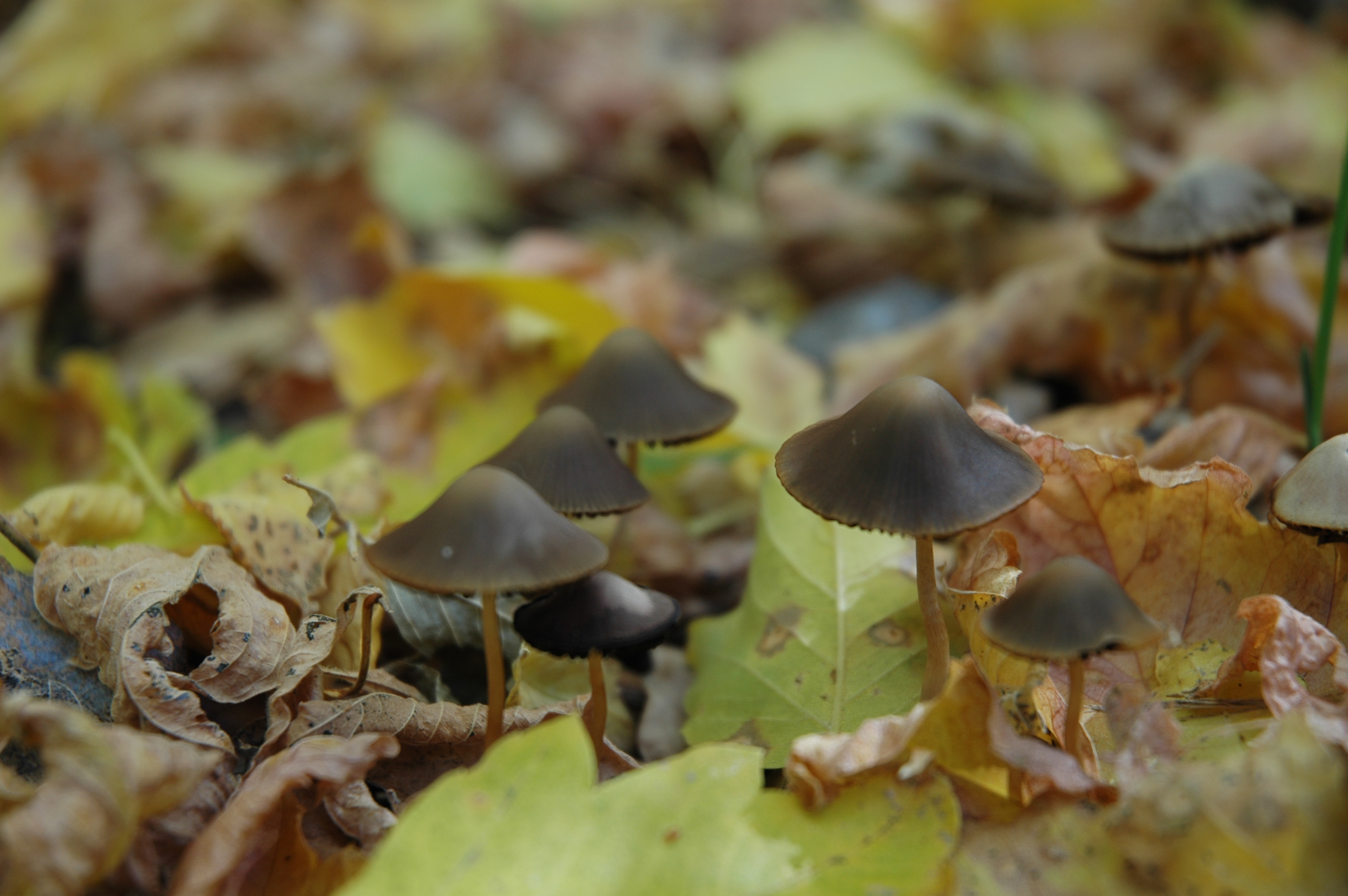
Nature’s Recyclers

Fungi Decomposing Fall
Leaves Outside the
Stokes Nature Center
Courtesy & © 2011 Andrea Liberatore
Stokes Nature Center


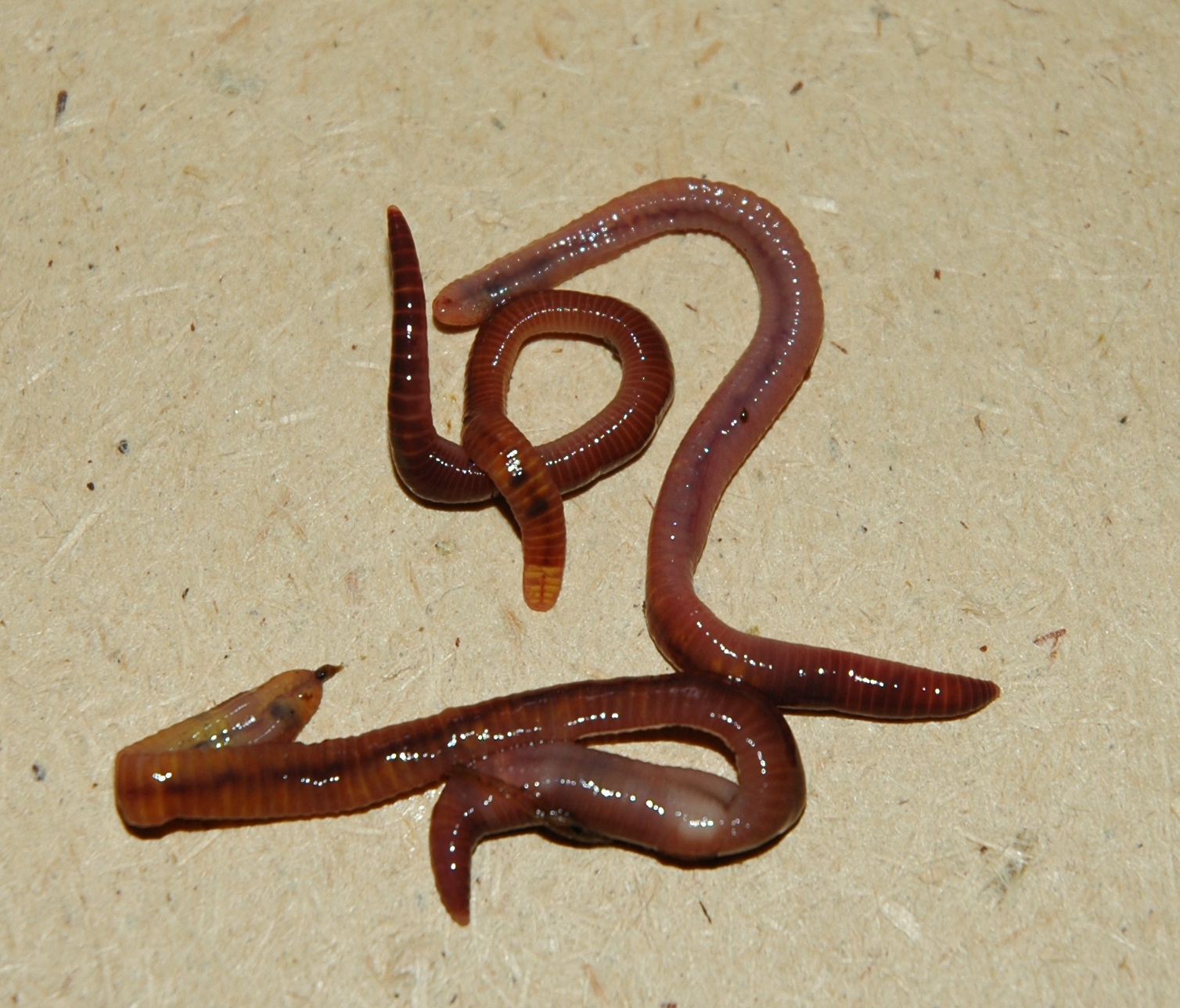
Redworms Eisenia fetida
from Stokes Nature Center’s
vermicomposting system
Courtesy & © 2011 Andrea Liberatore
Stokes Nature Center

On Tuesday, November 15th, our nation celebrates America Recycles Day. While the day itself tends to focus on human recycling activity, I thought we should also give a nod to nature’s recyclers. Worms, maggots, fungi, beetles, and bacteria – it sounds like a list of leftover Halloween horrors. But in reality, we should be more afraid of what our world would look like without these creepy-crawlies, for these are nature’s recyclers. Scientists call these organisms saprophytes, and as important as their role in life is, they are more likely to evoke a shudder than any feeling of gratitude.

What decomposers actually do is break dead things down into smaller and smaller pieces, until all that is left are the basic molecular components that make up all living things such as nitrogen, phosphorous, carbon, and potassium. Once broken down, this material is then free to be taken up again by plants and animals that use them to live and grow. This cycle of nutrients is vital to life on Earth, and our saprophytic friends make it all possible.

While decomposition would occur even without the help of the decomposers, it would take much, much longer. In some landfills, newspapers have been unearthed that are more than 20 years old, and still quite readable. This is because landfills often create anaerobic environments, where oxygen-loving insects, fungi, and bacteria cannot live and therefore cannot aid decomposition. If without decomposers, a newspaper can last 20 years, what would happen to much larger and hardier items such as tree trunks and roadkill? I shudder to think about it.

Did you know that the U.S. throws more than 33 million tons of food waste into landfills each year? This organic material goes to waste there – taking up valuable space and taking longer than normal break down. So this year, celebrate America Recycles Day by employing some of nature’s recyclers in your yard. Consider starting a compost pile where your fall leaves and food scraps can get broken down into nutrient-rich all-natural fertilizer for next year’s garden.

If you’re in Cache Valley and are looking for a way to mark America Recycles Day, please join the Stokes Nature Center for a tour of the Logan landfill to find out what happens to your garbage and how recycling programs ensure there is less of it. This free tour will be held at 4:30pm on Tuesday, November 15th. For details, visit the Stokes Nature Center website at www.logannature.org.

For composting tips and more information about nature’s recyclers, visit Wild About Utah online at www.wildaboututah.org. Thank you to the Rocky Mountain Power Foundation for the research and development of this Wild About Utah topic. For the Stokes Nature Center and Wild About Utah, this is Andrea Liberatore.

For the Stokes Nature Center and Wild About Utah, this is Andrea Liberatore.

Credits:

Photos: Courtesy & © 2011 Andrea Liberatore, https://logannature.org/
Text:    Andrea Liberatore, Stokes Nature Center, logannature.org

Composting Tips & Information:

Farrell-Poe, K. and Koenig, R. (2010) Backyard Composting in Utah. Utah State University Cooperative Extension. https://extension.usu.edu/files/publications/factsheet/HG-Compost-01.pdf

U.S. Environmental Protection Agency: Composting. https://www.epa.gov/epawaste/conserve/rrr/composting/index.htm

Additional Reading:

Fogel, R. (2002) Waste Not, Want Not: Fungi as Decomposers. Utah State University Herbarium. https://utahpests.usu.edu/ipm/ornamental-pest-guide/diseases/wood-decay-fungi

Hoff, M. (2009) Young Naturalists: Nature’s Recyclers. Minnesota Conservation Volunteer Newsletter. July-August 2009. https://files.dnr.state.mn.us/publications/volunteer/young_naturalists/natures_recyclers/natures_recyclers.pdf

U.S. Environmental Protection Agency (2011) Basic Information About Food Waste. https://www.epa.gov/osw/conserve/materials/organics/food/fd-basic.htm

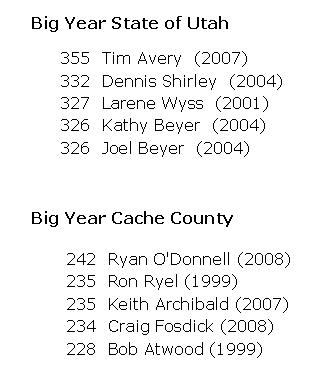
A Big Year in Utah

Utah Big Year Records
Courtesy Utahbirds.org/records/

Hi I’m Holly Strand.

Birders are flocking to theaters to see the new movie The Big Year. The story is based on a real life competition among birders in which they race around to count the most birds within a particular geographic boundary in a single calendar year.

To do a Big Year, you need to follow some simple rules. To count a bird it must be alive and wild and unrestrained when encountered. You have to see enough or hear enough of the bird to absolutely be sure it’s the species you are claiming to see. And the bird must be within the prescribed area and time period of your particular Big Year competition. For instance if you are doing a Big Year for the state of Utah, you can’t count a bird that you see across the border in Idaho. However, you can be standing in Idaho looking at a bird in Utah, and you can count it.

To be competitive in a Big Year you have to find ALL the usual or common birds in your designated country, state or area. This means hitting all the major birdwatching spots at critical times during the year. In Utah you might want to start in the southwestern corner of the state picking up desert species such as vermillion flycatcher and greater roadrunner . Then head to the high Uintas to see Rocky Mountain alpine and subalpine birds such as the rosy finch and northern goshawk. You’d want to check out the Great Salt Lake in all four seasons and make frequent trips up and down the Wasatch canyons as different elevation zones harbor different species. Whenever possible you should be scouring wetlands and riparian zones for whoever might be perching, wading or fishing.

To push your count up beyond that of your competitors, you would need to spot rare birds, esp. vagrants. Vagrants are birds who have wandered or been blown off course. For example, when setting the Big Year record in Cache County, Ryan O’Donnell saw an Iceland Gull who was obviously terribly lost. And a Mexican Whip-poor-will that had somehow drifted up from Southern Arizona.

Modern communication technology is incredibly useful for locating rare birds and vagrants. Big Year participants monitor chat lists like Birdnet and BirdTalk run by Utahbirds.org. Ebird also helps spread the news of sightings. Email hotlines operate in several Utah regions. It always helps to maintain a network of birding friends who can text you the location of birds you haven’t seen yet.

Thanks to Frank Howe and Ryan O’Donnell of Utah State University’s Dept. of Wildland Resources for their assistance in developing this Wild About Utah story.

For Wild About Utah, I’m Holly Strand.

Credits:

Table: Courtesy utahbirds.org
Text: Holly Strand

Sources & Additional Reading:

American Bird Association https://www.aba.org/

Utah Birds https://utahbirds.org/

Ebird https://ebird.org/content/ebird/

Bridgerland Audubon Society Cache Birders Hotline https://www.bridgerlandaudubon.org/hotline.htm

Official movie site: https://www.thebigyearmovie.com/

Migratory Birds and Coffee

Western Tanager
Courtesy & Copyright © 2010
Michael Fish

For many of us, the day has not truly begun until we hold a warm mug of richly flavored coffee in our hands. But how often have you considered where that coffee comes from and how its culture impacts wild Utah?

We tend to think of migratory birds as our residents who take a winter vacation to the south every year. But it is more truly the other way around. They are representatives from groups of tropical birds who venture north to take advantage of less crowded nesting and a seasonal abundance of food for their young. For instance, of the 49 species of true tanagers, only 4 summer in the United States. Much of our coffee originates in Central and South America and its production directly affects birds who fly north to nest in Utah.

Traditionally, coffee bushes are grown under a diverse canopy. Some of the trees in the overstory yield timber, others fix nitrogen and still others like papaya provide food. This multi-tiered habitat supports a wide variety of birds that is only exceeded by undisturbed tropical forest itself.

About twenty years ago, coffee production changed radically with the development of varieties that tolerate full sun. This has allowed huge areas of land to be cleared of forest and planted exclusively to row after row of coffee bushes that demand intensive management. More fertilizer and pesticides are needed leading to toxic runoff. Soil erosion increases. Much lovely bird habitat has been destroyed for this barren coffee monoculture. Many migratory bird populations are in trouble due to the loss of their forested winter habitats.

But there is hope for coffee lovers because many farmers still grow coffee in the traditional way. These grower-owned farms tend to be smaller and provide a more reliable income for the farmer due to the diversity of crops. Soil quality is maintained while providing critical habitat for tropical frogs, insects, plants and birds. When purchasing coffee, look for bird friendly or shade grown or certification by Rainforest Alliance or Smithsonian. Our warblers, tanagers and thrushes will thank you.

This is Linda Kervin for Bridgerland Audubon Society.

Credits:

Images: Courtesy & Copyright Michael Fish
Text: Linda Kervin, Bridgerland Audubon Society

Additional Reading:
Shade-Grown Coffee, National Audubon Website, https://web4.audubon.org/bird/at_home/coffee/

Song Bird Coffee, American Birding Association, https://www.aba.org/shadecoffee/songbird.html

Some Coffee-related Resources, American Birding Association, https://www.aba.org/shadecoffee/whattodo.html#Coffee-related%20Resources

Why Migratory Birds are Crazy for Coffee, Migrants and Coffee: What’s the Connection?, National Zoo, Smithsonian Institution, https://nationalzoo.si.edu/scbi/MigratoryBirds/Fact_Sheets/default.cfm?fxsht=1

Why Migratory Birds Are Crazy for Coffee, Atlanta Audubon Society, formerly: https://atlantaaudubon.org/aaswww/sgc/sgcfacts.htm

Smithsonian-Certified Shade Grown & Bird Friendly Coffee, Caffe Ibis, https://caffeibis.com/