What’s On Your List?

What's On Your List? Canoeing in Benson Marina, Benson, Utah Courtesy & Copyright Shannin Kishbaugh, photographer
Canoeing in Benson Marina
Benson, Utah
Courtesy & Copyright Shannin Kishbaugh, photographer

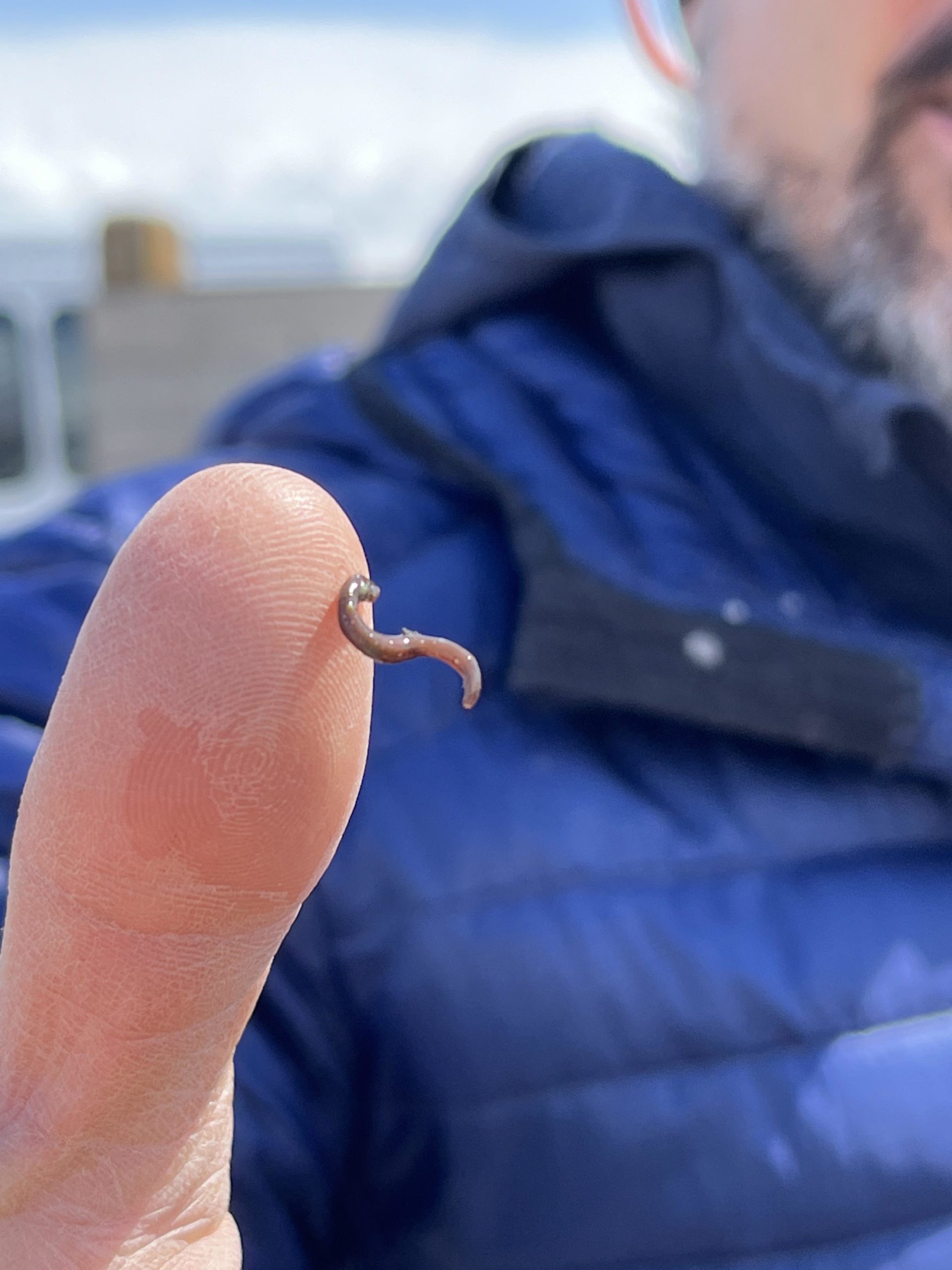
A Leech on Trip Armstrong’s Thumb Courtesy & Copyright Shannon Rhodes, Photographer A Leech on Trip Armstrong’s Thumb
Courtesy & Copyright Shannon Rhodes, Photographer

A Leech Escaping a Container Courtesy & Copyright Shannon Rhodes, Photographer A Leech Escaping a Container
Courtesy & Copyright Shannon Rhodes, Photographer

If I were to ask you to craft a list of words that represent your connection to the natural world, which words immediately pop into your mind? Of course, President Theodore Roosevelt said, “There are no words that can tell the hidden spirit of the wilderness that can reveal its mystery, its melancholy and its charm.” Yet, Brooke Smith published her book “The Keeper of Wild Words” in response to learning that nature words she loved were replaced in the Oxford Junior Dictionary for words like chatroom and voicemail.

Grandmother Mimi tells young Brook, “If we don’t use words, they can be forgotten. And if they’re forgotten, they disappear.”

That voice was the person who gave me this beautiful book, fellow Edith Bowen Laboratory School teacher Shannin Kishbaugh. I invited her with me to talk about wild words.

What words top your list? I would say calm, peaceful, freedom, exploration, and wonder.

My list evolves, but it always has wapiti and mica schist. It includes caddisfly casings on river rocks and cumulonimbus clouds in the sky. I love red-winged blackbirds I saw this morning in the phragmites along the roadside, curlycup gumweed I discovered at Hardware Ranch, stinging nettle walking the banks as a child with my father just off Fireclay Avenue in Murray, and hoodoos in Goblin Valley.

My most recent word is leech. Shannin, when you hear that, what are your words? Uncertainty, fear, dirty, slimy, old documents and uses in medicine. I’ve become a lover of water bugs this year, but still leeches feel extreme.

Well, those are very different words from your nature words. Not long ago at a conference cleverly titled “In Mud” about place-based education for young children, I stood with teachers from Washington state to Washington D.C. While the goal was discussing developing nature inquiry projects based on interest of the students, a colleague saw a dark blob on another’s boot and for the remainder of the workshop, we as educators huddled in a circle playing with the leech like children. It slithered and reached; we gazed in wonder and some apprehension. I realized I’d never spent time appreciating a leech.

There are lots of leech species, including some found only in Utah. They begin life in a cocoon which surprised me, they have suckers that give them the reputation as selfish parasites even though they don’t all suck blood, and they play an important role in the food chain. This spring when we took our first graders out again to explore what lives in the water, this time to Benson Marina of Cutler Reservoir, our students canoed past an osprey nest, captured the cattails in watercolor, and even observed a leech clinging to our guest scientist Trip Armstrong’s thumb. As the students worked, your idea was to collect the words, their exclamations, and offer them back to them to use in writing list poetry.

Let’s end with some of the nouns, adjectives and verbs from their list: “paddle whirlpools, dunking ducks, pelican peace, and ripple reflections.” And of course, “little leech. It was the best feeling. Happiness all around me.”

We are Shannon Rhodes and Shannin Kishbaugh, and we are wild about Utah words.

Credits:

Images: Canoeing – Courtesy & Copyright Shannin Kishbaugh, Photographer
Leeches – Courtesy & Copyright Shannon Rhodes, Photographer
Audio: Courtesy & © Friend Weller, https://upr.org/
Text: Shannon Rhodes, Edith Bowen Laboratory School, Utah State University https://edithbowen.usu.edu/
Additional Reading Links: Shannon Rhodes

Additional Reading:

Wild About Utah Pieces by Shannon Rhodes, https://wildaboututah.org/author/shannon-rhodes/

Andrews, Candice Gaukel. (2009). Nature Words on the Brink of Extinction. https://www.nathab.com/blog/nature-words-on-the-brink-of-extinction/

Black, Riley. (2021). New species of leech found in Utah. https://nhmu.utah.edu/articles/2023/05/new-species-leech-found-utah

Govedich, Fredric R. and Bonnie Bain. (2005). All About the Leeches of Montezuma Well. https://www.nps.gov/moca/learn/nature/upload/montezuma_well_leeches.pdf

Morse, Susan. A Few Words for Nature Nerds. https://www.fws.gov/story/few-words-nature-nerds

Smith, Brooke. (2020). The Keeper of Wild Words. San Francisco: Chronicle Books. https://www.chroniclebooks.com/products/the-keeper-of-wild-words

U.S. Department of the Interior. (2020). The Conservation Legacy of Theodore Roosevelt. https://www.doi.gov/blog/conservation-legacy-theodore-roosevelt

Utah State University Extension. Key to Aquatic Macroinvertebrates in Utah. https://extension.usu.edu/waterquality/macrokey/no-shell/worm-like/
The Bees and the Birds

The Bees and the Birds: The Bee Courtesy & Copyright Shannon Rhodes, Photographer
The Bee
Courtesy & Copyright Shannon Rhodes, Photographer

The Bees and the Birds: The Bird [A Mallard Drake] Courtesy & Copyright Shannon Rhodes, Photographer The Bird
[A Mallard Drake]
Courtesy & Copyright Shannon Rhodes, Photographer

March is a thrilling month to be in an elementary school. Besides fifth grade maturation sessions, shamrocks pop up and many spotlight the impact of Dr. Seuss. Besides green eggs and ham eaten by children wearing tall red and white hats, we read and re-read books filled with fanciful characters and rhymes that roll off the tongue. I learned this year along with my students that Dr. Seuss’s father was the superintendent of parks in Springfield, Massachusetts, so naturally young Theodor took his sketchpad and pencil to observe and record whenever he could. When an animal lost an antler at the zoo, he would use it to craft a sculpture just as whimsical as the imaginative ones in his books. He called them pieces of The Seuss System of Unorthodox Taxidermy and placed them early in his career as promotional advertisements in bookshops. Kangaroo Bird with its teal stripes and pouch-perched hatchling and the Andulovian Grackler’s fur tufts and orange bill intrigue me. He also painted the stunning “The Birds and the Trees” featuring a white flock flying between red and pink palm trees that inspired the Dadake Day in “Oh the Thinks You Can Think.” As we studied Dr. Seuss’s “Did I Ever Tell You How Lucky You Are?” released 50 years ago this year, students noted how many birds appeared in the pages, leading us to do a Seuss bird scavenger hunt, our version of the birding counts chronicled in Mark Obmascik’s “The Big Year: A Tale of Man, Nature, and Fowl Obsession” (that’s f-o-w-l).

I do know I was lucky to teach once on a fifth grade team with a man students called Mr. J. Among many other things, he taught them how to recognize and identify birds. He preserved a time each day to review birds they had learned and add facts about a new species, how it looks, how it sounds, and how it behaves. He could display photographs and even silhouettes; students knew the shapes enough to identify them. He could play short audio clips, and students shouted out the corresponding birds too. I’ve discovered since The Bird Song Hero app that provides a spectrogram showing pitches visually that allow people like me another way to memorize those various bird songs. I remember I popped in the day they were discussing how our loggerhead shrike impales insects, rodents, snakes, and lizards on fences and really anything sharp and off the ground. When we took them on the bus through the Bear River Migratory Bird Refuge, I couldn’t believe my ears as kids with binoculars and without them were confidently shouting, “I see…” and tallying on their clipboards. For weeks that spring I would find students at recess peering up in the sky above the schoolyard doing the same thing. When I marveled at this phenomenon, Mr. J. smiled. “You know, Shannon, it isn’t about the birds. It’s about being aware.”

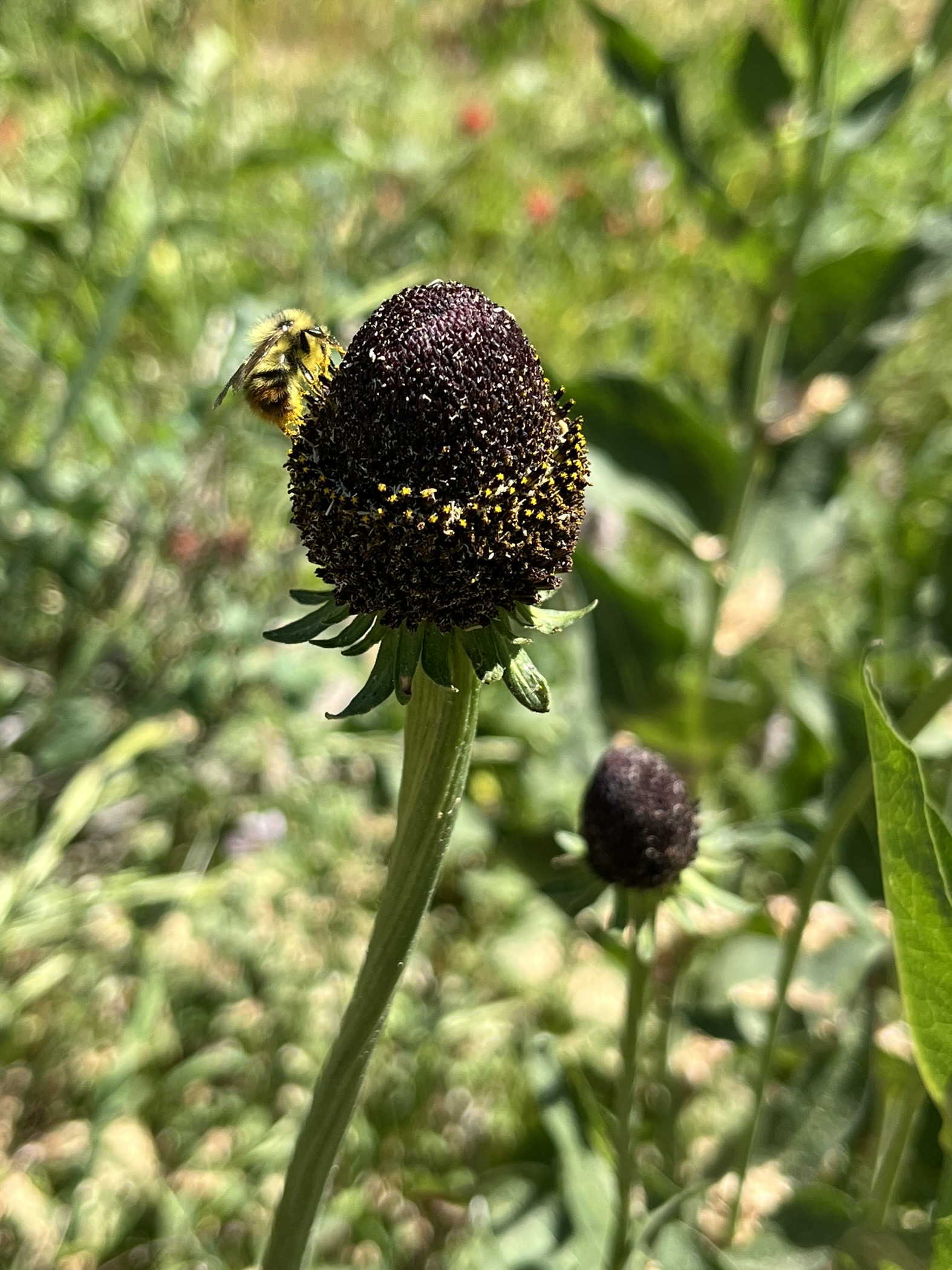
So often his “It’s about being aware” mantra pops in my head, like it did this week when my students huddled around our class pet cage housing a bee that emerged early from my Crown Bee tube “free-bee” from a recent science-teaching conference. Just like Dr. Seuss’s Bee-Watcher-Watchers, these six- and seven-year-olds eagerly missed romping in the fresh powder playground to watch a bee perched on a strawberry. I’ve done the same thing, standing mesmerized, lost in thought, watching a bee on a western coneflower, repeating the Seuss rhyme “Just tell yourself, Duckie, you’re really quite lucky.”

For Wild About Utah, I’m Shannon Rhodes.

Credits:

Images: Courtesy & Copyright Shannon Rhodes, Photographer
Audio: Courtesy & © Friend Weller, https://upr.org/
Text:     Shannon Rhodes, Edith Bowen Laboratory School, Utah State University https://edithbowen.usu.edu/
Additional Reading Links: Shannon Rhodes

Additional Reading:

Wild About Utah Pieces by Shannon Rhodes, https://wildaboututah.org/author/shannon-rhodes/

The Art of Dr. Seuss Collection. The Birds and the Trees. https://www.drseussart.com/the-birds-and-the-trees

The Art of Dr. Seuss Collection. The Bee-Watcher. https://www.drseussart.com/illustration-art/the-bee-watcher

The Art of Dr. Seuss Collection. The Seuss Collection of Unorthodox Taxidermy. https://www.drseussart.com/taxidermy

Bird Song Hero. https://academy.allaboutbirds.org/features/bird-song-hero/bird-song-hero-tutorial

Cane, Jim. The Native Bees of Utah. July 7, 2011. Wild About Utah. https://wildaboututah.org/the-native-bees-of-utah/

Kervin, Linda. Shrikes. October 31, 2013. Wild About Utah. https://wildaboututah.org/shrikes/#:~:text=Utah%20has%202%20species%20of,with%20their%20thick%20hooked%20bill .

Newberry, Todd & Holtan, G. (2005). The Ardent Birder: On the Craft of Birdwatching. Random House LLC. https://www.amazon.com/Ardent-Birder-Birdwatching-Newberry-2005-10-01/dp/B01FGJKGUS?asin=1580087159&revisionId=&format=4&depth=1

Obmascik, Mark. The Big Year. https://www.markobmascik.com/books/ and https://www.audubon.org/content/mark-obmascik

Seuss, Dr. Did I Ever Tell You How Lucky You Are? (1973). New York: Random House.https://www.penguinrandomhouse.com/books/42980/did-i-ever-tell-you-how-lucky-you-are-by-dr-seuss/

Seuss, Dr. Oh the Thinks You Can Think. (1975). New York: Random House.https://www.penguinrandomhouse.com/books/43101/oh-the-thinks-you-can-think-by-dr-seuss/

Hands on Stoneflies and Sculpin

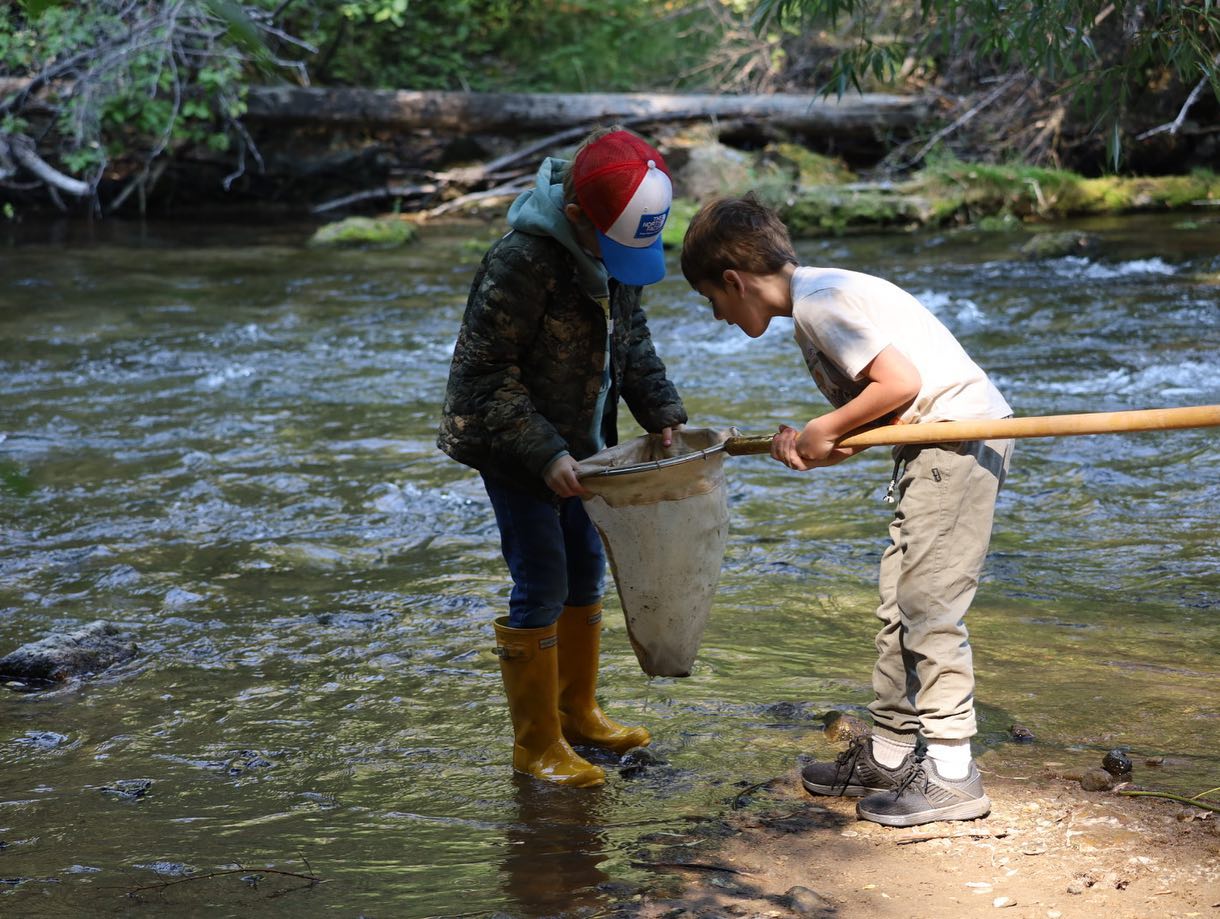
Hands on Stoneflies and Sculpin: Exploring the Logan River Courtesy & Copyright Edith Bowen Laboratory School (EBLS) Experiential Learning Eric Newell Director & Photographer https://edithbowen.usu.edu/
Exploring the Logan River
Courtesy & Copyright Edith Bowen Laboratory School (EBLS)
Experiential Learning Eric Newell Director & Photographer

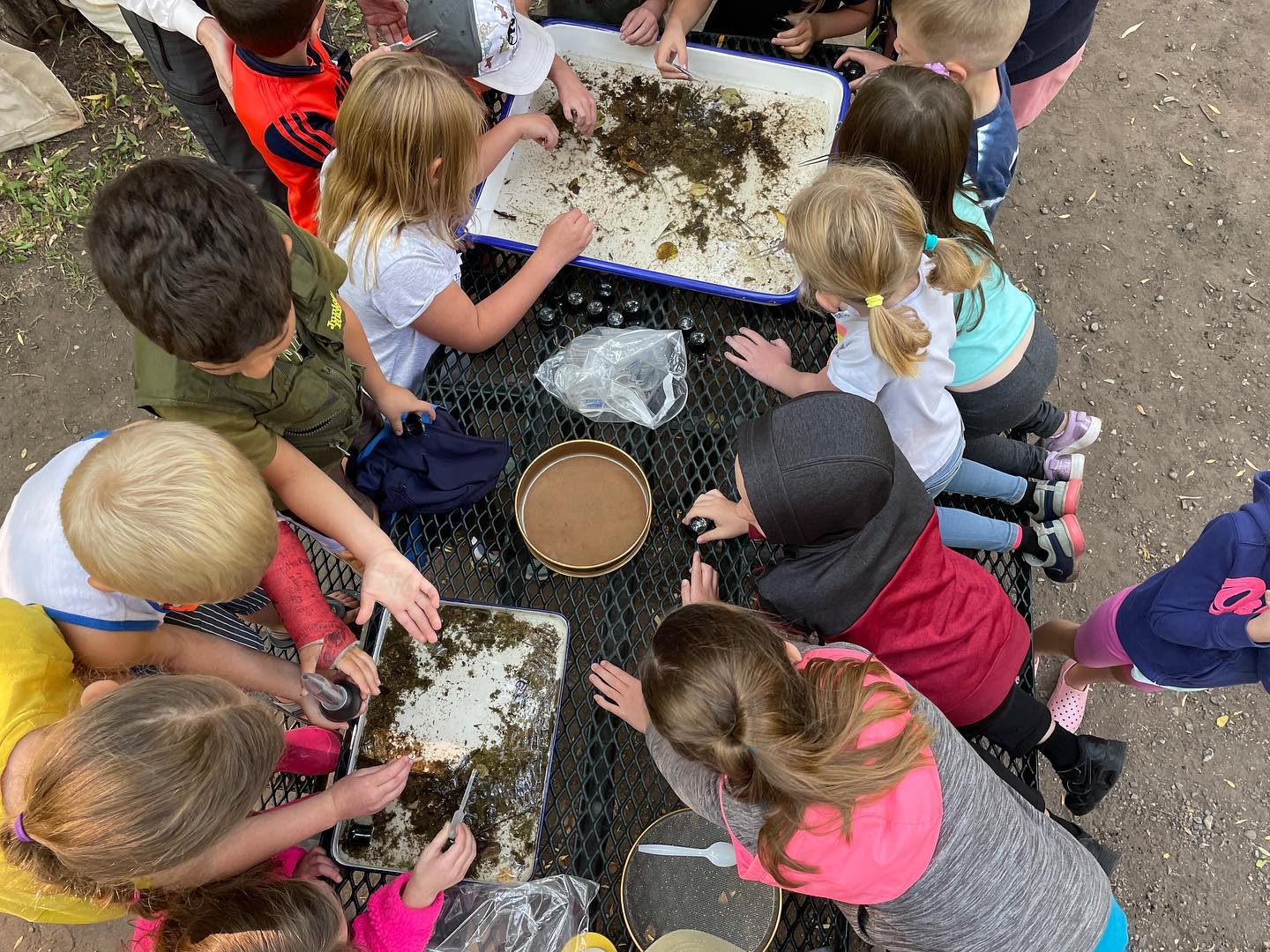
Benthic Macroinvertebrate Harvest Courtesy & Copyright Edith Bowen Laboratory School (EBLS) Experiential Learning Eric Newell Director & Photographer https://edithbowen.usu.edu/ Benthic Macroinvertebrate Harvest
Courtesy & Copyright Edith Bowen Laboratory School (EBLS)
Experiential Learning Eric Newell Director & Photographer

Merriam-Webster Benthic: of, relating to, or occurring at the bottom of a body of water

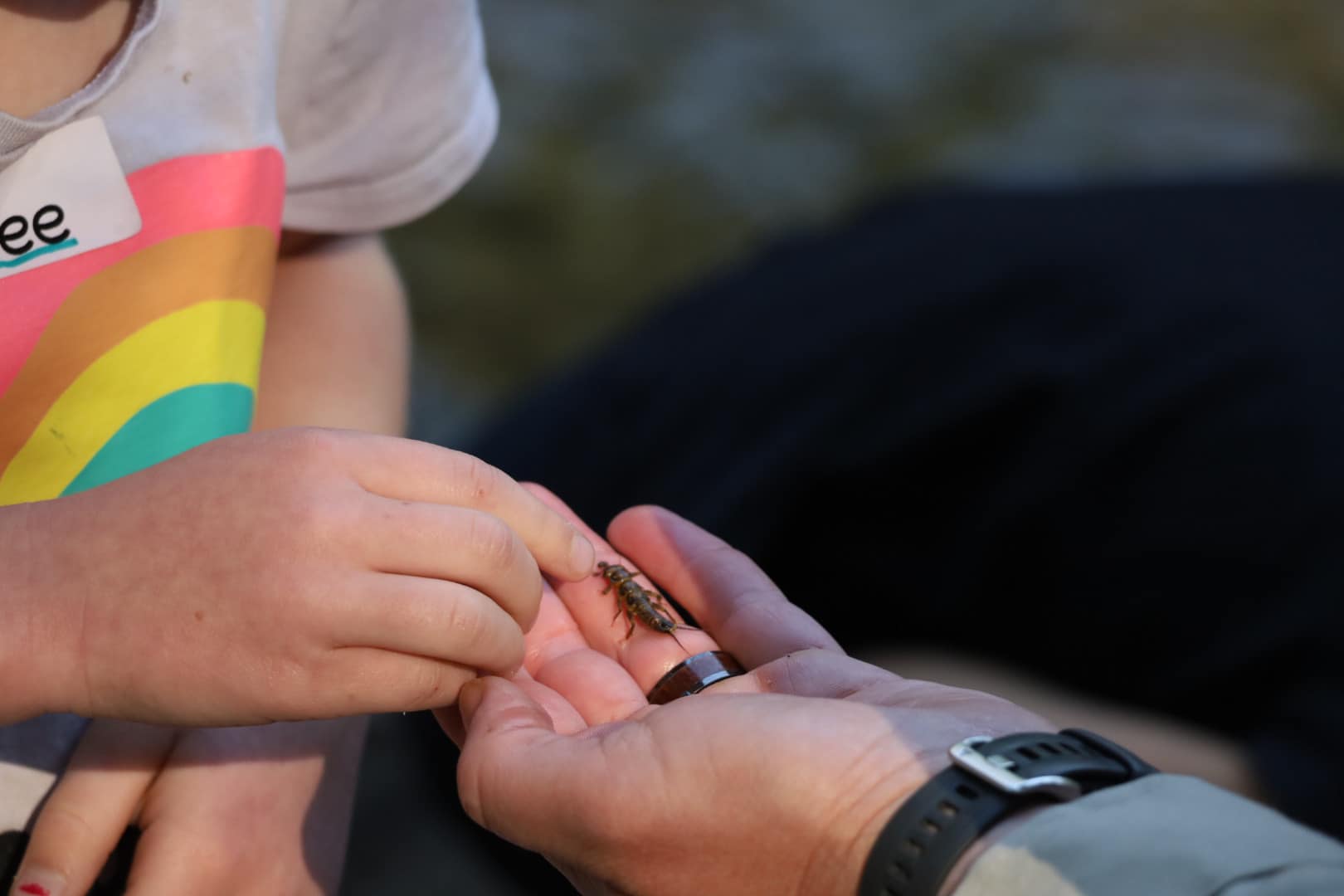
Student with a Stonefly Nymph Courtesy & Copyright Edith Bowen Laboratory School (EBLS) Experiential Learning Eric Newell Director & Photographer https://edithbowen.usu.edu/ Student with a Stonefly Nymph
Courtesy & Copyright Edith Bowen Laboratory School (EBLS)
Experiential Learning Eric Newell Director & Photographer

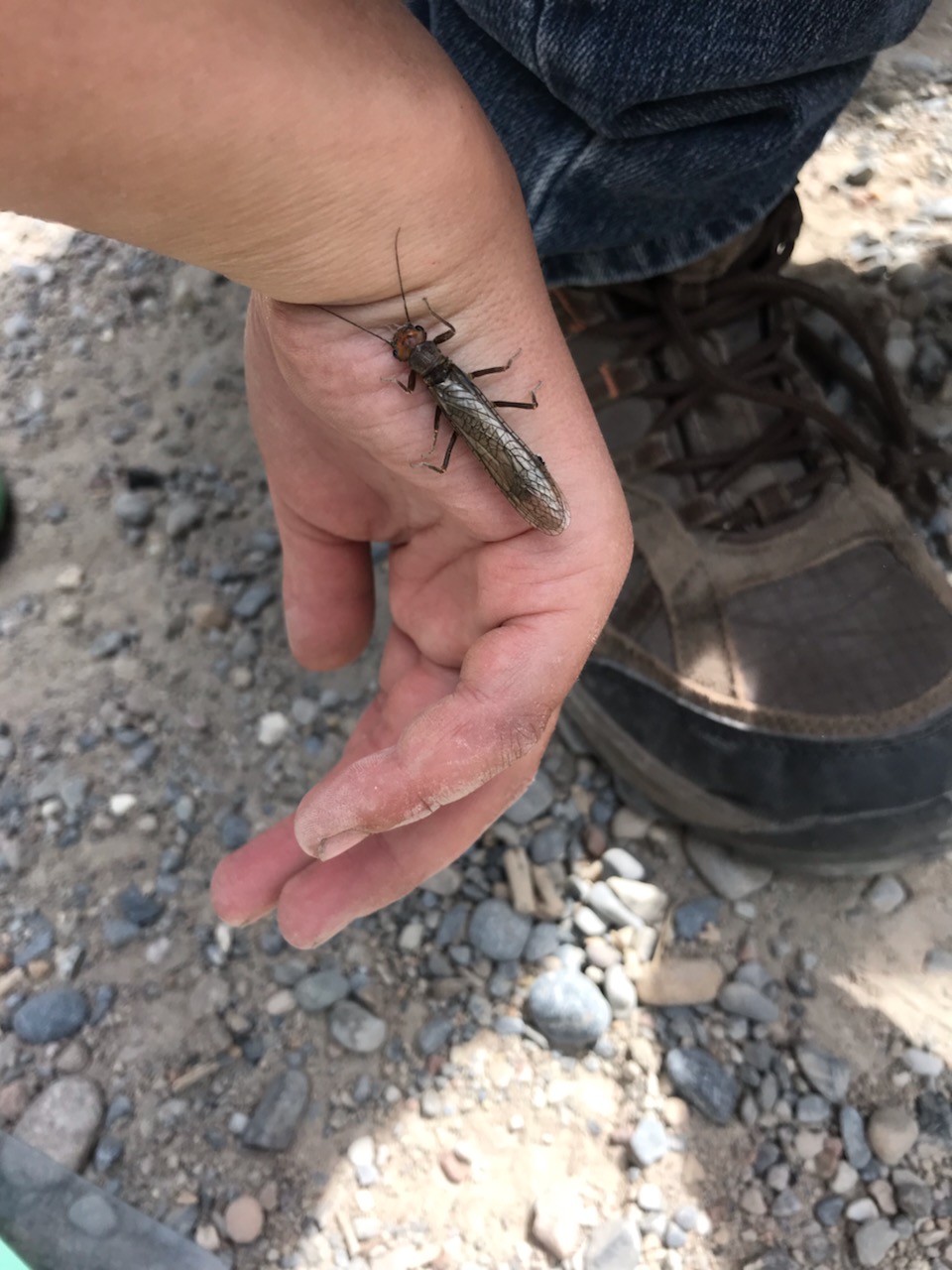
Stonefly Courtesy & Copyright Edith Bowen Laboratory School (EBLS) Experiential Learning Eric Newell Director & Photographer https://edithbowen.usu.edu/ Stonefly
Courtesy & Copyright Edith Bowen Laboratory School (EBLS)
Experiential Learning Eric Newell Director & Photographer

Sculpin Courtesy & Copyright Edith Bowen Laboratory School (EBLS) Experiential Learning Eric Newell Director & Photographer https://edithbowen.usu.edu/ Sculpin
Courtesy & Copyright Edith Bowen Laboratory School (EBLS)
Experiential Learning Eric Newell Director & Photographer

I remember my father on wintery Saturdays mounting his fly tying vice on the kitchen table, and then, from the cavern under the stairs, he’d emerge with his hooks, pheasant and peacock feathers, and other magical threads. I’d watch him spin intricate flies but never realized as a child that they were imitations of creatures I would meet and teach in the wild. When he took me to lakes and rivers to fish, we just used worms and pink marshmallows.

On an animal adaptation learning journey at Wood Camp along the Logan River this fall, our Edith Bowen Laboratory School first graders turned over river rocks, sweeping up all sorts of aquatic critters with nets and buckets to then probe playfully with tweezers and bare fingers. Trip Armstrong, Assistant Director of the National Aquatic Monitoring Center at Utah State University’s Department of Watershed Sciences, led our young investigators and several adult volunteers in identifying these benthic macroinvertebrates, especially the stonefly nymphs we found in every scoop.

These especially intrigued the children because they resemble something from outer space scurrying about on six legs. Stoneflies, both the nymphs and the adult insects, are large compared to mayfly and other critters you find in a river sample, so they stand out in a crowd. The adults have long wings, thus the Greek name Plecoptera meaning “braided wings,” but they are known to be poor fliers. The larvae have two tails or what biologists call cerci, while mayflies have three. Stoneflies have two hooks on their legs; mayflies have one. Stoneflies like oxygen-rich water flowing through their gills along their thorax and under their legs. We noticed some doing push-ups in the bin of river water, indicating it was time to return them to their habitat. Both mayfly and stonefly nymphs are pollution-sensitive, so finding them in such large numbers indicated that this part of the river was very healthy.

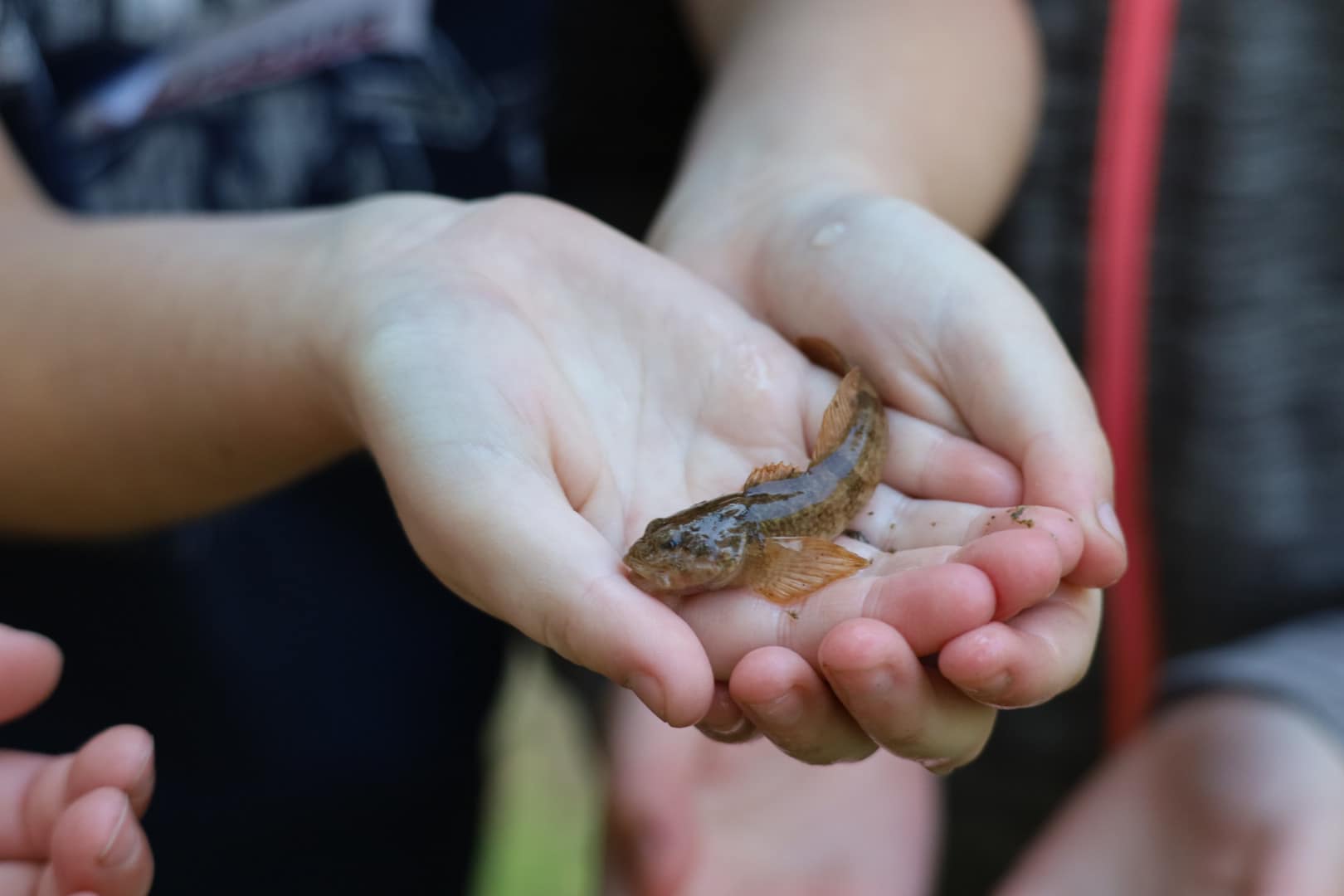
When a student approached from the river’s edge with a larger specimen cupped in her hands, I was stunned and a little spooked. “It’s a sculpin,” Armstrong said. These are bottom-dwelling fish that some say are basically big mouths with tails and have unflattering nicknames like “double uglies,” yet I learned later they are quite common. I’d just never met one. In fact, although biologists have determined that the Utah Lake sculpin has been extinct since the 1930s, the native Bear Lake sculpin and sculpin living in the Logan River are sources of food for the Bonneville Cutthroat and other trout.

I guess the lesson, as a wise first grader reminded me this week during our opinion writing session, is “Don’t yuck somebody’s yum.” Stoneflies and sculpin: flyfishers and bigger fish love them. I’m thankful for opportunities to teach in Utah’s wild places because every time I do, I learn something new.

I am Shannon Rhodes, and I’m wild about Utah.

Credits:

Images: Courtesy & Copyright Edith Bowen Laboratory School (EBLS)
Experiential Learning Eric Newell Director & Photographer https://edithbowen.usu.edu/
Audio: Courtesy & © J. Chase and K.W. Baldwin
Text: Shannon Rhodes, Edith Bowen Laboratory School, Utah State University https://edithbowen.usu.edu/https://edithbowen.usu.edu/
Additional Reading Links: Shannon Rhodes

Additional Reading

Beaudreau, Andrea. 2017. Why I Love Sculpins (and Why You Should Too). Coastal Fisheries Ecology Lab. https://annebeaudreau.com/2017/09/05/why-i-love-sculpins/

Bouchard, R.W. Jr. 2004. Guide to Aquatic Invertebrates of the Upper Midwest. 2004. https://dep.wv.gov/WWE/getinvolved/sos/Documents/Benthic/UMW/Plecoptera.pdf

Curtis, Jennifer Keats with Stroud Water Research Center. 2020. Arbordale Publishing. https://www.arbordalepublishing.com/bookpage.php?id=CreekCritters

Dickey, Amy. Water Quality and Macroinvertebrates. https://deq.utah.gov/communication/news/water-quality-macroinvertebrates

Larese-Casanova, Mark. 2013. Aquatic Insects, Harbingers of Health. Wild About Utah, https://wildaboututah.org/aquatic-insects-harbingers-of-health/

Leavitt, Shauna. 2017. Bear Lake Sculpin. Wild About Utah, https://wildaboututah.org/bear-lake-sculpin-cottus-extensus/

National Aquatic Monitoring Center. https://qcnr.usu.edu/research/namc/ (was https://namc-usu.org/)

Pennsylvania League of Angling Youth. 2006. PLAY. https://www.pa.gov/agencies/fishandboat/education/activities-education-portal/aquatic-macroinvertebrates.html (formerly: https://www.fishandboat.com/LearningCenter/PennsylvaniaLeagueofAnglingYouthPLAY/Documents/AquaticMacrosEnaElpaMayflyPondstream_Allpages.pdf)

Stroud Water Research Center. Macroinvertebrate Resources. https://stroudcenter.org/macros/

Utah Division of Wildlife Resources. Five Aquatic Species You May Not Know Live in Utah. Mottled Sculpin. https://wildlife.utah.gov/guidebooks/962-r657-29–government-records-access-management-act.html

Utah State University Extension. Bugs Don’t Bug Me. https://digitalcommons.usu.edu/extension_curall/1170/ (formerly: https://extension.usu.edu/waterquality/files-ou/Publications/AllBugs.pdf)

Zarbock, William. 1952. Life History of the Utah Sculpin. Transactions of the American Fisheries Society. https://www.tandfonline.com/doi/abs/10.1577/1548-8659%281951%2981%5B249%3ALHOTUS%5D2.0.CO%3B2

You and I and the Winged Things

You and I and the Winged Things: Late Autumn Evening Courtesy & Copyright Friend Weller
Late Autumn Evening
Courtesy & Copyright Friend Weller
One of the greatest magics of these late autumn evenings is that of midges, gnats, flies, mosquitoes, and bugs which flitter about in the humble stratosphere of their world between the intermittent cold snaps. They loop and spiral, as if on spiritual roller coasters, gently refracting the setting sun through and upon their bodies so that they seem to glow and become prescient of the night’s stars soon to bloom. When the cool November sun begins to set low, I can look out amongst the naked shrubs and thinning trees, the tall shaggy grasses and dead kaleidoscopic leaves, and see those hidden creatures who only dance in unlovely places the splendid slow waltz of autumnal joy.

Through the cascading shadow, the dance of the waning wing-bearers becomes even more dramatic. As the sun continues to slide below the mountains, the insects increase their pace it seems, and then begins the cataclysm of the birds. Small gray and off-gray birds with different flecks, inflections, songs, and hearts, though unified as the kind that would easily build a good hardy nest in an old dilapidated mug, begin diving through the midges and gnats and flies and mosquitoes. The birds are trapeze artists. Starting from a perch in a nearby tree, they swoop with grace through the air in a dramatic arc. At the nadir of their swing, the snare roll abruptly halts, a sharp inhale of silence descends like thunder and is followed in quicktime by a cymbal crash as the acrobats catch their purse in midair. Then, gently arching back up to the adjacent branch across, a great applause raptures. Like this, the birds dive and breach, avian orcas earning their rich protein in preparation for the imminent changing of the season. The horizon of thin times drives the orchestra of life onwards.

As I watch the fading insects, bugs, winged things, and other wonders I ponder as to why many see them as pests. In the evening glow, it seems an impossible identity for these fellow inhabitants of our world. Do people fear them? Not understand them? Believe they belong in one place and not another? Watching them in that moment, the thought escapes my mind and I am glad. I am glad to forget their supposedly assigned state, and I instead reforge my memories anew in the present, watching them as sparks in the swiftly quenching day. The perpetual creation of the world continues along, with I and you and all we’ve ever known and will know wrapped within it.

I’m Patrick Kelly, and I’m Wild About Utah.
 
Credits:
Images: Courtesy & © Friend Weller https://upr.org/
Audio: Courtesy & © J. Chase and K.W. Baldwin https://upr.org/
Text:    Patrick Kelly, Director of Education, Stokes Nature Center, https://www.logannature.org
Included Links: Patrick Kelly & Lyle Bingham, Webmaster, WildAboutUtah.org

Additional Reading

Wild About Utah, Posts by Patrick Kelly

Top 20 Identified Insects, Utah Plant Pest Diagnostic Lab, Extension, Utah State University, https://extension.usu.edu/pests/uppdl/top-20-insects