Bark Beetle Mania

Bark Beetle Mania: Pine beetle damage to ponderosa pine in Dixie National Forest 2000 Courtesy USDA Forest Service
Pine beetle damage to ponderosa pine
in Dixie National Forest
2000 USDA Forest Service

Hi, I’m Holly Strand of Stokes Nature Center in beautiful Logan Canyon.

For a creature that’s typically less than six millimeters in size, bark beetles certainly have a mammoth footprint. Outbreaks of the tiny insects in forests across western North America have changed millions of trees into shriveled, rust-colored sentinels of a changing ecosystem. In Utah alone, between 1990 and 2005, wood-boring beetles ate their way through more than 466,000 acres which equals 3% of Utah’s total forested area.

Bark beetles are native to our forests and evolved together with their respective hosts. For example, the Douglas-fir beetle evolved with Douglas firs, and the spruce beetle with Engelmann spruce. The mountain pine beetle is the least discriminating. It attacks lodgepole pine, ponderosa pine and, more recently, high elevation species such as whitebark pine, limber pine, and bristlecone pine.

Douglas fir beetle galleries
beneath the outer bark
2000 USDA Forest Service

At healthy population levels, bark beetles renew forests by killing older and declining trees, allowing young, more productive ones to flourish. Female beetles initiate the assault, simultaneously attracting males using pheromones. Within hours the tree becomes the site of a “mass attack” of thousands of beetles. Then the females begin to reproduce. An individual female may lay over 100 eggs. As eggs hatch, larvae construct feeding galleries in the inner bark of the tree. These galleries eventually girdle and kill the tree by cutting off the exchange of nutrients between the roots and the crown of the tree.

Some of the biggest outbreaks in Utah have occurred in the Dixie and the Manti La Sal National Forests. The spruce beetle is responsible for thousands of acres of dead Engelmann spruce trees in both of these forests. The Piñon Ips beetle also thrives in piñon pines in southern UT. Meanwhile, on the other end of the state, the mountain pine beetle is causing serious outbreaks in the Uintas. The Wasatch Range forests have yet to experience extensive diebacks but the mountain pine beetle, Douglas fir beetle and spruce beetle are all causing higher mortality rates than they have in the past.

Certain forestry management practices are partially responsible for the unprecedented bark beetle outbreaks. Dense, homogenous forests with repressed fire regimes are more susceptible to attack. On the other hand, uncrowded, variable age stands composed of lots of different species are healthy and resilient.

Warming climate conditions have also contributed to the severe bark beetle outbreaks. Early fall and late spring freezes, and extremely cold temperatures help repress bark beetle populations. I’ll try to keep this in mind when it’s snowing in June here in Cache Valley. At least our pine trees will be healthy and safe from the bark beetle.

Barbara Bentz, research entomologist with the USDA Forest Service Rocky Mountain Research Station and adjunct faculty member with Utah State University’s Department of Wildland Resources, provided the scientific information for this piece.

Thanks to the USU College of Natural Resources and the Rocky Mountain Power Foundation for supporting research and development of this Wild About Utah topics. For Wild About Utah and Stokes Nature Center, I’m Holly Strand.

Credits:

Images: UDSA Forest Service: Assessment and response to bark beetle outbreaks in the Rocky Mountain aea. Report to Congress from Forest Health Protection (see below)

Text: Mary-Ann Muffoletto, Holly Strand

Sources & Additional Reading

Bentz B, Allen CD, Ayres M, Berg E, Carroll A, Hansen M, Hicke J, Joyce L, Logan J,MacFarlane W, MacMahon J, Munson S, Negr?n J, Paine T, Powell J, Raffa K, Régnière J, Reid M, Romme W, Seybold S, Six D, Tomback D, Vandygriff J, Veblen T, White M, Witcosky J, Wood D (2009) Bark Beetle Outbreaks in Western North America: Causes and Consequences. University of Utah Press, ISBN 978-0-87480965-7, 42 p.
https://www.amazon.com/Beetle-Outbreaks-Western-North-America/dp/0874809657

Logan, J.A., Powell, J.A. 2001. Ghost forests, global warming, and the mountain pine beetle (Coleoptera: Scolytidae). Am. Ent. 47(3): 160-172. https://digitalcommons.usu.edu/barkbeetles/187/

Samman, Safiya, Logan, Jesse tech eds. 2000. Assessment and response to bark beetle outbreaks in the Rocky Mountain aea. Report to Congress from Forest Health Protection, Washington Office, Forest Service, U.S. Department of Agriculture. Gen. Tech. Rep. RMRS-GTR-62. Ogden, UT: U.S. Department of Agriculture, Forest Service, Rocky Mountain Research Station. 46 p.
https://digitalcommons.usu.edu/barkbeetles/39/ (accessed June 22, 2009 –Updated 8/2025)

Morgan, Kory, Racing the clock to stem the spread of the mountain pine beetle, USDA Forest Service, May 11, 2021, https://www.fs.usda.gov/features/racing-clock-stem-spread-mountain-pine-beetle

Bumblebee Queens of Spring

Bumblebee Queens of Spring: Bombus bifarius. Copyright (c) 2008 Don Rolfs
Bombus bifarius,
Copyright © 2008 Don Rolfs

This is Linda Kervin for Bridgerland Audubon Society.

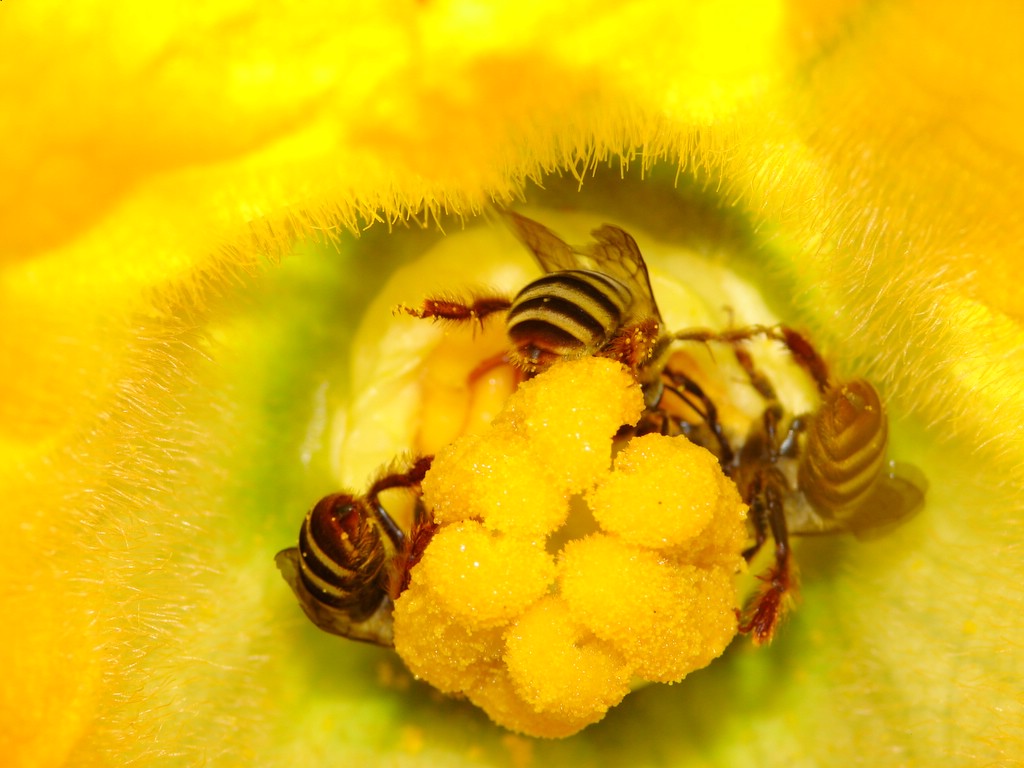
When crocuses are pushing through the snow in your garden, you might see another sign of spring: the flights of bees. Other bees may fly in spring, but few are as early or as boisterous as bumble bees. Utah is home to more than a dozen species of bumble bees, all of who belong to the genus Bombus (which in Greek means buzzing). All have a combination of black and yellow markings on their bodies. Some also have orange bands. Unlike honey bees that pass the winter warmly clustered in hives, bumble bees overwinter as solitary queens, dormant under a few inches of loose soil or leaf litter. These queens are quiescent all winter until warming soil beckons their reawakening to start their colony.

From March to May, watch for a behavior called nest searching, when the big, burly queen bumble bees fly low over the ground, stopping often to investigate holes in the earth or in building foundations. Bumble bees nest in small, insulated cavities, such as abandoned rodent burrows or bird houses. Once the queen finds a suitable nest site, she is out and about, foraging for pollen and nectar to provision her offspring. After a few days she will have sufficient food to begin laying eggs. Like all bees, her offspring progress through four life stages: egg, larva, pupa and adult. In just under a month, her daughters develop into adults, each chewing free of its cocoon.

Bombus griseocollis Queen
Foraging on Hedysarum
Copyright © 2008 Jamie Strange

These daughters take over foraging and nest construction duties, leaving the queen to remain in her nest and continue to lay eggs and incubate her brood. Workers are often much smaller than their mother, so don’t expect to see many big bumble bees again until autumn, when next year’s queens start the cycle anew, searching for mates and a spot to spend the winter.

This is Linda Kervin for Bridgerland Audubon Society.

Credits:

Photo: Courtesy & Copyright © 2008 Don Rolfs & Jamie Strange

Text: Jamie Strange, USU USDA-ARS Pollinating Insect Research Unit

Additional Reading:

ID a Bumblebee, https://www.ars.usda.gov/Services/docs.htm?docid=10749

Bumblebee Watch, https://www.bumblebeewatch.org/
Bumble Bee Watch is a citizen science project through the partnership of The Xerces Society, the University of Ottawa, Wildlife Preservation Canada, BeeSpotter, The Natural History Museum, London, and the Montreal Insectarium.

Snow Fleas

Snow Fleas, Bridgerland Audubon Amalga Barrens Sanctuary
Copyright © 2008 & Courtesy: Jim Cane
Bridgerland Audubon Society

This is Linda Kervin for Bridgerland Audubon Society.

Now, in the waning days of winter, you can see Nature’s winter flea circus perform. Look for warm snow surfaces that are peppered by tiny black flecks that resemble a parenthesis on your 1040 form. Bend down to regard these flecks carefully, or scoop some up. If they move, then you are likely eye to eye with snow fleas.

Fear not, for they aren’t really fleas at all. They aren’t even insects! Snowfleas belong to the order Collembola, the springtails, closest relatives to the insects. Springtails are so named for a fork-shaped appendage, the furcula, folded beneath the abdomen. The animal can snap its furcula open like a barrette clasp, catapulting the wee creature several inches forward through the air.

Springtails are rarely noticed, but it’s worth seeing their miniscule acrobatics. It helps to have something white against which to view them. The white warmed surface of the late-winter snowpack provides one opportunity. Or you can often see springtails by placing a white card on the needle duff of a conifer forest floor, where springtails help decompose fallen needles.

Atop the snow, snowfleas apparently graze for algae and fungal spores, but really, how would anyone know? In turn, are there wee predators from which snowfleas must, well, “flee” in this chilly habitat?

Snowfleas aren’t social, but they sure can be numerous. Last March, the manager of Bridgerland Audubon’s Barrens Sanctuary estimated a population of some 8 billion snowfleas springing about just within the confines of their 140 acre reserve.

With those kinds of numbers, pets and Utahns everywhere can be grateful that snowfleas really aren’t true fleas, leaving us to enjoy the pleasure of tromping around on a sunny winter’s day.

This is Linda Kervin for Bridgerland Audubon Society.

Credits:

Photo: Courtesy & Copyright © 2008 Jim Cane

Text: Jim Cane, Bridgerland Audubon Society https://www.bridgerlandaudubon.org

Additional Reading:

Edible antifreeze promises perfect ice cream, Tom Simonite, 11 January 2008, New Scientist
https://www.newscientist.com/article/dn13178

Beneficial/Neutral Insects, University of Minnesota Extension Service, https://www.extension.umn.edu/yardandgarden/EntWeb/Galleries/outdoor/beneficial/snowflea.html

Snow Flea, Study of Northern Virginia Ecology, Island Creek Elementary School, Fairfax County Public Schools, https://www.fcps.edu/islandcreekes/ecology/snow_flea.htm

Boxelder Bug Poetry

Boxelder Bugs
Courtesy Michigan Department of Agriculture

Hi, I’m Holly Strand from Stokes Nature Center in beautiful Logan Canyon.

Bill Holm, author, poet and essayist from Minnesota, died last week. He wrote and taught in the English department at Southwest Minnesota State University for 27 years. Why I do I mention this on a program about Utah nature? Because through his writing, he helped me come to terms with one aspect of Utah nature that I found troublesome at first —the ubiquitous and abundant boxelder bug.

“My boxelder bugs have odd preferences,” Holm wrote “They love radio dials, phonograph speakers, amplifiers, pianos, and harpsichords. Some would argue that this is because of the warmth and vibrations, but I prefer to think it is because of their taste for Bach and Vivaldi.”

The red and white bugs are essentially harmless. They might stain walls or carpets if you squish them. However, they are annoying primarily because they enter homes and other buildings in large numbers. Once in, they’ll find their way into your personal effects. Like your hair or your toothbrush or the glass of water you keep on the bedside table.

After hearing me go on a boxelder bug rant, a friend gave me Holm’s book Boxelder Bug Variations: A meditation of an idea in language and music. It changed my attitude toward with household invaders, as now I think of them as poetic. Maybe if I read a few verses, you will feel the same:
First, a boxelder bug prayer:

I want so little
For so little time
A south window,
A wall to climb,
The smell of coffee,
A radio knob,
Nothing to eat,
Nothing to rob,
Not love, not power,
Not even a penny,
Forgive me only
For being so many.

In this one, Holm describes a method for disposing boxelder bugs:

Take two bricks.
Creep deliberately up
Behind the boxelder bug,
Being careful not to sing—
This will alert him.
In a graceful flowing gesture,
Something like a golf swing
Or reaching for your lover in the dark,
Gather up the boxelder bug
On the surface of the left brick
Bringing the right brick
At the same time firmly down
Together with the left brick.
There will be a loud crashing,
Like broken cymbals,
Maybe a breaking of brick, and
If you are not careful,
Your own voice rising.
When the brick dust has settled
And you have examined your own hands,
Carefully,
You will not see the boxelder bug,
There is a small hole in the brick
And he is exploring it,
Calmly, like a millionaire
In an antique shop.

And finally, three boxelder bug haiku:

(1) Careful if you kill him!
There may be an afterlife
For both of you.
(2) Those black spots in your lamp?
Only bugs who didn’t make it
Into the next world.

And finally…

(3) The piano string stops trembling
But boxelder bugs
Keep dancing.

Thanks to Jen Levy for introducing me to boxelder bug poetry, and to Milkweed Editions for permission to reproduce Bill Holm’s work.

The Rocky Mountain Power Foundation supports research and development of Wild About Utah topics.

For Wild About Utah and Stokes Nature Center, I’m Holly Strand.

Credits:

Photo: Courtesy Michigan Department of Agriculture

Text: Stokes Nature Center: Holly Strand

Sources & Additional Reading

Boxelder Bug Variations: A Meditation on an Idea in Language and Music, Holm, Bill, 1985, Minneapolis, MN: Milkweed Editions https://www.milkweed.org/

Boxelder Bugs Fact Sheet, Erin Hodgson, Alan H. Roe, USU Cooperative Extension:
https://extension.usu.edu/files/factsheets/boxelder.pdf