Don’t Move a Mussel

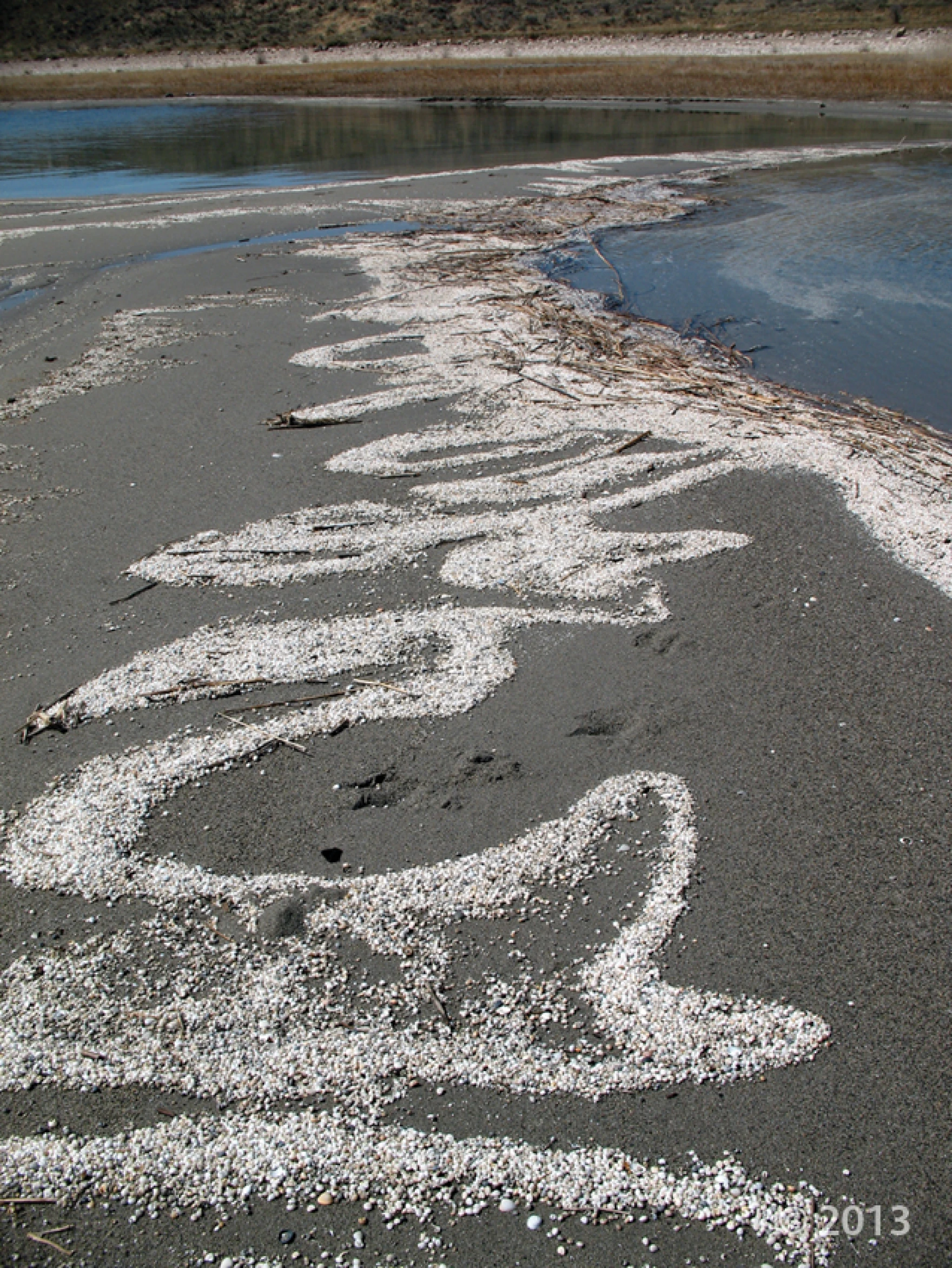
Quagga Mussels Exposed at Lake Powell Courtesy & Copyright Utah Division of Wildlife Resources, Phil Tuttle, Photographer
Quagga Mussels Exposed at Lake Powell
Courtesy & Copyright Utah Division of Wildlife Resources, Phil Tuttle, Photographer
You’ve heard the phrases, “Don’t move a mussel,” (spelled m-u-s-s-e-l) and “Stop aquatic hitch hikers.” If you have ever transported a watercraft, ranging in size from a paddle board to wake surf boat, you’ve probably been annoyed by the inconvenience of stopping at mandatory boat check stations for invasive species watercraft inspections. The threat is real and I hope this segment will make you a believer in inspection stations.

Let’s backtrack.

The opening of the St. Lawrence Seaway in 1959 allowed cargo ships to bypass the rapids on the St. Lawrence River and enter Lake Ontario. From there ships could access Canada’s Welland Canal, which also uses a series of locks to allow ships and barges to bypass Niagara Falls and access the rest of the Great Lakes. Proponents of the St. Lawrence Seaway sold the project on the grounds that it would turn the Great Lakes into a North American “Mediterranean” by transforming cities from Rochester, New York to Duluth, Minnesota into global ports.

They got what they wished for, but with a twist. “Salties,” or oceangoing cargo ships, traveling from the Mediterranean, Black, and Caspian Seas, emptied their ballast tanks in Great Lakes ports as cargo was loaded. In June of 1988 the first documented zebra mussel was found in Lake St. Clair—a small lake (in comparison to the Great Lakes) where the St. Clair River pools about halfway along its journey from Lake Huron to Lake Eire. This single, fingernail-sized mussel signaled a catastrophe. By the end of 1989, invasive zebra and quagga mussels were found in all five Great Lakes.
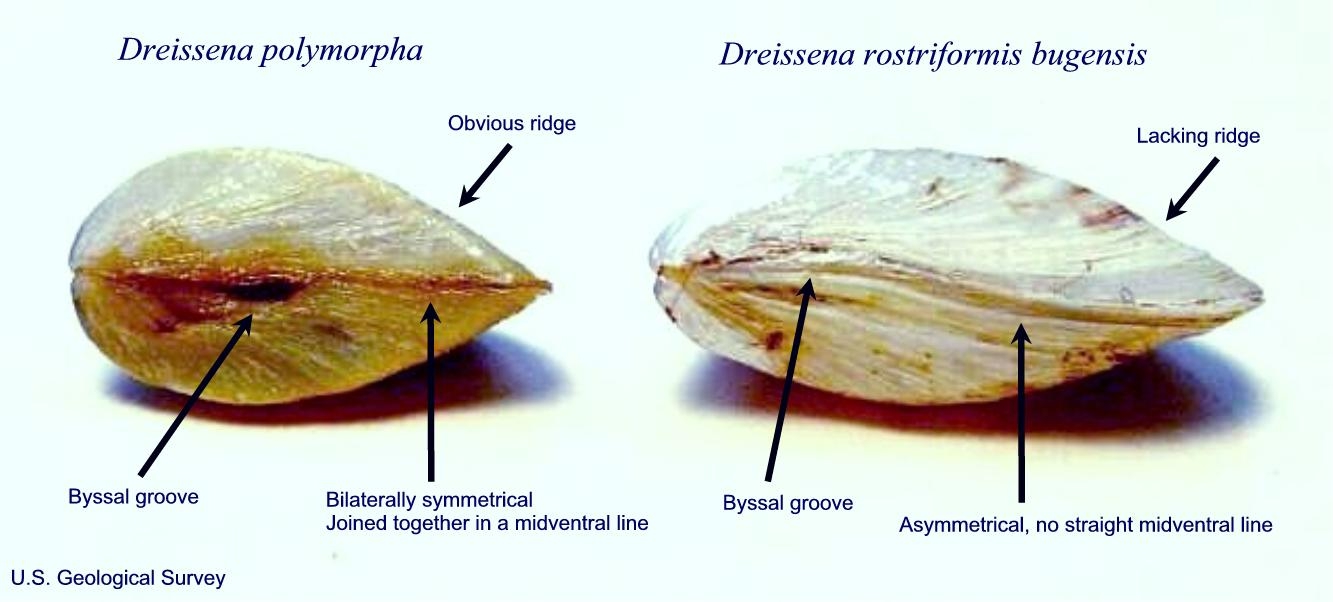
Zebra Mussel (Dreissena polymorpha) vs Quagga Mussel (Dreissena rostriformis bugensis). 
Courtesy USGS, Wetland and Aquatic Research Center, Amy J Benson, Photographer
Zebra Mussel (Dreissena polymorpha) vs Quagga Mussel (Dreissena rostriformis bugensis).
Courtesy USGS, Wetland and Aquatic Research Center,
Amy J Benson, Photographer
Zebra and quagga mussels are mollusks—soft-bodied invertebrates housed in hinged, two-part shells. They contain a muscular “foot” that allows them to move twelve to fourteen inches per hour—but that’s not how they travel most efficiently. Zebra and quagga mussels can produce a million eggs per year, that hatch into microscopic “veligers” which can swim efficiently for several weeks before their shell begins to form, sinking them to the bottom. Once a mature zebra mussel finds a suitable place for a home, the foot forms an epoxy-like bond with hard surfaces, making them difficult and expensive to remove from ship hulls, water intake pipes, docks, locks, and hydro-electric power infrastructure.

Zebra mussels thrive in water less than about fifty feet deep and on hard surfaces. Quagga mussels thrive in soft lake bottoms in water as deep as 500 feet. Together these invasive mollusks wreak havoc on aquatic ecosystems where they are most vulnerable—the bottom of the food chain.

Razor sharp zebra and quagga mussels filter microscopic nutrients from the water, This makes lakes clearer, while stripping them of nutrients aquatic species depend upon. By 2009 phytoplankton levels in the Great Lakes were diminished by 90% compared to pre-mussel levels. Clearer water makes for easier fishing for predatory birds and clearer water allows sunlight to penetrate deeper into lakes, warming them up faster and creating prime conditions for toxic algae blooms. Algae blooms deplete the water of oxygen and create ideal conditions for botulism, which then causes massive waterfowl die-offs. All of this has happened in the Great Lakes in a viscous cycle set in motion by zebra and quagga mussels.

Invasive mussels were found in Lake Mead in 2007 and in Lake Powell in 2013—transported from the Midwest recreational boats. What has happened in the Great Lakes can—and is—happening in the west.
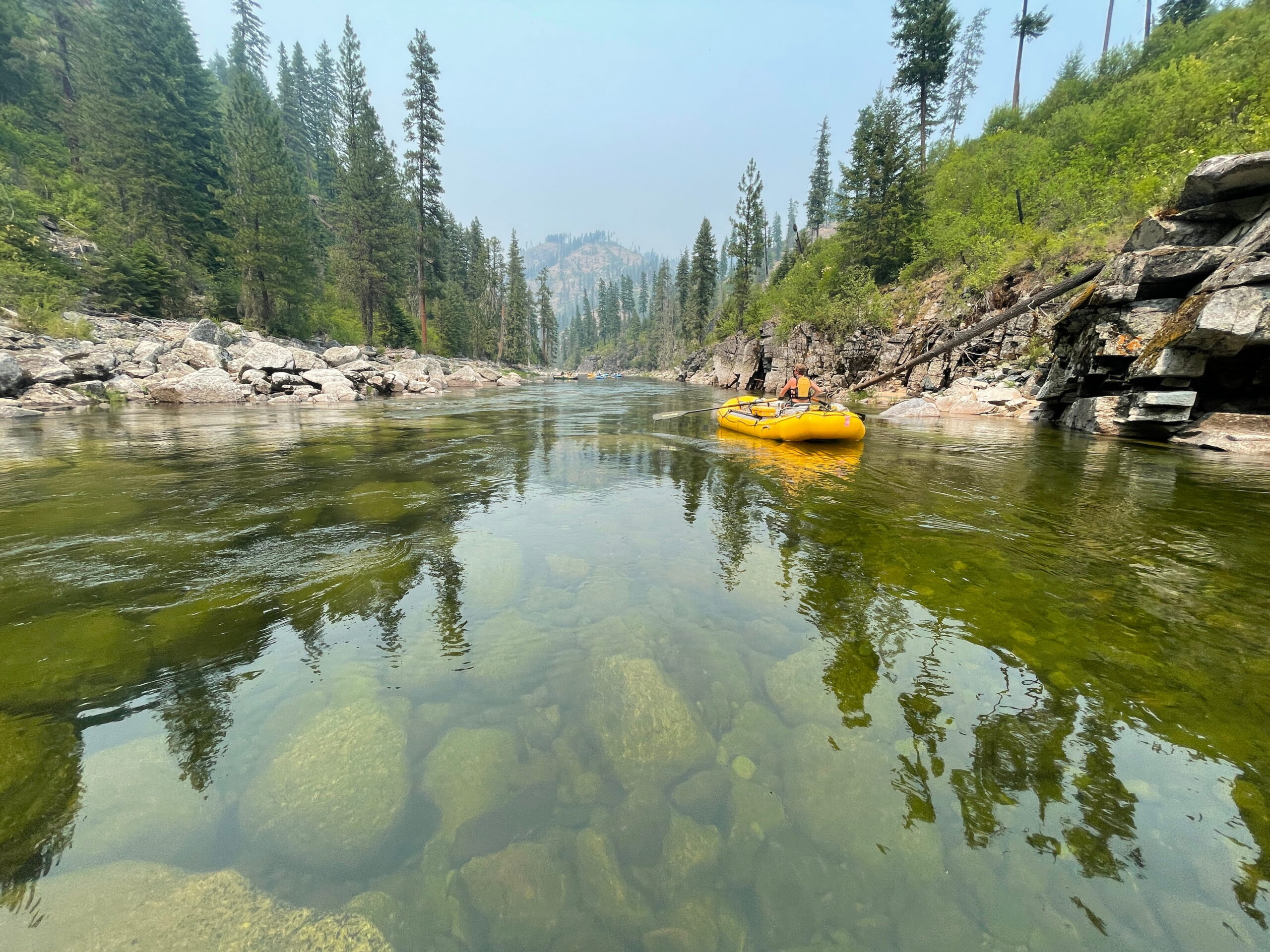
Pristine waters that could be harmed by Aquatic Invasive Species
Courtesy & Copyright Eric Newell, Photographer
Pristine waters that could be harmed by Aquatic Invasive Species
Courtesy & Copyright Eric Newell, Photographer
So, the next time you have to wait in line at a boat-check station, know you are doing the right thing. Clean, drain, and dry your paddle boards, kayaks, whitewater rafts, fishing boats, and wake surfers before transporting them to other waterways and lakes. It only takes one contaminated watercraft to put the rest of the lakes and rivers that we all love in peril.

I am Eric Newell and I am wild about Utah’s lakes and rivers.

Credits:

Images: Quagga Mussels exposed at Lake Powell, Phil Tuttle, Photographer, Utah DWR
Boating, Eric Newell, Photographer
Featured Audio: Courtesy & Copyright J. Chase and K.W. Baldwin.
Text: Eric Newell, Edith Bowen Laboratory School, Utah State University & Lyle Bingham, Bridgerland Audubon Society

Additional Reading:

WildAboutUtah pieces by Eric Newell, https://www.upr.org/people/eric-newell

Egan, Dan, Zebra Mussels’ Takeover of the Great Lakes, January 2, 2019, https://www.discovermagazine.com/zebra-mussels-takeover-of-the-great-lakes-2626

What are Invasive Mussels?, Invasive Mussel Collaborative, Great Lakes Commission, https://invasivemusselcollaborative.net/about/mussel-facts/#:~:text=They%20were%20first%20discovered%20in,at%20the%20bottom%20of%20lakes

Howard, James, When Zebra Mussels Made the Great Lakes “Clean”, October 8, 2025, https://jameshoward.us/2025/10/08/when-zebra-mussels-made-the-great-lakes-clean

Zebra Mussels, BB-17, Environmental Fact Sheet, New Hampshire Department of Environmental Services, 2026, https://www.des.nh.go v/sites/g/files/ehbemt341/files/documents/2020-01/bb-17.pdf

Map of Lake St Clair, The Great Lakes, Google Maps, https://www.google.com/maps/place/Lake+St+Clair/@44.6782974,-87.146707,1192993m/data=!3m1!1e3!4m6!3m5!1s0x88253a42a07febbd:0x679a153523440e7c!8m2!3d42.4356504!4d-82.6915429!16zL20vMDJnMzdn?entry=ttu&g_ep=EgoyMDI2MDkwOS4wIKXMDSoASAFQAw%3D%3D

Great Lakes St. Lawrence Seaway Development Corporation, https://greatlakes-seaway.com/en/

Leahy, Colleen, Quadrillions of invasive mussels are damaging the Great Lakes, documentary shows, Wisconsin Public Radio, February 28, 2025, https://www.wpr.org/environment/drebert-melnick-documentary-quagga-mussels-great-lakes#:~:text=The%20quagga%20mussel%20has%20infiltrated,are%20felt%20throughout%20lake%20ecosystems.

Book recommendation:

Egan, Dan, The Death and Life of the Great Lakes, W. W. Norton & Company, 2017, https://www.betterworldbooks.com/product/detail/the-death-and-life-of-the-great-lakes-9780393355550
Mollusks in Utah, then and now

Click to view this piece on UPR.org

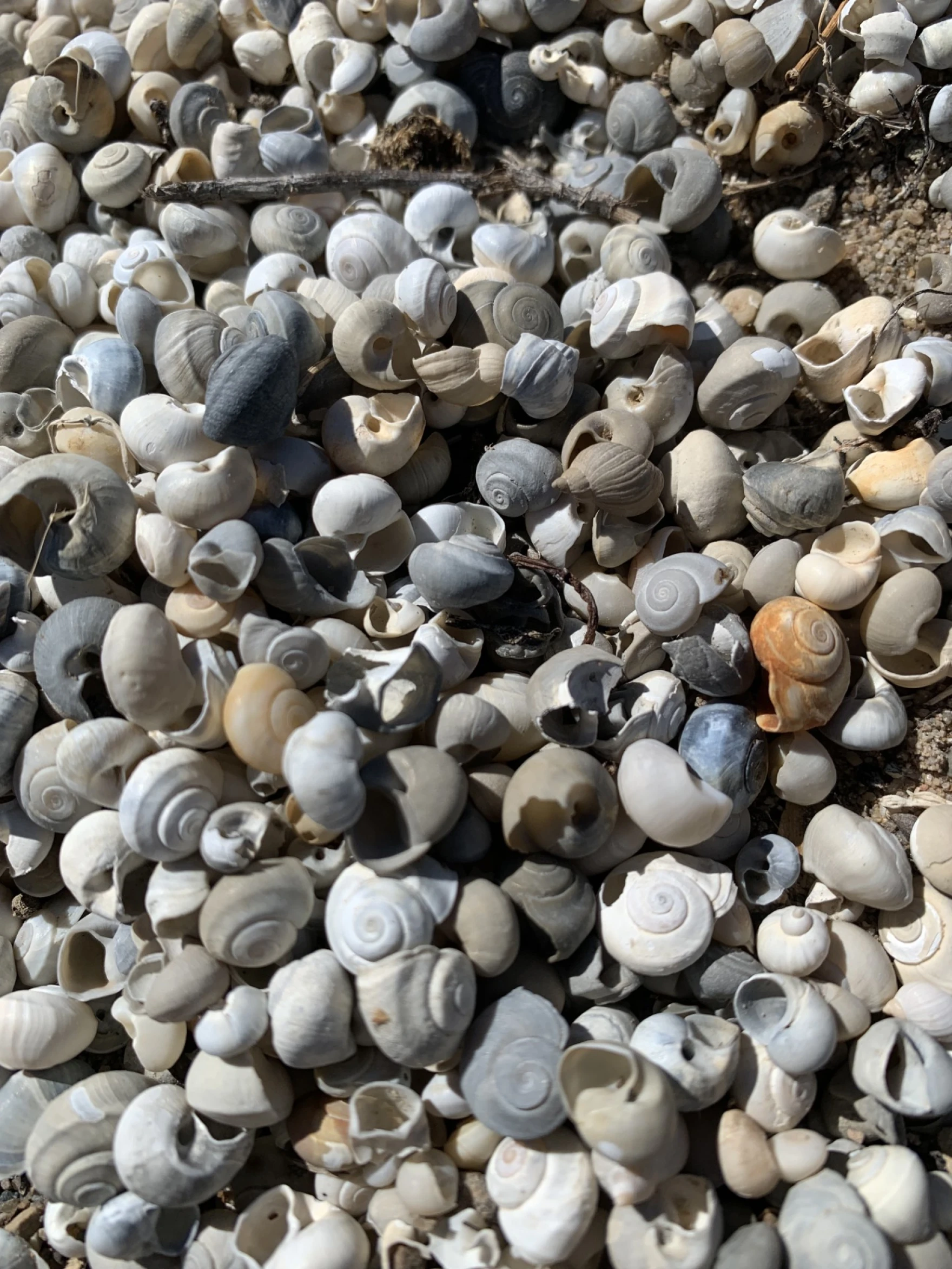
Mollusk shells along the southwest shore of Bear Lake, Rich County.
Courtesy Utah Geological Survey (UGS),
© Mark Brunson, Photographer
For many people in northern Utah, there’s nothing better than a warm afternoon with family and friends at Bear Lake. You can splash in the shallows, bask in the sunshine, and stroll along the shoreline while marveling at a centuries-old legacy of ancient mollusks.

Wait, what??! Ancient mollusks, 800 miles from the ocean? Yes, it’s true.

For years, when visiting Bear Lake, I’d be fascinated by snail shells strewn along the shore just above the waterline. I always wondered why we could find thousands of shells but would never see a live snail.

Mollusk shells along the southwest shore of Bear Lake, Rich County.
Courtesy Utah Geological Survey (UGS),
© Mark Milligan, Photographer

Mollusk shells along the southwest shore of Bear Lake, Rich County.
Well, it turns out that Utah is home to numerous species of live snails, but the shells we see beside Bear Lake have been there for nearly 10,000 years! They’ve lasted this long because they’re preserved by the calcium chemistry of a lake that’s fed by springs and groundwater beneath the limestone crags of the Bear River Range. Many years ago, researchers from the Smithsonian Institution identified six species of snail and one species of clam amongst the Bear Lake sands, all of which thrived in a bygone era when the lake was 30 to 50 feet higher and much bigger.

The snails that occupied those shells may have died out, but they have living relatives today. Scientists say that the group of invertebrates in the phylum Mollusca includes more than 85,000 recognized species, including clams and oysters, barnacles and limpets, snails and slugs, squids and octopuses. Some can even be found in our arid, landlocked state of Utah.

If you travel the highways of Utah and surrounding states, you’ve seen signs warning against a mollusk species that we don’t want in the state: the quagga mussel. These clam-like creatures have turned up in Lake Powell and we don’t want them in other lakes and reservoirs. They’ve become a nuisance in other states, clogging pipes and water lines, and competing with native fish for food. Once they become established, removing quagga mussels or the closely related zebra mussel can cost many millions of dollars. That’s why Utah has set up boat-inspection stations across the state to try to keep them out.

Another mollusk that many people would like to be rid of is the common garden slug – also called the grey field slug and known to malacologists as Deroceras reticulatum. Slugs don’t seem much like oysters or squids, but they’re basically just snails that have evolved to get along without a shell.

Less visible are the many other species of mollusks found in our state. A few years ago, biologist Eric Wagner published the Utah Mollusk Identification Guide with descriptions of 139 species of snails, slugs, clams, and mussels found within the borders of our state. Just one year later, Eric and a colleague, Christy Bills from the Natural History Museum of Utah, published an article reporting three additional species – two snails and a slug – that had not been seen in Utah before. Undoubtedly there are more that no one has noticed yet.

Just about all of Utah’s mollusks are cryptic – a term biologists use to refer to creatures that are hard to notice. Many are quite rare. One example is the Kanab ambersnail, a dime-sized creature found only at a large spring in Grand Canyon National Park and some small ponds near the town of Kanab, Utah. Others, like the freshwater mussel called the Western Pearlshell, can be found across the West but their populations are declining.

These creatures may not be obvious, but they’re part of what makes Utah’s wild nature so varied and wonderful. Losing any one of them would be a tragedy.

I’m Mark Brunson, and I’m wild about Utah’s wild creatures, no matter how cryptic.

Credits:

Images: Bear Lake Shells, Courtesy & Copyright Mark Brunson, Photographer, as well as Shells on the Bear Lake Sand, Courtesy Utah Geological Survey, Copyright Mark Mulligan, Photographer.
Featured Audio: Courtesy & © J. Chase and K.W. Baldwin and Anderson, Howe, and Wakeman
Voice & Text: Mark Brunson, https://www.usu.edu/experts/profile/mark-brunson/
Additional Reading: Mark Brunson, https://www.usu.edu/experts/profile/mark-brunson/ & Lyle Bingham, Bridgerland Audubon Society

Additional Reading

Mark Brunson’s Wild About Utah archive: https://www.upr.org/people/mark-brunson

Beautiful UTAH: The wonderfully weird world of mollusks. The Payson Chronicle (Oct. 6, 2021). https://paysonchronicle.blogspot.com/2021/10/beautiful-utah-wonderfully-weird-world.html

Carey, Trevor. 2018. The Conservation of the Kanab Ambersnail. University of California-Davis Center for Watershed Sciences. https://cwseducation.ucdavis.edu/class/116/conservation-kanab-ambersnail

List of mollusks of Utah facts for kids. https://kids.kiddle.co/List_of_mollusks_of_Utah

National Park Service. Western Pearlshell. https://www.nps.gov/articles/000/western-pearlshell.htm

Palacios, Patsy, Chris Luecke and Justin Robinson. 2007. Paleo-biology and paleo-hydrology of the Bear Lake Basin, Utah. https://digitalcommons.usu.edu/cgi/viewcontent.cgi?article=1592&context=nrei

Utah Division of Wildlife Resources. Collection, importation, and possession of fish, mollusks, and crustaceans in Utah. https://wildlife.utah.gov/cip

Wagner, Eric, and Christy Bills. 2024. Three gastropod species reported in Utah for the first time. https://scholarsarchive.byu.edu/wnan/vol84/iss1/12/

Invasive Quagga Mussels-Help Needed

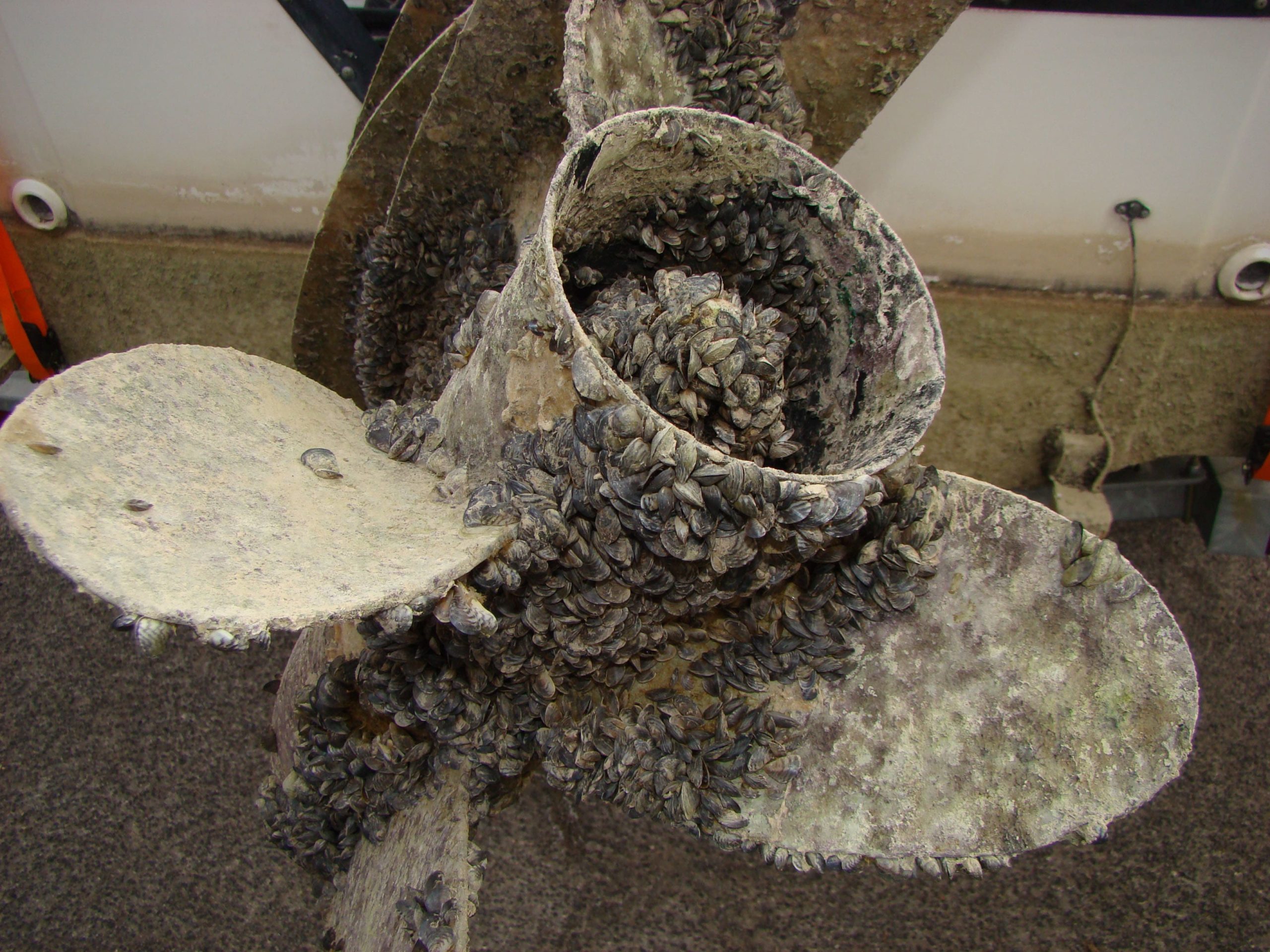
Quagga Mussels on Propeller Courtesy & Copyright Utah Division of Wildlife Resources, Faith Jolley, Photographer
Quagga Mussels on Propeller
Courtesy & Copyright Utah Division of Wildlife Resources, Faith Jolley, Photographer

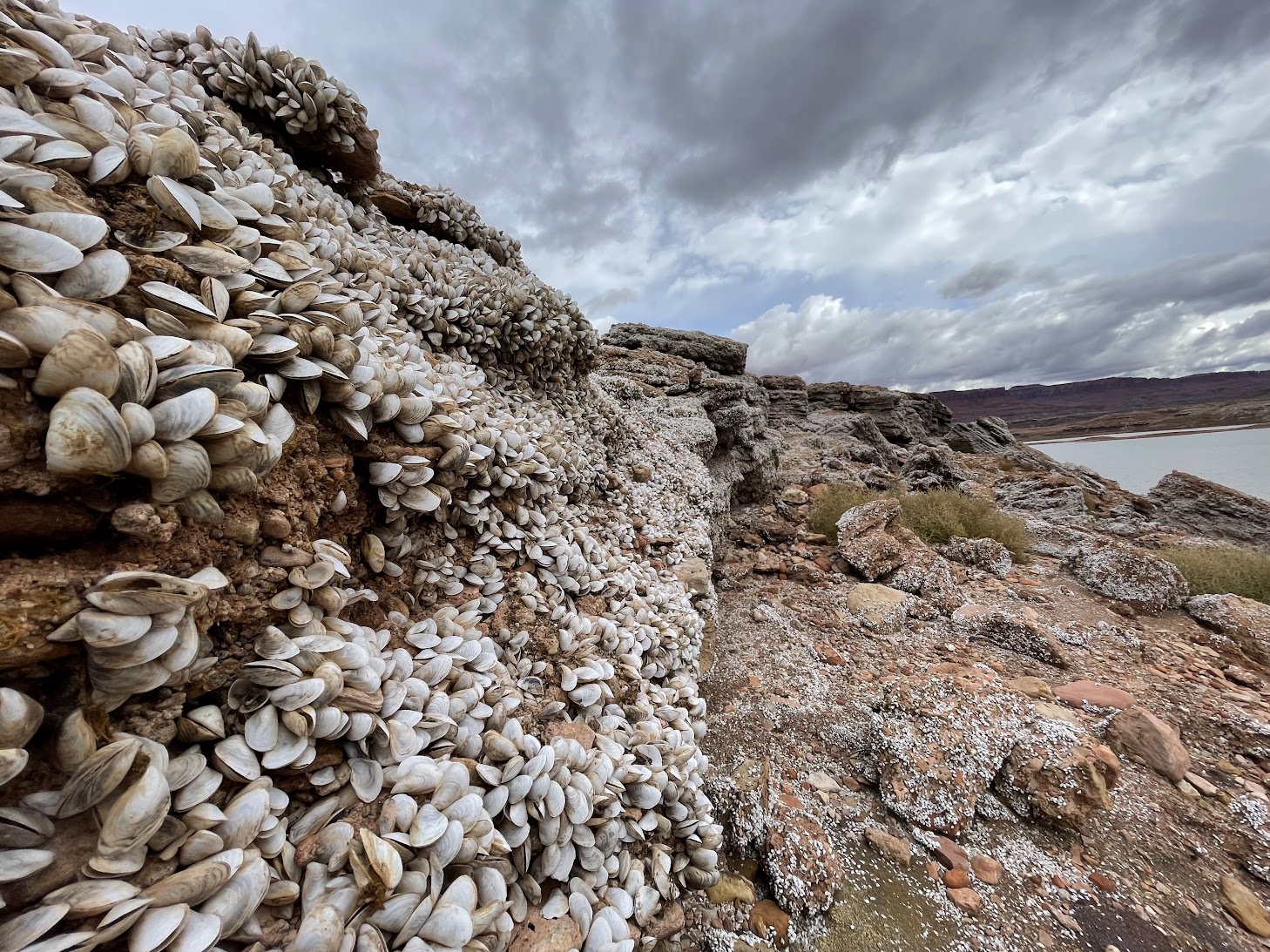
Quagga Mussels Exposed at Lake Powell Courtesy & Copyright Utah Division of Wildlife Resources, Phil Tuttle, Photographer Quagga Mussels Exposed at Lake Powell
Courtesy & Copyright Utah Division of Wildlife Resources, Phil Tuttle, Photographer

Quagga Mussels Exposed at Lake Powell Courtesy & Copyright Utah Division of Wildlife Resources, Phil Tuttle, Photographer Quagga Mussels Exposed at Lake Powell
Courtesy & Copyright Utah Division of Wildlife Resources, Phil Tuttle, Photographer

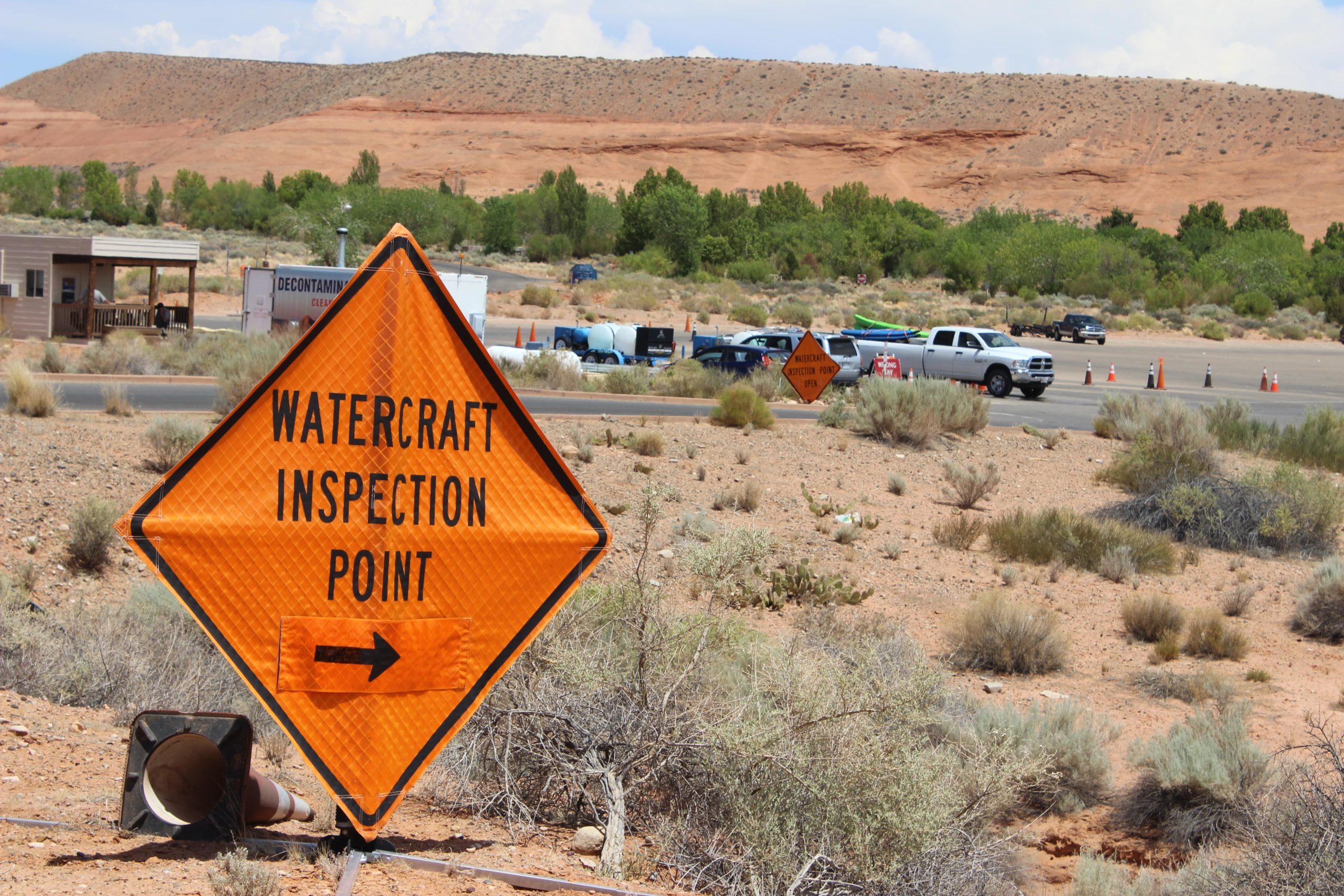
Watercraft Inspection Point. It is unlawful to drive past an open inspection station when carrying watercraft. Courtesy & Copyright Utah Division of Wildlife Resources, Faith Jolley, Photographer Watercraft Inspection Point
It is unlawful to drive past an open inspection station when carrying watercraft
Courtesy & Copyright Utah Division of Wildlife Resources, Faith Jolley, Photographer

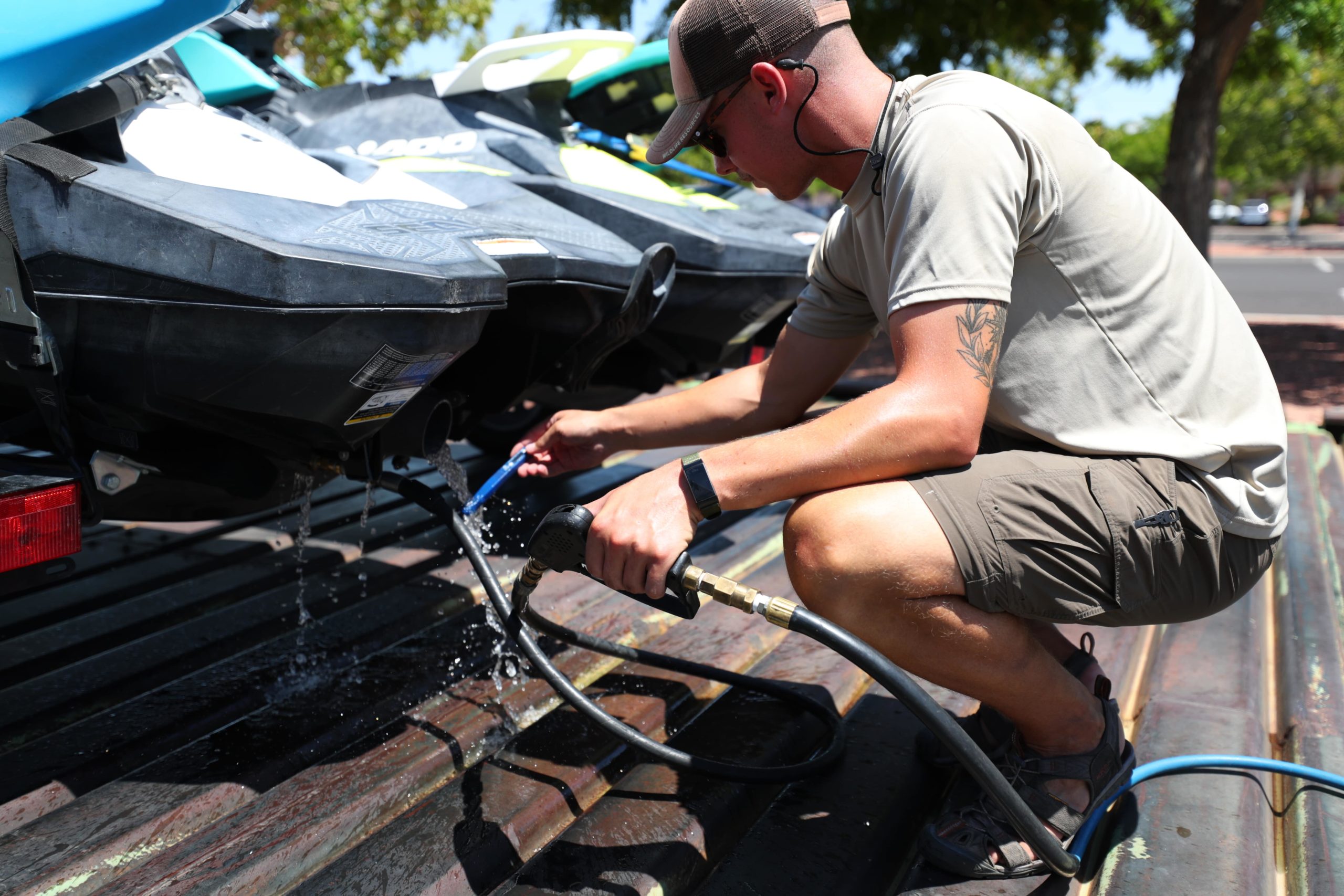
Technician Pressure Washing Watercraft with 140 F Water
Courtesy & Copyright Utah Division of Wildlife Resources, Faith Jolley, Photographer Technician Pressure Washing Watercraft with 140 F Water
Courtesy & Copyright Utah Division of Wildlife Resources, Faith Jolley, Photographer

Entering Decontamination Dip Tank Courtesy & Copyright Utah Division of Wildlife Resources, Michael Christensen, Photographer Entering Decontamination Dip Tank
Courtesy & Copyright Utah Division of Wildlife Resources, Michael Christensen, Photographer

Nature lovers need to be concerned about invasive aquatic species, especially the devastating potential of quagga mussels and their close relatives zebra mussels. Although these invertebrates don’t move much as adults, it is important to understand how they traveled here, the reasons these mussels are dangerous, and the ways their proliferation can be prevented.

Dan Egan in his Death and LIfe of the Great Lakes explains that quagga mussels and zebra mussels migrated from the waters of the Black and Caspian seas to the Great Lakes in the ballast tanks of ocean-going freighters. Since 1989, these mussels have hitch-hiked on boats across the Great Lakes and throughout the Mississippi River drainage. They traveled up the Missouri into Montana and across the continental divide to Lake Mead, down the Colorado to California, and upstream to Lake Powell. Currently, they cover much of the United States except for parts of Utah and the Northwest.

The threat from quickly spreading, voracious, mussels is real. Quaggas reproduce better than most freshwater mussels, each spawning as many as one million microscopic veligers per year. Since mussels filter plankton from freshwater so well, little is left to nourish fish and aquatic insects. Mussels also grow quickly where water moves: piling on top of each other, clogging pipes, and fouling propellers. Unfortunately, the damage is not limited to watercraft. Water delivery pipes and power generation structures also suffer. Even death doesn’t get rid of them. Shells make beaches dangerous for bare hands and feet. Where quagga mussels take hold, the mitigation costs to private citizens and municipalities multiply dramatically.

Utah is using education, licensing, and assistance to keep invasives from spreading to other waters. Everyone operating motorized watercraft of any kind in Utah is required to take and pass the informative, mussel-aware boater course every year; pay an invasive species fee; affix stickers to watercraft; and display documents in each launch vehicle. The education effort emphasizes why watercraft surfaces, piping, and enclosed spaces must be thoroughly cleaned to prevent new infections. Although not licensed, rafts, float tubes, waders, and fishing equipment also require attention.

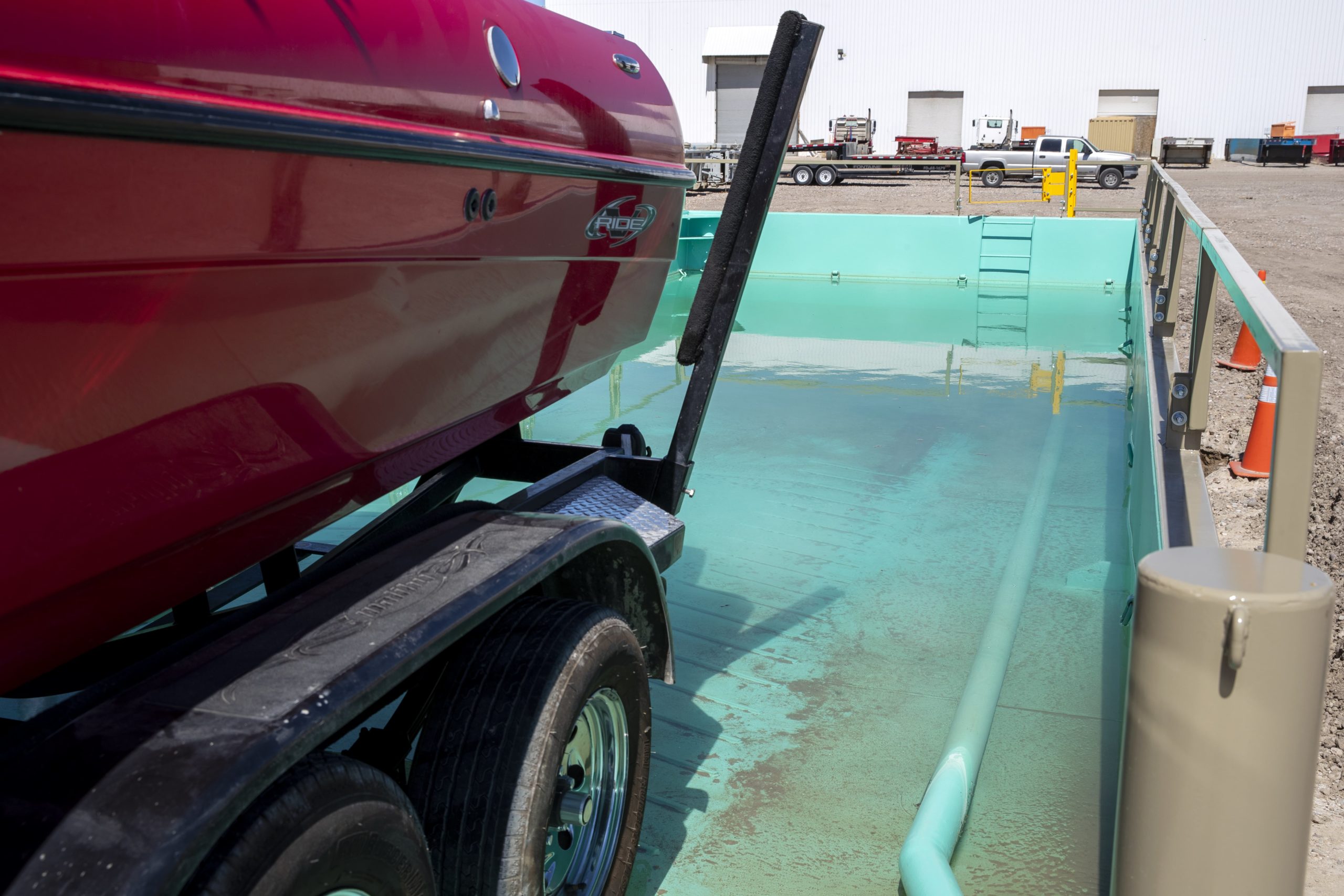
Stopping proliferation is the emphasis of the Utah Division of Wildlife Resources. Aquatic Invasive Species Lieutenant, Bruce Johnson, reminds everyone to “Clean, Drain, and Dry” all watercraft. Then he explains how the DWR can assist owners navigating the mandatory statewide inspection and cleanout stations. There, wildlife technicians inspect all watercraft and have the option to pressure wash visible and hidden recesses with 140-degree water. Alternatively, they can apply a seal, sequestering watercraft from relaunch until after a mandated 7-30 day drying period passes. But pressure washing a boat and trailer takes about 45 minutes and drying takes weeks. So recently, to improve treatment quality, enhance safety, and speed up the process, the DWR installed decontamination dip tanks. Dip tanks take about 10 minutes, and are much faster than a lengthy power wash. As officials add more dip tanks across the state, only the invasive species come up short.

The threat posed by invasive mussels requires everyone’s attention. Cleaning watercraft is the beachhead. Making sure mussels don’t get carried to new waters is the quest.

I’m Lyle Bingham for Bridgerland Audubon and I’m Wild About Utah and controlling invasive species.

Credits:
Photos: Courtesy & Copyright Utah Division of Wildlife Resources, Faith Jolley, PIO
Featured Audio: Courtesy & Copyright © Friend Weller, Utah Public Radio upr.org
Text: Lyle Bingham, https://bridgerlandaudubon.org/
Additional Reading: Lyle Bingham, https://bridgerlandaudubon.org/

Additional Reading

Lyle Bingham’s Wild About Utah Postings

Hellstern, Ron, Invasive Species, Wild About Utah, September 24, 2018, https://wildaboututah.org/ron-describes-exotic-invasive-species/

Egan, Dan, The Death and Life of the Great Lakes, W. W. Norton & Company, 2017, https://www.amazon.com/Death-Life-Great-Lakes/dp/0393246434

Egan, Dan, How invasive species changed the Great Lakes forever. Zebra mussels, quagga mussels have turned the lakes’ ecosystem upside down, Milwaukee Journal Sentinel, September 2, 2021, https://www.jsonline.com/in-depth/archives/2021/09/02/how-zebra-mussels-and-quagga-mussels-changed-great-lakes-forever/7832198002/

Dan Egan, Leaping out of the lakes: Invasive mussels spread across America. Officials at Lake Powell fought for a decade to keep out quagga mussels. They lost the fight., Milwaukee Journal Sentinel, September 2, 2021, https://www.jsonline.com/in-depth/archives/2021/09/02/leaping-out-lakes-invasive-mussels-spread-across-america/5562151001/

Mull, Ann, Spears, Lori, Quagga Mussel (Dreissena bugensis) and Zebra Mussel (Dreissena polymorpha), Extension, Utah State University, https://extension.usu.edu/pests/research/quagga-mussel-and-zebra-mussel

Mull, Ann, Spears, Lori, Quagga Mussel (Dreissena bugensis) and Zebra Mussel (Dreissena polymorpha), Utah Pests, USU Extension, June 2021, https://extension.usu.edu/pests/research/quagga-mussel-and-zebra-mussel

Mull, Ann, Spears, Lori, Quagga Mussel and Zebra Mussel, Dreissena polymorpha Pallas and Dreissena bugensis Andrusov, Fact Sheet, USU Extension, https://extension.usu.edu/pests/factsheets/quagga-mussel-and-zebra-mussel1.pdf

Benson, Amy, Chronological history of zebra and quagga mussels (Dreissenidae) in North America, 1988-2010, USGS Ecosystems Mission Area, https://www.usgs.gov/publications/chronological-history-zebra-and-quagga-mussels-dreissenidae-north-america-1988-2010

Quagga Articles on USGS.gov https://www.usgs.gov/search?keywords=quagga

Quagga mussel – Water Education Foundation https://www.watereducation.org/aquapedia-background/quagga-mussel

Zebra mussels: What they are, what they eat, and how they spread, Lilly Center for Lakes & Streams, Grace College, October 7, 2020, https://lakes.grace.edu/what-are-zebra-mussels/

Invasive mussels Utah Division of Wildlife Resources, August 14, 2023, https://wildlife.utah.gov/fishing/invasive-mussels.html

Quagga Mussels (AIS) | Utah State Parks https://stateparks.utah.gov/activities/boating/quagga-mussels-ais/

What are Aquatic Invasive Species, Utah Division of Wildlife Resources, https://stdofthesea.utah.gov/ais/what-are-they/

New boat decontamination dip tank installed at Utah Lake; other locations announced, Utah Division of Wildlife Resources, June 29, 2023, https://wildlife.utah.gov/news/utah-wildlife-news/1699-new-boat-decontamination-dip-tank-installed-at-utah-lake.html

Other Ways to Prevent Invasive Species:
Don’t ditch a fish!, Utah Division of Wildlife Resources, https://wildlife.utah.gov/dont-ditch.html

Don’t Let it Loose, Utah Division of Wildlife Resources, https://www.dontletitloose.com/rehoming-a-pet/utah/