Earth Day

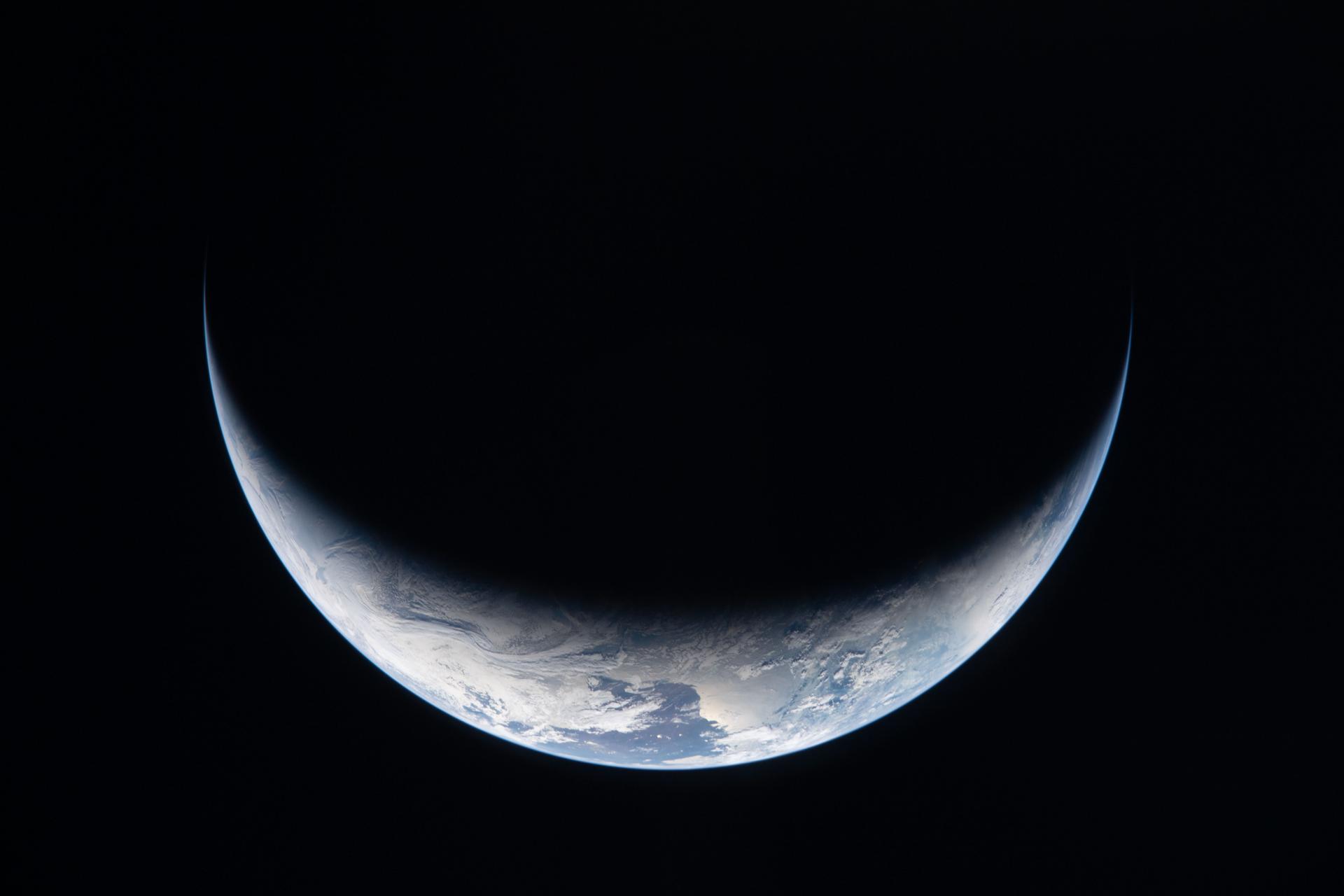
Eyes on Earth, A sliver of Earth is illuminated against the blackness of space in this photo taken by an Artemis II crew member through an Orion spacecraft window on the third day of the mission. Credit: NASA
Eyes on Earth
A sliver of Earth is illuminated against the blackness of space in this photo taken by an Artemis II crew member through an Orion spacecraft window on the third day of the mission. Credit: NASA
Earth Day, Earth Week, and my preferred, Earth Year. Let’s pretend to join the Artimus 11 crew for a wild 300,000 mile journey to the dark side of the moon for an Earth rise. Suddenly a soul piercing view appears and with it, in a brief second, we are transformed into a profound Earth lover. Eyes mist. Hearts race. A deep longing sweeps over us, a homesickness never before experienced. This celestial blue oasis hanging in an infinite black void contains all that we are, all that we love, from the long arch of human history to this very moment, sweeps over us. Transfixed, transformed, filled with an unquenchable longing.

Now imagine our return flight as earth’s gravity plunges us ever faster toward north America, and Utah before veering toward the blue Pacific for splash down.

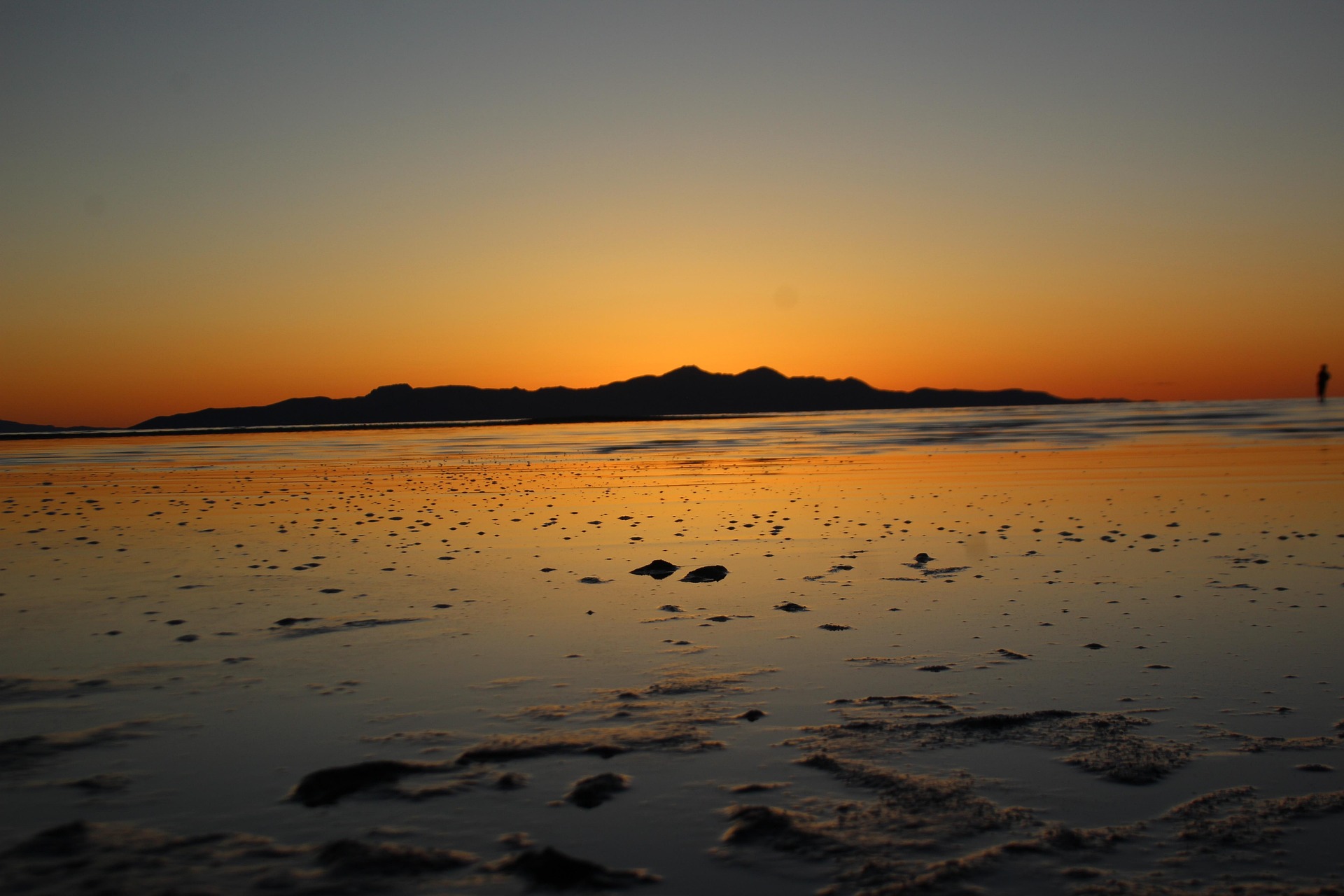
The Great Salt Lake at Sunset
Courtesy Pixabay, BJohnson, Contributor
The Great Salt Lake at Sunset
Courtesy Pixabay, BJohnson, Contributor

Four planets and the Moon are visible in the twilight sky over ancient Bristlecone Pine trees at Cedar Breaks NM Courtesy US NPS, Zach Schierl, Photographer Four planets and the Moon are visible in the twilight sky over ancient Bristlecone Pine trees at Cedar Breaks NM
Courtesy US NPS, Zach Schierl, Photographer

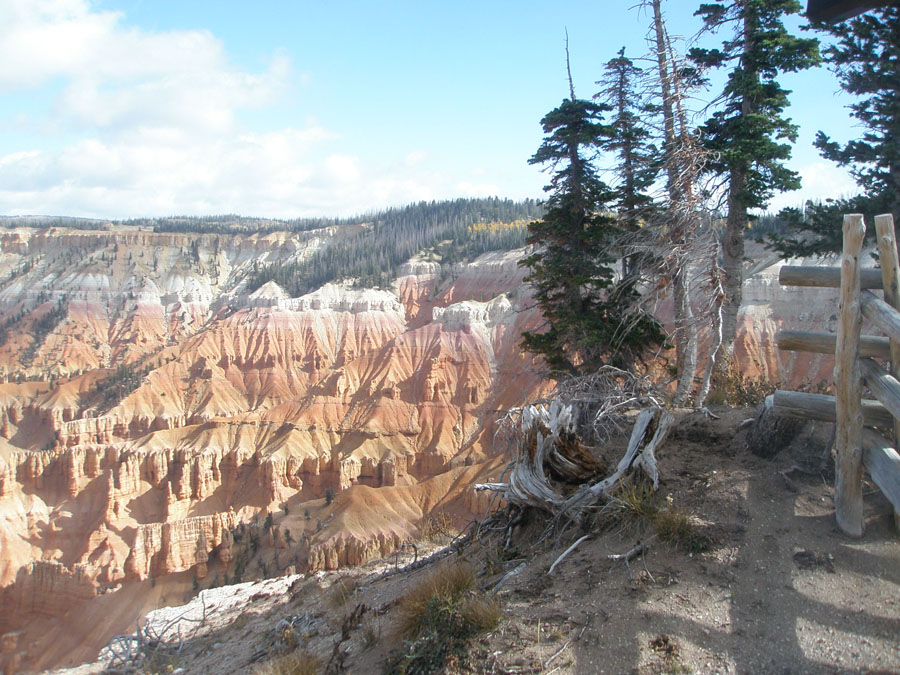
Cedar Breaks National Monument- the Pink Cliffs Courtesy USGS Cedar Breaks National Monument- the Pink Cliffs
Courtesy USGS

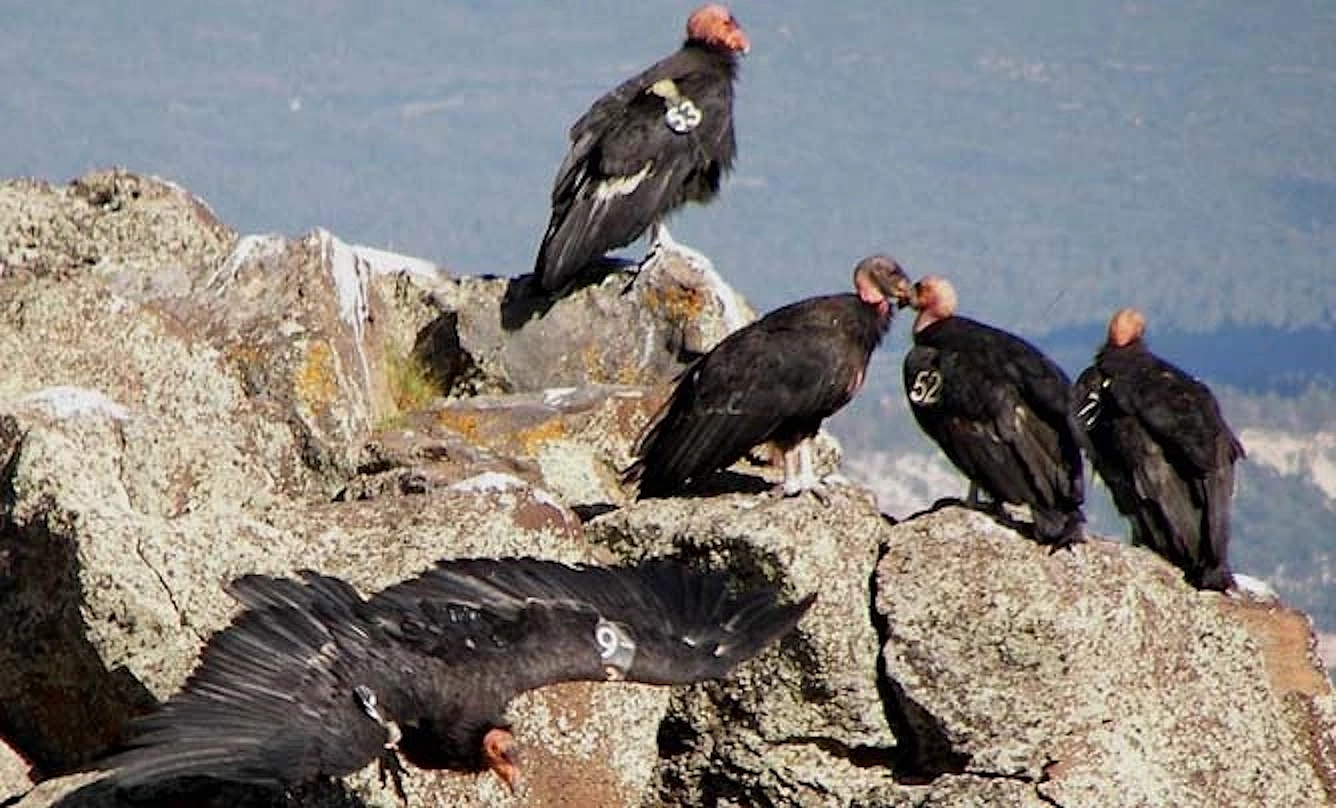
Condor Committee in Zion National Park Courtesy US NPS Condor Committee in Zion National Park
Courtesy US NPS

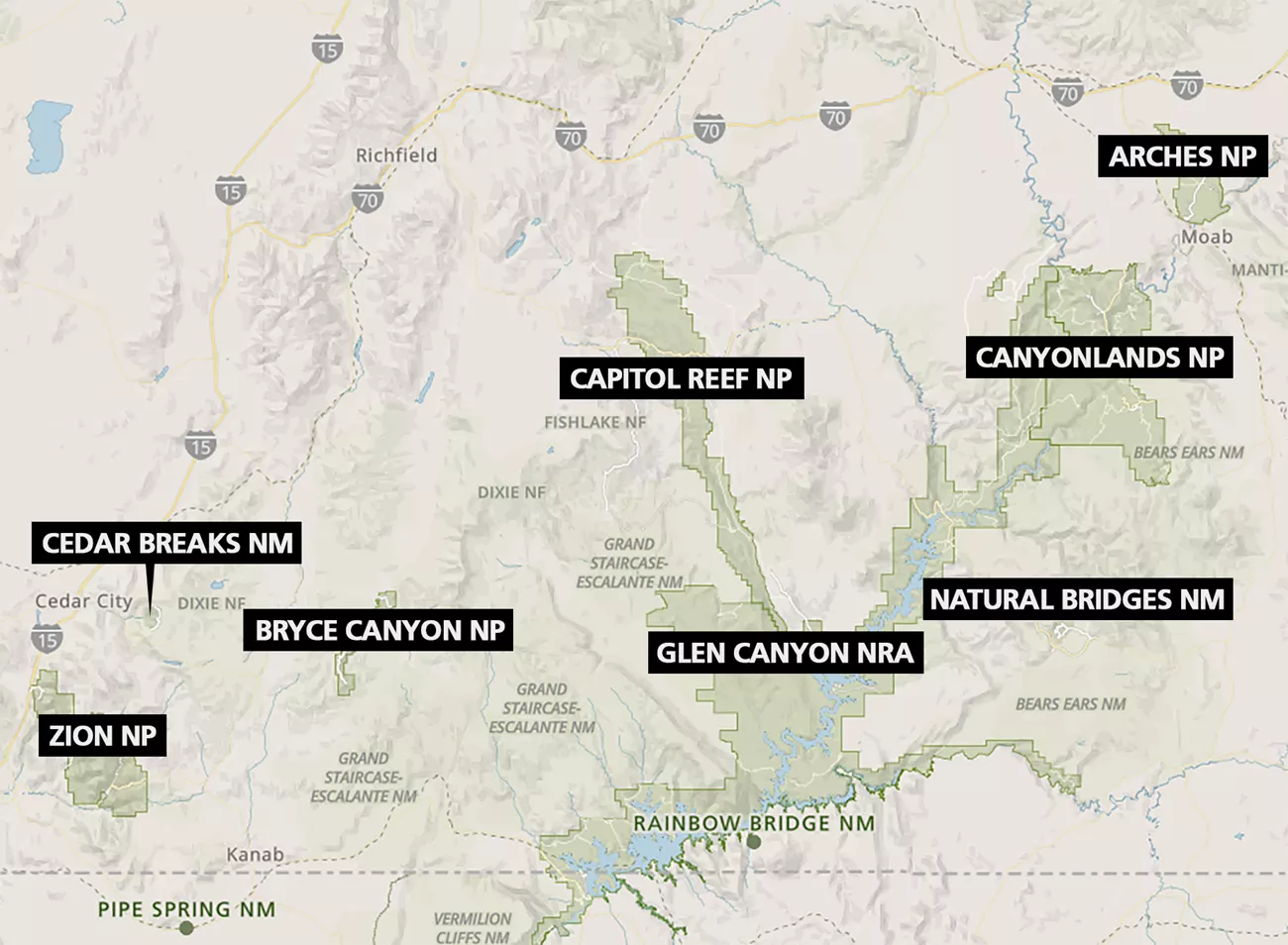
National Parks in Southern Utah Arches National Park, Bryce Canyon National Park, Canyonlands National Park, Capitol Reef National Park, Glen Canyon National Recreation Area, Natural Bridges National Monument, Zion National Park Courtesy US National Park Service (NPS) National Parks in Southern Utah
Arches National Park, Bryce Canyon National Park, Canyonlands National Park, Capitol Reef National Park, Glen Canyon National Recreation Area, Natural Bridges National Monument, Zion National Park
Courtesy US National Park Service (NPS)
https://www.nps.gov/articles/000/national-parks-in-southern-utah.htm

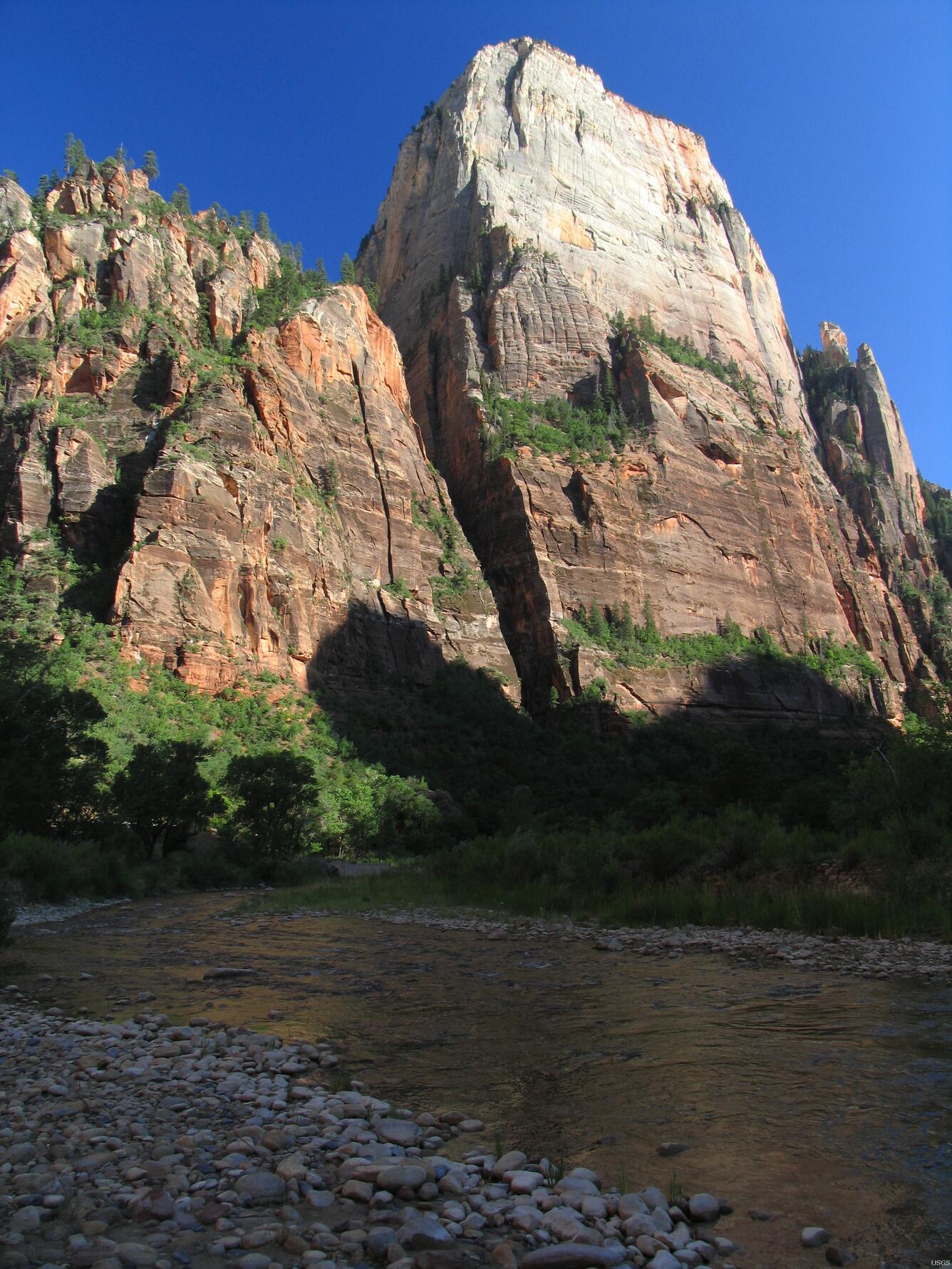
Cliffs Above the North Fork Virgin River, Zion National Park, UT Courtesy USGS Cliffs Above the North Fork Virgin River, Zion National Park, UT, Courtesy USGS

I’m reminded of the many flights taken to Southern California to train my AP Environmental science teachers, senses gratified by stunning views of the Great Salt Lake, a magnificent patchwork quilt of blues, reds, whites aware it’s teaming with brine shrimp, brine flies, and bird life, now sweeping over green, snowcapped mountains and high plateaus toward the red canyon country deeply incised by magnificent Colorado, Green, and Virgin rivers.

It becomes apparent that Utah has a unique beauty like no other, its varied landscapes replete with diverse life forms from Gila monsters to tetradactyl-like California condors, from over 800 bee species, to several thousand species of plants. Utah!! Home!

Considering this is factual fiction contrived by Jack’s brain, for all its splendor, let us pause over what I consider to be a standout to match a Great Salt Lake sunset- the Markagunt plateau. This magnificent piece of our beloved Earth has been sliced and diced into pure grandeur of deep canyons, much of which this mere Earthling has traipsed over- Zion National Park, Cedar Breaks NM, the shores of Navajo Lake, all resplendent with iconic species of life- pica, black hawks, black bear, Peregrine falcons, painted buntings, desert bighorn sheep, canyon tree frogs. Within the boundaries of Zion National Park our state’s highest biodiversity is found to match its magnificent, varied terrain.

Just to the west three bioregions merge where the Colorado Plateau intertwines with the Mojave desert and great basin spawning biological diversity beyond imagining!

Reaching across our marvelous state are stunning marvels- Bryce Canyon, Arches, Canyonlands, Capitol Reef, and an myriad of state parks that deserve national monument status considering their unique geology and grandeur- Snow Canyon, Goblin Valley, Coral Pink Sand Dunes, Kodachrome Basin, Dead Horse, Goosenecks, Antelope Island, Great Salt Lake- Splashdown! Now back to reality, a lovely spring morning to celebrate Spring replet with canyon wildflowers, gushing spring runoff, and the return of neotropical birds bless us with their hatchlings.

This is Jack Greene for Bridgerland Audubon Society and I’m Wild about our otherworldly Wild Utah.

Credits:

Images: Earth -Courtesy NASA – Artemis II Crew
Courtesy USGS – Cedar Breaks & Zion Cliffs
Courtesy US NPS, Zach Schierl, Photographer,
also Courtesy US NPS, Condors and Southern Utah National Parks
Sunset at the Great Salt Lake Courtesy Pixabay, BJohnson, Contributor https://pixabay.com/photos/sunset-utah-great-salt-lake-6032689/
Featured Audio: Courtesy & Copyright Kevin Colver, https://wildstore.wildsanctuary.com/collections/special-collections and
Anderson, Howe, and Wakeman.
Text & Voice: Jack Greene, Bridgerland Audubon, https://bridgerlandaudubon.org/
Additional Reading Links: Jack Greene & Lyle Bingham, https://bridgerlandaudubon.org/

Additional Reading:

Wild About Utah Pieces by Jack Greene, https://wildaboututah.org/author/jack/

National Parks in Southern Utah, National Park Service, US Department of the Interior, https://www.nps.gov/articles/000/national-parks-in-southern-utah.htm
Condors, Zion National Park, US NPS, https://www.nps.gov/zion/learn/nature/condors.htm

Arches National Park, Geology and Ecology of National Parks, USGS, https://www.usgs.gov/geology-and-ecology-of-national-parks/arches-national-park
Bryce Canyon National Park, Geology and Ecology of National Parks, USGS, https://www.usgs.gov/geology-and-ecology-of-national-parks/bryce-canyon-national-park
Canyonlands National Park, Geology and Ecology of National Parks, USGS, https://www.usgs.gov/geology-and-ecology-of-national-parks/canyonlands-national-park
Capitol Reef National Park, Geology and Ecology of National Parks, USGS, https://www.usgs.gov/geology-and-ecology-of-national-parks/capitol-reef-national-park

Cedar Breaks National Monument, USGS, https://www.usgs.gov/media/images/cedar-breaks-pink-cliffs

Utah State Parks, https://stateparks.utah.gov/parks/

Changing the Landscape of a
Northern Corner of Utah

NGC-ATK Landscape, West of Corinne, UT Courtesy & Copyright Mary Heers, Photographer
NGC-ATK Landscape, West of Corinne, UT
Courtesy & Copyright Mary Heers, Photographer
As I was driving through Logan Canyon, I caught the news that the Brigham City Museum of Art was opening a new exhibit called “Rural to Rockets.”

“Irresistible,” I muttered as I swung my car off the highway at the Brigham City exit. This promised to be the story of a major change in the landscape of one corner of Northern Utah.

Brigham City’s story began in 1854 when 50 pioneer families in Salt Lake committed to build a new city based on the co-operative movement. They promised to pool their resources and work together for the good of Zion. They agreed “not to be greedy for higher wages,” and “ask only for reasonable return on investment.”

The 50 families brought cattle and sheep with them. From the cattle hides they made boots and shoes for sale in their co-op store. The wool from their sheep was milled into blankets and clothes.

They purchased a small cotton farm in Southern Utah and took turns going down to tend it. The women who wanted silk raised mulberry bushes to feed their silkworms. During the cold weather these women sewed the silkworm cocoons into the lining of their dresses and wore them next to their bodies to keep the cocoons warm. Eliza Forsgren took her hand woven big beautiful black silk dress to the Chicago World Fair in 1893 and came home with a gold medal.

Brigham City settled into being one of Utah’s successful small rural towns.

Everything was upended in 1957 when Thiokol Corporation bought 10,000 acres nearby to build their new rocket manufacturing plant and test facility. Engineers and rocket scientists and their families moved in. 187 homes were built in one year. The school was overwhelmed and went on half days as new schools were hurriedly built. At its peak, Thiokol employed 6,000 workers.

I got back in my car to go take a look at what this rocket facility looks like today. As it came into sight, I was immediately struck by the substantial fence – 10 feet high chain link with 3 strands of barbed wire on top. The fence ran across the hillsides for hundreds of acres before disappearing out of sight. Inside the fence I saw windowless box shaped buildings dotting the hillsides, and a few whips of smoke.

NGC-ATK Rocket Garden, West of Corinne, UT Courtesy & Copyright Mary Heers, Photographer
NGC-ATK Rocket Garden
West of Corinne, UT
Courtesy & Copyright Mary Heers, Photographer
Outside the headquarters of the new owners of the facility, Northrop-Grumman, I found a small outdoor museum called a “Rocket Garden.” It included a full-size model of a former NASA launch rocket and an older Intercontinental Missile.

But the really stunning surprise was a whole new look of the landscape that pointed to a bright future. A giant solar farm had moved in next door.

This is Mary Heers and I’m Wild About Utah

Credits:
Photos: Courtesy Mary Heers,
Featured Audio: Courtesy & © Anderson, Howe and Wakeman
Text: Mary Heers, https://cca.usu.edu/files/awards/art-and-mary-heers-citation.pdf
Additional Reading: Lyle Bingham, https://bridgerlandaudubon.org/

Additional Reading

Wild About Utah, Mary Heers’ Wild About Utah Postings

Boam, Rod, Rocket Garden is a bonus for Golden Spike National Park visitors, Cache Valley Daily, Cache Valley Media Group, Mar 26, 2019, https://www.cachevalleydaily.com/news/local/rocket-garden-is-a-bonus-for-golden-spike-national-park-visitors/article_fe49306a-8ab6-5c32-a2b8-7acf6f40640e.html

Northrop-Grumman in Utah, https://www.northropgrumman.com/careers/northrop-grumman-in-utah

Udy, Boyd, Fifty Years at the Rocket Ranch, Life at Northrop Grumman, https://www.northropgrumman.com/life-at-northrop-grumman/fifty-years-at-the-rocket-ranch

Rural to Rockets, Box Elder County Takes Off, Brigham City Museum, https://brighamcitymuseum.org/event/rural-to-rockets-box-elder-county-takes-off

Utah’s Public Lands

Utah's Public Lands: Canyonlands National Park Courtesy Pixabay, Contributor: Sharon Kehl Califano, Photographer
Canyonlands National Park
Courtesy Pixabay, Contributor: Sharon Kehl Califano, Photographer
One might justly conjecture we have been cursed by Utah’s magnificent wild landscapes, which have caused such division and consternation among our political leadership and their constituents. Some see vast sweeps of our national public lands as having little to offer for recreation or scenery, waste lands of little value beyond mineral extraction, or selling them to the highest bidder. These lands have been a hot issue in Utah for most of our state’s history. Absentee landowners continue to be viewed with a jaundiced eye. State and local control is championed, which is often in opposition to the majority of Utah citizens.

Preeminent naturalist John Muir stated, “The bottom third of Utah should become a National Park!” He was overtaken by its rugged, unadulterated majesty. Many other prominent authors and naturalists have spoken in its behalf- Terry Tempest Williams, Ed Abbey, Wallace Stegner, Steve Trimble, to name a few.

More recently, our Native people have jumped into the fray- Navajo, Paiute, Ute, Shoshone, and many other tribes. Following years of relentless negotiations, they finally have been offered a seat at the table on how these lands should be managed.

“Our ancestors knew that this land is not just our home, but a place that sustains us, nurtures us, and connects us to something far greater than ourselves, If we do not stand together, our children will never know the beauty these lands hold.” Louise Fernandez

I too have real affection for our national public lands. The first part of my existence was in Michigan farm country surrounded by “Keep Out” signs. There was little opportunity to escape to open space. Thus, I view these public lands in a very different lens from many of the “locals”, who perceive them as restricting their rights to use these lands as they see fit. Two very different cultures and lived experiences.

As a naturalist educator, I have led my students and others into many of these wild spaces. The experience is often transformative. Never before have many of them experienced such beauty and untrammeled landscapes. One of my international students was nearly brought to tears, reminiscent of his cattle herding days in the rural landscapes of Egypt.

Beyond serving as recreational and inspirational retreats, these incomprehensible, uncompromised wide-open spaces serve as bulwarks for clean air, healthy watersheds, and as a sanctuary for an abundance of species beyond our own, some threatened or endangered from creeping human contrivances.

As I write this, the U.S. Supreme Court has rejected Utah’s attempt to gain state control over 18.5 million acres of federal BLM lands, representing about 1/3 of our state’s area. The fight will continue, just as the seasons will continue in these priceless, sacred lands.

This is Jack Greene for Bridgerland Audubon Society and I’m wild about Utah’s Wild Lands

Credits:
Image: Courtesy Pixabay, Sharon Kehl Califano, Contributor https://pixabay.com/photos/canyonlands-canyons-desert-6600504/
Featured Audio: Courtesy & © Kevin Colver https://wildstore.wildsanctuary.com/collections/special-collections/kevin-colver, Courtesy & © Anderson, Howe and Wakeman,
Also includes audio Courtesy & © J. Chase & K.W. Baldwin
Text: Jack Greene, Bridgerland Audubon, https://bridgerlandaudubon.org/
Additional Reading: Jack Greene & Lyle W Bingham, Webmaster, Bridgerland Audubon, https://bridgerlandaudubon.org/

Additional Reading:

Jack Greene’s Postings on Wild About Utah, https://wildaboututah.org/author/jack/

Magnificent Utah Canyons

Magnificent Utah Canyons: Kolob Canyon Landscapes, Courtesy Pixabay, Joe Russell Photography, Contributor
Kolob Canyon Landscapes
Courtesy Pixabay,
Joe Russell Photography, Contributor

Snow Canyon State Park, Courtesy Pixabay, AlpineDon, ContributorSnow Canyon State Park
Courtesy Pixabay
AlpineDon, Contributor

Utah is riddled with the most magnificent canyons on our lovely little planet! Thinking Snow Canyon, Kolob, Zion, Virgin River Gorge, Logan Canyon, Coyote gulch, Big and little Cottonwoods, and several hundred more that deserve mention.

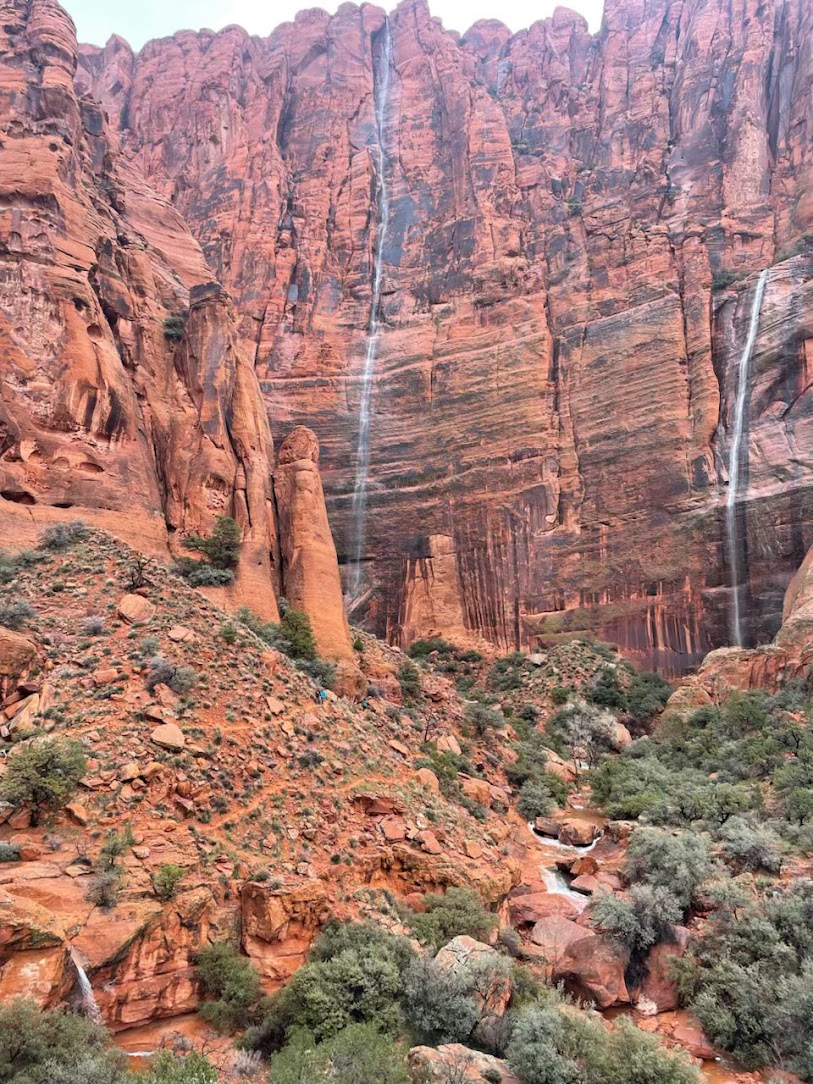
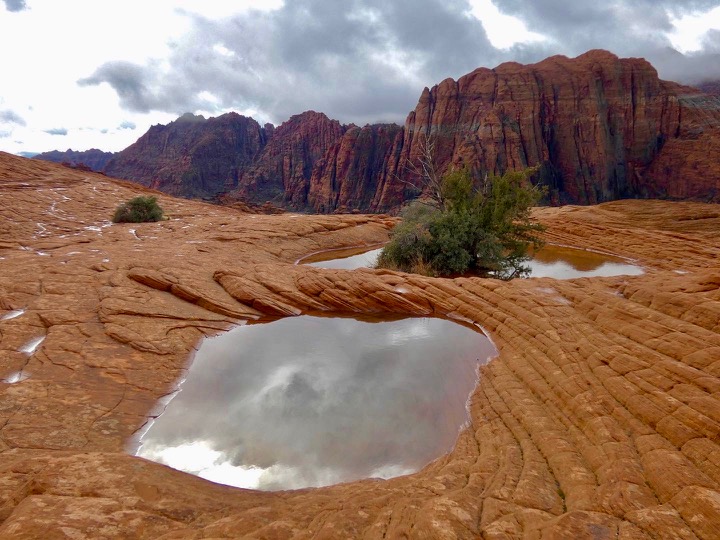
I recently returned from leading an outing for 25 USU international students where we split our time between Snow Canyon and Zion National Park. Their hearts have yet to fully recover from world class scenery and the remarkable geologic features they encompass. Petrified 200-foot sand dunes in Snow and 2000 foot vertical “big” walls in Zion, softened by rushing waters of the Virgin river. The Virgin River Narrows tugged at their sense of adventure as many “Narrows” hikers clothed in waders, holding wooden staffs, came trekking out of the “Gateway”.

Canyon’s deliver our waters and nurture our souls. Majestic rivers- Green, Colorado, Yampa White, San Juan, the Bear, offer all levels of boating thrills from placid to riotous. I’ve experienced many with family and students in various crafts- rafts, canoes, kayaks. Much of the country they cut through is remote and wild. Desolation, Dinosaur, Arches, Canyonlands NP, Bears Ears. Many meander through terra incognito, roadless wilderness, sliced and diced into alluring slot canyons where the sun never shines. Mysteries to behold, and flash floods to unfold.

My daughter-in-law and grandchildren experienced a grand adventure in the Zion subway slot canyon. A beautiful, blue-sky day with no hint or forecast of rain. Midway through their passage the water began to rise. Unknown to them, a heavy downpour had occurred miles above. Fortunately, they were able to scramble up to a ledge where they spent a long, cold, hungry night as the waters continued to rise. Not until the following day did the stream drop enough to allow their escape.

Where else can one take refuge from our overheated summers. Adventure awaits. Hiking, climbing, skiing, wildlife watching, botanizing- all there beckoning!

Birders delights from American dippers to Great Blue Herons. Soon to be filled with bird song as spring unfolds- fox and song sparrows, MacGillivray and Wilson warblers, warbling and plumbeous vireos, black headed grosbeaks and bullock orioles, lazuli buntings, join at least 20 other species adding to the chorus. Resident canyon wrens often announce their presence in vibrant, cascading song.

Beyond their stunning beauty and endless adventure, our canyons encompass myriad watersheds which capture the masses of snow melt resulting in most of our desert state’s water. Additionally, healthy watersheds feed our iconic Great Salt Lake, a critical western hemispheric shorebird refuge, and essential to our well-being in so many additional ways.

These priceless landforms deserve our love and protection. Threats of gondolas, mining, road improvements, and other human activities will continue to be challenges. “Save Our Canyons”, a SLC organization is laser focused on keeping Wasatch canyons from being further compromised. We must all become canyon advocates for the infinite joy and countless gifts they unflinchingly provide.

Jack Greene for Bridgerland Audubon, and yes, I’m wild about Utah!

Credits:

Images: Kolob Canyon Landscapes Courtesy Pixabay, Joe Russell_Photography, Contributor https://pixabay.com/photos/kolob-canyon-landscapes-outdoors-5215253/
Snow Canyon State Park Courtesy Pixabay, AlpineDon, Contributor, https://pixabay.com/photos/snow-canyon-state-park-utah-1066145/
Audio: Courtesy & © Kevin Colver, https://wildstore.wildsanctuary.com/collections/special-collections
Text: Jack Greene, Bridgerland Audubon, https://bridgerlandaudubon.org/
Additional Reading: Lyle Bingham and Jack Greene, Author, Bridgerland Audubon, https://bridgerlandaudubon.org/

Additional Reading:

Jack Greene’s Postings on Wild About Utah, https://wildaboututah.org/author/jack/

Kolob Canyons, Zion National Park, National Parks Service, US Department of the Interior, https://www.nps.gov/zion/planyourvisit/kolob-canyons.htm

Matcha (Contracted content), A Visitor’s Guide to Zion’s Kolob Canyons, Utah Office of Tourism, https://www.visitutah.com/Articles/Kolob-Canyons-Visitor-Guide