Species Names

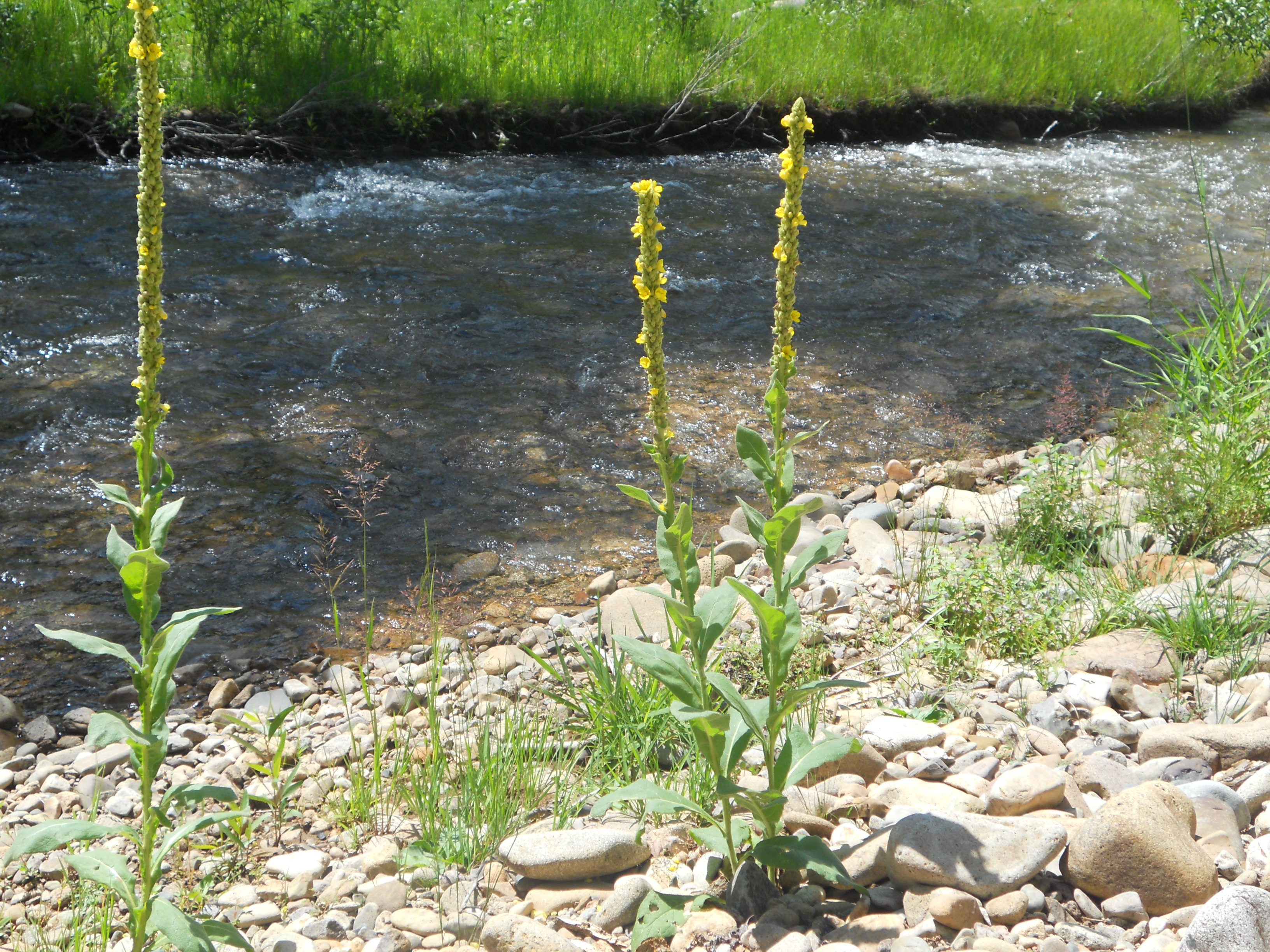
Common Mullein
Courtesy &
Copyright 2010 Holly Strand

Hi, I’m Holly Strand from Stokes Nature Center in beautiful Logan Canyon.

Common Mullein , Our Lady’s Flannel. Velvet Plant. Clown’s Lungwort. Jupiter’s Staff. Shepherd’s Clubs. Beggar’s Blanket. Hare’s Beard, Bear’s ear, and Nature’s Toilet Paper. These are just a few of the names that apply to a single species that is a widely distributed across Europe and Central Asia and naturalized in North America.

Common names are descriptive and often charming, but they are local names and won’t be understood beyond their particular region or in another language. And sometimes common names are downright misleading. For example a koala bear isn’t a bear. And a red panda isn’t a panda.

To avoid confusion, scientists use a unique two word designation—usually taken from Latin or Greek – to identify a species unambiguously. The first word is the name of the genus to which the organism belongs. The genus comprises a group of closely related animals or plants. The second term is chosen by the person that describes and publishes the species account.

Vampyroteuthis infernalis
“vampire squid from Hell”
Illustration by Carl Chun 1911
Public Domain/expired copyright

It is a huge breach of etiquette to name a species after yourself. But the taxonomist can name the organism after the person who actually found it in the field. An example is Mentzelia shultziorum, a blazingstar named after Utah botanist Leila Schultz who first found the plant in Professor Valley in Grand County. Taxonomists can also name the species after a friendly colleague and then hope that the friendly colleague will name one after them.

Often the name will describe some physical characteristics of the species. Earlier this year, a paleontologist unearthed a new dinosaur here in Utah and named it Jeyawati rugoculus. That’s a combination of Zuni and Latin for “grinding mouth, wrinkle eye.”

Other names are based on location: Penstemon utahensis is a penstemon found in our state. Amblyoproctus boondocksius is a scarab, and was apparently found in the middle of nowhere.

Often the name will represent a subjective reaction toward the organism. Vampyroteuthis infernalis translates into “vampire squid from Hell”, Indeed it is rather scary looking cross between a squid and an octopus.

Some scientists get sentimental at naming time. They’ll name species after their loved ones. Or their favorite artists. Thus we have 2 trilobites in the Avalanchurus genus named lennoni and starri. McCartney and Harrison are honored in a neighboring genus.

I’m proud to say that a Utah biologist named a parasitic louse, Strigiphilus garylarsoni. The Far Side cartoonist should not take offense. In a letter to Larson, Dr. Dale Clayton praised him for “the enormous contribution that my colleagues and I feel you have made to biology through your cartoons.”

For sources and archives of past programs see www. Wild About Utah.org

For Wild About Utah and Stokes Nature Center, I’m Holly Strand.

Credits:
Photo: Mullein-Courtesy & Copyright 2010 Holly Strand
Squid Illustration Carl Chun 1911 (Public Domain Courtesy Wikimedia.org)
Text: Stokes Nature Center: Holly Strand

Sources & Additional Reading

Gotch, A.F. 1996. Latin Names Explained: A Guide to the Scientific Classification of Reptiles, Birds & Mammals. NY: Facts on File, Inc.

Isaak, Mark. Curiosities of Biological Nomenclature website. https://www.curioustaxonomy.net/rules.html [Accessed September 15, 2010]

O’Donoghue, Amy Joi. 2010. ‘Grinding mouth, wrinkle eye’ is name of newly discovered species dinosaur. Deseret News, May 27, 2010.

Prigge, Barry A. 1986. New Species of mentzelia (Loasaceae) from Grand County, UT. Great Basin Naturalist Vol. 46, No. 2 pp. 361-365

Morels

Morels, Morchella esculenta, Courtesy and Copyright Chris Schnepf, University of Idaho, as found on bugwood.org
Morel
Morchella esculenta
Courtesy of and
Copyright © 2009 Chris Schnepf
As found on bugwood.org

The morels are among the most highly prized edible mushrooms in North America. Also called sponge mushrooms, morels have a long list of local names. There is an on-going debate as to how many species of morel are found in North America and what each should be named. Some suggest as few as 3 species, others as many as 50 species. For simplicity, Michael Piep of the Intermountain Herbarium, says 4: white or yellow, half-free, gray and black. All are delicious.

All morels have a cone-shaped, sponge-like head on a lighter colored stem. Appearances can be deceiving … morels are difficult to spot at the best of times, and seem adroit at hiding and camouflage.

“Where does one find Morels?”

This is an interesting question … localities range from under an old apple tree in Taylorsville to pine woodlands high in the canyons. In general, the white/yellow and half-free types tend to occur along streams and rivers most often on sand bars and tend to prefer areas with mature cottonwood trees nearby. Black morels are found at higher elevations typically on north or north-east facing slopes and most frequently under Lodgepole pine, but may be found with other conifer species and even quaking aspen. Gray morels don’t seem to be as choosy, and can be found in both habitat types.

The half-free morels start fruiting first, starting at about the time the buds on the cottonwood trees are about to burst. Yellow/white morels fruit at about the time the apple blossoms show pink; as do the grays. The black morels fruit about the time the aspen leaves are the size of a dime.

Hopefully these rough guidelines will help in your pursuit of the wily morel, and as always … Happy Mushrooming!

This is Linda Kervin for Bridgerland Audubon Society.
Credits:
Photo: Courtesy and Copyright Chris Schnepf, University of Idaho, Bugwood.org
Text: Michael Piep, Intermountain Herbarium, Utah State University

Resources:

Intermountain Herbarium: https://herbarium.usu.edu/
Bridgerland Mushroom Society: https://herbarium.usu.edu/#Bridgerland
Mushroom Society of Utah: https://www.utahmushrooms.com/

Censuses and Surveys

Wolf with Radio Collar watches biologists FWS Digital Library, Photo by William Campbell
Wolf with Radio Collar
Photographer: William Campbell
US FWS

Hi, I’m Holly Strand from Stokes Nature Center in beautiful Logan Canyon.

This year’s Census is the 23rd national headcount in United States history.

Census results affect the allocation of all kinds of government financial and program resources. The Census also determines the distribution of seats in
the state and federal House of Representatives.

It is also important to know the number and whereabouts of different wildlife species. This information is used for a number of management purposes– for instance, monitoring the status of endangered species or determining hunting or fishing quotas.

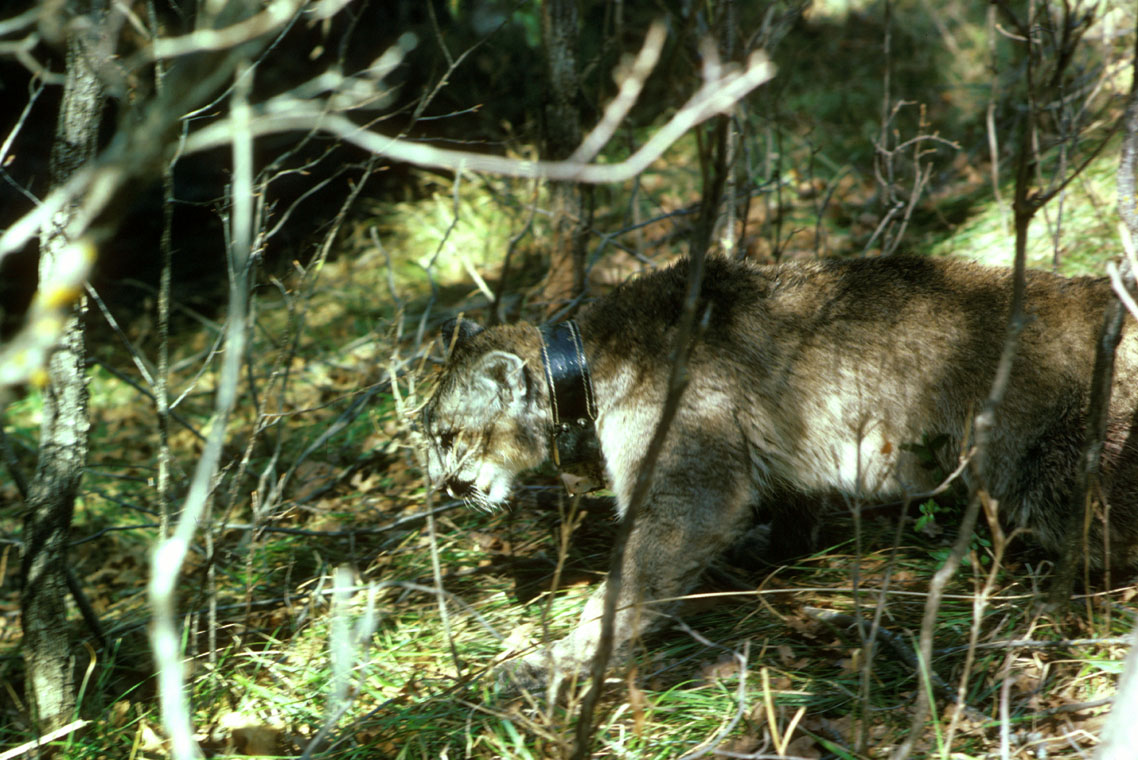
Mountain Lion with Radio Collar
Photographer: Claire Dobert
Courtesy US FWS

Counting wildlife isn’t as easy as counting people. You can’t mail
animals a survey with a self-addressed stamped envelope and you don’t necessarily know where to find them at any given point in time.

True censuses of animals are rare for in most cases a complete count is either too expensive or too difficult to undertake. Only animals conveniently and visibly grouped in a particular location can be censused– such as fish in a fish hatchery, or large animals along a certain migration route.

Setting a waterfowl capture net
Courtesy US FWS

Instead, biologists define an area of interest, then sample at random locations within that area. Samples usually consist of a number of transects or randomly selected quadrants. Counts from these samples are then extrapolated to an entire habitat or study area.

Along with selecting a sampling method, you have to figure out how you are going to effectively count an individual occurrence. This can be extremely tricky. Especially if your animal is reclusive or nocturnal. According to Dr. Eric Gese, a specialist in predator ecology at Utah State University, biologists use tracks, scats, scratches, burrows, hair samples –even roadkill counts as proxies for individual animals.

FWS Biologist Tracking a Black Bear
Photo by John & Karen Hollingsworth,
Courtesy US FWS

Capturing, marking and recapturing animals is one of the most reliable–albeit expensive– ways to do a direct count of animals. Captured animals are marked with ear tags, radio collars, dyes or even radioactive isotopes. In a future program I’ll describe an example of how one scientist tracks and counts large and elusive predators in the wild.

Thanks to Utah State University’s College of Natural Resources for supporting the development of this Wild About Utah topic.

For Wild About Utah and Stokes Nature Center, I’m Holly Strand.
Credits:
Images: Courtesy US FWS Digital Library
Text:     Holly Strand, Stokes Nature Center
Sources & Additional Reading:

Gese, E. M. 2001. Monitoring of terrestrial carnivore populations. Pages 372–396 in J. L. Gittleman, S. M. Funk, D. Macdonald, and R. K. Wayne, editors., Carnivore conservation. Cambridge University, Cambridge, United Kingdom.

Video: Biologists track hibernating bears for research, KSL Broadcasting Salt Lake City UT, 27 March 2010, https://www.ksl.com/index.php?nid=647&sid=10166167

American Black Bear, Utah Division of Wildlife Resources, wildlife.utah.gov/publications/pdf/bearnew.pdf

(tracking) Black-footed Ferrets, Wildlife Review Utah Division of Wildlife Resources, wildlife.utah.gov/wr/0804ferrets/0804ferrets.pdf


USA National Phenology Network

Courtesy USA National Phenology Network

The study of recurring plant and animal life cycle events is phenology. It is the calendar of nature. This includes when plants flower, when birds migrate and when crops mature. Phenology is relevant to interactions between organisms, seasonal timing and large-scale cycles of water and carbon. Phenology is important to us for many reasons. Farmers need to know when to plant and harvest crops and when to expect pests to emerge. Resource managers use it to monitor and predict drought and assess fire risk. Vacationers want to know when the best fall colors will be or when the wildflower blooms will peak. Timing varies but we can discern patterns.

The USA National Phenology Network monitors the influence of climate on the phenology of plants, animals and landscapes. They encourage people to observe phenological events such as flowering, migrations and egg laying. The Phenology Network provides a place to enter, store and share these observations, which are then compiled and analyzed nationwide. Participants range from individual observers in their own backyards to professional scientists monitoring long-term plots. My husband and I monitor leafing and flowering of lilacs, a key species in the program.

These observations support a wide range of decisions made routinely by citizens, managers, scientists and others. This includes decisions related to allergies, wildfires, pest control, and water management.

I urge you to participate. The National Phenology Network has many public, private and citizen partners. It is a great way to become involved in a nation-wide effort to better understand our environment. All this information and much more is available at the National Phenology website, to which there is a link from our Wild About Utah website.

This is Linda Kervin for Bridgerland Audubon Society.

Credits:

Text: Linda Kervin, Bridgerland Audubon Society
Additional Reading:

Linda Kervin’s pieces on Wild About Utah

Phenology Tools for Community Science
USA National Phenology Network, https://www.usanpn.org/
Nature’s Notebook Education Program, US National Phenology Network, https://www.usanpn.org/nn/education

North American Bird Phenology Program, USGS Patuxent Wildlife Research Center, https://www.pwrc.usgs.gov/bpp/BecomeAParticipant.cfm

eBird, https://www.ebird.org/

iNaturalist, https://www.inaturalist.org/