Utah’s Recent Pinyon Migrations and the Prospects for Climate Change

Utah’s Recent Pinyon Migrations and the Prospects for Climate Change
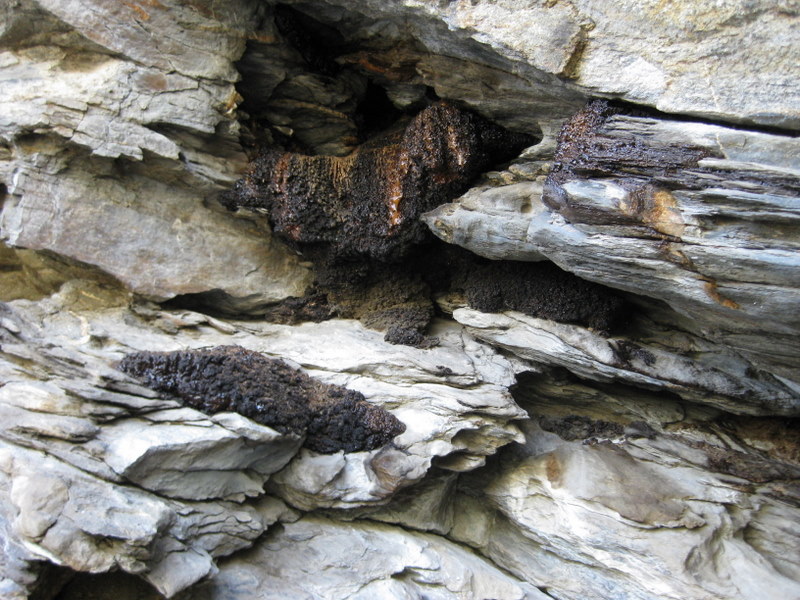
Packrat Fossil Midden
City of Rocks
Copyright © 2009 Julio Betancourt

In the late 1970’s, springtime in the American West warmed abruptly by 2 degrees Fahrenheit in the valleys, double that higher up. Our average onset of Spring now comes a week earlier across the West. If these are the first signs of climate change, even longer growing seasons will trigger not just earlier blooms but also northward plant migrations.

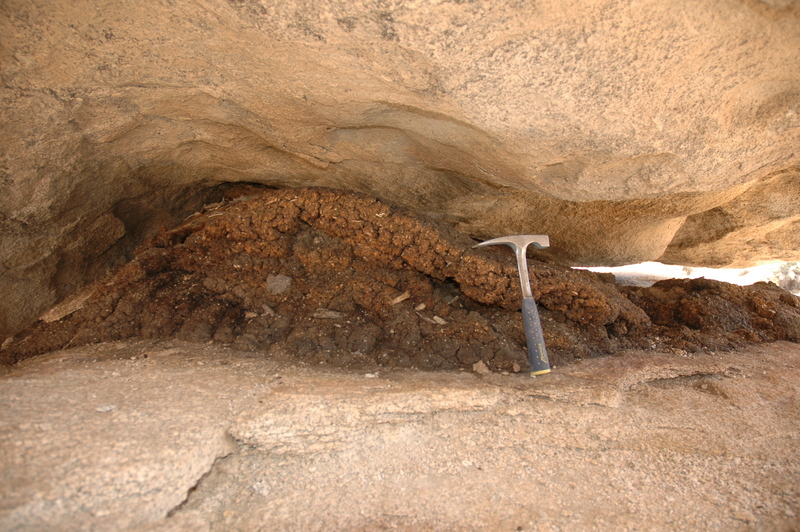
The past provides us with lessons about plant migrations. A thousand years ago, one-needle pinyon hopped from the Raft River Mountains in Utah to City of Rocks, Idaho. Across Utah, two-needle pinyon leaped over the Uintas to Flaming Gorge. We know this from radiocarbon dates on pinyon pine needles taken from ancient nest heaps of packrats preserved in caves. According to Dr. Julio Betancourt of the U.S. Geological Survey, who uses these packrat middens and tree rings to reveal past plant migrations, these recent advances by Utah’s two pinyon pines followed the Medieval Climate Anomaly, a period from 900 to 1300 AD marked by warming in Europe and severe drought in Utah.
Utah’s Recent Pinyon Migrations and the Prospects for Climate Change
Packrat 7000 year old Midden
Joshua Tree Natl Park
Copyright © 2009 Julio Betancourt

Droughts figure prominently in Dr. Betancourt’s view of tree migrations. Droughts trigger bark beetle infestations, wildfires, and tree dieoffs, opening up niches for regeneration. When the drought abates, the resident tree species typically return. With long-term warming, however, other species can move in from lower elevations or further south. Dead trees now abound on Utah’s landscape, and Dr. Betancourt thinks that we are on the verge of a new spate of tree migrations.

This go around, which species retreat or advance will depend on new factors, including human fragmentation of the landscape and accelerated dispersal of native and non-native species that hitch rides with us. To conserve ecological goods and services associated with some species, Dr. Betancourt argues, we will have to manage for these plant migrations.

This is Linda Kervin for Bridgerland Audubon Society.

Credits:

Photo: Courtesy and © Copyright 2009 Julio Betancourt

Text: Julio Betancourt USGS NRP Tucson: Biotic Response to Climate Variability
Faculty and Staff > Julio Betancourt

Additional Reading:

USGS National Research Program: Tucson AZ
https://wwwpaztcn.wr.usgs.gov/home.html

Climate Change and the Great Basin, Jeanne C. Chambers, USDA Forest Service, Rocky Mountain Research Station, Reno, NV, 2008,

A Database of Paleoecological Records from Neotoma Middens in Western North America, USGS/NOAA North American Packrat Midden Database, https://esp.cr.usgs.gov/data/midden/ (Accessed 27 August 2009)

Censuses and Surveys

Wolf with Radio Collar watches biologists FWS Digital Library, Photo by William Campbell
Wolf with Radio Collar
Photographer: William Campbell
US FWS

Hi, I’m Holly Strand from Stokes Nature Center in beautiful Logan Canyon.

This year’s Census is the 23rd national headcount in United States history.

Census results affect the allocation of all kinds of government financial and program resources. The Census also determines the distribution of seats in
the state and federal House of Representatives.

It is also important to know the number and whereabouts of different wildlife species. This information is used for a number of management purposes– for instance, monitoring the status of endangered species or determining hunting or fishing quotas.

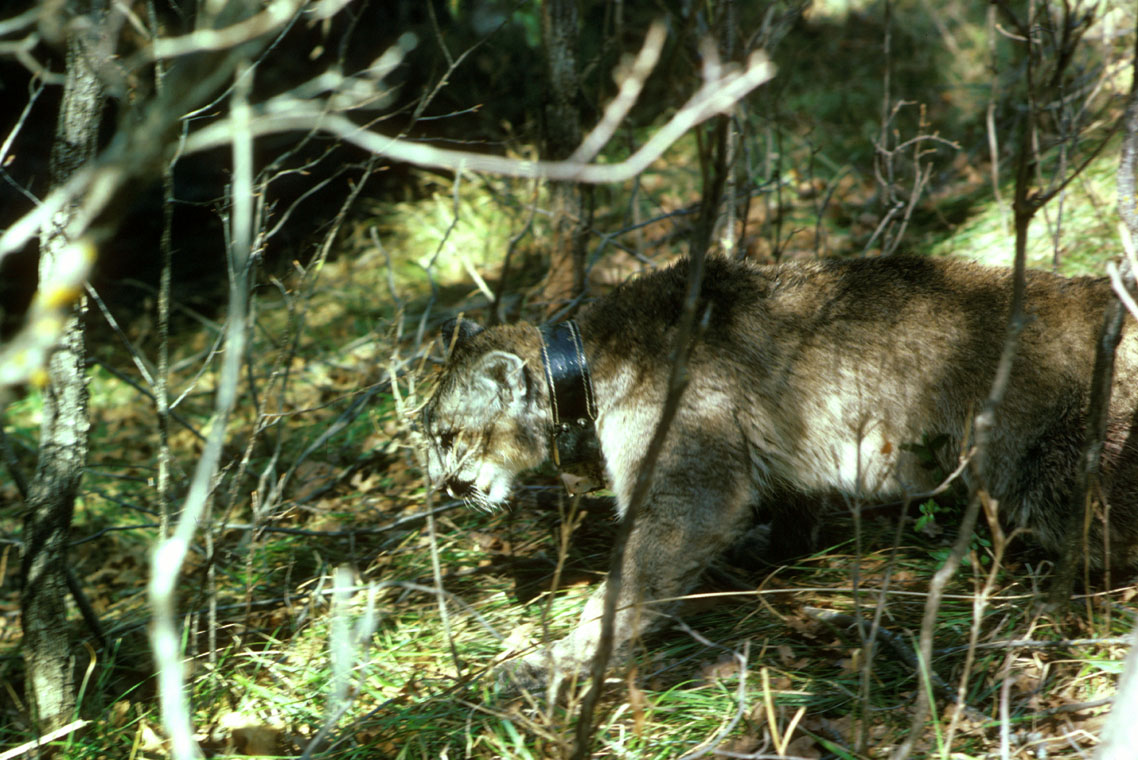
Mountain Lion with Radio Collar
Photographer: Claire Dobert
Courtesy US FWS

Counting wildlife isn’t as easy as counting people. You can’t mail
animals a survey with a self-addressed stamped envelope and you don’t necessarily know where to find them at any given point in time.

True censuses of animals are rare for in most cases a complete count is either too expensive or too difficult to undertake. Only animals conveniently and visibly grouped in a particular location can be censused– such as fish in a fish hatchery, or large animals along a certain migration route.

Setting a waterfowl capture net
Courtesy US FWS

Instead, biologists define an area of interest, then sample at random locations within that area. Samples usually consist of a number of transects or randomly selected quadrants. Counts from these samples are then extrapolated to an entire habitat or study area.

Along with selecting a sampling method, you have to figure out how you are going to effectively count an individual occurrence. This can be extremely tricky. Especially if your animal is reclusive or nocturnal. According to Dr. Eric Gese, a specialist in predator ecology at Utah State University, biologists use tracks, scats, scratches, burrows, hair samples –even roadkill counts as proxies for individual animals.

FWS Biologist Tracking a Black Bear
Photo by John & Karen Hollingsworth,
Courtesy US FWS

Capturing, marking and recapturing animals is one of the most reliable–albeit expensive– ways to do a direct count of animals. Captured animals are marked with ear tags, radio collars, dyes or even radioactive isotopes. In a future program I’ll describe an example of how one scientist tracks and counts large and elusive predators in the wild.

Thanks to Utah State University’s College of Natural Resources for supporting the development of this Wild About Utah topic.

For Wild About Utah and Stokes Nature Center, I’m Holly Strand.
Credits:
Images: Courtesy US FWS Digital Library
Text:     Holly Strand, Stokes Nature Center
Sources & Additional Reading:

Gese, E. M. 2001. Monitoring of terrestrial carnivore populations. Pages 372–396 in J. L. Gittleman, S. M. Funk, D. Macdonald, and R. K. Wayne, editors., Carnivore conservation. Cambridge University, Cambridge, United Kingdom.

Video: Biologists track hibernating bears for research, KSL Broadcasting Salt Lake City UT, 27 March 2010, https://www.ksl.com/index.php?nid=647&sid=10166167

American Black Bear, Utah Division of Wildlife Resources, wildlife.utah.gov/publications/pdf/bearnew.pdf

(tracking) Black-footed Ferrets, Wildlife Review Utah Division of Wildlife Resources, wildlife.utah.gov/wr/0804ferrets/0804ferrets.pdf


Utah’s Conifer Trees

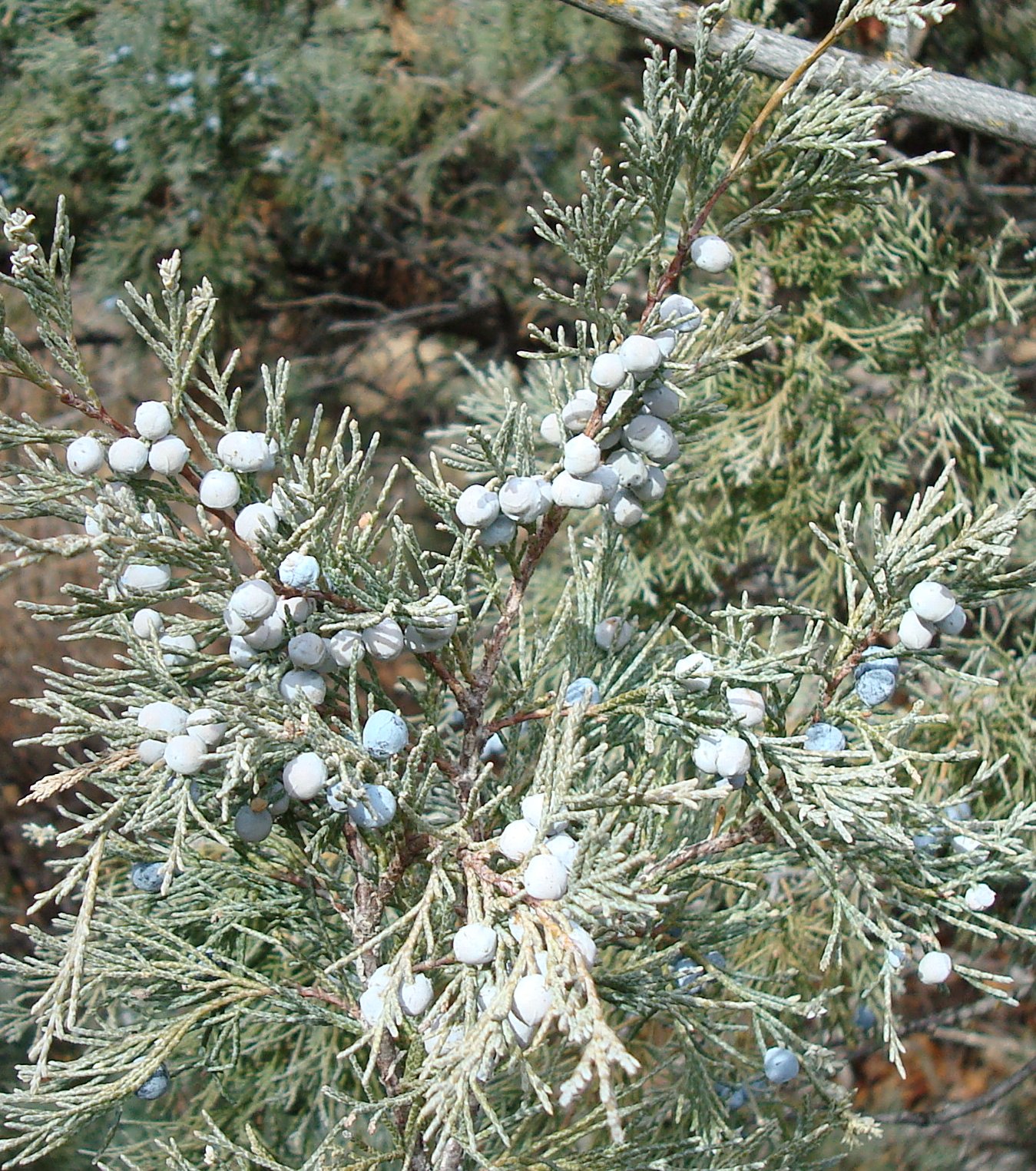
Juniper Leaves & Cones
Copyright © 2009 Linda Kervin

Two-needle Pinion PineTwo-needle Pinion Pine
Copyright © 2009 Linda Kervin

Norway Spruce ConesNorway Spruce Cones
Copyright © 2009 Linda Kervin

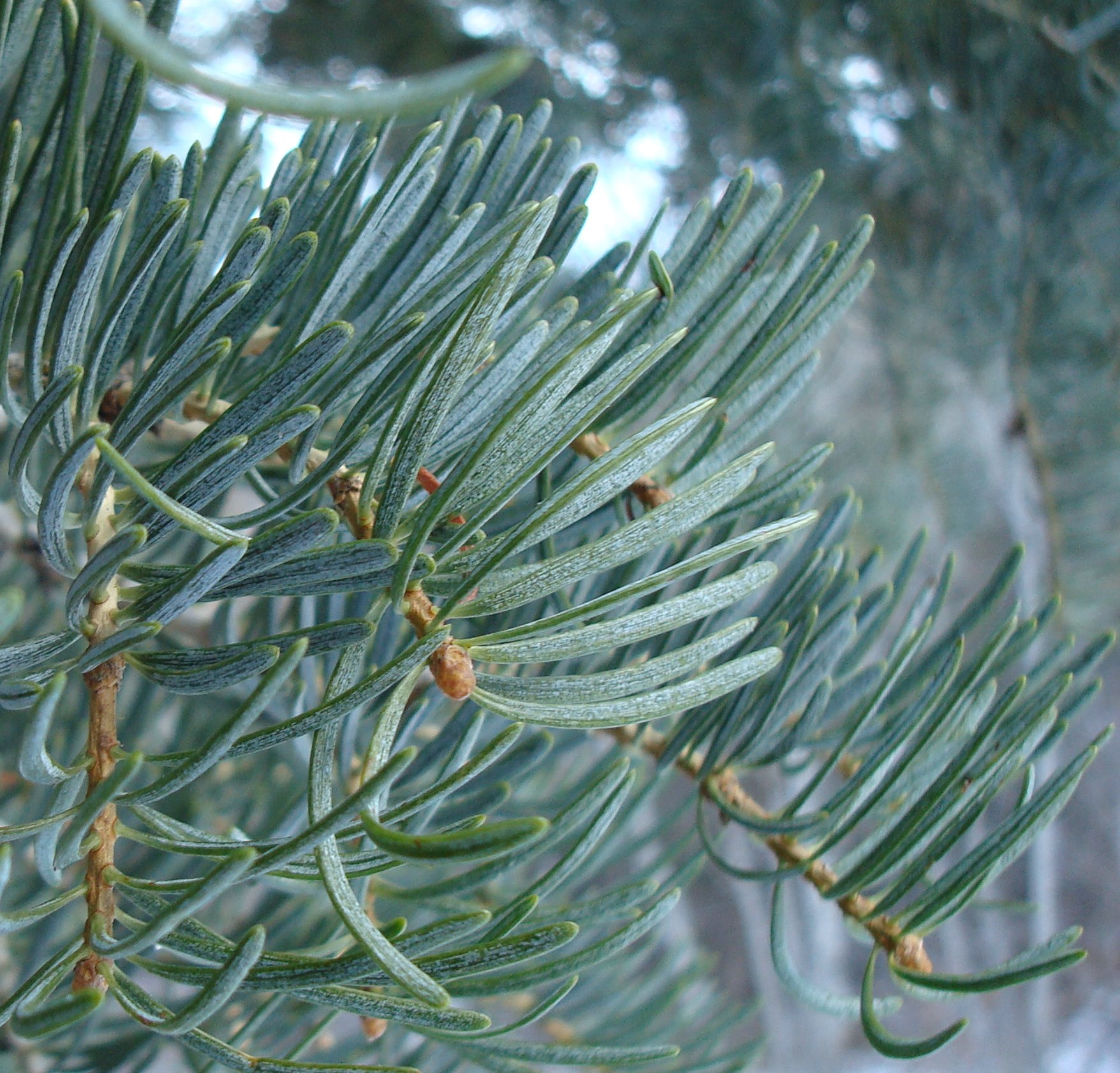
True Fir NeedlesTrue Fir Needles
Copyright © 2009 Linda Kervin

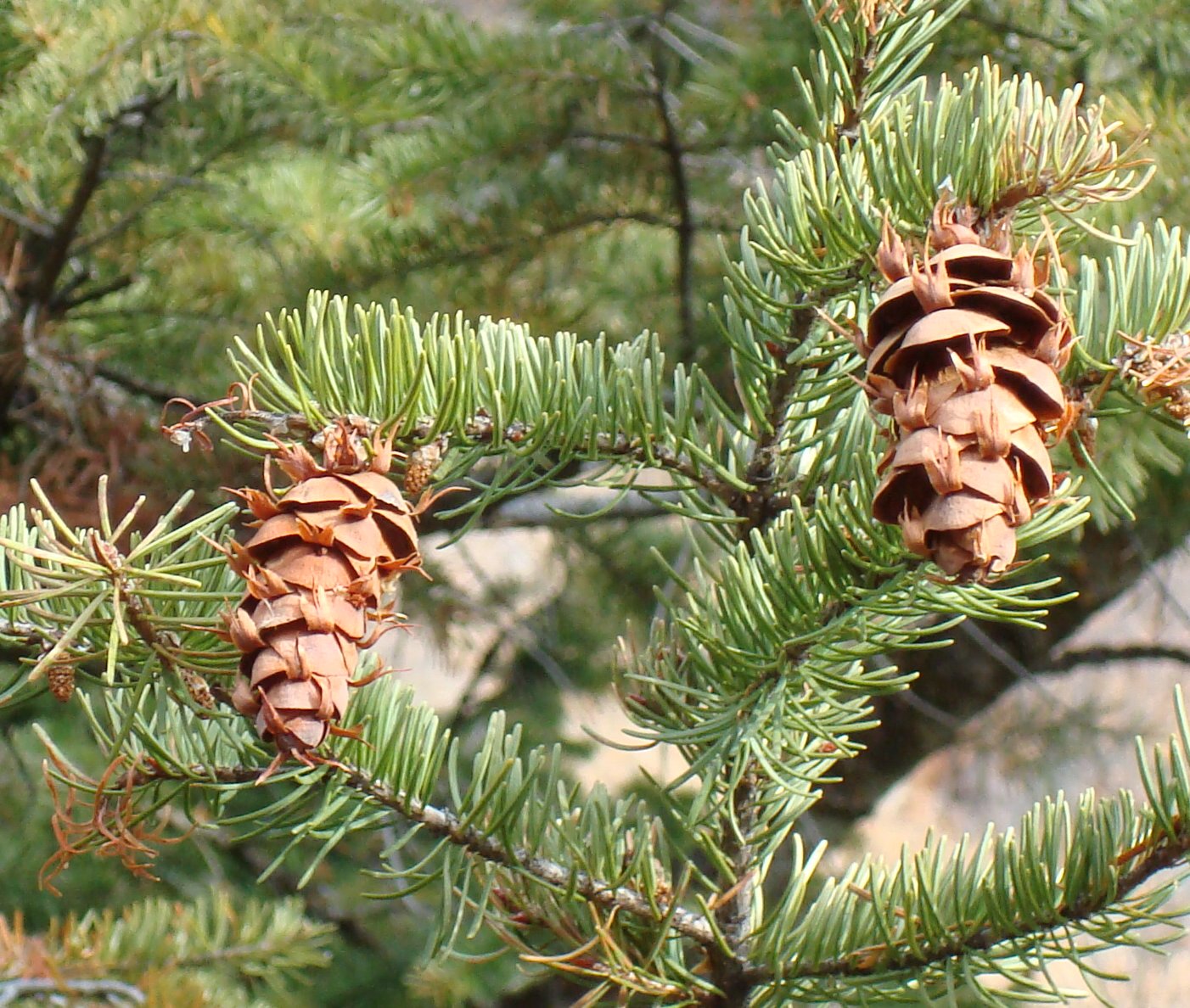
Douglas Fir Cones
Copyright © 2009 Linda Kervin

Now that the leaves have fallen from the deciduous trees, we can fully appreciate Utah’s evergreen trees. Conifers are trees that bear their seeds in cones instead of producing flowers and fruits. Utah has five kinds of conifers; all with stiff, needle-like leaves that remain green throughout the winter. Traits of their needles and cones allow you to distinguish between our different types of conifers. Cones can be found still attached or scattered on the ground.

I will start with the junipers. These conifers have scaly, slightly fleshly leaves. Juniper seeds are embedded in a cone that resembles a green berry. The cones are round and densely fleshy. Junipers are widely adaptable here, from arid foothills to rocky alpine slopes.

Our pines collectively span this same elevation range. They are the only conifers that have cylindrical needles bundled in clusters of 2 to 5. The one exception to this is Single Leaf Pinon, which as you might guess has single, round needles. The count of pine needles is often diagnostic of their species. Pinons mix with junipers at low elevations; their oily, wingless seeds are the edible pinon nut. Bristlecone pines, found in southern Utah, can live for over 1000 years.

Spruces are conifers that many recognize from their own yards. The spruce needle leaves a peg on the stem when it drops, which gives their twigs a rough, nubbly surface. Spruces grow in a classic pyramidal shape.

Another montane group is the true firs. Their flat needle attaches smoothly to the twig. True firs have uniquely upright cones that gradually disintegrate without dropping to the ground. Crushed fir needles are wonderfully fragrant, redolent of tangerines or grapefruit. Perhaps that is why true firs are a favorite Christmas tree.

Douglas fir, despite its common name, is in a different genus than the true firs. Its cones are distinctive; having long, three-pointed, papery bracts that project out from amid the cone’s scales. Douglas fir is one of the west’s most valuable timber tress. Like the spruces and firs, it is a montane species.

Conifer trees are a great resource for Utah wildlife, providing food and shelter, especially in the icy cold of winter.

This is Linda Kervin for Bridgerland Audubon Society.

Credits:
Pictures: Copyright © 2009 Linda Kervin
Text: Linda Kervin and Jim Cane

Additional Reading:

Sibley, David Allen. 2009. The Sibley Guide to Trees. New York: Alfred A. Knopf.

Johnson, Carl M. 1991. Common Native Trees of Utah. Utah State University Extension Service. Logan, UT. 109 p

Kuhns, Michael R., Utah Forest Facts, Conifers for Utah, https://extension.usu.edu/forestry/Reading/Assets/PDFDocs/NR_FF/NRFF015.pdf, USU Extension

Spruces in the Urban Landscape

Colorado Blue Spruce
Courtesy Linda Kervin

A spruce tree was felled in my neighborhood recently. I have no quarrels with its removal, especially since it was leaning over my roof. But some wild neighbors were not so upbeat about the incident. A Red Squirrel scolded anyone within earshot. It had lost its secure pathway between the front and backyards. Now it must run on the ground before once again climbing into the safety of loftier pathways.

Spruce trees have much to offer the non-human inhabitants of our urban landscapes. The noisy Red Squirrel may also have been complaining about the loss of a nest. Both squirrels and birds like to nest in spruce trees.
The dim interior of the spruce is a good place to look for owls roosting during daylight.

Spruce trees shelter animals during storms, their dense branches providing a dry, calm haven from wind, rain and snow.

Spruces offer a high perch from which every bird, house finch to crow to robin, can declare their territory by song sung lustily from the topmost branches.
When the Sharp-shinned Hawk swoops the birdfeeder for a feathery meal, the juncos and chickadees scatter to hide themselves in the spruce’s embrace.

Last winter, flocks of White-winged Crossbills descended upon Utah. Their bill crosses at the tip, which makes it perfect for prying open spruce cones to get to the tasty and nutritious seeds. These birds wander the Northern Hemisphere in search of abundant cone crops of spruce and other conifers.

The noble, lofty spruce is more than a decorative landscape tree. It offers food, home, safety and shelter to our wild neighbors.

Our theme music was written by Don Anderson and is performed by Leaping Lulu from their CD High Road, Low Road. Our bird music is provided by Kevin Colver.
Credits:

Text: Linda Kervin, Bridgerland Audubon Society

Additional Reading: