Cache Valley Christmas Bird Count (CBC) and Climate Change

Cache Valley Christmas Bird Count Courtesy Audubon.org Camilla Cerea, Photographer All Rights Reserved
Christmas Bird Count
Courtesy Audubon.org
© Camilla Cerea, Photographer
All Rights Reserved
It might be worth checking one’s mental state if they were to spend many hours in frigid temperatures hoping to find a bird. There are many of those crazies in our valley here in northern Utah. Citizen Scientists they call us. After all, we do follow strict protocol that defines boundaries, time and what is legitimately called a bird siting or sounding. Yes, there are errors in counts when a flock of European starlings darken the sky, or when trying to identify a distant raptor, that is scarcely more than a black dot in the heavens.

Called the Christmas Bird Count, this event is the longest citizen science program in the world, where data has been collected since 1899. Here in Cache Valley it began in 1955. It occurs throughout the state and world with many countries participating. Visit your local Audubon chapters if you care to be involved. Wasatch, Salt Lake and St George all have chapters. Bear Lake, Vernal and Provo also do counts. And I am sure there are others in your area if you inquire.

Along with the fun it brings, the count has special significance for our changing climates’ impact on birds, which is disrupting populations and their spacial distribution are changing at an accelerating rate.
The data collected by observers over the past 118 years has allowed researchers to study the long-term health and status of bird populations across North America and Central and South America. When combined with other surveys such as the Breeding Bird Survey, it provides a picture of how the continent’s bird populations have changed in time and space. This long term perspective is vital for conservationists. It informs strategies to better protect birds and their habitat, and helps identify environmental issues with implications for people as well.

Audubon’s 2014 Climate Change Report is a comprehensive study that predicts how climate change could affect the range of 588 North American birds. Of the bird species studied, more than half are likely to be in trouble. The models indicate that 314 species will lose more than half of their current range by 2080.
Audubon’s Common Birds in Decline Report revealed that some of America’s most beloved and familiar birds have taken a nosedive over the past forty years.

142 species of concern are found in our state, including our state bird, the California gull and our national bald eagle.

If you aren’t up to braving the elements, Project FeederWatch and Great Backyard Bird Count are other options you may find by googling. I’m hoping for good visibility and temperatures above zero as I prepare my optical instruments and hot chocolate.

And please keep those bird feeders full as we enter the coldest month of the year!

This is Jack Greene writing and reading for Wild About Utah.

Credits:
Image: Courtesy Audubon.org, Copyright © Camilla Cerea, Photographer, All Rights Reserved
Text:     Jack Greene, Bridgerland Audubon Society


Additional Reading:

Project FeederWatch is a winter-long survey of birds that visit feeders at backyards, nature centers, community areas, and other locales in North America. FeederWatchers periodically count the birds they see at their feeders from November through early April and send their counts to Project FeederWatch. FeederWatch data help scientists track broadscale movements of winter bird populations and long-term trends in bird distribution and abundance. https://feederwatch.org/

Launched in 1998 by the Cornell Lab of Ornithology and National Audubon Society, the Great Backyard Bird Count was the first online citizen-science project to collect data on wild birds and to display results in near real-time. https://gbbc.birdcount.org/about/

Audubon’s 118th Christmas Bird Count will be conducted this coming season, with all counts held between the dates of Thursday, December 14, 2017 through Friday, January 5, 2018.
https://www.audubon.org/conservation/join-christmas-bird-count
https://www.audubon.org/conservation/science/christmas-bird-count

58th Cache Valley (Logan) Christmas Bird Count: 16 Dec 2017
https://bridgerlandaudubon.org/our-projects/cache-valley-christmas-bird-count/

Regional Christmas Bird Counts
https://www.utahbirds.org/cbc/cbc.html

Jack’s Cougar Encounter

jacks cougar encounter
Photographer: Larry Moats
Courtesy US FWS Digital Library
There are those moments in one’s life when time stops and moments become hours. So it was while trail running in the Wellsville mountains of northern Utah

Deep in the forest shadows materialized a form- a coyote! Well, that was the initial thinking. I stopped for closer inspection and began talking in a soft, welcoming tone so as not to frighten away my favorite song dog.
The animal form persisted- no frenzied running up the steep slope just beyond. Interesting.
I walked toward the figure to find the fright distance and for closer encounter. Eight steps in crunchy leaves and the animal began to move. Wow! A long tail emerges. The canine face transforms to feline. MOUNTAIN LION!!!

After 50+ years of trapesing through wild, rugged country in the western U.S., dream becomes reality- that of seeing this shadow being in real form.

Mesmerized, I continue a cautious approach. The cat holds its ground. Our distance closes to 50 yards when it begins a leisurely retreat. I continue singing praises to its magnificence. At one point I find myself emitting “Here Kitty, Kitty, Kitty” to which fortunately it doesn’t respond.

Mountain Lion
Courtesy USDA Forest Service
A large tom with striking colors- its lithe, fluid, soundless movement- poetry in motion, a marvel of artistic expression. It stops frequently, looking back to lock eyes with wonderment- perhaps its first close encounter with this strange being.

Eventually it gains the steep slope and picks its way upward. Occasional sunburst accents the rich tawny gold and well-muscled body. Eyes strain to follow its progress, fading into the dream it once was.

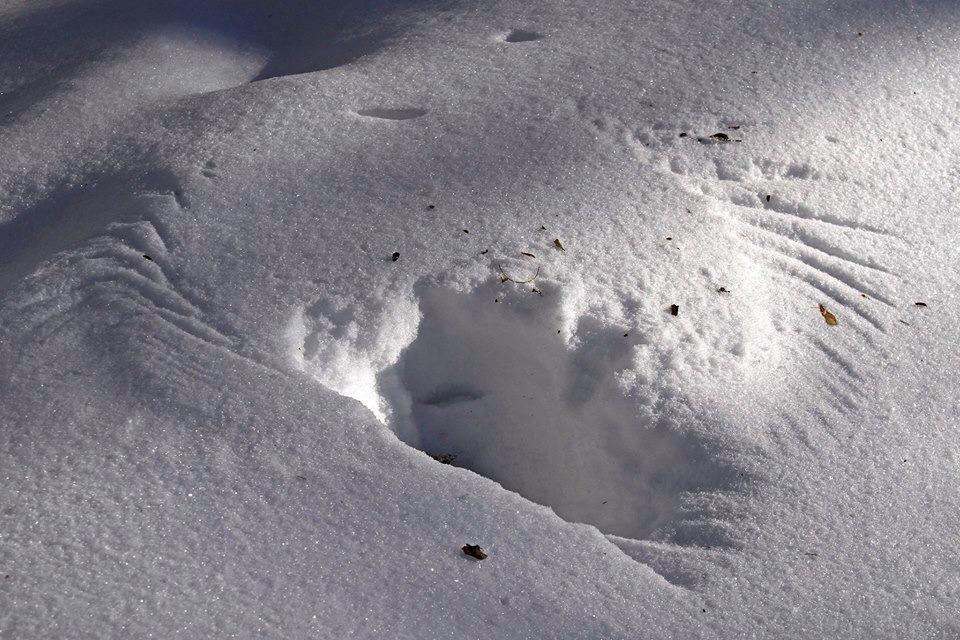
Cougars are solitary animals, making them a rare sight for humans. They usually hunt alone and at night, ambushing their prey from behind. Typically, cougars kill their prey with a bite to the lower neck. After making a kill, a cougar often will take the carcass to the base of a tree and cover it with dirt, leaves or snow, saving it to eat later.

Their main prey is deer, so cougars are often found close by. They can live up to 12 years in the wild but have lived up to 25 years in captivity.

Only 20 people in North America have been killed by cougars during the past 125 years, including six in California and 8 in Canada. No deaths have ever been reported in Utah. It is far less likely than dying from snake bites, avalanches, lightning strikes, hypothermia, or bee stings, or just about any other means. Children are particularly vulnerable when alone.

If approached by one, intimidation by intense eye contact, loud shouting, and any other actions to appear larger and more menacing is warranted.

This is Jack Greene writing and reading for Wild About Utah.

Credits:

Images: Courtesy US FWS Digital Library
Text:     Jack Greene

Sources & Additional Reading:

Mountain Lion, Wildlife Notebook, Utah Division of Wildlife Resources,

https://wildlife.utah.gov/publications/pdf/newlion.pdf

Starving Cougar Attacks Vernal Man, Hans Moran, Deseret News Nov. 12, 1997, https://www.deseretnews.com/article/594408/Starving-cougar-attacks-Vernal-man.html

Mountain Lion, National Geographic, https://animals.nationalgeographic.com/animals/mammals/mountain-lion.html

Talking Dirt

Talking Dirt: There are over four billion micro-organisms in a teaspoon of healthy soil. Courtesy King County, WA
There are over four billion micro-organisms in a teaspoon of healthy soil.
Courtesy King County, WA
It’s time to talk dirt- and I’m not talking politics, but real, factual dirt! Of all our amazing planets ecosystems, there is one that rises above all others. It’s the one your home is standing on, the one you don’t want your kids to track in the house. By now you’ve probably guessed it!

The diversity and abundance of life that exists within soil is greater than in any other ecosystem. A ‘biological universe’ exists in a gram of soil. Soil biota within this tiny universe transform energy, create and modify their habitat, influence soil health, and aid in the regulation of greenhouse gases. There are more microbes in a teaspoon of soil than there are people on the earth. We’re talking such characters as bacteria, fungi, protozoa, nematodes, earthworms, and arthropods. No wonder kids are so drawn to this miraculous stew of life! My one year old granddaughter can’t resist a mouthful given the opportunity! So let’s dive into a handful of soil.

Biogeochemical Cycling Courtesy USGS, Public Domain https://www.usgs.gov/media/images/biogeochemical-cycling-diagram-showing-climatic-processes-hydrologic
Biogeochemical Cycling
Courtesy USGS, Public Domain
https://www.usgs.gov/media/images/biogeochemical-cycling-diagram-showing-climatic-processes-hydrologic
The majority of life on Earth is dependent upon six critical elements: hydrogen, carbon, nitrogen, phosphorus, oxygen, and sulfur that pass through, and are transformed by, soil organisms. This process, called biogeochemical cycling, is defined as the transformation and cycling of elements between non-living and living matter. These processes are dependent upon life in the soil.

Although we understand the vital services that these organisms provide by breaking down organic debris and recy¬cling nutrients, scientists have only begun to study the rich and unique diversity that is a part of the soil ecosystem. Of particular interest for myself is understanding the functions of certain fungi and their roles in storing atmospheric carbon dioxide.

As you may have heard in past WAU readings, climate change is a major threat to Utah’s wildlife including birds, cold water fish, pollinators, and pica.

Conservation Tillage: Minimizing tillage and maintaining a crop residue on the soil surface can greatly reduce erosion impacts Agricultural Management Practices for Water Quality Protection--Watershed Academy Web, Courtesy US EPA
Conservation Tillage:
Minimizing tillage and maintaining a crop residue on the soil surface can greatly reduce erosion impacts
Agricultural Management Practices for Water Quality Protection–Watershed Academy Web, Courtesy US EPA
And here’s where our farms and ranches have the opportunity to play a crucial role beyond feeding us.
Deploying what’s called regenerative agricultural practices like tillage reduction, cover crops, companion planting, planned grazing, and keyline plowing—will not only improve soil quality making it more resilient to climate conditions like flooding and drought, but also increase soil’s organic matter which require less fertilizer. This in turn, means less runoff into waterways and greater profitability for farmers.

Perhaps most important of all, managing farms this way actually draws carbon out of the atmosphere. If all cropland in the U.S. was farmed using these regenerative practices, the greenhouse gas reduction would be equivalent to eliminating nearly 90 percent of our country’s cars. And now some states are considering economic incentives like tax breaks for carbon sequestration farming, and enlisting Farm Bureaus to provide additional support. Will Utah be next?

This is Jack Greene writing and reading for Wild About Utah.

Fortuna, A. (2012) The Soil Biota. Nature Education Knowledge 3(10):1, https://www.nature.com/scitable/knowledge/library/the-soil-biota-84078125

Biogeochemical Cycles, U.S. Global Change Research Program, https://nca2014.globalchange.gov/report/sectors/biogeochemical-cycles#intro-section-2

How do microbial mats work? Microbial Mat Biogeochemical Cycling, NASA Ames Research Center, https://spacescience.arc.nasa.gov/microbes/about/microbial.html

Biogeochemical Cycling, Center for Forested Wetlands Research, Southern Research Station, USDA Forest Service, https://www.srs.fs.usda.gov/charleston/research/biogeochemical/

Subsurface Biogeochemical Research Program, Climate and Environmental Sciences Division, Office of Biological and Environmental Research, U.S. Department of Energy, https://doesbr.org/

The Carbon Cycle, NASA Earth Observatory, EOS Project Science Office, NASA Goddard Space Flight Center, https://earthobservatory.nasa.gov/Features/CarbonCycle/

Smithfield Urban Deer

Smithfield Urban Deer: Click for a larger view of Mule Deer, Odocoileus hemionus, Courtesy US FWS, Ryan Moehring, Photographer

Mule DeerOdocoileus hemionus
Courtesy US FWS
Ryan Moehring, Photographer 
As I look out my front window, 7 mule deer are cavorting, feeding, with some lying down for a mid-day siesta. With the final week of the regular season deer hunt winding down, some have taken sanctuary from the nimrods to join the urban herd.

For our 30 years in Smithfield canyon, deer have been regulars, disappearing for the most part from mid-May to mid-June to give birth, as do the bucks, perhaps somewhat embarrassed with strange bumps forming on their crowns.
Spotted fawns begin adorning our lawn in mid-July. With enough speed to outrun all but the fastest predator’s, mom drops her guard a bit. Bucks begin parading their new, fully formed head gear.

As fall and winter approach, the neighborhood herd grows, with a few dozen hanging out when winter finally sets in. Their snow trails through the yard become conspicuous, further defined with sprinkles of fecal material. Out back the steep hillside across Summit Creek becomes a winter playground as small groups run repeatedly up and down and around. Apparently, their abundant stores of energy allow them to break winter’s lethargy. This is generally not the case for deer in the wilds where every calorie is conserved for winter hardships as snow deepens and temperatures plunge.

We’ve witnessed a few humorous behaviors during our 3 decades of observation. Deer are very curious which occasionally works against their best interests. We had an especially aggressive rooster who became our “feathered” watchdog. A small deer herd passing through the front yard noticed the stocky cock guarding the front door and decided on closer inspection. The lead deer approached stretching his neck and tender nose to get a closer whiff. Old roaster rooster gave her a welcoming sharp jab to the nose which sent the herd bounding off.
On another occasion, our tomcat found itself taking refuge under the trampoline as 4 deer approached from a patch of forest. The cat’s movement piqued the deer’s curiosity. They surrounded the trampoline, bent down on front knees with noses poked underneath for a close-up. Poor tom was terrified- to be munched by a deer- what a horrible end!

Of course, we realize that not everyone is enamored with deer in their space. Deer can be a nuisance causing damage to landscapes and gardens. With proper fencing and plant selection, this can be managed. A greater concern is safety, vehicle-deer collisions. Here again, with proper signage, this can be minimized. I’ve experienced close encounters on my bike, so always go slow when deer appear near or on the roadway.
An excellent resource for landscaping is found at wildlife.utah.gov/habitat/deer-browse.php Blending a variety of native and ornamental plants into a home landscape can create a highly attractive environment for family, friends, mule deer and other wildlife species. Enhancing the home environment and replacing some of the lost wildlife habitat can be enjoyable and beneficial.

This is Jack Greene for Wild About Utah.

Credits:
Image: Courtesy US FWS Ryan Moehring, Photographer
Text:     Jack Greene, Bridgerland Audubon Society


Additional Reading:

Copeland, H. E., H. Sawyer, K. L. Monteith, D. E. Naugle, A. Pocewicz, N. Graf, and M. J. Kauffman. 2014.
Conserving migratory mule deer through the umbrella of sage-grouse. Ecosphere 5(9):117. https://dx.doi.org/10.1890/ES14-00186.1
https://www.fws.gov/greatersagegrouse/documents/research/muledeer_mig_grouse_14-00186.pdf

Mule Deer, Utah Species, Utah Division of Wildlife Resources, Department of Natural Resources, State of Utah, https://fieldguide.wildlife.utah.gov/?species=odocoileus%20hemionus

Mule Deer, Utah Division of Wildlife Resources, https://wildlife.utah.gov/learn-more/mule-deer.html