Citius, Altius, Fortius

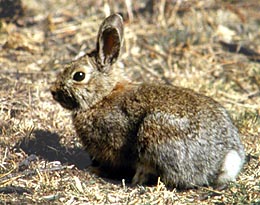
Snowshoe Hare summer coat image courtesy US National Parks Service
Snowshoe Hare Summer Coat
Courtesy US National Parks Service

Snowshoe Hare winter coat image courtesy US Forest Service https://www.fs.fed.us Snowshoe Hare Winter Coat
Courtesy USDA Forest Service

Hi, I’m Holly Strand from the Quinney College of Natural Resources at Utah State University

The upcoming winter Olympics in Sochi bring back fond memories of Utah’s stint as host of the winter games. You may recall that “Powder,” a playful snowshoe hare was among Salt Lake City’s three Olympic mascots. Powder represented “faster” in the Olympic triumvirate (try-um-virate) motto of “Citius, Altius, Fortius” (or Faster, Higher Stronger). And the little snowshoe hare needs to be fast. For according to USU wildlife biologist Dustin Ranglack Snowshoe hares are the Snickers bars of the forest. They’re a popular treat for a host of carnivores, including coyotes, foxes, lynx, bobcats, bears and birds of prey.

Hares are fast in general. They can reach 40 miles per hour, and can leap more than ten feet (three meters). But this hare has extra-large, wide feet with more fur and larger toes. Like permanent snowshoes, these feet are ideally suited for racing from predators in deep mountain snow.

In spite of its speed, the snowshoe hare’s best mechanism of defense is camouflage. In winter, its soft, fine fur turns white to blend into the snowy terrain. As spring thaws the wintry landscape, the hare’s fur turns brown or reddish-brown to help it elude predators. Only the tips of the ears remain dark throughout the year.

Scientists have observed that climate change may affect the survival of animals that undergo seasonal coat color changes. For example, with a shortened winter, a white-coated snowshoe hare is a sitting duck on brown earth in full view of ravenous predators.

But interestingly there is already a lot of variability in the timing of individual hares camouflaged coat. Amount of sunlight may start the color change in a snowshoe hare population. But once the process starts, the timing of full coat transformation — which can take up to two months — is unique. Perhaps this is due to the fact that—even before climate change– there was always been some variability in the onset of winter snow cover. Anyway, this variability in color change gives scientists hope that the snowshoe hare will be able to adapt its timing to seasonal changes in the future.
For sources and pictures go to WWW.wildaboututah.org.

For the Quinney College of Natural Resources, I’m Holly Strand

Credits:

Images: Courtesy US Forest Service and US National Parks Service

Text: Mary-Ann Muffoletto, Holly Strand, Quinney College of Natural Resources

Sources & Additional Reading

Snowshoe Hare Lepus Americanus, National Geographic, https://animals.nationalgeographic.com/animals/mammals/snowshoe-hare.html

Mills, L. Scott, Marketa Zimovaa, Jared Oylerb, Steven Runningb, John T. Abatzoglouc, and Paul M. Lukacsa. 2013 Camouflage mismatch in seasonal coat color due to decreased snow duration. PNAS. https://www.pnas.org/content/early/2013/04/10/1222724110#aff-1

Rossner, Hillary. 2012. The Color of Bunny: Can snowshoe hares outrace climate change? Feb. 6, 2012. High Country News. https://www.hcn.org/issues/44.2/can-snowshoe-hares-adapt-to-climate-change

Algae and Moss

Filamentous algae growing in the Colorado River near Lee’s Ferry. Copyright 2011 Wayne Wurtsbaugh, Photographer
Filamentous algae growing in the Colorado River near Lee’s Ferry
Copyright 2011
Wayne Wurtsbaugh, Photographer

Tortula ruralis is one of the few mosses that are common in the desert. Licensed through Wikimedia, Kristian Peters, PhotographerTortula ruralis
one of the few mosses
that are common in the desert
Courtesy Wikimedia
Licensed under CCA 3.0
Kristian Peters, Photographer

Hi, I’m Holly Strand from Utah State University’s Quinney College of Natural Resources.

Algae and moss are plentiful in and around Utah streams and lakes. But lots of people confuse these two kinds of plants. So let’s sort out what each one is.

First, both moss and algae are ancient plant forms that are commonly found in wet or moist places. As primary producers both algae and moss use sunlight to fix energy, giving off oxygen as a byproduct.

Neither algae nor moss has a vascular system to transport water so vertical growth is not their strong suit. Rarely more than an inch tall, a cushion of moss is really a tight cluster of individual moss plants. Bunching helps support the individual moss structures and helps conserve water. Meanwhile, algae comes in many forms, from microscopic one-celled diatoms to huge colonies of giant floating mats, or long flowing filaments. Algae also comes in many colors, such as green, gold, brown and red.

So where are they found? Moss loves shade. Look for it in the deep shadowy gorges and box canyons of the Colorado and Green Rivers. It also thrives in drainages off cliffs and around springs. Damp meadows, tree bases, bogs, and pond edges make great moss habitat. You will seldom find moss in saline environments. Some moss species live submerged in water but most live on land. With the sun-loving algae, the opposite is true—most live in water but some species will grow on damp soil and on the shaded sides of damp walls and trees.

Moss grows very slowly and lives a long time. So it needs a stable environment in which to grow. In contrast, algae is extremely fast-growing. A generation might last from one to several days. Algae is also extremely sensitivity to chemical, temperature and light conditions. Therefore, the presence, absence or quantity of algal species can be a useful indicator of ecosystem health. For instance, your aquatic system is probably in pretty good shape if a number of different species are flourishing. However, if the water is dominated by one or just a few fast growing species and the water starts to turn color—usually green—the system is seriously out of whack. Called algal blooms, these dramatic explosions of growth are usually the result of excess phosphorus or nitrogen runoff in the water.

During blooms the algal mass produces lots of oxygen during the day, but it consumes more than it makes at night. Further, more dead organic material is produced which eats up more oxygen. The result is a severe oxygen deficit. Resident fish, insects, and plants are deprived of oxygen and end up suffocating.

Go to www.wildaboututah.org for links to information on how to prevent algal blooms.

Thanks to 4th grade classes of Fallon Farokhi and Andrea Bostwick for their interest in moss, algae and water quality. Funded by an environmental education grant from the EPA Region 8, the 4th graders investigated and reported on water quality issues in the Bear River watershed. Also, thanks to Wayne Wurtsbaugh and Chuck Hawkins of Utah State University’s College of Natural Resources for their expertise in writing this piece.

For Wild About Utah, I’m Holly Strand.

Credits:
Image: Algae, Courtesy & Copyright Wayne Wurtsbaugh, Utah State University, Department of Watershed Sciences
Image: Moss, Licensed through the Attribution-ShareAlike 3.0 Unported (CC BY-SA 3.0) Courtesy Wikimedia, Kristian Peters, Photographer
Text: Holly Strand, Utah State University, Quinney College of Natural Resources

Sources & Additional Reading

US EPA. Harmful Algal Blooms https://www2.epa.gov/nutrientpollution/harmful-algal-blooms

US EPA. The Effects of Nutrient Pollution and Harmful Algal Blooms] https://www2.epa.gov/nutrientpollution/effects

US EPA. What You Can Do to Reduce Nutrient Pollution https://www2.epa.gov/nutrientpollution/what-you-can-do

Barbour, M.T., J. Gerritsen, B.D. Snyder, and J.B. Stribling. 1999. Rapid Bioassessment Protocols for Use in Streams and Wadeable Rivers: Periphyton, Benthic Macroinvertebrates and Fish, Second Edition. EPA 841-B-99-002. U.S. Environmental Protection Agency; Office of Water; Washington, D.C. https://water.epa.gov/scitech/monitoring/rsl/bioassessment/

Fisher, S. G. 1995. Stream ecosystems of the Western United States. In River and Stream Ecosystems of the World. C. E. Cushing, K. W. Cummins, and G. W. Minshall eds. University of California Press, Berkley. 817 pp. [Updated October 31, 2024] https://www.researchgate.net/publication/261545076_River_and_stream_ecosystems_of_the_world_edited_by_C_E_Cushing_K_W_Cummins_and_G_W_Minshall_University_of_California_Press_Berkeley_2006_No_of_pages_817_ISBN_0-520-24567-9

Flowers, Seville, Mosses: Utah and the West. Edited by Arthur Holmgren, First Published by Brigham Young University Press, 1973 [Updated October 31, 2024] Blackburn Press, July 1, 2001, https://www.amazon.com/Mosses-Utah-West-Seville-Flowers/dp/1930665253

Moss, Brian. 2010. Ecology of Freshwaters. A View for the Twenty-First Century. Wiley-Blackwell. https://www.amazon.com/Ecology-Fresh-Waters-Twenty-First-Century/dp/1444334743

Utah Division of Water Quality. Nutrients in Utah’s Waters https://www.nutrients.utah.gov/ [Updated Oct 31, 2024] https://deq.utah.gov/water-quality/headwater-criteria-nutrients-in-utahs-waters

Utah Water Research Laboratory. 2002. Understanding Nitrate Pollution in Small and Native American Communities. Water Treatment Technology Program Report No. 53. Washington DC, U.S. Department of the Interior.

Kimmerer, Robin Wall, Gathering Moss: A Natural and Cultural History of Mosses, Oregon State University Press, March 1, 2003, https://www.amazon.com/Gathering-Moss-Natural-Cultural-History/dp/0870714996 [Accessed Oct 31, 2024]

Small birds in cold temperatures

Audio:   mp3 Listen to WildAboutUtah

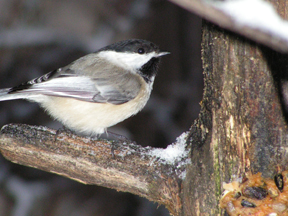
Black-Capped Chickadee, Copyright Stephen Peterson, Photographer
Black-Capped Chickadee
Copyright Stephen Peterson, Photographer

Hi, I’m Holly Strand from Utah State University’s Quinney College of Natural Resources.

There is a biological principle that states that species or populations that live near the poles tend to be bigger than those closer to the equator. Called Bergmann’s rule, this principle seems to work pretty well for some animal groups. Consider the size of polar bears, walruses, or penguins. An explanation behind Bergman’s rule is that large animals have a lower surface-to-volume ratio. Therefore they lose less body heart per unit of body mass. Furthermore, the larger you are, the more fat reserves you can carry around with you. Fat reserves represent potential energy, which is pretty useful to have in severe environments.

Large size could come in handy when dealing with Utah’s cold winter. But what about our little creatures? Like the small birds that forego a winter vacation in Arizona or Central America? Without the advantage of large size, how do they keep from icing over when the temperature drops?

Inactivity conserves energy so these little birds go to bed early and get up late in winter. That’s why your feeder looks so deserted on cold mornings. For a roosting spot, birds choose locations that offer protection from both the elements and from predators. The thick branches near the trunk of a conifer work nicely. And some species will seek out tree cavities or nest boxes. While roosting, birds may huddle together to create additional warmth.

Shivering helps a bird to increase its metabolic rate and generate heat when roosting. The drawback is that shivering requires a lot of calories.
An alternative approach that requires less energy is to simply reduce the core temperature of your body. The diminutive black-capped chickadee is well-known for surviving the cold using this adaptive form of self-induced hypothermia.

Good insulation is critical for survival. Some birds–like juncos and finches– put on extra fat. But all birds have feathers which are great for insulation. You’ve probably seen a bird fluff itself out, looking like a chubby feather ball. The bird does this to trap air next to its body to creating a nice warm down coat.

Bird parts not covered with feathers are more vulnerable to cold. So birds will bury their bills into their plumage and will tuck in their feet underneath.

During the shortened, active daytime hours little birds need to consume as many calories as possible. We can help them most by providing high energy food items such as oil sunflower and suet. For more information on what you can do to help Utah birds survive the winter chill, go to www.wildaboututah.org.

For Wild About Utah, I’m Holly Strand.

Credits:
Image: Courtesy Bridgerland Audubon Society, Copyright Stephen Peterson, Photographer
Text: Holly Strand

Sources & Additional Reading

Cooper, Sheldon J. and James A. Gessaman. 2005. Nocturnal Hypothermia in Seasonally Acclimatized Mountain Chickadees and Juniper Titmice. The Condor 107:151–15 https://www.uwosh.edu/faculty_staff/cooper/articles/Condor%20107%20151-155.pdf

Elkins, Norman. 1983. Weather and Bird Behavior. Calton, England: T& AD Poyser. https://www.amazon.com/Weather-Bird-Behaviour-Norman-Elkins/dp/0856610356

Kress, Steve. 2010. Audubon Guide to Winter Bird-Feeding. Audubon Magazine Published: November-December 2010
https://www.audubonmagazine.org/articles/living/audubon-guide-winter-bird-feeding

Marsh, R. L., and W. R. Dawson. 1989. Avian adjustments to cold. In: Advances in Comparative and Environmental Physiology, vol. 4, edited by L. C. H. Wang. Berlin Heidelberg: Springer‐Verlag, p. 205–253. Citation

Smith, Susan. 1991. The Black-Capped Chickadee: Behavioral Ecology and Natural History. Comstock Publishing
https://www.amazon.com/The-Black-Capped-Chickadee-Behavioral-Comstock/dp/0801497930

Yuhas, Daisy. 2013. How Birds Cope With Cold in Winter. Audubon Magazine Published: 12/12/2013 https://www.audubonmagazine.org/articles/birds/how-birds-cope-cold-winter

Utah is Worth its Salt

Bonneville Salt Flats as seen from Interstate 80 in Utah, USA
Bonneville Salt Flats
as seen from Interstate 80
East of Wendover, UT
Courtesy Wikimedia
Hermann Luyken, Photographer
Image licensed through
Creative Commons
CC0 1.0 Universal Public Domain Dedication

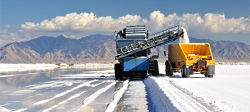
Salt Production, Solar Evaporation, Courtesy Morton Salt, Inc.Salt Production
Solar Evaporation
Courtesy Morton Salt, Inc.

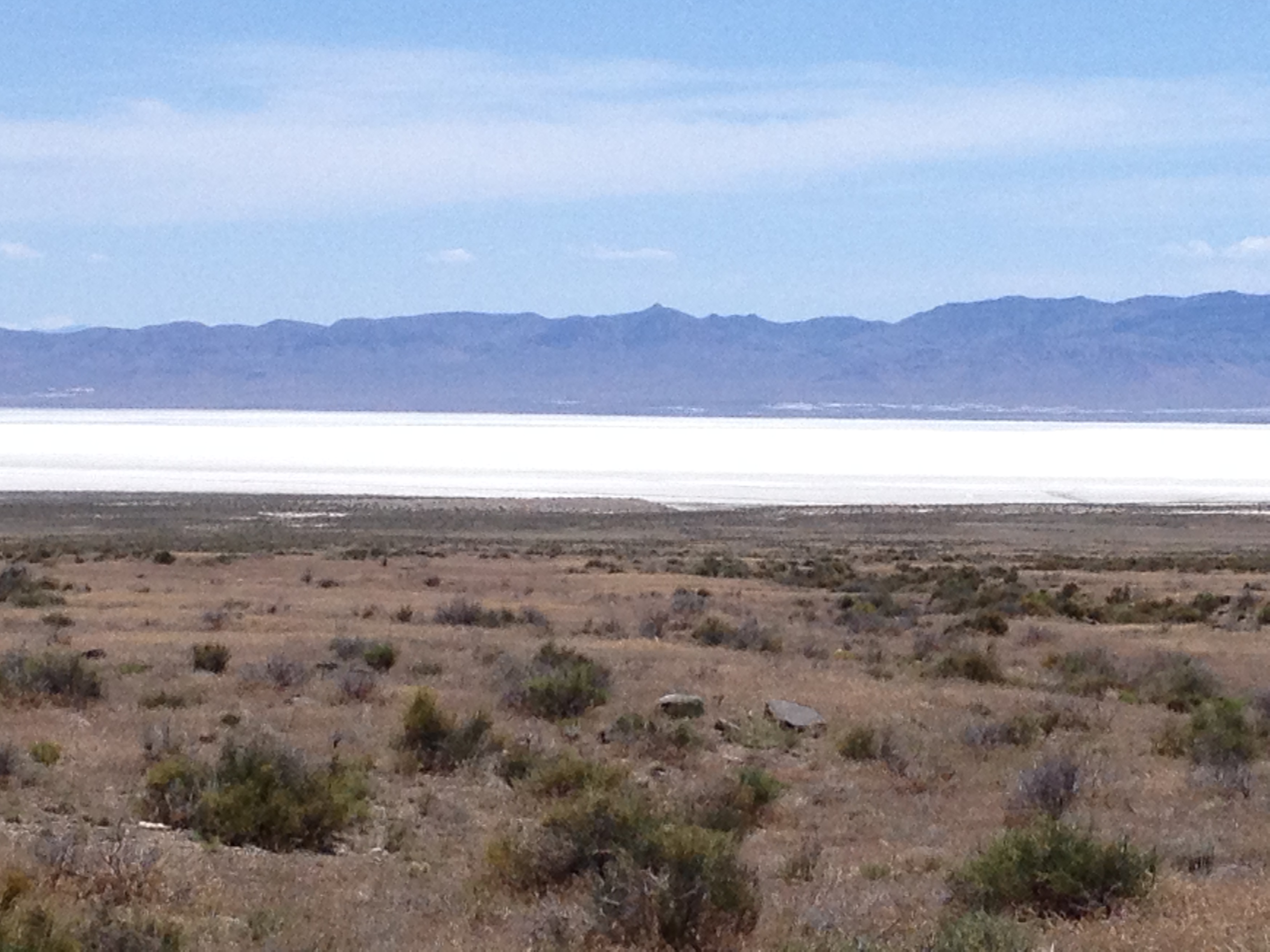
Sevier Lake, a Saline Lake in Central UtahSevier Lake
Courtesy & Copyright 2013
Holly Strand, Photographer

Salt Crystal, Photo Courtesy Minerals and Materials Photo Gallery, U.S House Subcommittee on Energy and Natural ResourcesSalt Crystal
Minerals and Materials Photo Gallery
U.S House Subcommittee
on Energy and Natural Resources

Hi, I’m Holly Strand from the Quinney College of Natural Resources at Utah State University.

Throughout history, salt has held enormous significance for human society. And not just because it makes food taste better. Salt is a biological necessity. The human body needs a small but regular supply of sodium to maintain a balance of body fluids, keep muscles and nerves running smoothly and help certain organs work properly.

Thousands of years ago, salt was discovered to have another vital function– as a food preservative. This discovery quickly transformed the human lifestyle. For if people could preserve their food, they no longer had to depend upon the seasonal availability of food. Further, preservation allowed people to travel over long distances with a portable food supply.

Because of its central importance to health and human welfare, salt acquired some interesting forms of cultural significance as well. For instance, spilling salt is a bad omen. But you can mitigate by throwing the spilled salt over your left shoulder into the eyes of the Devil that lurks there. In many places salt was used as money. The English word “salary” comes from the Latin phrase salarium argentum, or “salt money,” which was paid to Roman soldiers.

Before the evolution of modern geology and extraction techniques, salt was difficult to find and to remove. The limited supply led to increased demand. In Salt: A World History author Mark Kurlansky described how salt demand spawned extensive trade routes, alliances, and even empires. Salt taxes were a common source of government income as well as a cause for revolt.

Here in Utah, it’s hard to imagine getting worked up about salt supply. There’s just so much of it lying around. That’s because as the 20,000 square miles of water that was Lake Bonneville evaporated, salt was precipitated all over the dried up lake bed.

The Great Salt Lake itself contains about 4.5 billion tons of salt. Currently 3 corporations extract salt using over 80000 acres of solar evaporation ponds near the lake. They produce over 2 millions tons of salt per year. This roughly equals the amount of salt flowing into the lake. For the Bear, Weber and Jordan Rivers add about 2.2 million tons of salt annually.

Utah and nearby states use the Great Salt Lake salt for de-icing roadways. Some of the salt is pressed into pellets for water softeners. Ranchers get salt-lick blocks for their livestock. And huge quantities of bulk salt are used in metal, chemical, paper and other industries.

Food grade or table salt is not produced from the Great Salt Lake area. However Redmond Minerals Inc. produces table salt in Sevier County.

For Wild About Utah, I’m Holly Strand.

Credits:
Image: Courtesy Wikimedia, Hermann Luyken, Photographer, Image licensed through Creative Commons CC0 1.0 Universal Public Domain Dedication
Image: Courtesy & Copyright Morton Salt, Inc.
Image: Sevier Lake, Courtesy & Copyright 2013 Holly Strand
Image: Courtesy U.S House Subcommittee on Energy and Natural Resources, Public Domain
Text: Holly Strand

Sources & Additional Reading

Wild About Utah pieces authored by Holly Strand

Freeman, Shanna. 2007. “How Salt Works” HowStuffWorks.com. https://science.howstuffworks.com/innovation/edible-innovations/salt.htm

Gwynn, Mark, Ken Krahulec, and Michael Vanden Berg. Utah Mining 2010, Utah Geological Survey of Utah Department of Natural Resources, https://ugspub.nr.utah.gov/publications/circular/c-114.pdf Circular 114

Gwynn, J. Wallace, ed. Great Salt Lake: an overview of change. 2002. DNR Special Publication. Utah Geological Survey of Utah Department of Natural Resources. formerly at: https://wildlife.utah.gov/gsl/gsl_cmp_resource_doc/10minerals.pdf

Kurlansky, Mark. 2003. Salt: A World History. London: Penguin Books. https://www.amazon.com/Salt-World-History-Mark-Kurlansky/dp/0142001619

Salt Institute. A non-profit trade association dedicated to advocating the many benefits of salt. https://www.saltinstitute.org/ [Dissolved March 2019]

Stephens, Doyle W. and Joe Gardner USGS. Great Salt Lake, Utah https://pubs.usgs.gov/wri/wri994189/PDF/WRI99-4189.pdf

USDA. Sodium in Your Diet: Using the Nutrition Facts Label to Reduce Your Intake. https://www.fda.gov/Food/ResourcesForYou/Consumers/ucm315393.htm.