
Elkweed/Green Gentian

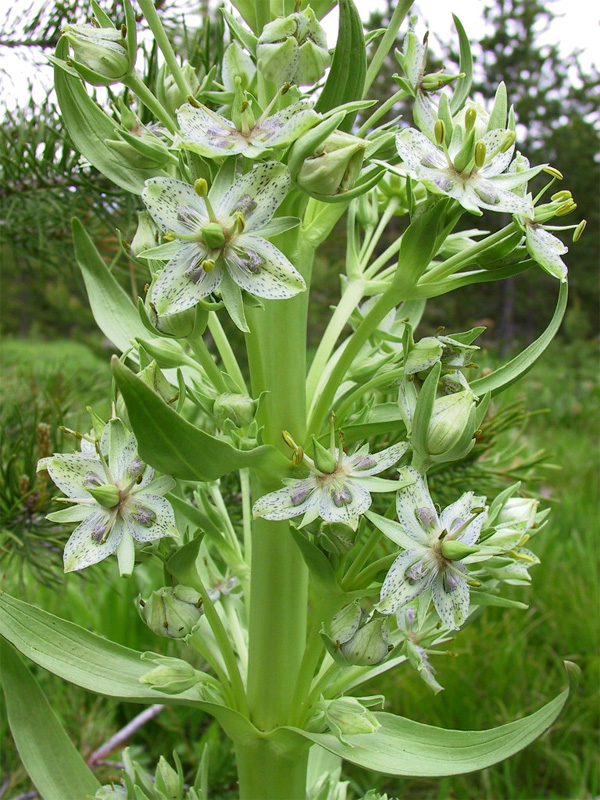
Green gentian, Frasera speciosa, Courtesy US Forest Service, Teresa Prendusi, Photographer
In keeping with our nation’s 250-year celebration, Red, White, and Blue have decorated Utah’s higher elevations, from Tony Grove in the north to Cedar Breaks in the south. Sprinkled in between are mountain meadows carpeted with wildflowers, Indian paintbrush, penstemons, columbine, patriots of the loveliest hues. Additionally, nature’s erosional forces have created monuments found in our national and state parks on Utah’s Colorado Plateau, rivaling human-created monuments with their overpowering majesty.

Green gentian, Frasera speciosa, Mt Nebo Scenic Byway (Nebo Loop), Courtesy US Forest Service, Teresa Prendusi, Photographer
Green gentian, Frasera speciosa,
Mt Nebo Scenic Byway (Nebo Loop)
Courtesy US Forest Service, Teresa Prendusi, Photographer

Green Gentian, Frasera speciosa Stalk, Courtesy USDA Forest Service, S Olson, Photographer Green Gentian, Frasera speciosa Stalk, Courtesy USDA Forest Service, S Olson, Photographer

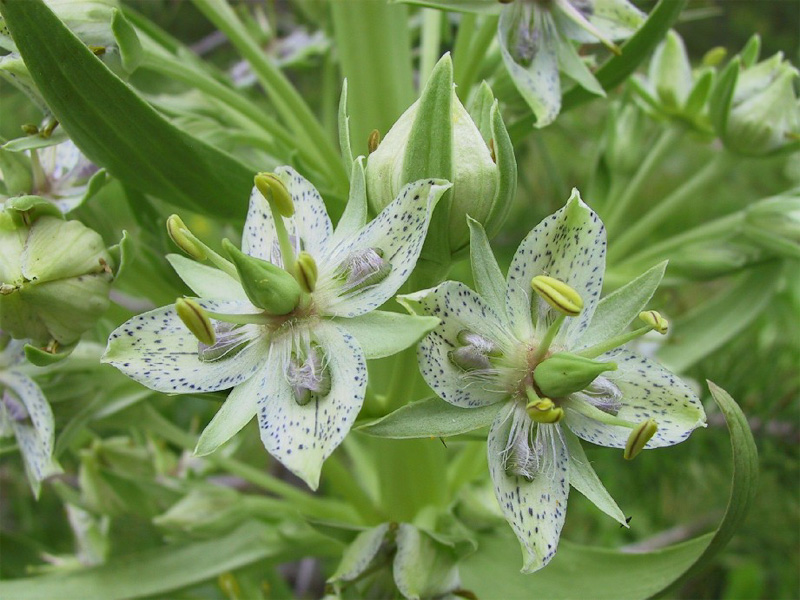
There is another monument found in the plant kingdom that towers above all others on our mountains and plateaus., frasera speciosa or green gentian. Upon first seeing this lofty flower, my senses were startled by its monumental size. On closer inspection, there were multitudes of exquisite blossoms adorning its tall stalk, with cream colors flowing into delicate green tips, with purple dots sprinkled throughout. The sepals, pistils, and stamens are no less striking. I stood in awe of this monumental beauty.

Over the years since my first introduction, I became intrigued with its remarkable life history, spending up to 80 years as an inconspicuous rosette of leaves, referred to as elkweed. Then, in its final year of life, it launches itself into a burst of glory, shooting up a tall stalk garnered with stunning flowers.

Given the size of its flowering stalk, it’s not surprising that a green gentian produces a large number of seeds. An average stalk is composed of 600 flowers and is capable of producing 66,000 seeds. When the plant dies, its leaves fall to the ground and decomposes, fertilizing nearby seeds, doubling its germination and survival chances compared with seeds dispersed further from the plant.

When a green gentian flowers, some of its offspring will flower in 20 years, while others will wait 60 or more years. Montane and subalpine environments are highly variable, with precipitation, temperature, damaging frost events, pollinator populations, thus germination and seedling survival vary unpredictably. It appears that for a plant that will flower only once, having offspring flower from 20 to 80 years is a way of hedging its bets in an unpredictable environment.

Research has revealed much about this fascinating and conspicuous wildflower, but it also demonstrates a fundamental fact in ecology. Long-term studies are necessary to identify some phenomena, such as synchronous and monocarpic-that is, dying after flowering-by Jeff Minton, a researcher.

Green gentian has been used by multiple Native American tribes for a wide range of medicinal purposes, with documented applications spanning from sedative and digestive treatments to veterinary remedies, the plant’s fleshy root was eaten by indigenous peoples as well, although considered too bitter by the untrained palate.

Parts of the Colorado Rockies are experiencing a super bloom of green gentian this year, which is interesting considering it’s been a record hot and dry winter-spring season. Many mysteries yet remain for this monument of nature.

This is Jack Green for Bridgerland Audubon Society, and I’m Wild About Nature’s Monuments.

Credits:
Images Courtesy USDA Forest Service, Teresa Prendusi and S Olson, Photographers
Audio: Courtesy & © Kevin Colver, https://wildstore.wildsanctuary.com/collections/special-collections and Anderson, Howe and Wakeman
Text: Jack Greene, Bridgerland Audubon, https://bridgerlandaudubon.org/
Additional Reading: Lyle W Bingham, Webmaster, and Jack Greene, Author, Bridgerland Audubon, https://bridgerlandaudubon.org/

Additional Reading:

Jack Greene’s Postings on Wild About Utah, https://wildaboututah.org/author/jack/

Gentian Family, Yellowstone’s Photo Collection, Yellowstone National Park, US National Park Service, https://www.nps.gov/features/yell/slidefile/plants/gentianfamily/Page.htm

Utah Rare Plant Guide, Utah Rare Plants, Utah Native Plant Society, https://www.utahrareplants.org/rpg_species.html (search lower on the page for “Frasera” or “Green Gentian”.)

Footer, Tracey, A Sight for the Ages: Frasera speciosa is on Display in the Northern Wasatch Canyons!, Utah Native Plant Society, https://www.unps.org/segolily/Sego2023Summer.pdf

Green Gentian, Utah Species of Greatest Conservation Need (2025), Fieldguide, Utah Division of Wildlife Resources, https://wildlife.utah.gov/pdf/wap/2025-12-sgcn-list.pdf
By County List: https://wildlife.utah.gov/pdf/wap/2025-12-sgcn-list-county.pdf

Rascoe, Ayesha, A rare flower is in a superbloom in the Rocky Mountains, Weekend Edition Sunday, NPR,
July 5, https://www.npr.org/2026/07/05/nx-s1-5877757/a-rare-flower-is-in-a-superbloom-in-the-rocky-mountains

Frasera speciosa – Green Gentian/Elk Weed/Monument Plant, First Nature, Wales, UK, https://www.first-nature.com/flowers/frasera-speciosa.php

Ute Ladies’ Tresses – Utah Orchids

Ute Ladies' Tresses at the Mendon Meadow Preserve, Bear River Land Conservancy, Courtesy & © Mark Brunson, Photographer
Ute Ladies’ Tresses, Spiranthes diluvialis, at the Mendon Meadow Preserve
Bear River Land Conservancy
Courtesy & © Mark Brunson, Photographer

The Mendon Meadow Preserve, Bear River Land Conservancy Courtesy & © Mark Brunson, Photographer The Mendon Meadow Preserve
Bear River Land Conservancy
Courtesy & © Mark Brunson, Photographer

Bumblebee on Ute Ladies' Tresses at the Mendon Meadow Preserve, Bear River Land Conservancy Courtesy & © Mark Brunson, Photographer Bumblebee on Ute Ladies’ Tresses at the Mendon Meadow Preserve
Bear River Land Conservancy
Courtesy & © Mark Brunson, Photographer

It’s a warm summer evening on the west side of Cache Valley, where a small group of volunteers has gathered beside a green pasture. We hear the rattling bugle calls of sandhill cranes in the distance. A Swainson’s hawk scolds us as it circles overhead. As we walk into the field, our steps disturb dragonflies and leopard frogs. But we’re not here for the wildlife. We’re after something rarer: orchids!

Wait, what? Orchids? You mean those delicate tropical plants with colorful blossoms that city folks grow in humid greenhouses? Well, yes actually. It turns out that orchids grow on almost every type of land surface across the globe, including some in Utah.

The orchid we’re seeking has drawn the attention of the federal government. You see, while the orchid family has nearly 28,000 species worldwide, many of those are rare. The one we’re looking for, called Ute Ladies’-tresses, is on the federal Threatened Species list, which gives it legal protection from human impacts until it’s no longer at risk of disappearing.

In Cache County, Ute Ladies’-tresses are guarded by the Bear River Land Conservancy, a nonprofit whose mission is to protect open space and working farms and ranches in northern Utah. After orchids were found in a pasture near the small town of Mendon, the Conservancy received funding to purchase and manage the land in ways that could help the orchids to thrive, and to provide data to the U.S. Fish and Wildlife Service about how the population is doing.

That’s why we volunteers are gathered in a pasture on a Friday evening. Our job is to carefully walk the property, looking for blossoms. When one of us sees an orchid in bloom, we mark the spot with a bamboo plant stake. Then someone trails along behind them – usually that’s me – and records the location using a global positioning system. By taking these GPS measurements, we not only count how many plants have flowered that year, but we also map their locations to learn where we might be losing or gaining orchids over time.

Ute Ladies’-tresses has narrow leaves, hard to distinguish from the surrounding grasses and sedges and rushes. But then it sends up 1-5 flower stalks, up to a foot high. Each stalk has numerous small white flowers arranged in a graceful spiral. The plant likes to grow on solid ground that floods at some point in the year – a streambed that’s dry except during spring runoff, or a flood-irrigated pasture like the one in Mendon. At our site, the first flowers emerge around Pioneer Day, and new ones continue to appear till about Labor Day.

Monitoring this population since 2013, we’ve learned a lot about Ute Ladies’-tresses. One key finding is that flower numbers fluctuate widely from year to year. Our highest count was nearly 2,000 flowering specimens in 2017. But in the very dry summer of 2021, we counted fewer than 30. That year was scary if you’re trying to protect a rare plant, But these orchids live for several years, flowering only when conditions are right, and last year we found more than 1,400.

You see, even if a plant is rare, that doesn’t have to mean it’s fragile. Some rare plants are, to be sure, but Ute Ladies’-tresses is resilient. In fact, last fall the Fish and Wildlife Service proposed removing the species from the Threatened list. One reason they feel they can do so is the continued protection it gets from groups like Bear River Land Conservancy. And so I look forward to many more August evenings in a Mendon meadow, sharing time with this lovely orchid.

I’m Mark Brunson, and I’m wild about Utah’s rare plants.

Credits:

Images Courtesy & Copyright Mark Brunson, Photographer
Featured Audio: Courtesy & © Kevin Colver, https://wildstore.wildsanctuary.com/collections/special-collections and J. Chase and K.W. Baldwin. https://upr.org/
Text: Mark Brunson,
Additional Reading: Lyle Bingham, https://bridgerlandaudubon.org/

Additional Reading

Wild About Utah pieces authored by Mark Brunson

Ute Ladies’ Tresses in Wet Pasture, Bear River Land Conservancy, https://www.bearriverlandconservancy.org/mendon-meadows

Ute Ladies’ Tresses, Utah Species, Fieldguide, Utah Division of Wildlife Resources, State of Utah, https://fieldguide.wildlife.utah.gov/?species=spiranthes%20diluvialis

Species Profile for Ute ladies’-tresses (Spiranthes diluvialis), US Fish & Wildlife Service, https://ecos.fws.gov/ecp/species/2159

Delmatier, Charmaine, Ute Lady’s Tresses (Spiranthes diluvialis), Plant of the Week, USDA Forest Service, 2016, US Department of Agriculture(USDA), https://www.fs.usda.gov/wildflowers/plant-of-the-week/spiranthes_diluvialis.shtml

St. John, Loren, Ogle, Dan, USDA NRCS, Ute Lady’s Tresses Spiranthes diluvialis Sheviak, Natural Resources Conservation Service, US Department of Agriculture(USDA), https://plants.usda.gov/DocumentLibrary/plantguide/pdf/pg_spdi6.pdf