Insects

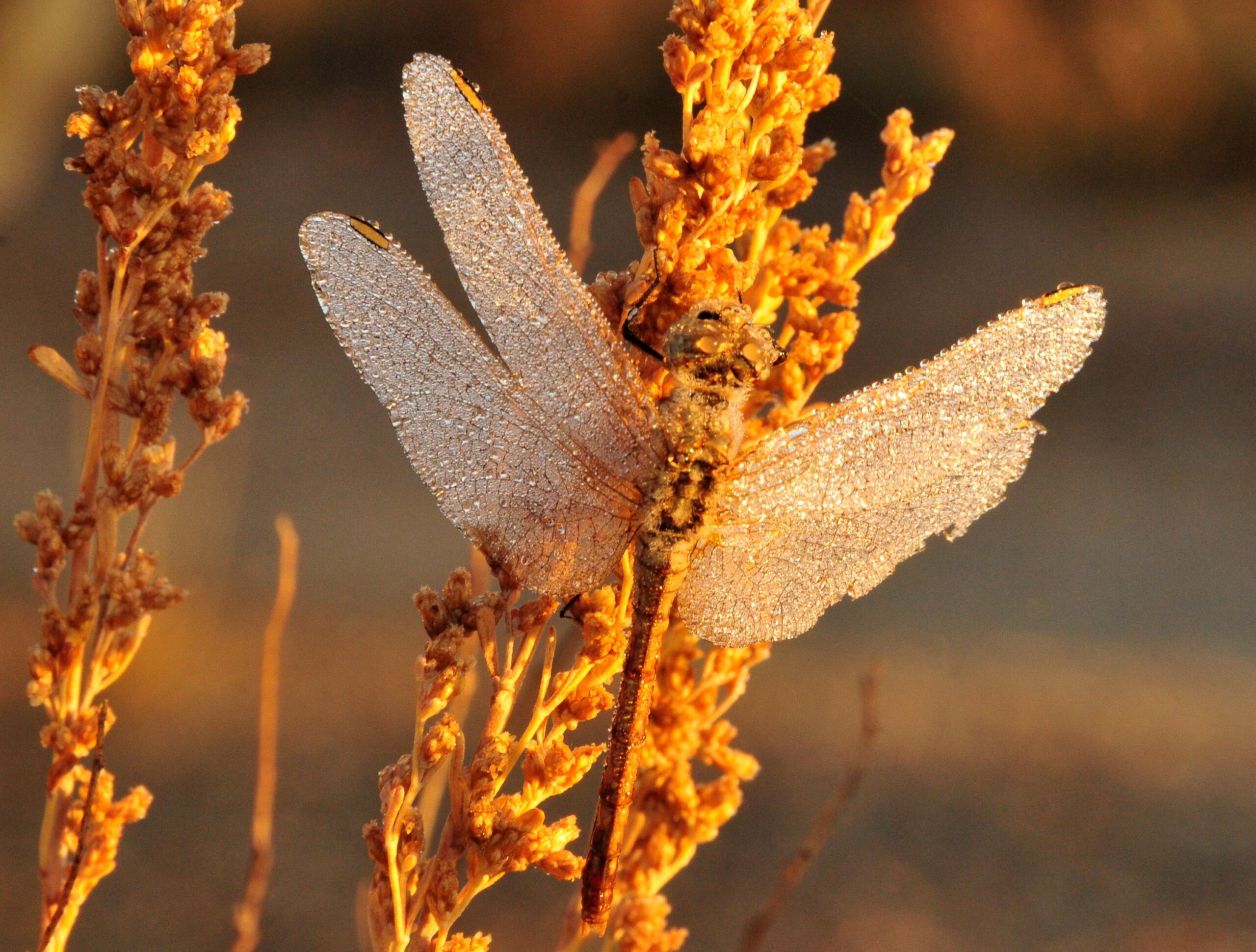
A meadowhawk dragonfly, with dew on its wings, rests on a big sagebrush seedstalk
Courtesy US FWS, Tom Koerner, Photographer
A meadowhawk dragonfly, with dew on its wings, rests on a big sagebrush seedstalk
Courtesy US FWS, Tom Koerner, Photographer
Our lovely fall cricket symphony finally went silent as temperatures dropped, an indicator that winter isn’t far off.

I must confess that I have a love/hate relationship with insects. Early years in Michigan exposed my tender flesh to a full suite of biters and stingers- black flies, deer flies, no-see-ums, gnats, horse flies, and clouds of mosquitos that would darken the sky! My dear farmer friend succumbed to a swarm of yellow jackets he angered while driving his tractor through a field, and I’m aware of insect vectors that inoculate us with wretched diseases- from the plague to malaria. Aside from this house of horrors, how often do we humans really appreciate these amazing beings?

Throughout history, insects have markedly shaped human culture—from serving as valuable sources of food, pigment, and fiber, to inspiring our greatest feats of engineering, art, and design. We have much to learn from their abundant wisdom.

They fuel life on Earth through their roles as pollinators, predators, and prey. Insects serve as foundational elements in almost every terrestrial environment, acting as both consumers and providers of essential services. Their presence ensures that energy flows efficiently through various trophic levels, supporting biodiversity from the smallest microorganisms to large vertebrates.
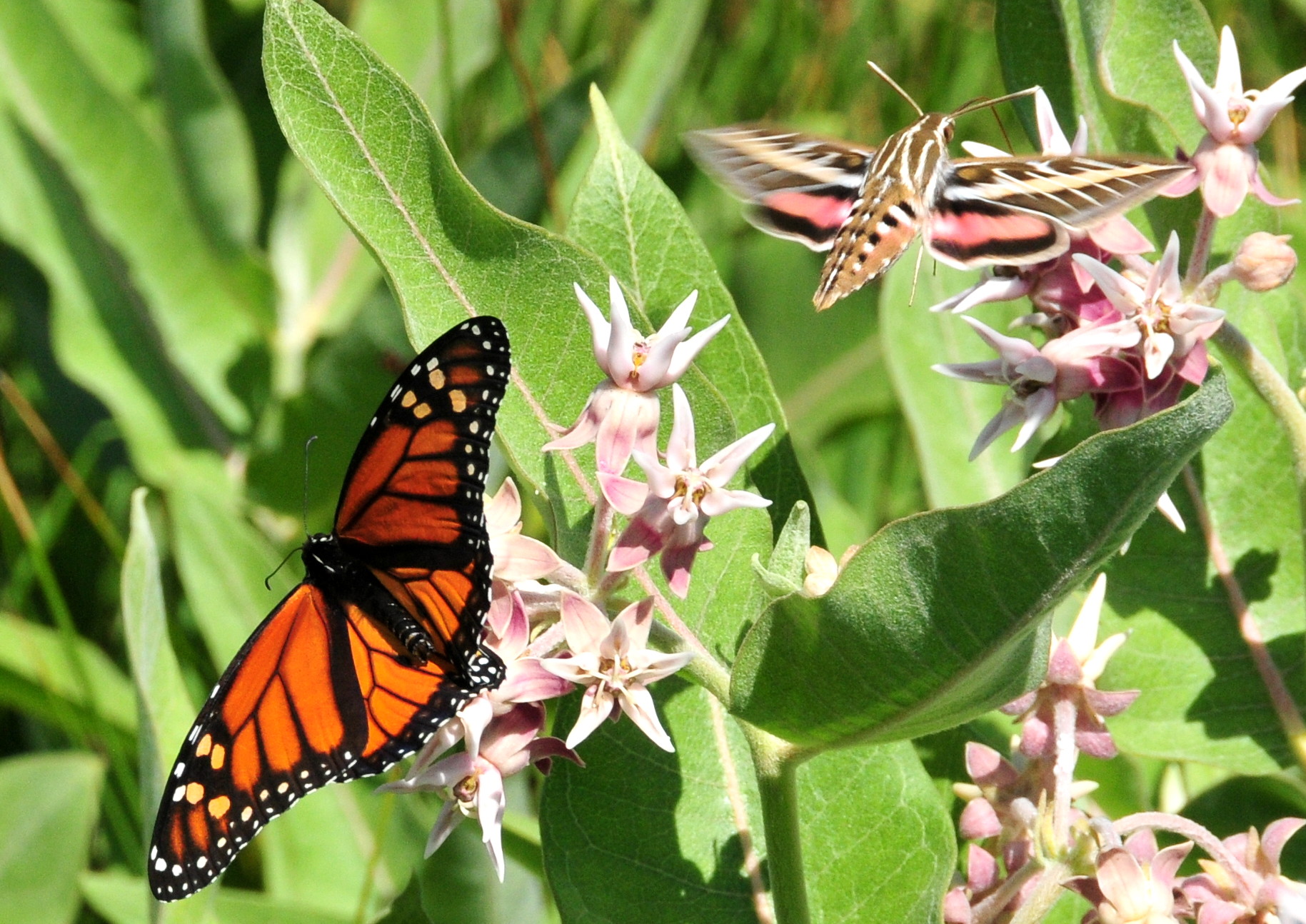
Hummingbird Moth and Monarch 
Butterfly on Showy Milkweed
Courtesy US FWS, Tom Koerner, Photographer
Hummingbird Moth and Monarch
Butterfly on Showy Milkweed
Courtesy US FWS, Tom Koerner, Photographer
As pollinators, insects facilitate the reproduction of more than 75% of crop species and 85% of wild flowers. Many species provide natural biological control by preying on or parasitizing other insects that would otherwise destroy crops or local vegetation. Beyond their daily roles in nutrient cycling, insects act as guardians of environmental health. Their sensitivity to pollutants and habitat shifts makes them invaluable tools for assessing the overall resilience of natural landscapes.

Approximately 90 percent of bird species rely on insects for food at some point in their lives. Terrestrial birds that depend on insects have experienced a dramatic decline over the last 50 years. When insect availability drops, birds often struggle to meet the energy demands required for their daily survival and the strenuous needs of raising offspring.

Aerial insectivorous birds have seen a 32 percent population reduction since 1970, with groups like swifts, swallows and nightjars struggling as their primary food source vanishes. Because they rely almost exclusively on capturing insects in flight, they are uniquely sensitive to the health of the broader invertebrate community. Their inability to switch prey types effectively means that even short-term drops in insect activity can have catastrophic effects on nestling growth and adult survival.

Migratory birds face a compounded crisis from their breeding territories to their nonbreeding grounds and essential stopover points. Long distance species are particularly hard hit, as they often arrive after the short, critical peak in insect availability, leading to reproductive failure that residents and short-distance migrants avoid. Spring arrival dates often fail to align with the peak emergence of essential insect prey, a mismatch increasingly caused by shifting seasonal temperatures.

Industrial agriculture replacing vast swaths of biologically diverse natural systems with a few plant species and use of pesticides combined with extreme weather are primary causes in insect loss

This is Jack Greene for Bridgerland Audubon Society and I’m wild about Utah’s bugs, even the biting ones!

Credits:
Picture: Courtesy US FWS, Tom Koerner, Photographer
Audio: Courtesy & © J. Chase and K.W. Baldwin and Anderson, Howe, and Wakeman
Voice & Text: Jack Greene, Bridgerland Audubon, https://bridgerlandaudubon.org/
Additional Reading: Lyle W Bingham, Bridgerland Audubon Society, https://bridgerlandaudubon.org/

Additional Reading:

Jack Greene’s Postings on Wild About Utah, https://wildaboututah.org/author/jack/

The following references were accurate as of the date of publication or most recent update.

Utah Water Week

Join us for Utah Water Week We all live in a watershed. Help protect our water!Join us for Utah Water Week
We all live in a watershed. Help protect our water!


Utah Water Week runs from May 7th through the 13th, and is a perfect time of year for each of us to consider the importance of water in our lives.

In a dry state like Utah, where irrigation is important for maintaining our crops, gardens and lawns, we tend to focus on how much water we have. It’s easy to forget that the quality of this water will actually determine how (or if) we can use it.

We all value clean water to drink and use around the home, but those aren’t the only reasons we need clean water. Swimming in our lakes and reservoirs is only safe if the water is free of pathogens. Irrigation water with high salt concentrations is unusable. Fish and other aquatic life are the most dependent on clean water, needing water that is the right temperature, has sufficient dissolved oxygen and is free of toxins and other pollutants.

We’ve made great progress in this country in reducing water pollution – particularly in treating municipal and industrial waste. We’re still improving those treatment methods but the biggest problems these days are water pollutants that don’t come from a single source.

Fertilizers, pesticides, personal care products, and motor oil are just a few examples of substances that can cause serious harm when they reach our waters. Excess fertilizers that are washed into our lakes contribute to floating rafts of harmful algae, green cloudy water, and low oxygen levels. A single quart of motor oil can pollute 250,000 gallons of water. Improper disposal of medicines and personal care products are literally medicating our waters.
It’s always cheaper and easier to prevent water pollution than to clean up dirty water. Luckily, there’s a lot of pretty simple and straightforward actions we can all take to help keep our waters clean. In fact, a lot of Utahns are already helping out.

Homeowners are using more environmentally-friendly products and are composting their kitchen waste rather than sending it down the garbage disposal to a WWTP or a septic system. Gardeners and farmers are taking care to use no more fertilizer than their plants need and are implementing new irrigation methods that reduce runoff into streams and lakes. Pet owners are picking up after their pets and disposing of the waste properly. Pharmacies are partnering with our municipal offices so we can return medicines for proper disposal rather than dumping them down the drain. Municipalities are keeping their roads clean and finding innovative ways to capture and treat storm water. Farmers are reducing polluted runoff from animal operations, and across the state landowners and land managers are restoring streamside vegetation that helps intercept pollutants.

This water week, take a look around you and think of ways you can help keep our water pollutant-free. Together, our small actions will have big impacts on keeping our water clean.
For more ideas, visit our website: extension.usu.edu/waterquality.

Remember…..water is life and quality matters.

This is Eli Robinson from USU’s Water Quality Extension program…

Credits:

Images: Courtesy Utah Water Week, https://extension.usu.edu/utahwaterwatch/Calendarandevents/waterweek
Text:     Eli Robinson

For Information On Tagging:

Utah Water Week, USU Water Quality Extension Program, 2017, https://extension.usu.edu/utahwaterwatch/Calendarandevents/waterweek

USU Water Quality Extension Program, 2017, https://extension.usu.edu/waterquality/

USU Water Quality Extension Program, 2017, https://extension.usu.edu/waterquality/protect_your_water

Water Quality, The USGS Water Science School, USGS, https://water.usgs.gov/edu/waterquality.html