A Trip to the Utah Museum of Natural History

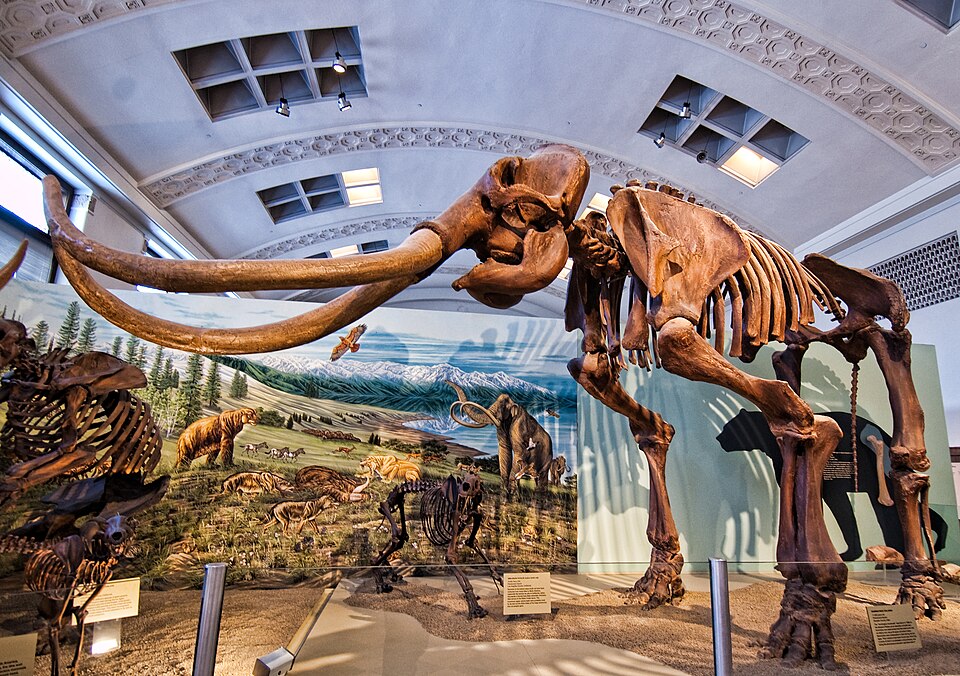
Mounted cast of a Columbian mammoth (Mammuthus columbi) in the old building of the "Utah Museum of Natural History" Courtesy Wikimedia, Brett Neilson, Photographer, Licensed under the Creative Commons, https://en.wikipedia.org/wiki/en:Creative_Commons, Attribution 2.0 Generic license, https://creativecommons.org/licenses/by/2.0/deed.en
Mounted cast of a Columbian mammoth (Mammuthus columbi) in the old building of the “Utah Museum of Natural History”
Courtesy Wikimedia, Brett Neilson, Photographer
Licensed under the Creative Commons Attribution 2.0 Generic license.
When I opened the door to the special exhibit on the Ice Age at Salt Lake’s Natural History Museum, I found myself face to face with the long, looping tusks of a wooly mammoth. Once I caught my breath, I could see the mammoth’s head was painted on a piece of wood, but the tusks were 3 dimensional and towered above me – about 10 feet in the air and stretching out to about 9 feet. This magnificent mammal, now extinct, was well adapted to living on an icy planet. Its hair grew as long as 35 inches and its skin was slightly over 3 inches thick. By comparison, the museum pointed out, the modern Asian elephant has little or no hair and its skin is less than an inch thick.

The special ice age exhibit has left Salt Lake, but a visit to the Museum of Natural History is always a treat. Its skeleton of a mammoth clearly conveys a feeling for its massive size. Also looking huge is their skeleton of a giant sloth, standing 8 feet high and sporting a hand claw over 12 inches long. Back when Thomas Jefferson was president of the United States, some explorers found a similar claw in a cave in Virginia and sent it to him.. Jefferson quickly sent off an urgent message to Lewis and Clark on their trek west to keep an eye out for this fiercesome beast. As it turns out, the giant sloth was extinct and had just been a vegetarian who lived mostly in the trees. The giant sloth used the claw to pull tree branches closer so he could eat the leaves.

If you walk down the museum ramp leading away from the giant sloth, you leave the Ice Age and go deeper back in time to the Age of Dinosaurs. You pass by a prehistoric crocodile and a giant birdlike creature standing on large, three toed claw feet. This bird would run down its prey at speeds as high as 30 mph. Soon you arrive at a section of glass flooring, exposing a massive jumble of bones underfoot. You have arrived at the exhibit on Utah’s unique Cleveland-Lloyd quarry. In the early 1900’s, some cowboys and sheepherders noticed some large bones sticking out of a hillside about 30 miles away from the current town of Price. The scientific community was alerted, and digging at the site began. To this day, over 10,000 bones have been unearthed, and the majority identified as belonging to predator dinosaurs. But we still don’t know how or why this massive bone yard was created.

Four paleontologists have stepped forward and offered their best guess as to why so many dinosaur bones are here. One by one these four men appear on video screens along the museum path. The first one says this was once a watering hole. The dinosaurs came to drink, but the watering hole dried up. The dinosaurs died of thirst.

Oh no, said the second. There was actually too much water. The mud surrounding the watering hole became so deep the dinosaurs got stuck in the mud.

The third agreed that the dinosaurs came to the site to drink. But somehow the water had become contaminated. The dinosaurs drank and died of poison.

The fourth simply said the dinosaurs had died somewhere else, and the bones had been washed down to this site.

It’s still a mystery waiting to be solved.

In the meantime, the work of discovery goes on. Fossils are being found, and the promising ones are wrapped in plaster casts and sent to the lab. You can look in the lab windows as you exit the museum. A crew of staff and volunteers in white lab coats are picking up small hammers, picks and dentist drills. Slowly, carefully, they are cutting back the layers of time.

The answer to the question about the origin of Utah’s dinosaur bone yard seems to still lie just around the corner.

This is Mary Heers and I’m Wild About Utah

Credits:
Photos: Courtesy Wikimedia and US Bureau of Land Management
Featured Audio: Courtesy & Copyright © Anderson, Howe, and Wakeman Utah Public Radio upr.org
Text: Mary Heers, https://cca.usu.edu/files/awards/art-and-mary-heers-citation.pdf
Additional Reading: Lyle Bingham, https://bridgerlandaudubon.org/

Additional Reading

Wild About Utah, Mary Heers’ Wild About Utah Postings

Natural History Museum of Utah, University of Utah, http://nhmu.utah.edu
301 Wakara Way, Salt Lake City, UT 84108

Cleveland Lloyd Dinosaur Quarry, US Bureau of Land Management (BLM), US Department of the Interior, https://www.blm.gov/visit/cleveland-lloyd-dinosaur-quarry

Cleveland Lloyd Dinosaur Quarry, Jurassic National Monument, US Bureau of Land Management (BLM), US Department of the Interior, https://www.blm.gov/programs/national-conservation-lands/utah/jurassic-national-monument/photos

Cleveland Lloyd Dinosaur Quarry: Paleontological Resource Management, https://yout-ube.com/watch?v=YotsxDLDMSE

Cleveland Lloyd Dinosaur Quarry: The Interpretive Center, US Bureau of Land Management (BLM), US Department of the Interior, https://yout-ube.com/watch?v=YotsxDLDMSE
Utah at the Smithsonian

Utah at the Smithsonian: Click for a larger view of Diplodicus, Courtesy NMNH.si.edu, Michael Brett Surman, Photographer
Diplodicus
Courtesy NMNH.si.edu
Michael Brett Surman, Photographer

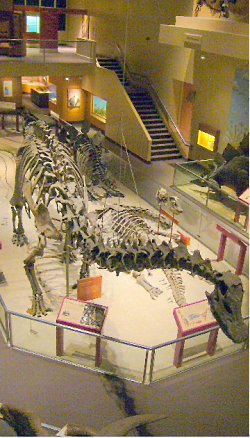
Utah at the Smithsonian: Camarasaurus, Camarasaurus lentus (Marsh), Courtesy https://www.nmnh.si.edu/, Michael Brett Surman, PhotographerCamarasaurus
Camarasaurus lentus (Marsh)

Courtesy NMNH.si.edu
Michael Brett Surman, Photographer

Utah at the Smithsonian: Smithsonian Butte, Public Domain, Courtesy National Scenic Byways Online, https://www.byways.org/ and Bureau of Land Management, John Smith, Photographer

Smithsonian Butte
Public Domain, Courtesy
National Scenic Byways Online and Bureau of Land Management.
John Smith, Photographer

Hi, I’m Holly Strand from the Quinney College of Natural Resources at Utah State University.

You don’t have to be in Utah to appreciate some of its treasures. Examples of Utah natural history can be found in museums around the globe. The last time I was in Washington DC, I explored the collections of the Smithsonian Museum of Natural History. There turned out to be a whole lot more Utah stuff than I ever imagined.

Many would consider dinosaurs to be our most illustrious museum export. Indeed a 90-foot long Utah diplodocus is the centerpiece of the museum’s Dinosaur Hall.

Not far away is an amazingly intact Camarasaurus from Utah’s Dinosaur National Monument. Its fossilized bones remained in position for over 150 million years. So beautifully and naturally preserved, it still rests on part of the sandstone block in which it was found.

Only a tiny fraction of the Museum’s collections are on display. The vast majority of its 126 million specimens are in drawers, vaults, and freezers. These items are meticulously cataloged and preserved and they serve as primary reference materials for researchers around the world. I found many 1000s of cataloged items for Utah plants, mammals and birds. Less abundant, there are still 100s of records representing specimens of our amphibians, reptiles and fish.

If you poke around in the collections databases you are sure to find something of interest. I found records of some 300 Utah plant specimens collected by Lester Frank Ward, a botanist who worked for John Wesley Powell on his western expeditions. Powell also contributed to the Smithsonian’s collection of flora and fauna. I found 8 bison skulls and one grass species, but there is probably more.

There is the skull and partial skeleton of a grizzly killed in Logan Canyon. Not Old Ephraim–his skull is here in Utah–but another one killed the year before.

In 1950, a meteorite struck a driveway just a few feet from a Box Elder County woman. A few years later, the meteorite was donated to the Smithsonian. But not before it was enhanced by local schoolchildren using crayons of various colors.

The museum’s mineral collection contains 1000s of Utah specimen, some with very strange names : I found Beaverite, Rabbitite Englishite, Coffinite, Psuedowavellite, Cristobalite, Alunite, Apatite and even Bieberite. As in Justin, I guess.

Anyway, you get the idea. The Smithsonian collections form the largest, most comprehensive natural history collection in the world. And Utah is a prime contributor of both collection items and the stories behind them.

By the way, not only are Utah things in the Smithsonian, but there are also Smithsonian things in Utah.

For example, the Henry Mountains in south central Utah were named after the first Secretary of the Smithsonian Institution Joseph Henry.

Another example is Smithsonite–or zinc carbonate–which was first identified by James Smithson in 1802. The very same Smithson left his fortune to the United States government, directing that it be used to create the Smithsonian Institution. The mineral Smithsonite has been found in Tooele and Washington Counties.

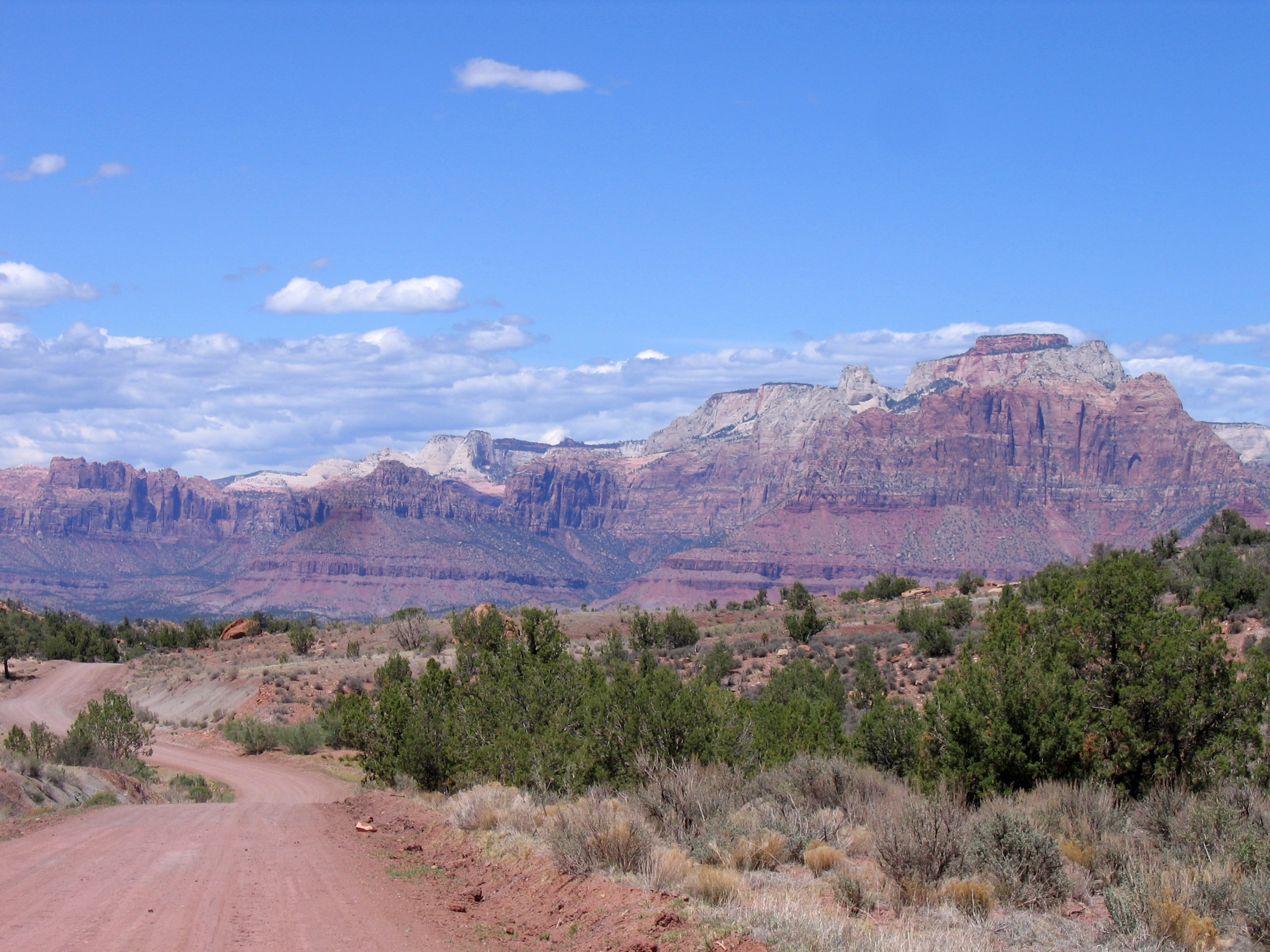
Lastly, there’s Smithsonian Butte. When the Powell Expedition traveled through the Zion area, geologist Edward Dutton named the Butte after the expedition’s most generous sponsor. Smithsonian Butte Road is a designated national backcountry byway, crossing over the Vermilion cliffs between Utah 9 and Utah 59.

For pictures, sources and links, go to www.Wildaboututah.org

For Wild About Utah, I’m Holly Strand.

Credits:

Images: Information and photos provided with the permission of the National Museum of Natural History, Smithsonian Institution, 10th and Constitution Ave. N.W., Washington, DC 20560-0193. (https://www.nmnh.si.edu/)
Smithsonian Butte, Public Domain, Courtesy National Scenic Byways Online and Bureau of Land Management., John Smith, Photographer
Text: Holly Strand

Sources & Additional Reading


Panoramic Virtual Tour of the Smithsonian National Museum of Natural History (NMNH). Navigate or go directly to the Dinosaur Hall to see the diplodocus from Utah. (Fossils: Dinosaur 2)
https://www.mnh.si.edu/panoramas/index.html

Dinosaur page of the NMNH.https://paleobiology.si.edu/dinosaurs/index.html

Research and Collections of the Smithsonian NMNH.
https://www.mnh.si.edu/rc/

Access to Smithsonian NMNH Museum Collection Records databases
https://collections.mnh.si.edu/search/

Smithsonite, Museum of Natural History, Smithsonian Institute, https://www.mnh.si.edu/onehundredyears/featured_objects/smithsonite.html