
Courtesy Pixabay, ElseMargariet, Contributor
Courtesy Pixabay, Sylvia Emilie, Contributor
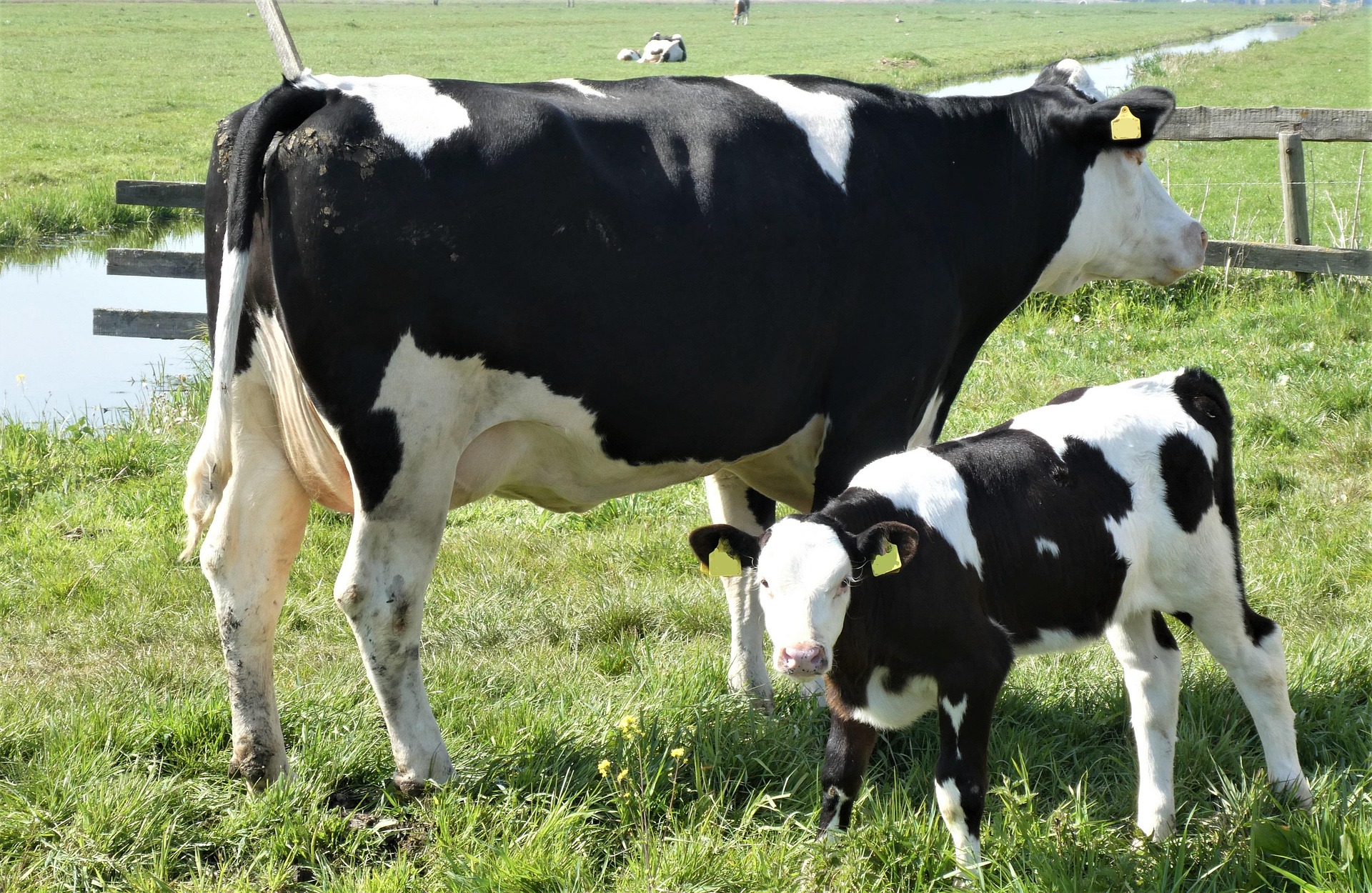
When the calves saw us coming, holding bottles full of warm milk, they let out what sounded to me like joyous noise. And once the calves got hold of the three-inch nipples, they sucked with so much enthusiasm that I had a hard time hanging on to the bottle.
I found the whole experience deeply satisfying, and even a bit romantic. In no time I found my own job feeding calves and doing the morning milking at a small dairy farm in Benson.
By the 1980s most dairies came equipped with vacuum-powered suction cups that imitated the squeeze of a hand milker. My job was to let in five cows on each side of what we now call the milking parlor, and tug on the rope that drops some tasty grain into each cow’s feed bowl.Then I washed the teats with the warm water hose and attached the suction cups.
All the cows had names, and I soon learned them by their udders. This made it a bit awkward later when I had to go find a cow that the vet wanted to see. I had to walk through the herd, bent over the waste, peeking under the cows until I found the right udder.
All this was over 40 years ago, so you can imagine how I perked up when I heard that some of the valley dairies were switching to robot milkers. I jumped at the chance to visit USU’s new robotic setup.
Each of the cows at the USU dairy farm was wearing an ID necklace, so when she stepped into the milking chute, the robot knew exactly who was there. Immediately, the precise amount of grain she was allotted dropped into the feed bowl.
The robot moved under her udder and went to work. With the aid of its camera the robot scrubbed each teat between its wet rotating bristle brushes. The robot then realigned itself and raised a suction cup up and attached to the teat. Three more realignments, and soon all four suction cups were attached and milking the cow.
The robot was reporting its progress on a screen diagram documenting the exact amount of milk coming out of each teat. The computer was clicking along, not only reporting the cow’s performance, but also comparing it to the previous day’s. Any unexpected measurements, and the computer shot off a message to the manager’s computer telling him he better check on that cow.
I must admit I was a bit dazzled by the efficiency of the whole set up. Looking around the milking chute, I could see five cows milling around the entrance to the chute patiently waiting their turn to get milked.
Most cows voluntarily came through the chute three times a day. The top cow was currently giving 17 gallons of milk a day.
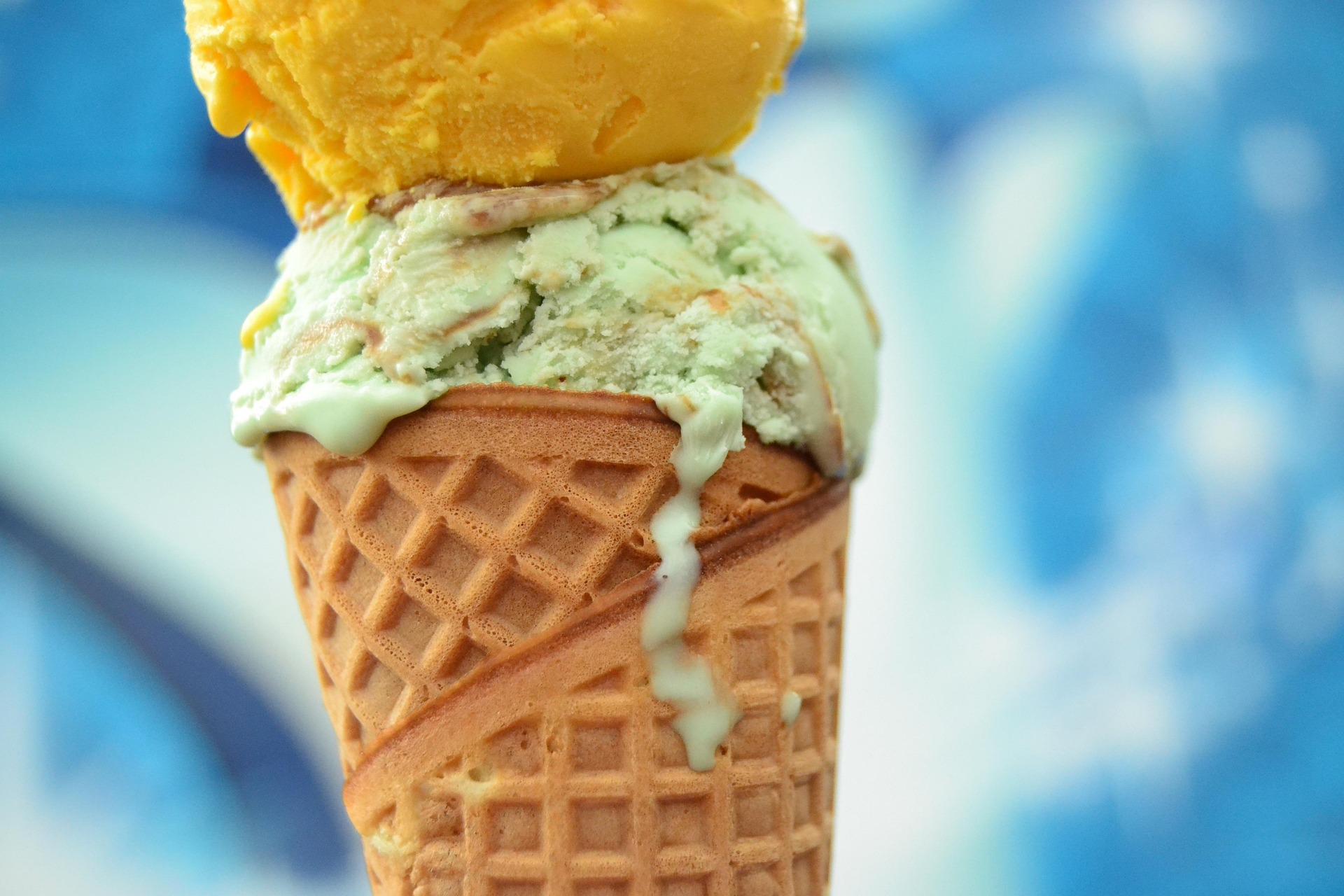
Every Monday morning, Aggie Ice Cream sends its milk truck to the USU Dairy to pick up its weekly allotment of 9000 pounds of milk.
For those of us whose happy place is Aggie Ice Cream, we now know that the journey of milk from the cow to the ice cream cone begins out on the highway near Wellsville, where two robots are milking 45 Jerseys and 65 Holsteins.
This is Mary Hears, and I’m wild about Utah.
Credits:
Images Courtesy Pixabay, https://pixabay.com/photos/ice-cream-summer-cornet-cone-scoop-770994/
https://pixabay.com/photos/calf-cow-moederzorg-cows-meadow-5047986/
Featured Audio: Courtesy & Copyright © Freesound, https://freesound.org/people/spurioustransients/sounds/513565/?#comments & Anderson, Howe & Wakeman,
Text: Mary Heers, https://cca.usu.edu/files/awards/art-and-mary-heers-citation.pdf
Additional Reading: Lyle Bingham, https://bridgerlandaudubon.org/
Additional Reading
Wild About Utah, Mary Heers’ Postings
Aggie Ice Cream, https://www.usu.edu/aggieicecream/
Teichert, Bronson, Dairy Robotics and Economics: New Milking Barn at USU Changes More Than Equipment,S.J. & Jessie E. Quinney College of Agriculture & Natural Resources, Utah State University, https://qanr.usu.edu/cultivate/spring18/dairy-robotics
From Cow to Cone: Utah State University, Holstein Association USA, Inc.