Symbiosis in the Desert

Summer temperatures in the Red Cliffs Desert Reserve may often exceed 100 degrees with only a 15 degree drop at night. This is not uncommon in this portion of the Mojave Desert. Over the millennia, amazing adaptations have been made by plants and animal alike to enhance their survival here. Anatomical, physiological and behavioral adaptations are on display every day. Some are quite obvious like cacti, whose leaves have been reduced to spines. What is not as obvious are the remarkable symbiotic relationships that have evolved to enhance survival in these extreme conditions

A symbiotic relationship is best defined as two organisms living together where one or both benefit from the relationship and neither is harmed
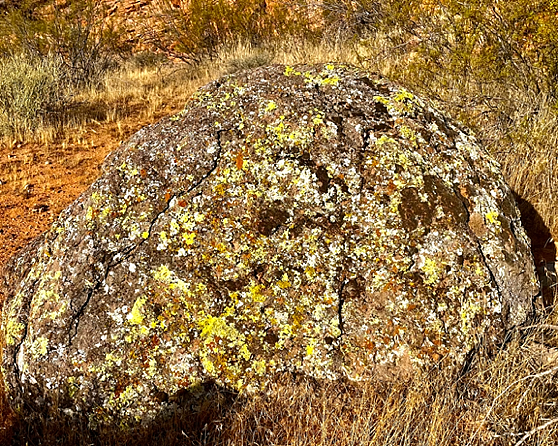
Lichen on Rock, Courtesy & Copyright Marshall Topham, Photographer
Lichen on Rock
Courtesy & Copyright Marshall Topham, Photographer
Anyone who has hiked in the deserts of Utah has encountered rocks splashed with a dazzling display of every color in the rainbow. We call them Lichens, but you may not be aware that they are examples of a mutualistic symbiosis where two organisms live together and both benefits from the relationship. Lichens are actually a partnership between a fungus and a photosynthetic organism, usually an alga or cyanobacterium. The fungus provides a protective structure and absorbs water and minerals from rain, dew, or dust. They also offer shelter from harsh desert conditions such as intense sunlight and temperature extremes. The alga or cyanobacterium are the source of color as they contain Chlorophyl, Carotenoids, Anthraquinones, Uric acid and Melanin’s. They produce food by photosynthesis, supplying life sustaining energy for both organisms

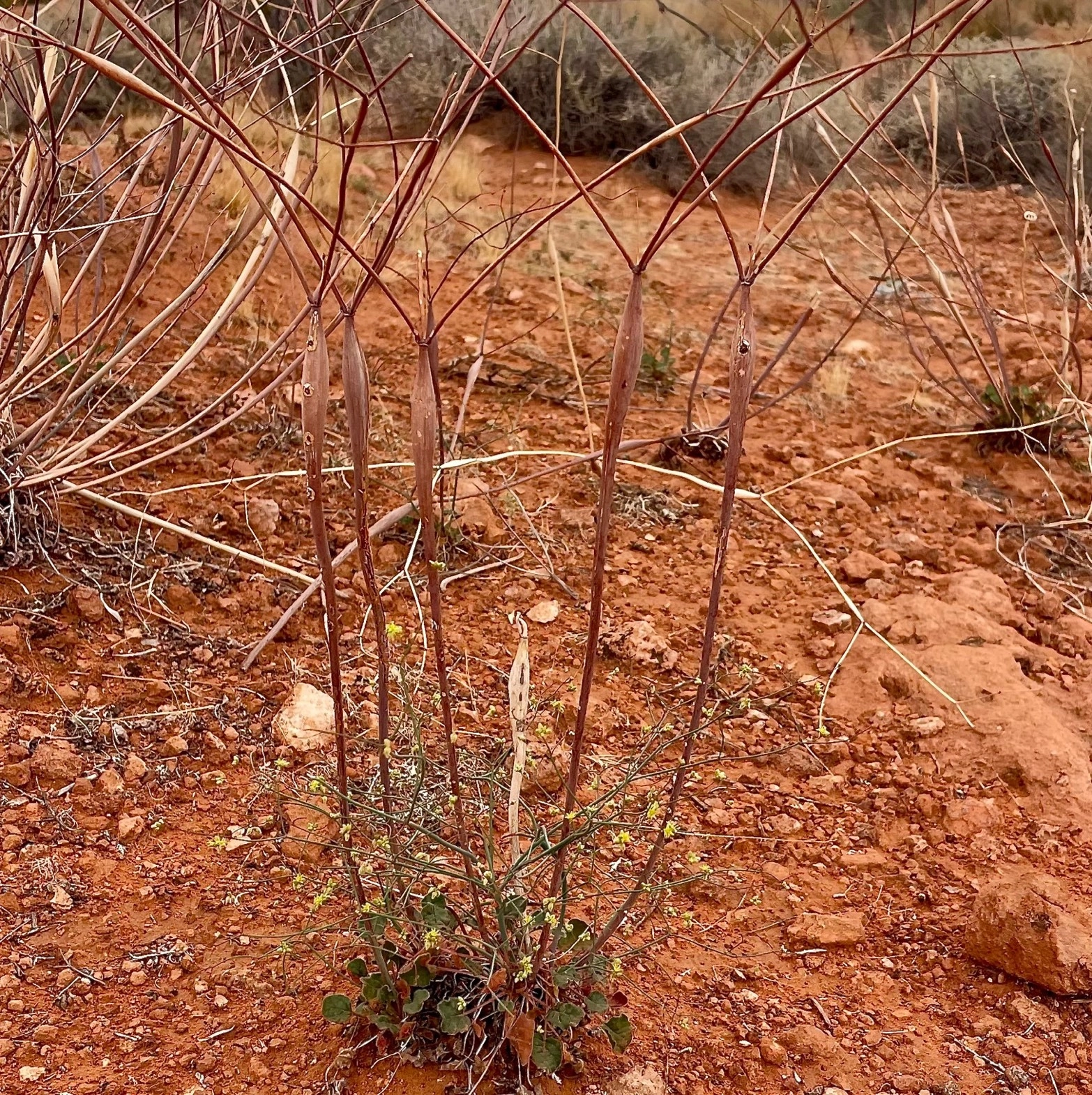
Desert Trumpet with Wasp Exit Holes, Courtesy & Copyright Marshall Topham, Photographer
Desert Trumpet with Wasp Exit Holes
Courtesy & Copyright Marshall Topham, Photographer
Another symbiotic relationship known as commensalisms, where one organism is benefited and the other is neither harmed or benefited, can be found associated with Desert Trumpet plants. These tall slender plants have hollow and dynamic inflated stems. The inflated portions of the stems are penetrated by Cynipidae wasps as they lay their eggs inside the hollow cavity where their larvae develop in a protected environment. The resulting hole left when the larvae emerge as adults, allows access inside the chamber, sometimes for years. a student of mine cataloged over 20 species of insects, spiders and mites that were secondary inhabitants of the hollow stems.

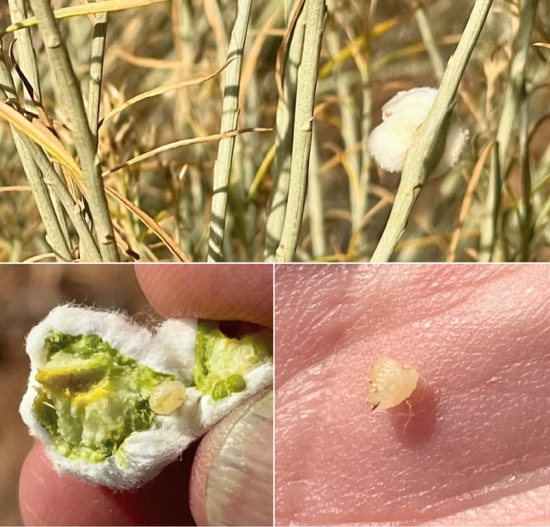
Rabbit Brush Gall, Opened Below Showing Occupant, Courtesy & Copyright Marshall Topham, Photographer
Rabbit Brush Gall
Opened Below Showing Occupant
Courtesy & Copyright Marshall Topham, Photographer

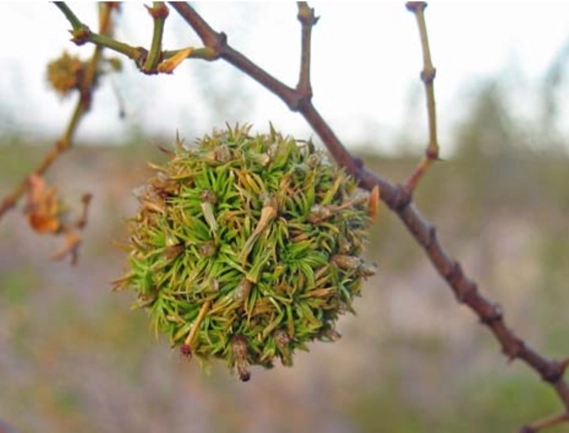
Creosote Gall, Courtesy & Copyright Marshall Topham, Photographer Creosote Gall
Courtesy & Copyright Marshall Topham, Photographer

Perhaps the most interesting of all symbiotic relationships found in the desert is the creation of insect galls. Galls are remarkable cancerous like plant growths, produced as a reaction to chemicals injected by insects. This is most commonly initiated by gall wasps, midges, and aphids. Galls come in all shapes, sizes and architectural design and serve as a protective capsule for insects eggs and developing larvae. Some look like cotton balls others resemble land mines or satellites or simple cupping protuberances on a leaf. These galls provide both food and shelter for the insect’s developing larvae. Despite the harshness of arid landscapes, deserts host a surprising diversity of galls. Each insect species typically induces a highly specific gall on a particular host plant. Chemicals secreted by the insect or its larvae manipulate the plant’s hormonal pathways, redirecting growth to form a unique structure that supports the insect’s life cycle. I am not averse to stopping and dissecting galls to examine the larva inside. I am occasionally surprised to find secondary inhabitants such as spiders, mites and the like. While insects benefit from the galls protection the host plants generally do not seem to Any significant harm.

I’m professor Marshall Topham and I’m Wild about Utah’s Mojave Desert.

Credits:

Images Courtesy & Copyright Marshall Topham, Photographer
Featured Audio: Courtesy & © Bob Holmes, Composer, Hugh Jones, Producer, Rubber Rodeo-Before I Go Away, 1984, https://www.discogs.com/release/9698183-Rubber-Rodeo-Scenic-Views
Text: Marshall Topham, https://ees.utahtech.edu/faculty-staff/
Additional Reading: Lyle Bingham, https://bridgerlandaudubon.org/

Additional Reading

Wild About Utah pieces by Marshall Topham https://wildaboututah.org/author/marshall-topham/

Cane, Jim & Kervin, Linda, Gall Insects, Wild About Utah, January 13, 2011, https://wildaboututah.org/gall-insects/

“Sagebrush is an important member of an ecosystem that helps support many birds, reptiles, amphibians, and mammals, as well as an abundance of insects and microbes. One study found nearly 300 arthropod species directly living on just a few plants including- 72 spider, 237 insect, 42 of which were gall-forming, amongst many other species.”
Greene, Jack, Sage Steppe, Wild About Utah, June 15, 2015, https://wildaboututah.org/sage-steppe/

“Pests and Potential Problems Some ecotypes of rubber rabbitbrush are infected by stem galls, which are caused by two species of tephritid flies (Aciurina species) (McArthur 1979). There are no reports of negative effects caused by the galls. ”
Rubber Rabbitbrush, NRCS, USDA, https://www.nrcs.usda.gov/plantmaterials/mtpmcpg9696.pdf
A Tale of Green Inspirations

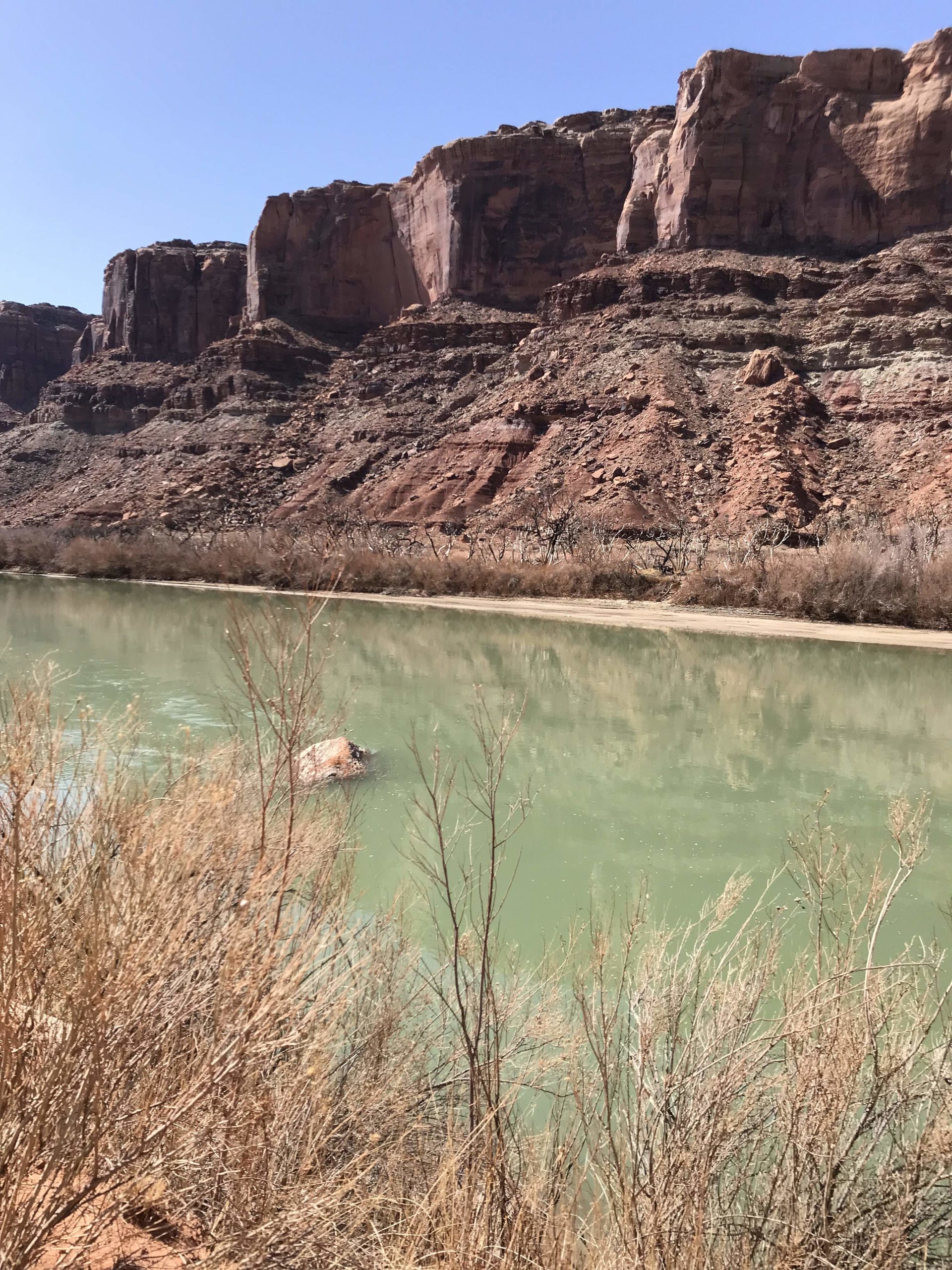
Green River Courtesy & Copyright Shannon Rhodes, Photographer
Green River
Courtesy & Copyright Shannon Rhodes, Photographer

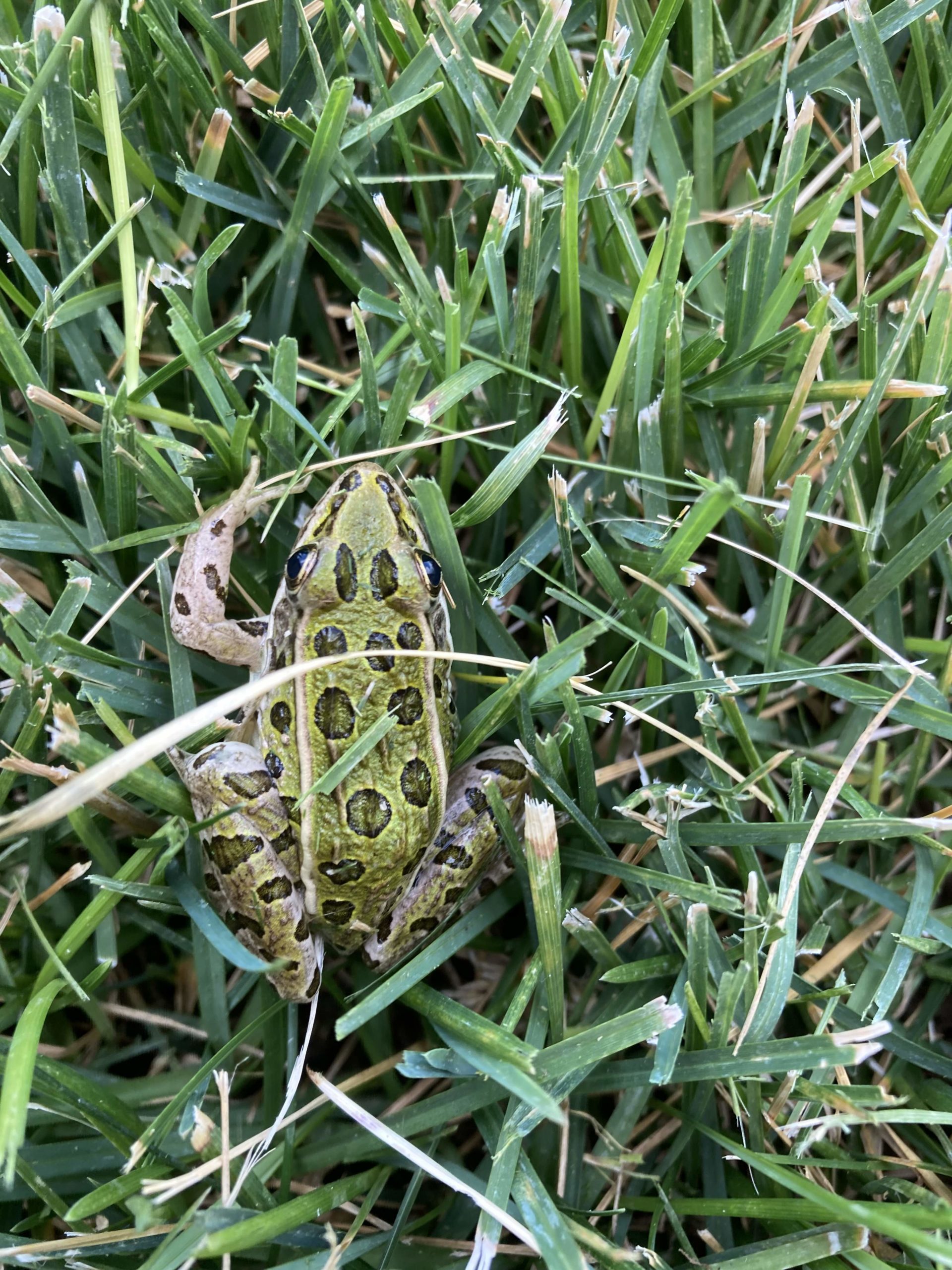
Leopard Frog, Lithobates pipiens Courtesy & Copyright Shannon Rhodes, Photographer Leopard Frog, Lithobates pipiens
Courtesy & Copyright Shannon Rhodes, Photographer

Wolf Lichen, Letharia vulpina Courtesy & Copyright Shannon Rhodes, Photographer Wolf Lichen, Letharia vulpina
Courtesy & Copyright Shannon Rhodes, Photographer

In one of my first childhood books I met a washerwoman hedgehog named Mrs. Tiggy-winkle who lived on a hilltop higher than the clouds that had a spring, peculiar rocks, and mysterious footmarks. Its author had studied and recorded both in words and watercolor detail in her sketchbooks everything from bird eggs and bees to caterpillars and cornflowers to water lilies and Flopsy Mopsy rabbits with naturalist precision.

What if children’s book author Beatrix Potter would have known Utah the way she captured interesting elements of places she visited while on her family holiday outings in the English Lake District, North Wales, and Scotland? I wonder how her mind might have played with our minty Green River, sometimes in Utah’s history known by the names Rio Verde and Seedskeedee. What would she have done with its Gates of Lodore or Desolation Canyon?

Green. Everywhere I look outside I see green. Perhaps that is why green is my favorite color. Nothing stops me in my tracks like chartreuse wolf lichen clinging to the bark of conifer trunks. What stories would Potter spin with that had she wandered through Utah’s forests? It is said that her favorite organism was actually fungi like the Amanita gemmata or jeweled deathcap, so much so that her naked-eye and microscope-enhanced renderings led her to compose an essay about spore germination for the Linnean Society in 1897.

The world knows her best for her Peter Rabbit tale, yet because she was such an observant nature artist, spinning fantastical stories about creatures in the wild and pairing them with companion pencil and watercolor illustrations begs little of the reader in the way of imagination.

Few may know her, though, for her beautiful nature journals. Her entry of a painted lady butterfly, zooming in specifically on the wing scales, or magnified studies of a ground beetle’s leg and elytra reveal hours she spent noticing. I marvel at how long it must have taken her to know amphibian structures and behaviors to craft a tale with such specificity. In “The Tale of Mr. Jeremy Fisher,” she portrays a frog punting like on the River Cam, fishing, and nibbling butterfly sandwiches. She draws him dipping his foot in the pond, swimming, and leaping across the meadow in his tattered macintosh. What would she have imagined the Northern Leopard frog thinking as it zigzagged through my lawn last summer? Why did it have to come from the far-away canal across concrete and road to my home before I noticed its distinctive snoring and clicking croak or learned to appreciate its tenacity?

Potter found equal perfection in “the highest and the lowest in nature,” aware and eager to capture it all with imagination and detail. As our world greens this spring, I hope we take time to sit and sketch the wonders, even if we don’t have the courage to eat “roasted grasshopper with lady-bird sauce.”

I’m Shannon Rhodes, and I’m wild about Utah.

Credits:
Images: Courtesy & Copyright Shannon Rhodes, Photographer
Additional Audio: Courtesy & ©
Text: Shannon Rhodes, Edith Bowen Laboratory School, Utah State University https://edithbowen.usu.edu/
Additional Reading Links: Shannon Rhodes

Additional Reading:

Wild About Utah Posts by Shannon Rhodes https://wildaboututah.org/author/shannon-rhodes/

Drost, Charles. Status of Northern Leopard Frogs in the Southwest. December 15, 2016. https://www.usgs.gov/centers/southwest-biological-science-center/science/status-northern-leopard-frogs-southwest

Larese-Casanova, Mark. The Call of Springtime: Utah’s Frogs and Toads. March 22, 2012. https://wildaboututah.org/the-call-of-springtime-utahs-frogs-and-toads/

Lear, Linda. About Beatrix Potter. 2011. The Beatrix Potter Society. https://beatrixpottersociety.org.uk/about-beatrix/

National Park Service. Northern Leopard Frog. https://www.nps.gov/articles/northern-leopard-frog.htm

Northern Leopard Frogs. Biokids’ Inquiry of Diverse Species. https://www.biokids.umich.edu/critters/Lithobates_pipiens/

Potter, Beatrix. The Tale of Mr. Jeremy Fisher. 1906. https://www.gutenberg.org/files/15077/15077-h/15077-h.htm

Potter, Beatrix. The Tale of Mrs. Tiggy Winkle. 1905. https://www.gutenberg.org/files/15137/15137-h/15137-h.htm

Strand, Holly. Last Blank Spots on the Map. October 29, 2009. https://wildaboututah.org/last-blank-spots-on-the-map/

Thomson, Keith. Beatrix Potter, Conservationist. May-June 2007. https://www.americanscientist.org/article/beatrix-potter-conservationist

Beatrix Potter, Author and Conservationist, Born (1866), Day by Day in Conservation History, Today in Conservation, July 28, 2017, https://todayinconservation.com/2020/04/july-28-beatrix-potter-author-and-conservationist-born-1866/

U.S Department of Agriculture Forest Service. Lichens. https://www.fs.fed.us/wildflowers/beauty/lichens/didyouknow.shtml

Victoria and Albert Museum. Beatrix Potter: Drawn to Nature. 2022. https://www.vam.ac.uk/collections/beatrix-potter

Webb, Roy. Green River. Utah History Encyclopedia. 1994. https://historytogo.utah.gov/green-river/

Wilkinson, Todd. Utah Ushers Its Frogs Toward Oblivion. High Country News. May 27, 1996. https://www.hcn.org/issues/60/1858

Woolley, Ralf R. The Green River and Its Utilization. United States Department of the Interior. 1930. https://pubs.usgs.gov/wsp/0618/report.pdf

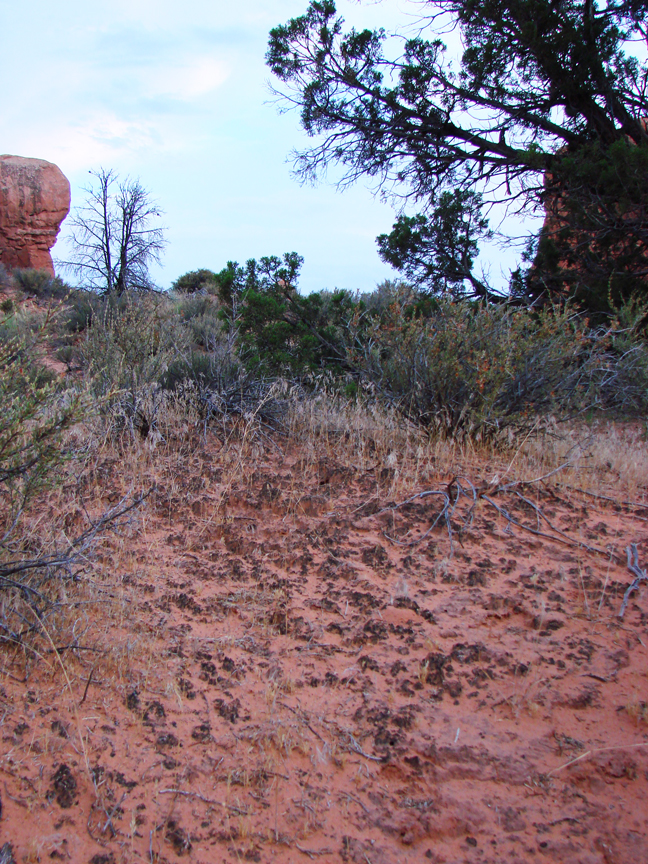
Cryptobiotic Soil Crusts

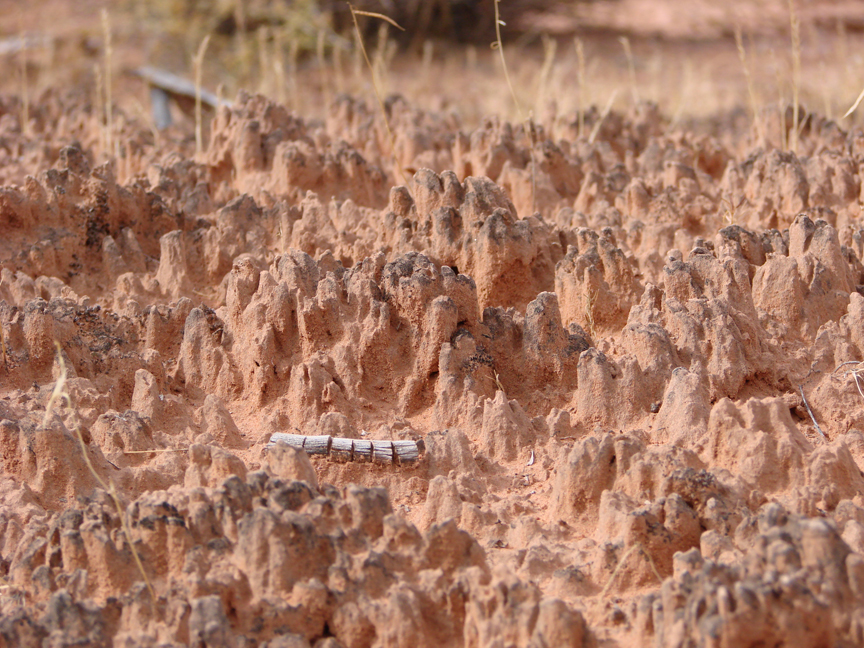
Click to view larger image of Cryptobiotic Soil Crust, Photo Courtesy and Copyright Mark Larese-Casanova
Cryptobiotic Soil Crust
Photo Courtesy & Copyright 2009
Mark Larese-Casanova

Hi, this is Mark Larese-Casanova from the Utah Master Naturalist Program at Utah State University Extension.

Looking out over a Utah desert, we might see relatively few plants- perhaps some sagebrush, maybe a few junipers or Joshua trees, or even some small wildflowers or cacti. What is less noticeable, though, is the living soil crust that holds this entire landscape together. It’s not just sand, but rather an important and vast partnership between bacteria, lichens, algae, and fungi. These soil crusts are often referred to as ‘cryptobiotic’, which means ‘living in suspended animation’. This is a fitting description, considering that water can be so rare in Utah’s deserts.

Cyanobacteria, which is often called blue-green algae, is the backbone of cryptobiotic soil crust. Vast networks of long, microscopic filaments of cyanobacteria and fungi grow in length when they are wet, and leave behind a casing that literally binds the soil together. So, what might otherwise be loose sand not only is less likely to be washed away by water or blown away by wind, but also is able to hold much more water for plants.

Click to view larger image of Cryptobiotic Soil Crust, Photo Courtesy and Copyright Mark Larese-Casanova
Cryptobiotic Soil Crust
Photo Courtesy & Copyright 2009
Mark Larese-Casanova

Cyanobacteria is also extremely useful to desert landscapes for its ability to take Nitrogen out of the air and make it available to plant roots in the soil. Desert soils typically have relatively low nutrients, so this is especially important to desert plants.

In many Utah deserts, cryptobiotic soil crusts can cover up to 70% of the ground surface. Old soil crust can often look like small mountain ranges with black or white peaks inhabited by lichens or mosses. The little valleys in between the tiny mountains of crust are perfect spots for the seeds of desert plants to grow. Over time, the above ground crust can grow up to ten centimeters, or four inches, thick!

However, cryptobiotic soil crust grows at an alarmingly slow rate of about one millimeter per year. So, any soil crust that is disturbed can take a very long time to recover. Depending on the amount of moisture a desert receives, it can take anywhere between 20 and 250 years for soil crust to grow back.

Next time you’re out in the desert, kneel down and have a close look at the telltale peaks and valleys of cryptobiotic soil crust. If you bring a magnifying glass, you just might be able to see some of the lichens and mosses. Be sure to stay on trail, though, and whatever you do, don’t bust that crust!

For Wild About Utah, I’m Mark Larese-Casanova.

Credits:

Images: Courtesy and copyright Mark Larese-Casanova
Text:     Mark Larese-Casanova, Utah Master Naturalist Program at Utah State University Extension.
Additional Reading:

US Department of Interior. 2001. Biological Soil Crusts: Ecology and Management. Bureau of Land Management Technical Reference 1730-2., https://www.blm.gov/nstc/library/pdf/CrustManual.pdf
Rosentreter, R., M. Bowker, and J. Belnap. 2007. A Field Guide to Biological Soil Crusts of Western U.S. Drylands. U.S. Government Printing Office, Denver, Colorado., https://www.soilcrust.org/

Cryptobiotic Soil Crusts

Click to view larger image of Cryptobiotic Soil Crust, Photo Courtesy and Copyright Mark Larese-Casanova
Cryptobiotic Soil Crust
Photo Courtesy & Copyright 2009
Mark Larese-Casanova

Hi, this is Mark Larese-Casanova from the Utah Master Naturalist Program at Utah State University Extension.

Looking out over a Utah desert, we might see relatively few plants- perhaps some sagebrush, maybe a few junipers or Joshua trees, or even some small wildflowers or cacti. What is less noticeable, though, is the living soil crust that holds this entire landscape together. It’s not just sand, but rather an important and vast partnership between bacteria, lichens, algae, and fungi. These soil crusts are often referred to as ‘cryptobiotic’, which means ‘living in suspended animation’. This is a fitting description, considering that water can be so rare in Utah’s deserts.

Cyanobacteria, which is often called blue-green algae, is the backbone of cryptobiotic soil crust. Vast networks of long, microscopic filaments of cyanobacteria and fungi grow in length when they are wet, and leave behind a casing that literally binds the soil together. So, what might otherwise be loose sand not only is less likely to be washed away by water or blown away by wind, but also is able to hold much more water for plants.

Click to view larger image of Cryptobiotic Soil Crust, Photo Courtesy and Copyright Mark Larese-Casanova
Cryptobiotic Soil Crust
Photo Courtesy & Copyright 2009
Mark Larese-Casanova

Cyanobacteria is also extremely useful to desert landscapes for its ability to take Nitrogen out of the air and make it available to plant roots in the soil. Desert soils typically have relatively low nutrients, so this is especially important to desert plants.

In many Utah deserts, cryptobiotic soil crusts can cover up to 70% of the ground surface. Old soil crust can often look like small mountain ranges with black or white peaks inhabited by lichens or mosses. The little valleys in between the tiny mountains of crust are perfect spots for the seeds of desert plants to grow. Over time, the above ground crust can grow up to ten centimeters, or four inches, thick!

However, cryptobiotic soil crust grows at an alarmingly slow rate of about one millimeter per year. So, any soil crust that is disturbed can take a very long time to recover. Depending on the amount of moisture a desert receives, it can take anywhere between 20 and 250 years for soil crust to grow back.

Next time you’re out in the desert, kneel down and have a close look at the telltale peaks and valleys of cryptobiotic soil crust. If you bring a magnifying glass, you just might be able to see some of the lichens and mosses. Be sure to stay on trail, though, and whatever you do, don’t bust that crust!

For Wild About Utah, I’m Mark Larese-Casanova.

Credits:

Images: Courtesy and copyright Mark Larese-Casanova
Text:     Mark Larese-Casanova, Utah Master Naturalist Program at Utah State University Extension.
Additional Reading:

US Department of Interior. 2001. Biological Soil Crusts: Ecology and Management. Bureau of Land Management Technical Reference 1730-2., https://www.blm.gov/nstc/library/pdf/CrustManual.pdf
Rosentreter, R., M. Bowker, and J. Belnap. 2007. A Field Guide to Biological Soil Crusts of Western U.S. Drylands. U.S. Government Printing Office, Denver, Colorado., https://www.soilcrust.org/