A Long Winter’s Nap

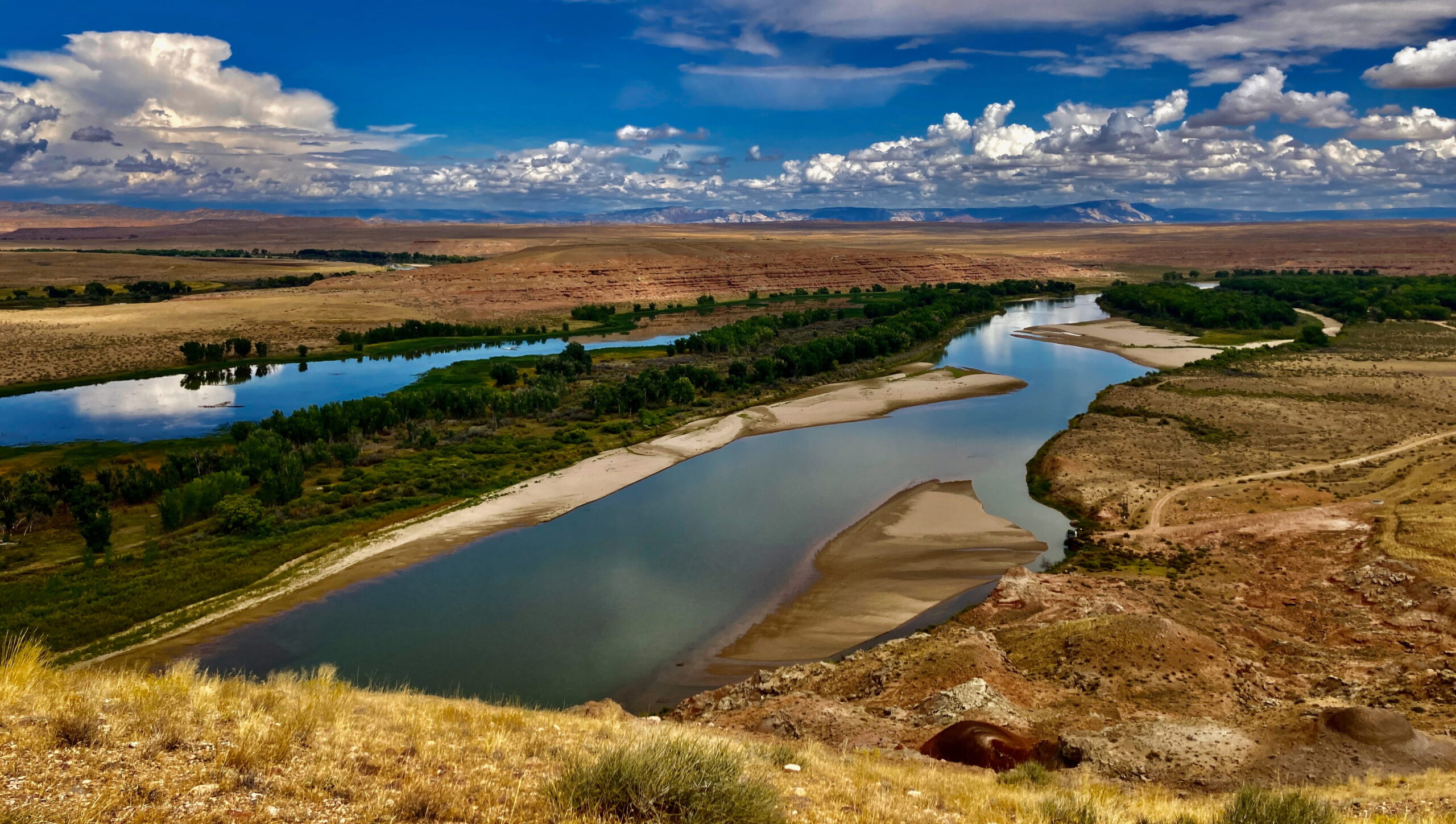
Johnson Bottom on the Green River, Ouray National Wildlife Refuge, Courtesy US Fish & Wildlife Service, John Orlanda, Photographer
Johnson Bottom on the Green River, Ouray National Wildlife Refuge
Courtesy US Fish & Wildlife Service, John Orlanda, Photographer
One of the lesser-known natural, and underappreciated, areas in our state is found 32 miles south of Vernal in eastern Utah: the Ouray National Wildlife Refuge. My wife and I visited last July, hoping to see bird species we don’t find in other parts of the state. We enjoyed the birding, but what made the visit most memorable to me wasn’t birds, but fish.

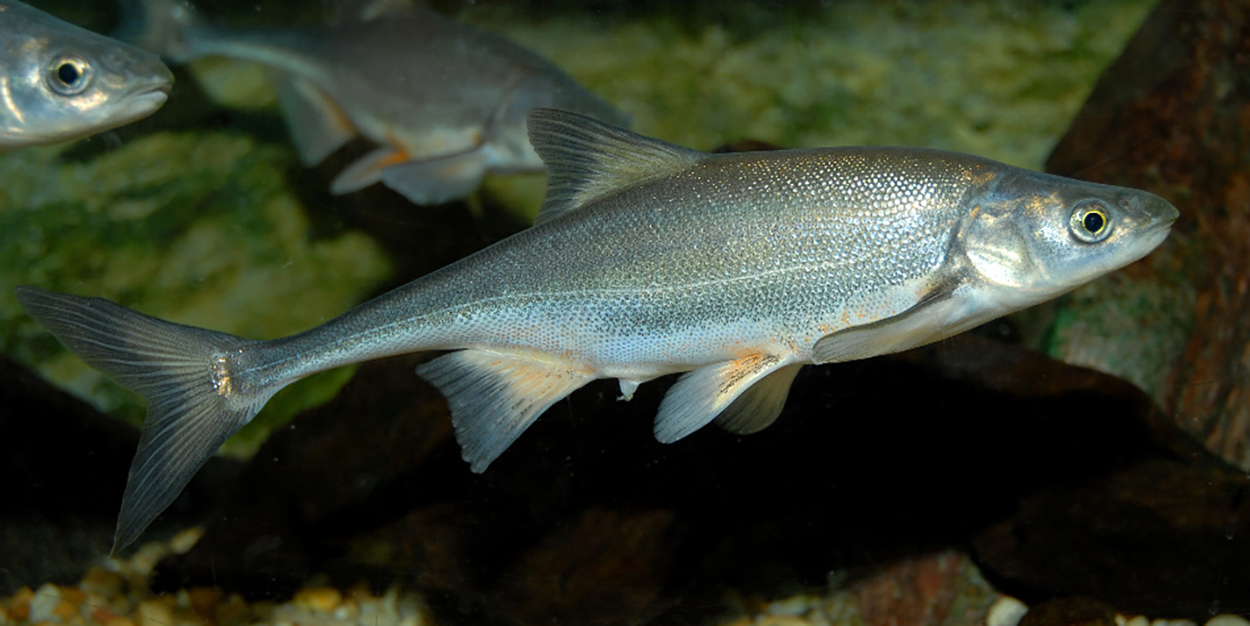
Razerback Sucker Courtesy US FWS, Sam Stukel, Photographer
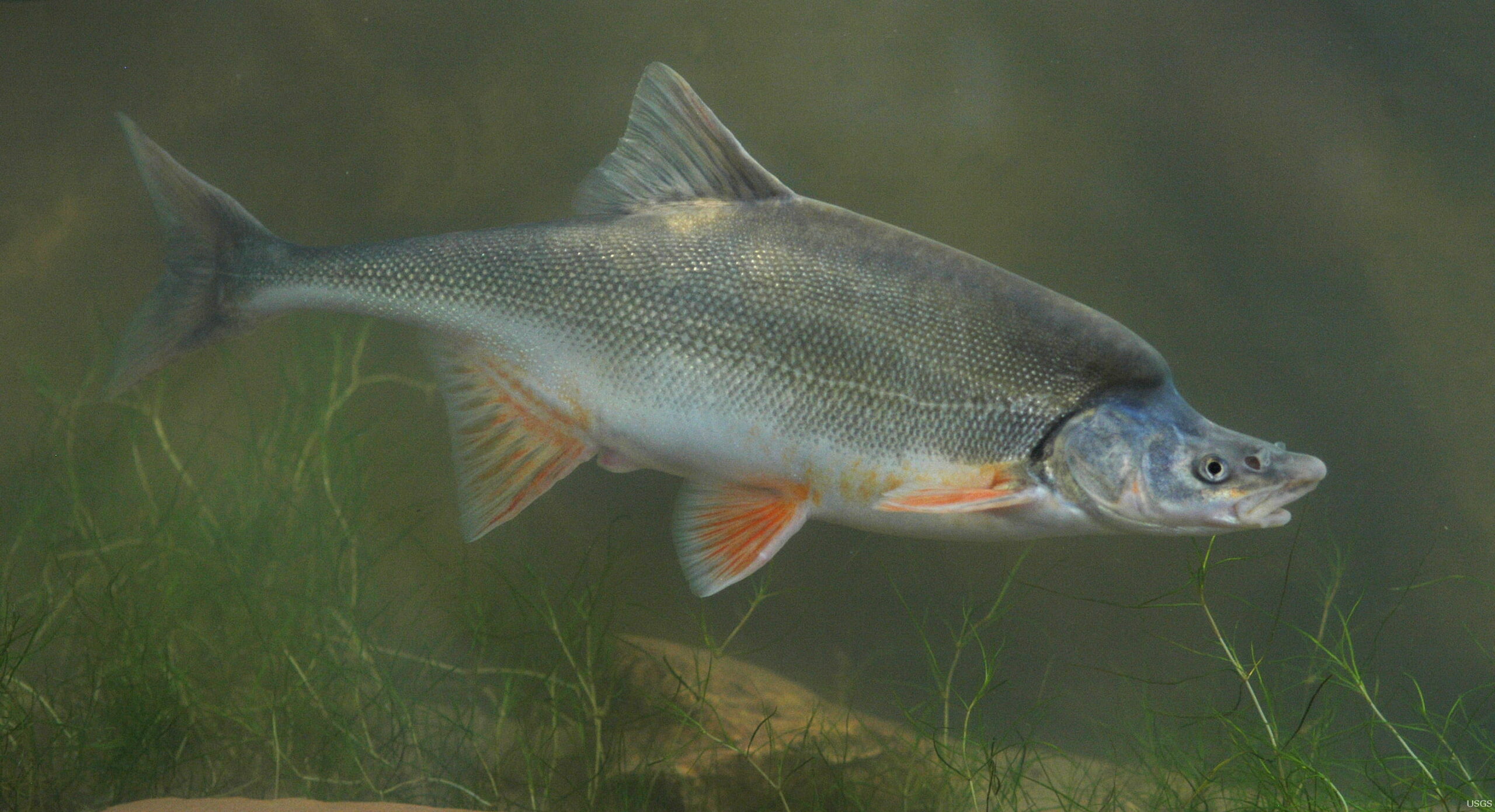
Razerback Sucker
Courtesy US FWS, Sam Stukel, Photographer

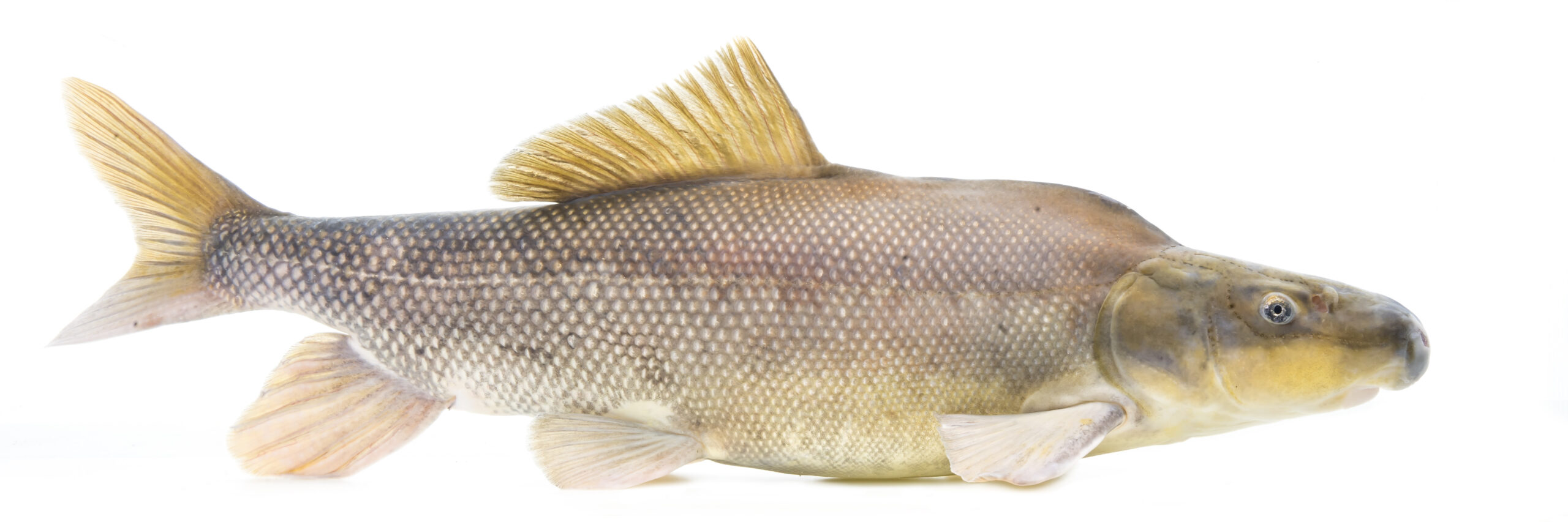
Humpback Chub Courtesy US FWS Humpback Chub
Courtesy US FWS

Bonytail Chub Courtesy US FWS Bonytail Chub
Courtesy US FWS

The refuge lies along the Green River, the largest tributary of the Colorado. If you drive far enough down the main refuge road, you’ll come to the Ouray National Fish Hatchery, dedicated to protecting three of the rarest fishes in North America: the bonytail, the humpback chub, and the razorback sucker.

All three of these species are confined to the Colorado River watershed, and all are on the federal Threatened and Endangered Species list. They’re desert fish, used to warm water. In fact, I learned that one reason why populations of these fish declined in the 1960s was that construction of the Flaming Gorge Dam upstream had made the Green River much cooler, as the water flowing through the dam was drawn from the coldest depths of the reservoir. That was great for trout, turning a 30-mile stretch of the Green into a world-renowned fishery. But it wasn’t so good for desert-adapted fish.

Learning this made me curious. The Ouray refuge is in the Uinta Basin. and it gets cold in the Basin in the winter. So, if cold water is bad for them, how have the bonytail, humpback chub, and razorback sucker survived there for thousands of years?

To answer that, it helps to understand the terms that anglers and fisheries biologists use. They refer to cold water species, like trout, kokanee, and whitefish, and warm water species like bass, perch, and catfish. The rare Green River species are warm water fish. But those labels aren’t about what temperatures the fish can survive, they’re about temperatures they experience when they thrive – during the warmer half of the year.

All fish are cold-blooded. More specifically, they’re ectothermic, getting their body heat from their environment, and poikilothermic, having a body temperature that fluctuates with the temperature of the waters where they live. To survive in winter, they go into a low-energy state called “torpor.” Their heart rate drops, their metabolism slows to a crawl, and their need for food is basically nonexistent. It’s like hibernation, except it happens in the deeper, slower water of a river instead of a cave or burrow.

That’s an important adaptation for the Colorado River fishes. Bonytail and humpback chub feed on insects, crustaceans, seeds and plants, occasionally small fish, all of which are much harder to find in the winter. Razorback suckers eat insects, plankton, and decaying plant matter – also less available in the winter months.

Now that we’re heading into springtime, when the weather gets warmer and the river along with it, both the fish and their prey are becoming active again.

Temperature is no longer a big threat to survival of these species. Flaming Gorge Dam has been re-engineered so that warmer water is drawn through its turbines. Also, flows through the dam are altered during spawning season to increase survival of fish larvae. The Ouray hatchery raises young fish to boost their population. The biggest threats to these species are habitat destruction and competition from non-native fishes. Those are challenges that are much harder to address. But it’s good to know there are biologists helping to recover the rare native fishes of the Green and Colorado Rivers.

I’m Mark Brunson, and I’m wild about Utah’s aquatic species and habitats.

Credits:

Images: Johnson Bottoms, Courtesy US FWS, John Orlanda, Photographer
Razerback Sucker, Courtesy US FWS, Sam Stuckel, Photographer
Bonytail Chub, Humpback Chub, Courtesy US FWS
Featured Audio: J. Chase and K.W. Baldwin as well as Friend Weller, https://upr.org/
Text: Mark Brunson, https://www.usu.edu/experts/profile/mark-brunson/
Additional Reading: Mark Brunson, https://www.usu.edu/experts/profile/mark-brunson/ & Lyle Bingham, Bridgerland Audubon Society

Additional Reading

Mark Brunson’s archive: https://wildaboututah.org/?s=brunson

Upper Colorado River Endangered Fish Recovery Program, U.S. Fish and Wildlife Service, https://www.fws.gov/office/upper-colorado-river-endangered-fish-recovery-program/species

Ouray National Wildlife Refuge, U.S. Fish and Wildlife Service, https://www.fws.gov/refuge/ouray

Ouray National Fish Hatchery, U.S. Fish and Wildlife Service, https://www.fws.gov/fish-hatchery/ouray

Fish, Dinosaur National Park, National Park Service, https://www.nps.gov/dino/learn/nature/fish.htm

Endangered Species Day: A look at how DWR, other agencies are helping razorback suckers in Utah, News, Utah Division of Wildlife Resources, May 14, 2020. https://wildlife.utah.gov/news/utah-wildlife-news/919-endangered-species-day-helping-razorback-suckers.html

Where do fish go when it freezes outside?, National Oceanic and Atmospheric Administration (NOAA), https://oceanservice.noaa.gov/facts/fish-freeze.html

Building a Warm Home for Endangered Razorback Suckers’ Young

Building a Warm Home for Endangered Razorback Suckers’ Young: A tiny razorback sucker larvae under a microscope. They look like tiny noodles when seen swimming in the wetlands. Courtesy & Copyright Katie Creighton, Photographer
A tiny razorback sucker larvae under a microscope. They look like tiny noodles when seen swimming in the wetlands.
Courtesy & Copyright Katie Creighton, Photographer
Just outside Moab between the cold, fast flowing water of the Colorado River and the slow, warmer waters of the Matheson Wetland Preserve stands a newly constructed escape passage for larvae of the endangered razorback sucker.Building a Warm Home for Endangered Razorback Suckers’ Young:

The fish nursery was built to provide the newly hatched razorbacks a way to escape the appetites of the large predators in the Colorado River.

The tiny “noodle like” larvae enter the passage, swim through a screen which holds the predators back, then live a peaceful few months in the safe, nutrient rich water of the preserve.

Building a Warm Home for Endangered Razorback Suckers’ Young: Katie Creighton and Zach Ahrens both native aquatics biologists for Utah Division of Wildlife Resources (UDWR) standing on the temporary Matheson screen. The Nature Conservancy and UDWR partnered together to build the structure to allow the endangered razorback sucker larvae to enter the Scott M. Matheson Wetlands Preserve without the predators also coming in. Courtesy & Copyright Katie Creighton, Photographer
Katie Creighton and Zach Ahrens both native aquatics biologists for Utah Division of Wildlife Resources (UDWR) standing on the temporary Matheson screen. The Nature Conservancy and UDWR partnered together to build the structure to allow the endangered razorback sucker larvae to enter the Scott M. Matheson Wetlands Preserve without the predators also coming in.
Courtesy & Copyright Katie Creighton, Photographer
The larvae will stay in the Matheson Wetland preserve during the summer to grow and gain strength. When water levels drop, the razorback young will be moved back into the Colorado River when they are much larger and have a better chance of survival.

The razorback sucker has lived in the Colorado River for thousands of years and has adapted to Utah’s warm turbid desert waters and rivers.

But during the twentieth century the razorbacks faced two threats: the growing population of non-native predator fish that consume the razorbacks, and the changing flow regime in the Colorado River Basin due to increasing water demand and development. These two threats decreased the razorbacks’ ability to maintain a sustainable population, which eventually led to the listing of the sucker as a federally endangered species.

Light trap near control structure in the Scott M. Matheson preserve. The traps are used to catch and monitor razorback sucker larvae. Courtesy & Copyright Katie Creighton, Photographer
Light trap near control structure in the Scott M. Matheson preserve. The traps are used to catch and monitor razorback sucker larvae.
Courtesy & Copyright Katie Creighton, Photographer
Katie Creighton, the native aquatics project leader with the Utah Division of Wildlife Resources said, “In the Upper Basin [of the Colorado River], specifically around Moab, we saw [a] pretty significant decline in [population] numbers in the mid-90s [which] prompted stocking. We began to augment the populations with fish we reared in hatcheries.”

For 30 years, managers stocked razorback in the Colorado River. Then in 2008, they began noticing an increase in adult razorback numbers and detecting spawning aggregations which prompted managers to begin tracking reproduction.

Creighton explains, “We [went] into the rivers around Moab, in the Green and the Colorado Rivers, and…set larval light traps… to determine whether or not these fish were successfully spawning.”

Building a Warm Home for Endangered Razorback Suckers’ Young: Light trap in the Scott M. Matheson Wetlands Preserve. The trap is used to determine how many larvae make it into the preserve. Courtesy & Copyright Katie Creighton, Photographer
Light trap in the Scott M. Matheson Wetlands Preserve. The trap is used to determine how many larvae make it into the preserve.
Courtesy & Copyright Katie Creighton, Photographer
The light traps collected a promising amount of razorback larvae in both the Green and Colorado Rivers.

Managers could now say the razorbacks do well as stocked adults, they reproduce in the wild, and their eggs hatch successfully.

The question left unresolved is why the “young of the year” are not surviving, juvenile razorbacks are rarely seen in the wild.

Unravelling the bottleneck between when the razorbacks hatch and when they become adults has become the new focus for managers. This is where the Matheson Wetlands project came in. Utah Division of Wildlife Resources partnered with the Natural Conservancy to build the fish nursery.

Building a Warm Home for Endangered Razorback Suckers’ Young: Katie Creighton, native aquatics biologists for Utah Division of Wildlife Resources, setting light traps in Matheson Preserve. The traps are used to monitor razorback sucker larvae. Courtesy & Copyright Katie Creighton, Photographer
Katie Creighton, native aquatics biologists for Utah Division of Wildlife Resources, setting light traps in Matheson Preserve. The traps are used to monitor razorback sucker larvae.
Courtesy & Copyright Katie Creighton, Photographer
Creighton explains, “The main goal [of the project] is to get [the razorback suckers] off the endangered species list. To recover them to self-sustaining populations that can maintain their numbers without…stocking. It’s a pretty ambitious goal, especially because we have to do [it] in the face of continued water use and water development…The recovery program is not battling or trying to stop water development, its goal is [simply] to recover these species in the face of what is currently happening with water use.”

Phaedra Budy, professor in the Watershed Sciences Department at USU and unit leader for U.S. Geological Survey Cooperative Fish & Wildlife Research Unit said, “The Razorback sucker has intrinsic value to the [Colorado River system], is a critical member of the ecosystem, and deserves every effort for recovery.”

This is Shauna Leavitt and I’m Wild About Utah.

Building a Warm Home for Endangered Razorback Suckers’ Young-Credits:
Photos:
    Courtesy US NPS, Zach Schierl, Photographer, Education Specialist, Cedar Breaks National Monument
    Courtesy & Copyright Shauna Leavitt,
Audio: Courtesy and Copyright
Text: Shauna Leavitt, Utah Cooperative Fish and Wildlife Research Unit, Quinney College of Natural Resources, Utah State University

Building a Warm Home for Endangered Razorback Suckers’ Young-Additional Reading

Leavitt, Shauna, Piute Farms Waterfall on Lower San Juan – a Tributary of Lake Powell, Wild About Utah, Aug 6, 2018, https://wildaboututah.org/piute-farms-waterfall-on-lower-san-juan-a-tributary-of-lake-powell/

Razorback Sucker(Page 68), Utah’s Endandengered Fish, 2018 Utah Fishing Guidebook, Utah Division of Wildlife Services, https://wildlife.utah.gov/guidebooks/2018_pdfs/2018_fishing.pdf

Fish Ecology Lab, Utah State University, 
https://www.usu.edu/fel/

Razorback sucker (Xyrauchen texanus), Upper Colorado River Endangered Fish Recovery Program, https://www.coloradoriverrecovery.org/general-information/the-fish/razorback-sucker.html

Scott M. Matheson Wetlands Preserve, The Places We Protect, The Nature Conservancy, https://www.nature.org/en-us/get-involved/how-to-help/places-we-protect/scott-m-matheson-wetlands-preserve/

A Nursery for Endangered Fish, The Nature Conservancy, https://www.nature.org/en-us/about-us/where-we-work/united-states/utah/stories-in-utah/razorback-sucker-nursery-utah/

Piute Farms Waterfall on Lower San Juan – a Tributary of Lake Powell

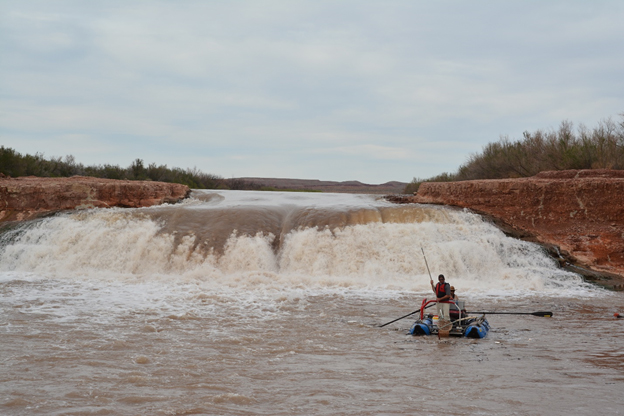
Piute Farms Waterfall on the San Juan River, An Example of Superimposition Courtesy & Copyright Mark McKinstry, Photographer
Piute Farms Waterfall on the San Juan River, An Example of Superimposition
Courtesy & Copyright Mark McKinstry, Photographer

Piute Farms waterfall is a 25-ft high cascade that has formed along the San Juan River and spans its entire width. The location is a remote spot in an upstream arm of Lake Powell reservoir.

To reach the falls it takes a rough two-hour drive from Mexican Hat, or a 100-mile-boat ride from Bullfrog Marina in Lake Powell.

It formed when the tributary re-routed itself, cut through a thick layer of sediment, and began flowing over a bedrock cliff.

Scientists call this phenomenon superimposition.

Jack Schmidt, Janet Quinney Lawson Chair of Colorado River Studies in the Quinney College of Natural Resources at USU explains, “When reservoirs are created by the construction of dams, the sediment load of inflowing rivers is deposited in the most upstream part of the reservoir. In Lake Powell…the deposits in the…San Juan arm of the reservoir are as much as 80ft thick.”

“[If} reservoirs…drop…the inflowing rivers erode into the accumulated sediment. There is no guarantee the location of the new channel will be in the same place as…the original channel.”

The San Juan River’s original route was buried under the thick layer of sediment. The river’s response was to form a new channel one mile south of the original route and over the ridge.

Schmidt continues, “A [similar] thing…happened in Lake Mead reservoir where an unrunnable rapid formed near Pearce Ferry where the new Colorado River flows over a lip… [of] consolidated sediment. Although not a vertical waterfall, Pearce Ferry Rapid is sometimes more dangerous to boating than any rapid in the Grand Canyon!”

With future droughts, we can expect reservoirs to be at low levels for extended periods, and superimposition will continue to occur forming additional waterfalls and obstructions. Managers monitor the positive and negative effects of these changes.

One impact of the Piute Farms waterfall is a novel subpopulation of endangered razorback suckers which are now blocked from swimming upstream to spawn.

Endangered Razerbck Sucker Captured near Piute Farms Waterfall Courtesy & Copyright Mark McKinstry, Photographer
Endangered Razerbck Sucker
Captured near Piute Farms Waterfall
Courtesy & Copyright Mark McKinstry, Photographer

Zach Ahrens, Native Aquatics Biologist at Utah Division of Wildlife Resources and graduate student at USU says, “The razorback and other native fishes in the Colorado River basin have evolved over millions of years to play their roles in spite of the extremes of temperature and flow in their riverine environment. Given the uncertainty of future climate and water resources…it’s important to do what we can to ensure their continued survival.”

Before the waterfall formed, managers were not sure what percentage of razorback suckers travelled this far upstream.

Endangered Razerbck Sucker Captured near Piute Farms Waterfall Courtesy & Copyright Mark McKinstry, Photographer
Endangered Razerbck Sucker
Captured near Piute Farms Waterfall
Courtesy & Copyright Mark McKinstry, Photographer

Mark McKinstry, Biological Scientist from the Bureau of Reclamation, explains, “It took perseverance, technology, and dedication of a lot of different folks to find where…the Razorbacks are and understand the fish’s life history strategy.”

Peter MacKinnon with the Quinney College of Natural Resources at Utah State University and Biomark Inc. provided the technical expertise to set up a method to insert Razorback suckers with pit tags (similar to those used in cats and dogs) then track them with antennas placed below the falls.

With this tracking method, managers and researchers identified more than 1000 razorback suckers below the falls, apparently trying to ascend the waterfall. Approximately 2000-4000 suckers live in the San Juan River. It is estimated about 25% of the razorbacks are unable to spawn – because the waterfall blocks fish passage. This could influence the population of the endangered fish.

The Bureau of Reclamation consulted with experts on how to help razorback suckers get past the waterfall so they can move upstream and spawn. The most feasible suggestion seems to be, to build a naturalized fish passage around the side of the waterfall. Managers and volunteers would build a trap location on the upstream side of the passage where fish moving upstream could be captured; volunteers could then release the captured razorbacks and other native fish upstream where they choose to spawn.

Phaedra Budy, professor in the Watershed Sciences Department and Unit Leader for U.S. Geological Survey Cooperative Fish & Wildlife Research Unit said, “The Razorback sucker has intrinsic value to the San Juan River and beyond, is a critical member of the ecosystem, and deserves every effort for recovery.”

Managers and researchers hope their information gained and recovery efforts will give the endangered razorback suckers an increased chance for survival in its changing environment.

This is Shauna Leavitt and I’m Wild About Utah.

Credits:
Photos: Courtesy & Copyright © Mark McKinstry
Audio: Courtesy Western Soundscape Archive, University of Utah, Sound provided by The National Park Service, licensed under CCA-ND
Text: Shauna Leavitt, Utah Cooperative Fish and Wildlife Research Unit, Quinney College of Natural Resources, Utah State University

Sources & Additional Reading

Waterfall Still Blocks San Juan River, River Runners for Wilderness(RRFW), https://rrfw.org/riverwire/waterfall-still-blocks-san-juan-river

https://www.americansouthwest.net/utah/monument_valley/piute_farms.html

Razorback Sucker(Page 68), Utah’s Endandengered Fish, 2018 Utah Fishing Guidebook, Utah Division of Wildlife Services, https://wildlife.utah.gov/guidebooks/2018_pdfs/2018_fishing.pdf

Fish Ecology Lab, Utah State University, 
https://www.usu.edu/fel/