
Leafy Bee Nests

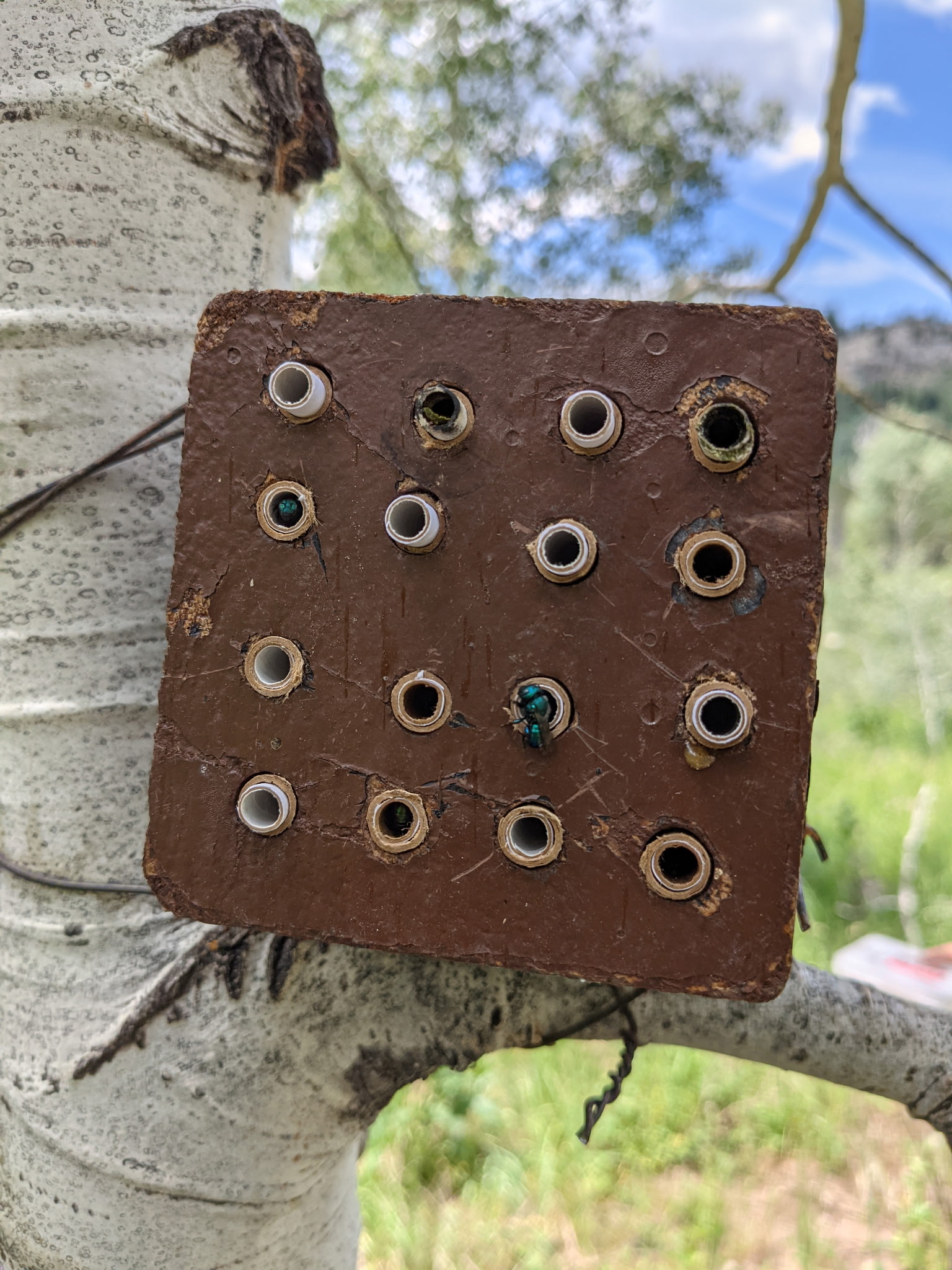
Mason Bee at the entrance to a nest tube
Courtesy & © Lindsie McCabe, Photographer
Mason Bee at the entrance to a nest tube
Courtesy & © Lindsie McCabe, Photographer
Today’s story is in both English and Spanish, to hear the Spanish translation tune in Wednesday evening at 9 or online at UPR.org

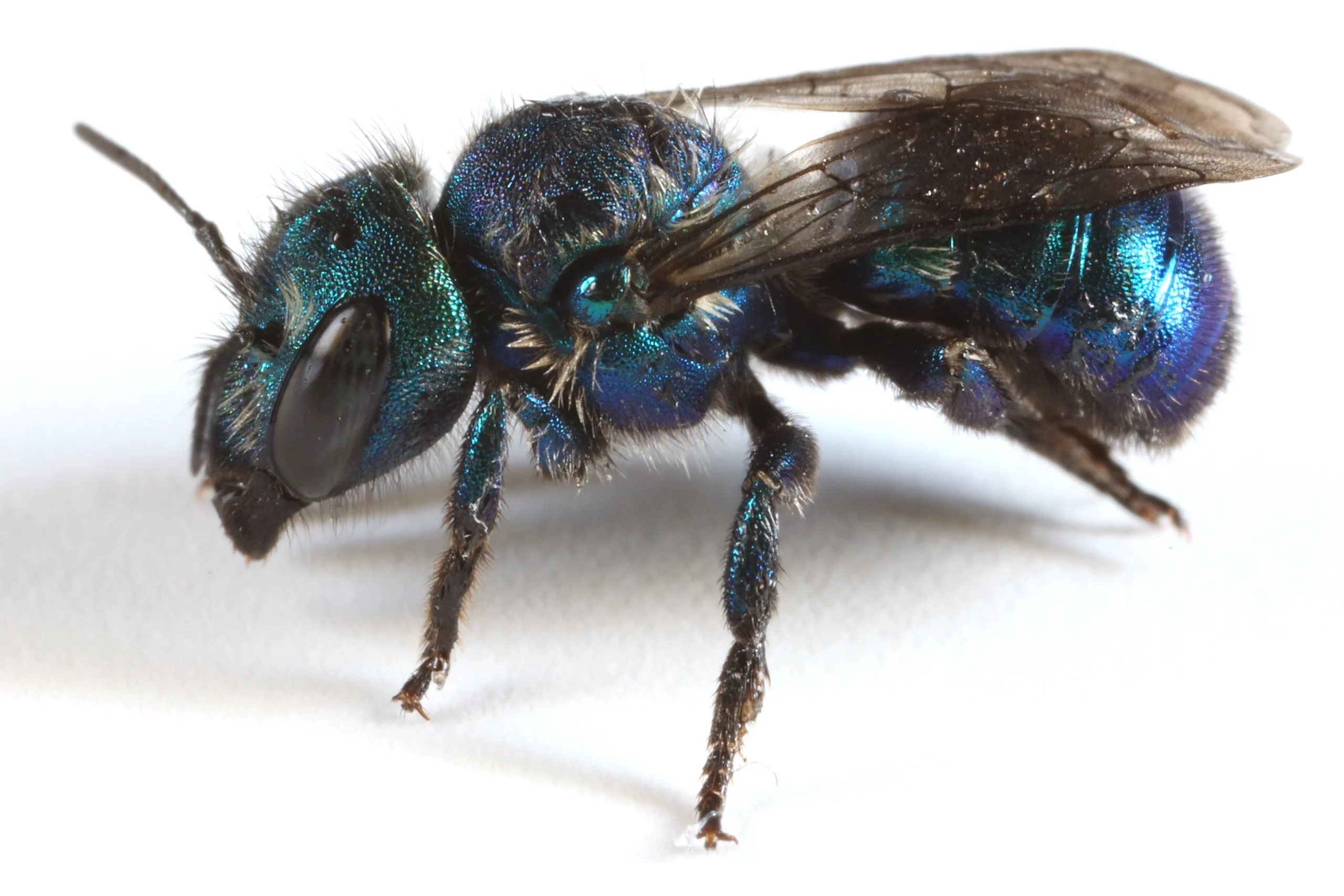
Osmia bruneri Female
Courtesy & © Michael Branstetter, Photographer
Osmia bruneri Female
Courtesy & © Michael Branstetter, Photographer
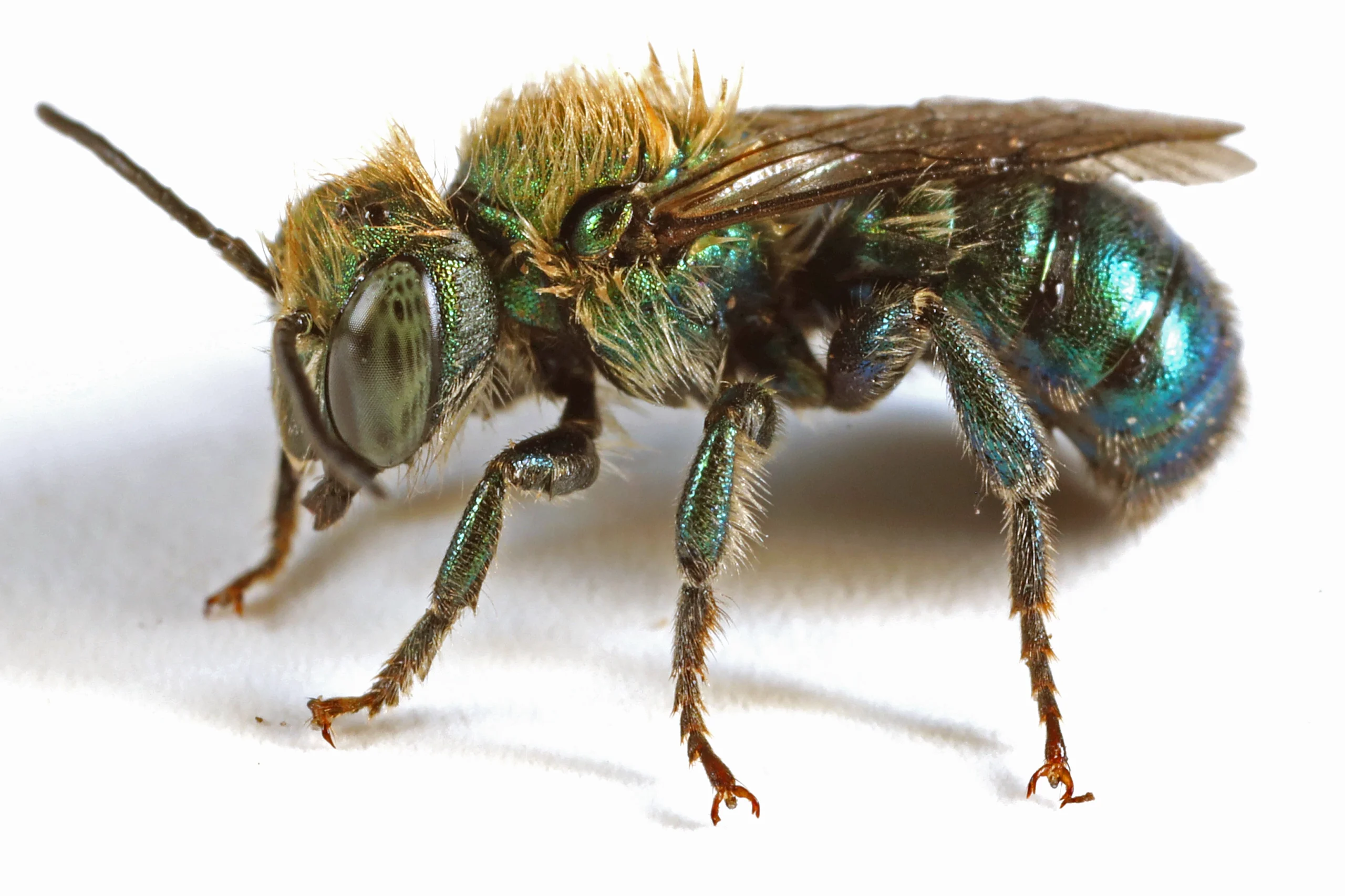
Osmia bruneri Male
Courtesy & © Michael Branstetter, Photographer Osmia bruneri Male
Courtesy & © Michael Branstetter, Photographer

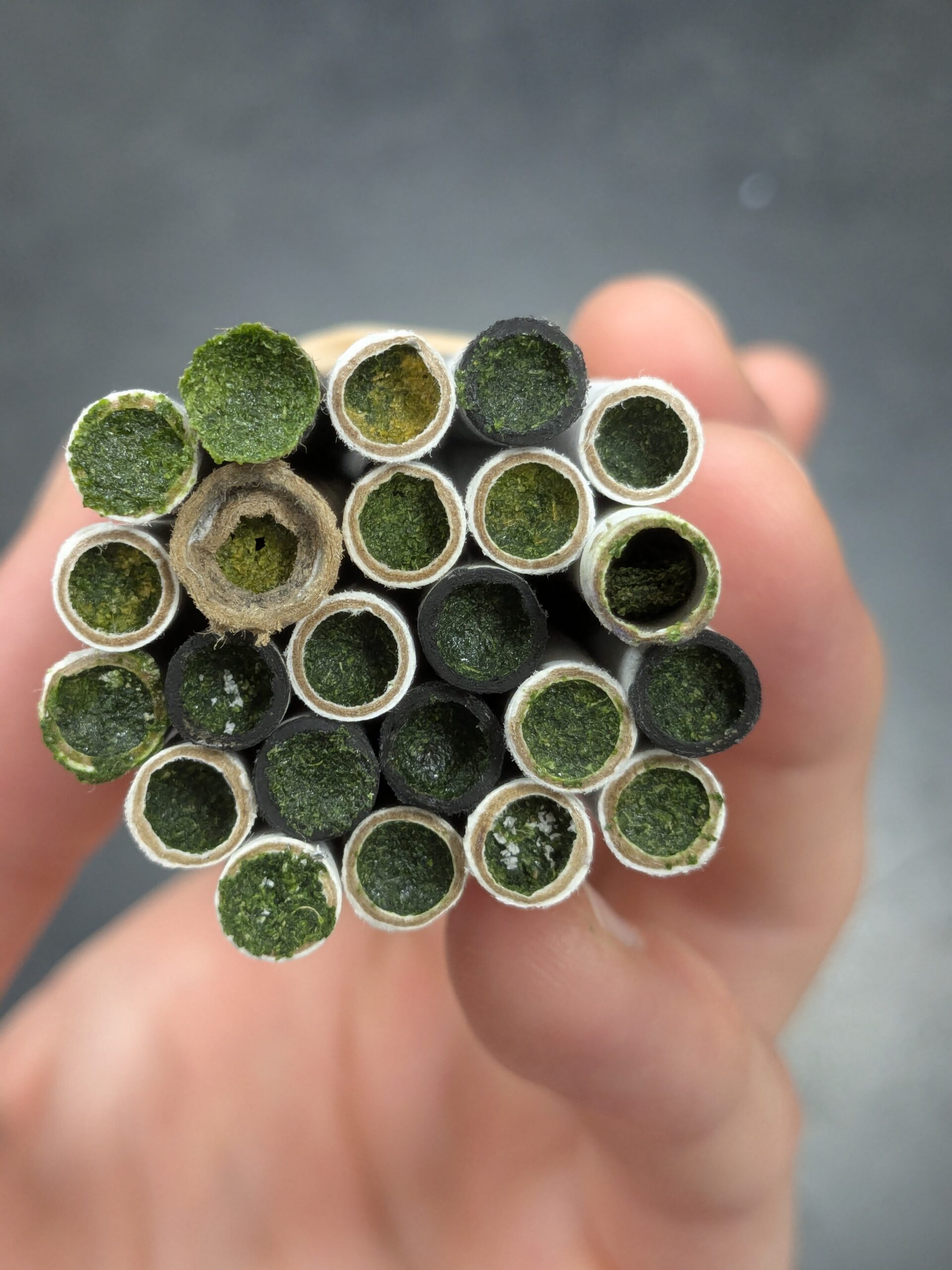
Filled and Leaf-capped Nest Tubes
Courtesy & © Anna Goates, Photographer Filled and Leaf-capped Nest Tubes
Courtesy & © Anna Goates, Photographer

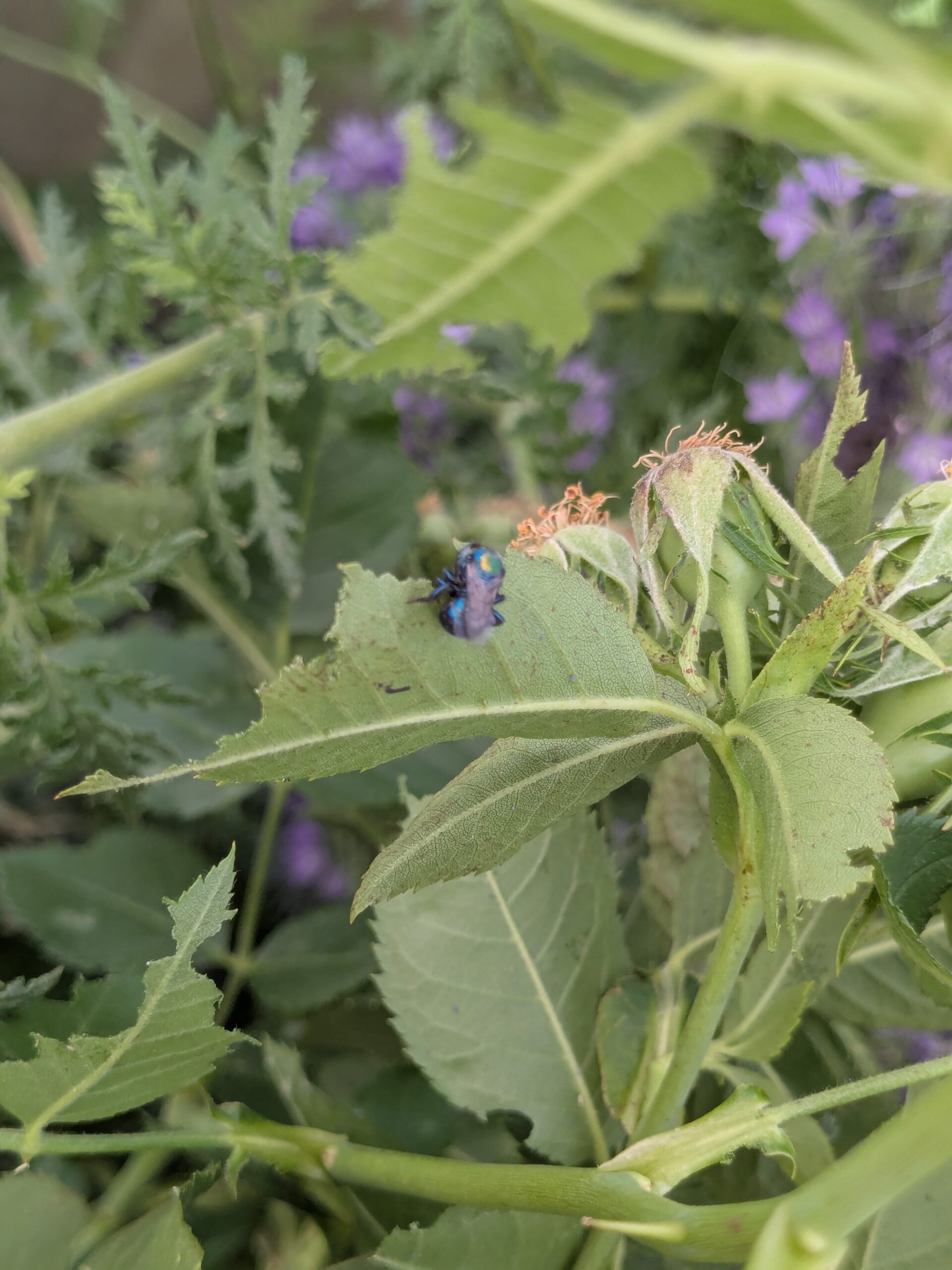
Female Osmia bruneri Harvesting Leaf Material
Courtesy & © Anna Goates, Photographer Female Osmia bruneri Harvesting Leaf Material
Courtesy & © Anna Goates, Photographer

When you think about what a bee needs to live, you probably think of flowers and a big hive. Bees do need flowers, and some live in a hive, but many bees also need other materials to build their nests. Some of my favorites build nests with mud, small rocks, pieces of leaves, sap from trees, flower petals, or even the fuzzy hairs that grow on plants. These bees are often solitary, relying on just one strong mama to take care of the whole nest.

It’s almost my favorite time of the year, when I get to watch these moms emerge and start their nests. Some solitary bees, like the ones I study, make their nests in holes in wood. Usually this means nesting in a wooden tunnel drilled out by a beetle, but it also means that they will nest in manmade nesting boxes. These nesting structures consist of a wooden block with long dead-end drilled holes where each hole belongs to a different mom, like rows of single story condos.

If I stand patiently next to a nesting box, I’m rewarded with the sight of a mama bee backing out of one of the nesting holes. She rests for a moment at the entrance to her nest, basking in some sun. She rubs her back legs together and wiggles her abdomen a bit. Then, she takes flight. I watch her buzz away to a leaf where she lands and rapidly chews on the leaf edge. Her motions are quick and urgent. Then she buzzes back to her nesting hole. She hovers for a moment, and pokes at the neighboring hole before landing back at her own and depositing the small bit of chewed leaf. She begins drywalling her new nursery, several trips of collecting, chewing up and puttying this bright green leaf pulp will result in a wall that protects her babies. Those babies develop throughout the rest of summer and fall and go into hibernation for the winter. When temperatures warm up, these new bees will chew through that leafy wall to enter the world.

My name is Anna Goates. I am a student at Utah State University and I study bees at the USDA-ARS Pollinating Insects Research Unit. I’m studying the nesting of one species of bee, Osmia bruneri, a bee that’s native here in Utah and throughout the Great Basin area. Like many other bees, bruneri need more than flowers. Bruneri bees use leaf pieces to build their nests. A mama bee will bring lots of pollen to her nest using fuzzy hairs on her belly. Then she lays an egg on top of the pollen and builds a wall out of leaf pulp. Female bruneri are a shiny metallic blue, and male bees are a metallic lime green with a fuzzy white mustache on their faces. If you don’t look closely, you might think they are flies.

As spring approaches, bees and other insects will start coming out from their winter hideaways. I’m excited to see my little bee friends again.

I’m Anna Goates, a volunteer for Stokes Nature Center, and I’m wild about Utah.

Credits:

Images: Capped Nesting Straws & Leaf-harvesting Osmia Female, Courtesy and Copyright Anna Goates, Photographer
Male & Female Osmia bruneri, Courtesy and Copyright Michael Branstetter, Photographer
Bee at tube entrance, Courtesy & Copyright Lindsie McCabe, Photographer
Featured Audio: Courtesy & Copyright Anderson, Howe, and Wakeman..
English Text & Voice: Anna Goates, Stokes Nature Center Volunteer, https://logannature.org/volunteer
Spanish Text & Voice: Carlos Ramos, Stokes Nature Center, https://logannature.org/staff
Additional Reading Links: Lyle Bingham, https://bridgerlandaudubon.org/

Additional Reading:

Wild About Utah Pieces by Anna Goates, https://wildaboututah.org/author/anna-goates/

Bruner’s Mason Bee — Osmia bruneri. Montana Field Guide. Montana Natural Heritage Program. Retrieved on April 5, 2026, from https://FieldGuide.mt.gov/speciesDetail.aspx?elcode=IIHYMA2610

Cuckoo Bees

Cuckoo bees: Indiscriminate Cuckoo bee Courtesy & © Mark Brunson, Photographer
Indiscriminate Cuckoo Bee
Courtesy & © Mark Brunson, Photographer

Indiscriminate Cuckoo bee Courtesy & © Mark Brunson, PhotographerIndiscriminate Cuckoo Bee
Courtesy & © Mark Brunson, Photographer

I’d like to tell you a crime story. At least, it would be a crime story if told from a human perspective. But is it still a crime story if it’s about the natural world? I’ll tell it and then let you decide for yourself.

First let me set the stage: Not long ago I was hiking in Northern Utah’s Bear River Range. It was the height of wildflower season, and I was enjoying the colorful variety of blossoms along the trail. I stopped to admire a tall, showy plant with dozens of purplish-green blossoms: Frasera speciosa, commonly known as monument plant or green gentian. It’s often seen near the top of Logan Canyon, but what struck me about this particular monument plant was that it was full of bumble bees.

I knew that a Utah-based conservation science organization, Sageland Collaborative, is asking community volunteers to help them measure bumble bee diversity in the state, so I took out my phone and snapped a few photos. Later I uploaded the best photos into an app called iNaturalist so they’d end up in the Utah Pollinator Pursuit database maintained by the Utah Division of Wildlife Resources with Sageland’s help. Then I waited to learn what species of bumble bee I’d seen. The answer came back: indiscriminate cuckoo bumble bee. I thought: What an unusual name. I needed to know more.

It turns out “indiscriminate” simply means that, unlike many native bees that are particular about what they eat, this species doesn’t much care where it gets its nectar. As for “cuckoo”? Like the birds they’re named after, these bumble bees are thieves.

Or to say it more scientifically: these bumble bees are kleptoparasites. Parasites – animals that take resources they need from other species to the detriment of those species – and “klepto,” as in stealing. Like cuckoos or cowbirds, they lay their eggs in the nests of other bumble bee species, letting the workers from the host species do the work of raising them.

Here’s where our crime story gets even more sinister. When a cuckoo bumble bee queen finds a suitable nest to rob – one with a good-sized group of workers to raise the bee larvae, but not so many workers that they can easily protect their queen – she kills the host queen and becomes part of the colony, laying her alien eggs for the host workers to feed.

Cuckoo bumble bees don’t need their own workers, so they’re less often seen on wildflowers. In fact, there’s a good chance that some of the other bumble bees on my monument plant – the ones I didn’t get a picture of – were members of the host species. They also don’t need to take pollen back to a nest of their own, so they don’t have those “pollen baskets” we often see on the hind legs of female bumble bees.

But they do move pollen from flower to flower when it sticks to their bodies as they feed. In other words, they do play a role in sustaining the wildflowers we enjoy every summer. So is this really a crime story? Or is it just another example of the amazing diversity of behaviors found in nature? While you’re deciding about that for yourselves, I hope you get a chance to enjoy watching Utah’s various kinds of bumble bees as they do their all-important work.

I’m Mark Brunson, and I’m wild about Utah’s native bees.

Credits:

Images Courtesy & Copyright Mark Brunson, Photographer
Featured Audio: Courtesy & © Kevin Colver, https://wildstore.wildsanctuary.com/collections/special-collections and J. Chase and K.W. Baldwin. https://upr.org/
Text: Mark Brunson, https://www.usu.edu/experts/profile/mark-brunson/
Additional Reading: Lyle Bingham, https://bridgerlandaudubon.org/

Additional Reading

Wild About Utah pieces authored by Mark Brunson

Sheffield, Cory S., Cuckoo bees, Epeoloides pilosula, The Xerces Society, https://www.xerces.org/endangered-species/species-profiles/at-risk-bees/cuckoo-bees

Smale, Parker, Understanding cuckoo bumble bees: terrors or treasures?, Wildlife Preservation Canada, February 29, 2024, https://wildlifepreservation.ca/blog/understanding-cuckoo-bumble-bees-terrors-or-treasures/

Barth, Amanda, The Unique Lives of Cuckoo Bees, Sageland Collaborative, July 25, 2024, https://sagelandcollaborative.org/blog/2024/7/25/the-unique-lives-of-cuckoo-bees