Weber River’s Bluehead Sucker Population

Weber River’s Bluehead Sucker Population: Bluehead Sucker Courtesy & © Bryan Maloney, Photographer
Bluehead Sucker
Courtesy & © Bryan Maloney, Photographer
Bluehead Sucker Courtesy  & © Bryan Maloney, Photographer Bluehead Sucker
Courtesy & © Bryan Maloney, Photographer

Bluehead Sucker Courtesy  & © Bryan Maloney, Photographer Bluehead Sucker
Courtesy & © Bryan Maloney, Photographer

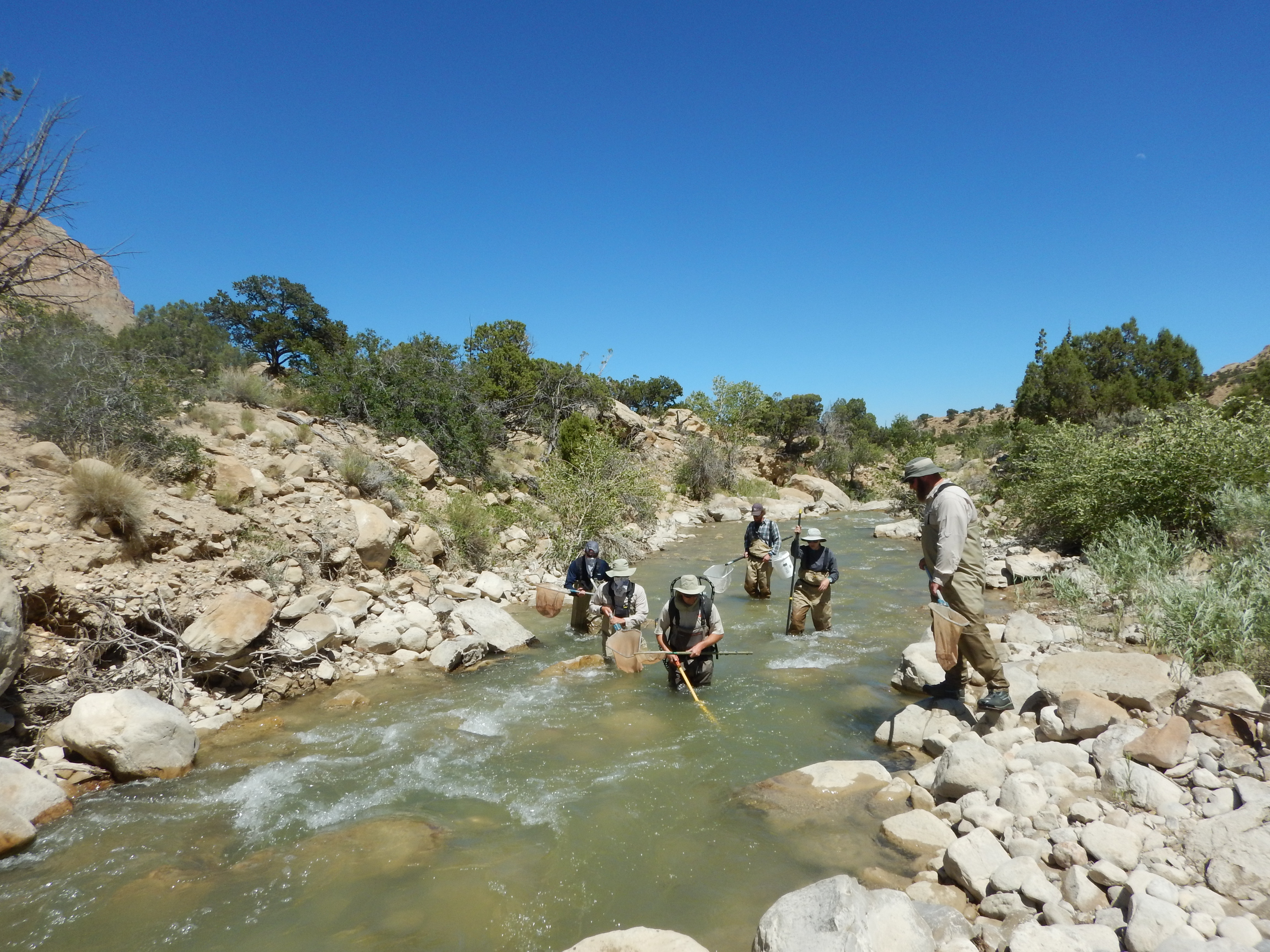
Bluehead Sucker Survey, Ferron Creek, Ferron Canyon, Manti-La Sal National Forest, Emery County, Utah, Courtesy & © Bryan Maloney, Photographer Bluehead Sucker Survey, Ferron Creek, Ferron Canyon, Manti-La Sal National Forest, Emery County, Utah, Courtesy & © Bryan Maloney, Photographer
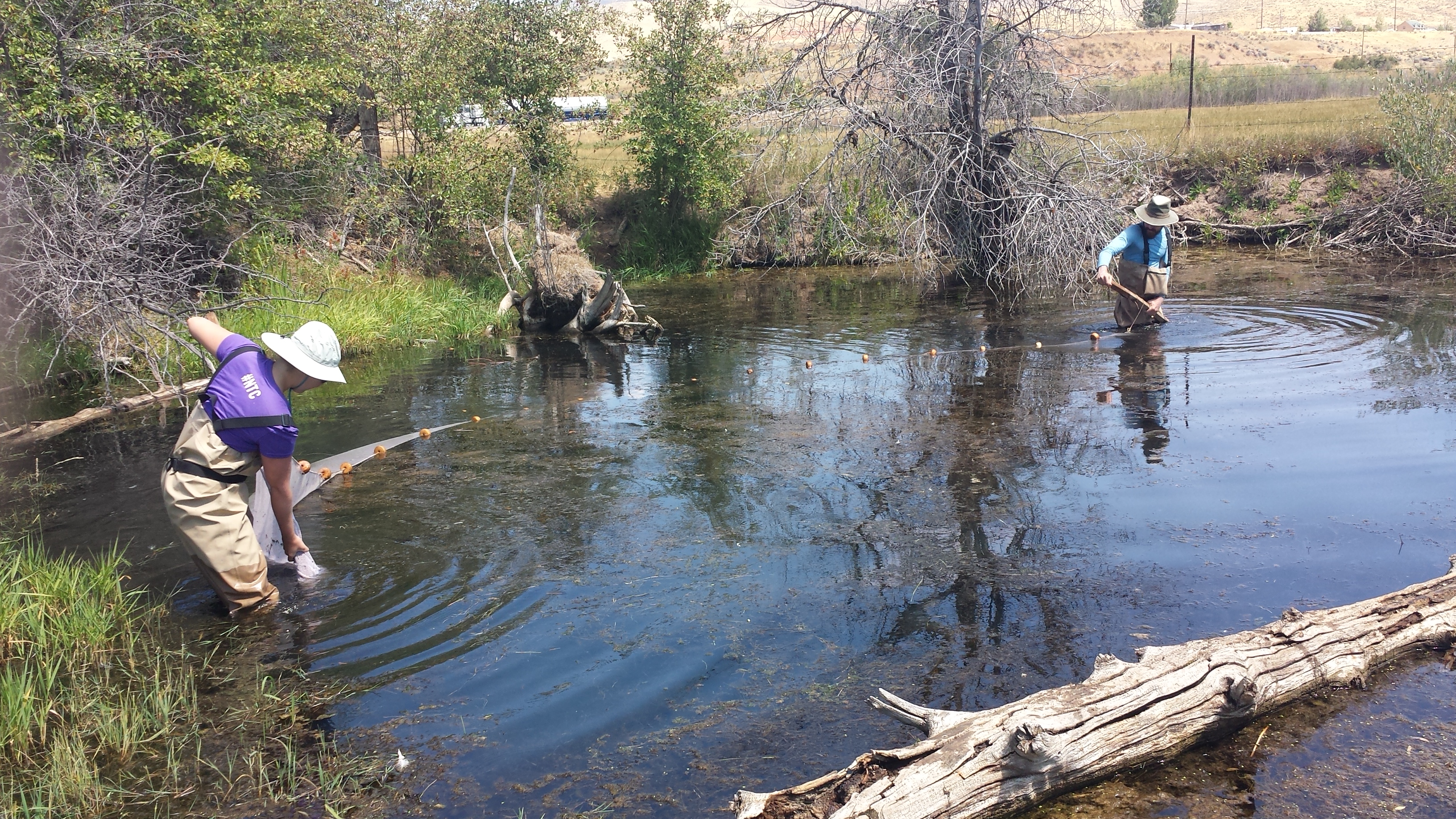
Bluehead Sucker Netting Survey Courtesy  & © Bryan Maloney, Photographer Bluehead Sucker Netting Survey
Courtesy & © Bryan Maloney, Photographer

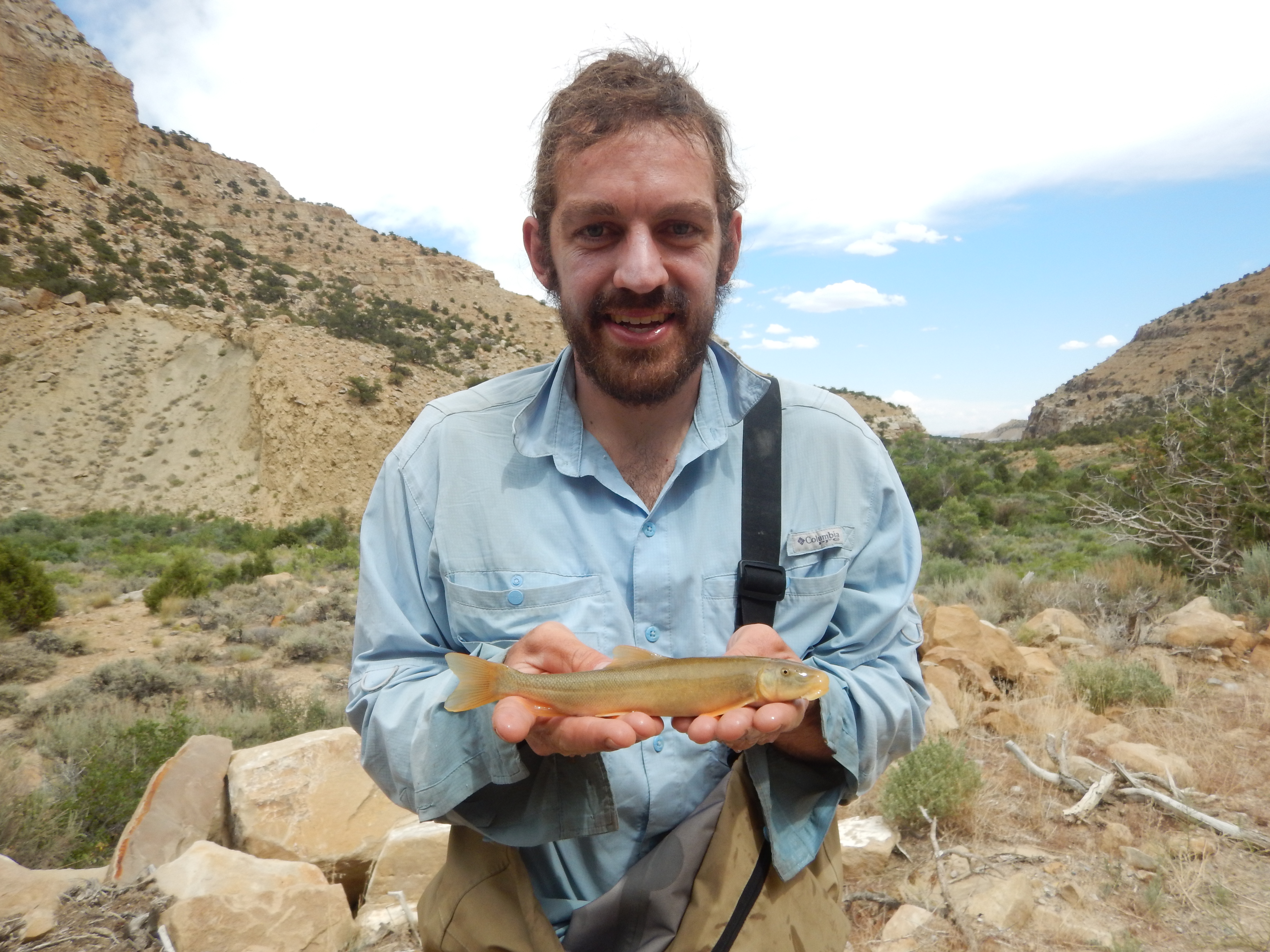
Along the bottom of the Weber River lives a genetically-distinct fish called the bluehead sucker.

Its head is colored in dusty shades of blue, brown and gold. From the gills to the tail the fish has a pattern of gold, diamond-shaped scales with dark brown borders, which grow larger and more distinct closer to the tail.

Its large rounded nose overhangs the papillae-covered lips and mouth, which are set low to allow the fish to eat algae off surfaces.
Another distinguishing feature is its large size the adult bluehead suckers can reach a length of 16-18 inches.
One of the main benefits of the bluehead sucker in the Weber River, is its place in the food web, primarily eating algae. The cartilage scraping edges of its jaws make it easy to feed off rocks and other objects where algae may build up.

The suckers obtain nutrients from the algae, and grow to be good bait and forage fish.

Dr. Phaedra Budy, Unit Leader for the U.S Geological Survey Cooperative Fish & Wildlife Research Unit at USU said, “When both bluehead suckers and trout exist together, the suckers help take the predator pressure off of the game fish, and its feeding habits offer little competition with trout.”
This native species has intrinsic value to the river because of its ability to indicate the health of the riverine ecosystem. But changes in the river have created challenges for the sucker by limiting its habitat.

The river no longer has the freedom to meander across the landscape since it is confined by rail tracks, highways, and urban development for much of its reach. There are also two 150-foot dams and reservoirs in its path. These changes have altered both the physical and thermal characteristics and decreased the spawning habitat of the sucker.

Bryan Maloney, a former graduate student in Dr. Budy’s lab, recently completed his Master’s on the bluehead sucker. His research included determining what spawning habitat the bluehead suckers use.

To do this, Maloney compared the spawning bluehead suckers in Weber River to the ones in the pristine Ferron Creek. This comparison was essential since he needed to see what the spawning suckers chose in the unaltered streams.

Budy explains, if we only studied Weber it would be similar to observing a student who rented a really bad apartment for a semester because he was broke – then saying, “Oh, this must be what he likes to live in,” and not recognizing he would have chosen something much better if he had the resources.

By comparing the two rivers, Maloney discovered the spawning suckers use wide channels with plenty of pools, gravel, and cobble. Once the eggs hatch, the juvenile suckers use nearshore locations where the water is slow and deep and the young suckers find it easier to hide, eat, and grow.

According to Maloney, “These diverse habitat components are critical for spawning adult and growing juvenile bluehead suckers. Restoring them to the Weber River, will assist in recovering this imperiled population.”

Although Weber River is limited in these habitat characteristics, the future of the riverine ecosystem is optimistic due to the formation of the Weber River Partnership.

The agencies in the partnership include Utah Division of Wildlife Resources, Trout Unlimited, Weber Basin Water Conservancy District, both the Weber River and Provo River Water Users Associations, City of Ogden, PacifiCorp, Bureau of Reclamation, and the Davis and Weber Counties Canal Company.

Plans are underway for the fish habitat restoration in the Weber River, which will be a big help to the future of bluehead suckers, and whatever steps are taken to benefit habitat for suckers will also benefit the native trout.

This is Shauna Leavitt for Wild About Utah.

Credits:

Theme: Courtesy & Copyright Don Anderson Leaping Lulu
Photos: Courtesy and Copyright Bryan Maloney
Text: Shauna Leavitt

Sources & Additional Reading

Bluehead Sucker, Utah Conservation Data Center, Utah Division of Wildlife Management, https://fieldguide.wildlife.utah.gov/?species=catostomus%20discobolus [Link updated January 2024]

Thompson, Paul D., Bonneville Cutthroat Trout and Bluehead Sucker in the Weber River: Endangered Species Act Implications, Utah Division of Wildlife Resources, Jun 15, 2015, https://www.slideshare.net/PaulThompson47/weber-river-partnership-native-species-presentation

Webber, P. Aaron, Thompson, Paul D. and Buddy, Phaedra, Status and Structure of two Populations of the Bluehead Sucker(Catostomus discobolus) in the Weber River, Utah, https://www.usu.edu/fel/publications/pdf/Webber_et_al_%202012_BLH_Weber.pdf

Budy, Phaedra; Thiede, Gary P; Mckay, Samuel; Weber River metapopulation structure and source-sink dynamics of native fishes, 2011-2013, https://www.usu.edu/fel/research/weber-river/

Blueheads and Bonnevilles Restoration Project Inspires Weber River Partnership, National Fish Habitat Partnership, October 19, 2016, https://www.fishhabitat.org/news/blueheads-and-bonnevilles-restoration-project-inspires-weber-river-partners

Weber River Partnership Protects World-Class Fishery, Paul Thompson, Guest Blogger, Utah Department of Environmental Quality, https://deq.utah.gov/news/tag/bluehead-sucker

Smithfield Urban Deer

Smithfield Urban Deer: Click for a larger view of Mule Deer, Odocoileus hemionus, Courtesy US FWS, Ryan Moehring, Photographer

Mule DeerOdocoileus hemionus
Courtesy US FWS
Ryan Moehring, Photographer 
As I look out my front window, 7 mule deer are cavorting, feeding, with some lying down for a mid-day siesta. With the final week of the regular season deer hunt winding down, some have taken sanctuary from the nimrods to join the urban herd.

For our 30 years in Smithfield canyon, deer have been regulars, disappearing for the most part from mid-May to mid-June to give birth, as do the bucks, perhaps somewhat embarrassed with strange bumps forming on their crowns.
Spotted fawns begin adorning our lawn in mid-July. With enough speed to outrun all but the fastest predator’s, mom drops her guard a bit. Bucks begin parading their new, fully formed head gear.

As fall and winter approach, the neighborhood herd grows, with a few dozen hanging out when winter finally sets in. Their snow trails through the yard become conspicuous, further defined with sprinkles of fecal material. Out back the steep hillside across Summit Creek becomes a winter playground as small groups run repeatedly up and down and around. Apparently, their abundant stores of energy allow them to break winter’s lethargy. This is generally not the case for deer in the wilds where every calorie is conserved for winter hardships as snow deepens and temperatures plunge.

We’ve witnessed a few humorous behaviors during our 3 decades of observation. Deer are very curious which occasionally works against their best interests. We had an especially aggressive rooster who became our “feathered” watchdog. A small deer herd passing through the front yard noticed the stocky cock guarding the front door and decided on closer inspection. The lead deer approached stretching his neck and tender nose to get a closer whiff. Old roaster rooster gave her a welcoming sharp jab to the nose which sent the herd bounding off.
On another occasion, our tomcat found itself taking refuge under the trampoline as 4 deer approached from a patch of forest. The cat’s movement piqued the deer’s curiosity. They surrounded the trampoline, bent down on front knees with noses poked underneath for a close-up. Poor tom was terrified- to be munched by a deer- what a horrible end!

Of course, we realize that not everyone is enamored with deer in their space. Deer can be a nuisance causing damage to landscapes and gardens. With proper fencing and plant selection, this can be managed. A greater concern is safety, vehicle-deer collisions. Here again, with proper signage, this can be minimized. I’ve experienced close encounters on my bike, so always go slow when deer appear near or on the roadway.
An excellent resource for landscaping is found at wildlife.utah.gov/habitat/deer-browse.php Blending a variety of native and ornamental plants into a home landscape can create a highly attractive environment for family, friends, mule deer and other wildlife species. Enhancing the home environment and replacing some of the lost wildlife habitat can be enjoyable and beneficial.

This is Jack Greene for Wild About Utah.

Credits:
Image: Courtesy US FWS Ryan Moehring, Photographer
Text:     Jack Greene, Bridgerland Audubon Society


Additional Reading:

Copeland, H. E., H. Sawyer, K. L. Monteith, D. E. Naugle, A. Pocewicz, N. Graf, and M. J. Kauffman. 2014.
Conserving migratory mule deer through the umbrella of sage-grouse. Ecosphere 5(9):117. https://dx.doi.org/10.1890/ES14-00186.1
https://www.fws.gov/greatersagegrouse/documents/research/muledeer_mig_grouse_14-00186.pdf

Mule Deer, Utah Species, Utah Division of Wildlife Resources, Department of Natural Resources, State of Utah, https://fieldguide.wildlife.utah.gov/?species=odocoileus%20hemionus

Mule Deer, Utah Division of Wildlife Resources, https://wildlife.utah.gov/learn-more/mule-deer.html

Autumn Migrations

Autumn Migrations: Redhead Ducks Courtesy US FWS Nate Rathbun, Photographer
Redhead Ducks
Courtesy US FWS
Nate Rathbun, Photographer
Here comes Autumn, especially noticed in the northern parts of Utah: the colors, the cool air, the absence of many insects, the falling leaves, and the occasional dusting of snow in the mountains.

In these weather-changing conditions, wildlife species have four options: adapt to colder weather, migrate to better conditions, hibernate…or die. Today, we’ll consider migration.

As recorded by the National Geographic Society, Entomology Professor Emeritus, Hugh Dingle, mentions five basic characteristics of migration:

Prolonged movements that carry animals outside familiar habitats.

  1. They tend to be linear, not zig-zag patterns.
  2. They involve special behaviors of preparation and arrival (such as overfeeding).
  3. They demand special allocations of energy.
  4. They maintain attention to the greater mission. Meaning they are undistracted by temptations, and undeterred by challenges, that would turn other animals aside.
  5. They feel they can eat, rest, or mate later.

The entire migration movement involves body shape, physical processes, and genetics of each species.

For ten years, scientists have been documenting one of the largest aerial mass migrations on earth. According to Science Magazine, three and one half trillion insects were recorded on radar traveling from southern England to Africa and back. They represented 3,200 tons of biomass (living tissues), which was more than seven times that of the thirty million songbirds that make that same annual flight.

Movements don’t have to be monumental to be considered migratory. For instance, some consider the daily changes in depth of ocean zooplankton to be a form of migration. They spend the day near the surface benefiting from the food provided by sunlight, then sink to darker depths at night to hide.

Some rattlesnakes in Western Canada are also considered migratory as they have been tracked to relocate anywhere from 5 to 33 miles each year. This movement is spurred by cold temperatures which reduce food, and a scarcity of good den sites below the earth’s surface, which must be warm enough and at times capable of holding up to 1,000 snakes. In contrast, Arizona rattlers travel far less because they don’t require that need.

Pronghorns, which are not really antelopes, travel far and fast, around 60 miles per hour. One group travels hundreds of miles from north-central Montana up into Alberta for breeding in the Spring. Another group of nearly 20,000 goes from Grand Teton National park south to the sagebrush plains near Pinedale, Wyoming for the winter. The routes of both groups do not vary, which can be hazardous if they are blocked by snows.

Biodiversity of ecosystems and processes, which enable each species to survive, is critical. But Conservation scientists also try to preserve migrational behaviors.

Monarchs in Mexico Courtesy FWS Pablo Leutaud, Photographer Licensed under Creative Commons
Monarchs in Mexico
Courtesy FWS
Pablo Leutaud, Photographer
Licensed under Creative Commons
No doubt, there are fragile creatures which travel south to avoid cold temperatures as well as lack of food. The Monarch butterfly comes to mind. The disappearance of flowers, and freezing cold would spell doom for them in northern climates. So they embark on a 3,000 mile journey to Mexico, or southern California. Let’s consider some other long-distance, roundtrip travelers:
*Salmon and Caribou also migrate 3,000 miles.
*Dragonflies will go 10,000 miles.
*Leatherback turtles swim 12,000 miles.
*Elephant seals and Humpback whales swim over 13,000 miles.
*For birds, Northern Wheatears and Pectoral Sandpipers fly 18,000 miles.
*Sooty Shearwaters fly from the Falkland Islands to Arctic waters, a roundtrip of 40,000 miles.
*The champion distance migrant, the Arctic Tern, flies 44,000 miles from the Arctic north of Greenland to Antarctica every year!
*And the longest nonstop flight goes to the Bar-Tailed Godwit at over 7,000 miles from Alaska to New Zealand in nine consecutive days!

An entire program could also be dedicated to human migrations including various Native American tribes, the Nenets who herd reindeer 400 miles in the Russian Yamal Peninsula, and the ancient people who crossed the Bering Strait to settle in the Americas.

As we close this session of Fall migrations, consider the words of George Eliot who wrote
the following in 1841: “Delicious Autumn. My very soul is wedded to it. And if I were a bird I would fly about the earth seeking the successive Autumns.”

This is Ron Hellstern for Wild About Utah


Credits:

Images: Readhead Ducks, Courtesy US FWS, Nate Rathbun, Photographer; Monarchs in Mexico, Courtesy US FWS but licensed under Creative Commons, Pablo Leutaud, Photographer
Text:     Ron Hellstern, Cache Valley Wildlife Association

Additional Reading

https://www.fws.gov/midwest/news/monarchpopulation2016.html

https://www.fws.gov/radar/migration/index.html

https://whc.unesco.org/en/list/1290

https://blog.nature.org/science/2014/02/26/cornfield-monarch-butterfly-decline-pollinators-agriculture/

https://www.nationalgeographic.org/news/snake-migration/

https://news.nationalgeographic.com/news/2006/08/060808-bird-migration.html

NRCS Working Lands for Monarch Butterflies, https://arcg.is/0TjueO

Greater Sage Grouse Recovery

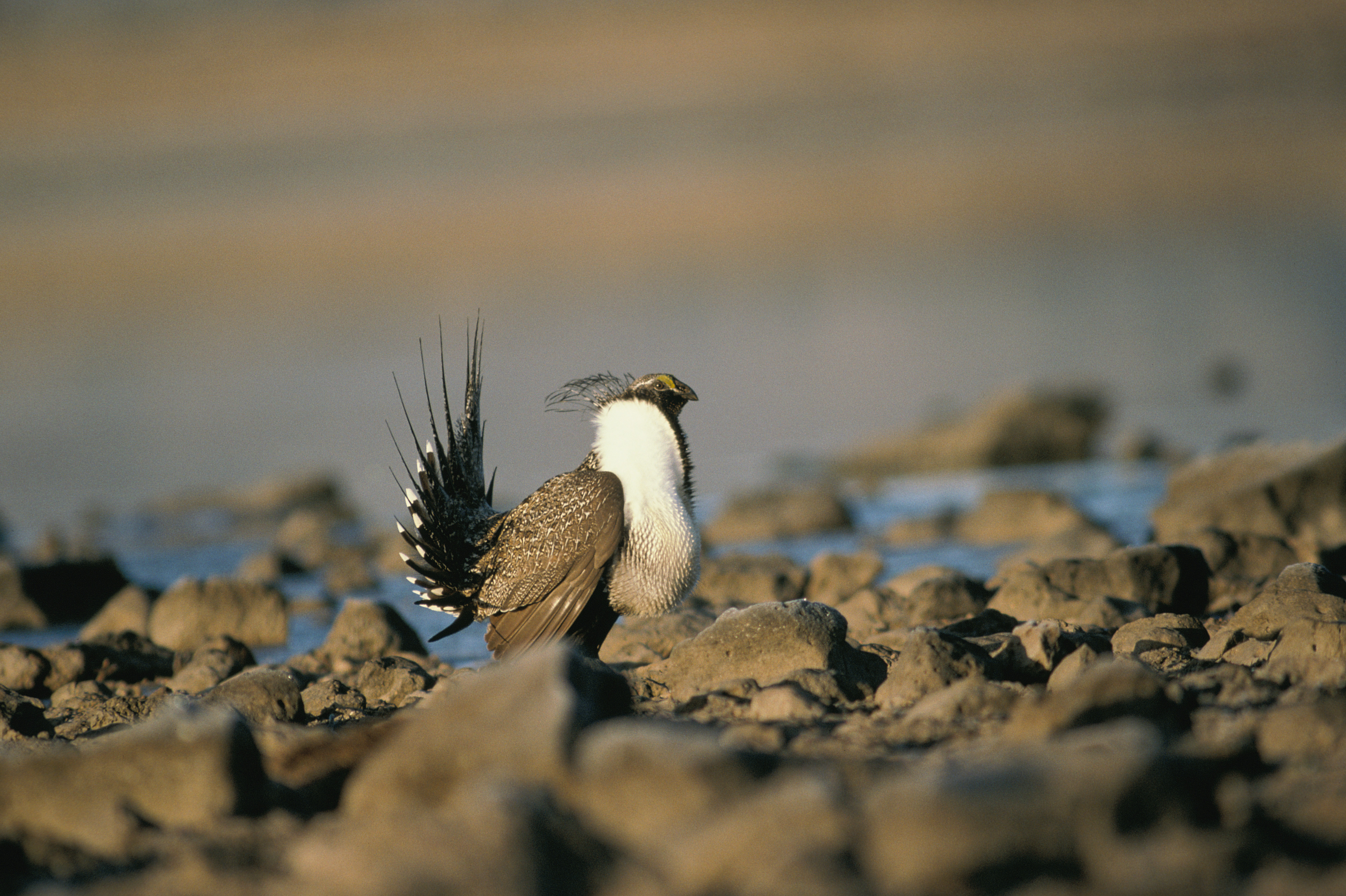
Greater Sage Grouse Recovery: Sage grouse standing in profile on rocky lake shore Courtesy US FWS Dave Menke, Photographer
Sage grouse standing in profile on rocky lake shore
Courtesy US FWS
Dave Menke, Photographer
So what happens when you get a bunch of ranchers together with a bunch of scientists and agencies? I found the answer as I attended a meeting in a remote part of western Boxelder County a few evenings ago. I was pleasantly surprised to discover much good for both wildlife and people.

This was a formal meeting under the auspice of the West Boxelder Conservation Resource Management (CRM) Group targeting greater sage grouse recovery. It was a very informative meeting covering everything from juniper forest removal, prescribed burns, and reseeding to enhance range for cattle, birds, and wildlife.

I learned that due to wildfire suppression which is essential to maintaining healthy range conditions, juniper forests have replaced thousands of acres of grasses, forbs, and sage steppe communities. I was also informed that pinyon pine will be preserved honoring Native American traditions which is central to their culture and diet. In addition to this work, the group addresses general rangeland condition and invasive species.

The CRM is planning wetland and riparian improvements that will provide resting, feeding, and nesting sites for migrating birds. Fencing has been put around key springs and off-site water sources have been developed. The reintroduction of beaver to the stream will help the extremely limited water supply by slowing the spring water runoff, stabilizing the stream banks, and raising the water table.

There was a lively exchange regarding a paper published in a respected science journal by USU authors addressing grazing impacts on grouse populations. The Greater Sage Grouse has become a species of special concern due to plummeting populations, and is considered an umbrella species being its recovery should be paralleled by other sensitive faunal species.

A statement in the papers abstract “Our meta-analysis revealed an overall negative effect of livestock grazing on grouse populations.” raised some red flags with the ranching community. Reading further, this study was conducted on a different grouse species in the U.K. There appeared to be a peaceful resolution to this concern and agreement that future abstract wording would get more scrutiny before published.

I also learned the verdict is still out on grazing impacts on the greater sage grouse. Intense research is underway in the CRM attempting to find answers. My prediction is with all of the range restoration activity combined with well managed grazing will eventually result in higher grouse populations.

This good work has not gone unrecognized. In 2016, the West Boxelder CRM was presented with the Sage Grouse Habitat Stewardship-Collaborative Award from the BLM as an ideal example of a community-based land stewardship organization that is committed, engaged, and active across land ownership boundaries. A tip of the hat to all interests on this remarkable effort!

This is Jack Greene writing and reading for Wild About Utah

Credits:

Pictures: Courtesy US Fish & Wildlife Service, Dave Menke, Photographer
Text: Jack Greene, Bridgerland Audubon Society

Additional Reading:

Community Based Conservation Plan, https://utahcbcp.org/localworkinggroups/WestBoxElder-WBECRM/westboxelder