Community Trees

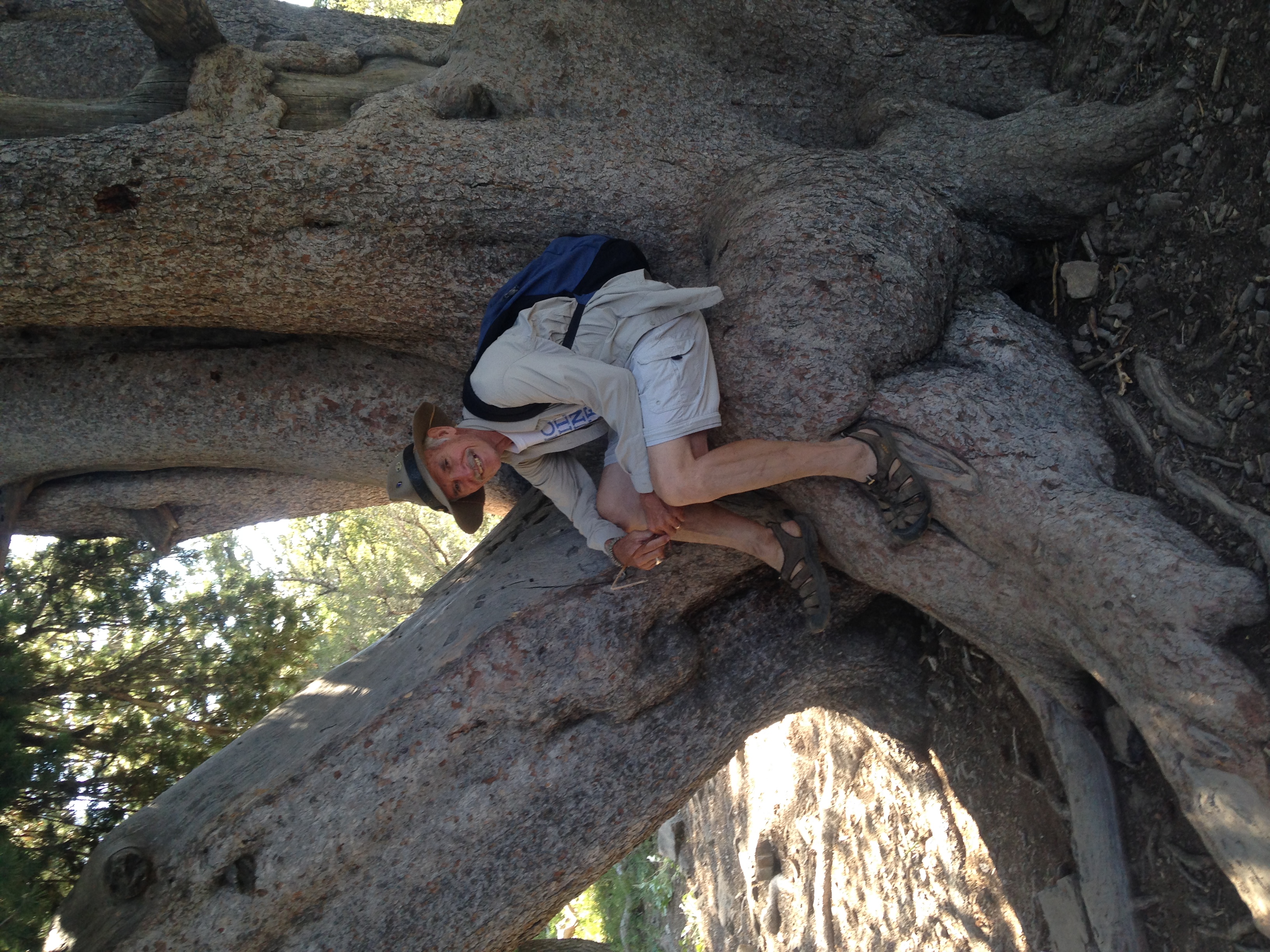
Jack in 560 year old Limber Pine tree 7/27/16 Courtesy & Copyright Hilary Shughart
Jack in 560 year old Limber Pine tree 7/27/16
Courtesy & Copyright Hilary Shughart

Jack and Darren McAvoy measuring the champion Engelmann Spruce at Tony Grove Lake. Jack has identified this tree as a close contender for the state Champion listing Courtesy & Copyright Hilary Shughart, Photographer Jack and Darren McAvoy measuring the champion Engelmann Spruce at Tony Grove Lake.
Jack has identified this tree as a close contender for the state Champion listing
Courtesy & Copyright Hilary Shughart, Photographer

Urban Trees Courtesy and Copyright Ron Hellstern, Photographer Urban Trees
Courtesy and Copyright Ron Hellstern, Photographer

“I think that I shall never see a poem lovely as a tree” Joyce Kilmore. I’m a forest person, my psyche deeply rooted in the forests of northern Wisconsin from my toddler days forward. Now as an octogenarian tree committee chair for Smithfield, Utah, trees have once again invaded my mental space and I feel the mychorrhizal fungi creeping back into my roots.

Arbor Day has come and gone a wonderful opportunity to celebrate these magnificent, towering relatives. As a biology teacher, I would have my students form a circle with each student offering a different benefit we receive from trees. Without any repetition, they never disappointed, each voicing another arboreal gift.

Every dollar spent on planting and caring for a community tree yields benefits that are two to five times the investment. The benefits urban forests provide include jobs, higher property values, improved physical and mental health, pollution mitigation, heat mitigation, lower energy bills, safer streets, flood protection, and biodiversity. Trees connect communities, cultures, and generations. Neighborhood trees have shown the ability to reduce stress, improve overall health and development in children, and encourage physical activity.

Climate change is arguably the greatest challenge facing the health of our planet, which is our health. While it will take many solutions working together to make a difference, trees are the proven, affordable, natural way that can be implemented quickly to pull carbon dioxide out of the atmosphere. Every tree planted is a step in the right direction.

One of the biggest line items in the Inflation Reduction Act’s forestry budget goes to urban forests: $1.5 billion has been appropriated for the Urban and Community Forest Assistance program, which provides technical and financial help to local communities so they can plant and maintain urban trees, educate citizens about tree care, and train tree workers.

“Access to urban green space and trees do a lot of wonderful things for people,” says Rachel Holmes, urban forestry strategist for the Nature Conservancy and co-chair for the Sustainable Urban Forest Coalition. Study after study validates the benefits of urban tree cover: Views of trees outside classroom and office windows can positively influence kids’ test scores and behavior, office workers report significantly less stress and more satisfaction; greener neighborhoods experience less crime.

An excellent resource for all things trees- selecting best tree for your landscape, planting, pruning, watering, mulching, is the Arbor Day website- www.arborday.org Smithfield has the high honor of holding the title “Tree City, USA”. Does your city? If not, the Arbor Day website has the criteria for attaining this esteemed title.

Are trees sentient beings- capable of thought and caring? May I suggest you read “Finding the Mother Tree- Discovering the Wisdom of the Forest” by Suzanne Simard for the answer.

Jack Greene for Bridgerland Audubon Society and I’m Wild About Utah trees!

Credits:

Audio: Courtesy & © Kevin Colver, https://wildstore.wildsanctuary.com/collections/special-collections
Text: Jack Greene, Bridgerland Audubon, https://bridgerlandaudubon.org/
Additional Reading: Lyle W Bingham, Webmaster, Bridgerland Audubon, https://bridgerlandaudubon.org/

Additional Reading:

Jack Greene’s Postings on Wild About Utah, https://wildaboututah.org/author/jack/

Joyce Kilmer, Poetry Foundation, https://www.poetryfoundation.org/poets/joyce-kilmer

Smithfield, Utah Tree Committee, https://smithfieldcity.org/bc-tc

USDA Forest Service Urban & Community Forestry, Inflation Reduction Act, Notice of Funding Opportunity (NOFO), USDA Forest Service, https://www.fs.usda.gov/sites/default/files/UCF-IRA-NOFO-04122023.pdf

About Tree City USA, The Arbor Day Foundation, https://www.arborday.org/programs/treecityusa/
Inflation Reduction Act News, UDSA News, https://www.usda.gov/ira

Kuhns, Michael, Mooter, Dave, Tree Planting Rules, https://extension.usu.edu/forestry/trees-cities-towns/tree-planting/tree-planting-rules

Tree Browser, USU Extension, Utah State University, https://treebrowser.org/
Find the Story

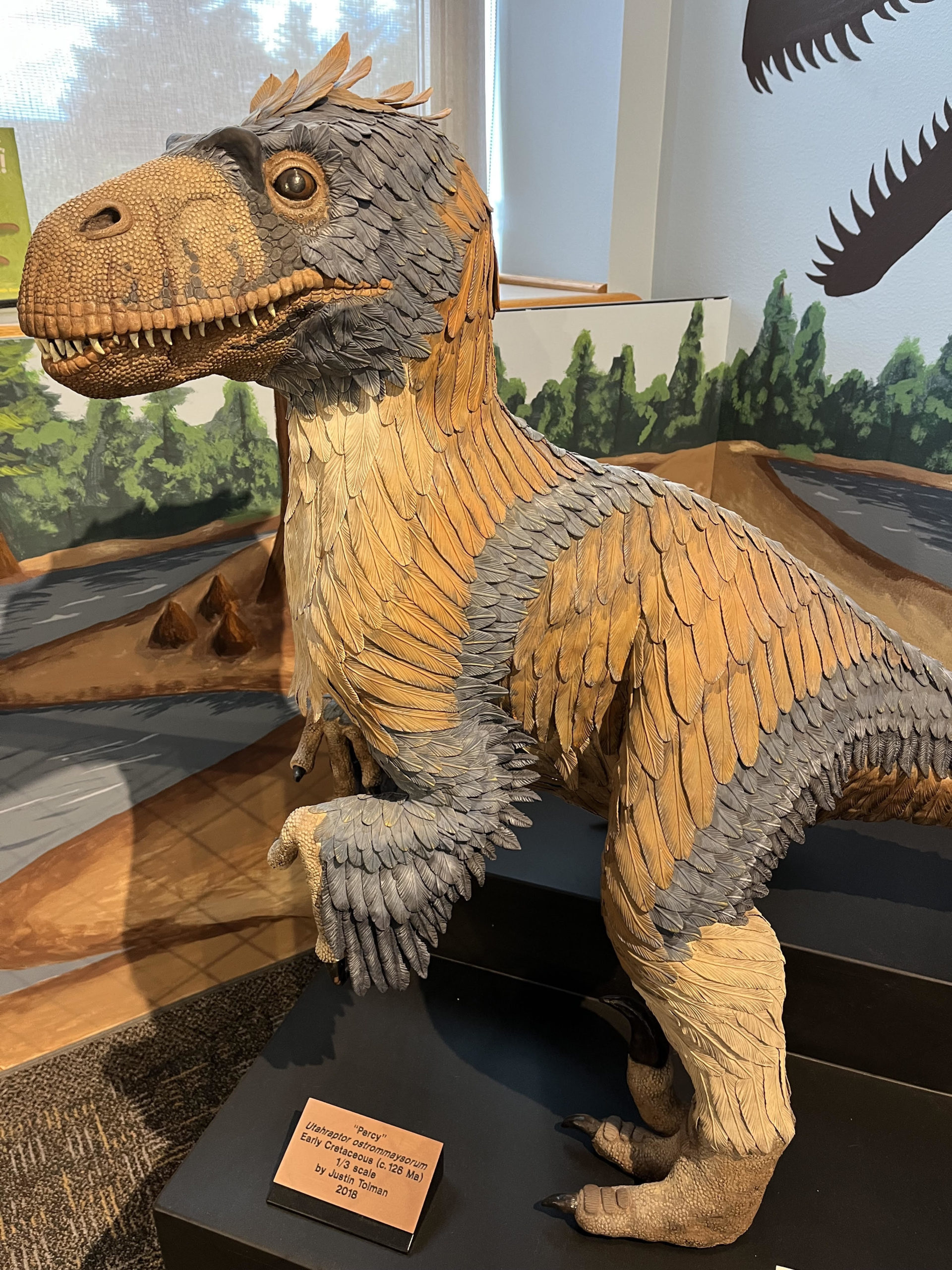
Percy the Utahraptor by Justin Tolman, USU Museum of Geology, https://www.usu.edu/geo/info/geology-museum/ Courtesy & © Shannon Rhodes, Photographer
Percy the Utahraptor
by Justin Tolman
USU Museum of Geology
Courtesy & © Shannon Rhodes, Photographer

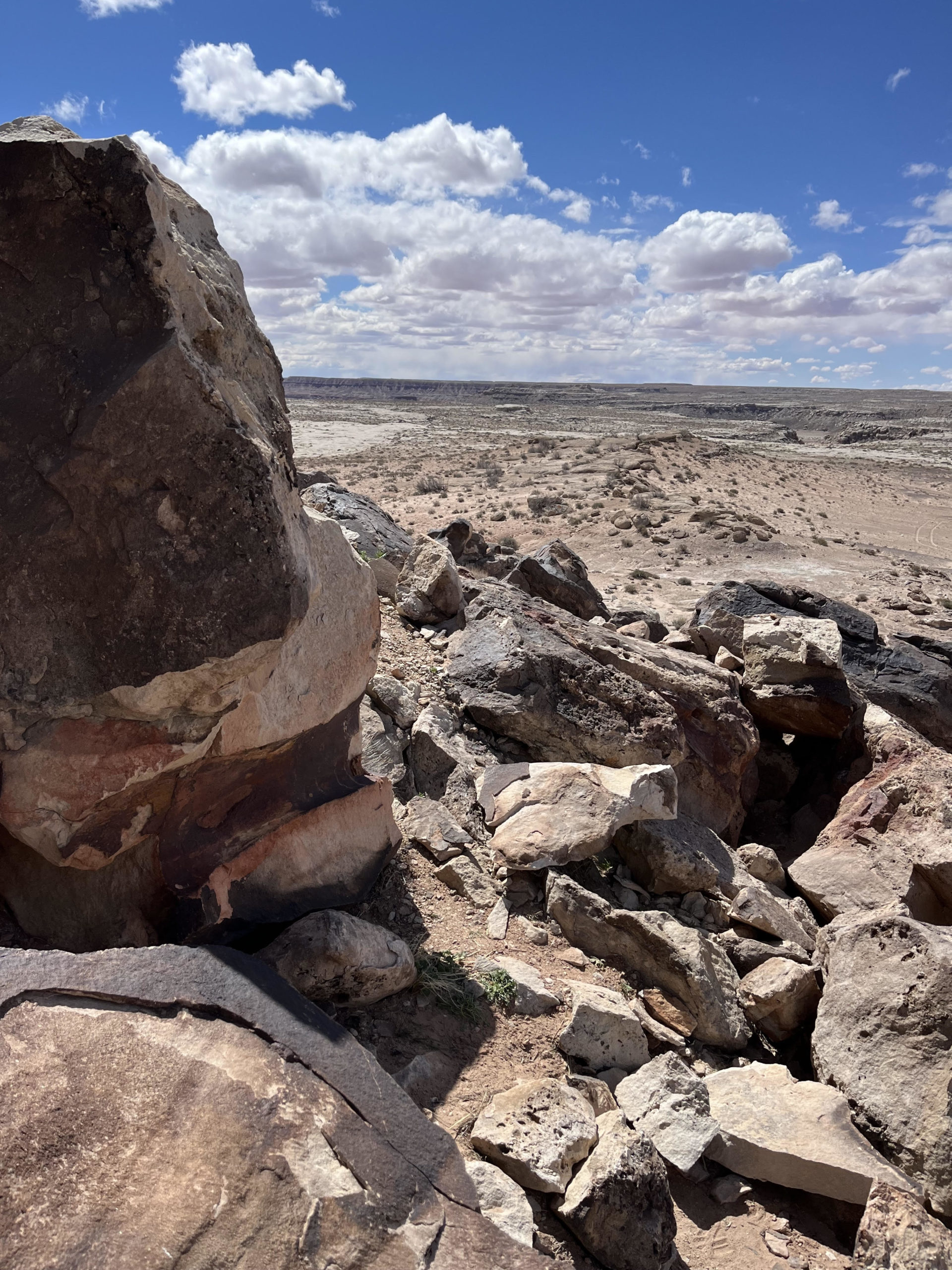
Fossil Point in the San Rafael desert near Green River, Utah, Courtesy & © Shannon Rhodes, Photographer Fossil Point in the San Rafael desert near Green River, Utah
https://www.blm.gov/visit/fossil-point-trailhead
Courtesy & © Shannon Rhodes, Photographer

In their picture book “Everywhere, Wonder,” Matthew Swanson and Robbi Behr challenge readers to find a story in places and phenomena both ordinary and extraordinary. Black ants marching in a line have a story just as interesting as red-rock canyons and a footprint on the moon. Sunlight patterns through a window are just as beautiful as Brazilian jungles and wildebeests in Kenyan savannas. They remind us to keep our eyes open and weave the stories of our noticings. As I wander among Utah’s wild wonders, it’s easy.

This spring I realized the fun of finding my wonder story as I stumbled upon the sign for Fossil Point in the San Rafael desert near Green River, Utah. The odds were pretty good, I suspected, that I could find fossils there, but I didn’t know exactly what I was hunting. My eyes are always drawn to the fact-filled stories on interpretive signage, even if I’ve read them before, but at this spot all I knew was the title. No kiosks with hint-filled maps and tips for discovery or guardrail paths making it obvious where to walk. Just a pile of boulders.

Although I wouldn’t consider myself a dino-fanatic, I have been a frequent visitor throughout my life at the Dinosaur National Monument and other Utah fossil museums as well as more dinosaur trackways and quarries not housed in buildings. I’ve read hundreds of dino readers and scanned even more dinosaur books, but here I was without many clues to what I might find. Resisting the urge to look up internet hints, I started up the Fossil Point slope. Was it trilobites the size of dimes and quarters or prehistoric swamp ferns? I will not reveal what I found at Fossil Point so that you can discover the wonder yourself, but it motivated me to catch up on Utah’s contribution to the more than one hundred characters in the dinosaur story, as depicted beautifully in the Dinosaurs of Utah tools at the Utah Geological Survey website.

So many students I’ve met have been fascinated by the T-rex and Utah state fossil Allosaurus, and they know all sorts of theories about how the Utahraptor, our state dinosaur since 2018, might have had feathers and hunted in packs. Fossils provide hints to the size and shape of prehistoric life, but they leave a lot of the colors and textures to the imagination. Tucked in the back corner of the Geology Museum at Utah State University I found another story, this one titled “Percy.” While the stories of Percy’s relatives are preserved in the nine-ton Utahraptor Megablock extracted from the area that is emerging as Utahraptor State Park, this story took sculptor Justin Tolman an astounding 350 hours to create. This incredible replica sports colors resembling my grandbabies’ Easter egg-dying hands as they toddled along the base of Fossil Point with me hunting evidence of a Mesozoic story. It is a story I’m glad I found
almost all on my own.

For Wild About Utah, I am Shannon Rhodes.

Credits:

Images: Courtesy & Copyright Shannon Rhodes, Photographer
Audio: Courtesy & © Friend Weller, https://upr.org/
Text:     Shannon Rhodes, Edith Bowen Laboratory School, Utah State University https://edithbowen.usu.edu/
Additional Reading Links: Shannon Rhodes

Additional Reading:

Wild About Utah Pieces by Shannon Rhodes, https://wildaboututah.org/author/shannon-rhodes/

Bureau of Land Management, Fossil Point trailhead, https://www.blm.gov/visit/fossil-point-trailhead

Rodgers, Bethany, Governor Spencer Cox signs bill to create Utahraptor State Park near Moab. 2021. The Salt Lake Tribune. https://www.sltrib.com/news/politics/2021/03/17/gov-spencer-cox-signs/

Sidwell, Owen. University student sculpts Utahraptor for USU Geology Museum. 2018. Utah Public Radio. https://www.upr.org/arts-and-culture/2018-04-12/university-student-sculpts-utahraptor-for-usu-geology-museum

Swanson, Matthew. Everywhere, Wonder. 2017. Imprint: New York. https://robbiandmatthew.com/everywhere-wonder/

USU Museum of Geology, Come meet Percy the Raptor, https://www.usu.edu/geo/info/geology-museum

Popular Geology: Dinosaurs and Fossils, Utah Geological Survey. https://geology.utah.gov/popular/dinosaurs-fossils/#:~:text=Utah%20also%20contains%20abundant%20fossils,of%20millions%20of%20years%20ago.

Mountain Lions Are Keystone Providers for Birds!

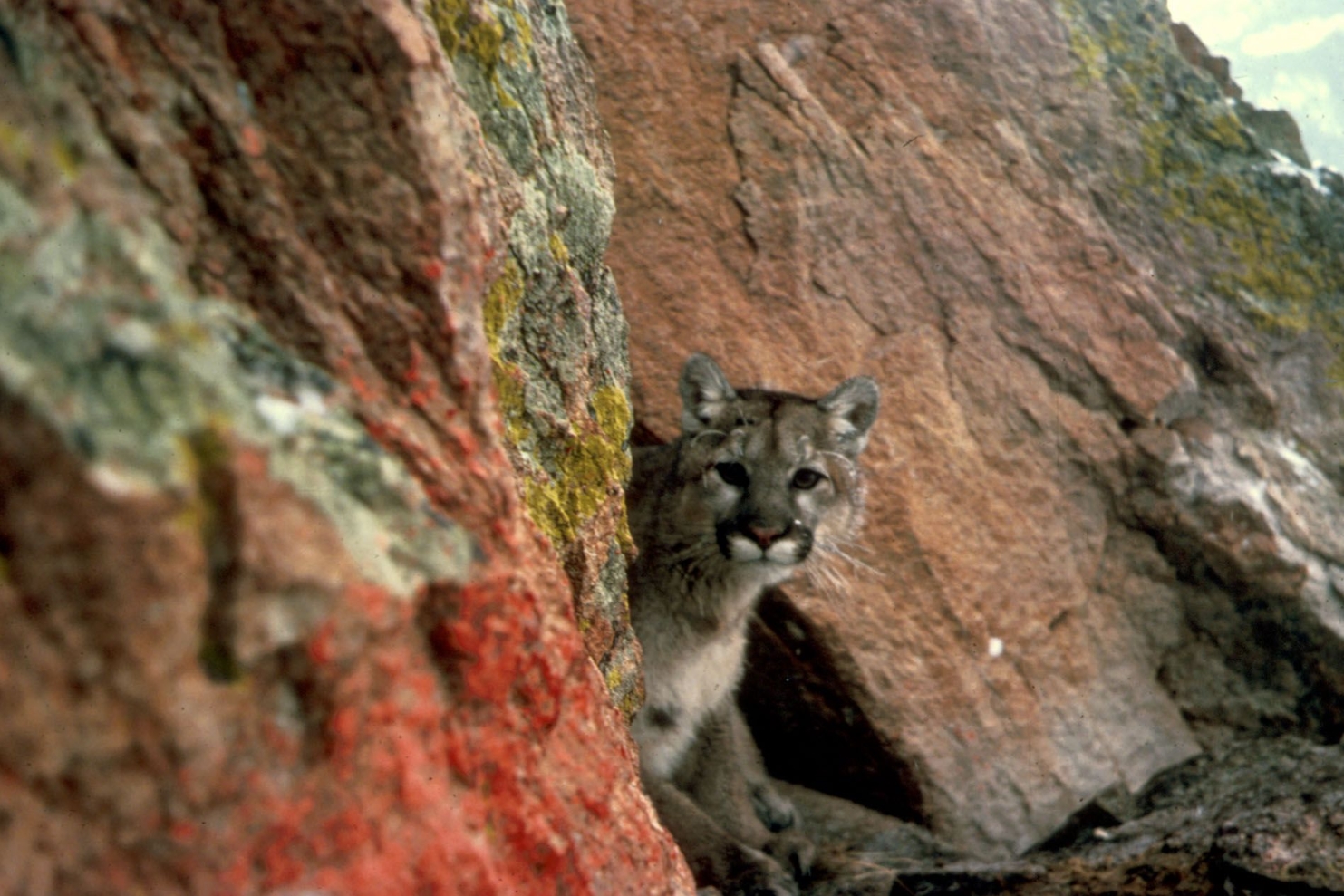
Mountain Lions Are Keystone Providers for Birds: Mountain Lion, (Felis concolor,) Courtesy US FWS, Larry Moats, Photographer
Mountain Lion
Felis concolor
Courtesy US FWS
Larry Moats, Photographer

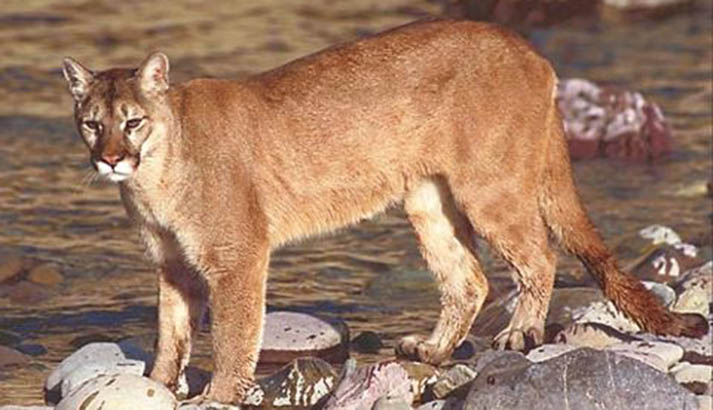
Cougar or Mountain Lion(Felis concolor). Courtesy US FWS Cougar or Mountain Lion
Felis concolor
Courtesy US FWS

Yellow-billed Cuckoo, (Coccyzus americannus,) Courtesy and Copyright Eric Peterson, Photographer Yellow-billed Cuckoo
Coccyzus americannus
Courtesy & © Eric Peterson, Photographer

When we think about World Migratory Bird Day, we often think about providing for their needs with water, bird feeders, and native plants, and hopefully we are keeping cats indoors and taking steps to prevent the lethal danger of window-collisions. We may even think about the importance of sponge city landscaping and beaver dams to slow and store snowmelt runoff, but it is the Mountain Lion which has the unique distinction of being a keystone provider ranked as the top vertebrate feeder of birds – in fact they “feed more mammals and birds than any other predator, increasing the number of animal interactions – the links in food webs so essential to maintaining ecosystem resilience. And they are ecosystem engineers on top of this as well.”
(1) Researchers have found that large carcasses create essential habitat for carrion-dependent beetles – these are not just food for beetles, but the very places beetles spend their lives, hiding from predators, seeking mates, raising young, and morphing from larvae [lahr-vee] into adult forms which disperse in search of the next carcass to begin the cycle all over again. (2)The food web gets to the very heart of bird migration, and the very real challenge of ensuring a future in which people and birds can thrive with dwindling habitat resources essential for survival.

Consider the Yellow-billed Cuckoo [koo-koo], one of the World Migratory Bird Day Ambassador species, to highlight the importance of water and riparian habitat for birds. A long-distance migrant, the Yellow-billed Cuckoo breeds in the United States, Mexico, and the Caribbean, and migrates through Central America to reach its wintering grounds in South America. It seeks wooded habitats with water nearby, where it feasts mostly on insects, especially caterpillars, during the spring and summer, transitioning to a more fruit- and seed-heavy diet in the fall and winter.

The Yellow-billed Cuckoo was selected for this year’s World Migratory Bird Day campaign to help shed light on the decline of riparian habitats along our rivers, streams, and freshwater lakes, particularly in the American West, where species that rely on these areas are experiencing population declines and are in possible danger of extirpation from some states. These western riparian species include Summer Tanager, Yellow Warbler, Willow Flycatcher, Yellow-breasted Chat, and Yellow-billed Cuckoo. Loss of native forest to farmland, housing, and other development has led to significant population declines in these species, especially in the case of the Cuckoo, which relies on large patches of streamside forest for breeding.

The Yellow-billed Cuckoo is becoming an increasingly rare bird in the American West. We need to increase awareness and encourage decision makers to explore ways to protect riparian areas, remove invasive species, restore habitat, and conserve water. World Migratory Bird Day 2023 aims to contribute to these efforts by highlighting the importance of water conservation and habitat management for migratory birds, and by providing resources to help promote these important issues. Bird Day is every day, but especially mid-May and mid-October. Learn more at migratorybirdday.org, and learn more about how to conserve water for sustaining bird life!

I’m Hilary Shughart with the Bridgerland Audubon Society, and I am Wild About Utah!

Credits:
Images: Mountain Lion images Courtesy US Fish & Wildlife Service, Larry Moats, Photographer
     Yellow-beaked Cuckoo, Courtesy & Copyright, Eric Peterson, VikingPhotographyUtah
Featured Audio: Courtesy & Copyright © Kevin Colver, https://wildstore.wildsanctuary.com/collections/special-collections/kevin-colver
Text: Hilary Shughart, President, Bridgerland Audubon Society
Additional Reading: Hilary Shughart and Lyle Bingham, https://bridgerlandaudubon.org/

Additional Reading

WildAboutUtah pieces by Hilary Shughart, https://wildaboututah.org/author/hilary-shughart/

In research recently published in the prestigious journal, Oecologia, we show that mountain lions are ecosystem engineers that create essential habitat for carrion-dependent beetles. It is the first research to show that an apex predator plays the role of engineer. In collaboration with graduate researcher, Josh Barry, and Dr. Melissa Grigione at Pace University, we collected and identified 24, 209 beetles across 18 sites, representing 215 unique beetle species. The carcasses abandoned by mountain lions were not just food for beetles, but the very places beetles spent their lives, hiding from predators, seeking mates, raising young, and morphing from larvae into adult forms that dispersed in search of the next carcass to begin the cycle all over again.”
Barry, J.M., Elbroch, L.M., Aiello-Lammens, M.E. et al. Pumas as ecosystem engineers: ungulate carcasses support beetle assemblages in the Greater Yellowstone Ecosystem. Oecologia 189, 577–586 (2019). https://doi.org/10.1007/s00442-018-4315-z

Mountain Lions as Ecosystem Engineers, MarkElbroch.com, , [Accessed April 29, 2023]

Mountain Lion Conservation, MarkElbroch.com, , [Accessed April 29, 2023]

EOC 206: Mark’s Cougar Conundrum, Eyes on Conservation Podcast, https://podcasts.apple.com/us/podcast/the-eyes-on-conservation-podcast/id916341600 [Accessed April 30, 2023]

Elbroch, Mark, The Cougar Conundrum, Sharing the World with a Successful Predator,, Island Press, August 2020, https://islandpress.org/books/cougar-conundrum [Accessed April 30, 2023]

Panthera USA, https://www.panthera.org/ [Accessed April 30, 2023]
Mark Elbroch, Ph.D., Panthera USA, https://panthera.org/mark-elbroch-phd [Accessed April 30, 2023]

MarkElbroch.com, [Accessed April 29, 2023]

Wiggins, D. (2005, March 25). Yellow-billed Cuckoo (Coccyzus americanus): a technical conservation assessment.
[Online]. USDA Forest Service, Rocky Mountain Region. Available: https://www.fs.usda.gov/Internet/FSE_DOCUMENTS/stelprdb5182002.pdf [Apr 30, 2023].

Yellow-billed Cuckoo Coccyzus americanus, All About Birds, Cornell Lab of Ornithology, Cornell University, https://www.allaboutbirds.org/guide/Yellow-billed_Cuckoo/

May 13 & October 14, World Migratory Bird Day 2023, WATER, UNEP/CMS Secretariat and UNEP/AEWA Secretariat, https://www.worldmigratorybirdday.org/

Great Salt Lake Mirabilite Mounds

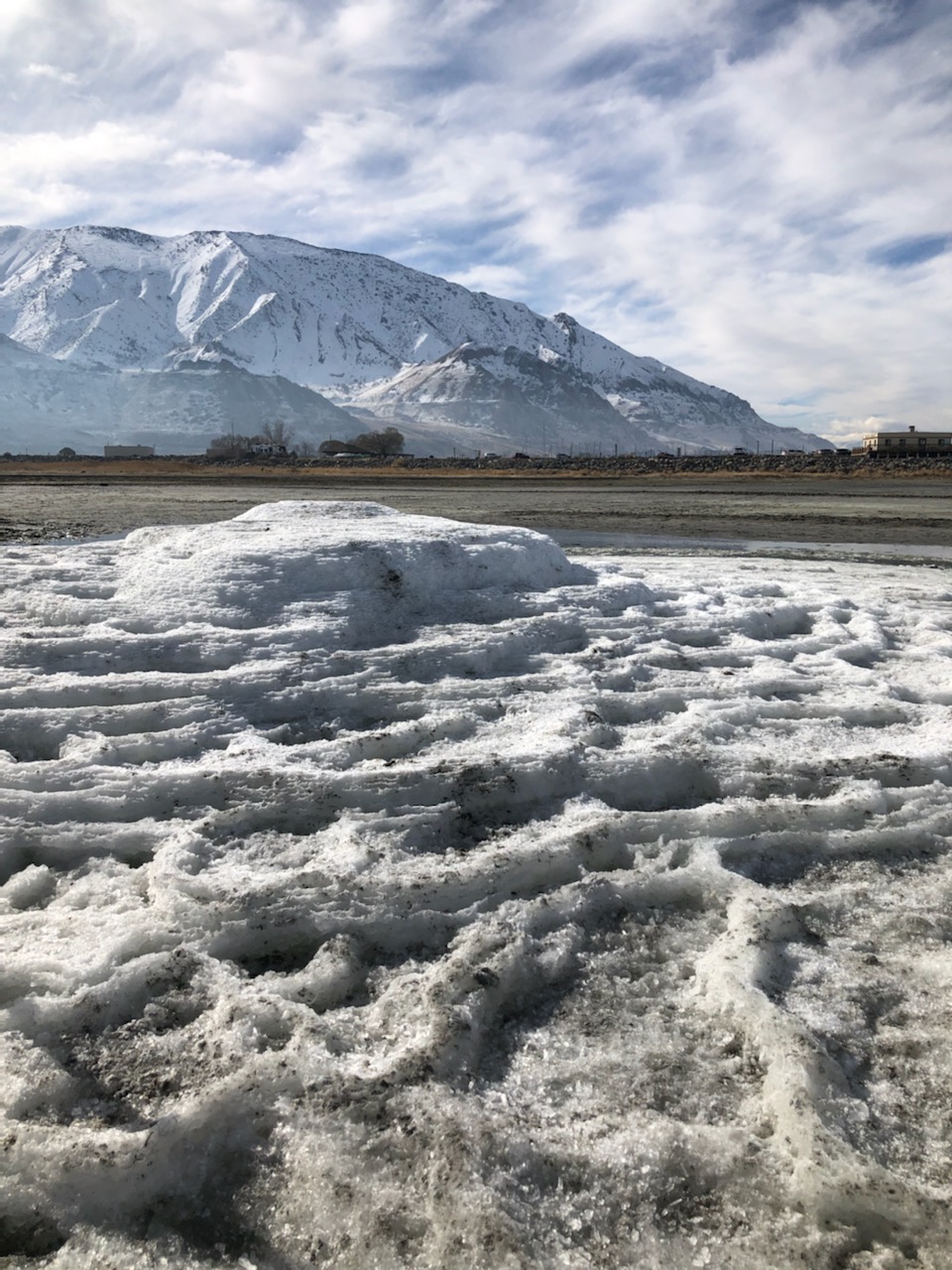
Mirabilite Mounds in the Great Salt Lake Courtesy & © Mary Heers, Photographer
Mirabilite Mounds
in the Great Salt Lake
Courtesy & © Mary Heers, Photographer
Back in October 2019, the ranger at the Great Salt Lake State Park began to notice a white mound forming on the sand flats behind the visitor center. The white mounds turned out to be hydrated sodium sulfate – known as mirabilite- which was being carried to the surface by the upwelling of a fresh water spring. Since the 1940’s geologists have known that in this area, 30 inches below the surface, there was a 3 – 6 foot thick shelf of mirabilite. They knew about the fresh water springs What was new was cold air. Since this stretch of sand was no longer underwater, the mirabilite carried to the surface stayed there as crystals, piling up on each other, puddling and spreading out. One mound rose to the height of 3 feet.

Mirabilite Springs in the shadow of the Kennecott Smelter stack Courtesy & © Mary Heers, Phorographer
Mirabilite Springs in the shadow of the Kennecott Smelter stack
Courtesy & © Mary Heers, Phorographer
When the mounds started to form again this winter, I jumped at the chance to to go and take a look. I must admit at first I was a little underwhelmed at the size, perhaps because the Kennecott Smelter Stack nearby dominates the view, rising to 1,215 feet – roughly the same height as the Empire State Building. But the park ranger got my attention when she told us that mirabilite mounds have only been seen in four places in the entire world – the Canadian Arctic, Antarctica, Central Spain, – and Utah. Just seeing them turns out to be a rare winter treat. When the air warms to 50 degrees, the mirabilite will crumble into a fine white powder and disappear.

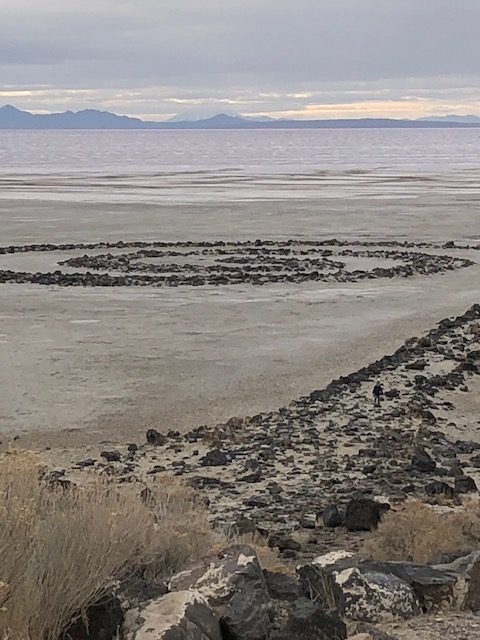
Robert Smithson's Spiral Jetty (1970) Courtesy & © Mary Heers, Photographer
Robert Smithson’s Spiral Jetty (1970)
Courtesy & © Mary Heers, Photographer
My mind flashed back to a trip I’d made to the other end of the lake ten years ago. I’d just graduated from the docent training class at the Utah Museum of Fine Art, and a friend and I wanted to celebrate by having High Tea at the center of the Spiral Jetty, a 1,500 foot, long, 15 foot wide coil of black basalt rock – a stunning example of land art jutting out from the northern shore. We’d been warned that it might be underwater, but when we arrived we were delighted to find we could easily walk to the very center of the spiral as the lake water gently lapped at the edges of our shoes. We clinked our tea cups, and toasted the greatness of the lake.

Suddenly I wanted to see the jetty again, so I hopped in my car and drove to the remote site. I saw the Spiral Jetty was now high and dry. Drifting sand had already started to bury parts of it. The water’s edge was now over 300 yards away. I thought of the millions of migratory birds that would be arriving in the spring to rest and feast on the tiny treasures of the lake, the brine shrimp. I hoped a smaller lake would still be enough for all of them.

The recent words of the director of Friends of the Great Salt Lake, Lynn de Freitas, rang in my head: “The Great Salt Lake is a gift that keeps on giving. Just add water.”

This is Mary Heers and I’m Wild About Utah.

Credits:
Photos: Courtesy & Copyright Mary Heers, Photographer
Featured Audio: Courtesy and Copyright Kevin Colver https://wildstore.wildsanctuary.com/collections/special-collections/kevin-colver
Text & Voice: Mary Heers, Generous Contributor, Utah Public Radio
Additional Reading: Lyle Bingham, Webmaster Bridgerland Audubon Society

Additional Reading

Mirabilite Spring Mounds Near Great Salt Lake Marina, Utah Geological Survey (UGS), Utah Department of Natural Resources, https://geology.utah.gov/popular/general-geology/great-salt-lake/mirabilite-spring-mounds/

Mirabilite, Mindat.org, Hudson Institute of Mineralogy, https://www.mindat.org/min-2725.html

Tabin, Sara, Rare salt formations return to Great Salt Lake’s shores; take a tour while they last, The Salt Lake Tribune, Jan. 13, 2021, https://www.sltrib.com/news/2021/01/14/rare-salt-formations/

USGS 412613112400801 The Great Salt Lake at Spiral Jetty, Site Map for the Nation, U.S. Geological Survey(USGS), U.S. Department of the Interior, https://waterdata.usgs.gov/nwis/nwismap/?site_no=412613112400801&agency_cd=USGS

Case, William, GEOSIGHTS: PINK WATER, WHITE SALT CRYSTALS, BLACK BOULDERS, AND THE RETURN OF SPIRAL JETTY!, Survey Notes, v. 35 no. 1, Utah Geological Survey (UGS), Utah Department of Natural Resources, January 2003, https://geology.utah.gov/map-pub/survey-notes/geosights/spiral-jetty/

Board & Staff, Friends of the Great Salt Lake, https://www.fogsl.org/about/board-staff

Salt Lake Brine Shrimp, https://saltlakebrineshrimp.com/harvest/