Everyone Can Be a Part of the February Global Bird Count!

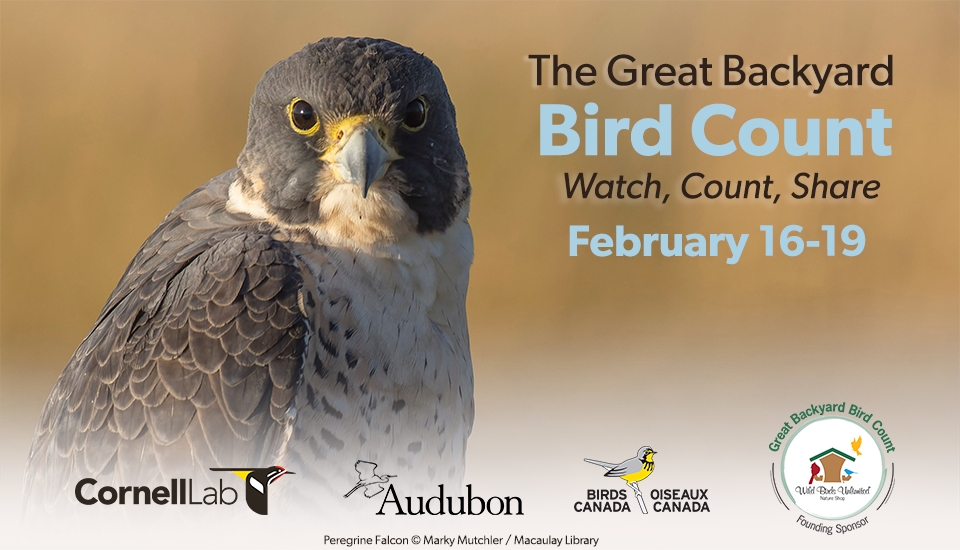
Everyone Can Be a Part of the February Global Bird Count! Courtesy Cornell Lab of Ornithology on behalf of Great Backyard Bird Count, GBBC.org
Courtesy Cornell Lab of Ornithology on behalf of Great Backyard Bird Count, GBBC.org

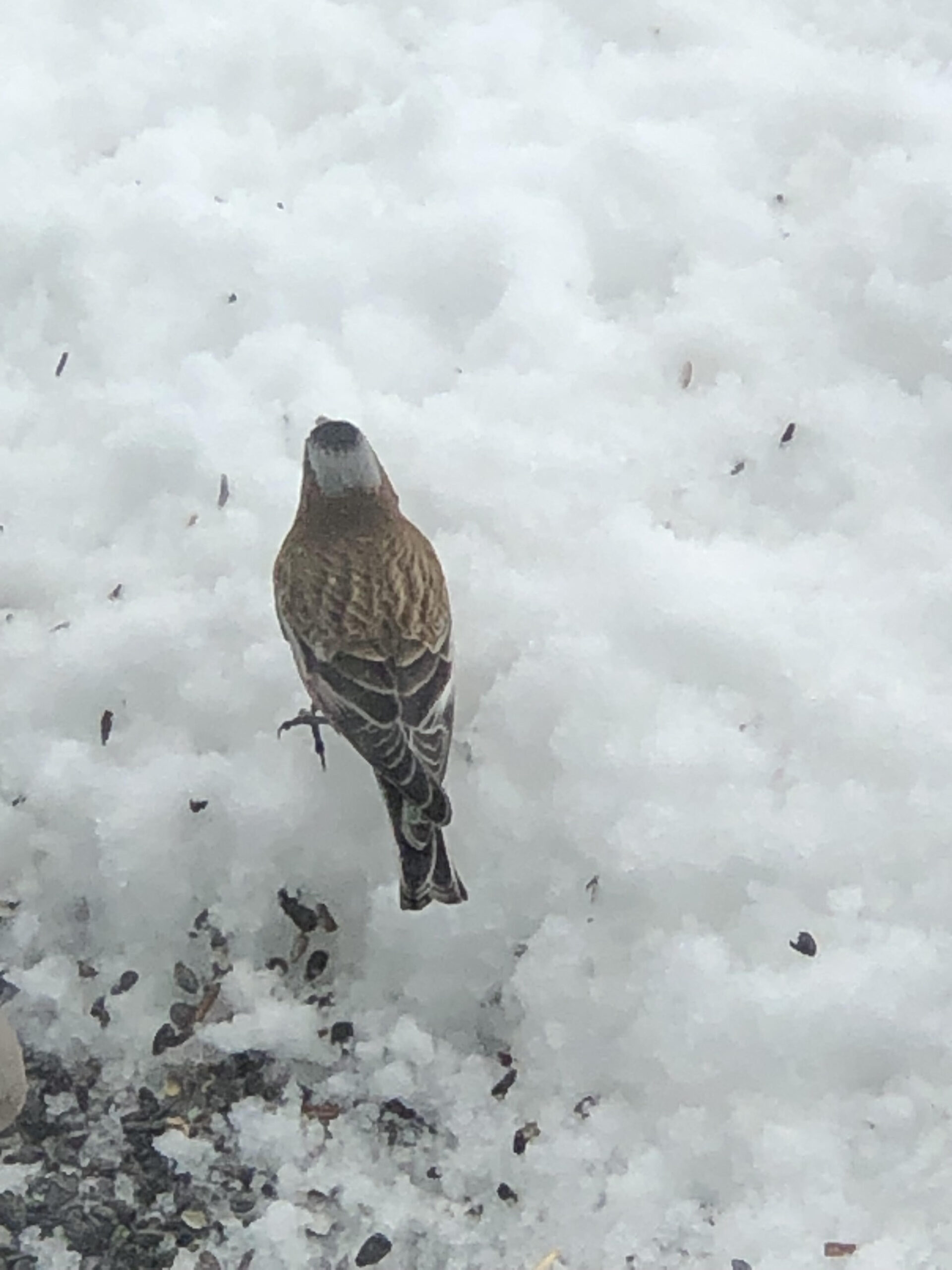
Gray-crowned Rosy Finch Courtesy & Copyright Hilary Shughart, Photographer Gray-crowned Rosy Finch
Courtesy & Copyright Hilary Shughart, Photographer

There are deeply concerning drops in bird populations, and shifting migration ranges and patterns are changing before our eyes, but on the bright side, the crisis presents a strong reason and opportunities for even the most novice birders to be a part of the solution, to contribute to environmental conservation through community science. The Cornell Lab of Ornithology, the National Audubon Society, and Birds Canada urge us to walk into nature and count birds for the mid-February Global Bird Count known as the Great Backyard Bird Count. February is the month to help scientists better understand global bird populations before one of their annual migrations, and the data collected will help bend the curve for bird survival.

“Spend time in your favorite places watching birds–then tell us about them! In as little as 15 minutes notice the birds around you. Identify them, count them, and submit them to help scientists better understand and protect birds around the world. If you already use eBird or Merlin, your submissions over the 4 days count towards GBBC.”

Everything you need to know will be shared in a free online webinar, so “Get ready to flock together for the Great Backyard Bird Count (GBBC)! Panelists will explain how to participate in this exciting global event and how participation might extend past your back door. Discover how to join a group taking part in the GBBC and explore fun ways to involve kids. From bird ID tips to counting birds with ease, this webinar is your ticket to an engaging and confident GBBC experience.”

We’ve posted links for local parks and trails with eBird printable checklists, and it’s encouraging to see the number and variety of species accessible right in town, and in our nearby National Forests and Wilderness Areas. Will you see American Robins, Black-billed Magpies, and Northern Flickers? Can you tell the difference between the American and the Lesser Goldfinch, or the Mountain and Black-capped Chickadee? Will you get lucky and spot a Gray-crowned Rosy finch feasting on black oil sunflower seeds in your own backyard?

There’s no time like the present to establish new traditions for connecting with nature and being part of the solution to the climate challenge. There are ample online resources for new and experienced birders, and in addition to the four local Utah Audubon Chapters, the Birding in Utah Facebook group provides a birding community with expert help with learning how to identify birds even in blurry photos. Team up to be a part of the constellation of community scientists documenting history, and weaving a safety net to ensure that birds have the places they need to thrive today and tomorrow.

I’m Hilary Shughart with the Bridgerland Audubon Society, and I am wild about the National Audubon initiative to promote community science for Bird-Friendly communities, and I am Wild About Utah!

Credits:
Images: Courtesy Great Backyard Bird Count, Cornell Lab of Ornithology et. al.
Gray-crowned Rosy-Finch: Courtesy & Copyright Hilary Shughart
Featured Audio: Courtesy & Copyright © Kevin Colver, https://wildstore.wildsanctuary.com/collections/special-collections/kevin-colver
Text: Hilary Shughart, President, https://bridgerlandaudubon.org/
Additional Reading: Hilary Shughart and Lyle Bingham, https://bridgerlandaudubon.org/

Additional Reading

Other Wild About Utah pieces authored by Hilary Shughart

Global Bird Count in February, Great Backyard Bird Count, https://www.birdcount.org/

About the Great Backyard Bird Count, Every February, count for as little as 15 minutes in your own backyard to help expand our understanding of birds. National Audubon, https://www.audubon.org/conservation/about-great-backyard-bird-count

Global Bird Count in February; Great Backyard Bird Count, Birds Canada, https://www.birdscanada.org/bird-science/great-backyard-bird-count

eBird Field Checklist Sue’s Pond–Logan River Wetlands and Shorebird Playa (178 species), Cache, Utah, https://ebird.org/printableList?regionCode=L586105&yr=all&m=

Who Likes What: The Favorite Birdseed of Feeder Regulars and Rarities, Here are the top three seed choices for a variety of species, per a scientific observational study of 1.2 million bird feeder visits. National Audubon, https://www.audubon.org/news/who-likes-what-favorite-birdseed-feeder-regulars-and-rarities

Birding: The Basics & Beyond (1 hr 12 mn video), Natural Habitat Adventures & WWF(World Wildlife Fund), https://www.nathab.com/traveler-resources/webinars/your-daily-dose-of-nature/birding-the-basics-beyond/

Bridgerland Audubon Great Backyard Bird Count Page, https://bridgerlandaudubon.org/birding-tools/birding-events/great-backyard-bird-count/

Howe, Frank, Rosy Finches, Local Bird Spotlight, The Stilt, Bridgerland Audubon Society, December 2009, https://bridgerlandaudubon.org/documents/BAS-Stilts/Stilt-2009/Vol%2038%20Image%2010.pdf

Gray-crowned Rosy-Finch, All About Birds, Cornell Lab of Ornithology, https://www.allaboutbirds.org/guide/Gray-crowned_Rosy-Finch/overview#

“Get ready to flock together for the 2024 Great Backyard Bird Count (GBBC)! Panelists will explain how to participate in this exciting global event and how participation might extend past your back door.”
Beyond the Backyard: All About the Great Backyard Bird Count Webinar, Tuesday, February 13, 1:00-2:00 p.m. Eastern, https://dl.allaboutbirds.org/2024gbbcwebinar
Pony Express & Wild Horses

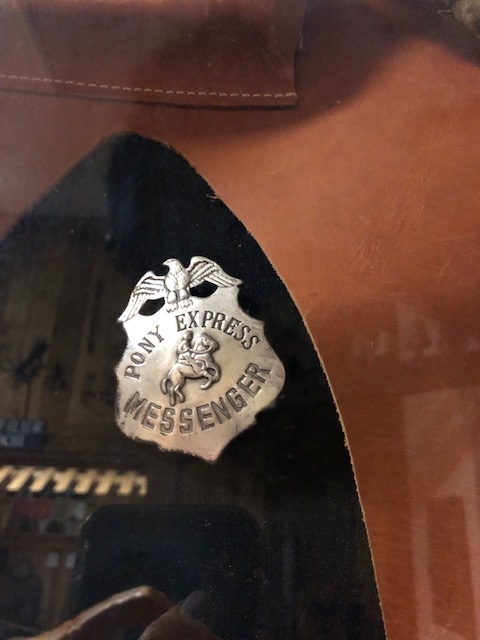
Pony Express & Wild Horses: Pony Express Messenger Badge on Mail Satchel Camp Floyd State Park Museum Image Courtesy & Copyright Mary Heers
Pony Express Messenger Badge on Mail Satchel
Camp Floyd State Park Museum
Image Courtesy & Copyright Mary Heers

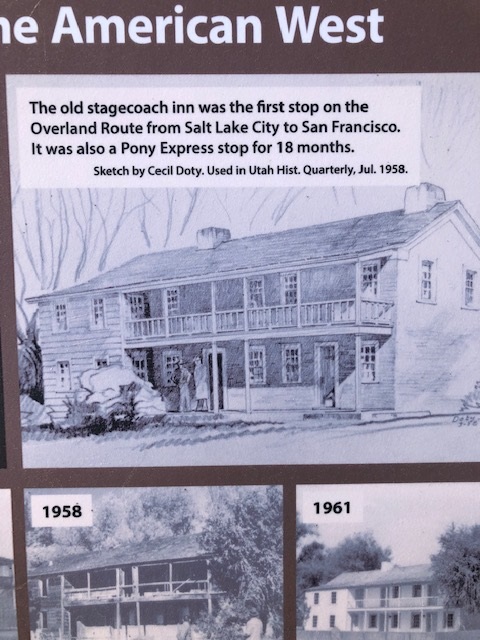
Images of the Old Stagecoach Inn As Sketched by Cecil Doty and Published in the Utah Historical Quarterly July 1958 and other images therein credited. Camp Floyd State Park Museum Image Courtesy & Copyright Mary Heers Images of the Old Stagecoach Inn
As Sketched by Cecil Doty and Published in the Utah Historical Quarterly July 1958 and other images therein credited.
Camp Floyd State Park Museum
Image Courtesy & Copyright Mary Heers

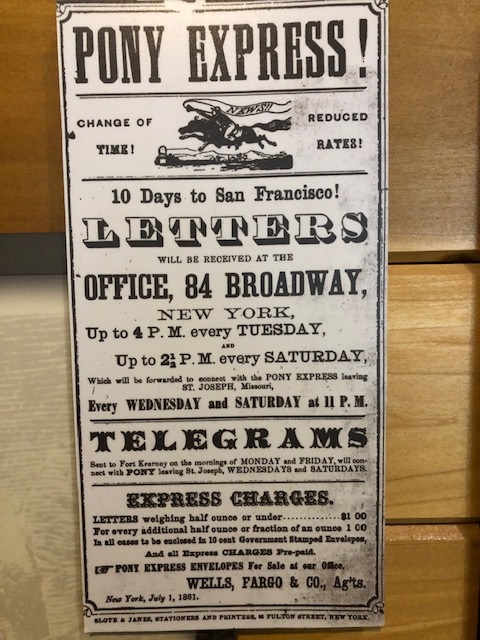
Pony Express Ad Camp Floyd State Park Museum Image Courtesy & Copyright Mary Heers Pony Express Ad
Camp Floyd State Park Museum
Image Courtesy & Copyright Mary Heers

Last month, Tom Williams’ interview with author Will Grant really caught my attention. Will was describing his adventures retracing the original Pony Express route thru Utah with his two horses, Chicken Fry and Badger. When he was crossing Utah’s West Desert, he ran into a wild stallion. The Onaqui herd of wild horses now roams freely there, but this stallion was a loner.

Will saw the horse first, about a mile away, rolling in the mud at a watering hole. Will knew the stallion would resent an intrusion into his space. Will picked up some stones.

The stallion came at them at a dead run. At the last moment, the stallion veered off and circled them at a gallop. At 40 feet Will threw his first stone. He missed. The second stone hit the stallion, who reared up and hammered the air with his front hooves. Luckily, after a few more stones the stallion had had enough and went off to graze.

Hoping to see the wild horses -from the safety of my car – I picked up the Pony Express trail as it skirted the southern edge of the Great Salt Lake. I stopped in Fairfield at a historic inn that had been the first overnight stop for the stagecoach leaving Salt Lake with the mail for the new state of California. The stagecoach journey took 25 days. The Pony Express said it could do it in 10. So, at this inn, the Pony Express rider just jumped on a waiting horse and kept going.

I wasn’t in a hurry, so I poked my head into a small brick building adjacent to the inn. Inside was a lone state park employee who was delighted to see me and insisted I watch a 10 minute video. I was amazed to find out that at this very spot over 3,000 US soldiers spent three years at what they called Camp Floyd. Then, when the Civil War broke out, the soldiers pulled up stakes and disappeared with hardly leaving a trace.

Back in my car, I followed the original pony express route for miles down an empty slim road. Up head I knew it would become so dry and desolate that water would have to be hauled to the relay stations by wagons. I was just starting to offer up a small prayer that I wouldn’t have any car trouble, when I caught sight of the highway intersecting the trail up ahead. I don’t remember ever being so happy to see traffic.

The very first Pony Express rider galloped into Utah in April 1860. Every rider rode between 75-100 miles, switching horses every 10 miles. It was expensive but it was fast. At the same time, another company, the Intercontinental Telegraph, was cutting down trees across the Utah Territory and extending their line of telegraph poles. In Oct 1861, five months after the Civil War started, the telegraph company had its 27,500 poles and 2,000 miles of iron wire in place. A message was tapped out in California, went zinging through the wires in Salt Lake, and was delivered to Abraham Lincoln’s desk. The people of California, the message read, would remain loyal to the union.

The message traveled from coast to coast in seconds. The Pony Express closed down its operations two days later. It had lasted 18 months.

This is Mary Heers and I’m Wild About Utah

Credits:
Photos: Courtesy Mary Heers, as taken at the Camp Floyd State Park Museum, Fairfield, UT
Featured Audio: Courtesy & Copyright © Friend Weller, Utah Public Radio upr.org
Text: Mary Heers, https://cca.usu.edu/files/awards/art-and-mary-heers-citation.pdf
Additional Reading: Lyle Bingham, https://bridgerlandaudubon.org/

Additional Reading

Wild About Utah, Mary Heers’ Wild About Utah Postings

2021 Onaqui Mountain Wild Horses Gather, Bureau of Land Management, US Department of the Interior, July 18, 2021, https://www.blm.gov/programs/whb/utah/2021-onaqui-wild-horse

Onaqui Mountain HMA, Bureau of Land Management, US Department of the Interior, https://www.blm.gov/programs/wild-horse-and-burro/herd-management/herd-management-areas/utah/onaqui-mountain

Grant, Will, The Last Ride of the Pony Express: My 2,000-mile Horseback Journey into the Old West, Little, Brown and Company, June 6, 2023, https://www.amazon.com/Last-Ride-Pony-Express-Horseback/dp/0316422312

“The horse went extinct in the Americas (along with other large mammals like the mammoth and giant sloth) about 10,000 years ago. It was the Spanish Conquistadors that reintroduced the horse to North America. When Hernan Cortez and his 200 soldiers landed in Mexico in 1519, they brought 16 horses with them. Over time, some of these horses got away to form wild bands, and others fell into the hands of the Native Americans.”
Heers, Mary, Gallop Thru Time, Wild About Utah, August 22, 2022, https://wildaboututah.org/gallop-thru-time/

Squirrel Tales

Evergreen Cone Scales, Courtesy & Copyright Shannon Rhodes
Evergreen Cone Scales
Courtesy & Copyright Shannon Rhodes

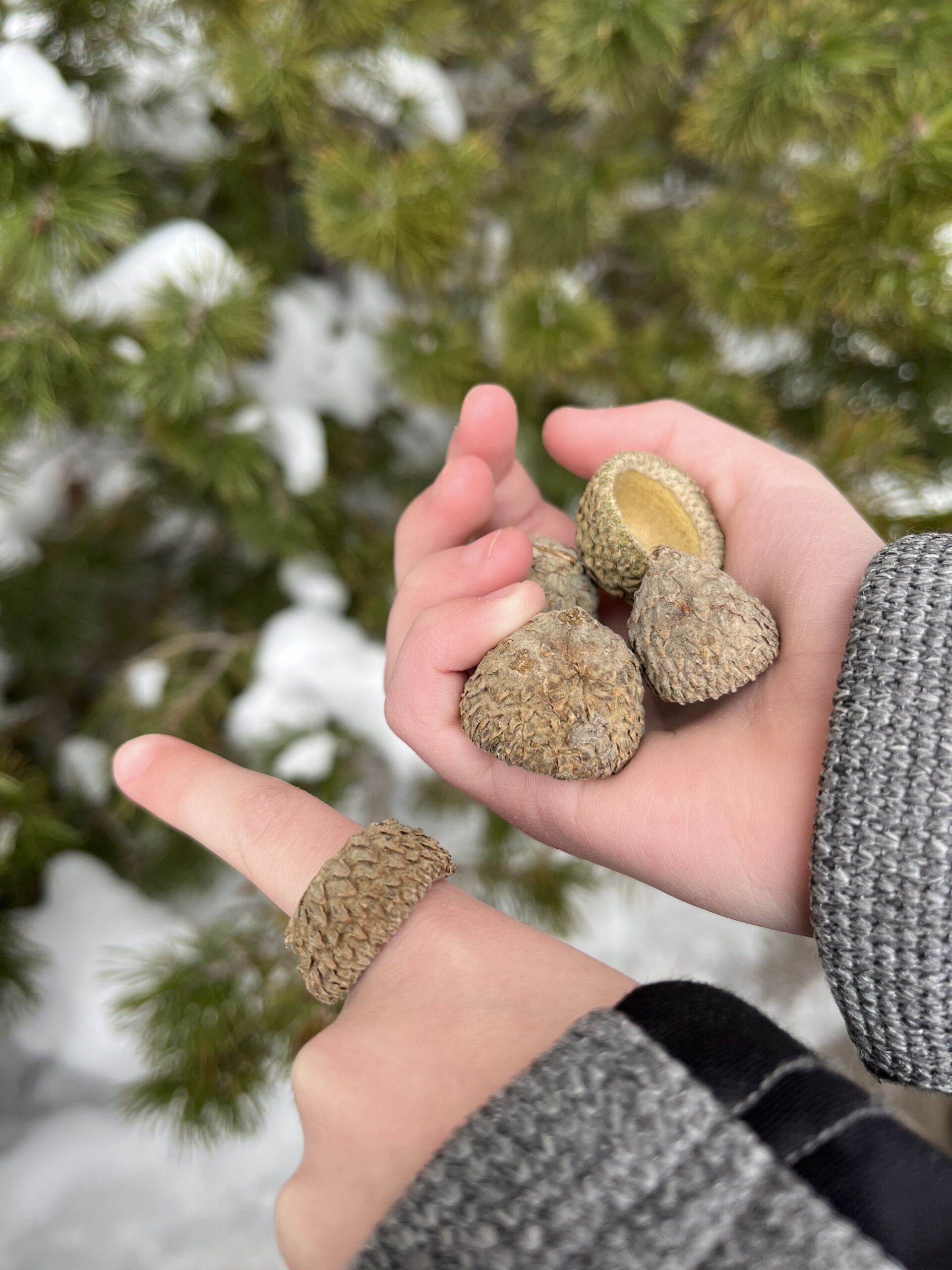
Nature Rings, Courtesy & Copyright Shannon Rhodes Nature Rings
Courtesy & Copyright Shannon Rhodes

The recent snows have made the sledding hill at Edith Bowen Laboratory School on the campus of Utah State University a popular place, but without snow, children flock at recess to the wild area under the oak trees to harvest acorns. I’ve invited one of these students, a seven-year-old first grader named Lila, to explain this phenomenon:

“You get an acorn and you rub the pointy bottom part and keep doing it for a bit and then you can put it on whatever finger it fits on and it turns into a nature ring.”

They trade them and then squirrel the rings away in their lockers. Sometimes they stop to notice the squirrels scolding above them in the trees, and one day I sat with them to appreciate a noisy one. Nibbling away, its eight black claws rotated the little nugget it was holding. Standing erect so I could see the whitish belly fur and bushy tail, it kept me in its sights as I sketched its silhouette and details in my nature journal.

The Natural History Museum of Utah sponsored another Squirrel Fest during the first week of December, and I should have been better prepared to identify it so I could participate in that project during the same month as the Christmas Bird Count. The NHMU website reports that more than 900 Utah citizen scientists watched for and collected data on fox squirrels and other squirrels in 2023. I know now that my squirrel wasn’t a fox squirrel native to the eastern U.S. Those critters are moving in. Actually, they have been spreading throughout northern Utah since 2011. I know mine was probably not that target species because the fox squirrel is larger and has a bright yellow or orange belly and a long, very bushy tail.

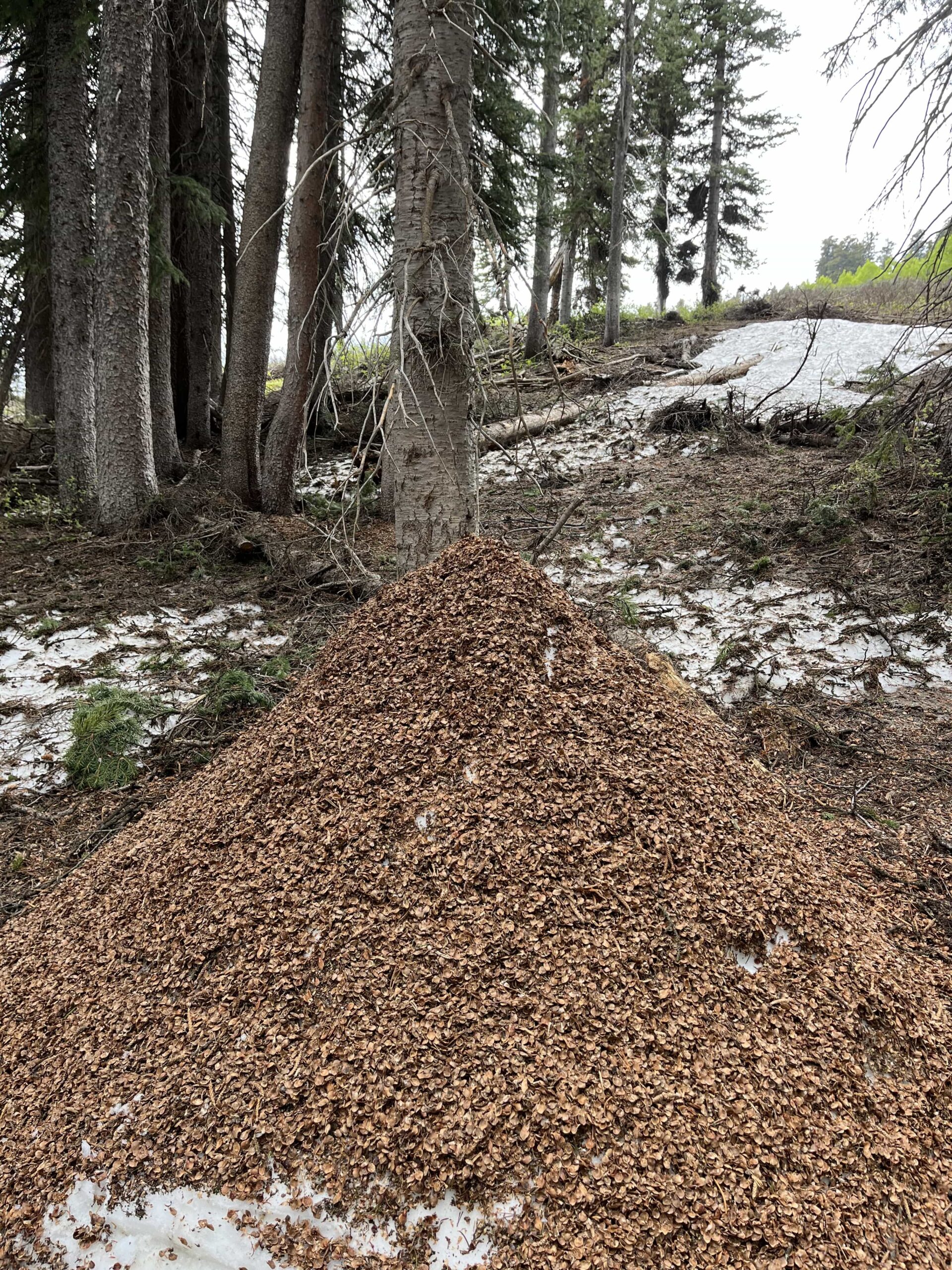
Here’s another story. One June afternoon last summer in the Cache National Forest, I stumbled upon a massive pile of evidence that squirrels had been busy, having stashed their food finds and then unpacking them. The pile of evergreen cone scale leftovers was over three feet tall. I had seen middens at the base of trees before, but never had I seen a pile this incredible. Even though it was a snow pile that the cone scales covered, the insulation slowing the melt, it was still monstrous.

As most of the students on the first day launching my first ever university writing class described themselves as writers with words like decent, ok, alright, unpolished, and mediocre, I thought about that pile of potential. They have stories, piles of stories to tell and teach, squirreled away maybe, but ready to thaw.

Just like Kate DiCamillo’s superpowered squirrel Ulysses in her children’s novel Flora and Ulysses, we all have stories to write. DiCamillo wrote, “He would write and write. He would make wonderful things happen. Some of it would be true. All of it would be true. Well….Most of it would be true.”

This year on January 21 we celebrate Squirrel Appreciation Day. But whether you watch and write about squirrels or anything else, we think it is time for you to get writing stories just as magical as nature rings made of acorns at recess.

For Wild About Utah, I’m Shannon Rhodes, and I am Lila Hoggan.

Credits:

Images: Courtesy & Copyright Shannon Rhodes, Photographer
Audio: Courtesy & © Friend Weller, https://upr.org/
Text:     Shannon Rhodes and Lila Hoggan, Edith Bowen Laboratory School, Utah State University https://edithbowen.usu.edu/
Additional Reading Links: Shannon Rhodes

Additional Reading:

Wild About Utah Pieces by Shannon Rhodes, https://wildaboututah.org/author/shannon-rhodes/

DiCamillo, Kate. Flora and Ulysses. 2013. Candlewick Press. https://www.candlewick.com/cat.asp?mode=book&isbn=0763687642

Greene, Jack. Intelligent Tree Squirrels. Wild About Utah, Oct. 17, 2022. https://wildaboututah.org/intelligent-tree-squirrels/

Larese-Casanova, Mark. Nutcrackers and Squirrels: Farmers of the Forest. Wild About Utah, Aug. 26, 2013. https://wildaboututah.org/nutcrackers-squirrels-farmers-forests/

Natural History Museum of Utah. Utah Fox Squirrels. https://nhmu.utah.edu/citizen-science/utah-fox-squirrels

Strand, Holly. Rocky the Flying Squirrel. Wild About Utah, Nov. 26, 2009. https://wildaboututah.org/rocky-the-flying-squirrel/

The Audubon Society for the Protection of Birds is Counting Birds for Conservation

The Audubon Society for the Protection of Birds is Counting Birds for Conservation: Cassiar Junco, Courtesy & Copyright Hilary Shughart
Cassiar Junco
Courtesy & Copyright Hilary Shughart

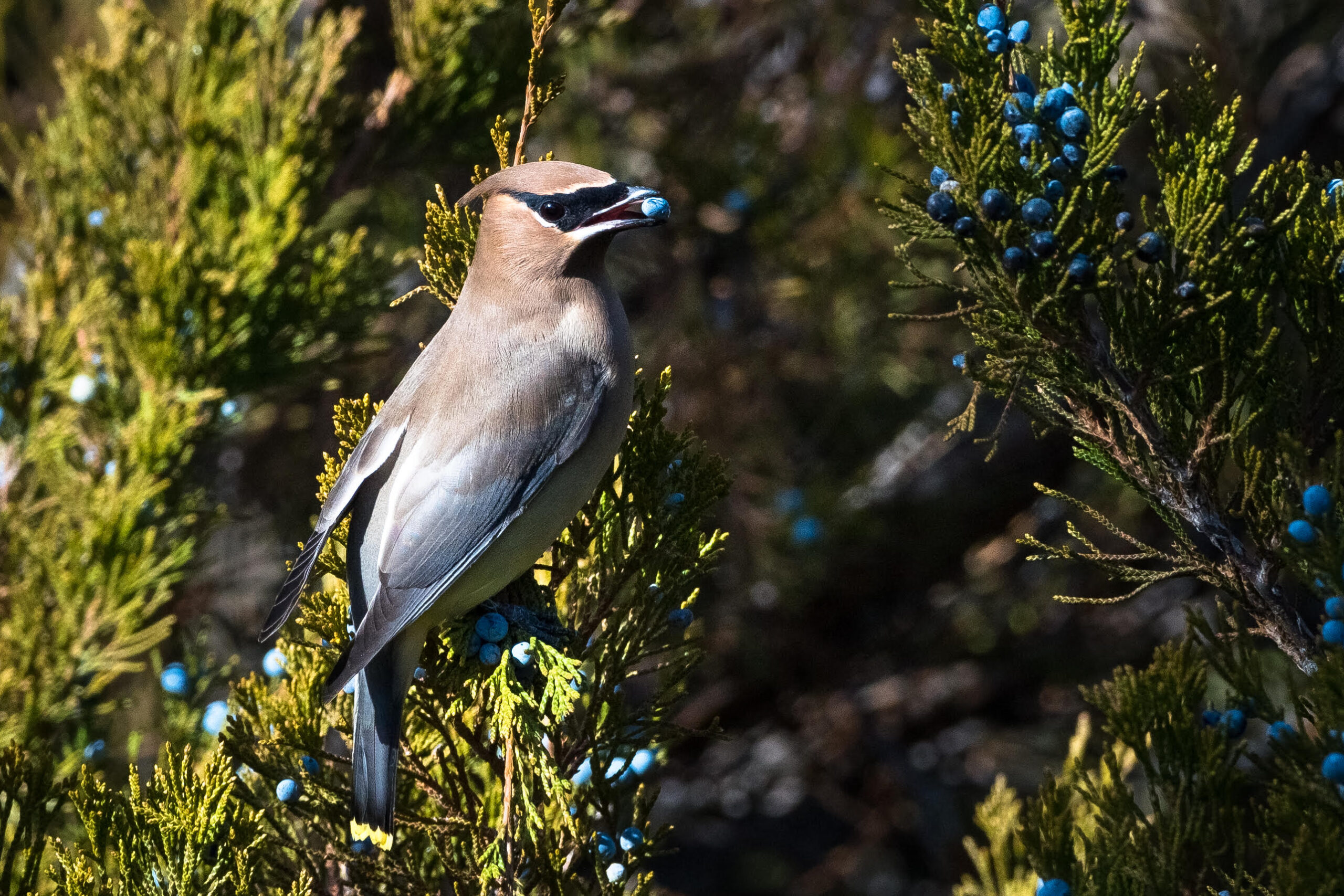
The Audubon Society for the Protection of Birds is Counting Birds for Conservation: Cedar Waxwing eating Juniper Berry, Courtesy & Copyright Jimmie Grutzmacher, Photographer Cedar Waxwing eating Juniper Berry
Courtesy & Copyright Jimmie Grutzmacher, Photographer

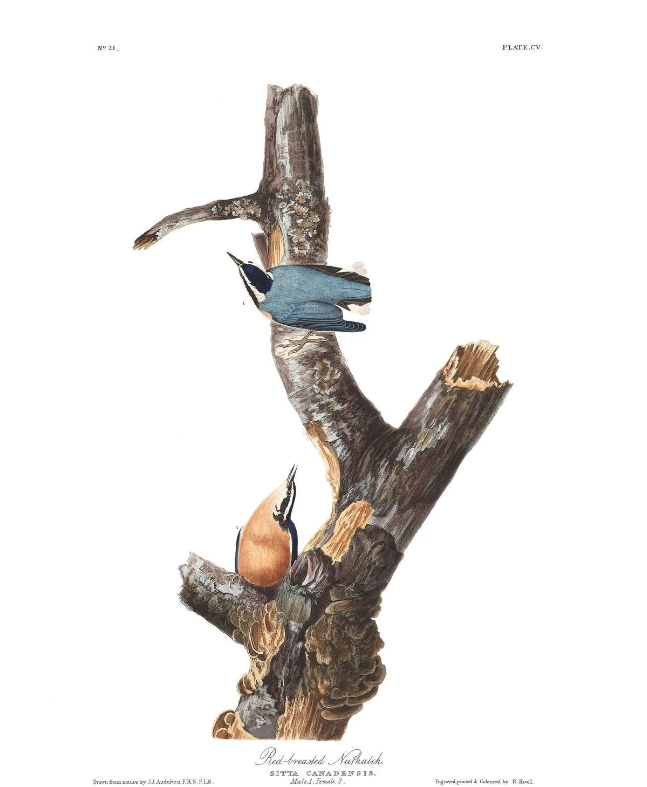
Red-breasted Nuthatch, The Birds of America paintings by John James Audubon, Courtesy the John James Audubon Center at Mill Grove, Montgomery County Audubon Collection, and Zebra Publishing Red-breasted Nuthatch
The Birds of America paintings by John James Audubon
Courtesy the John James Audubon Center at Mill Grove, Montgomery County Audubon Collection, and Zebra Publishing

The Bridgerland Audubon Society has enjoyed another productive Cache Valley Christmas Bird Count, and the participation of volunteers watching from home has proven as valuable as ever because despite the roving teams of volunteers covering the farms, wetlands, canyons, and mountains in the established 177 square mile count circle, the home sector sometimes contributes species missed by the driving and hiking teams. Either way, birds connect us because everyone who spent at least a few minutes counting birds was an important part of assisting the Audubon Society in generating community science data for the conservation of birds and the habitat they need.

The Audubon Society for the Protection of Birds was established in 1886 by George Bird Grinnell, who was inspired by the conservation ethic of his tutor and mentor, Lucy Bakewell Audubon, the widow of naturalist and artist John James Audubon. Grinnell published The Audubon Magazine, which “constituted one of the first efforts to preserve bird species decimated by the women’s hat trade, hunting, and loss of habitat.” (1) Many of the early members were women who, ironically, would attend society meetings wearing plumed hats.” (2) Grinnell is credited as the architect of the Migratory Bird Treaty Act, an effort which took over a decade of advocacy and the many voices of Audubon chapter members.

“The legacy of the Migratory Bird Treaty is the recognition that these magnificent birds are held in public trust and shared by all citizens. Our responsibility is to make sure that this legacy endures by conserving and managing migratory birds and their habitats for future generations to enjoy.” (3), and while the Migratory Bird Treaty Act is the cornerstone of migratory bird management across North America, anyone can help by participating in community science bird counts.

Highlights from this year’s Christmas Bird Count Home Sector reports include a few species not seen last year, such as Cedar Waxwing (Bombycilla cedrorum), which can be attracted to gardens with a songbird border of Juniper berries, Hawthorn, Serviceberry, and Red Osier Dogwood.

Also seen, the Ruby-crowned Kinglet (Corthylio calendula), one of North America’s smallest birds, which “can linger because in addition to insects, it will also eat berries and suet at feeders.”(4) The Red-breasted Nuthatch (Sitta canadensis) “feeds mainly on insects and spiders in summer; in winter, eats many seeds, especially those of conifers. Young are fed mostly or entirely on insects and spiders.” (5)

“Seed-eating boreal visitors, including several sparrow species and the Darkeyed Junco, will benefit from your letting things go literally to seed.” (6) The American and Lesser Goldfinch (Spinus tristis & Spinus psaltria) and the Pine Siskin (Spinus pinus) can be seen feasting on the tiny seeds in dried wild Sunflowers, Coneflowers, and Black-eyed Susans.

This year we added the elusive Cassiar (Junco hyemalis cismontanus), a Darkeyed Junco race also known as the Rocky Mountain Junco, which is rare to spot anywhere.(7) The Cassiar resembles a Slate Junco, but with a hood darker than it’s back. It is set apart from the more common Oregon, Slate, Pink-sided, and Gray-headed Juncos. This is an exciting addition to our local Christmas Bird Count checklist, and was made possible by someone watching the birds outside their window. To paraphrase Louis Pasteur who observed that in science chance favors the prepared mind, the more you know, the more you notice.

I’m Hilary Shughart with the Bridgerland Audubon Society, and I am wild about Utah!

Credits:

Images: Cassiar Junco, Courtesy & Copyright Hilary Shughart
      Cedar Waxwing eating Juniper Berry Courtesy and Copyright Jimmie Grutzmacher, Photographer
      Red-breasted Nuthatch: Courtesy of the John James Audubon Center at Mill Grove, Montgomery County Audubon Collection, and Zebra Publishing https://www.audubon.org/birds-of-america/red-breasted-nuthatch
Featured Audio: Courtesy & Copyright © Kevin Colver, https://wildstore.wildsanctuary.com/collections/special-collections/kevin-colver
Text & Voice: Hilary Shughart, President, https://bridgerlandaudubon.org/
Additional Reading: Hilary Shughart and Lyle Bingham, https://bridgerlandaudubon.org/

Additional Reading

  1.  Spare the Birds! George Bird Grinnell and the First Audubon Society, by Carolyn Merchant, Yale University Press, 2016. https://yalebooks.yale.edu/book/9780300215458/spare-the-birds/
  2.  B&C Member Spotlight – George Bird Grinnell, Boone and Crockett Club, https://www.boone-crockett.org/bc-member-spotlight-george-bird-grinnell
  3.  The Migratory Bird Treaty Centennial, For 100 years, this landmark agreement has been the cornerstone of migratory bird management across North America. by Paul Schmidt. Ducks Unlimited, June 23, 2016, https://www.ducks.org/newsroom/the-migratory-bird-treaty-centennial
  4.  Ruby-crowned Kinglet, American Bird Conservancy, https://abcbirds.org/bird/ruby-crowned-kinglet/
  5.  Red-breasted Nuthatch (Sitta canadensis), National Audubon, https://www.audubon.org/field-guide/bird/red-breasted-nuthatch
  6.  “ Even though records are widespread across much of the lower 48, only two of the grids show higher than the 0-2% frequency, the rarest category. They appear to not be common anywhere.”
    Dark-eyed Junco races: Oregon, Slate-colored and Cassiar By eBird Northwest Team December 12, 2014 https://ebird.org/pnw/news/dark-eyed-junco-races-oregon-slate-colored-and-cassiar/
  7.  How to Welcome Winter Birds: Fall may mean migration, but one bird’s north is just another bird’s south. By Ashley P. Taylor, National Audubon, October 06, 2015, https://www.audubon.org/news/how-welcome-winter-birds
    Disponible en español
  8.  Dark-eyed Junco races: Oregon, Slate-colored and Cassiar By eBird Northwest Team December 12, 2014 https://ebird.org/pnw/news/dark-eyed-junco-races-oregon-slate-colored-and-cassiar/

Ordinary Extraordinary Junco, by Jonathan Atwell, Steve Burns, and Ellen Ketterson, 2013 Documentary Video https://juncoproject.org/view-download/chapter3/index.html

Wright, Rick, “The Junco Called Cassiar” (2013). Nebraska Bird Review. 1324. https://digitalcommons.unl.edu/nebbirdrev/1324
https://digitalcommons.unl.edu/cgi/viewcontent.cgi?article=2323&context=nebbirdrev